GRADE & PURITYMoligand™?Moligand™ — Aladdin's line of ligands and bioactive small molecules. Use for receptor, pathway, and binding studies needing defined small-molecule tools.10 mM in DMSO
Moligand™, 10 mM in DMSO Moligand™ for sensitive chromatographic and analytical workflows requiring minimal baseline interference.
🌡
Storage & shipping
Store at -80°C Ships Dry ice packs + Cold packs Check lot-specific COA for exact specifications.
📋
Quality documents
SDS, COA, datasheet, and spec sheet available for download. Lot-specific COA accessible via lot number lookup.
📚
Literature proof
Cited in 0 peer-reviewed publications across chromatography, organic synthesis, and cross-coupling reactions.
Descripción general
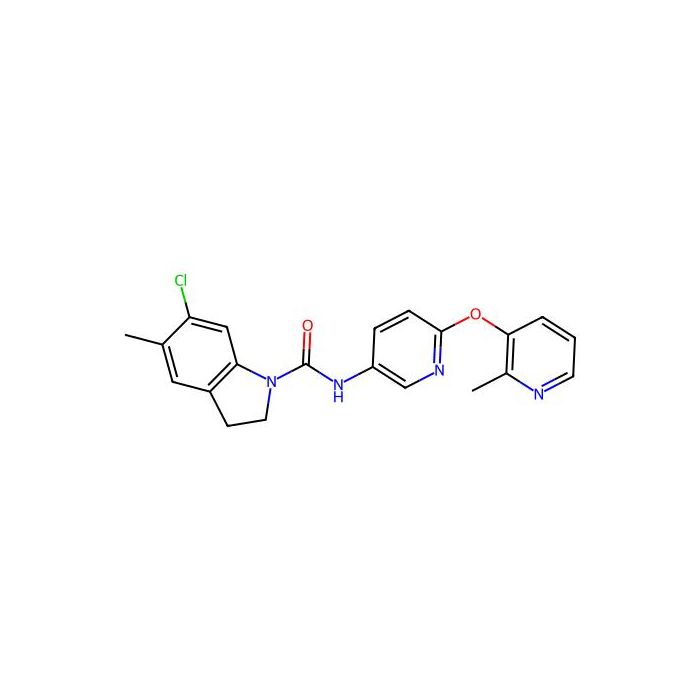
SB 242084 is a selective, competitive and high-affinity ( pK i =9.0) 5-HT 2C receptor antagonist (crosses the blood-brain barrier). SB 242084 increases basal activity of dopaminergic neurons in the ventral tegmental area (VTA) of the midbrain and dopamine release in the vomeronasal nucleus. SB 242084 also increases mitochondrial gene expression and oxidative metabolism via 5-HT 2A receptor . SB 242084 has good research potential in the negative symptoms of anxiety, depression and schizophrenia, as well as in acute organ damage.
Specifications
Especificaciones y pureza
Moligand™, 10 mM in DMSO
Condiciones de almacenamiento de almacenamiento
Store at -80°C
Enviado en
Dry ice packs + Cold packs
Este producto requiere envío en cadena de frío. Los servicios terrestres y otros servicios económicos no están disponibles.
Certificados (CoA, COO, BSE/TSE y tabla de análisis)
C of A & Other Certificates(BSE/TSE, COO):
Analytical Chart:
Calculadoras de soluciones
Molarity Calculator
Determine the necessary mass, volume, or concentration for preparing a solution.
Dilution Calculator
Determine the dilution needed to prepare a stock solution.
Reconstitution Calculator
Reseñas
Reseñas de cliente
Application Protocols
Tested applications, recommended concentrations, and step-by-step protocols are Not specified for this item.
Guidance:
For any planned use in receptor pharmacology, adopt your laboratory’s validated SOPs for ligand handling, stock preparation, dosing, and data normalization. Ensure vehicle controls and replicate design are appropriate for the assay format.
Please refer to the CoA/Spec Sheet for any batch-specific recommendations if provided, and consult the primary literature for protocol exemplars involving SB 242084.
Biological Roles
Research context (literature, not item-specific specifications):
SB 242084 is extensively cited as a selective antagonist of the serotonin 5-HT2C receptor, used to probe 5-HT2C-mediated signaling pathways in vitro and in vivo models. Literature commonly reports high affinity at 5-HT2C with marked selectivity over 5-HT2A/5-HT2B, enabling dissection of receptor-subtype contributions to cellular responses.
Typical experimental roles (literature):
Target validation: Antagonist blockades to confirm 5-HT2C involvement in second messenger readouts (e.g., Ca2+ flux, IP3 accumulation) in recombinant or native systems.
Pathway mapping: Evaluation of downstream signaling (e.g., PLC/IP3, ERK phosphorylation) and gene expression changes upon receptor inhibition.
Pharmacological profiling: Benchmarking new chemical entities for 5-HT2C selectivity by competitive binding or functional antagonism assays.
Best practices (general):
Use well-controlled concentration–response designs and maintain consistent vehicle (e.g., DMSO) across conditions.
Verify receptor expression levels and species variants, as ortholog differences can modestly affect affinity/efficacy rank order.
Notes and limitations:
Do not infer therapeutic properties from research data; this product is for laboratory research use only.
Potency/selectivity values can vary by assay format, cell background, receptor density, and ion composition; consult primary sources for numerical Ki/IC50 figures if required for study design.
Buffer Applications
This product is a small-molecule research ligand rather than a buffering agent. It does not serve as a pH buffer component, complexing agent, or conductivity modifier.
Practical notes (general):
When dosing into aqueous buffers (e.g., PBS, HEPES, HBSS), prepare concentrated DMSO stocks and dilute with vigorous mixing to minimize precipitation.
Maintain constant vehicle percentage across controls and treatments.
Item-specific buffer preparation parameters (pKa, aqueous solubility limits, stability) are Not specified for this item; refer to the CoA/Spec Sheet and validate empirically in your assay buffer system.
Green Alternatives
This product is a discrete bioactive ligand, not a process solvent or bulk reagent; “green alternative” assessments (renewability, EHS footprint, solvent substitution) are not directly applicable.
Practical considerations to reduce environmental impact when using small-molecule ligands (general guidance):
Minimize DMSO volumes and prepare concentrated stocks to reduce solvent waste.
Use micro-scale assay formats (e.g., 384/1536 well plates) to lower per-assay compound consumption.
Employ validated plate maps and replicate strategies to avoid over-preparation of dosing solutions.
Consolidate compound handling steps to limit freeze–thaw cycles, thereby reducing re-synthesis/re-purchasing and waste.
Dispose of organic waste streams according to local regulations; segregate halogenated from non-halogenated waste.
No greener “alternative compound” is defined for this SKU; selection of tool compounds should be driven by target pharmacology and assay fit-for-purpose.
Pharmaceutical Uses
Formulation/CMC context (general, research use only):
SB 242084 is supplied for laboratory research and screening; it is not intended for human or veterinary use, API manufacture, or clinical applications.
In discovery settings, such compounds may be employed as reference standards in analytical methods (e.g., LC–MS calibration) or as pharmacological controls in preclinical assay cascades. These are research functions, not approved pharmaceutical uses.
Regulatory status:
No pharmacopeial monograph or compendial status is specified for this item. Any GMP, ICH, or stability zone requirements are out of scope for this research-grade product.
Handling for analytical reference use (general):
Document lot numbers, storage conditions, and preparation records in your quality system. Qualify working standards against neat material using validated methods (e.g., assay by HPLC, ID by MS/NMR).
Item-specific excipient compatibility, dosage form roles, or clinical formulation data are Not specified for this item.
Physical Properties
Item-specific physicochemical specifications were not provided in this listing.
Physical state/appearance: Not specified for this item; refer to CoA/Spec Sheet.
Melting point: Not specified for this item; refer to CoA/Spec Sheet.
Boiling point: Not applicable/unknown for a non-volatile research ligand; item-specific value not specified.
Density: Not specified for this item; refer to CoA/Spec Sheet.
Refractive index: Not applicable for a solid; not specified.
Solubility: Not specified for this item; refer to CoA/Spec Sheet.
LogP, pKa: Not specified for this item; refer to CoA/Spec Sheet.
Literature/generic handling notes for bioactive small molecules (not item-specific):
Many heteroaromatic ligands are prepared as concentrated stocks (e.g., 10–50 mM) in anhydrous DMSO, then diluted into assay buffer immediately prior to use to minimize precipitation and adsorption.
If aqueous work is required, co-solvents (DMSO ≤1–2% v/v in final assays) and surfactants (e.g., 0.01% Tween-20) are commonly used to maintain homogeneity. These are general practices and not specifications for this item.
Important:
For method development, confirm solubility, extinction coefficients, and any polymorph/solvate status from the item’s CoA/Spec Sheet.
Do not treat literature data as product specifications; verify with the supplied batch documentation.
Quality and Grades
Grade: Moligand™ (as listed for this item).
What Moligand™ typically signifies (program-level description; not a specification):
A curated, research-use-only small-molecule/ligand library quality suitable for screening and target validation workflows.
Emphasis on structural identity and high purity appropriate for discovery biology assays, often accompanied by documentation such as CoA and batch-specific purity data. Exact acceptance criteria (e.g., assay method, purity %) are not specified for this item; refer to the CoA/Spec Sheet.
Implications for assay work:
Ligand screening quality focuses on minimizing confounders (unknown impurities, residual solvents, or degradation products) that can impact potency readouts or selectivity profiles.
Batch traceability and documentation are critical for reproducibility—record lot/COA IDs in screening databases and electronic lab notebooks.
What is NOT stated for this item:
Stabilizers, salt form, water content, residual solvent limits, metal content, and UV cutoffs are Not specified for this item; refer to CoA/Spec Sheet.
Recommendation:
Prior to HTS or pharmacology studies, confirm purity method (e.g., HPLC-UV, LC–MS), structural ID (NMR/MS), and salt/form status from the supplied documentation to align with your internal quality thresholds.
Reaction and Applications
This listing corresponds to a finished bioactive small molecule used as a research ligand, not a synthetic reagent or catalyst.
Not typically employed as a solvent, base, nucleophile, electrophile, ligand for metal catalysis, or stoichiometric reagent in organic synthesis.
Consequently, conventional “reaction application” guidance (e.g., coupling conditions, organometallic compatibility, or reagent selectivity) is not applicable.
Where it is used (research context, literature):
SB 242084 is widely referenced as a selective serotonergic receptor tool compound in receptor pharmacology, signaling, and behavioral neuroscience experiments (literature). Those uses rely on biological assays rather than chemical transformations.
If you require a chemically reactive surrogate or building block related to this scaffold (e.g., for SAR development), please consult our catalog for functionalized analogs or intermediates. For this specific SKU, defer to Biological Roles and Storage & Reconstitution for the most relevant guidance.
Reaction Conditions
Conventional chemical reaction conditions are not applicable to this SKU because it is supplied as a bioactive small molecule for pharmacological research rather than as a reagent or catalyst.
If employing the compound in biological assays (general guidance; not item-specific):
Stock preparation: Frequently prepared at 10–50 mM in anhydrous DMSO; exact solubility for this item is not specified—verify experimentally.
Dosing: Serially dilute into assay buffer, maintaining constant final DMSO (commonly ≤1–2% v/v depending on assay tolerance).
Incubation: Equilibration times for receptor antagonists in cell-based assays often range 10–60 min prior to agonist challenge; optimize per system.
Note: These are general assay handling practices rather than chemical “reaction” conditions. Item-specific parameters (solubility, stability in buffer, light/air sensitivity) are Not specified for this item; consult the CoA/Spec Sheet and perform pilot runs.
Safety and Handling
Safety classifications and hazard pictograms are not provided in this listing and can vary with concentration, salt form, and impurities.
GHS classification: Not specified for this item; refer to SDS.
Signal word / H-statements / Pictograms: Not specified for this item; refer to SDS.
General laboratory precautions for bioactive small molecules (non-item-specific):
Use in a certified chemical fume hood. Avoid inhalation, ingestion, and skin/eye contact.
PPE: lab coat, safety glasses, and appropriate chemical-resistant gloves (e.g., nitrile). Change gloves frequently when handling solids and DMSO concentrates.
Avoid generating dust or aerosols; weigh using antistatic measures and microspatulas. Cap DMSO stocks promptly to limit hygroscopic water uptake.
Incompatibilities: Strong oxidizers and reactive acylating/alkylating agents should be avoided unless part of a deliberate synthetic step. For solution work, be aware that amine/heteroaromatic ligands can bind plastics; prefer glass vials.
First aid (summary; defer to SDS): If on skin/eyes, rinse with water for ≥15 min; remove contaminated clothing. If inhaled, move to fresh air. If ingested, rinse mouth; seek medical attention. Provide SDS to responders.
Waste: Dispose as organic hazardous waste per institutional and local regulations. Segregate halogenated from non-halogenated solvent waste.
Always consult the product’s SDS for authoritative hazard information and emergency procedures.
Solvent Selection
This product is a bioactive small molecule rather than a process solvent. Nevertheless, solvent choice is pivotal for preparing stock solutions and delivering the compound to assays.
General, literature-based guidance for ligands (not item-specific):
Primary solvent: DMSO is commonly used due to broad solubilizing power and biological compatibility at ≤1–2% v/v in assays.
Secondary options: DMF or ethanol can be used for intermediate concentrates, but their permissible assay percentages may be lower; always verify assay tolerance.
Aqueous delivery: Dilute DMSO stocks into buffered saline systems (e.g., PBS, HEPES) with gentle mixing; add compound last to minimize precipitation. Maintain constant final DMSO across test wells.
Adsorption/precipitation: Use low-bind polypropylene or glass vials; pre-rinse plastic tips with DMSO stock if carryover/adsorption is observed.
When to choose alternatives:
For membrane assays or if DMSO-sensitive targets are used, consider cosolvent blends (e.g., DMSO + PEG-400 or DMSO + cyclodextrin solutions) validated by your assay team.
Not specified for this item:
Solubility limits in specific solvents, pKa/logP, and salt form are Not specified for this item; consult the CoA/Spec Sheet and perform a small-scale solubility screen if needed.
Storage and Reconstitution
Storage (item-specific from Product Data):
Store at −80°C.
Shipping: Supplied on dry ice packs + cold packs.
General handling (non-item-specific best practices):
Upon receipt, keep the container tightly closed at −80°C. If frequent access is expected, consider preparing single-use aliquots to minimize freeze–thaw cycles.
Allow vial to equilibrate to room temperature in a desiccator before opening to prevent moisture condensation.
Reconstitution (not specified for this item; general guidance):
Vehicle: Many research ligands are first dissolved in anhydrous DMSO to prepare concentrated stocks. The exact solubility and preferred solvent for this item are Not specified for this item; refer to CoA/Spec Sheet and confirm experimentally.
Aliquoting: Dispense working stocks into low-bind microtubes; flush headspace with inert gas if sensitivity is suspected (not specified for this item).
Stability: Working solutions in aqueous buffers are commonly prepared fresh; avoid prolonged storage at ambient temperature and protect from light as a precaution. Item-specific stability data are Not specified for this item; consult CoA/SDS.
Research Use Note: For research use only.
Structure and Identity
SB 242084 is a cataloged small-molecule research ligand. Item-specific structural identifiers were not supplied with this listing.
Chemical name: Not specified for this item; refer to CoA/Spec Sheet.
CAS: 181632-25-7 (literature identifier commonly associated with SB 242084)
Molecular formula: Not specified for this item; refer to CoA/Spec Sheet.
Molecular weight: Not specified for this item; refer to CoA/Spec Sheet.
SMILES: Not specified for this item; refer to CoA/Spec Sheet.
InChIKey: Not specified for this item; refer to CoA/Spec Sheet.
CID: 16219981 (literature cross-reference for SB 242084)
Structural features (general, literature):
SB 242084 is reported in the literature as a heteroaromatic small molecule used as a serotonin receptor modulator. Detailed ring systems and functional groups are not specified in this product entry; consult primary literature or the CoA for definitive structure.
2D structure description (general):
Literature depictions show an aromatic polycyclic/heteroaromatic scaffold typical of serotonergic ligands; exact substitution pattern is not specified in this listing. For unequivocal structural confirmation, rely on the product’s CoA/SDS and reputable databases associated with CAS 181632-25-7.
Notes:
Where exact identifiers are required for regulatory filings or method development, obtain the item-specific CoA/Spec Sheet from Aladdin Scientific to confirm formula, MW, and canonical identifiers.
Synthetic Utility
This SKU is a finished bioactive ligand rather than a functionalized building block or reagent. As such, it is not typically used to perform synthetic transformations or as a synthon in routine organic synthesis.
What is relevant:
If your objective is structure–activity relationship (SAR) exploration around the SB 242084 scaffold, consider sourcing or synthesizing appropriately functionalized analogs (e.g., with halogen, nitrile, amine, or boronate handles) to enable cross-couplings or late-stage diversification. This product entry does not specify such handles.
Not provided for this item:
Functional group inventory, reactivity handles, or salt form that would inform derivatization are Not specified for this item; refer to the CoA/Spec Sheet.
Recommendation:
Use this compound as a pharmacological reference tool in assays (see Biological Roles). For synthetic campaigns, consult our catalog for building blocks and intermediates designed for diversification.
Target Specificity
Target specificity details are typically provided for antibodies or validated bioassay reagents with defined binding profiles. For this small-molecule ligand SKU, item-specific target confirmation, potency, and selectivity data are Not specified for this item; refer to CoA/Spec Sheet and primary literature associated with CAS 181632-25-7.
General literature note (not product-specific): SB 242084 is widely described as a selective antagonist of the serotonin 5-HT2C receptor, with substantially lower activity at 5-HT2A/5-HT2B in many assay systems. Numerical selectivity ratios and Ki/IC50 values vary by method and are not specified in this listing.
Need help choosing the grade?
Our grade selection guide covers purity, stabilizer status, and application suitability for all variants in our catalog.
We use cookies to ensure the website functions properly and, where permitted, to improve your experience. You can manage your preferences at any time in Settings. Learn more in our Cookie Policy.
Shall we send you a message when we have discounts available?
Remind me later
Thank you! Please check your email inbox to confirm.
Products are supplied to verified businesses, institutions, and qualified professionals for research and development use only. Not for use in humans, animals, diagnosis, or therapy.