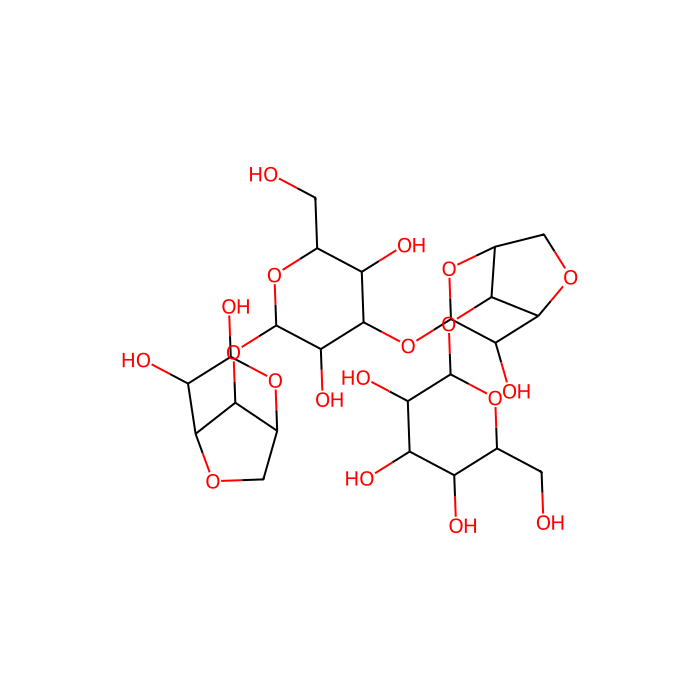
Synthetic agarose - Low Melting Point , CAS No.9012-36-6

CAS: 9012-36-6 Cat. No.: S579062 Número EC: 232-731-8 PubChem CID: 11966311
Disponible para pedir
GRADE & PURITY Low Melting Point
Synonyms
AKOS015916622 | MJQHZNBUODTQTK-WKGBVCLCSA-N | Agarose gel beads | Agarose | EINECS 232-731-8 | agarotetraose | CHEBI:2511 | [4)-3,6-An-alpha-L-Galp-(1->3)-beta-D-Galp-(1->]n | SCHEMBL1413225 | (2S,3R,4S,5R,6R)-2-[[(1S,3S,4S,5S,8R)-3-[(2S,3R,4S,5S,6R)-2-[[
Storage
Room temperature
Shipped In
Normal
★
Size
Alemania (EU)
USA*
Price
Qty
5g
S579062-5g
—
2 Disponible

45,04€

58,92€
Guardar 13,88 € (23.56%)
25g
S579062-25g
—
1 Disponible

149,16€

209,04€
Guardar 59,87 € (28.64%)
100g
S579062-100g
—
2 Disponible

397,34€

579,56€
Guardar 182,23 € (31.44%)
500g
S579062-500g
—
1 Disponible

1.587,01€

2.026,08€
Guardar 439,08 € (21.67%)
Enter a quantity for the sizes you want to add.
🧪
Why this grade

Low Melting Point for sensitive chromatographic and analytical workflows requiring minimal baseline interference.

🌡

Storage & shipping

Room temperature Ships Normal Check lot-specific COA for exact specifications.

📋

Quality documents

SDS, COA, datasheet, and spec sheet available for download. Lot-specific COA accessible via lot number lookup.

📚

Literature proof

Cited in 268 peer-reviewed publications across chromatography, organic synthesis, and cross-coupling reactions.

Specifications

Sinónimos
AKOS015916622 | MJQHZNBUODTQTK-WKGBVCLCSA-N | Agarose gel beads | Agarose | EINECS 232-731-8 | agarotetraose | CHEBI:2511 | [4)-3,6-An-alpha-L-Galp-(1->3)-beta-D-Galp-(1->]n | SCHEMBL1413225 | (2S,3R,4S,5R,6R)-2-[[(1S,3S,4S,5S,8R)-3-[(2S,3R,4S,5S,6R)-2-[[
Especificaciones y pureza
Low Melting Point
Condiciones de almacenamiento de almacenamiento
Room temperature
Enviado en
Normal
Nombres e identificadores
Pubchem Sid
Pubchem Sid Url
https://pubchem.ncbi.nlm.nih.gov/substance/508812878
Sonrisas canónicas
C1[C@H]2[C@H]([C@@H](O1)[C@@H]([C@@H](O2)O)O)O[C@H]3[C@@H]([C@H]([C@H]([C@H](O3)CO)O)O[C@H]4[C@H]([C@H]5[C@@H]([C@@H](O4)CO5)O[C@H]6[C@@H]([C@H]([C@H]([C@H](O6)CO)O)O)O)O)O
IUPAC Name
(2S,3R,4S,5R,6R)-2-[[(1S,3S,4S,5S,8R)-3-[(2S,3R,4S,5S,6R)-2-[[(1S,3R,4S,5S,8R)-3,4-dihydroxy-2,6-dioxabicyclo[3.2.1]octan-8-yl]oxy]-3,5-dihydroxy-6-(hydroxymethyl)oxan-4-yl]oxy-4-hydroxy-2,6-dioxabicyclo[3.2.1]octan-8-yl]oxy]-6-(hydroxymethyl)oxane-3,4,5-triol
InChIKey
MJQHZNBUODTQTK-WKGBVCLCSA-N
INCHI
1S/C24H38O19/c25-1-5-9(27)11(29)12(30)22(38-5)41-17-8-4-36-20(17)15(33)24(40-8)43-18-10(28)6(2-26)39-23(14(18)32)42-16-7-3-35-19(16)13(31)21(34)37-7/h5-34H,1-4H2/t5-,6-,7+,8+,9+,10+,11+,12-,13+,14-,15+,16-,17-,18+,19+,20+,21-,22+,23+,24+/m1/s1
Isómeros SMILES
C1[C@H]2[C@H]([C@@H](O1)[C@@H]([C@@H](O2)O)O)O[C@H]3[C@@H]([C@H]([C@H]([C@H](O3)CO)O)O[C@H]4[C@H]([C@H]5[C@@H]([C@@H](O4)CO5)O[C@H]6[C@@H]([C@H]([C@H]([C@H](O6)CO)O)O)O)O)O
CAS alternativo
39346-81-1
PubChem CID
11966311

Documentation

📋 Safety Data Sheet (SDS)

Comprehensive hazard, handling, storage, and regulatory compliance document.

Download SDS →

✅ Certificate of Analysis (COA)

Lot-specific quality data. Enter your lot number to retrieve the exact COA.

Look up COA →

📊 Datasheet

Quick-reference summary of product specifications and applications.

View datasheet →

🔬 Specification Sheet

Full quality attributes and acceptance criteria for this grade.

View spec sheet →

Advanced Data

Taxonomic Classification

Taxonomy Tree

KingdomOrganic compounds
SuperclassOrganic oxygen compounds
ClaseOrganooxygen compounds
SubclassCarbohydrates and carbohydrate conjugates
Intermediate Tree Nodes Not available
Direct ParentOligosaccharides
Alternative Parents O-glycosyl compounds  1,4-dioxepanes  Oxanes  Oxolanes  Secondary alcohols  Hemiacetals  Polyols  Oxacyclic compounds  Dialkyl ethers  Acetals  Primary alcohols  Hydrocarbon derivatives  
Molecular FrameworkAliphatic heteropolycyclic compounds
Substituents Oligosaccharide - Glycosyl compound - O-glycosyl compound - 1,4-dioxepane - Dioxepane - Oxane - Oxolane - Secondary alcohol - Hemiacetal - Acetal - Dialkyl ether - Oxacycle - Ether - Polyol - Organoheterocyclic compound - Hydrocarbon derivative - Primary alcohol - Alcohol - Aliphatic heteropolycyclic compound
DescripciónThis compound belongs to the class of organic compounds known as oligosaccharides. These are carbohydrates made up of 3 to 10 monosaccharide units linked to each other through glycosidic bonds.
External Descriptors Not available
Estructura 3D
Modelo de Estructura Química Interactiva


Certificados (CoA, COO, BSE/TSE y tabla de análisis)
C of A & Other Certificates(BSE/TSE, COO):
Analytical Chart:

Find and download the COA for your product by matching the lot number on the packaging.

6 results found

Lot NumberCertificate TypeFechaArticulo
B2518037Certificate of AnalysisJul 05, 2023 S579062
G2326677Certificate of AnalysisJul 05, 2023 S579062
G2326680Certificate of AnalysisJul 05, 2023 S579062
G2326684Certificate of AnalysisJul 05, 2023 S579062
G2326692Certificate of AnalysisJul 05, 2023 S579062
H2518116Certificate of AnalysisJul 05, 2023 S579062
Propiedades químicas y físicas
Punto de fusión (°C)62-68℃
Peso molecular630.500 g/mol
XLogP3-6.500
Hydrogen Bond Donor Count10
Hydrogen Bond Acceptor Count19
Rotatable Bond Count8
Exact Mass630.201 Da
Monoisotopic Mass630.201 Da
Topological Polar Surface Area285.000 Ų
Heavy Atom Count43
Formal Charge0
Complexity946.000
Isotope Atom Count0
Defined Atom Stereocenter Count20
Undefined Atom Stereocenter Count0
Defined Bond Stereocenter Count0
Undefined Bond Stereocenter Count0
The total count of all stereochemical bonds0
Covalently-Bonded Unit Count1
Preguntas frecuentes y artículos
Five Key Strategies to Optimize Agarose Gel Electrophoresis with GelRed
Five Key Structural Features of Plasmids
Immobilized Enzyme Technology and Its Applications in Biocatalysis
An Introduction to Research-Grade Carbohydrates: Decoding the “Glycan Language” and a Product-Selection Guide (with Tables 1–3)
A Review of Ten Commonly Used Techniques for Detection, Quantification, and Interaction Analysis in Nucleic Acid Research
Understanding Hydrophilic Polymers in Aqueous Systems: Hydration Mechanisms, Structural Knobs, and Task-Oriented Selection Guide (Including Tables 1–3)
16 Frequently Asked Questions About Nourseothricin
GelRed Nucleic Acid Stain: Frequently Asked Questions
Deoxyribonuclease (DNase): DNA Hydrolytic Cleavage Properties, Methodological Value, and Multi-Context Applications
Micrococcal Nuclease (MNase): A Technical Review of Enzymatic Properties, Reaction Control, and Research and Biomanufacturing Applications
dsDNase-Mediated Hydrolysis of Double-Stranded DNA: Enzymatic Characteristics, Methodological Strategies, and Bioanalytical Applications
Key Judgments in Medical Hydrogel R&D: From Polymer Source and Crosslinking Strategy to Sterilization Planning, Scale-Up Feasibility, and Quality Control
Applications of Enzymatic Protein Crosslinking Systems in Gel Construction and Functional Evaluation
What Is Synthetic Biology? The Industrialization Pathway from Upstream Reagent Toolchains to Biomanufacturing Applications
Synthetic Agarose: Properties, Uses & Lab Guide
Citations of This Product
Calculadoras de soluciones
Reseñas

Reseñas de cliente

¿Quieres que te enviemos un mensaje cuando tengamos descuentos disponibles?

Recordármelo más tarde

¡Gracias! Por favor, revisa tu bandeja de entrada de correo electrónico para confirmar.

¡Vaya! Las notificaciones están desactivadas.