Determine the necessary mass, volume, or concentration for preparing a solution.
| Activity Type | Activity Value -log(M) | Mechanism of Action | Activity Reference | Publications (PubMed IDs) |
|---|

Store at -20°C. It is important to note that this product is reported to be light sensitive. Store In the Dark. Store under desiccating conditions.
Taxonomy Tree
| Kingdom | Organic compounds |
|---|---|
| Superclass | Organic oxygen compounds |
| Clase | Organooxygen compounds |
| Subclass | Ethers |
| Intermediate Tree Nodes | Not available |
| Direct Parent | Diarylethers |
| Alternative Parents | Polyhalopyridines Phenoxy compounds Phenol ethers Aryl chlorides Heteroaromatic compounds Azacyclic compounds Organopnictogen compounds Organonitrogen compounds Organochlorides Hydrocarbon derivatives |
| Molecular Framework | Aromatic heteromonocyclic compounds |
| Substituents | Diaryl ether - Phenoxy compound - Phenol ether - Polyhalopyridine - Aryl chloride - Aryl halide - Monocyclic benzene moiety - Pyridine - Benzenoid - Heteroaromatic compound - Organoheterocyclic compound - Azacycle - Organopnictogen compound - Organonitrogen compound - Organochloride - Organohalogen compound - Organic nitrogen compound - Hydrocarbon derivative - Aromatic heteromonocyclic compound |
| Descripción | This compound belongs to the class of organic compounds known as diarylethers. These are organic compounds containing the dialkyl ether functional group, with the formula ROR', where R and R' are aryl groups. |
| External Descriptors | Not available |
| Activity Type | Activity Value -log(M) | Mechanism of Action | Activity Reference | Publications (PubMed IDs) |
|---|
| Activity Type | Relation | Activity value | Units | Action Type | Journal | PubMed Id | doi | Assay Aladdin ID |
|---|
| Activity Type | Relation | Activity value | Units | Action Type | Journal | PubMed Id | doi | Assay Aladdin ID |
|---|
| Activity Type | Relation | Activity value | Units | Action Type | Journal | PubMed Id | doi | Assay Aladdin ID |
|---|
| Activity Type | Relation | Activity value | Units | Action Type | Journal | PubMed Id | doi | Assay Aladdin ID |
|---|
| Activity Type | Relation | Activity value | Units | Action Type | Journal | PubMed Id | doi | Assay Aladdin ID |
|---|
| Activity Type | Relation | Activity value | Units | Action Type | Journal | PubMed Id | doi | Assay Aladdin ID |
|---|
| Activity Type | Relation | Activity value | Units | Action Type | Journal | PubMed Id | doi | Assay Aladdin ID |
|---|
| Activity Type | Relation | Activity value | Units | Action Type | Journal | PubMed Id | doi | Assay Aladdin ID |
|---|
| Activity Type | Relation | Activity value | Units | Action Type | Journal | PubMed Id | doi | Assay Aladdin ID |
|---|
| Activity Type | Relation | Activity value | Units | Action Type | Journal | PubMed Id | doi | Assay Aladdin ID |
|---|
| Activity Type | Relation | Activity value | Units | Action Type | Journal | PubMed Id | doi | Assay Aladdin ID |
|---|
| Activity Type | Relation | Activity value | Units | Action Type | Journal | PubMed Id | doi | Assay Aladdin ID |
|---|
| Activity Type | Relation | Activity value | Units | Action Type | Journal | PubMed Id | doi | Assay Aladdin ID |
|---|
| Activity Type | Relation | Activity value | Units | Action Type | Journal | PubMed Id | doi | Assay Aladdin ID |
|---|
| Activity Type | Relation | Activity value | Units | Action Type | Journal | PubMed Id | doi | Assay Aladdin ID |
|---|
| Activity Type | Relation | Activity value | Units | Action Type | Journal | PubMed Id | doi | Assay Aladdin ID |
|---|
| Activity Type | Relation | Activity value | Units | Action Type | Journal | PubMed Id | doi | Assay Aladdin ID |
|---|
| Activity Type | Relation | Activity value | Units | Action Type | Journal | PubMed Id | doi | Assay Aladdin ID |
|---|
| Activity Type | Relation | Activity value | Units | Action Type | Journal | PubMed Id | doi | Assay Aladdin ID |
|---|
| Activity Type | Relation | Activity value | Units | Action Type | Journal | PubMed Id | doi | Assay Aladdin ID |
|---|
| Activity Type | Relation | Activity value | Units | Action Type | Journal | PubMed Id | doi | Assay Aladdin ID |
|---|
| Activity Type | Relation | Activity value | Units | Action Type | Journal | PubMed Id | doi | Assay Aladdin ID |
|---|
| Activity Type | Relation | Activity value | Units | Action Type | Journal | PubMed Id | doi | Assay Aladdin ID |
|---|
| Activity Type | Relation | Activity value | Units | Action Type | Journal | PubMed Id | doi | Assay Aladdin ID |
|---|
| Activity Type | Relation | Activity value | Units | Action Type | Journal | PubMed Id | doi | Assay Aladdin ID |
|---|
| Activity Type | Relation | Activity value | Units | Action Type | Journal | PubMed Id | doi | Assay Aladdin ID |
|---|
| Activity Type | Relation | Activity value | Units | Action Type | Journal | PubMed Id | doi | Assay Aladdin ID |
|---|
| Activity Type | Relation | Activity value | Units | Action Type | Journal | PubMed Id | doi | Assay Aladdin ID |
|---|
| Sensibilidad | light sensitive |
|---|---|
| Peso molecular | 402.1 |
| XLogP3 | 6.000 |
| Hydrogen Bond Donor Count | 0 |
| Hydrogen Bond Acceptor Count | 4 |
| Rotatable Bond Count | 4 |
| Exact Mass | 401.931 Da |
| Monoisotopic Mass | 399.934 Da |
| Topological Polar Surface Area | 44.200 Ų |
| Heavy Atom Count | 24 |
| Formal Charge | 0 |
| Complexity | 362.000 |
| Isotope Atom Count | 0 |
| Defined Atom Stereocenter Count | 0 |
| Undefined Atom Stereocenter Count | 0 |
| Defined Bond Stereocenter Count | 0 |
| Undefined Bond Stereocenter Count | 0 |
| The total count of all stereochemical bonds | 0 |
| Covalently-Bonded Unit Count | 1 |
P264:Wash hands [and …] thoroughly after handling.
Only application protocols explicitly provided for this SKU can be listed here.
General note: For small-molecule ligands, users commonly prepare DMSO stocks (e.g., 10–50 mM as solubility allows) and perform serial dilutions into assay media, maintaining constant vehicle across conditions. Validate concentration by UV or LC methods if required for quantitative studies.
Context from literature (not product claims):
No clinical or diagnostic use is implied. All applications are for research use only. Always confirm target engagement with orthogonal readouts (e.g., marker gene panels) and verify species relevance for your biological system.
This item is a hydrophobic research ligand rather than a buffering reagent. It does not serve as a pH buffer or electrolyte component in the conventional sense.
Practical notes for buffer compatibility (general literature guidance):
While “green alternatives” are traditionally discussed for bulk solvents or reagents, a similar mindset can be applied to bioactive tool compounds by considering solvent choices and handling practices.
Trade-offs: Highly lipophilic ligands often provide strong target engagement but require organic vehicles and careful handling. Choosing ligands with improved solubility may lower environmental and exposure burdens but might alter target selectivity or potency.
This product is supplied strictly for research use only and is not intended for human or veterinary use.
Formulation and process-relevant notes (general, literature-based):
No pharmacopeial monograph or clinical formulation role is implied by this listing. Do not use in diagnostics or as a drug substance.
Item-specific physico-chemical specifications were not provided in this listing.
Literature/general guidance (not product specifications):
This product is supplied as a bioactive small-molecule ligand rather than a general synthetic reagent or solvent. Consequently, its primary application domain is biochemical and cellular research, not stoichiometric or catalytic organic synthesis.
Research applications (literature context):
Practical tips for research use (general):
Note: If you intend to derivatize or conjugate this scaffold, consult primary literature for reactivity of aryl–O–aryl ethers and halopyridyl motifs; however, such transformations are outside typical use for this item.
Not typically applicable. TCPOBOP is supplied as a finished bioactive ligand rather than a reagent for running synthetic reactions.
For researchers interested in making analogs (general literature):
These notes are provided only for conceptual context; they do not describe how to use this catalog item.
Authoritative safety guidance must be taken from the product SDS.
Applicability: TCPOBOP is a hydrophobic research ligand rather than a reaction solvent. This section discusses dissolving/handling solvents for assays.
General guidance (literature/experience; not product specs):
Small comparison (literature):
Item-specific directions:
Reconstitution (general guidance for hydrophobic ligands; not a specification):
Stability handling tips:
For definitive stability limits, shelf-life, and purity data, consult the lot-specific CoA and SDS.
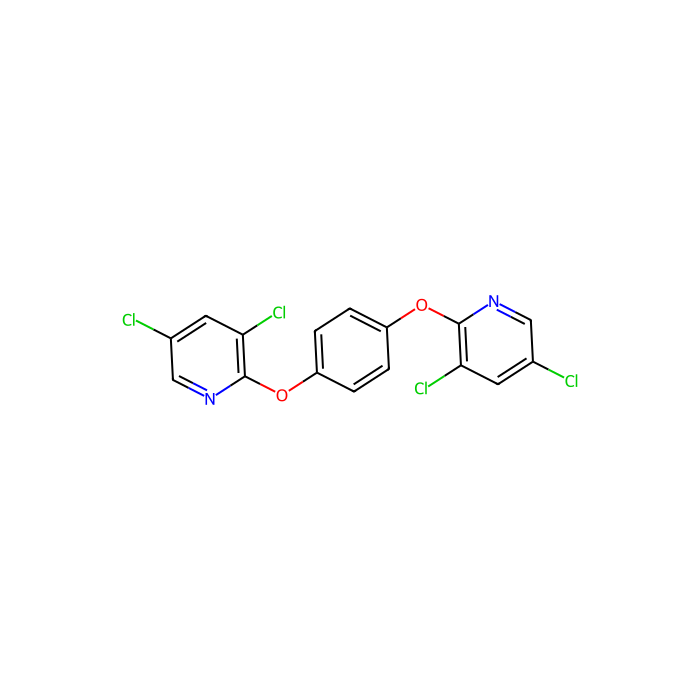
Brief overview: TCPOBOP is a well-known small-molecule research ligand widely used as a tool compound in nuclear receptor biology (literature). Item-specific identifiers provided by this listing are limited.
Structural features (literature description, for context only):
2D structure in words (literature):
Primary use: bioactive tool compound. It is not typically deployed as a reagent or intermediate in synthesis.
General chemistry context (literature):
Because this catalog item is intended as a finished ligand, users generally avoid chemical modification and instead focus on formulation and assay deployment.
Only item-specific target information from the product data may be listed here.
Note: Literature frequently discusses this compound in the context of nuclear receptor biology, but those details are intentionally not repeated here to comply with the requirement that this tab reflect product-provided data only.
Nuestra guía de selección de calidades cubre la pureza, el estado del estabilizador y la idoneidad de la aplicación para todas las variantes de nuestro catálogo.
Ver la guía de calidades Moligand™ →