Orally active, subtype-selective GluN1A/GluN2B (formally NR1A/NR2B) NMDA receptor antagonist (IC50values are 5.3, 35000 and > 100000 nM for GluN1A/2B (NR1A/2B), GluN1A/2B (NR1A/2B) and GluN1A/2C (NR1A/2C) receptor subtypes respectively). Potentiates the effect of L-DOPA in 6-OHDA-lesioned rats following oral administration.Please refer toIUPHAR Guide to Pharmacologyfor the most recent naming conventions.
Condiciones de almacenamiento de almacenamiento
Store at -20°C
Enviado en
Ice chest + Ice pads
Este producto requiere envío en cadena de frío. Los servicios terrestres y otros servicios económicos no están disponibles.
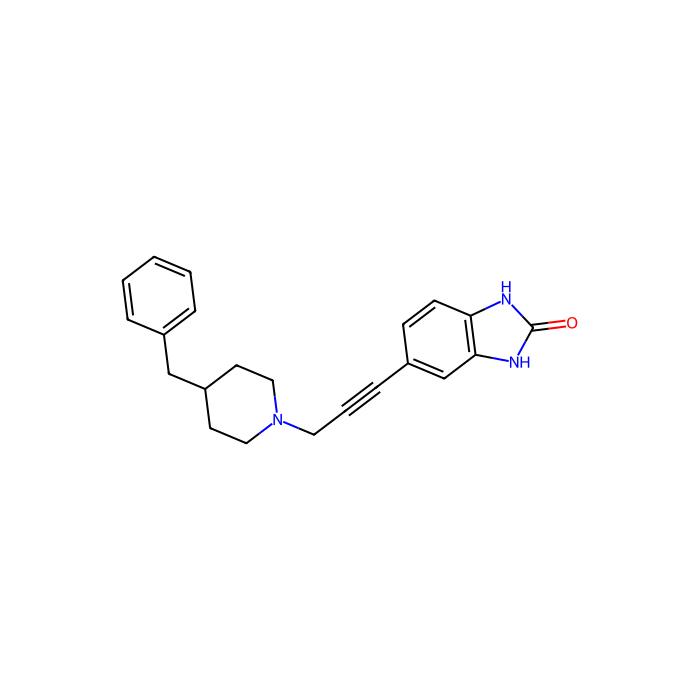
This compound belongs to the class of organic compounds known as 4-benzylpiperidines. These are organic compounds containing a benzyl group attached to the 4-position of a piperidine.
External Descriptors
Not available
1. Djoumbou Feunang Y, Eisner R, Knox C, Chepelev L, Hastings J, Owen G, Fahy E, Steinbeck C, Subramanian S, Bolton E, Greiner R, and Wishart DS. ClassyFire: Automated Chemical Classification With A Comprehensive, Computable Taxonomy. Journal of Cheminformatics, 2016, 8:61.
Solvent:DMSO, Max Conc. mg/mL: 34.54, Max Conc. mM: 100; Solvent:ethanol, Max Conc. mg/mL: 34.54, Max Conc. mM: 100
Peso molecular
345.4
XLogP3
3.500
Hydrogen Bond Donor Count
2
Hydrogen Bond Acceptor Count
2
Rotatable Bond Count
4
Exact Mass
345.184 Da
Monoisotopic Mass
345.184 Da
Topological Polar Surface Area
44.400 Ų
Heavy Atom Count
26
Formal Charge
0
Complexity
548.000
Isotope Atom Count
0
Defined Atom Stereocenter Count
0
Undefined Atom Stereocenter Count
0
Defined Bond Stereocenter Count
0
Undefined Bond Stereocenter Count
0
The total count of all stereochemical bonds
0
Covalently-Bonded Unit Count
1
Seguridad y peligros (GHS)
Precauciones
P264:Wash hands [and …] thoroughly after handling.
Calculadoras de soluciones
Molarity Calculator
Determine the necessary mass, volume, or concentration for preparing a solution.
Dilution Calculator
Determine the dilution needed to prepare a stock solution.
Reconstitution Calculator
Reseñas
Reseñas de cliente
Application Protocols
Item-specific validated applications
Not specified for this item; refer to CoA/Spec Sheet.
General protocol guidance for small-molecule testing
Stock preparation: Dissolve in anhydrous DMSO to 10–50 mM; vortex and, if necessary, sonicate briefly. Filter through 0.2 µm if particulates remain.
Plate-based assays: Prepare serial dilutions in assay buffer ensuring constant vehicle percentage (typically 0.1–1% DMSO). Include vehicle-only wells.
Stability check: Incubate working solutions under assay conditions and inspect for precipitation or color change; verify potency drift over time by including a mid-curve control.
Data integrity: Run technical replicates (n ≥ 3) and fit concentration–response curves with appropriate models (e.g., four-parameter logistic). Report exact vehicle %, incubation time, and temperature.
Documentation
Record lot number and storage history to correlate with assay performance. Retain chromatograms and spectra from CoA for traceability.
Biological Roles
Scope and limitations
The specific molecular target(s), pathway involvement, and mode of action for TCS 46b are not provided in this item data. Therefore, no target-specific biological function can be stated here.
General considerations for small-molecule research tools
Such compounds are commonly used as chemical probes to modulate enzyme or receptor activity in vitro and in cells, enabling hypothesis testing about signaling pathways, protein functions, or phenotypic outcomes.
Typical workflows include determination of concentration–response relationships, time-dependence of effect, and selectivity profiling across related targets when data are available from primary literature.
Off-target assessments, cytotoxicity counterscreens, and chemical stability checks (e.g., in assay buffer or cell culture media) are recommended to contextualize observed biological outcomes.
Notes
For rigorous interpretation, users should pair compound treatment with appropriate positive/negative controls and orthogonal readouts. Consult peer-reviewed sources associated with the provided CAS or CID for validated biological roles.
Buffer Applications
Not typically applicable
TCS 46b is a small-molecule research compound rather than a buffering agent. It does not constitute a defined buffer system.
Practical note
When preparing aqueous assay solutions, the compound is commonly dissolved in DMSO and diluted into a pre-selected buffer (e.g., HEPES, PBS, Tris) appropriate for the biological system. Select the buffer based on your assay needs rather than the compound itself, and verify that pH and ionic strength do not induce precipitation.
Green Alternatives
Context
For small-molecule tool compounds, the primary environmental impacts arise from solvent use in handling, formulation, and analytical methods rather than from the compound itself.
Greener solvent choices (general guidance)
Prefer water-rich systems with minimal DMSO when feasible; consider solubilization aids (cyclodextrins, surfactants) to reduce high-boiling dipolar aprotics.
Replace DMF/NMP with safer options like Cyrene or propylene carbonate where compatible (analytical sample prep or certain synthetic steps).
For chromatography, evaluate ethanol or isopropanol as partial substitutes for acetonitrile or dichloromethane, subject to method performance.
Illustrative comparison (general)
DMSO vs. PEG400 co-solvent: DMSO offers superior solubilization and assay compatibility at low % but is difficult to remove; PEG400 can reduce DMSO content but may affect viscosity and assay optics.
MeCN vs. ethanol for HPLC: MeCN provides low backpressure and UV transparency; ethanol is greener but increases backpressure and can alter selectivity.
Operational tips
Scale analytical runs sensibly, pool fractions efficiently, and reuse mobile phases where validated to reduce waste.
Implement microvolume workflows for potency profiling to minimize solvent consumption.
Pharmaceutical Uses
Scope
This product is supplied strictly for research use only. No excipient or pharmacopeial status is provided in the product data.
General formulation context for research tools
For in vitro and preclinical research, small molecules are often formulated as DMSO stocks for screening, or in suitable vehicles (e.g., saline with co-solvent, PEG400/ethanol mixtures) for animal studies. Any in vivo use must follow institutional approvals; Aladdin Scientific provides no clinical or therapeutic claims.
Item-specific status
Regulatory/compendial listings (USP/EP/JP), residual solvent limits, and bioburden/endotoxin specifications are not specified for this item; refer to CoA/Spec Sheet or contact technical support for research-only qualification details.
Physical Properties
Item-specific physical constants
Appearance: Not specified for this item; refer to CoA/Spec Sheet.
Purity/Grade: Not specified for this item; refer to CoA/Spec Sheet.
Common physico-chemical data
Molecular weight: Not specified for this item; refer to CoA/Spec Sheet.
Melting point (MP): Not specified for this item; refer to CoA/Spec Sheet.
Boiling point (BP): Not applicable or not routinely reported for small-molecule solids; Not specified for this item.
Density: Not specified for this item; refer to CoA/Spec Sheet.
Refractive index: Not applicable for solids; Not specified for this item.
LogP, pKa: Not specified for this item; consult literature for the specific structure if needed.
Solubility: Not specified for this item; typical small-molecule tool compounds are often prepared as DMSO stock solutions (literature/general practice). Confirm with CoA/Spec Sheet.
Notes for users (general/literature-guided)
If the compound is hydrophobic, initial dissolution in anhydrous DMSO (e.g., 10–50 mM) followed by dilution into assay buffer is standard practice. If basic or acidic functional groups are present in the true structure, pH-adjusted aqueous co-solvent systems (buffer/MeOH/PEG400) may be required. Always verify solvent compatibility and stability experimentally.
Because definitive constants are not included in this listing, rely on the batch CoA and SDS for any quantitative property requirements in regulated workflows.
Quality and Grades
Item-specific quality details
Grade/Purity: Not specified for this item; refer to CoA/Spec Sheet.
Appearance: Not specified for this item; refer to CoA/Spec Sheet.
Interpreting grades (general guidance)
Research-grade small molecules are typically qualified by HPLC purity (e.g., area %), identity (1H NMR/HRMS), and residual solvent/volatile profiles. The exact thresholds vary by supplier and lot.
If an HPLC or LC–MS purity is stated on the CoA, it reflects the lot-specific assay conditions and method. Verify chromatographic conditions (gradient, wavelength, column) if you must compare across suppliers or lots.
For bioassay use, low residual water and peroxides are desirable for sensitive targets, but specific limits are not provided here.
Documentation and traceability
Request the lot-specific CoA for detailed purity, analytical methods, and test results.
If you require stringent specifications (e.g., metal content, residual solvent limits, solid-state form), contact technical support for a custom specification or pre-shipment CoA review.
Reaction and Applications
Reactivity as a synthetic reagent
This product is categorized as a small-molecule compound for research/assay use. It is not primarily supplied as a synthetic reagent or building block; therefore, named-reaction roles (e.g., coupling partner, nucleophile/electrophile) are not defined in this listing.
Assay/biological applications (general)
Small-molecule tool compounds such as TCS 46b are commonly used in biochemical, cell-based, or target-engagement studies. Specific target class or mechanism is not provided in this item data. Users should consult primary literature associated with the CAS/CID for mechanistic context and validated assays.
Practical guidance
Prepare concentrated DMSO stocks to minimize repeat freeze-thaw cycles and to ensure dosing accuracy in microplate formats.
Confirm stability in the chosen assay medium (e.g., buffer composition, presence of serum, redox conditions). Light sensitivity and hydrolytic liability must be assessed empirically when structural details are unknown.
Include vehicle controls (matching DMSO content), serial dilutions to define potency windows, and orthogonal assays (e.g., biochemical plus cellular) when characterizing activity.
Reaction Conditions
Not primarily applicable
As supplied, TCS 46b is not provided for use as a reagent in standard organic transformations; therefore, no canonical reaction conditions are associated with this product.
General guidance for handling in solution
Prepare concentrated stock solutions in anhydrous DMSO under ambient conditions unless the compound is light- or moisture-sensitive (verify with SDS/CoA). Typical stock concentrations: 10–50 mM.
If conducting derivatization chemistry, select conditions based on the confirmed structure and functional groups. For example, cross-couplings commonly employ Pd catalysts in polar aprotic solvents at 60–100°C; amide couplings may use carbodiimides or uronium reagents in DMF/MeCN with base. These are literature-general practices and must be adapted to the actual structure.
Safety and Handling
GHS and hazard information (item-specific)
Signal word: Not specified for this item; refer to SDS.
H-statements: Not specified for this item; refer to SDS.
GHS classification and pictograms: Not specified for this item; refer to SDS.
General laboratory precautions (applicable to small-molecule research compounds)
Handle in a chemical fume hood and avoid inhalation of dust or vapors. Prevent contact with skin and eyes.
Recommended PPE: lab coat, safety glasses or splash goggles, and appropriate chemically resistant gloves (e.g., nitrile). Use additional PPE based on SDS guidance.
Avoid sources of ignition if the material is an organic powder and can form dust. Minimize aerosol generation during weighing and transfers.
Storage incompatibilities: keep separate from strong oxidizers and strong acids/bases unless stability is confirmed for the specific structure (consult SDS).
First-aid overview (general)
Inhalation: move to fresh air; seek medical attention if symptoms persist.
Skin contact: wash thoroughly with soap and water; remove contaminated clothing.
Eye contact: rinse cautiously with water for several minutes; remove contact lenses if present and easy to do; seek medical attention if irritation persists.
Ingestion: rinse mouth; do not induce vomiting unless directed by medical personnel; seek medical attention.
Spill and waste
Small spills: absorb with inert material, avoid dust formation, and dispose of following institutional hazardous waste procedures.
Refer to the official SDS for authoritative safety classifications and response measures.
Solvent Selection
Applicability
As a small-molecule research compound with unspecified polarity and functional groups, definitive solvent recommendations cannot be item-specific. The following is general guidance for small-molecule tool compounds.
General dissolution strategy (literature/practice)
Primary stock: anhydrous DMSO (10–50 mM) provides broad solubilization for many aromatic and heteroaromatic scaffolds.
Co-solvent systems: DMSO or DMF partial stock followed by dilution with aqueous buffer containing 0.1–1% co-solvent; for hydrophobic compounds, inclusion of PEG400, ethanol, or cyclodextrins may improve apparent solubility.
For non-aqueous chemistry uses, typical solvents include acetonitrile, dichloromethane, THF, methanol, or ethyl acetate, chosen based on the actual compound’s polarity and stability.
Practical notes
Filter stocks (0.2 µm) if particulate persists after dissolution.
Evaluate solubility at working temperature and ionic strength; precipitation can occur upon cold dilution.
Avoid adsorptive losses by using low-bind plasticware or glass for highly lipophilic compounds.
Storage and Reconstitution
Item-specific storage conditions
Storage: Store at -20°C (from Product Data).
Shipping: Shipped in ice chest with ice pads (from Product Data).
General handling and reconstitution (small molecules)
Upon receipt: Allow the sealed container to equilibrate to room temperature before opening to prevent condensation. Reseal promptly after use.
Stock solutions: Prepare in anhydrous DMSO at 10–50 mM unless solubility dictates otherwise. Aliquot stocks in amber vials or low-bind microtubes to minimize freeze–thaw cycles.
Freeze–thaw guidance: Avoid repeated cycles; thaw on ice or at room temperature, mix gently, and promptly return unused aliquots to -20°C or -80°C as appropriate.
Light/moisture sensitivity: Not specified for this item; if uncertain, protect from light and moisture as a precaution.
Stability notes
Solid-state and solution stability parameters (e.g., long-term stability, hydrolysis, photolysis) are not specified for this item; consult the CoA/SDS and perform small-scale stability checks in intended solvents and buffers.
Disposal
Dispose of waste solutions in accordance with institutional hazardous chemical procedures and local regulations.
Structure and Identity
Brief overview: TCS 46b is listed as a small-molecule research compound. Detailed structural identifiers are limited in the provided item data.
Item-specific (from Product Data)
Product name: TCS 46b
SKU: T286863
CAS: 302799-86-6
PubChem CID: 9863010 (identifier only; verify details in primary databases)
InChIKey: 161829 (as provided)
SMILES: Not specified for this item; refer to CoA/Spec Sheet.
Molecular formula: Not specified for this item; refer to CoA/Spec Sheet.
Molecular weight: Not specified for this item; refer to CoA/Spec Sheet.
Structural features (general guidance)
Functional groups, ring systems, and stereochemistry: Not specified for this item; consult the CoA/SDS or authoritative databases for confirmed structure.
2D structure description (general)
Without a provided SMILES or structural diagram, a text description of the 2D connectivity cannot be supplied. Users should retrieve the verified structure from the CoA/Spec Sheet or the cited CID for internal documentation and registration.
Synthetic Utility
Applicability
TCS 46b is offered as a finished small-molecule research compound, not as a general-purpose synthetic building block. Without a disclosed structure, specific functional-group reactivity and named-reaction roles cannot be detailed.
General considerations (when adapting small molecules for derivatization)
If users intend to prepare analogs, consult the confirmed structure to identify handles for diversification (e.g., aryl halides for cross-coupling, amines/acids for amide coupling, or heterocycles for N-oxidation/alkylation). Stability of the core scaffold under the planned conditions must be established experimentally.
For SAR generation, modular late-stage diversification (Suzuki–Miyaura, Buchwald–Hartwig, Sulfonylation, or reductive amination) can accelerate analog libraries, contingent on available functional handles in the verified structure.
Quality note
Any synthetic adaptation should begin from a structure-confirmed lot and be accompanied by full analytical characterization (NMR, HRMS, LC–MS, purity by HPLC).
Target Specificity
Item-specific information
Target, pathway, and selectivity profile: Not specified for this item; refer to CoA/Spec Sheet and primary literature for the CAS 302799-86-6 or CID 9863010.
Notes for users
If using TCS 46b as a probe, confirm target engagement via orthogonal assays (e.g., biophysical binding, enzymatic IC50, cellular readouts) and compare against structurally related inactive controls when available.
Preguntas frecuentes
What is the purity of this product, and how is it determined?
This product is supplied at ≥98% purity, determined by HPLC. Lot-specific values are stated on the Certificate of Analysis.
How should this product be stored?
Store at ?20 °C. Freezer storage is required to maintain the specified shelf life.
How is this product shipped?
This product ships in an insulated container with ice pads. Unpack on arrival and transfer it to the storage condition stated above.
What are the CAS number, molecular formula and molecular weight?
The CAS Number is 302799-86-6, the molecular formula is C22H23N3O, and the molecular weight is 345.44 g/mol. InChIKey JJEXWPHPFZLTCU-UHFFFAOYSA-N.
What documentation is provided?
Available product documentation, including Certificates of Analysis (COA), Safety Data Sheets (SDS), and specification sheets, is shown in the product document area. Document availability and access follow the current site policy.
Utilizamos cookies para garantizar el correcto funcionamiento del sitio web y, cuando esté permitido, para mejorar su experiencia. Puede gestionar sus preferencias en cualquier momento en Configuración. Más información en nuestra Política de Cookies.
¿Quieres que te enviemos un mensaje cuando tengamos descuentos disponibles?
Recordármelo más tarde
¡Gracias! Por favor, revisa tu bandeja de entrada de correo electrónico para confirmar.
Products are supplied to verified businesses, institutions, and qualified professionals for research and development use only. Not for use in humans, animals, diagnosis, or therapy.

 K2507042