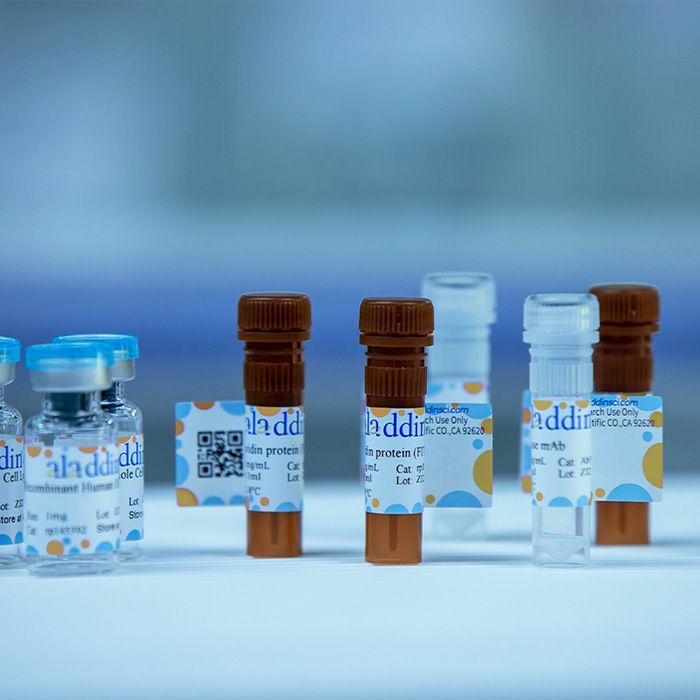
TIM4 Rat mAb - Anticuerpo primario, specific to TIM 4, Rat IgG2a

Cat. No.: Ab131283
Disponible para pedir
CALIDAD & PUREZA Carrier Free ? Carrier-free — supplied without added carrier protein/stabilizer. Use when carriers (e.g. BSA) would interfere with conjugation or sensitive assays. Azide Free ? Azide-free — without sodium azide preservative. Use in conjugations, cell work, or assays where azide is toxic or inhibitory. Validated ? Validated grade — performance confirmed in defined applications before release. Use when you want documented assurance the reagent works as stated. PBS Only ? PBS-only formulation — supplied in phosphate-buffered saline with no other additives. Use when you need a clean PBS buffer free of stabilizers/carriers. ≥95%(SDS-PAGE) See COA
Application
Blocking, Flow Cytometry, Functional Assay, IF/ICC
Host species
consejo
Reactive species
Ratón
Isotype
Rat IgG2a
Clone Number
RMT4-54
Conjugation
Unconjugated
★
Talla
Alemania (EU)
USA*
Precio
Cantidad
10μg
Ab131283-10μg
Fabricado bajo pedido · 8–12 semanas
58,92€
50μg
Ab131283-50μg
Fabricado bajo pedido · 8–12 semanas
173,46€
100μg
Ab131283-100μg
Fabricado bajo pedido · 8–12 semanas
260,23€
1mg
Ab131283-1mg
Fabricado bajo pedido · 8–12 semanas
364,36€
Enter a quantity for the sizes you want to add.
🧪
Por qué esta calidad

Carrier Free,Azide Free,Validated,PBS Only,≥95%(SDS-PAGE),See COA Azide Free,Carrier Free,PBS Only,Validated para flujos de trabajo cromatográficos y analíticos sensibles que requieren una interferencia mínima de la línea base.

🌡

Almacenamiento y envío

Store at 2-8°C,Do not freeze Envío Wet ice,Do not freeze. Consulte el COA específico del lote para conocer las especificaciones exactas.

📋

Documentos de calidad

SDS, COA, ficha técnica y hoja de especificaciones disponibles para descargar. COA específico del lote accesible mediante búsqueda por número de lote.

📚

Prueba documental

Citado en 0 publicaciones revisadas por pares sobre cromatografía, síntesis orgánica y reacciones de acoplamiento cruzado.

Descripción general

Rat anti Mouse TIM 4 Antibody, Monoclonal (RMT4-54), could be used for Flow, IF, ICC, in vitro TIM-4 blocking and so on.

Application:

Flow: Use at an assay dependent concentration.

IF/ICC: Use at an assay dependent concentration.

in vitro TIM-4 blocking: Use at an assay dependent concentration.
Protein Function
Phosphatidylserine receptor that enhances the engulfment of apoptotic cells. Involved in regulating T-cell proliferation and lymphotoxin signaling. Ligand for HAVCR1/TIMD1.

Especificaciones

Product Name
TIM4 Rat mAb - Anticuerpo primario, specific to TIM 4, Rat IgG2a
Sinónimos
Tim4 | B430010N18Rik | FLJ27515 | Smuckler | T-cell immunoglobulin and mucin domain containing 4 | T-cell immunoglobulin and mucin domain-containing protein 4 | T-cell membrane protein 4 | TIM4 | TIM-4 | TIMD4 | TIMD-4 | SMUCKLER antibody | Spleen, mucin-
Especificaciones y pureza
Carrier Free,Azide Free,Validated,PBS Only,≥95%(SDS-PAGE),See COA
Especies hospedadoras
consejo
Especificidad
TIM 4
Inmunógeno
Mouse TIM-4-Ig fusion protein
Conjugación
Unconjugated
Grado
Azide Free, Carrier Free, PBS Only, Validated
Isotipo
Rat IgG2a
Tipo de cadena ligera
kappa
SDS-PAGE
150 kDa
Método de purificación
Protein G purified
Concentración
See COA
Product Line
Productos biológicos
Almacenamiento y envío
Forma
Liquid
Condiciones de almacenamiento de almacenamiento
Store at 2-8°C,Do not freeze
Enviado en
Wet ice,Do not freeze
Estabilidad y almacenamiento
Shipped at 4°C. Store at 4°C long term (12 months). Do not freeze. Upon receipt, it is recommended to aliquot.
Aplicación
Aplicación
Dilution info
Flow Cytometry

Use at an assay dependent concentration.

IF/ICC

Use at an assay dependent concentration.

in vitro TIM-4 blocking

Use at an assay dependent concentration

Documentación

📋 Hoja de datos de seguridad (SDS)

Documento completo sobre peligros, manipulación, almacenamiento y cumplimiento normativo.

<<<<<<< HEAD Descargar SDS → ======= Descargar SDS → >>>>>>> release248-p3

✅ Certificado de análisis (COA)

Datos de calidad específicos del lote. Introduzca su número de lote para obtener el COA exacto.

Buscar COA →

📊 Ficha técnica

Resumen de referencia rápida de las especificaciones y aplicaciones del producto.

Ver ficha técnica →

🔬 Hoja de especificaciones

Atributos de calidad completos y criterios de aceptación para esta calidad.

Ver hoja de especificaciones →

Datos avanzados

Objetivos asociados (humanos)
TIMD4 Tbio T-cell immunoglobulin and mucin domain-containing protein 4 (0 Activities)
Activity TypeActivity Value -log(M)Mechanism of ActionActivity ReferencePublications (PubMed IDs)
Certificados (CoA, COO, BSE/TSE y tabla de análisis)
C of A & Other Certificates(BSE/TSE, COO):
Analytical Chart:

Find and download the COA for your product by matching the lot number on the packaging.

4 results found

Lot NumberCertificate TypeFechaArticulo
ZJ25F0420806ZJ25F0420806Certificate of AnalysisFeb 10, 2026 Ab131283
ZJ25F0420807ZJ25F0420807Certificate of AnalysisFeb 10, 2026 Ab131283
ZJ25F0420808ZJ25F0420808Certificate of AnalysisFeb 10, 2026 Ab131283
ZJ25F0420809ZJ25F0420809Certificate of AnalysisFeb 10, 2026 Ab131283
Calculadoras de soluciones
Reseñas

Reseñas de cliente

Application Protocols

Tested/validated applications, recommended dilutions, and positive control materials are Not specified for this item; refer to CoA/Spec Sheet.

General note (not item-specific, for planning only):

  • Typical antibody applications include flow cytometry, immunohistochemistry, immunofluorescence, Western blotting, ELISA, and immunoprecipitation. Starting dilutions and protocols must be determined empirically and confirmed against item-specific validation data when available.

For Ab131283, rely on the manufacturer’s CoA/Spec Sheet for authoritative application guidance.

Biological Roles

Target context (TIM4; general literature background, not product performance claims):

  • TIM4 (T-cell immunoglobulin and mucin domain-containing protein 4) is a phosphatidylserine (PtdSer) receptor predominantly expressed on subsets of antigen-presenting cells, including tissue-resident macrophages and certain dendritic cell populations.
  • Function: Binds PtdSer exposed on apoptotic cells, mediating their recognition and engulfment (efferocytosis). This contributes to tissue homeostasis and resolution of inflammation.
  • Immune modulation: Through apoptotic cell clearance and potential costimulatory interactions, TIM4 influences antigen presentation and peripheral tolerance. Reported roles include shaping T-cell responses indirectly via macrophage/dendritic cell function (literature).
  • Structural notes: Member of the TIM family with an N-terminal IgV-like domain responsible for ligand binding and a mucin-rich stalk. Cytoplasmic tail lacks canonical signaling motifs; internalization and signaling often occur via associated adaptors (literature).
  • Research applications (general): Detection/localization of TIM4-expressing cells, immunoprecipitation of TIM4 complexes, and functional blockade or capture in phagocytosis assays. Specific tested applications for this SKU are Not specified for this item; refer to CoA/Spec Sheet.

This background is provided for conceptual orientation. Refer to the product’s CoA/Spec Sheet for item-specific validation data and species reactivity.

Buffer Applications
  • Supplied matrix: PBS Only (per Product Data). Exact composition (e.g., 10 mM phosphate, 137 mM NaCl, 2.7 mM KCl, pH ~7.4) is common for PBS but is Not specified for this item; refer to CoA/Spec Sheet.
  • Preservatives: Azide Free. If antimicrobial control is required post-opening, users may add suitable preservatives or sterile-filter and maintain asepsis, ensuring compatibility with downstream assays.

Practical tips for antibody handling in buffers (general good practice):

  • Working buffers: PBS or TBS at pH 7.2–7.6 with 0.01–0.05% Tween-20 can reduce nonspecific binding in immunoassays; inclusion of 0.1–1% BSA or casein provides blocking where carrier-free status is not required.
  • Low-protein binding plastics: Reduce loss when working at ≤1 μg/mL.
  • Sterility: Use sterile techniques to maintain azide-free yet contamination-free solutions.
  • Divalent cations: Typically not required; if present (e.g., in HBSS), assess impact on assay performance.

Buffer preparation notes (general):

  • PBS stock (10×) can be prepared and diluted with ultrapure water; adjust pH at room temperature. Filter (0.22 μm) for sterility.

All buffer compositions specific to this SKU, including pH and ionic strength at shipment, are Not specified for this item; refer to CoA/Spec Sheet.

Green Alternatives

Conventional “green solvent” substitutions do not apply to this protein reagent. Environmental impact considerations for antibody usage focus on buffer selection and waste minimization rather than solvent replacement.

General laboratory sustainability tips for antibody work:

  • Use ready-to-use buffers when possible to reduce chemical waste; prepare PBS concentrates to minimize packaging.
  • Avoid sodium azide if downstream biological assays require live cells or enzymes—this item is already azide-free.
  • Minimize single-use plastics by employing reusable racks and certified-wash glassware where protein adsorption will not compromise results.
  • Plan experiments to avoid repeated freeze–thaw (here: do not freeze at all); aliquot once under sterile conditions to limit waste due to degradation.

There are no direct greener “alternatives” to the antibody itself; select formats (e.g., recombinant or engineered binders) based on your scientific needs and institutional sustainability policies.

Pharmaceutical Uses

This product is designated For research use only and is not intended for diagnostic or therapeutic use.

General formulation/bioprocess context (not specific to this SKU’s regulatory status):

  • Antibodies can function as capture/detection reagents in bioanalytical assays supporting process development (e.g., ELISA, ligand-binding assays), where carrier- and azide-free formulations are often preferred to avoid interference.
  • Excipients: Carrier-free status indicates absence of stabilizing proteins (e.g., BSA), providing a cleaner background for quantitative assays and conjugation chemistry. Users may add pharmacopeial-grade excipients in their downstream research workflows if needed.

Regulatory and compendial notes specific to this item:

  • No pharmacopeial monograph or GMP status is provided for Ab131283. Any use in manufacturing, diagnostics, or clinical applications would require separate qualification; this product is supplied for laboratory research only.

For research formulation work, consult institutional guidelines and the product’s CoA/Spec Sheet for any available information on concentration, excipients, and sterility.

Physical Properties

Item-specific physico-chemical specifications are not provided for this antibody preparation; see CoA/Spec Sheet for exact lot data.

Item data provided:

  • Grade/Purity: Carrier Free, Azide Free, Validated, PBS Only (see Quality & Grades)
  • Appearance: Not specified for this item; refer to CoA/Spec Sheet.

General/literature properties for IgG-class antibodies (context, not specifications):

  • Molecular weight: typically ~150 kDa for full-length IgG; Fab fragments ~50 kDa; scFv ~25–30 kDa.
  • Isoelectric point (pI): commonly in the 6–9 range, isotype- and sequence-dependent.
  • Solubility: high in aqueous physiological buffers (e.g., PBS); poor in most neat organic solvents.
  • Stability: sensitive to freeze–thaw; stability enhanced by controlled temperature (2–8°C), neutral pH, and avoidance of surface adsorption/agitation.
  • Extinction coefficient: sequence-dependent; a rough estimate for intact IgG is A280 ≈ 1.4 for 1 mg/mL (literature). Use item-specific E280 if provided on CoA.
  • Aggregation: can occur with temperature stress, extremes of pH, or mechanical shear; filtration (0.22 μm) and gentle handling mitigate risk.

Do not interpret the above literature values as specifications for Ab131283. For lot-specific concentration, buffer composition (PBS details), and protein content, consult the CoA/Spec Sheet.

Quality and Grades

Item-specific quality designations (from Product Data):

  • Carrier Free: Formulated without protein carriers (e.g., BSA). Advantages include greater assay sensitivity, compatibility with surface immobilization, and clean mass/proteomic readouts. Handle gently to minimize adsorption at low concentrations; consider adding inert protein only in your downstream workflow if required.
  • Azide Free: No sodium azide preservative present. This is critical for azide-sensitive applications (e.g., HRP-based assays, live-cell work, metabolic labeling, or click-chemistry precursors that are azide-incompatible). Use sterile technique and small aliquots to mitigate microbial risk.
  • Validated: The product has been validated by the manufacturer (scope not specified). Refer to CoA/Spec Sheet for the specific applications, species reactivity, and validation data included for this SKU.
  • PBS Only: Supplied in phosphate-buffered saline. Exact PBS composition (pH, ionic strength) is not specified here; refer to CoA/Spec Sheet.

What this means for your workflow:

  • Conjugation-readiness: Carrier- and azide-free formulations are typically well-suited for chemical labeling (e.g., NHS-ester dyes, maleimide tags) and for functional studies where preservatives interfere. Verify buffer components (e.g., amines, glycerol) on the CoA before conjugation.
  • Chromatography and MS: The absence of carrier proteins minimizes background and ion suppression in LC–MS proteomics following immunocapture.
  • Reproducibility: Maintain the specified cold-chain (2–8°C) and avoid freeze–thaw to preserve validated performance characteristics.
Reaction and Applications

This section typically details chemical reaction use-cases; however, this product is a monoclonal antibody reagent and is not used as a solvent or small-molecule reactant.

  • Not typically applicable: The antibody is intended for immunological and biochemical assays rather than for participation in organic/organometallic reactions.
  • For practical guidance, see: Biological Roles (TIM4 context), Target Specificity, Application Protocols, and Buffer Applications.

If you plan to chemically conjugate this antibody (e.g., fluorophores, biotin), consult the Quality & Grades and Storage sections and the CoA/Spec Sheet for buffer composition to ensure compatibility with the chosen conjugation chemistry.

Reaction Conditions

Not applicable to chemical reactions. This product is not intended for use as a reagent in organic or inorganic reaction optimization.

General note on antibody conjugation workflows (context only):

  • Common chemistries: NHS esters (lysine labeling) at pH 7.5–8.5; maleimides (cysteine labeling) at pH ~6.5–7.5 after mild reduction; click-ready handles via NHS–azide/alkyne linkers if compatible with assay design (note: this SKU is azide-free, which may be advantageous when introducing azides deliberately).
  • Buffers: Avoid primary amines for NHS labeling (e.g., Tris) and avoid free thiols for maleimide chemistry. PBS composition for this item is Not specified; verify on CoA.

These are general literature practices and not specifications or validated conditions for Ab131283.

Safety and Handling
  • GHS classification: Not specified for this item; refer to SDS.
  • Signal word, H-statements, pictograms: Not specified for this item; refer to SDS.

General laboratory safety guidance for antibody solutions:

  • Use standard PPE: lab coat, safety glasses, and appropriate gloves.
  • Avoid aerosol generation and contact with skin/eyes. Wash thoroughly after handling.
  • Storage per product data: Store at 2–8°C. Do not freeze. Ship on wet ice; keep cold upon receipt.
  • Incompatibilities: Avoid strong acids/bases and oxidizers that may denature proteins. Do not mix with sodium azide–containing buffers if azide-free status must be preserved for downstream applications (e.g., live-cell assays, enzyme conjugations).
  • Special risks: Protein biologics can denature with repeated freeze–thaw, vigorous vortexing, or prolonged exposure to elevated temperatures. Adsorption to untreated polypropylene/Glass can occur at very low concentrations; consider low-bind plastics when working at sub-μg/mL levels.

First-aid overview (general):

  • Skin/eye contact: Rinse with water for several minutes. Remove contaminated clothing. Seek medical attention if irritation persists.
  • Ingestion/inhalation: Move to fresh air and seek medical attention as needed.

Always consult the official Safety Data Sheet (SDS) for authoritative and complete safety information for this product.

Solvent Selection

This product is an aqueous antibody preparation designated “PBS Only” and is intended to be used in physiological buffer systems rather than organic solvents.

  • Primary medium: Phosphate-buffered saline (PBS). Exact pH and ionic strength are not specified for this item; refer to CoA/Spec Sheet.
  • Miscibility: Fully miscible with water and common biological buffers (e.g., TBS, HEPES, culture media) when appropriately diluted.
  • Not recommended: Neat organic solvents (e.g., acetone, acetonitrile, methanol, DMSO) can denature antibodies. If organic cosolvent is unavoidable (e.g., surface coating steps), keep below denaturing thresholds and validate activity.

When to choose PBS vs alternatives (general guidance):

  • PBS: Routine immunoassays, cell handling, and storage at neutral pH.
  • TBS: Some immunoassays prefer TBS to reduce phosphate interference with detection chemistries; evaluate empirically.
  • Additives: Since this item is carrier- and azide-free, end-users may add blocking proteins (BSA, casein), detergents (0.01–0.05% Tween-20), or preservatives in their downstream workflow if compatible with the assay.

Note: Maintain the azide-free/carrier-free status if those attributes are required by your application.

Storage and Reconstitution

Item-specific storage and shipping (from Product Data):

  • Storage: Store at 2–8°C.
  • Do not freeze.
  • Shipped on wet ice; keep cold upon receipt.

Additional practical guidance:

  • Upon first use, record the receipt date and create aliquots under sterile conditions if multiple openings are anticipated. Since this SKU is azide-free and carrier-free, aseptic handling minimizes microbial contamination and adsorption losses.
  • Avoid repeated cap opening at room temperature; keep the vial on ice during setup. Do not vortex vigorously—mix by gentle inversion.
  • Reconstitution: Not specified for this item; refer to CoA/Spec Sheet. If the product is supplied liquid (common for PBS-only antibodies), use as provided. If lyophilized (not indicated here), follow the CoA for reconstitution volume, buffer, and equilibration time.
  • Freeze–thaw: Not applicable—do not freeze this product. Discard any portion that has been inadvertently frozen or shows precipitation/turbidity inconsistent with the CoA.

Always consult the CoA/Spec Sheet for concentration, buffer composition, and any stabilizers, and follow institution SOPs for storage and traceability.

Research Use Note: For research use only.

Structure and Identity
  • Product: TIM4 Rat mAb (SKU: Ab131283)
  • Category: Monoclonal antibody reagent for research use
  • Antigen/Target name (from product title): TIM4 (T-cell immunoglobulin and mucin domain-containing protein 4)
  • Host species: Rat monoclonal antibody (mAb)
  • CAS: Not specified for this item; refer to CoA/Spec Sheet.
  • InChIKey: Not applicable to antibodies.
  • SMILES: Not applicable to antibodies.
  • Molecular formula: Not specified for this item; refer to CoA/Spec Sheet.
  • Molecular weight: Not specified for this item; refer to CoA/Spec Sheet. (Typical IgG ~150 kDa, literature)

Structural features (general, literature):

  • Typical IgG architecture comprising two heavy chains and two light chains linked by disulfide bonds, forming a Y-shaped heterotetramer.
  • Variable domains (VH/VL) confer antigen recognition to TIM4; constant domains (CH1–CH3/CL) mediate Fc-related properties. Exact isotype/subclass for this item is not specified.
  • Antibodies are high-molecular-weight glycoproteins; glycosylation pattern and isotype are item-specific and not provided here.

2D/2D-like description (general):

  • Two identical Fab arms (antigen-binding fragments) connected to an Fc stem via hinge disulfides; each Fab contains one heavy- and one light-chain variable domain forming the paratope that recognizes an epitope on TIM4. Epitope, clone designation, and isotype are Not specified for this item; refer to CoA/Spec Sheet.
Synthetic Utility

Not applicable. This product is a monoclonal antibody reagent and is not used as a synthetic building block or reagent in chemical synthesis.

For end-users contemplating chemical modification (e.g., fluorophore, biotin, or enzyme conjugation), see Quality & Grades for buffer considerations and ensure compatibility of the conjugation chemistry with an azide-free, carrier-free PBS matrix. Item-specific buffer components and concentrations are Not specified for this item; refer to CoA/Spec Sheet.

Target Specificity

Only information present in the product data is reported here.

  • Antigen/Target name (from product title): TIM4 (T-cell immunoglobulin and mucin domain-containing protein 4)
  • Antibody type: Rat monoclonal antibody (mAb)
  • Clone, isotype, epitope, species reactivity, and cross-reactivity: Not specified for this item; refer to CoA/Spec Sheet.

No additional target or clone details are provided in the supplied data.

¿Necesita ayuda para elegir la calidad?

Nuestra guía de selección de calidades cubre la pureza, el estado del estabilizador y la idoneidad de la aplicación para todas las variantes de nuestro catálogo.

Ver la guía de calidades Carrier Free → Ver la guía de calidades Validated → Ver la guía de calidades Azide Free → Ver la guía de calidades PBS Only →

Artículos relacionados

Rat IgG - Anticuerpo de control isotípico, IgG
Goat Anti-Rat IgG H&L Antibody - Anticuerpo secundario, Goat IgG
Goat Anti-Rat IgG H&L (Biotin) - Anticuerpo secundario, Goat IgG
Rat IgG (Biotin) - Anticuerpo de control isotípico, IgG
Rat IgG (PE) - Anticuerpo de control isotípico, IgG
Rat IgG (FITC) - Anticuerpo de control isotípico, IgG
Rat IgG (APC) - Anticuerpo de control isotípico, IgG
TIM4 Rat mAb - Anticuerpo primario, specific to TIM 4, Rat IgG1
Rat IgG2a-kappa, anti-Spike RBD - Anticuerpo de control isotípico, specific to Spike RBD, Rat IgG2a
Rat IgG2b-kappa, anti-Spike RBD - Anticuerpo de control isotípico, specific to Spike RBD, Rat IgG2b
Rat IgG1-kappa - Anticuerpo de control isotípico, Rat IgG1
Rat IgG (AF405) - Anticuerpo de control isotípico, IgG
Rat IgG (AF647) - Anticuerpo de control isotípico, IgG
Rat IgG (AF700) - Anticuerpo de control isotípico, IgG
Rat IgG (AF555) - Anticuerpo de control isotípico
Rat IgG2b-kappa (Biotin), anti-Spike RBD - Anticuerpo de control isotípico, specific to Spike RBD
Rat IgG2b-kappa (APC), anti-Spike RBD - Anticuerpo de control isotípico, specific to Spike RBD
Rat IgG2b-kappa (FITC), anti-Spike RBD - Anticuerpo de control isotípico, specific to Spike RBD
Rat IgG2b-kappa (AF555), anti-Spike RBD - Anticuerpo de control isotípico, specific to Spike RBD
Rat IgG2b-kappa (AF647), anti-Spike RBD - Anticuerpo de control isotípico, specific to Spike RBD
Rat IgG2a-kappa (AF405), anti-Spike RBD - Anticuerpo de control isotípico, specific to Spike RBD
Rat IgG2a-kappa (AF647), anti-Spike RBD - Anticuerpo de control isotípico, specific to Spike RBD
Rat IgG2a-kappa (FITC), anti-Spike RBD - Anticuerpo de control isotípico, specific to Spike RBD
Rat IgG2a-kappa (APC), anti-Spike RBD - Anticuerpo de control isotípico, specific to Spike RBD
Rat IgG2b-kappa (AF700), anti-Spike RBD - Anticuerpo de control isotípico, specific to Spike RBD
Rat IgG2b-kappa (AF405), anti-Spike RBD - Anticuerpo de control isotípico, specific to Spike RBD
Rat IgG2a-kappa (AF700), anti-Spike RBD - Anticuerpo de control isotípico, specific to Spike RBD
Rat IgG (PE-Cy5) - Anticuerpo de control isotípico
Rat IgG (APC-Cy7) - Anticuerpo de control isotípico
Rat IgG2a-kappa (AF555), anti-Spike RBD - Anticuerpo de control isotípico, specific to Spike RBD
Rat IgG (AF488) - Anticuerpo de control isotípico
Rat IgG (PE-Cy7) - Anticuerpo de control isotípico
TIM4 Rat mAb (AF647) - Anticuerpo primario, specific to TIM 4

¿Quieres que te enviemos un mensaje cuando tengamos descuentos disponibles?

Recordármelo más tarde

¡Gracias! Por favor, revisa tu bandeja de entrada de correo electrónico para confirmar.

¡Vaya! Las notificaciones están desactivadas.