CALIDAD & PUREZAMoligand™?Moligand™ — Aladdin's line of ligands and bioactive small molecules. Use for receptor, pathway, and binding studies needing defined small-molecule tools.10mM in DMSO
Urolithin C, a gut-microbial metabolite of Ellagic acid, is a glucose-dependent activator of insulin secretion . Urolithin C is a L-type Ca 2+ channel opener and enhances Ca 2+ influx. Urolithin C induces cell apoptosis through a mitochondria-mediated pathway and also stimulates reactive oxygen species (ROS) formation
In Vitro
Urolithin C (20-100 μM; 1 hour; INS-1 cells) treatment enhances glucose-induced extracellular signal-regulated kinases 1/2 (ERK1/2) activation in INS-1 β-cells. Urolithin C significantly inhibits the proliferation of PC12 cells. Urolithin C treatment actively increases the lactate dehydrogenase (LDH) release and lipid peroxidation malondialdehyde (MDA), stimulates reactive oxygen species (ROS) formation and mitochondrial membrane depolarization, and caused calcium dyshomeostasis. Urolithin C treatment induces apoptosis and S phase cell cycle arrest. MCE has not independently confirmed the accuracy of these methods. They are for reference only. Western Blot AnalysisCell Line: INS-1 cells Concentration: 20 μM, 100 μM Incubation Time: 1 hour Result: Enhanced glucose-induced extracellular signal-regulated kinases 1/2 (ERK1/2) activation.
In Vivo
The pharmacokinetics of Urolithin C (10 mg/kg; intraperitoneal administration) in male Wistar rat (140-160 g) are studied. The half-life of the terminal part is 11.3 h and the total clearance (CL/F) is 3.41 L/h/kg. The initial volume of distribution (V 1 /F) and the steady-state volume of distribution (Vss/F) are 0.831 L/kg and 55.6 L/kg, respectively. MCE has not independently confirmed the accuracy of these methods. They are for reference only.
IC50& Target:Insulin secretion, L-type Ca 2+ channel, Reactive oxygen species (ROS),Apoptosis
Especificaciones
Especificaciones y pureza
Moligand™, 10mM in DMSO
Mecanismos bioquímicos y fisiológicos
Urolithin C, a gut-microbial metabolite of Ellagic acid, is a glucose-dependent activator of insulin secretion . Urolithin C is a L-type Ca 2+ channel opener and enhances Ca 2+ influx. Urolithin C induces cell apoptosis through a mitochondria-mediated pat
Condiciones de almacenamiento de almacenamiento
Store at -80°C
Enviado en
Dry ice packs + Cold packs
Este producto requiere envío en cadena de frío. Los servicios terrestres y otros servicios económicos no están disponibles.
Grado
Moligand™
Nombres e identificadores
Isómeros SMILES
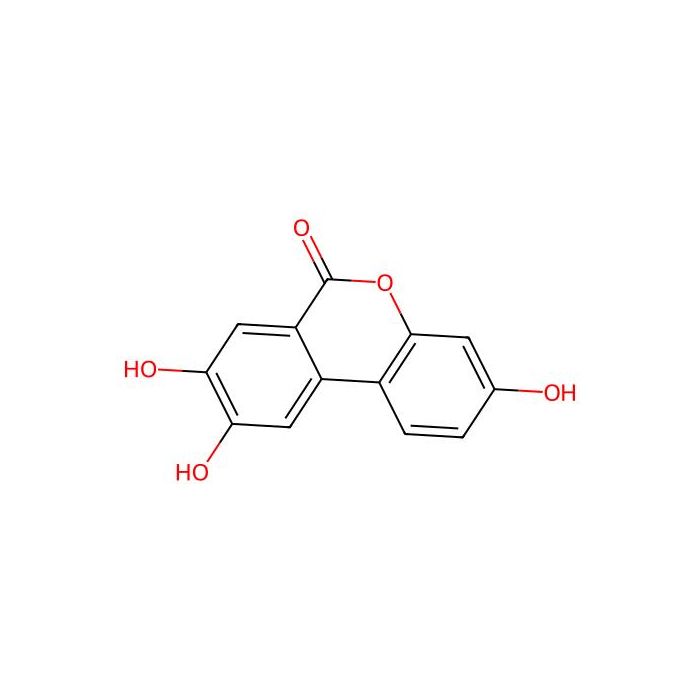
C1=CC2=C(C=C1O)OC(=O)C3=CC(=C(C=C23)O)O
PubChem CID
60198001
Peso molecular
244.20
Datos avanzados
Certificados (CoA, COO, BSE/TSE y tabla de análisis)
C of A & Other Certificates(BSE/TSE, COO):
Analytical Chart:
Calculadoras de soluciones
Molarity Calculator
Determine the necessary mass, volume, or concentration for preparing a solution.
Dilution Calculator
Determine the dilution needed to prepare a stock solution.
Reconstitution Calculator
Reseñas
Reseñas de cliente
Application Protocols
No manufacturer-validated application protocols are provided for this item. The following general practices are commonly used for small-molecule screening compounds and analytical standards (guidance only):
Stock preparation:
Dissolve in anhydrous DMSO to 10–50 mM. Vortex and, if necessary, sonicate briefly. Filter through 0.2 µm PTFE for particle removal.
Aliquot to minimize freeze–thaw and store at −80°C in sealed vials or plates.
Biochemical/biophysical assays:
Dilute DMSO stocks into buffer to a final DMSO content of ≤0.1–1% v/v. Include vehicle controls.
Verify solubility at the highest assay concentration by visual inspection or nephelometry.
LC–MS quantitation (reference standard workflow):
Prepare a calibration curve (e.g., 0.5–1000 ng/mL) in matrix-matched diluent.
Use reversed-phase LC with water–acetonitrile or water–methanol and volatile modifiers. Monitor in negative ESI for [M–H]−; confirm with product ions.
Stability checks:
Perform short-term stability in the intended matrix (bench-top, autosampler, freeze–thaw) to ensure reliable quantitation or screening readouts.
All procedures should be tailored to your instrumentation and assay design. Refer to the CoA/SDS for any lot-specific handling information.
Biological Roles
Contextual information on the urolithin chemical class (literature; not item-specific biological claims):
Origin and pathway:
Urolithins are microbiome-derived metabolites formed from dietary ellagitannins and ellagic acid. Urolithin C is one member of this family, typically described as a tri-hydroxylated urolithin formed along the dehydroxylation/hydroxylation cascade in the gut (literature).
Chemical biology features:
Polyphenolic lactone architecture supports hydrogen bonding and π–π interactions with biomolecular targets, which is useful in probe design and biophysical binding studies.
The phenolic groups can undergo phase II metabolic conjugation (e.g., glucuronidation, sulfation) in biological systems (literature trend for polyphenols).
Analytical standards:
Urolithin C is often used as a reference material for method development and quantitation of ellagitannin-derived metabolites in biofluids and tissues using LC–MS/MS.
Redox and stability considerations:
Phenolic urolithins may display antioxidant activity in chemical assays; however, responses are assay- and context-dependent and should not be generalized to biological efficacy.
Note: This product is provided strictly for research use. No medical, health, or clinical claims are made or implied. Biological behavior depends on system context, concentration, and metabolic transformations; users should validate all findings in their specific experimental setups.
Buffer Applications
This product is a small-molecule polyphenolic lactone and is not itself a buffering reagent. Therefore, it is not typically used to prepare buffer systems.
Practical guidance for working with Urolithin C in buffered systems (general):
Dissolution: prepare concentrated DMSO stocks and dilute into the target buffer while mixing vigorously to avoid precipitation. Keep final DMSO low (≤0.1–1% v/v) and consistent across controls.
pH considerations: neutral to slightly acidic buffers (pH 5.5–7.4) help minimize base-catalyzed lactone opening; avoid prolonged exposure to strong base.
Common assay buffers: PBS, HEPES, or acetate buffers are compatible with typical biochemical assays; confirm solubility and spectral interference at the intended wavelength.
Filtration: if particulates are observed after dilution, pass through a 0.2 µm PTFE or PES filter prior to use.
If your goal is to prepare a buffer system, please refer to dedicated buffering agents (e.g., phosphate, HEPES, Tris), as this compound does not provide a defined buffering range.
Green Alternatives
For handling Urolithin C in research workflows, the main environmental impact comes from solvent selection for dissolution, purification, and analysis. The compound itself is the research target; greener choices thus focus on media and processes.
Greener dissolution media (compared to DMF/NMP):
Ethanol or isopropanol: renewable, lower toxicity; may support moderate working concentrations; pair with mild heating/sonication.
PEG-400: co-solvent for higher apparent solubility in aqueous systems; consider viscosity and assay interference.
Aqueous buffers with minimal DMSO (≤0.5%) and cyclodextrin or mild surfactants to enhance solubility (evaluate assay compatibility).
Workup and purification:
Favor ethyl acetate, methyl tert-butyl ether (MTBE), or 2-methyltetrahydrofuran (2-MeTHF) over chlorinated solvents where feasible.
For chromatography, use ethanol/ethyl acetate–heptane gradients instead of dichloromethane when separation permits.
Analytical considerations:
In LC, water–ethanol or water–acetonitrile systems with volatile buffers reduce halogenated waste; adopt shorter columns and UHPLC to minimize solvent use.
Tradeoffs (balanced view):
DMSO offers superior solubilization but is less volatile and harder to remove; ethanol is greener but may not reach high stock concentrations.
2-MeTHF is a greener ether alternative yet can form peroxides; implement routine peroxide testing and inhibitor management.
Selection should be guided by solubility requirements, assay tolerance to cosolvents, and institutional green chemistry policies.
Pharmaceutical Uses
This product is sold for research use only and is not an excipient or active pharmaceutical ingredient for clinical use.
Contextual information (general, non-clinical):
Role in R&D: Urolithin-class compounds are sometimes evaluated in preformulation or discovery settings as small-molecule leads or reference metabolites. Such activities are strictly research-oriented, including permeability, stability, and metabolism studies.
Excipient status: Urolithin C is not a common pharmacopeial excipient. No compendial monograph is implied by this listing.
Formulation experiments (research context):
Solubilization screens may include DMSO, ethanol, PEG-400, or lipid-based vehicles, with subsequent dilution into aqueous media.
Solid-state work might explore polymorph/solvate states and co-crystal formation with suitable coformers to tune solubility and stability.
Compliance statements:
No therapeutic or diagnostic claims are made for this product.
For any work beyond basic research (e.g., GLP studies), users must establish their own quality and regulatory frameworks and verify analytical controls, impurity profiles, and stability data.
Consult your institutional guidelines for handling research chemicals in drug discovery workflows.
Physical Properties
Item-specific physicochemical specifications have not been provided for this listing.
Item-specific values:
Appearance: Not specified for this item; refer to CoA/Spec Sheet.
Melting point, boiling point, density, refractive index, UV cutoff, water/peroxide/metal content: Not specified for this item; refer to CoA/Spec Sheet.
Literature and general reference values for urolithin-type polyphenolic lactones (context only; not specifications):
Expected physical form: crystalline solid (typical for urolithins; literature).
Solubility profile (typical):
Water: very low solubility; may require organic cosolvents or alkalinization (literature).
Organic solvents: soluble in DMSO and DMF; sparingly to moderately soluble in methanol/ethanol/acetonitrile depending on hydration/state (literature).
Ionization: phenolic pKa values often in the 7–10 range; lactone carbonyl non-ionizable but susceptible to base-catalyzed ring opening (general phenolic/lactone behavior; literature).
LogP: polyphenolic lactones are usually moderately lipophilic but more polar than simple coumarins due to multiple OH groups (literature trend; exact value not provided here).
Practical notes (general):
Prepare concentrated stocks in dry DMSO (e.g., 10–50 mM) for screening; dilute into aqueous buffers with vigorous mixing and minimal final DMSO (≤0.1–1% v/v) to mitigate precipitation.
For analytical work, confirm solvent and wavelength response via method scouting (HPLC/UPLC), as phenolic aromatics can exhibit strong UV absorbance in the 240–330 nm region (literature trend).
Quality and Grades
Supplied grade: Moligand™ (from Product Data).
What Moligand™ typically implies (context for library/screening compounds; not a regulatory standard):
Emphasis on fitness for high-throughput screening, ligand discovery, and medicinal chemistry hit validation.
Prioritizes identity confirmation (e.g., NMR/HRMS/LC-MS) and sufficient purity for biochemical/biophysical assays; detailed purity and analytical thresholds are lot-dependent and reported on the CoA/Spec Sheet.
May include structural curation for desirable physicochemical space (e.g., compliance with common screening rules) and minimized pan-assay interference substructures, as appropriate for the panel.
Item-specific notes:
Exact purity, residual solvents, water content, metal content, and UV specifications: Not specified for this item; refer to CoA/Spec Sheet.
Stabilizers or additives: Not specified for this item; refer to CoA/Spec Sheet.
Best practices for screening-quality small molecules:
Verify identity and purity by orthogonal methods in-house (e.g., LC-UV-ESI-MS, quantitative NMR) before critical studies.
Document salt/solvate form, if any; small changes in form can influence solubility and assay response.
For plate-based work, maintain consistent DMSO histories and freeze–thaw cycles to limit variability.
Regulatory note: This product is intended for research use only; not intended for diagnostic or therapeutic applications.
Reaction and Applications
Manufacturer Applications: Not provided beyond the product listing; this Moligand™ entry is suitable for small-molecule screening and ligand discovery in research contexts.
Research and assay applications (general for urolithins):
Chemical biology: used as reference ligands or chemical probes in phenolic–protein interaction studies and in redox/antioxidant assay development (literature context; assay-dependent).
Metabolite research: serves as a standard for microbiome-derived ellagitannin metabolite profiling in biological matrices by LC–MS.
Synthetic and analytical applications (literature context):
Derivatization handles: multiple phenolic OH groups enable O-alkylation, O-acylation, and carbonate formation to modulate lipophilicity and permeability.
Core reactivity: the conjugated lactone can participate in nucleophilic ring opening under basic conditions, allowing access to hydroxy acid derivatives and re-lactonization strategies.
Analytical characterization: strong UV chromophore supports detection at 254–320 nm; MS readily detects deprotonated [M–H]− in negative ESI.
Practical tips:
Maintain anhydrous, oxygen-limited conditions during moisture- or air-sensitive derivatizations; phenolics can slowly oxidize.
For high-throughput screening, confirm solubility at working assay concentrations across pH 6.5–7.5 and include cosolvent controls to deconvolute vehicle effects.
For LC–MS, evaluate both acidic (0.1% formic acid) and neutral/basic modifiers (ammonium acetate) to balance ionization and chromatographic performance.
All uses are for research purposes only.
Reaction Conditions
General literature-style conditions for transforming polyphenolic lactone scaffolds like Urolithin C (guidance only; optimize for your substrate and scale):
O-alkylation:
Typical: alkyl halide (e.g., MeI, benzyl bromide), base (K2CO3, Cs2CO3), polar aprotic solvent (acetone, DMF), 0–25°C to reflux, 1–24 h. Protect other phenols to control selectivity.
O-acylation/carbonate formation:
Acyl chloride or anhydride with base (pyridine, Et3N) and catalytic DMAP in DCM, MeCN, or toluene, 0°C to rt, 0.5–6 h. Monitor to avoid overacylation.
Lactone opening/re-lactonization:
Opening: dilute Na2CO3/NaOH or alkoxide in MeOH/EtOH or aqueous THF at 0–25°C, minutes to hours.
Closure: acidify to pH ~1–2 or use dehydrating agents (DCC/DMAP or acid catalysis) to restore lactone.
NBS/NCS in polar aprotic solvent, 0–25°C; regioselectivity depends on phenol protection pattern. Follow with Suzuki–Miyaura using Pd(0/II), base (K3PO4), and boronic partners in dioxane/H2O or MeCN/H2O at 60–100°C.
Analytical monitoring:
LC–MS with water–acetonitrile (0.1% formic acid) or ammonium acetate buffers; UV 254–320 nm for phenolic aromatics.
Expected yields vary widely by substitution and protection strategy; conduct small-scale scouting to establish chemoselectivity and stability. Carefully exclude moisture/oxygen during sensitive steps to limit oxidative side reactions of phenolic moieties.
Safety and Handling
Authoritative safety guidance is provided in the SDS; consult it before use. Product Data for this listing does not include item-specific hazard classification.
Item-specific hazard information:
Signal word: Not specified for this item; refer to SDS.
H-statements: Not specified for this item; refer to SDS.
GHS classification/pictograms: Not specified for this item; refer to SDS.
General laboratory handling for polyphenolic lactones (context; not item-specific):
PPE: use lab coat, nitrile gloves, and safety glasses as a baseline; handle powders in a fume hood to minimize inhalation of dust.
Avoid generating dust/aerosols; weigh using antistatic tools and closed balances when possible.
Incompatibilities: strong bases may open the lactone ring; strong oxidants can degrade phenolic functions; avoid prolonged exposure to light and air to limit oxidation.
Hygroscopicity and stability: phenolic solids can oxidize slowly; maintain under inert atmosphere for long-term storage where practical.
First-aid overview (general):
Inhalation: move to fresh air; seek medical attention if symptoms persist.
Skin/eye contact: rinse with water for several minutes; remove contaminated clothing; seek medical advice if irritation continues.
Ingestion: rinse mouth; do not induce vomiting; obtain medical assistance.
Spills and disposal:
Small spills: collect with damp disposable wipes or HEPA vacuum; avoid dusting.
Waste: dispose according to institutional and local regulations for organic laboratory chemicals.
Note: This product is for research use only.
Solvent Selection
Urolithin C is a polyphenolic lactone with limited aqueous solubility and good compatibility with polar aprotic solvents.
Polarity and miscibility (literature trends):
Readily soluble: DMSO, DMF, NMP.
Moderately soluble: methanol, ethanol, acetonitrile, acetone (solubility increases with warming and dryness).
Poorly soluble: water at neutral pH; solubility may improve at basic pH via phenolate formation, noting potential lactone opening under strong base.
Practical selection by application:
Biochemical screening: prepare concentrated DMSO stocks (e.g., 10–50 mM) and dilute into aqueous buffers to ≤0.1–1% v/v DMSO final. Filter through 0.2 µm if precipitation risk exists.
Spectroscopy/analytical: methanol or acetonitrile (HPLC-grade) with aqueous modifiers for LC-UV/LC-MS; verify peak shape across pH 2–7.
Synthetic manipulation: dry polar aprotics (DMSO/DMF) for O-alkylation/acylation; non-protic aromatics (toluene) or ethers as needed depending on transformation.
Comparison to alternatives (general):
DMSO vs DMF: DMSO offers broader solubilization and lower volatility; DMF may be preferable when sulfur-containing media are undesirable.
Alcohols (MeOH/EtOH): greener but may not reach high stock concentrations; can engage in H-bonding and transesterification under strong base/acid.
Compatibility cautions:
Avoid strong basic aqueous media during long incubations to minimize lactone hydrolysis.
Limit exposure to acidic chlorinated solvents if acylation or chlorination side reactions are a concern during synthesis.
Storage and Reconstitution
Item-specific conditions (from Product Data):
Storage: Store at −80°C.
Shipping: Dry ice packs + Cold packs.
Reconstitution guidance (general best practices for small-molecule screening compounds):
Primary solvent: dissolve in anhydrous DMSO to prepare concentrated stocks (e.g., 10–50 mM). Gently warm (≤40°C) or sonicate briefly if needed; avoid prolonged heating.
Aliquoting: dispense single-use aliquots in amber vials or 96/384-well plates under dry, inert gas when possible to minimize oxidation and moisture uptake.
Working solutions: dilute into assay buffer immediately before use, keeping final DMSO low (≤0.1–1% v/v). If turbidity occurs, reduce concentration or add co-solvent and filter (0.2 µm PTFE/PES).
Stability considerations (general):
Protect from light and air to limit phenolic oxidation. Minimize freeze–thaw cycles by using small aliquots.
For long-term storage, maintain at −80°C in tightly sealed containers with desiccant; document storage history.
Unspecified parameters:
Hydration/solvate form, exact purity, and stabilizers: Not specified for this item; refer to CoA/Spec Sheet.
Note: For research use only. Always consult the SDS and CoA for lot-specific stability and handling instructions prior to use.
Structure and Identity
Concise overview of identity and core structural features for Urolithin C (SKU U655986).
Item-specific identifiers (from Product Data):
CAS: 165393-06-6
PubChem CID: 60198001
Grade: Moligand™
SMILES: Not specified for this item; refer to CoA/Spec Sheet.
InChIKey: Not specified for this item; refer to CoA/Spec Sheet.
Molecular formula: Not specified for this item; refer to CoA/Spec Sheet.
Molecular weight: Not specified for this item; refer to CoA/Spec Sheet.
Literature identity (for contextual reference; not item specifications):
The urolithin framework is a fused tricyclic system resembling a benzocoumarin: two benzene rings fused to a central lactone (pyran-2-one) ring.
Urolithin C is commonly represented as a tri-hydroxylated urolithin (literature), featuring phenolic hydroxyls at distinct positions around the polycyclic core and a conjugated lactone carbonyl.
Note: Exact constitutional details (e.g., position of hydroxyl substituents, canonical SMILES, and InChIKey) should be verified against the certificate of analysis (CoA) for this supplied lot.
Synthetic Utility
Urolithin C provides a versatile polyphenolic lactone scaffold useful in synthetic and medicinal chemistry explorations (literature context).
Functional group handles:
Phenolic OH groups: amenable to O-alkylation (e.g., MeI/Ag2O, alkyl halides/base), O-acylation (acyl chlorides/anhydrides with DMAP), and carbonate/urethane formation to modulate lipophilicity and stability.
Lactone: susceptible to nucleophilic opening under base, forming hydroxy acid intermediates; re-lactonization can restore the core under dehydrative conditions.
Core modifications:
Electrophilic aromatic substitution on suitably activated positions (subject to deactivation by phenols/lactone); regioselectivity governed by phenolic directing effects.
Halogenation (literature precedent with related scaffolds) can enable Pd-catalyzed cross-couplings (Suzuki, Buchwald–Hartwig after O-protection) to elaborate the aromatic rings.
O-protection (methyl/benzyl/tert-butyldimethylsilyl) facilitates harsh transformations and improves solubility control.
Retrosynthetic value:
Urolithin cores are commonly assembled via cyclization of appropriately substituted biaryl salicylic/catechol precursors or through oxidative coupling and lactonization strategies.
Analytical facilitation:
Strong UV chromophore simplifies reaction monitoring by TLC/HPLC. Negative-mode ESI-MS typically shows [M–H]−; positive-mode detection may require adduct promotion.
These features make Urolithin C a practical platform for SAR studies, prodrug design (via transient O-derivatization), and as a reference metabolite in synthesis/analytical method development. Validate conditions experimentally, as phenolic/lactone reactivity can be sensitive to base strength and protecting group strategy.
Target Specificity
Not applicable. This product is a small organic molecule (Urolithin C) and not a biologic or affinity reagent. No antigen, epitope, clone, isotype, or species-reactivity details apply.
If using Urolithin C as a chemical probe in target engagement studies, users must establish target specificity empirically (e.g., thermal shift assays, SPR/ITC, chemoproteomics) and report conditions and controls. No target specificity is provided or implied in this product listing.
Preguntas frecuentes
How should this product be stored?
Store at ?80 °C. Ultra-low temperature storage is required to maintain the specified shelf life.
What is Moligand??
Moligand? is one of Aladdin Scientific's premium product lines, formulated for high-purity applications across multiple workflows. Compared to standard grades in the same workflow, Moligand? products typically offer tighter specifications, more rigorous QC, and stronger lot-to-lot consistency.
How is this product shipped?
This product ships frozen with dry ice and cold packs. Unpack on arrival and transfer it to the storage condition stated above; handle dry ice with insulated gloves in a ventilated area.
What are the CAS number, molecular formula and molecular weight?
The CAS Number is 165393-06-6, the molecular formula is C13H8O5, and the molecular weight is 244.20 g/mol.
What documentation is provided?
Available product documentation, including Certificates of Analysis (COA), Safety Data Sheets (SDS), and specification sheets, is shown in the product document area. Document availability and access follow the current site policy.
¿Necesita ayuda para elegir la calidad?
Nuestra guía de selección de calidades cubre la pureza, el estado del estabilizador y la idoneidad de la aplicación para todas las variantes de nuestro catálogo.
Utilizamos cookies para garantizar el correcto funcionamiento del sitio web y, cuando esté permitido, para mejorar su experiencia. Puede gestionar sus preferencias en cualquier momento en Configuración. Más información en nuestra Política de Cookies.
¿Quieres que te enviemos un mensaje cuando tengamos descuentos disponibles?
Recordármelo más tarde
¡Gracias! Por favor, revisa tu bandeja de entrada de correo electrónico para confirmar.
Products are supplied to verified businesses, institutions, and qualified professionals for research and development use only. Not for use in humans, animals, diagnosis, or therapy.