≥98% per flussi di lavoro cromatografici e analitici sensibili che richiedono un'interferenza minima della linea di base.
🌡
Stoccaggio e spedizione
Store at 2-8°C Spedizione Wet ice. Consultare il COA specifico del lotto per le specifiche esatte.
📋
Documenti di qualità
SDS, COA, scheda tecnica e scheda delle specifiche disponibili per il download. COA specifico del lotto accessibile tramite ricerca per numero di lotto.
📚
Prova documentale
Citato in 2 pubblicazioni peer-reviewed su cromatografia, sintesi organica e reazioni di accoppiamento incrociato.
Panoramica
2-Aminopurine (2-AP) is used to specifically inhibit double-stranded RNA-dependent protein kinase, protein kinase R (PKR).
Product Application:
2-Aminopurine has been used to inhibit eukaryotic initiation factor-2α (eIF2α)-phosphorylation of osteoarthritis (OA) chondrocytes.
2-Aminopurine (2-AP) is used to specifically inhibit double-stranded RNA-dependent protein kinase, protein kinase R (PKR).
2-Aminopurine (2AP) is an analog of guanosine and adenosine, which can base pair with cytosine and thymine. It is used as a fluorescent probe in nucleic acid structure and dynamics. 2-Aminopurine (2-AP) inhibits double-stranded RNA-dependent protein kinas
Condizioni di conservazione di stoccaggio
Store at 2-8°C
Spedito in
Wet ice
Questo prodotto richiede spedizione a catena fredda. I servizi di terra e altri servizi economici non sono disponibili.
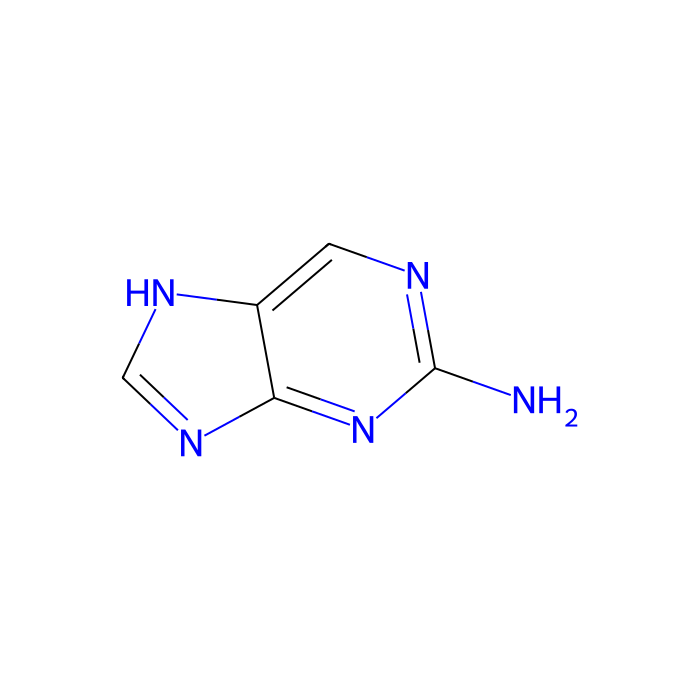
This compound belongs to the class of organic compounds known as purines and purine derivatives. These are aromatic heterocyclic compounds containing a purine moiety, which is formed a pyrimidine-ring ring fused to an imidazole ring.
External Descriptors
nucleobase analogue - 2-aminopurines
1. Djoumbou Feunang Y, Eisner R, Knox C, Chepelev L, Hastings J, Owen G, Fahy E, Steinbeck C, Subramanian S, Bolton E, Greiner R, and Wishart DS. ClassyFire: Automated Chemical Classification With A Comprehensive, Computable Taxonomy. Journal of Cheminformatics, 2016, 8:61.
Determine the necessary mass, volume, or concentration for preparing a solution.
Dilution Calculator
Determine the dilution needed to prepare a stock solution.
Reconstitution Calculator
Recensioni
Recensioni dei clienti
Application Protocols
Item-specific validated protocols are not provided in the Product Data for this SKU. The following are general, literature-based procedures to help design experiments with 2-aminopurine (not item-specific specifications):
A) Preparation of 2-AP-labeled oligonucleotides
Solid-phase synthesis: Use commercially available 2-AP phosphoramidite under standard DNA synthesis cycles. Incorporate at desired position(s). After deprotection and purification (HPLC), verify by MALDI/ESI-MS.
B) Fluorescence melting assay
Prepare complementary oligonucleotides with a single 2-AP substitution.
Buffer: 10 mM phosphate, 100 mM NaCl, pH 7.4.
Anneal by heating to 90 °C for 2 min and slow cooling to room temperature.
Measure fluorescence (Ex ~305 nm, Em ~365 nm) while ramping temperature (e.g., 10–90 °C at 0.5–1 °C/min). Monitor emission decrease upon duplex formation/stacking.
C) Real-time enzyme kinetics with 2-AP
Set up reactions with 2-AP-containing DNA/RNA substrates.
Record fluorescence vs time to monitor base flipping (e.g., glycosylases) or unwinding (helicases). Maintain DMSO ≤1% if used as cosolvent.
D) Stock solution handling
Dissolve 2-AP in DMSO (10–50 mM) or 0.01–0.1 M HCl; dilute into assay buffer immediately before use. Filter if necessary (0.2 µm).
Controls and calibration
Include unlabeled controls to quantify background.
Determine extinction coefficient in your buffer by recording absorbance spectra to accurately convert A to concentration.
Always adapt conditions to your instrumentation and oligonucleotide sequences.
Biological Roles
Scope: 2-Aminopurine is not a natural metabolite; it is a synthetic base analog of adenine used to interrogate nucleic acid structure and dynamics.
Literature-based biological context (no clinical claims):
Base pairing: 2-AP can form hydrogen-bonded pairs with thymine/uracil and, under some conditions, with cytosine through alternative tautomeric forms. These altered pairing preferences underlie its classic use in mutagenesis studies and fidelity assays in vitro.
Polymerase interactions: Certain DNA/RNA polymerases accept 2-AP nucleotides (e.g., 2-APTP) with varying efficiencies, allowing kinetic measurements of incorporation, mismatch extension, and exonuclease proofreading through fluorescence readouts.
Nucleic acid conformational sensing: When embedded in oligonucleotides, 2-AP fluorescence reports local stacking/unstacking, base flipping (e.g., in DNA repair glycosylases), and tertiary interactions in ribozymes/aptamers.
Protein–nucleic acid binding: Fluorescence changes upon protein binding enable determination of binding stoichiometry, dissociation constants, and conformational transitions without external fluorophore labels.
Photophysics as a reporter: The excited-state dynamics of 2-AP are exquisitely sensitive to microenvironment polarity and quenchers (e.g., neighboring guanine), allowing mapping of sequence-dependent dynamics.
Practical notes:
Incorporation site matters: Place 2-AP at positions with minimal quenching (avoid adjacent G where possible) for higher signal.
All uses are for research laboratory studies of nucleic acid behavior; not intended for diagnostic or therapeutic applications.
Buffer Applications
Not a buffer component per se, but buffer choice is critical for dissolving and using 2-aminopurine in fluorescence/biophysical assays.
Practical guidance (literature/general):
Common systems: Phosphate (10–50 mM, pH 7.0–8.0), Tris (10–50 mM, pH 7.5–8.5), and HEPES (10–50 mM, pH 7.0–8.0) are widely used. Avoid high concentrations of primary amines (in Tris) if they interfere with downstream coupling chemistries.
pH effects: Protonation at lower pH can reduce fluorescence quantum yield and shift λmax. Maintain a stable pH near neutrality unless intentionally probing pH effects.
Ionic strength: 50–150 mM NaCl often stabilizes nucleic acid duplexes and can modulate stacking (thus fluorescence). Optimize for your sequence context.
Additives: Mg2+ (0–10 mM) for RNA folding/ribozyme studies; note that metal ions and aromatic quenchers (e.g., imidazole, guanine-rich contexts) can affect 2-AP emission.
Stock solutions: Prepare 10–50 mM stocks in DMSO or dilute acid (e.g., 0.01–0.1 M HCl), then dilute into buffer to final working concentrations (typically 0.5–50 µM in strands; verify by UV absorbance at the 2-AP λmax).
Filtration: For cell-free assays, 0.2 µm filtration of buffers minimizes particulate fluorescence/background.
Note: Recipe specifics (pH, concentrations) should be adapted to the nucleic acid system under study. Always document buffer composition when comparing fluorescence data.
Green Alternatives
Context: 2-Aminopurine is itself the functional probe/base analog; “alternatives” typically concern solvent systems and photoprobes rather than replacement of the core reagent.
Greener solvent choices (literature/general):
Aqueous-first strategy: Maximize water content for fluorescence assays. When cosolvent is needed, prefer small amounts of DMSO over DMF/DMAC/NMP due to better environmental and health profiles.
Replace chlorinated solvents in synthesis: Where compatible, use acetonitrile or 2-MeTHF instead of dichloromethane/1,2-dichloroethane for glycosylation steps. Evaluate promoter compatibility (e.g., TMSOTf) carefully.
Energy efficiency: Dissolve by mild heating/sonication rather than prolonged reflux; for nucleoside synthesis, microwave heating can reduce time and improve selectivity if validated.
Alternative fluorescent base analogs (trade-offs; literature):
tCO/tCnitro: Higher quantum yields and excitation in the visible; however, more complex synthesis and bulkier structures that may perturb duplex structure more than 2-AP.
6-MI/DMAP-r analogs: Different spectral windows and stacking behaviors; can reduce UV excitation requirements but may alter base pairing.
Comparison snapshot:
2-AP: Simple base analog; UV excitation (~305 nm); strong environment sensitivity; minimal structural perturbation but lower brightness in stacked contexts.
Visible-range dyes (Cy3, Alexa): Higher brightness and visible excitation but require linkers and can strongly perturb nucleic acid structure.
Recommendation: For minimal structural perturbation with environmental sensitivity, 2-AP remains attractive. Optimize buffer composition and minimize hazardous solvents to align with green-chemistry principles.
Pharmaceutical Uses
This product is supplied for research use only.
Contextual, non-clinical information (literature/general):
Role in manufacturing R&D: 2-Aminopurine can serve as a heterocyclic starting material for the synthesis of nucleoside and nucleotide analogs used in discovery research. Its exocyclic amine and purine ring enable derivatization toward prodrugs or tool compounds.
Excipient status: Not used as a pharmaceutical excipient to common knowledge. There is no established pharmacopeial monograph specifically for 2-aminopurine as a drug substance or excipient.
Analytics and process development: Due to its intrinsic UV absorbance and fluorescence, 2-AP derivatives can be used as internal probes for assay development, stability studies of oligonucleotide formulations, or as tracers in process characterization (non-clinical).
Impurity standards: In nucleoside/nucleotide synthesis routes, 2-AP-related species may appear as process impurities in research-scale manufacturing; authentic standards can aid in method development (HPLC/UPLC, LC–MS).
Important: No medical, diagnostic, or therapeutic use is intended or implied. For any work related to human use or cGMP manufacturing, consult appropriate regulatory guidance and obtain materials with documented compliance and specifications.
Physical Properties
Item-specific specifications:
Appearance: Not specified for this item; refer to CoA/Spec Sheet.
Literature/general physical data (for reference; not item-specific specifications):
Molecular formula: C5H5N5 (literature)
Molecular weight: ~135.12 g/mol (literature)
Melting point: reported high melting/decomposition in the ~315–325 °C range (literature; values vary with purity and method).
Boiling point: not applicable (decomposes before boiling at ambient pressure).
Density: not widely reported for the solid; typically not critical for usage (literature).
Solubility: sparingly soluble in water at neutral pH; improved solubility in dilute mineral acids (e.g., 0.1 M HCl) and under basic conditions; readily soluble in DMSO and formamide (literature). Useful working aqueous concentrations for fluorescence assays are often in the low mM range with pH adjustment.
LogP/logD: expected very low/negative due to multiple nitrogens; specific values vary by method (literature).
pKa: multiple protonation sites; reported values in the approximate ranges pKa1 ~2–4 (ring N protonation) and pKa2 ~8–10 (exocyclic amine/basic nitrogens), method-dependent (literature). These govern charge state and fluorescence.
UV/Vis: strong absorption in the near-UV (around 305–310 nm) with environment-sensitive fluorescence emission typically 360–370 nm in aqueous media (literature; instrument- and matrix-dependent).
Hygroscopicity: not pronounced, but fine powders may adsorb moisture; store tightly closed (general guidance).
Always consult the item’s CoA/SDS for definitive, lot-specific values.
Quality and Grades
Item-specific details:
Grade/Purity: Not specified for this item; refer to CoA/Spec Sheet.
Guidance on grades for this compound class (general; not item-specific claims):
Research grade 2-aminopurine is typically supplied at high chemical purity suitable for biochemical assays and oligonucleotide synthesis. When fluorescence measurements are critical, additional controls on fluorescent impurities and UV-absorbers are beneficial.
For nucleic acid synthesis, specialized grades (e.g., “DNA-synthesis grade”) emphasize low levels of inorganic salts, trace metals, and UV-active contaminants, ensuring reproducible coupling efficiencies after conversion to phosphoramidites.
For HPLC/biophysical studies, low-UV background and well-defined extinction coefficients are desirable. Vendors may provide additional spectral QC (UV–Vis absorption, fluorescence quantum yield in standard buffers) specific to the lot.
Stabilizers: None are typically required for this heteroaromatic base; absence/presence of stabilizers should be confirmed on the CoA. If stabilizers are used, they can influence extinction coefficients and should be disclosed.
Documentation: Request CoA specifying identity (NMR, MS, HPLC/UPLC purity), residual solvents (GC), and water content (KF) where relevant. For trace specification limits (e.g., residual metals, UV cutoffs), rely on the item’s CoA/Spec Sheet if provided.
Takeaway: Select the grade that matches your application (fluorescence assays vs nucleoside synthesis), and verify lot-specific QC parameters in the CoA.
Reaction and Applications
Key research applications (literature; extendable from general manufacturer use in nucleic acid research):
Fluorescent base analog: 2-Aminopurine (2-AP) is an environmental fluorescence probe replacing adenine in DNA/RNA. Its emission is strongly quenched when base-stacked and increases upon exposure to solvent, enabling assays of base flipping, melting, protein binding, helicase/translocase action, and polymerase kinetics.
Oligonucleotide labeling/incorporation: Incorporated at the N9 position via solid-phase synthesis (2-AP phosphoramidites) or enzymatically as nucleotide triphosphate analogs in select polymerase systems. Enables monitoring of hybridization and conformational dynamics.
Photophysics: Excitation typically near 305–310 nm; emission 360–370 nm in water. Quantum yield and lifetime are highly environment-dependent, providing sensitivity to local structure.
Synthetic and transformation chemistry (literature):
Nucleoside synthesis: Glycosylation of 2-AP (after silylation) with protected ribose/deoxyribose donors (e.g., 1-O-acetyl sugars) under Lewis acid catalysis (TMSOTf, SnCl4) affords 2-AP nucleosides; N9/N7 selectivity is controlled by conditions.
Protection strategies: Temporary protection of the exocyclic N2 (e.g., benzoyl, isobutyryl) can modulate solubility and direct glycosylation.
Electrophilic substitution: Functionalization at C8 (e.g., halogenation) provides handles for further diversification.
Practical tips:
Maintain low background fluorescence: Use clean glassware, low-fluorescence plastics, and filtered buffers. Minimize aromatic contaminants.
For biophysical assays, prepare fresh solutions, protect from strong UV light, and verify absorbance at the 2-AP λmax to estimate concentration using published ε values.
In synthesis, rigorously dry conditions and careful control of promoter stoichiometry/temperature improve N9 selectivity and yields.
Reaction Conditions
General, literature-based guidance for common transformations of 2-aminopurine (not item-specific specifications):
Silylation and Vorbrüggen-type glycosylation
Silylation: Reflux 2-AP in hexamethyldisilazane (HMDS) with catalytic ammonium sulfate or TMSCl (80–120 °C, 2–6 h) to form the persilylated base.
Coupling: Add a protected sugar donor (e.g., 1-O-acetyl-2-deoxy-3,5-di-O-benzoyl-β-D-ribofuranose) in dry CH2Cl2, MeCN, or 1,2-dichloroethane. Promote with TMSOTf (1.5–3 equiv) at 0 °C to rt, then 25–60 °C as needed. Typical reaction times: 1–12 h. Isolated yields for N9-β nucleosides commonly 40–80%, with conditions and protection strategy affecting N9/N7 selectivity.
N2 protection/deprotection
Acylation: Treat 2-AP with acyl chlorides or anhydrides (e.g., BzCl) in pyridine or DMAP-catalyzed conditions at 0–25 °C to afford N2-acyl derivatives. Deprotect under ammonolysis (MeOH/NH3) or basic conditions compatible with downstream steps.
Electrophilic substitution at C8
Halogenation: Use NBS or NCS in acetic acid or DMF at 0–25 °C to introduce Br/Cl at C8. Reaction time 0.5–4 h. Monitor by TLC/LC–MS.
Cross-coupling: For 8-bromo derivatives, Pd-catalyzed Suzuki (aryl/alkenyl boronates) in dioxane/H2O or toluene/EtOH/H2O with bases like K2CO3, 60–100 °C, 2–16 h.
Stock solution preparation for fluorescence assays
Dissolve in DMSO to 10–50 mM; dilute into buffered aqueous media to final ≤1% DMSO. Protect from strong UV light. Verify concentration by UV absorbance at the 2-AP λmax.
Notes:
Moisture control is essential for Lewis-acid-mediated steps.
Protonation state (pH) significantly affects solubility and spectral properties in aqueous systems.
Safety and Handling
Item-specific hazard details (from Product Data):
GHS Classification: Not specified for this item; refer to SDS.
Signal Word: Not specified for this item; refer to SDS.
H-Statements: Not specified for this item; refer to SDS.
Pictograms: Not specified for this item; refer to SDS.
General safety information (literature/good laboratory practice; not a substitute for SDS):
Likely hazards: May cause irritation to eyes, skin, and respiratory tract as a fine organic powder. Avoid dust generation and inhalation.
PPE: Use appropriate lab coat, safety glasses or splash goggles, and suitable gloves (e.g., nitrile). Handle in a fume hood when weighing to minimize dust exposure.
First aid overview: If inhaled, move to fresh air; if on skin, wash with soap and water; if in eyes, rinse cautiously with water for several minutes; if ingested, rinse mouth and seek medical attention. Always follow institutional protocols and SDS guidance.
Fire and reactivity: Combustible organic solid. Use CO2, dry chemical, or foam to extinguish. Avoid strong oxidizers that may react exothermically with organic materials.
Incompatibilities: Strong oxidizing agents; strong acids/bases may alter protonation state/solubility but are not inherently incompatible from a safety standpoint when handled properly.
Dust control: Ground and bond when transferring large quantities of dry powder to mitigate static; use local exhaust where appropriate.
Note: For authoritative hazard classification and exposure limits, consult the product’s SDS.
Solvent Selection
Applicability: As a polar, hydrogen-bonding heteroaromatic base, 2-aminopurine behaves very differently from common organic reagents and is only modestly soluble in neutral water. Solvent choice is driven by target application (biophysical assay vs synthetic transformation).
General solvent behavior (literature):
Aqueous media: Sparingly soluble at neutral pH; solubility increases in mildly acidic buffers (e.g., acetate, citrate) or basic carbonate/borate buffers. Heating and sonication can help dissolution.
Polar aprotic: DMSO, DMF, and formamide dissolve 2-aminopurine well and are typical for stock solutions in fluorescence assays (subsequently diluted into buffer to ≤1–2% cosolvent).
Alcohols: Limited solubility in MeOH/EtOH; can be improved with heat or in presence of acid.
Nonpolar solvents (Et2O, hexanes, toluene): Essentially insoluble; not recommended.
Selection examples:
Fluorescence kinetics in DNA/RNA: Prepare a concentrated DMSO stock (e.g., 10–50 mM), dilute into phosphate or Tris buffer (pH ~7–8) to final DMSO ≤1% v/v.
Nucleoside synthesis (Vorbrüggen-type): Use anhydrous, high-boiling, polar aprotic solvents (e.g., MeCN, 1,2-dichloroethane, CH2Cl2) after prior silylation in HMDS; promoters such as TMSOTf are moisture-sensitive, so rigorously dry conditions are essential.
Comparison (practical):
DMSO vs DMF: DMSO offers better biocompatibility at low percentages and lower toxicity profiles; DMF may be preferred for some coupling reactions but is less desirable in bioassays.
Aqueous acidic vs basic buffers: Acidic solutions protonate ring nitrogens, boosting solubility but can quench fluorescence; mild basic pH often balances solubility with useful emission.
Storage and Reconstitution
Item-specific instructions (from Product Data):
Storage Conditions: Store at 2–8 °C.
Shipped In: Wet ice.
General guidance (literature/best practice; not item-specific specifications):
Container: Keep tightly closed in a dry, inert atmosphere. Protect from prolonged exposure to strong light to maintain photophysical integrity.
Stability: As a stable heteroaromatic solid, 2-aminopurine typically exhibits long shelf life when kept dry and cool. Always consult the CoA/SDS for retest/expiry information.
Reconstitution for stock solutions:
Aqueous acidic: Dissolve in 0.01–0.1 M HCl to prepare 1–50 mM stocks; neutralize upon dilution into buffer as needed.
Organic: DMSO stocks at 10–50 mM are convenient; store aliquots at 2–8 °C (short term) or −20 °C (long term) protected from light.
Filtration: If clarity is required, filter through 0.2 µm PTFE (for organic) or PES (for aqueous) filters.
Aliquoting: To avoid repeated freeze–thaw and moisture uptake, prepare single-use aliquots. Thaw at room temperature and use promptly.
Handling: Minimize dust generation during weighing. Allow the container to equilibrate to room temperature before opening to prevent condensation.
Note: For research use only. Always refer to the item’s CoA/Spec Sheet for lot-specific details and to the SDS for safety information.
Structure and Identity
Brief overview: 2-Aminopurine is an adenine analog (purine core bearing an exocyclic amino group at the 2-position). It is widely used as an environment-sensitive fluorescent base analog in nucleic acid research.
Item-specific facts (from Product Data):
SKU: A113172
CAS: 452-06-2
InChIKey: 230031 (as listed in Product Data)
Storage note appears under Storage & Reconstitution.
Literature/computed identifiers and descriptors (for reference; not item-specific):
Common name: 2-Aminopurine; 9H-purin-2-amine
Molecular formula (literature): C5H5N5
Molecular weight (literature): ~135.12 g/mol
Synonyms: 2-AP; 2-aminopurine base
Functional groups: bicyclic fused imidazole–pyrimidine (purine) system; exocyclic primary amine at C2; multiple ring nitrogens (tautomerizable), one ring NH in the 9H-tautomer.
2D structural description: A fused six-membered diazine ring and five-membered imidazole ring share a bond (purine). At the C2 position of the six-membered ring, an –NH2 substituent projects exocyclically. The ring contains multiple endocyclic nitrogens capable of protonation/deprotonation and hydrogen bonding; the N9 position is the typical glycosylation site in nucleoside synthesis.
Stereochemistry: none (achiral).
SMILES: Not specified for this item; refer to CoA/Spec Sheet.
General notes:
Tautomerism between 7H/9H forms can influence reactivity and spectral properties.
Often used as a base analog of adenine but with altered hydrogen-bonding and photophysics.
Synthetic Utility
Overview: 2-Aminopurine is a versatile heteroaromatic building block for nucleoside/nucleotide analog synthesis and further functionalization on the purine scaffold.
Key reactive features (literature):
Exocyclic primary amine (N2): Amenable to acylation, sulfonylation, carbamate formation, and protection (e.g., benzoyl, isobutyryl) to modulate solubility/reactivity during glycosylation.
N9/N7 ring nitrogens: Nucleophilic under appropriate conditions; N9 is the preferred site for glycosylation to form nucleosides. Reaction conditions influence N9/N7 selectivity.
Electrophilic C8 position: Susceptible to halogenation (e.g., NBS/NCS or elemental halogens under acidic conditions) enabling cross-coupling handles after metalation.
Representative transformations:
Vorbrüggen glycosylation: HMDS-mediated silylation of 2-AP followed by coupling with protected ribose/deoxyribose donors in the presence of Lewis acids (TMSOTf, SnCl4) affords β-nucleosides. Protecting the N2 can improve selectivity and yield.
N-alkylation and N-oxide chemistry: Alkylation at N9 (or N7) under phase-transfer or strong base; N-oxide formation can direct subsequent substitution patterns.
Cross-coupling derivatives: After C8 halogenation, Suzuki, Buchwald–Hartwig, or Sonogashira couplings deliver diversely functionalized analogs for probe development.
Phosphitylation: Conversion to nucleoside phosphoramidites for solid-phase DNA/RNA synthesis enables site-specific incorporation into oligonucleotides.
Practical notes:
Control moisture rigorously during Lewis-acid-promoted couplings.
Monitor N9/N7 isomer ratios by NMR; isomerization may occur under acidic/basic workups.
Use mild conditions for deprotection to avoid purine ring opening or depurination in nucleoside derivatives.
Target Specificity
Not applicable to this product type. 2-Aminopurine is a small-molecule base analog, not an antibody, enzyme, or biological target-specific reagent. For application relevance, see the sections “Reaction & Applications,” “Biological Roles,” and “Application Protocols.”
Domande frequenti
What is the purity of this product?
This product is supplied at ≥98% purity (chemical assay). Lot-specific values are stated on the Certificate of Analysis.
How should this product be stored?
Store at 2–8 °C. Refrigerated storage is required to maintain the specified shelf life.
How is this product shipped?
This product ships chilled on wet ice. Unpack on arrival and transfer it to the storage condition stated above.
What are the CAS number, molecular formula and molecular weight?
The CAS Number is 452-06-2, the molecular formula is C5H5N5, and the molecular weight is 135.13 g/mol. InChIKey MWBWWFOAEOYUST-UHFFFAOYSA-N.
What documentation is provided?
Available product documentation, including Certificates of Analysis (COA), Safety Data Sheets (SDS), and specification sheets, is shown in the product document area. Document availability and access follow the current site policy.
Utilizziamo i cookie per garantire il corretto funzionamento del sito web e, ove consentito, per migliorare la tua esperienza. Puoi gestire le tue preferenze in qualsiasi momento nelle Impostazioni. Per saperne di più, consulta la nostra Cookie Policy.
Desidera che le inviamo un messaggio quando avremo sconti disponibili?
Ricordamelo più tardi
Grazie! Controlli la sua casella di posta per confermare.
Products are supplied to verified businesses, institutions, and qualified professionals for research and development use only. Not for use in humans, animals, diagnosis, or therapy.

 L2219102