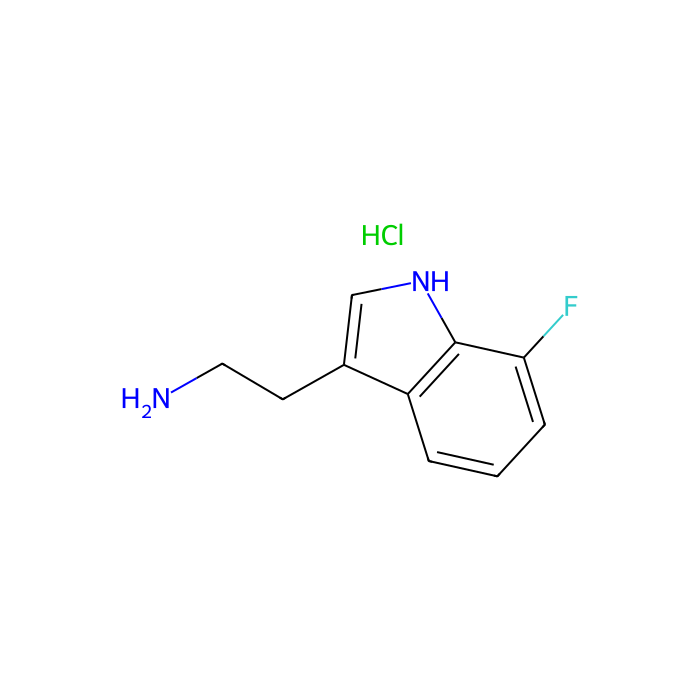
7-Fluorotryptamine HCl - ≥95% , CAS No.159730-09-3

CAS: 159730-09-3 Cat. No.: F353045 Formula: C10H12ClFN2 Peso molecolare: 214.671 Numero EC: 885-543-9
Disponibile su ordine
QUALITÀ & PUREZZA ≥95%
Synonyms
2-(7-fluoro-1H-indol-3-yl)ethan-1-amine hydrochloride|1H-Indole-3-ethanamine, 7-fluoro-, monohydrochloride|7-Fluorotryptamine hydrochloride|2-(7-Fluoro-1H-indol-3-yl)ethanamine hydrochloride|2-(7-fluoro-1H-indol-3-yl)ethanamine;hydrochloride|2-(7-Fluoro-1H-indol-3-yl)ethan-1-amine--hydrogen chloride (1/1)|2-(7-Fluoro-1h-indol-3-yl)-ethylamine, HCl|2-(7-Fluoro-1H-indol-3-yl)-ethylamine hydrochloride|2-(7-Fluoro-1H-indol-3-yl)ethylamine HCl|7-Fluorotryptamine (hydrochloride)|2-(7-Fluoro-1H-indol-3-yl)ethanamine,hydrochloride|7-Fluorotryptamine HCl
Storage
Store at 2-8°C
Shipped In
Wet ice
★
Dimensione
Germania (EU)
USA*
Prezzo
Qtà
10mg
F353045-10mg
—
5 Disponibile
129,21€
50mg
F353045-50mg
—
5 Disponibile
222,92€
250mg
F353045-250mg
—
5 Disponibile
780,88€
Enter a quantity for the sizes you want to add.

Specifiche

Sinonimi
2-(7-fluoro-1H-indol-3-yl)ethan-1-amine hydrochloride | 1H-Indole-3-ethanamine, 7-fluoro-, monohydrochloride | 7-Fluorotryptamine hydrochloride | 2-(7-Fluoro-1H-indol-3-yl)ethanamine hydrochloride | 2-(7-fluoro-1H-indol-3-yl)ethanamine;hydrochloride | 2-(7-Fluoro-1H-indol-3-yl)ethan-1-amine--hydrogen chloride (1/1) | 2-(7-Fluoro-1h-indol- Mostra altro
Specifiche e purezza
≥95%
Condizioni di conservazione di stoccaggio
Store at 2-8°C
Spedito in
Wet ice
Questo prodotto richiede spedizione a catena fredda. I servizi di terra e altri servizi economici non sono disponibili.
Purezza
≥95%
Nomi e identificatori
Pubchem Sid
Pubchem Sid Url
https://pubchem.ncbi.nlm.nih.gov/substance/504771282
SMILES
C1=CC2=C(C(=C1)F)NC=C2CCN.Cl
IUPAC Name
2-(7-fluoro-1H-indol-3-yl)ethanamine;hydrochloride
InChIKey
JWAZOMQARDNFMN-UHFFFAOYSA-N
InChI
1S/C10H11FN2.ClH/c11-9-3-1-2-8-7(4-5-12)6-13-10(8)9;/h1-3,6,13H,4-5,12H2;1H
Isomeri SMILES
C1=CC2=C(C(=C1)F)NC=C2CCN.Cl
Peso molecolare
214.671
Reaxy-Rn
24360138
Reaxys-RN_link_address
https://www.reaxys.com/reaxys/secured/hopinto.do?context=S&query=IDE.XRN=24360138&ln=

Dati avanzati

Taxonomic Classification

Taxonomy Tree

KingdomOrganic compounds
SuperclassOrganoheterocyclic compounds
ClasseIndoles and derivatives
SubclassTryptamines and derivatives
Intermediate Tree Nodes Not available
Direct ParentTryptamines and derivatives
Alternative Parents 3-alkylindoles  2-arylethylamines  Aralkylamines  Substituted pyrroles  Benzenoids  Aryl fluorides  Heteroaromatic compounds  Azacyclic compounds  Organopnictogen compounds  Organofluorides  Monoalkylamines  Hydrochlorides  Hydrocarbon derivatives  
Molecular FrameworkAromatic heteropolycyclic compounds
Substituents Tryptamine - 3-alkylindole - Indole - 2-arylethylamine - Aralkylamine - Aryl fluoride - Aryl halide - Benzenoid - Substituted pyrrole - Heteroaromatic compound - Pyrrole - Azacycle - Amine - Hydrochloride - Primary amine - Organonitrogen compound - Organofluoride - Organohalogen compound - Primary aliphatic amine - Hydrocarbon derivative - Organopnictogen compound - Organic nitrogen compound - Aromatic heteropolycyclic compound
DescrizioneThis compound belongs to the class of organic compounds known as tryptamines and derivatives. These are compounds containing the tryptamine backbone, which is structurally characterized by an indole ring substituted at the 3-position by an ethanamine.
External Descriptors Not available
Struttura 3D
Modello di struttura chimica interattiva


Certificati (CoA, COO, BSE/TSE e tabella di analisi)
C of A & Other Certificates(BSE/TSE, COO):
Analytical Chart:

Find and download the COA for your product by matching the lot number on the packaging.

6 results found

Lot NumberCertificate TypeDataOggetto
D23081152D23081152Certificate of AnalysisJan 20, 2026 F353045
D2308969D2308969Certificate of AnalysisJan 20, 2026 F353045
D2308975D2308975Certificate of AnalysisJan 20, 2026 F353045
D2308976D2308976Certificate of AnalysisJan 20, 2026 F353045
D2308981D2308981Certificate of AnalysisJan 20, 2026 F353045
D2308985D2308985Certificate of AnalysisJan 20, 2026 F353045
Proprietà chimiche e fisiche
Peso molecolare214.670 g/mol
XLogP3
Hydrogen Bond Donor Count3
Hydrogen Bond Acceptor Count2
Rotatable Bond Count2
Exact Mass214.067 Da
Monoisotopic Mass214.067 Da
Topological Polar Surface Area41.800 Ų
Heavy Atom Count14
Formal Charge0
Complexity174.000
Isotope Atom Count0
Defined Atom Stereocenter Count0
Undefined Atom Stereocenter Count0
Defined Bond Stereocenter Count0
Undefined Bond Stereocenter Count0
The total count of all stereochemical bonds0
Covalently-Bonded Unit Count2
Calcolatori di soluzioni
Recensioni

Recensioni dei clienti

Application Protocols

No tested bioassay or analytical application protocols are provided for this item in the Product Data. For general laboratory use of tryptamine hydrochloride salts:

  • Stock solution preparation (literature):
    • Dissolve in water, EtOH, or DMSO to prepare concentrated stocks (e.g., 10–100 mM depending on solubility). Filter-sterilize (0.22 µm) for cell-free biochemical assays if required.
  • Reaction setup (synthetic):
    • For acylations or reductive aminations, neutralize the HCl salt in situ with an organic base (e.g., DIPEA, TEA) before adding electrophiles or reductants.
  • Analytical QC:
    • Use HPLC with UV detection at 220–230 nm or 270–280 nm (indole chromophore) and confirm mass by LC–MS. Report concentrations as free base equivalents.

For any specific application, develop and validate protocols under your laboratory’s SOPs. Refer to the CoA/SDS for product-specific handling guidance.

Biological Roles

This product is for research use only. The following points summarize general biochemical context for tryptamine analogs and indole-containing small molecules; they are not medical claims.

  • Indole motif (literature):
    • Indole is a pervasive scaffold in natural products and metabolites. It participates in π–π and hydrogen-bonding interactions with proteins, often serving as a privileged structure in ligand design.
  • Tryptamine framework (literature):
    • Tryptamine is a biogenic amine derived from tryptophan decarboxylation and is a substrate for monoamine oxidases (MAO). Substitutions on the indole ring, such as fluorination at C-7, can modulate binding and metabolic stability in enzymatic and receptor systems.
  • Relevance of fluorine (literature):
    • Aryl fluorination can influence lipophilicity, pKa, and conformational preferences, potentially affecting membrane permeability and metabolic pathways (e.g., oxidative deamination rates by MAO).
  • Experimental utilities:
    • As a chemical probe precursor: 7-fluorotryptamine derivatives can be elaborated into fluorescent, affinity, or photo-crosslinking probes via amide/urea linkages to study protein–ligand interactions.
    • Radiolabel surrogacy: The presence of F suggests potential conceptual routes to 18F labeling in related scaffolds (not necessarily on this exact position), informing PET tracer development research (general concept; not specific to this item).

For any biological testing, ensure compound identity/purity, consider salt/base form, and report concentrations as free base equivalents where appropriate.

Buffer Applications

This compound is not a buffering agent and is not typically used to prepare defined pH buffer systems. If aqueous handling is required:

  • Dissolve the hydrochloride salt directly in deionized water or buffered media appropriate to your assay (literature: the protonated amine is stable in neutral aqueous solutions).
  • Adjust pH only if needed for compatibility with your system; be aware that strong base will convert the HCl salt to the free base, affecting solubility.

For buffer preparation guidance, see dedicated buffering reagents (e.g., phosphate, acetate, HEPES).

Green Alternatives

Opportunities to improve sustainability when working with 7-fluorotryptamine HCl focus on solvent choice, protection strategy minimization, and enabling aqueous or micellar conditions.

  • Greener solvent swaps (literature):
    • Replace DMF/NMP with safer alternatives when feasible:
      • 2-MeTHF or CPME for extractions and some couplings (less toxic, bio-based for 2-MeTHF).
      • EtOAc/Me-THF biphasic systems for acylations and workups.
      • Water or aqueous ethanol for Pictet–Spengler variants; micellar catalysis (e.g., TPGS-750-M) can enable reductive amination and acylations in water.
    • Prefer EtOH over MeOH for stock solutions where solubility permits (lower tox profile).
  • Process intensification (literature):
    • One-pot neutralization–coupling: liberate free base in situ with DIPEA and proceed directly to amide/urea formation, minimizing isolations and solvent use.
    • Flow chemistry for exothermic acylations or reductive aminations to improve heat/mass transfer and reduce solvent volumes.
  • Energy and waste reduction:
    • Run at ambient temperature when possible (e.g., EDC·HCl/HOAt/DIPEA couplings in EtOAc or MeCN).
    • Use catalytic hydrogenation (H2/Pd-C) in EtOH under low pressure for imine reductions instead of borohydrides where compatible.

Comparison (general):

  • DMF vs. MeCN: MeCN offers lower boiling point and easier recovery, though toxicity still requires care.
  • DCM vs. EtOAc: EtOAc is more benign and often an effective replacement for extractions and some couplings.

Note: Verify solubility and reaction performance with small-scale trials when implementing greener substitutions.

Pharmaceutical Uses

No excipient or pharmacopeial status is provided for this item; it is sold for research use only.

General formulation/manufacturing context for analogous small-molecule amine hydrochloride salts (literature):

  • Role as an intermediate: 7-fluorotryptamine HCl can serve as a synthetic intermediate toward API candidates or reference standards containing indole–ethylamine motifs.
  • Salt advantages in process chemistry:
    • Improved crystallinity and solid-state stability versus free base, aiding isolation and handling.
    • Enhanced aqueous solubility for telescoped steps, salt metathesis, or impurity purging.
  • Handling in formulation development (research-only):
    • Stock solutions in water, EtOH, or DMSO are common for in vitro screening.
    • When reporting dose or concentration, express as free base equivalents to standardize across salt forms.

No claims are made regarding therapeutic use, efficacy, safety in humans/animals, or regulatory status. For any development activities, generate full specifications (identity, purity, residual solvents, water, counterion content, solid form) according to internal QA systems.

Physical Properties

Item-specific specifications (grade-specific physicochemical limits) are not provided in the Product Data.

  • Appearance: Not specified for this item; refer to CoA/Spec Sheet.
  • Molecular weight and formula:
    • Not specified for this item; refer to CoA/Spec Sheet.
    • Literature/computed (for context):
      • Free base: C10H11FN2, Mr ≈ 178.21 g/mol
      • Hydrochloride salt: C10H12ClFN2, Mr ≈ 214.67 g/mol
  • Melting point:
    • Not specified for this item; refer to CoA/Spec Sheet.
    • General note (literature): many tryptamine HCl salts are crystalline solids with melting points typically in the 180–230 °C range, often with decomposition; specific value for this compound should be verified on the CoA.
  • Boiling point: Not applicable to the HCl salt (decomposes before boiling under ambient pressure); specific data not established in literature.
  • Solubility (literature, general behavior of aryl-tryptamine HCl salts):
    • Water: expected to be freely soluble due to protonated primary amine.
    • Alcohols (MeOH, EtOH): typically soluble to moderately soluble.
    • Polar aprotic solvents (DMSO, DMF): high solubility expected.
    • Nonpolar solvents (hexanes, toluene): poor solubility expected as the HCl salt; free base is more organic-soluble.
  • LogP/logD (literature expectation):
    • Free base: moderate polarity; aryl fluorination can slightly increase lipophilicity vs. unsubstituted tryptamine. No validated value located; consult primary data if critical.
  • pKa (literature, analogous tryptamines):
    • Primary amine pKaH typically ~9–10 (protonated in neutral water). Exact value for 7-fluoro analog not verified; consult primary sources.
Quality and Grades
  • Grade/Purity: Not specified for this item; refer to CoA/Spec Sheet.

Guidance for interpreting typical grades (general information):

  • Research/reagent grade tryptamine salts are supplied with assays usually by HPLC or NMR for identity and purity. When a purity specification is present (e.g., ≥98% HPLC), it indicates chromatographic area percent relative purity and excludes residual solvents/water unless separately specified.
  • Hydrochloride salts are often selected for:
    • Improved crystallinity and batch-to-batch handling consistency.
    • Enhanced aqueous solubility for biological assays or preparative steps.
    • Reduced volatility and odor versus the free base.
  • If stabilizers or special treatments are used (e.g., desiccants, light-protective packaging), they would be listed on the CoA/label; none are specified here.
  • Recommended verification upon receipt (best practices):
    • Confirm identity via 1H NMR (D2O or DMSO-d6) and MS (M+H+ expected for free base; salt shows [M+H]+ corresponding to the free amine). For indoles, monitor the characteristic indole N–H resonance.
    • Check water content by KF and inorganic chloride by ion chromatography or silver titration if these parameters are critical to your application. Absent item-specific specs, set in-house acceptance criteria as needed.
  • UV and chromatographic behavior (general):
    • Indole chromophore gives strong UV at ~220–230 nm and 270–280 nm (literature), facilitating HPLC detection.
Reaction and Applications

7-Fluorotryptamine HCl is a versatile heteroaromatic amine building block. The 3-(2-aminoethyl) indole motif underpins diverse synthetic and discovery chemistry, while the 7-fluoro substituent modulates electronics and metabolic stability.

  • Representative application areas (literature):
    • Ligand and probe synthesis: tryptamine analogs for SAR in GPCR/aminergic receptor ligand discovery (no clinical claims).
    • Alkaloid frameworks: Pictet–Spengler cyclizations of tryptamines with carbonyl compounds to access β-carbolines/tetrahydro-β-carbolines.
    • Amide/urea/sulfonamide libraries: acylation, carbamoylation, and sulfonylation at the primary amine.
    • Reductive amination: formation of secondary/tertiary amines from aldehydes/ketones.
    • N-Protection strategies: Boc/CBz/Fmoc protection of the side-chain amine; optional protection of indole N (e.g., with Boc) when selective chemistry is required.
  • Role of the 7-fluoro substituent (literature):
    • Influences pKa, lipophilicity, and ring electronics; can alter binding or metabolic profiles.
    • Aryl–F is generally robust; direct SNAr on the indole benzene ring typically requires strong conditions and activating groups; plan late-stage diversification accordingly.
  • Practical tips:
    • Use the HCl salt for weighing and aqueous operations; neutralize with a hindered base (e.g., DIPEA, TEA) in aprotic media to unleash nucleophilicity for coupling.
    • For Pictet–Spengler: employ protic or Lewis acids (TFA, AcOH, or TiCl4 variants) and control temperature to steer towards desired β-carboline stereochemistry (literature guidance).
    • Protect the indole N if selective side-chain transformations are needed; indole N-alkylation or acylation can compete under strong conditions.
Reaction Conditions

The following are general literature guidelines for common transformations of tryptamine derivatives; adjust to your substrate, scale, and safety requirements.

  • Amide formation (literature):
    • Solvent: DMF, DCM, or MeCN; Base: DIPEA (2–3 equiv); Coupling: HATU or EDC·HCl/HOBt; Temp: 0–25 °C; Time: 1–16 h. Monitor by HPLC/LC–MS.
  • Reductive amination (literature):
    • Solvent: MeOH or DCE/MeOH mixtures; Additives: AcOH (0.5–1 equiv) to promote imine formation; Reductant: NaBH3CN (1.2–2.0 equiv) at 0–25 °C or NaBH(OAc)3 in DCE/MeOH at rt; Typical time: 2–12 h.
    • Catalytic hydrogenation: EtOH or EtOAc/EtOH, H2 (1–3 bar), 10% Pd/C (5–10 wt%), 25–40 °C, 1–6 h.
  • Pictet–Spengler (literature):
    • Carbonyl partner: aldehyde (e.g., benzaldehyde); Catalyst: TFA (0.1–1 equiv) or AcOH (neat or solvent); Solvent: DCM, MeOH, or toluene; Temp: 0–25 °C; Time: 2–24 h. Diastereoselectivity may depend on acid strength and solvent.
  • N-Protection (Boc) (literature):
    • Reagents: Boc2O (1.2–1.5 equiv), Base: NaHCO3/Na2CO3 (aq) or DIPEA (org); Solvent: dioxane/water or THF; Temp: 0–25 °C; Time: 1–4 h.
  • Indole N-acylation/alkylation (literature):
    • Prefer prior protection of the side-chain amine to avoid mixtures; use mild bases (NaH, K2CO3) in DMF/THF, 0–25 °C.

Notes:

  • Begin from the HCl salt: add ≥1.1 equiv base to liberate the free amine; for carbodiimide couplings, include base to sequester HCl.
  • Light/air sensitivity of indoles: employ amber glass and inert atmosphere for long runs to minimize byproduct formation.
  • Expected yields vary widely (40–90%) depending on substrate and step; determine conditions by small-scale optimization.
Safety and Handling

Follow standard precautions for handling amine hydrochloride salts and indole derivatives in research settings. Always consult the SDS for authoritative, product-specific safety information.

  • GHS information (item-specific):
    • Signal Word: Not specified for this item; refer to CoA/Spec Sheet.
    • H-Statements: Not specified for this item; refer to CoA/Spec Sheet.
    • GHS Classification: Not specified for this item; refer to CoA/Spec Sheet.
    • Pictograms: Not specified for this item; refer to CoA/Spec Sheet.
  • Anticipated hazards (general for tryptamine salts):
    • May cause irritation to skin, eyes, and respiratory tract. Dust may be harmful if inhaled. Avoid ingestion and prolonged exposure.
  • PPE and engineering controls:
    • Wear lab coat, safety glasses or chemical splash goggles, and appropriate gloves (e.g., nitrile). Handle powders in a fume hood to minimize dust exposure. Use weighing boats with antistatic measures if needed.
  • First-aid overview (general):
    • Skin/eye contact: Rinse with water for ≥15 min; remove contaminated clothing; seek medical attention if irritation persists.
    • Inhalation: Move to fresh air; obtain medical attention if symptoms develop.
    • Ingestion: Rinse mouth; do not induce vomiting; seek medical attention.
  • Incompatibilities and stability (general):
    • Strong oxidizers may react with aromatic amines. Bases can free the amine from the HCl salt, potentially changing solubility/volatility. Indole nucleus can be light/air sensitive over long periods; minimize prolonged exposure to light and air.
  • Spill and disposal:
    • Avoid dust generation; collect with inert absorbent or HEPA vacuum. Dispose of according to local regulations for organic laboratory chemicals.
Solvent Selection

As an amine hydrochloride salt, 7-fluorotryptamine HCl is highly polar and typically water- and alcohol-soluble, while poorly soluble in nonpolar media. The free base exhibits broader solubility in organic solvents.

  • Polarity/miscibility (literature, general behavior):
    • Water: high solubility expected; suitable for aqueous reactions and bioassays.
    • Alcohols (MeOH, EtOH, iPrOH): good solubility; convenient for stock solutions and precipitation-driven purifications.
    • DMSO/DMF: excellent solubility; common as stock solvents for screening assays.
    • Nonpolar (toluene, hexanes): poor solubility for the HCl salt; convert to free base for use in apolar media.
  • Choosing salt vs. free base:
    • Use HCl salt when aqueous handling, precise dosing, or salt-driven crystallinity are priorities.
    • Convert to free base in situ (neutralize with base, extract) for nonpolar reactions or when amine nucleophilicity must be maximized in aprotic media.
  • Practical notes:
    • For HPLC or LC–MS, aqueous-organic mobile phases (water/MeCN or water/MeOH with formic acid) give strong UV signals due to the indole.
    • In peptide coupling or acylation, dissolve the HCl salt in DMF or DCM with a stoichiometric base (e.g., DIPEA) to liberate the free amine.
  • Brief comparison (literature):
    • DMSO vs. DMF: DMSO offers superior solubilization and greener profile; DMF may provide faster reaction kinetics in some couplings.
    • MeOH vs. EtOH: MeOH dissolves more readily; EtOH preferred for reduced toxicity or crystallizations.
Storage and Reconstitution
  • Storage conditions (item-specific): Store at 2–8 °C. Shipped on wet ice.
  • Container/atmosphere (best practice):
    • Keep tightly closed in original, light-protective container. Consider desiccation to limit moisture uptake; avoid prolonged light exposure due to potential indole sensitivity.
  • Stability (general for amine HCl salts):
    • Typically stable for months at 2–8 °C when protected from moisture and light. Minimize repeated warming–cooling cycles.
  • Reconstitution and solutions (general):
    • Aqueous: Dissolve directly in deionized water or aqueous buffer; gentle warming (room temperature) and vortexing can aid dissolution.
    • Organic: Highly soluble in DMSO; soluble in MeOH/EtOH. For nonpolar solvents, convert to free base prior to dissolution.
    • Sterile filtration: If aseptic solutions are required, pass through a 0.22 µm PTFE or PES filter.
  • Working aliquots:
    • Prepare single-use aliquots to avoid repeated freeze–thaw of solutions. For DMSO or aqueous stocks, store at 2–8 °C short term; for longer storage, consider −20 °C in amber vials. Validate stability under your conditions.
  • Specifications not provided:
    • Appearance, assay, water content, and related-item limits: Not specified for this item; refer to CoA/Spec Sheet.

Always consult the product label and SDS for definitive instructions.

Structure and Identity

7-Fluorotryptamine HCl is a substituted tryptamine presented as the hydrochloride salt; it features an indole core bearing a fluorine atom at the 7-position and a 2-aminoethyl side chain at C-3, protonated as the ammonium chloride salt.

  • Item-specific identifiers (from Product Data):
    • CAS: 159730-09-3
    • CID (PubChem): 53487481
    • InChIKey: 171622 (as provided)
    • SMILES: Not specified for this item; refer to CoA/Spec Sheet.
  • Structural features (general description):
    • Core: indole bicyclic ring system (benzene fused to pyrrole).
    • Substituents: fluorine at the benzene ring C-7; 2-aminoethyl chain at the indole C-3 (tryptamine motif), present as the protonated aminium with Cl− counterion.
    • Functional groups: primary amine (as ammonium chloride in the salt), halogenated aromatic (Ar–F), heteroaromatic NH (indole N–H).
    • Stereochemistry: achiral (no stereocenters).
  • Molecular formula and mass (literature/computed, free base vs. HCl salt; not item-specific):
    • 7-Fluorotryptamine (free base): C10H11FN2; Mr ≈ 178.21 g/mol (literature/computed)
    • 7-Fluorotryptamine hydrochloride: C10H12FN2·HCl (often written C10H12ClFN2); Mr ≈ 214.67 g/mol (literature/computed)
  • 2D structure in words:
    • An indole ring numbered with N at position 1; an ethylamino chain attaches at C-3. The benzene portion bears F at C-7 (meta to the ring fusion). The amine is protonated in the hydrochloride salt, with chloride as counterion.
Synthetic Utility

The molecule offers three principal reactive elements: a primary amine (as HCl salt), an indole N–H, and an aryl C–F substituent. Together, these enable diverse bond-forming tactics while the fluorine tunes electronics.

  • Primary amine transformations (literature):
    • Acylation/carbamoylation/sulfonylation to form amides, ureas, and sulfonamides (e.g., using acyl chlorides or coupling agents like EDC/HATU).
    • Reductive amination with aldehydes/ketones (NaBH3CN, NaBH(OAc)3, or catalytic hydrogenation).
    • N-alkylation (SN2) after liberating the free base; use base and appropriate solvents to minimize overalkylation.
    • Protection: Boc/CBz/Fmoc as needed for orthogonal strategies.
  • Indole nucleus (literature):
    • Electrophilic substitution typically at C-3/C-2; since the side chain occupies C-3, further functionalization may target N1 or benzene ring under directed conditions.
    • N1 protection (e.g., Boc) suppresses indole N reactivity and can alter regioselectivity.
  • Pictet–Spengler and related cyclizations (literature):
    • Condensation with aldehydes to form iminium ions, followed by cyclization to tetrahydro-β-carbolines; useful for alkaloid analog synthesis.
  • Aryl fluoride (literature):
    • Generally inert to mild nucleophiles; SNAr typically requires strong conditions and/or additional activating substituents. Consider metal-catalyzed C–H functionalization strategies elsewhere on the ring for diversification rather than relying on C–F activation.

Strategic note: The hydrochloride salt is ideal for weighing and storage; for reactions in aprotic media, neutralize in situ with organic base to generate the free amine.

Target Specificity

Not applicable to this product category. This item is a small-molecule chemical building block, not an antibody, enzyme, or biological with defined antigen/epitope specificity. No target specificity data are provided in the Product Data.

Domande frequenti

What is the purity of this product?
This product is supplied at ≥95% purity (chemical assay). Lot-specific values are stated on the Certificate of Analysis.
How should this product be stored?
Store at 2–8 °C. Refrigerated storage is required to maintain the specified shelf life.
How is this product shipped?
This product ships chilled on wet ice. Unpack on arrival and transfer it to the storage condition stated above.
What are the CAS number, molecular formula and molecular weight?
The CAS Number is 159730-09-3, the molecular formula is C10H12ClFN2, and the molecular weight is 214.671 g/mol. InChIKey JWAZOMQARDNFMN-UHFFFAOYSA-N.
What documentation is provided?
Available product documentation, including Certificates of Analysis (COA), Safety Data Sheets (SDS), and specification sheets, is shown in the product document area. Document availability and access follow the current site policy.

Desidera che le inviamo un messaggio quando avremo sconti disponibili?

Ricordamelo più tardi

Grazie! Controlli la sua casella di posta per confermare.

Ops! Le notifiche sono disabilitate.