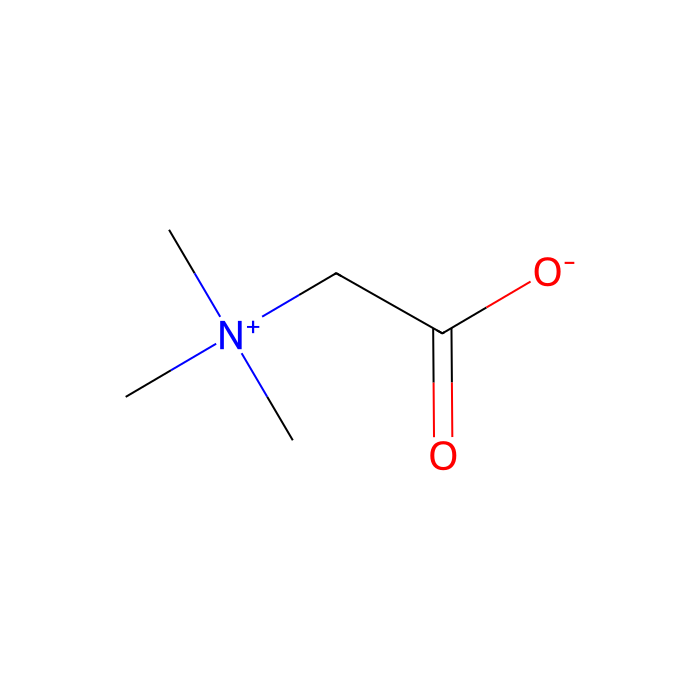
Betaine - Moligand™, 10mM in DMSO , CAS No.107-43-7

CAS: 107-43-7 Cat. No.: B420528 Formula: C5H11NO2 Peso molecolare: 117.15 Beilstein Registry Number: 3537113 Numero EC: 203-490-6
Disponibile su ordine
GRADE & PURITY Moligand™ ? Moligand™ — Aladdin's line of ligands and bioactive small molecules. Use for receptor, pathway, and binding studies needing defined small-molecule tools. 10mM in DMSO
Synonyms
betaine|107-43-7|glycine betaine|oxyneurine|Trimethylglycine|lycine|Abromine|Trimethylglycocoll|Glycocoll betaine|Glycylbetaine|Rubrine C|Jortaine|BETAINE, ANHYDROUS|acidin-pepsin|alpha-Earleine|trimethylammonioacetate|2-(trimethylazaniumyl)acetate|N,N,N-
Storage
Protected from light,Store at -80°C
Shipped In
Dry ice packs + Cold packs
★
Size
Germania (EU)
USA*
Price
Qty
1ml
B420528-1ml
—
1 Disponibile

29,42€

34,62€
Salva 5,21 € (15.04%)
Enter a quantity for the sizes you want to add.
🧪
Why this grade

Moligand™, 10mM in DMSO Moligand™ for sensitive chromatographic and analytical workflows requiring minimal baseline interference.

🌡

Storage & shipping

Protected from light,Store at -80°C Ships Dry ice packs + Cold packs Check lot-specific COA for exact specifications.

📋

Quality documents

SDS, COA, datasheet, and spec sheet available for download. Lot-specific COA accessible via lot number lookup.

📚

Literature proof

Cited in 227 peer-reviewed publications across chromatography, organic synthesis, and cross-coupling reactions.

Panoramica

Betaine is a quaternary ammonium zwitterion, extensively present in animals, plants and microorganisms. It also forms a good dietary source as it is found in wheat, spinach, shellfish and sugar beets. Betaine is a methyl derivative of the amino acid glycine. It is known by different names such as trimethylglycine, glycine betaine, lycine and oxyneurine.

Specifications

Sinonimi
betaine | 107-43-7 | glycine betaine | oxyneurine | Trimethylglycine | lycine | Abromine | Trimethylglycocoll | Glycocoll betaine | Glycylbetaine | Rubrine C | Jortaine | BETAINE, ANHYDROUS | acidin-pepsin | alpha-Earleine | trimethylammonioacetate | 2-(trimethylazaniumyl)acetate | N,N,N-
Specifiche e purezza
Moligand™, 10mM in DMSO
Meccanismi biochimici e fisiologici
Apart from betaine taking part in transmethylation, it acts as an organic osmolyte in protecting cells under stress. This is being significantly observed in plants and microorganisms. Betaine is also known to increase the levels of S-adenosylmethionine an
Condizioni di conservazione di stoccaggio
Protected from light,Store at -80°C
Spedito in
Dry ice packs + Cold packs
Questo prodotto richiede spedizione a catena fredda. I servizi di terra e altri servizi economici non sono disponibili.
Grado
Moligand™
Nomi e identificatori
Pubchem Sid
Sorrisi canonici
C[N+](C)(C)CC(=O)[O-]
IUPAC Name
2-(trimethylazaniumyl)acetate
InChIKey
KWIUHFFTVRNATP-UHFFFAOYSA-N
INCHI
1S/C5H11NO2/c1-6(2,3)4-5(7)8/h4H2,1-3H3
Isomeri SMILES
C[N+](C)(C)CC(=O)[O-]
WGK Germania
3
RTECS
DS5900000
Peso molecolare
117.15
Beilstein
3537113
Reaxy-Rn
3537113
Reaxys-RN_link_address
https://www.reaxys.com/reaxys/secured/hopinto.do?context=S&query=IDE.XRN=3537113&ln=

Documentazione

📋 Safety Data Sheet (SDS)

Comprehensive hazard, handling, storage, and regulatory compliance document.

Download SDS →

✅ Certificate of Analysis (COA)

Lot-specific quality data. Enter your lot number to retrieve the exact COA.

Look up COA →

📊 Datasheet

Quick-reference summary of product specifications and applications.

View datasheet →

🔬 Specification Sheet

Full quality attributes and acceptance criteria for this grade.

View spec sheet →

Advanced Data

Taxonomic Classification

Taxonomy Tree

KingdomOrganic compounds
SuperclassOrganic acids and derivatives
ClasseCarboxylic acids and derivatives
SubclassAmino acids, peptides, and analogues
Intermediate Tree Nodes Amino acids and derivatives - Alpha amino acids and derivatives
Direct ParentAlpha amino acids
Alternative Parents Tetraalkylammonium salts  Carboxylic acid salts  Monocarboxylic acids and derivatives  Carboxylic acids  Organopnictogen compounds  Organic salts  Organic oxides  Hydrocarbon derivatives  Carbonyl compounds  Amines  
Molecular FrameworkAliphatic acyclic compounds
Substituents Alpha-amino acid - Quaternary ammonium salt - Tetraalkylammonium salt - Carboxylic acid salt - Monocarboxylic acid or derivatives - Carboxylic acid - Organopnictogen compound - Hydrocarbon derivative - Organic salt - Organic oxygen compound - Organooxygen compound - Organonitrogen compound - Carbonyl group - Amine - Organic nitrogen compound - Organic oxide - Aliphatic acyclic compound
DescrizioneThis compound belongs to the class of organic compounds known as alpha amino acids. These are amino acids in which the amino group is attached to the carbon atom immediately adjacent to the carboxylate group (alpha carbon).
External Descriptors a methylated methyl acceptor
Struttura 3D
Modello di struttura chimica interattiva


Obiettivi associati (non umani)
rep Replicase polyprotein 1ab (378 Activities)
Activity TypeRelationActivity valueUnitsAction TypeJournalPubMed IddoiAssay Aladdin ID
Meccanismi d'azione
Certificati (CoA, COO, BSE/TSE e tabella di analisi)
C of A & Other Certificates(BSE/TSE, COO):
Analytical Chart:

Find and download the COA for your product by matching the lot number on the packaging.

1 results found

Lot NumberCertificate TypeDataOggetto
I2206022Certificate of AnalysisMay 07, 2026 B420528
Proprietà chimiche e fisiche
SensibilitàLight sensitive.
Punto di fusione (°C)293°C
Peso molecolare117.150 g/mol
XLogP30.500
Hydrogen Bond Donor Count0
Hydrogen Bond Acceptor Count2
Rotatable Bond Count1
Exact Mass117.079 Da
Monoisotopic Mass117.079 Da
Topological Polar Surface Area40.100 Ų
Heavy Atom Count8
Formal Charge0
Complexity87.600
Isotope Atom Count0
Defined Atom Stereocenter Count0
Undefined Atom Stereocenter Count0
Defined Bond Stereocenter Count0
Undefined Bond Stereocenter Count0
The total count of all stereochemical bonds0
Covalently-Bonded Unit Count1
Domande frequenti e articoli
Determination of Additives in Beverages
Buffer Additives to Prevent Protein Precipitation
Principles and Application Strategies of Common PCR Enhancers
Structure–Function Relationships of Betaine and Progress in Its Detection and Applications
A Review of Ten Commonly Used Techniques for Detection, Quantification, and Interaction Analysis in Nucleic Acid Research
Methionine: Biological Roles and Key Points for Research Application
Review of Chymotrypsin: Enzymological Properties, Catalytic Mechanism, and Research Applications
Roles of One-Carbon Metabolism Enzymes in Oxidative Stress and Epigenetic Regulation in Cardiovascular Diseases
Progress in Research on the S-Adenosylmethionine Cycle and Regulatory Mechanisms of Methyltransfer Reactions
Metabolic Basis and Research Framework of Glycerol Utilization and Metabolic Reprogramming
How Alkyl Polyglucosides (APG) Differ from Cocamidopropyl Betaine (CAPB): Structure, Foam Performance, and Applications in Personal Care and Household-Care Formulations
Why Do Alcohols Differ in Function: Why Is Glycerol Mainly Moisturizing, Propylene Glycol Mainly Solubilizing, and Isopropyl Alcohol Fast-Drying? — Understanding Personal Care Formulation Functions from Structural Differences
From Structure to Mechanism: Raw Material Structures and Surface Conditioning Mechanisms in Antistatic Systems for Daily Chemical Applications
Performance Sources and Formulation Applications of Enzyme-Based Ingredients in Daily Chemical Products: Fermentation Transformation, Enzymatic Reactions, and Application Principles
Understanding Ceramides from the Perspective of the Stratum Corneum Lipid Barrier: Moisturizing and Barrier-Repair Mechanisms, Ingredient Selection, and Formulation Research Considerations
Choline Metabolism and Detection Methods: Pathway Analysis of Choline, Phosphatidylcholine, Betaine, Acetylcholine, and TMAO
Analysis of Hydrolyzed Pearl as a Cosmetic Raw Material: Preparation Process, Active Components, and Skincare Formulation Applications
The Dual-Targeted Skin-Brightening Mechanism of 4-MSK: Inhibiting Melanin Production and Reducing Epidermal Pigment Retention
The Moisturizing and Low-Moisture Protective Mechanisms of Trehalose: From Its α,α-1,1 Structure and Hydration Dynamics to In Vitro Skin Barrier Research
The Sebum-Regulating Potential of Zinc PCA and Its Relationship with Stratum Corneum Hydration
How Ectoine Regulates Skin Hydration: Zwitterionic Structure, Preferential Hydration, and Barrier-Support Mechanisms
Citations of This Product
Calcolatori di soluzioni
Recensioni

Recensioni dei clienti

Shall we send you a message when we have discounts available?

Remind me later

Thank you! Please check your email inbox to confirm.

Oops! Notifications are disabled.