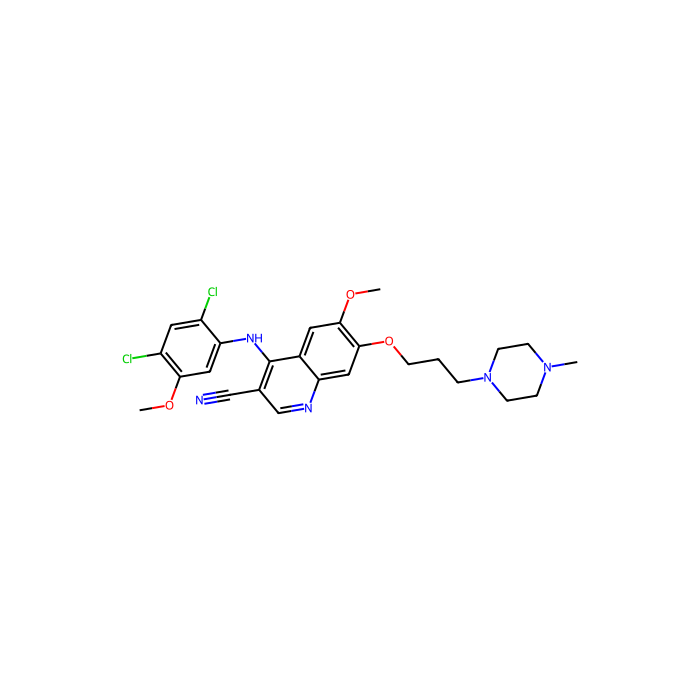
Bosutinib (SKI-606) - Moligand™, 10mM in DMSO , Tyrosine-protein kinase Lyn inhibitor, CAS No.380843-75-4, Tyrosine-protein kinase Lyn inhibitor

CAS: 380843-75-4 Cat. No.: B407917 Formula: C26H29Cl2N5O3 Peso molecolare: 530.45 Numero EC: 700-455-1
Disponibile su ordine
GRADE & PURITY Moligand™ ? Moligand™ — Aladdin's line of ligands and bioactive small molecules. Use for receptor, pathway, and binding studies needing defined small-molecule tools. 10mM in DMSO
Synonyms
4-(2,4-dichloro-5-methoxyphenylamino)-6-methoxy-7-(3-(4-methylpiperazin-1-yl)propoxy)quinoline-3-carbonitrile
Storage
Store at -80°C
Shipped In
Dry ice packs + Cold packs
★
Size
Germania (EU)
USA*
Price
Qty
1ml
B407917-1ml
—
1 Disponibile

91,89€

133,55€
Salva 41,65 € (31.19%)
Enter a quantity for the sizes you want to add.
🧪
Why this grade

Moligand™, 10mM in DMSO Moligand™ for sensitive chromatographic and analytical workflows requiring minimal baseline interference.

🌡

Storage & shipping

Store at -80°C Ships Dry ice packs + Cold packs Check lot-specific COA for exact specifications.

📋

Quality documents

SDS, COA, datasheet, and spec sheet available for download. Lot-specific COA accessible via lot number lookup.

📚

Literature proof

Cited in 0 peer-reviewed publications across chromatography, organic synthesis, and cross-coupling reactions.

Panoramica

Information

Bosutinib (SKI-606) is a novel, dualSrc/Ablinhibitor withIC50of 1.2 nM and 1 nM in cell-free assays, respectively. Bosutinib also effectively decreases the activity ofPI3K/AKT/mTOR,MAPK/ERKandJAK/STAT3signaling pathways by blocking the phosphorylation lev
In vitro

Bosutinib is selective for Src over non-Src family kinases with an IC50 of 1.2 nM, and potently inhibits Src-dependent cell proliferation with an IC50 of 100 nM. Bosutinib significantly inhibits the proliferation of Bcr-Abl-positive leukemia cell lines KU812, K562, and MEG-01 but not Molt-4, HL-60, Ramos, and other leukemia cell lines, with IC50 of 5 nM, 20 nM and 20 nM, respectively, more potently than that of STI-571. Similar to STI-571, Bosutinib displays antiproliferative activity against the Abl-MLV-transformed fibroblasts with IC50 of 90 nM. Bosutinib ablates tyrosine phosphorylation of Bcr-Abl and STAT5 in CML cells and of v-Abl expressed in fibroblasts at the concentration of ~50 nM, 10-25 nM and 200 nM, respectively, leading to the Bcr-Abl downstream signaling inhibition of Lyn/Hck phosphorylation. Although unable to inhibit the proliferation and survival of breast cancer cells, Bosutinib significantly decreases the motility and invasion of breast cancer cells with IC50 of ~250 nM, involved with an increase in cell-to-cell adhesion and membrane localization of β-catenin.

In vivo

Bosutinib (60 mg/kg/day) is active against Src-transformed fibroblasts xenografts and HT29 xenografts in nude mice with T/C of 18% and 30%, respectively. Oral administration of Bosutinib for 5 days significantly suppresses K562 tumor growth in mice in a dose-dependent manner, with the large tumors eradicated at dose of 100 mg/kg and tumor free at 150 mg/kg without overt toxicity. As being inactive against Colo205 xenografts in nude mice at 50 mg/kg twice daily, Bosutinib dosing at 75 mg/kg twice daily is necessary against Colo205 xenografts, and increasing the dose of Bosutinib has no additional benefit, in contrast to the significant dose-dependent ability against HT29 xenografts.
Cell Data

cell lines:Gli-Luc/MEF cells

Concentrations:Dissolved in DMSO, final concentrations ~1 μM

Incubation Time:72 hours

Powder Purity:≥98%

Specifications

Sinonimi
4-(2,4-dichloro-5-methoxyphenylamino)-6-methoxy-7-(3-(4-methylpiperazin-1-yl)propoxy)quinoline-3-carbonitrile
Specifiche e purezza
Moligand™, 10mM in DMSO
Meccanismi biochimici e fisiologici
Bosutinib (SKI-606) is a novel, dual Src/Abl inhibitor with IC50 of 1.2 nM and 1 nM in cell-free assays, respectively. Bosutinib also effectively decreases the activity of PI3K/AKT/mTOR, MAPK/ERK and JAK/STAT3 signaling pathways by blocking the phosphoryl
Condizioni di conservazione di stoccaggio
Store at -80°C
Spedito in
Dry ice packs + Cold packs
Questo prodotto richiede spedizione a catena fredda. I servizi di terra e altri servizi economici non sono disponibili.
Grado
Moligand™
Tipo di azione
INHIBITOR
Meccanismo d'azione
Tyrosine-protein kinase Lyn inhibitor
Proprietà del prodotto
ALogP
5.4
Nomi e identificatori
Isomeri SMILES
CN1CCN(CC1)CCCOC2=C(C=C3C(=C2)N=CC(=C3NC4=CC(=C(C=C4Cl)Cl)OC)C#N)OC
WGK Germania
3
Peso molecolare
530.45
Reaxy-Rn
9100307
Reaxys-RN_link_address
https://www.reaxys.com/reaxys/secured/hopinto.do?context=S&query=IDE.XRN=9100307&ln=

Documentazione

📋 Safety Data Sheet (SDS)

Comprehensive hazard, handling, storage, and regulatory compliance document.

Download SDS →

✅ Certificate of Analysis (COA)

Lot-specific quality data. Enter your lot number to retrieve the exact COA.

Look up COA →

📊 Datasheet

Quick-reference summary of product specifications and applications.

View datasheet →

🔬 Specification Sheet

Full quality attributes and acceptance criteria for this grade.

View spec sheet →

Advanced Data

Obiettivi associati (umani)
CTH Tchem Cystathionine gamma-lyase (0 Activities)
Activity TypeActivity Value -log(M)Mechanism of ActionActivity ReferencePublications (PubMed IDs)
EPHA2 Tclin Ephrin type-A receptor 2 (1 Activities)
Activity TypeActivity Value -log(M)Mechanism of ActionActivity ReferencePublications (PubMed IDs)
EPHA4 Tchem Ephrin type-A receptor 4 (1 Activities)
Activity TypeActivity Value -log(M)Mechanism of ActionActivity ReferencePublications (PubMed IDs)
EPHA8 Tchem Ephrin type-A receptor 8 (1 Activities)
Activity TypeActivity Value -log(M)Mechanism of ActionActivity ReferencePublications (PubMed IDs)
EPHB4 Tchem Ephrin type-B receptor 4 (2 Activities)
Activity TypeActivity Value -log(M)Mechanism of ActionActivity ReferencePublications (PubMed IDs)
ERBB4 Tclin Receptor tyrosine-protein kinase erbB-4 (1 Activities)
Activity TypeActivity Value -log(M)Mechanism of ActionActivity ReferencePublications (PubMed IDs)
EPHA5 Tchem Ephrin type-A receptor 5 (1 Activities)
Activity TypeActivity Value -log(M)Mechanism of ActionActivity ReferencePublications (PubMed IDs)
ERBB3 Tclin Receptor tyrosine-protein kinase erbB-3 (1 Activities)
Activity TypeActivity Value -log(M)Mechanism of ActionActivity ReferencePublications (PubMed IDs)
EGFR Tclin Epidermal growth factor receptor (4 Activities)
Activity TypeActivity Value -log(M)Mechanism of ActionActivity ReferencePublications (PubMed IDs)
EPHA3 Tchem Ephrin type-A receptor 3 (1 Activities)
Activity TypeActivity Value -log(M)Mechanism of ActionActivity ReferencePublications (PubMed IDs)
SRC Tclin Proto-oncogene tyrosine-protein kinase Src (28 Activities)
Activity TypeActivity Value -log(M)Mechanism of ActionActivity ReferencePublications (PubMed IDs)
STK10 Tchem Serine/threonine-protein kinase 10 (2 Activities)
Activity TypeActivity Value -log(M)Mechanism of ActionActivity ReferencePublications (PubMed IDs)
STK24 Tchem Serine/threonine-protein kinase 24 (3 Activities)
Activity TypeActivity Value -log(M)Mechanism of ActionActivity ReferencePublications (PubMed IDs)
STK35 Tchem Serine/threonine-protein kinase 35 (1 Activities)
Activity TypeActivity Value -log(M)Mechanism of ActionActivity ReferencePublications (PubMed IDs)
STK4 Tchem Serine/threonine-protein kinase 4 (1 Activities)
Activity TypeActivity Value -log(M)Mechanism of ActionActivity ReferencePublications (PubMed IDs)
TXK Tchem Tyrosine-protein kinase TXK (1 Activities)
Activity TypeActivity Value -log(M)Mechanism of ActionActivity ReferencePublications (PubMed IDs)
YES1 Tclin Tyrosine-protein kinase Yes (2 Activities)
Activity TypeActivity Value -log(M)Mechanism of ActionActivity ReferencePublications (PubMed IDs)
FRK Tchem Tyrosine-protein kinase FRK (4 Activities)
Activity TypeActivity Value -log(M)Mechanism of ActionActivity ReferencePublications (PubMed IDs)
FYN Tclin Tyrosine-protein kinase Fyn (3 Activities)
Activity TypeActivity Value -log(M)Mechanism of ActionActivity ReferencePublications (PubMed IDs)
GAK Tchem Cyclin-G-associated kinase (3 Activities)
Activity TypeActivity Value -log(M)Mechanism of ActionActivity ReferencePublications (PubMed IDs)
FGR Tchem Tyrosine-protein kinase Fgr (2 Activities)
Activity TypeActivity Value -log(M)Mechanism of ActionActivity ReferencePublications (PubMed IDs)
CAMK1D Tchem Calcium/calmodulin-dependent protein kinase type 1D (1 Activities)
Activity TypeActivity Value -log(M)Mechanism of ActionActivity ReferencePublications (PubMed IDs)
SIK1 Tchem Serine/threonine-protein kinase SIK1 (1 Activities)
Activity TypeActivity Value -log(M)Mechanism of ActionActivity ReferencePublications (PubMed IDs)
SIK2 Tchem Serine/threonine-protein kinase SIK2 (2 Activities)
Activity TypeActivity Value -log(M)Mechanism of ActionActivity ReferencePublications (PubMed IDs)
TNIK Tchem TRAF2 and NCK-interacting protein kinase (1 Activities)
Activity TypeActivity Value -log(M)Mechanism of ActionActivity ReferencePublications (PubMed IDs)
SIK3 Tchem Serine/threonine-protein kinase SIK3 (1 Activities)
Activity TypeActivity Value -log(M)Mechanism of ActionActivity ReferencePublications (PubMed IDs)
SLK Tchem STE20-like serine/threonine-protein kinase (1 Activities)
Activity TypeActivity Value -log(M)Mechanism of ActionActivity ReferencePublications (PubMed IDs)
PKMYT1 Tchem Membrane-associated tyrosine- and threonine-specific cdc2-inhibitory kinase (2 Activities)
Activity TypeActivity Value -log(M)Mechanism of ActionActivity ReferencePublications (PubMed IDs)
MINK1 Tchem Misshapen-like kinase 1 (2 Activities)
Activity TypeActivity Value -log(M)Mechanism of ActionActivity ReferencePublications (PubMed IDs)
MAP2K2 Tclin Dual specificity mitogen-activated protein kinase kinase 2 (1 Activities)
Activity TypeActivity Value -log(M)Mechanism of ActionActivity ReferencePublications (PubMed IDs)
MAP4K2 Tchem Mitogen-activated protein kinase kinase kinase kinase 2 (2 Activities)
Activity TypeActivity Value -log(M)Mechanism of ActionActivity ReferencePublications (PubMed IDs)
LCK Tclin Tyrosine-protein kinase Lck (2 Activities)
Activity TypeActivity Value -log(M)Mechanism of ActionActivity ReferencePublications (PubMed IDs)
MAP4K3 Tchem Mitogen-activated protein kinase kinase kinase kinase 3 (2 Activities)
Activity TypeActivity Value -log(M)Mechanism of ActionActivity ReferencePublications (PubMed IDs)
MAP4K4 Tchem Mitogen-activated protein kinase kinase kinase kinase 4 (1 Activities)
Activity TypeActivity Value -log(M)Mechanism of ActionActivity ReferencePublications (PubMed IDs)
MAP4K5 Tchem Mitogen-activated protein kinase kinase kinase kinase 5 (4 Activities)
Activity TypeActivity Value -log(M)Mechanism of ActionActivity ReferencePublications (PubMed IDs)
LYN Tclin Tyrosine-protein kinase Lyn (4 Activities)
Activity TypeActivity Value -log(M)Mechanism of ActionActivity ReferencePublications (PubMed IDs)
BTK Tclin Tyrosine-protein kinase BTK (3 Activities)
Activity TypeActivity Value -log(M)Mechanism of ActionActivity ReferencePublications (PubMed IDs)
BMX Tchem Cytoplasmic tyrosine-protein kinase BMX (2 Activities)
Activity TypeActivity Value -log(M)Mechanism of ActionActivity ReferencePublications (PubMed IDs)
BCR Tclin Breakpoint cluster region protein (1 Activities)
Activity TypeActivity Value -log(M)Mechanism of ActionActivity ReferencePublications (PubMed IDs)
BLK Tchem Tyrosine-protein kinase Blk (1 Activities)
Activity TypeActivity Value -log(M)Mechanism of ActionActivity ReferencePublications (PubMed IDs)
TNK2 Tclin Activated CDC42 kinase 1 (4 Activities)
Activity TypeActivity Value -log(M)Mechanism of ActionActivity ReferencePublications (PubMed IDs)
ABL2 Tchem Tyrosine-protein kinase ABL2 (3 Activities)
Activity TypeActivity Value -log(M)Mechanism of ActionActivity ReferencePublications (PubMed IDs)
ABL1 Tclin Tyrosine-protein kinase ABL1 (23 Activities)
Activity TypeActivity Value -log(M)Mechanism of ActionActivity ReferencePublications (PubMed IDs)
HCK Tclin Tyrosine-protein kinase HCK (3 Activities)
Activity TypeActivity Value -log(M)Mechanism of ActionActivity ReferencePublications (PubMed IDs)
NTRK2 Tclin BDNF/NT-3 growth factors receptor (1 Activities)
Activity TypeActivity Value -log(M)Mechanism of ActionActivity ReferencePublications (PubMed IDs)
NTRK1 Tclin High affinity nerve growth factor receptor (1 Activities)
Activity TypeActivity Value -log(M)Mechanism of ActionActivity ReferencePublications (PubMed IDs)
CAMK2G Tchem Calcium/calmodulin-dependent protein kinase type II subunit gamma (1 Activities)
Activity TypeActivity Value -log(M)Mechanism of ActionActivity ReferencePublications (PubMed IDs)
MAP2K1 Tclin Dual specificity mitogen-activated protein kinase kinase 1 (2 Activities)
Activity TypeActivity Value -log(M)Mechanism of ActionActivity ReferencePublications (PubMed IDs)
MAP2K5 Tchem Dual specificity mitogen-activated protein kinase kinase 5 (1 Activities)
Activity TypeActivity Value -log(M)Mechanism of ActionActivity ReferencePublications (PubMed IDs)
Certificati (CoA, COO, BSE/TSE e tabella di analisi)
C of A & Other Certificates(BSE/TSE, COO):
Analytical Chart:

Find and download the COA for your product by matching the lot number on the packaging.

1 results found

Lot NumberCertificate TypeDataOggetto
L2214617Certificate of AnalysisAug 01, 2026 B407917
Proprietà chimiche e fisiche
SolubilitàSolubility (25°C) In vitro DMSO: 47 mg/mL (199.05 mM); Water: 47 mg/mL (199.05 mM); Ethanol: 10 mg/mL (42.35 mM);
Domande frequenti e articoli
Calcolatori di soluzioni
Recensioni

Recensioni dei clienti

Application Protocols

No item-specific, validated application protocols are provided for this SKU.

General literature guidance (non-validated; for planning only):

  • Stock preparation: Dissolve in anhydrous DMSO to prepare a concentrated stock (e.g., 10–50 mM), vortex and, if necessary, sonicate briefly. Filter sterilize if required for cell work.
  • Biochemical kinase assays: Titrate over several log units to establish IC50 under your assay conditions; include matched DMSO controls.
  • Cell-based assays: Start with sub-μM to low-μM ranges, adjusting based on target expression and exposure time; monitor for solvent effects and cytotoxicity.

For step-by-step, validated procedures, consult peer-reviewed literature for your specific target system and use the product’s SDS/CoA for material handling information.

Biological Roles

Bosutinib is widely used as a chemical biology probe to interrogate kinase-mediated signaling.

  • Mechanism and target class (literature/general)

    • ATP-competitive inhibitor with primary activity against ABL1/BCR-ABL and Src-family kinases; also exhibits activity on a subset of additional kinases at higher concentrations depending on assay conditions.
    • Engages the kinase hinge region via heteroaromatic interactions; substituents orient into hydrophobic pockets, supporting type I binding.
  • Research utilities

    • Dissection of Src/ABL-dependent pathways in cell lines and biochemical systems, enabling modulation of phosphorylation events and phenotypic outputs.
    • Benchmarking selectivity in kinome profiling to validate screening platforms and inform SAR decision-making.
    • Use as a control in degradation (PROTAC) studies where a bosutinib-derived warhead is employed, separating warhead-driven vs degradation-driven effects.
  • Off-target considerations (literature/general)

    • Like many kinase inhibitors, target engagement can broaden with increasing concentration and time; careful titration and orthogonal readouts (e.g., phospho-substrate panels) are recommended.
  • ADME/biophysical context (general)

    • Moderately lipophilic with basic centers; cellular potency can be influenced by protein binding, lysosomal sequestration, and transporter interactions—factors to consider when translating biochemical potency to cellular effects.

No medical or clinical claims are made. This product is for laboratory research use only.

Buffer Applications

This product is not a buffering agent and is not typically used to prepare buffer systems. For experimental use, bosutinib is usually delivered in small volumes of organic cosolvent (e.g., DMSO) into pre-existing biological buffers.

  • Practical note: Validate buffer compatibility (ionic strength, pH 6.5–7.5 typical for kinase assays) and keep organic solvent percentages as low as your assay permits to maintain protein stability and signal quality.
Green Alternatives

As a finished bioactive tool compound, bosutinib itself does not have a “greener substitute” in the sense of a solvent or commodity reagent. However, greener choices can be made around its handling and formulation.

  • Greener solvent/formulation considerations (general)

    • Prefer aqueous buffers with minimal DMSO carryover (≤0.1% v/v) when assay sensitivity allows.
    • Where high-organic stocks are required, DMSO is generally preferable to DMF or NMP from a worker-safety perspective and regulatory profile.
    • Consider hydroxypropyl-β-cyclodextrin (HPβCD) or PEG-based cosolvents to reduce organic solvent percentages in dose solutions.
  • Process and waste minimization

    • Use small-volume, high-concentration stocks to minimize solvent use.
    • Adopt microplate-based assays and acoustic dispensing to reduce plastic and solvent waste.
    • Consolidate analytical runs (LC–MS) to lower sample throughput and solvent consumption.
  • Example comparison (general intent; not product specs)

    • DMSO vs DMF/NMP: DMSO typically offers lower chronic toxicity concerns and better biodegradability profile; DMF/NMP may pose reproductive toxicity hazards and should be avoided when possible.

Note: These recommendations concern the surrounding workflow. The molecular identity of bosutinib is intrinsic to its research function; substituting with another chemical will change target engagement properties.

Pharmaceutical Uses

This listing is supplied for research use only and is not intended for human or veterinary use or for use as an API.

  • Research/formulation roles (general)

    • Reference material in analytical method development (e.g., LC–MS/MS) and system suitability testing.
    • Positive-control inhibitor in target engagement and kinase activity assays during discovery research.
    • Potential internal standard/benchmark in stability-indicating studies for heteroaromatic kinase inhibitors.
  • Regulatory/compendial status: Not specified for this item; refer to CoA/Spec Sheet. No claims are made regarding pharmacopeial compliance.

  • Excipient status: Not applicable.

Any use in GMP or clinical settings would require separate, appropriately qualified material; this Moligand™ product is not offered for such applications.

Physical Properties

Item-specific physicochemical data were not provided with this listing. Where helpful, commonly cited literature values are noted for context and should not be construed as specifications for SKU B407917.

  • Appearance: Not specified for this item; refer to CoA/Spec Sheet.
  • Molecular weight: ~530.45 g/mol (literature, free base). Note: different salt/hydrate forms have different MW.
  • Melting point: Not specified for this item; refer to CoA/Spec Sheet. (Literature values vary by form/polymorph.)
  • Boiling point: Not applicable (decomposes before boiling; literature generality for complex kinase inhibitors).
  • Density: Not specified for this item; refer to CoA/Spec Sheet.
  • pKa(s): Reported basic pKa values associated with tertiary amine functionality (literature, qualitative); exact values vary by method and form and are not specified for this item.
  • LogP/logD: Reported as moderately lipophilic in the kinase inhibitor range (literature, qualitative); numerical values are not specified for this item.
  • Solubility (qualitative, literature):
    • Soluble in DMSO and DMF; often prepared as concentrated DMSO stock solutions for screening.
    • Low aqueous solubility at neutral pH; aqueous uptake can be improved using cosolvent, cyclodextrin, or pH adjustment strategies.
  • UV/Vis: Kinase hinge-binding heteroaromatics typically show UV absorbance in the 200–350 nm range (literature, qualitative). No item-specific UV cutoff provided.

For exact, reportable physical property values applicable to this SKU, consult the item’s CoA/Spec Sheet.

Quality and Grades
  • Grade/Purity: Moligand™

    • Moligand™ indicates suitability for use as a research ligand/tool compound in screening libraries and assay development. Emphasis is on identity and practical purity for discovery workflows rather than chromatographic solvent grades or biopharma GMP standards.
    • Typical expectations (general, for library-grade small molecules): verified identity (e.g., NMR/LC–MS), assay-ready purity suitable for screening, and stability controls for shipment and storage. Item-specific acceptance criteria are defined on the CoA.
  • What this means for your experiments

    • Appropriate for biochemical and cell-based assays, target profiling, and SAR benchmarking where bosutinib serves as a positive control/standard.
    • If you require quantified levels of residual solvents, water content, or metal contaminants: Not specified for this item; refer to CoA/Spec Sheet or request additional QC documentation.
  • Stabilizers/additives

    • None specified for this item. If present, stabilizers would be disclosed on the CoA; absence or presence can affect solubility and assay performance.
  • Comparison to other common grades (general explanation)

    • Research/tool compound (this item): optimized for screening fidelity and identity confirmation.
    • Analytical reference standard: tightly defined purity/assay with certified values for quantitative methods.
    • GMP/clinical grade: manufactured under cGMP with full regulatory documentation (not applicable here; this product is for research use only).
Reaction and Applications

This product is supplied as a finished research ligand/tool compound rather than a synthetic reagent. Its primary applications are in chemical biology and screening.

  • Research applications (literature/general)

    • Positive control/benchmark inhibitor for ABL1/BCR-ABL and Src-family kinase assays (biochemical and cellular) to validate assay windows and signal-to-background.
    • Target profiling across kinome panels to calibrate selectivity metrics, help train predictive models, and anchor SAR analyses.
    • Chemical probe in pathway interrogation studies (e.g., modulation of Src/ABL signaling) to dissect phosphorylation cascades and feedback regulation.
    • Reference compound in method development for LC–MS/MS bioanalytical assays and in stability testing workflows.
  • Practical usage notes

    • Prepare concentrated DMSO stocks and store in aliquots to avoid freeze–thaw cycles; verify concentration by UV if appropriate (determine ε experimentally under your conditions).
    • Include solvent controls at matching DMSO percentages to isolate compound effects from carrier effects.
    • For cellular assays, confirm uptake and exposure time dependence; many kinase inhibitors show time-dependent potency shifts due to intracellular accumulation.
  • Not typically used in synthetic transformations of other substrates. If derivatization for probe development (e.g., linkers, tags, PROTAC-like constructs) is planned, medicinal chemistry optimization and full analytical re-characterization are required.

Reaction Conditions

Not typically applicable. Bosutinib is provided as a finished small-molecule probe, not as a reagent or catalyst in organic synthesis.

  • For users pursuing derivatization (general literature guidance):
    • Solvents: anhydrous polar aprotics (DMSO, DMF) are often employed for heteroaromatic coupling or substitution steps on related scaffolds.
    • Conditions: mild bases and carefully controlled temperatures are preferred to preserve sensitive heteroaromatic motifs; avoid strong acids/oxidants that can degrade the scaffold.
    • Purification: reverse-phase preparative HPLC is commonly required due to polarity and close-running impurities.

These notes are general and not specific to this SKU; no standardized reaction conditions apply to the as-supplied compound.

Safety and Handling

Safety information specific to this item was not provided. Treat bosutinib as a bioactive small molecule with potential systemic activity. Always consult the product SDS for authoritative guidance.

  • GHS classification, signal word, pictograms, H-statements: Not specified for this item; refer to SDS.
  • General hazards (literature/general): Bioactive kinase inhibitors may present acute toxicity if ingested, inhaled, or absorbed through skin; avoid exposure and environmental release.
  • Personal protective equipment (PPE):
    • Use lab coat, safety glasses, and appropriate chemical-resistant gloves (e.g., nitrile).
    • Handle powders and stock solutions in a certified chemical fume hood or ventilated enclosure to minimize inhalation exposure.
  • Handling practices:
    • Minimize aerosol/particle generation when weighing.
    • Use dedicated tools and wipe down surfaces after use to avoid cross-contamination of screening collections.
  • Incompatibilities: Avoid strong oxidizers and strong acids/bases that may degrade heteroaromatic systems (general chemical guidance).
  • First aid overview (general):
    • Inhalation: Move to fresh air; seek medical attention if symptoms occur.
    • Skin/eye contact: Rinse with water for at least 15 minutes; remove contaminated clothing; seek medical attention if irritation persists.
    • Ingestion: Rinse mouth; do not induce vomiting; seek medical attention.
  • Spill response: Avoid dust formation; absorb solutions with inert material; collect in labeled hazardous-waste container.

Always defer to and follow the SDS and institutional EHS policies for this specific product.

Solvent Selection

Bosutinib is a moderately lipophilic, heteroatom-rich kinase inhibitor. Solvent choice primarily impacts dissolution for stock preparation and compatibility with biological assays.

  • Primary solvents (literature/practice):

    • DMSO: Preferred for high-concentration stocks (e.g., 10–50 mM typical in screening practice). Offers broad compatibility with biochemical and cell-based assays at low final percentages.
    • DMF or NMP: Alternative polar aprotic solvents when DMSO is contraindicated; verify assay tolerance.
    • Ethanol: Can be used at lower concentrations; often requires cosolvent strategies for higher stocks.
  • Aqueous handling (general):

    • Low intrinsic water solubility at neutral pH; use DMSO cosolvent (e.g., final 0.1–1% v/v in assay) or solubilizing excipients (cyclodextrins, surfactants) as assay permits.
    • pH adjustment may modestly enhance solubility due to basic amine(s), but avoid conditions that compromise target biology.
  • Dielectric/polarity context (general):

    • Bosutinib dissolves well in high-dielectric, hydrogen-bond–accepting media (DMSO, DMF) and poorly in nonpolar solvents.
  • Practical selection tips

    • Start with DMSO for reproducible stocks; filter sterilize through low-protein-binding membranes if sterility is required.
    • Validate solvent tolerance in your specific assay readout (fluorescence quenching/inner filter effects can occur with aromatic inhibitors).
  • Quick comparison (general)

    • DMSO: best solubilizer; high assay compatibility at ≤0.5% v/v.
    • DMF/NMP: strong solubilizers; assess cytotoxicity/background.
    • Aqueous buffers: require cosolvent or formulation aids for clear solutions.
Storage and Reconstitution
  • Storage conditions (item-specific): Store at -80°C. Shipment on dry ice packs + cold packs as provided.

  • Appearance: Not specified for this item; refer to CoA/Spec Sheet.

  • Stability: No explicit shelf-life or stability data are provided for this SKU; consult CoA for retest/expiry information. Minimize exposure to light, moisture, and repeated freeze–thaw.

  • Reconstitution

    • Item-specific instructions: Not specified for this item; refer to CoA/Spec Sheet.
    • General guidance (literature/practice): Prepare concentrated stock solutions in anhydrous DMSO. Aliquot into small volumes in chemically resistant, low-bind tubes; purge headspace with inert gas if long-term storage is anticipated. Store aliquots at ≤ -20°C to -80°C. Avoid multiple freeze–thaw cycles; thaw at room temperature, vortex to homogeneity, and immediately return unused aliquots to cold storage.
    • Aqueous working solutions: Prepare fresh on the day of use by diluting the DMSO stock into assay buffer with vigorous mixing. Maintain consistent final DMSO percentage across controls and treatments.
  • Adsorption/containers (general): Use glass or high-quality polypropylene; pre-rinse pipette tips with solution to minimize adsorption losses of hydrophobic inhibitors.

Always consult the product’s CoA and SDS for authoritative, item-specific instructions.

Structure and Identity

Bosutinib (SKI-606) is a research-grade, ATP-competitive small-molecule kinase inhibitor commonly used as a reference tool compound in kinase panels and chemical biology.

  • Product identifiers

    • SKU: B407917
    • Product Name: Bosutinib (SKI-606)
    • CAS: 380843-75-4
    • PubChem CID: 5328940
    • Category: Small molecules and compound libraries (筛选/化合物库)
  • Structure identifiers

    • InChIKey: Not specified for this item; refer to CoA/Spec Sheet.
    • SMILES: Not specified for this item; refer to CoA/Spec Sheet.
  • Composition

    • Molecular formula: C26H29Cl2N5O3 (literature, free base)
    • Molecular weight: ~530.45 g/mol (literature, free base)
  • Structural features (literature description)

    • Contains a dihalo-heteroaromatic kinase-binding hinge motif (dichloro–azaheteroarene) consistent with type I ATP-site engagement.
    • Presents a tertiary amine-containing, polar tail and ether linkages that modulate solubility and kinase pocket fit.
    • Multiple hydrogen-bond acceptors (ring nitrogens, amide/carboxamide-like carbonyl) and limited donors; overall moderately lipophilic with polar functionality enabling kinase hinge interactions.
    • 2D description: a substituted heteroaromatic core bearing two chlorines is linked via an anilide/aryloxy spacer to a tertiary amine side chain; additional heteroatoms (O, N) populate the periphery for solubility and binding orientation.

Notes: Exact stereochemistry is not applicable (bosutinib is achiral as typically supplied). All identifiers not explicitly provided here should be verified against the item-specific CoA.

Synthetic Utility

Bosutinib is supplied as a finished tool compound and is not generally employed as a synthetic reagent. Nevertheless, in medicinal chemistry contexts it can serve as a scaffold for probe development.

  • As a derivatization starting point (literature/general)

    • Researchers have appended linkers or reporter groups to bosutinib-like warheads to generate affinity probes or degrader molecules for kinase-focused studies.
    • Such work requires identification of vector positions that tolerate modification without ablating target engagement; this is highly system- and design-dependent.
  • Functional group context (general)

    • Multiple heteroatoms (N, O) in the core and side chains provide sites potentially amenable to protection/modification, but uncontrolled changes often disrupt potency/selectivity.
    • The molecule lacks simple, free carboxylic acid or primary amine “handles” in many forms; semi-synthesis often starts from advanced intermediates rather than the final drug-like molecule.
  • Recommendation

    • If synthetic modification is desired, consider starting from published intermediates or leveraging custom synthesis services; fully re-characterize any derivative (NMR, HRMS, HPLC/UPLC purity, and if relevant, chiral analysis).
Target Specificity

Not specified for this item; refer to CoA/Spec Sheet.

General literature note: Bosutinib is widely used as a research inhibitor of ABL1/BCR-ABL and Src-family kinases. Exact potency and selectivity depend on assay format, protein construct, and conditions and are not specified for this SKU.

Need help choosing the grade?

Our grade selection guide covers purity, stabilizer status, and application suitability for all variants in our catalog.

View Moligand™ grade guide →

Shall we send you a message when we have discounts available?

Remind me later

Thank you! Please check your email inbox to confirm.

Oops! Notifications are disabled.