Certificati (CoA, COO, BSE/TSE e tabella di analisi)
C of A & Other Certificates(BSE/TSE, COO):
Analytical Chart:
Proprietà chimiche e fisiche
Solubilità
DMSO : 250 mg/mL (963.87 mM; Need ultrasonic)
Calcolatori di soluzioni
Molarity Calculator
Determine the necessary mass, volume, or concentration for preparing a solution.
Dilution Calculator
Determine the dilution needed to prepare a stock solution.
Reconstitution Calculator
Recensioni
Recensioni dei clienti
Application Protocols
No item-specific tested applications, recommended concentrations, or protocols are provided in the Product Data. Please refer to the CoA/Spec Sheet or contact Technical Support for any available assay guidance.
Constraints per catalog policy:
Protocol recommendations and positive controls are listed only when validated for the specific item/lot. In their absence, users should follow internal SOPs and standard literature methods appropriate for DRD2 antagonist evaluation.
Biological Roles
General background (literature; not item-specific):
The dopamine D2 receptor (DRD2) is a Gi/o-coupled GPCR that modulates adenylate cyclase activity, ion channels, and downstream signaling pathways. DRD2 exists as short (D2S) and long (D2L) isoforms with distinct pre- and postsynaptic localizations.
DRD2 regulates neurotransmitter release, reward circuitry, motor control, endocrine signaling (e.g., pituitary lactotroph function), and numerous neuronal network processes.
An antagonist at DRD2 blocks dopamine-mediated signaling, typically leading to increased cAMP levels in Gi/o-coupled systems, modulation of β-arrestin pathways, and altered neuronal excitability in model systems.
Use of this product (research context only):
As an annotated DRD2 antagonist tool, this item may serve to delineate receptor contribution in complex signaling, establish assay windows in screening cascades, and act as a reference comparator when profiling novel dopaminergic ligands.
Caveats:
Without item-specific potency/selectivity data, users should confirm isoform preference (D2S vs D2L), off-target activity (e.g., DRD3, 5-HT receptors, α-adrenergic), and functional bias via orthogonal assays.
Ensure experimental conditions (temperature, pH, ionic strength) preserve receptor integrity in membranes or live cells.
No medical or clinical claims are made; this product is strictly for research use.
Buffer Applications
This item is a small-molecule receptor ligand rather than a buffering agent. However, buffers are integral to its use in pharmacology assays (general guidance; not item-specific):
Binding assays: 50 mM Tris-HCl or HEPES buffers (pH 7.4) with NaCl/KCl, MgCl2, and 0.01–0.05% nonionic detergent to mitigate nonspecific binding/aggregation.
Functional assays: HBSS or PBS with HEPES (pH 7.2–7.4) for live-cell readouts; maintain osmolarity and CO2 compatibility if using bicarbonate systems.
Stability: For basic amines, slightly acidic storage/dilution buffers (pH 5–6) can improve solubility; validate effects on cells/receptors.
Item-specific buffer recommendations are not provided; consult your assay SOP and verify compound stability/solubility experimentally.
Green Alternatives
Because this item is a bioactive small molecule rather than a solvent or reagent, “green alternatives” primarily relate to solvent choices for dissolution and assay preparation.
General solvent greening (not item-specific):
Prefer water-based buffers whenever solubility permits; limit DMSO to the lowest effective percentage (≤0.1–0.3% v/v in biological assays).
For analytical workflows, consider ethanol or isopropanol in place of acetonitrile or dichloromethane when chromatographically acceptable.
Minimize solvent volumes by using high-concentration stock solutions and acoustic dispensing to reduce waste.
Illustrative comparison (general):
DMSO vs. NMP/DMF: DMSO is typically favored for toxicity and handling; avoid NMP/DMF in cell assays when possible.
MeOH/EtOH vs. ACN: Alcohols can be greener but may impact protein stability; ACN often required for LC performance—optimize gradients to reduce consumption.
Operational practices:
Implement microplate formats and sealed storage of stocks to extend shelf life and reduce discard rates.
Use in-line solvent purification/recycling in preparative chromatography when feasible.
Note: No item-specific environmental metrics (biodegradability, E-factor) are available for this compound.
Pharmaceutical Uses
No pharmaceutical, clinical, or excipient uses are specified for this product. It is designated For research use only and is not intended for human or veterinary applications.
General context (not item-specific):
Bioactive reference compounds can be employed as analytical controls during preclinical research (e.g., LC–MS method development, retention-time markers, or system suitability in bioanalytical assays).
When a salt form is used, dose calculations should normalize for counterion mass; confirm form and assay potency via the CoA.
Regulatory status:
No pharmacopeial monograph or regulatory listing is provided for this item. Any use beyond basic research would require appropriate regulatory evaluation and quality documentation.
Conclusion:
Treat this compound strictly as a laboratory research tool for DRD2-related investigations.
Physical Properties
Item-specific values:
Appearance: Not specified for this item; refer to CoA/Spec Sheet.
Melting point (MP): Not specified for this item; refer to CoA/Spec Sheet.
Boiling point (BP): Not applicable/unknown for a solid; Not specified for this item; refer to CoA/Spec Sheet.
Density: Not specified for this item; refer to CoA/Spec Sheet.
Solubility: Not specified for this item; refer to CoA/Spec Sheet.
LogP, pKa, refractive index: Not specified for this item; refer to CoA/Spec Sheet.
General guidance (literature, not item-specific):
Small-molecule GPCR ligands are frequently supplied as off-white to light-yellow solids with good solubility in DMSO (10–50 mM stock); aqueous solubility varies and often benefits from cosolvents (0.1–1% DMSO) or acidified buffers when basic amines are present.
If the compound contains a basic tertiary amine (common in DRD2 antagonists), water solubility may increase under acidic conditions (e.g., citrate/phosphate buffers, pH 3–6), while free-base forms can be more lipophilic.
Notes:
For quantitative physicochemical parameters and chromatographic purity, rely on the item’s CoA/Spec Sheet. Avoid assuming solubility or ionization behavior without structural disclosure.
Quality and Grades
Item-specific details:
Grade/Purity: Not specified for this item; refer to CoA/Spec Sheet.
Interpretation and expectations (general guidance, not item-specific):
Bioactive screening compounds are commonly supplied at ≥95% purity by HPLC/UPLC with supporting LC–MS or NMR identity confirmation. However, do not assume this for the present item—verify against the CoA/Spec Sheet accompanying your lot.
If provided as a free base vs. salt form, the label and CoA should clearly state counterion content and potency normalization (salt correction) for dosing calculations.
For analytical applications (e.g., reference standard), low levels of residual solvents, inorganic salts, and related impurities may be critical; request extended characterization (qNMR, HRMS, water content) as needed.
Research-use only:
This product is designated For research use only (per Product Data). It is not intended for human or veterinary use, diagnostic procedures, or as a therapeutic ingredient.
Reaction and Applications
Chemical reaction use:
This product is a bioactive small molecule intended for receptor pharmacology and screening, not as a synthetic reagent. It is not typically used to promote or participate in named organic reactions. Consequently, sections on coupling, catalysis, or stoichiometric reactivity are generally not applicable.
Research applications (biological/pharmacological; general guidance):
Tool compound for probing dopamine D2 receptor (DRD2) function in cellular or membrane-based assays.
Use in competition binding assays (e.g., [3H]-spiperone displacement) to characterize receptor occupancy and Ki values for test ligands (literature methods).
Functional antagonism studies in G protein signaling (Gi/o-coupled): cAMP accumulation assays (forskolin-stimulated), β-arrestin recruitment (BRET/Envision), or GTPγS binding.
Phenotypic readouts in neuronal or heterologous expression systems (e.g., HEK293, CHO) expressing human DRD2 short/long isoforms.
Practical tips (general, not item-specific):
Prepare DMSO stocks (e.g., 10 mM) and serially dilute to minimize DMSO carryover (≤0.1–0.3% final).
Include positive controls (well-characterized DRD2 antagonists) and monitor compound aggregation artifacts (use 0.01–0.05% detergent or counterscreens).
Verify target engagement via orthogonal assays (binding and functional) when structure and provenance are undisclosed.
Reaction Conditions
Not applicable. This product is not provided as a reagent for chemical synthesis, catalysis, or coupling reactions. Therefore, typical reaction temperatures, catalysts, or yields do not apply.
General note (assay conditions; not item-specific):
For biological assays, common conditions include 37°C incubation for live-cell functional tests and 4°C for certain binding equilibrations; buffer pH ~7.2–7.4; DMSO ≤0.1–0.5% v/v to maintain cell health. These are assay conditions rather than chemical reaction parameters and must be optimized per SOP.
For chemical reaction information, refer instead to reagents specifically intended for synthetic transformations.
Safety and Handling
Item-specific hazard data:
Signal word (GHS): Not specified for this item; refer to SDS.
H-Statements / GHS classification / Pictograms: Not specified for this item; refer to SDS.
General laboratory safety (for small-molecule bioactives; not item-specific):
Handle in a chemical fume hood with appropriate PPE: lab coat, safety glasses, and nitrile gloves. Avoid inhalation, ingestion, and skin/eye contact.
Prevent dust formation/aerosols when weighing; use antistatic spatulas and weigh boats.
Store segregated from strong oxidizers and moisture-sensitive reagents unless specified otherwise by the SDS.
In case of skin/eye contact: rinse with water for at least 15 minutes; seek medical attention as appropriate. If inhaled: move to fresh air. If swallowed: rinse mouth; do not induce vomiting; obtain medical attention. Follow institutional SOPs.
Stability considerations:
The product is shipped cold (ice chest + ice pads) and should be stored at −20°C (per Product Data). Limit freeze–thaw cycles by preparing single-use aliquots.
Authoritative source:
For definitive hazard classification, exposure limits, spill response, and disposal guidance, consult the item-specific SDS and institutional EHS policies.
Solvent Selection
Item-specific solubility is not disclosed. The following guidance is general for small-molecule GPCR antagonists (not item-specific):
Primary stock solvent: DMSO is preferred due to broad solubilizing power and cell compatibility at ≤0.1–0.5% v/v final concentration.
Cosolvent strategies: For aqueous assays, dilute DMSO stocks into buffered saline (e.g., HBSS, PBS) with optional 0.01–0.1% nonionic surfactant (Tween-20, Pluronic F-68) to mitigate precipitation.
pH adjustments: If the ligand is a weak base (common for DRD2 antagonists), modest acidification (pH 4–6) can improve aqueous solubility; avoid extreme pH that perturbs cells or receptors.
Volatile organic options: Acetonitrile or methanol may be used for analytical sample preparation (LC–MS); ensure compatibility with detectors and columns.
Quick comparison (general):
DMSO: highest solvency; low volatility; compatible with cells at low %.
MeOH/ACN: LC–MS friendly; higher volatility; may denature proteins in binding assays.
Aqueous buffer alone: suitable only if compound is sufficiently ionizable/hydrophilic.
Always confirm actual solubility and stability with small-scale tests; consult the item’s CoA/Spec Sheet if provided.
Reconstitution and handling (general guidance; not item-specific):
If provided as a dry solid, prepare a concentrated DMSO stock (e.g., 10–50 mM) under low-moisture conditions. Vortex/sonicate briefly to ensure complete dissolution. Filter if required for sterile applications (note DMSO compatibility of filters).
If supplied in solution, verify solvent, concentration, and form (free base/salt) on the label and CoA; mix thoroughly after thawing.
Aliquot into single-use vials to avoid repeated freeze–thaw. Store tightly capped under inert headspace if stability data suggest sensitivity to air/moisture/light.
Stability notes:
Item-specific stability, hygroscopicity, and light sensitivity are not specified; protect from light as a precaution and minimize time at room temperature.
Always defer to the CoA/Spec Sheet and SDS for lot-specific guidance on concentration limits, stability, and safe handling.
Structure and Identity
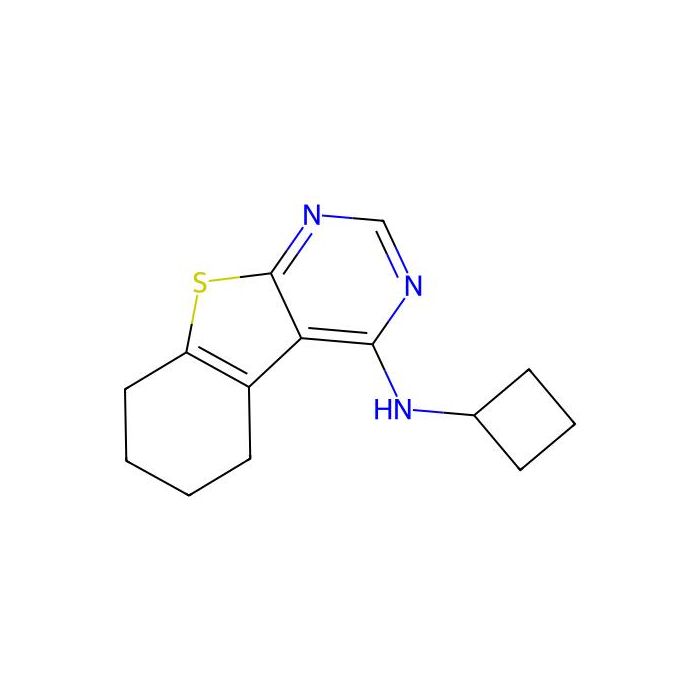
Brief overview: Dopamine D2 receptor antagonist-1 (SKU D648094) is supplied as a research-use small molecule annotated as a dopamine D2 (DRD2) receptor antagonist for screening and mechanistic studies.
Item-specific identifiers (from Product Data):
CAS: 1055411-77-2
Molecular formula: Not specified for this item; refer to CoA/Spec Sheet.
Molecular weight: Not specified for this item; refer to CoA/Spec Sheet.
SMILES: Not specified for this item; refer to CoA/Spec Sheet.
InChIKey: Not specified for this item; refer to CoA/Spec Sheet.
Structural features (general context, not item-specific):
As an annotated DRD2 antagonist, compounds in this class commonly include an arylpiperazine, benzamide, indole, or heteroaryl-alkylamine motif (literature). Without a disclosed structure, specific functional groups, ring systems, or stereochemistry for this item cannot be confirmed.
2D structure description:
Not available for this item; the supplier has not provided a structural diagram or line notation. Please consult the Certificate of Analysis or request the structural disclosure if required for cheminformatics or regulatory documentation.
Synthetic Utility
This product is supplied as a bioactive ligand for dopamine D2 receptor studies and is not intended as a synthetic intermediate or reagent.
General remarks (not item-specific):
Many DRD2 antagonists contain basic amines and multiple heteroaromatic/aryl motifs. While such scaffolds can, in principle, undergo functionalization (e.g., N-alkylation, amide coupling, Suzuki/Heck on aryl halides), using a bioactive tool compound as a building block risks altering its target profile and is typically avoided.
If derivatization for SAR or probe development is desired, obtain or design appropriately functionalized analogs rather than modifying a finished reference compound of unknown structure.
Bottom line:
No item-specific synthetic transformations, named reactions, or retrosynthetic utilities are applicable without structural disclosure.
Target Specificity
Item-specific targeting (from Product Name):
Annotated target: Dopamine D2 receptor (DRD2)
Mode: Antagonist
Details not provided for this item; refer to CoA/Spec Sheet or request technical data:
Subtype/isoform selectivity (D2S vs D2L): Not specified for this item; refer to CoA/Spec Sheet.
Selectivity vs. related receptors (DRD1, DRD3–5; 5-HT; α-adrenergic; histamine): Not specified for this item; refer to CoA/Spec Sheet.
Binding affinity (Ki), functional potency (IC50), bias: Not specified for this item; refer to CoA/Spec Sheet.
Recommendations (general, not item-specific):
Confirm specificity with orthogonal assays (radioligand binding, β-arrestin BRET, cAMP) and a panel screen against GPCR families to rule out off-target effects.
Include reference antagonists of known selectivity to benchmark assay performance.
We use cookies to ensure the website functions properly and, where permitted, to improve your experience. You can manage your preferences at any time in Settings. Learn more in our Cookie Policy.
Shall we send you a message when we have discounts available?
Remind me later
Thank you! Please check your email inbox to confirm.
Products are supplied to verified businesses, institutions, and qualified professionals for research and development use only. Not for use in humans, animals, diagnosis, or therapy.