
Anthrone–Anthrol Tautomerism and Structure–Reactivity Relationships: C10 Bond Formation, Anthrolate Photochemistry, and Natural Product Transformations
Anthrone–Anthrol Tautomerism and Structure–Reactivity Relationships: C10 Bond Formation, Anthrolate Photochemistry, and Natural Product Transformations
1 Basic Structures of Anthrone and Anthrol
1.1 Anthrone and anthrol are a pair of tautomers
The compound commonly referred to as anthrone is 9-anthrone [9(10H)-anthracenone]. In its central ring, C9 is a carbonyl carbon, whereas C10 is a methylene carbon. 9-Anthrol, by contrast, contains a hydroxyl group at C9 and a correspondingly rearranged carbon–carbon double-bond system.
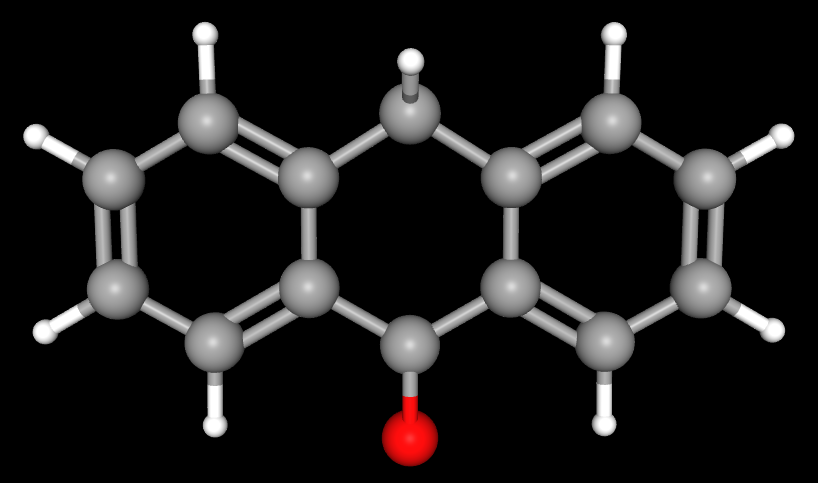
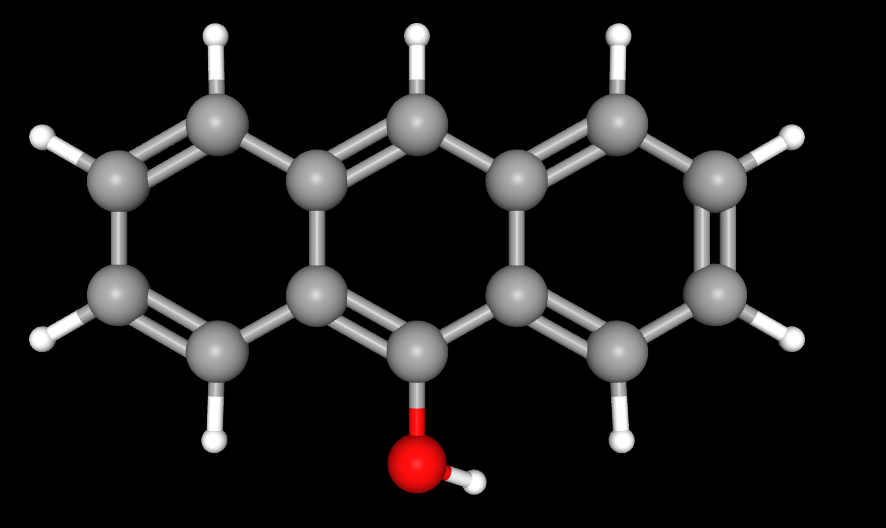
The two structures can be represented as follows:
9-Anthrone ⇌ 9-Anthrol
This transformation is a form of keto–enol tautomerism. During the tautomerization process, the position of the proton at C10 changes, while the C9=O bond and the π bonds in the central ring are rearranged; the overall composition and oxidation state of the molecule remain unchanged.[1] McCann et al. directly determined the equilibrium and interconversion rates between 9-anthrone and 9-anthrol using kinetic methods.
Anthrone and anthrol do not exist in the same proportions under all conditions. In an aqueous acetate buffer system at 25 °C, McCann et al. defined the equilibrium constant as (K_E = [\text{anthrol}]/[\text{anthrone}]) and measured a p(K_E) value of 2.10, indicating that the equilibrium under these conditions strongly favors the anthrone form.[1]
1.2 Structural differences among anthrone, anthrol, and anthraquinone
Compound type | Principal structure of the central ring | Main chemical characteristics |
9-Anthrone | C9=O; C10 is a methylene group (CH₂) | Undergoes tautomerization; C10 can be deprotonated |
9-Anthrol | C9–OH and the corresponding C=C structure | Enol form of anthrone; can be further converted into the anthrolate anion |
9,10-Anthraquinone | C9=O and C10=O | Higher oxidation state; primarily exhibits the electron-accepting and redox properties of a quinone structure |
Two structurally distinct types of transformation are involved here:
Anthrone ⇌ anthrol is a tautomerization;
Anthrone/anthrol → anthraquinone involves oxidation.
This distinction is fundamental to understanding the reactivity of these three classes of anthracene derivatives.[1,2]
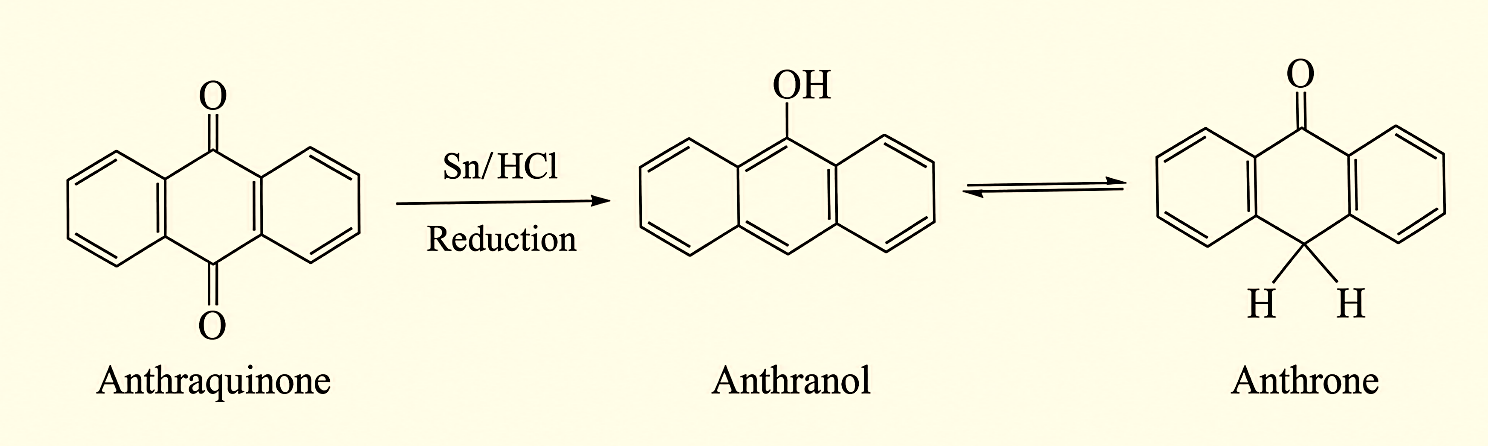
The reduction of anthraquinone and anthrol–anthrone tautomerization are illustrated below.
9,10-Anthraquinone is reduced by Sn/HCl to form anthrol, which is then converted into anthrone through proton transfer and double-bond rearrangement. The reversible interconversion between anthrol and anthrone is a keto–enol tautomerization, reflecting the redox characteristics of the anthrone system and the reactivity of the C10 position.
2 Why Anthrone–Anthrol Tautomerism Is Important
2.1 The essence of tautomerization is proton transfer and π-bond rearrangement
In the anthrone structure, the hydrogen atom at C10 is located adjacent to the carbonyl group. During enolization, the C10–H bond participates in proton transfer, while the C9 carbonyl group is converted into a hydroxyl group and the π bonds in the central ring are rearranged, forming 9-anthrol.
Tautomerization is not an autonomous structural fluctuation that occurs independently of the surrounding environment. McCann et al. found that the conversion of 9-anthrol into anthrone can be catalyzed by both acids and bases. In strongly acidic aqueous solutions, hydronium-ion catalysis was observed together with a pronounced solvent isotope effect; the kinetic results supported a rate-determining step involving protonation at C10 of the central ring of 9-anthrol.[1]
In buffer systems formed from weaker acids, the basic component of the buffer also participates in proton transfer. Consequently, the solvent, acid–base conditions, and substituents can all affect the rate and equilibrium of anthrone/anthrol tautomerization by altering the energy barrier for proton transfer.[1]
2.2 C10 is the key reactive position of anthrone
In the anthrone structure, C10 is directly adjacent to the C9 carbonyl group. After the C10–H proton is removed by a base, the resulting anion can be described by both a C10 carbanion form and an enolate form containing a C9=C10 bond and an O⁻ group. The negative charge is delocalized primarily between C10 and the oxygen atom, forming an anionic system associated with the 9-anthrolate anion.
This can be represented in simplified form as:
Anthrone —H⁺ → anthrone/anthrolate anion resonance system
This gives C10 pronounced carbon nucleophilicity. Anthrone therefore differs from anthraquinone, which mainly behaves as an electron-accepting quinone structure: anthrone contains both a carbonyl group and a C10 position that can be converted into a carbon nucleophilic center through deprotonation.
A 2015 study of asymmetric allylic substitution directly exploited this property. Ceban et al. used anthrone as the nucleophilic component in an organocatalytic allylic substitution with Morita–Baylis–Hillman carbonates. High yields and enantioselectivities were obtained for multiple substrates, with the enantiomeric excess of some products exceeding 90% and the highest reported value reaching 98% ee.[2]
3 How C10 Reactivity Is Translated into Carbon–Carbon Bond-Forming Ability
The resonance-stabilized anion formed through deprotonation at C10 of anthrone can attack electron-deficient carbon centers and can therefore participate in carbon–carbon bond-forming reactions such as Michael additions and allylic substitutions.
The nucleophilic reactivity of C10 in anthrone has been directly used for carbon–carbon bond construction. Ceban et al. performed an asymmetric allylic substitution between anthrone and Morita–Baylis–Hillman carbonates and proposed a corresponding reaction mechanism based on kinetic experiments, as shown below. In this reaction, anthrone acts as the carbon nucleophilic component and attacks a catalytically generated electrophilic intermediate, ultimately forming a new C–C bond at C10.[2]
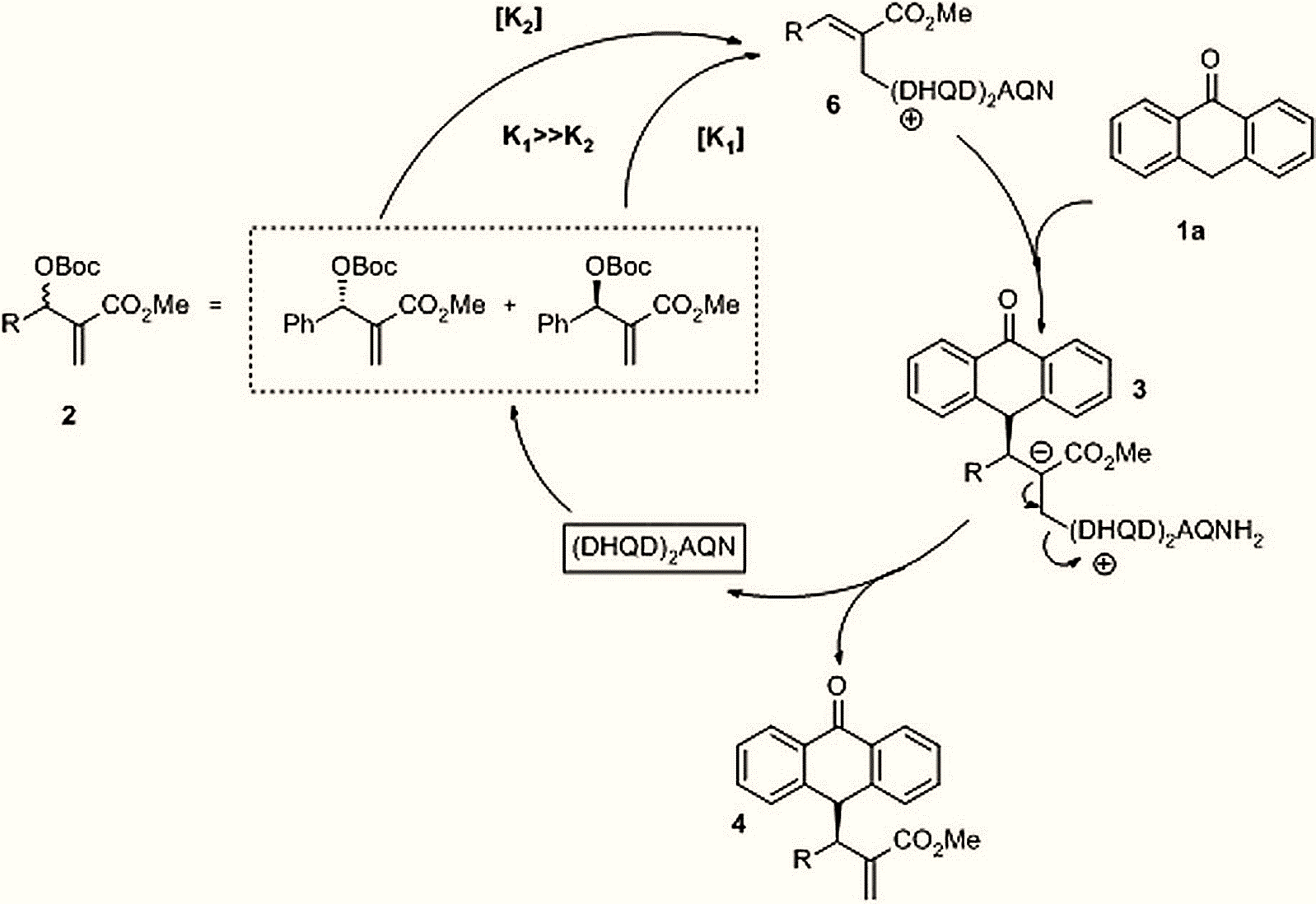
Proposed mechanism for the asymmetric allylic substitution involving anthrone
Anthrone acts as the nucleophilic component and reacts with a catalytically generated electrophilic intermediate, forming a new C–C bond at C10. Source: Ceban V, Tauchman J, Meazza M, et al. Scientific Reports, 2015, 5:16886, Figure 6. CC BY 4.0.
In 2019, Genc investigated the asymmetric Michael addition of anthrone to nitroalkenes using a chiral tetraoxacalix[2]arene[2]triazine catalyst. In the reaction, anthrone acts as a carbon nucleophile, forming a new C–C bond between C10 and the nitroalkene. Under optimized conditions, yields reached up to 96%, with enantiomeric excess values of up to 97% ee.[3]
This class of reactions reflects three consecutive chemical processes in the anthrone structure:
C10–H deprotonation → anion formation and charge delocalization → nucleophilic attack by C10 on an electrophilic center.
Thus, the carbonyl group of anthrone is not merely an ordinary ketone functional group. Together, the carbonyl group and the adjacent C10–H establish a reactive center that can be regulated through acid–base equilibria, allowing C10 to be converted from a relatively stable C–H site into a nucleophilic site capable of forming new C–C bonds.[2,3]
4 Electronic Structure and Photochemical Reactions of the Anthrolate Anion
The anion generated by deprotonation at C10 not only changes the nucleophilicity of the molecule but also alters its electronic absorption and excited-state properties.
4.1 Deprotonation converts neutral anthrone into a new photoactive species
Under basic conditions, 9-anthrone establishes a coupled equilibrium dominated by 9-anthrone and the 9-anthrolate anion through tautomerization to 9-anthrol followed by deprotonation of the latter. Schmalzbauer et al. found that neutral 9-anthrone has limited absorption in the visible region, whereas the absorption of the 9-anthrolate anion extends into the visible-light region, allowing it to be excited by blue light-emitting diodes (LEDs).[5]
This means that a simple deprotonation simultaneously produces two changes:
① The ground-state electronic structure and absorption spectrum change;
② The electron-transfer capability after photoexcitation changes significantly.
The anthrolate anion can therefore serve as a reducing species in photoinduced electron-transfer systems.
4.2 The 9-anthrolate anion can generate hydrated electrons
In an original study published in 2015, Kerzig and Goez demonstrated that the 9-anthrolate anion in aqueous solution can undergo two-photon photoionization upon excitation with 355 nm near-ultraviolet light, generating a hydrated electron [(e_{aq}^{-})] and an anthroxy radical. After ascorbate dianion was added as a sacrificial electron donor, the anthroxy radical could be reduced back to the 9-anthrolate anion, thereby establishing a catalytic cycle.[4]
Subsequent studies further showed that the visible-light-absorbing 9-anthrolate anion can participate in photoinduced electron transfer after blue-light excitation, enabling the reductive activation of certain aryl chlorides and heteroaryl chlorides, followed by the formation of C–C or C–heteroatom bonds.[5]
This research direction reveals another important property of the anthrone–anthrol system:
Tautomerization and deprotonation not only alter nucleophilicity in thermal reactions but can also change the excited-state electronic structure, allowing the same anthrone framework to enter photoredox reactions.
5 Anthrone Derivatives in Natural Products
Naturally occurring anthrones commonly contain hydroxyl, methyl, hydroxymethyl, or glycosyl groups and may also form dimeric structures. A variety of anthrones, anthrone glycosides, and dianthrone glycosides have been directly isolated or detected in plants.
Type | Representative compounds | Structural characteristics and sources |
Hydroxyanthrones | Dithranol, emodin anthrone, rhein anthrone | The anthrone parent framework additionally contains substituents such as hydroxyl, methyl, or carboxyl groups |
Anthrone C-glycosides | Aloin A, aloin B | The sugar is linked to an anthrone-type parent framework through a C–C bond; important anthrone constituents of Aloe species |
Complex anthrone C-glycosides | Cascaroside C, cascaroside D, cassialoin, etc. | Isolated from plants including Himalayan rhubarb |
Dianthrone glycosides | Sennoside A, sennoside B | Two anthrone-related units form a dimeric structure and are linked to glucosyl groups |
In studies of plants belonging to the genus Rhamnus, extraction methods designed to prevent oxidation enabled the detection of emodin anthrone, physcion anthrone, and the corresponding dianthrone derivatives, indicating that sample handling itself can affect the composition of anthrones and products at higher oxidation states.[7]
Krenn et al. isolated new anthrone C-glucosides, including 10-hydroxycascaroside C, 10-hydroxycascaroside D, and 10R-chrysaloin 1-O-β-D-glucoside, from the roots of Himalayan rhubarb (Rheum emodi). They also identified related compounds, including cascaroside C, cascaroside D, and cassialoin.[8]
These results indicate that the structural diversity of naturally occurring anthrones is based primarily on several fundamental structural variations: substitution of the parent framework, C-glycosylation, and dimerization.
6 Aloin Illustrates How Anthrone C-Glycosides Are Formed and Transformed
6.1 The C–C glycosidic bond of aloin originates from an anthrone-type substrate
Aloin is a typical anthrone-type C-glycoside. Unlike ordinary O-glycosides, it contains a direct C–C bond between the anomeric carbon of glucose and the anthrone parent framework.
In 1981, Grün and Franz demonstrated using a cell-free system from Aloe arborescens that uridine diphosphate glucose (UDP-glucose) can serve as the glycosyl donor, transferring a glucosyl group to aloe-emodin anthrone and forming the C-glycosidic bond of aloin. The study also confirmed the reaction’s specificity for UDP-glucose and the aloe-emodin anthrone substrate.[6]
The formation of aloin illustrates a clear structural relationship among natural products:
Aloe-emodin anthrone → C-glycosylation → aloin.
Glycosylation does not eliminate the anthrone parent framework; instead, it produces a derivative based on that framework that is more stable and more readily recognized by biological systems.
6.2 C-glycosides can still undergo specific microbial bond cleavage
C–C glycosidic bonds generally cannot be directly cleaved through the acid hydrolysis or β-glucosidase-mediated hydrolysis characteristic of ordinary O-glycosides. Nevertheless, specific intestinal microorganisms can carry out the corresponding transformations of C-glycosides.
Che et al. isolated an intestinal anaerobic bacterium capable of metabolizing aloin from human feces. This bacterium could convert aloin into aloe-emodin anthrone.[9] Subsequent gnotobiotic animal experiments further demonstrated that animals colonized with the corresponding Eubacterium sp. strain BAR could convert aloin into aloe-emodin anthrone.[10]
This shows that although C-glycosidic bonds have chemical stability different from that of ordinary O-glycosidic bonds, they can still undergo biotransformation through specific microbial enzyme systems.
7 Formation of Dianthrone Glycosides and Rhein Anthrone
Sennoside A and sennoside B are dianthrone glycosides. Their two anthracene-derived units are linked through a carbon–carbon bond, and each carries a glycosyl group. Sennosides A, A1, and B can be directly isolated from senna leaves, with A and B being important dirheinanthrone glucosides.[11]
After entering the intestine, hydrolysis of the glycosidic bonds and reduction of the dianthrone structure can occur with the participation of intestinal microorganisms, ultimately forming monoanthrone-type metabolites such as rhein anthrone. Early animal experiments identified rhein anthrone as an important active metabolite of sennosides A and B.[12]
In recent years, investigation of this process has progressed from the “discovery of metabolites” to the identification of specific reductases. Xu et al. designed a photoaffinity probe based on sennoside A and combined it with activity-based protein profiling to identify NfrA, a protein with sennoside A-reducing activity, in Bifidobacterium pseudocatenulatum. Experiments with the recombinant protein further confirmed its reducing activity.[13]
A follow-up study published in 2025 used enzymatic activity visualization to locate and isolate functional bacterial populations capable of reducing sennoside A from complex human gut microbiota and functionally validated the associated reductases.[14]
Such studies demonstrate an ongoing shift in natural-product research on anthrones: the focus has expanded from “which constituents are present in plants” to determining which chemical bond is transformed, which anthrone structure is formed, and which microbial enzyme catalyzes the transformation.
8 Oxidative Relationships among Anthrone, Anthrol, and Anthraquinone
Anthrone and anthrol are at the same oxidation level and interconvert through proton transfer and π-bond rearrangement. Anthraquinone, by contrast, is at a higher oxidation state.
Studies of anthrol oxidation provide direct evidence for this relationship. Ogata, Kosugi, and Nate investigated the kinetics of the autoxidation of anthrol to anthraquinone in buffered aqueous dioxane. The experimental results supported the following reaction process: under basic conditions, the anthrolate anion is formed, after which molecular oxygen attacks the anion in the rate-determining step, generating a radical intermediate that undergoes further oxidation to form anthraquinone.[15]
The three structures can therefore be distinguished according to the nature of their transformations:
Anthrone ⇌ anthrol: proton transfer and π-bond rearrangement
Anthrol/anthrone → anthraquinone: oxidation
This relationship also explains why the analysis of naturally occurring anthrones is relatively sensitive to sample-handling conditions. If oxidation occurs during extraction and storage, anthrone or dianthrone constituents originally present in the sample may be converted into the corresponding products at higher oxidation states. Early studies of Rhamnus species therefore specifically employed handling methods designed to prevent oxidation when analyzing their natural anthracene-derived constituents.[7]
9 Research Directions for Anthrone and Anthrol Derivatives
The research value of anthrone and anthrol centers on their central reactive structure, which can undergo tautomerization, deprotonation, and oxidation.
9.1 Selective carbon–carbon bond formation at C10
Deprotonation at C10 of anthrone produces carbon nucleophilicity that can be used in Michael additions and asymmetric allylic substitutions. Modern organocatalytic studies have demonstrated that chiral catalysts can control the stereoselectivity of new C–C bond formation at this position and provide high enantioselectivity.[2,3]
This research direction exploits the enolization capability jointly established by the anthrone carbonyl group and the C10–H bond.
9.2 Photoredox chemistry of the anthrolate anion
When anthrone forms the 9-anthrolate anion under basic conditions, its absorption spectrum and excited-state electron-transfer capability change. The 9-anthrolate anion can both generate hydrated electrons under near-ultraviolet light and participate in strongly reducing reactions in visible-light-driven organic photoredox systems.[4,5]
This approach exploits the regulation of molecular electronic structure and photochemical reactivity through acid–base equilibria.
9.3 Gut microbiota-driven formation of anthrones
Studies of aloin and sennosides show that anthrones are not merely static natural products found in plants; they can also be metabolic structures formed after complex glycosides enter the intestine. Modern chemical-biology methods can use substrate-derived probes, proteomics, and enzymatic activity imaging to further identify the specific metabolizing microorganisms and catalytic enzymes involved.[10,13,14]
This has extended anthrone research beyond traditional natural-product identification and into mechanistic studies of the relationships among structural transformations, microorganisms, and functional enzymes.
10 Structure–Reactivity Relationships of Anthrone and Anthrol Derivatives
The chemical properties of anthrone and anthrol derivatives can be summarized as a continuous system of structural transformations:
Structural transformation | Resulting chemical consequence |
Anthrone ⇌ anthrol | Changes the positions of the carbonyl group, hydroxyl group, and π bonds |
Deprotonation at C10 | Forms a resonance-stabilized anion and gives C10 carbon nucleophilicity |
Formation of the 9-anthrolate anion | Changes electronic absorption and excited-state electron-transfer capability |
C-Glycosylation | Forms stable anthrone-type natural glycosides such as aloin |
Dimerization and glycosylation | Forms dianthrone glycosides such as sennosides |
Oxidation | Converts the anthrone/anthrol system into the corresponding anthraquinone structure |
11 Chemicals Related to Anthrone–Anthrol Tautomerism, Dimerization Reactions, and Transformations of Natural Anthracene Derivatives
Table 1. Anthrone, anthrol, and their oxidized and substituted derivatives
Category | CAS No. | Aladdin Catalog No. | Name | Specification or Purity | Product Features and Applications |
Anthrone parent compound | 90-44-8 | Anthrone | AR | Used for studies of anthrone–anthrol tautomerism, deprotonation and carbon nucleophilic reactions at C10, oxidative dimerization, and anthraquinone formation. | |
Anthrol tautomer | 529-86-2 | 9-Hydroxyanthracene | ≥95% | Used for studies of the enolic structure of anthrol, keto–enol equilibrium, absorption spectra, and oxidative transformations. | |
Anthraquinone oxidation-state reference | 84-65-1 | Anthraquinone | Melting-point standard | Used for melting-point apparatus calibration and as a structural and physicochemical reference for anthraquinone formed through the oxidation of anthrone and anthrol. | |
Hydroxylated natural anthrone | 491-60-1 | Emodin anthrone | Moligand™, ≥98% | Used to study the effects of hydroxyl and methyl substitution on anthrone tautomerism, redox transformations, and the metabolism of natural anthracene derivatives. | |
Polyhydroxy anthrone–anthrol system | 1143-38-0 | 1,8,9-Trihydroxyanthracene | ≥98% | Used for studies of polyhydroxy anthrone–anthrol tautomerism, oxidative stability, radical formation, and photodegradation behavior. | |
Carboxylated natural anthrone | 480-09-1 | Rhein-9-anthrone | ≥95% | Used for studies of the intestinal transformation products of sennosides, the oxidative conversion of rhein anthrone to rhein, and carboxyl-substitution effects. |
Table 2. C-Glycosyl anthrones, dianthrone aglycones, and dianthrone glycosides
Category | CAS No. | Aladdin Catalog No. | Name | Specification or Purity | Product Features and Applications |
C-Glycosyl anthrone | 1415-73-2 | A1193969 | Aloin | Moligand™, ≥95% | Used for studies of the C10 configuration of C-glycosyl anthrones, the stability of C–C glycosidic bonds, tautomerism, and the analysis of anthracene constituents in Aloe. |
C-Glycosyl anthrone diastereomer | 28371-16-6 | Aloin B | ≥98% | Used together with aloin for studies of C10 diastereomerism, isomer separation and identification, and compositional transformations during processing and storage. | |
Dianthrone parent compound | 434-84-4 | Dianthronyl | ≥97% | Used for studies of coupling at the central carbon atoms of anthrone units, oxidative dimerization, conformational changes, and photochromic behavior. | |
Carboxylated dianthrone aglycone | 641-12-3 | Sennidin A | Moligand™, ≥98% | Used as a reference for the deglycosylation product of sennoside A and for studies of dianthrone-aglycone stereochemistry, glycoside hydrolysis, and the metabolic transformation of natural products. | |
Stereoisomer of a carboxylated dianthrone aglycone | 517-44-2 | Sennidin B | Moligand™, ≥98% | Used as a reference for the deglycosylation product of sennoside B and for studies of configurational differences between dianthrone aglycones, chromatographic separation, and oxidative transformations. | |
Homodianthrone diglycoside | 81-27-6 | Sennoside A | Analytical standard, ≥96% | Used for the qualitative and quantitative determination of sennoside A in senna leaves, rhubarb, and related samples, as well as for studies of stereoisomer separation and glycoside hydrolysis. | |
Homodianthrone diglycoside | 128-57-4 | Sennoside B | Analytical standard, ≥97% (HPLC) | Used for the quantitative determination of sennoside B in senna leaves, rhubarb, and related samples, as well as for studies of dianthrone glycoside hydrolysis and gut microbial transformation. | |
Heterodianthrone diglycoside | 37271-16-2 | Sennoside C | ≥98% | Used for the identification, configurational analysis, and metabolic-transformation studies of heterodianthrone glycosides composed of rhein-type and aloe-emodin-type anthrone units. | |
Stereoisomer of a heterodianthrone diglycoside | 37271-17-3 | Sennoside D | Moligand™, ≥98% | Used together with sennoside C for studies of heterodianthrone-glycoside stereoisomerism, chromatographic separation, the composition of natural samples, and microbial transformation. |
Note: The products listed above are representative Aladdin products related to scientific research. Specific uses should be determined in conjunction with the product specifications, batch-specific Certificate of Analysis (COA), and the intended reaction or evaluation system. Additional information on product specifications, grades, and COAs can be found on the Aladdin website by searching for the product name/CAS number/catalog number.
References
[1] McCann GM, McDonnell CM, Magris L, More O'Ferrall RA. Enol-keto tautomerism of 9-anthrol and hydrolysis of its methyl ether. Journal of the Chemical Society, Perkin Transactions 2, 2002: 784-795. DOI: 10.1039/B109242C.
[2] Ceban V, Tauchman J, Meazza M, et al. Expanding the scope of Metal-Free enantioselective allylic substitutions: Anthrones. Scientific Reports, 2015, 5: 16886. DOI: 10.1038/srep16886.
[3] Genc HN. Enantioselective Michael reaction of anthrone catalyzed by chiral tetraoxacalix[2]arene[2]triazine derivatives. RSC Advances, 2019, 9: 21063-21069. DOI: 10.1039/C9RA03029H.
[4] Kerzig C, Goez M. Generating hydrated electrons through photoredox catalysis with 9-anthrolate. Physical Chemistry Chemical Physics, 2015, 17: 13829-13836. DOI: 10.1039/C5CP01711D.
[5] Schmalzbauer M, Ghosh I, König B. Utilising excited state organic anions for photoredox catalysis: activation of (hetero)aryl chlorides by visible light-absorbing 9-anthrolate anions. Faraday Discussions, 2019, 215: 364-378. DOI: 10.1039/C8FD00176F.
[6] Grün M, Franz G. In vitro biosynthesis of the C-glycosidic bond in aloin. Planta, 1981, 152: 562-564. DOI: 10.1007/BF00380828.
[7] van den Berg AJ, Labadie RP. Anthraquinones, anthrones and dianthrones in callus cultures of Rhamnus frangula and Rhamnus purshiana. Planta Medica, 1984, 50(5): 449-451. DOI: 10.1055/s-2007-969765.
[8] Krenn L, Pradhan R, Presser A, Reznicek G, Kopp B. Anthrone C-glucosides from Rheum emodi. Chemical & Pharmaceutical Bulletin, 2004, 52(4): 391-393. DOI: 10.1248/cpb.52.391.
[9] Che QM, Akao T, Hattori M, Kobashi K, Namba T. Isolation of a human intestinal bacterium capable of transforming barbaloin to aloe-emodin anthrone. Planta Medica, 1991, 57(1): 15–19. DOI: 10.1055/s-2006-960007.
[10] Akao T, Che QM, Kobashi K, Hattori M, Namba T. A purgative action of barbaloin is induced by Eubacterium sp. strain BAR, a human intestinal anaerobe, capable of transforming barbaloin to aloe-emodin anthrone. Biological and Pharmaceutical Bulletin, 1996, 19(1): 136-138. DOI: 10.1248/bpb.19.136.
[11] Park SB, Kim YS. Simultaneous separation of three isomeric sennosides from senna leaf (Cassia acutifolia) using counter-current chromatography. Journal of Separation Science, 2015, 38(20): 3502–3507. DOI: 10.1002/jssc.201500672.
[12] Yagi T, Miyawaki Y, Nishikawa A, et al. Prostaglandin E2-mediated stimulation of mucus synthesis and secretion by rhein anthrone, the active metabolite of sennosides A and B, in the mouse colon. Journal of Pharmacy and Pharmacology, 1990, 42(8): 542-545. DOI: 10.1111/j.2042-7158.1990.tb07055.x.
[13] Xu Y, Lv S, Li X, et al. Photoaffinity probe-enabled discovery of sennoside A reductase in Bifidobacterium pseudocatenulatum. Journal of Pharmaceutical Analysis, 2025, 15(1): 101108. DOI: 10.1016/j.jpha.2024.101108.
[14] Zhai C, Liu X, Liu Z, et al. In situ identifying sennoside A-reducing bacteria guilds in human gut microbiota via enzymatic activity visualization. Gut Microbes, 2025, 17(1): 2560598. DOI: 10.1080/19490976.2025.2560598.
[15] Ogata Y, Kosugi Y, Nate K. Kinetics of the autoxidation of anthranol to anthraquinone in buffered aqueous dioxan. Tetrahedron, 1971, 27(13): 2705-2711. DOI: 10.1016/S0040-4020(01)98061-5.
For more related articles, see below:
Extraction, isolation and characterization of anthraquinones in Rheum palmatum (Rheum palmatum)
Tetramethyl-1,4-benzoquinone(DQ)
Extraction and isolation of free hydroxyanthraquinone components from Cynodon dactyliflorus
Chloranil, Tetrachloro-1,4-benzoquinone
Tetramethyl-1,4-benzoquinone(DQ)
Glucosidases: Classification Framework, Catalytic Mechanisms, and Application Essentials
Biological Characteristics and Application Value of the Aminoglycoside Antibiotic Hygromycin B
n-Dodecyl-β-D-maltoside (DDM): Structure, Properties, and Applications as a Non-ionic Surfactant
Molecular Basis of Glycosylation Modification and Functional Release in Natural Products
Will glycosylation affect the biological activity of recombinant protein?
Plant proteomics and glycosylation experiments