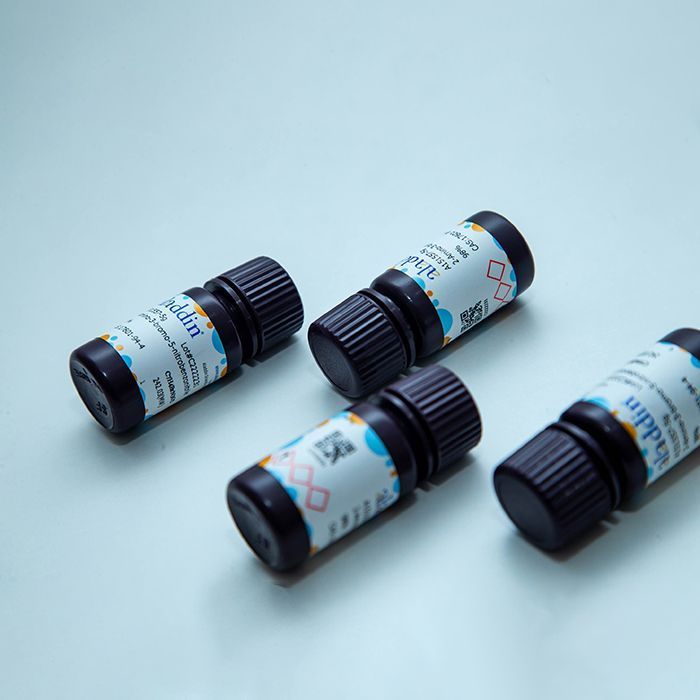
Gelatin - CP , CAS No.9000-70-8

CAS: 9000-70-8 Cat. No.: G108394 Numero EC: 232-554-6
Disponibile su ordine
QUALITÀ & PUREZZA CP ? Chemically Pure grade — moderate purity above technical grade but below analytical. Use for general lab reactions where ultra-low impurities aren't critical.
Synonyms
gelatine hydrolysate|hydrolyzed collagen|collagen hydrolysate
Storage
Desiccated,Room temperature
Shipped In
Normal
★
Dimensione
Germania (EU)
USA*
Prezzo
Qtà
100g
G108394-100g
5 Disponibile
7 Disponibile

20,74€

24,21€
Salva 3,47 € (14.34%)
500g
G108394-500g
1 Disponibile
7 Disponibile
74,54€
Enter a quantity for the sizes you want to add.

Specifiche

Sinonimi
gelatine hydrolysate | hydrolyzed collagen | collagen hydrolysate
Specifiche e purezza
CP
Condizioni di conservazione di stoccaggio
Desiccated,Room temperature
Spedito in
Normal
Grado
CP
Nomi e identificatori
Pubchem Sid
Pubchem Sid Url
https://pubchem.ncbi.nlm.nih.gov/substance/488189785
SMILES
CNCC(C1=CC(=C(C=C1)O)O)O.Cl
IUPAC Name
4-[(1R)-1-hydroxy-2-(methylamino)ethyl]benzene-1,2-diol;hydrochloride
InChIKey
ATADHKWKHYVBTJ-FVGYRXGTSA-N
InChI
1S/C9H13NO3.ClH/c1-10-5-9(13)6-2-3-7(11)8(12)4-6;/h2-4,9-13H,5H2,1H3;1H/t9-;/m0./s1
Isomeri SMILES
CNC[C@@H](C1=CC(=C(C=C1)O)O)O.Cl
WGK Germania
3
RTECS
LX8580000
Reaxys
4019338
Reaxys-RN_link_address
https://www.reaxys.com/reaxys/secured/hopinto.do?context=S&query=IDE.XRN=4019338&ln=

Dati avanzati

Taxonomic Classification

Taxonomy Tree

KingdomOrganic compounds
SuperclassBenzenoids
ClassePhenols
SubclassBenzenediols
Intermediate Tree Nodes Not available
Direct ParentCatechols
Alternative Parents Aralkylamines  1-hydroxy-4-unsubstituted benzenoids  1-hydroxy-2-unsubstituted benzenoids  Benzene and substituted derivatives  Secondary alcohols  1,2-aminoalcohols  Dialkylamines  Organopnictogen compounds  Hydrochlorides  Hydrocarbon derivatives  Aromatic alcohols  
Molecular FrameworkAromatic homomonocyclic compounds
Substituents Catechol - 1-hydroxy-4-unsubstituted benzenoid - 1-hydroxy-2-unsubstituted benzenoid - Aralkylamine - Monocyclic benzene moiety - 1,2-aminoalcohol - Secondary alcohol - Secondary aliphatic amine - Secondary amine - Alcohol - Hydrocarbon derivative - Organooxygen compound - Organonitrogen compound - Organic nitrogen compound - Organopnictogen compound - Organic oxygen compound - Amine - Aromatic alcohol - Hydrochloride - Aromatic homomonocyclic compound
DescrizioneThis compound belongs to the class of organic compounds known as catechols. These are compounds containing a 1,2-benzenediol moiety.
External Descriptors hydrochloride
Struttura 3D
Modello di struttura chimica interattiva


Meccanismi d'azione
Certificati (CoA, COO, BSE/TSE e tabella di analisi)
C of A & Other Certificates(BSE/TSE, COO):
Analytical Chart:

Find and download the COA for your product by matching the lot number on the packaging.

30 results found

Lot NumberCertificate TypeDataOggetto
B2301208B2301208Certificate of AnalysisNov 18, 2026 G108394
G2627274G2627274Certificate of AnalysisJul 20, 2026 G108394
G2627264G2627264Certificate of AnalysisJul 20, 2026 G108394
A2627464A2627464Certificate of AnalysisJan 19, 2026 G108394
A2627465A2627465Certificate of AnalysisJan 19, 2026 G108394
G2531431G2531431Certificate of AnalysisJul 07, 2025 G108394
G2531357G2531357Certificate of AnalysisJul 07, 2025 G108394
E2508244E2508244Certificate of AnalysisMar 28, 2025 G108394
E2508241E2508241Certificate of AnalysisMar 28, 2025 G108394
C2519152C2519152Certificate of AnalysisJan 06, 2025 G108394
C2519153C2519153Certificate of AnalysisJan 06, 2025 G108394
A2506116A2506116Certificate of AnalysisDec 26, 2024 G108394
A2506403A2506403Certificate of AnalysisDec 26, 2024 G108394
I2412367I2412367Certificate of AnalysisSep 04, 2024 G108394
I2412366I2412366Certificate of AnalysisSep 04, 2024 G108394
I2412365I2412365Certificate of AnalysisSep 04, 2024 G108394
I2412364I2412364Certificate of AnalysisSep 04, 2024 G108394
E2424048E2424048Certificate of AnalysisMay 30, 2024 G108394
E2319187E2319187Certificate of AnalysisFeb 04, 2024 G108394
E2304040E2304040Certificate of AnalysisMay 13, 2023 G108394
E2304046E2304046Certificate of AnalysisMay 13, 2023 G108394
A2305188A2305188Certificate of AnalysisJan 09, 2023 G108394
J2227163J2227163Certificate of AnalysisOct 31, 2022 G108394
H2209422H2209422Certificate of AnalysisAug 13, 2022 G108394
H2209426H2209426Certificate of AnalysisAug 13, 2022 G108394
G2220596G2220596Certificate of AnalysisJul 22, 2022 G108394
G2220593G2220593Certificate of AnalysisJul 22, 2022 G108394
G2213564G2213564Certificate of AnalysisJul 14, 2022 G108394
D2117020D2117020Certificate of AnalysisApr 22, 2021 G108394
D2117018D2117018Certificate of AnalysisApr 22, 2021 G108394
Sicurezza e pericoli (GHS)
WGK Germania
3
RTECS
LX8580000
Reaxys
4019338
Reaxys-RN_link_address
https://www.reaxys.com/reaxys/secured/hopinto.do?context=S&query=IDE.XRN=4019338&ln=
Domande frequenti e articoli
Picking CP Grade Reagents: Applications, Limits, and Upgrade Paths
Structural Characteristics, Biological Functions, and Application Prospects of Mussel Adhesive Proteins
A Practical Guide to Fragrance Compositions: Turning a Black-Box Formula into an Engineerable System—Compatibility, Stability, Controlled Release, Traceability, and Selection
Papain (Papaya Cysteine Protease): Composition, Structure, Manufacturing, and Application Guidance
Understanding Hydrophilic Polymers in Aqueous Systems: Hydration Mechanisms, Structural Knobs, and Task-Oriented Selection Guide (Including Tables 1–3)
Biomedical Polymer Insights: Role-Based Task Map, Six Key Material Levers, and a Risk-Driven Evidence Chain (including the Product Navigation Guide and Product Tables 1–3)
Beneath the Skin: Protein- and Peptide-Based Actives in Skincare and Aesthetic Medicine
Bromelain: Enzymological Properties and Key Points for Food, Pharmaceutical, and Industrial Applications
Glutaraldehyde-mediated Microbial Inactivation: Chemical Mechanisms, Determinants, and Key Validation Considerations
Review of Collagenase: Enzymological Features, Type Systems, and Research Applications
Review of the Structural Characteristics, Biological Functions, and Application Advances of Lycopene
Technical Comparison and Method Selection for Hydroxyproline Determination
Selection Logic, Operating Parameters, and Application Boundaries of Common Cell Culture Coating Solutions
Key Judgments in Medical Hydrogel R&D: From Polymer Source and Crosslinking Strategy to Sterilization Planning, Scale-Up Feasibility, and Quality Control
Injectable Thermosensitive Gels: Gelation Behavior, Rheological Properties, and Drug Release Characteristics
Comparative Analysis and Selection Strategies for Mounting Media in Immunological Experiments
Significance of CK, CK-MB, and CK-MM Testing in the Interpretation of Tissue Injury
Applications of Enzymatic Protein Crosslinking Systems in Gel Construction and Functional Evaluation
Designing Hydrogel Scaffolds as Programmable Cell Microenvironments: From Click-Chemistry Functionalization to 3D Cell Culture Experimental Design
The Role of Tannins in Astringency, Precipitation, and Antioxidant Activity of Plant Extracts
Structure, Properties, and Mechanisms of Powdered Fragrances and Fragrance Delivery Materials: Stability, Release Mechanisms, and Selection Logic
R&D Selection and Experimental Evaluation of Common Food Hydrocolloids
Evaluation of Blood-Brain Barrier Permeability: Tracer Extravasation, TEER Measurement, and Interpretation of In Vitro Model Results
How Do Collagen Peptides Act on the Skin? From Surface Hydration and Percutaneous Delivery to Fibroblasts and Collagen Homeostasis
How Palmitoyl Pentapeptide-4 Acts on the Skin: From the KTTKS Sequence and Skin Delivery to Collagen Matrix Responses
How Does Collagen Tripeptide Act on the Skin: Stratum Corneum Delivery, Matrix Protection, and Regulation of Collagen Homeostasis
What Determines Collagen Function: From Triple-Helix Formation to Hierarchical Assembly, Crosslink Maturation, and Dynamic Remodeling
What Is “Plant Collagen”? Distinguishing Ingredient Types, Structural Differences, Production Methods, and Skincare Effects
The Combination Logic of Palmitoyl Tripeptide-1 and Palmitoyl Pentapeptide-4: Skin Delivery, Matrix Signaling, and Regulation of Collagen Homeostasis
Differences Between Animal-Derived Collagen and Recombinant Collagen in Skincare: Sequence and Structure, Safety, Skin Effects, and Evidence Evaluation
Citations of This Product
Calcolatori di soluzioni
Recensioni

Recensioni dei clienti

Domande frequenti

How is this product shipped?
This product ships under standard ambient conditions. No temperature-controlled packaging is required.
How should this product be stored?
Store at room temperature, desiccated. Keep the container tightly closed with desiccant — the material is moisture-sensitive.
What does CP mean?
CP is a defined analytical purity tier suitable for general analytical and reagent applications. It specifies a minimum assay percentage, controlled limits on common impurities (water, heavy metals, residue on ignition), and lot-to-lot consistency. CP is one of several purity tiers — choose based on the sensitivity and regulatory requirements of your method.
What are the CAS number, molecular formula and molecular weight?
The CAS Number is 9000-70-8. InChIKey ATADHKWKHYVBTJ-FVGYRXGTSA-N.
What documentation is provided?
Available product documentation, including Certificates of Analysis (COA), Safety Data Sheets (SDS), and specification sheets, is shown in the product document area. Document availability and access follow the current site policy.

Hai bisogno di aiuto per scegliere la qualità?

La nostra guida alla selezione delle qualità copre purezza, stato dello stabilizzatore e idoneità all'applicazione per tutte le varianti del nostro catalogo.

Visualizza la guida alle qualità CP →

Desidera che le inviamo un messaggio quando avremo sconti disponibili?

Ricordamelo più tardi

Grazie! Controlli la sua casella di posta per confermare.

Ops! Le notifiche sono disabilitate.