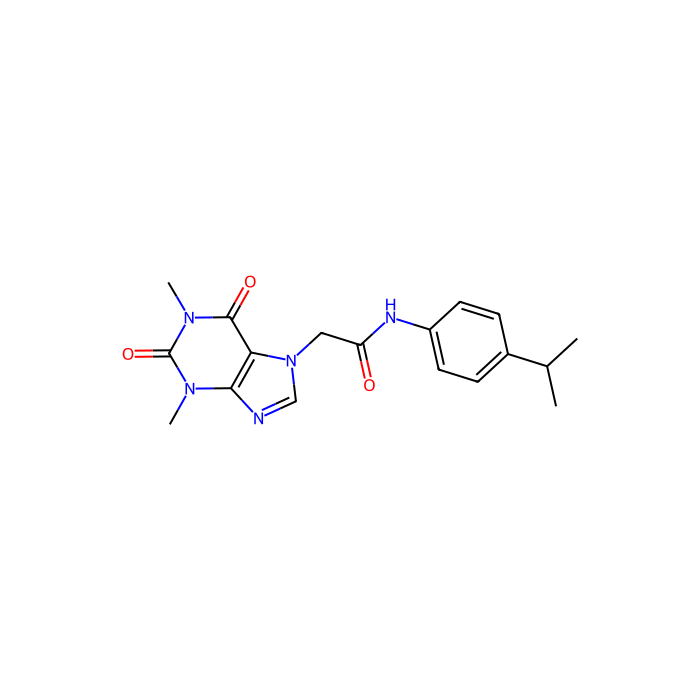
HC-030031 - Moligand™, ≥98% , Gating inhibitor of TRPA1, CAS No.349085-38-7, Gating inhibitor of TRPA1

CAS: 349085-38-7 Cat. No.: H126738 Formula: C18H21N5O3 Peso molecolare: 355.39 Numero EC: 631-548-4
Disponibile su ordine
QUALITÀ & PUREZZA Moligand™ ? Moligand™ — Aladdin's line of ligands and bioactive small molecules. Use for receptor, pathway, and binding studies needing defined small-molecule tools. ≥98%
Synonyms
HC 030031|HC030031|2-(1,3-dimethyl-2,6-dioxo-1,2,3,6-tetrahydropurin-7-yl)-N-(4-isopropylphenyl)acetamide|2-(1,3-Dimethyl-2,6-dioxo-1,2,3,6-tetrahydro-7H-purin-7-yl)-N-(4-isopropylphenyl)acet amide|2-(1,3-dimethyl-2,6-dioxopurin-7-yl)-N-(4-propan-2-ylphenyl)acetamide|7H-Purine-7-acetamide, 1,2,3,6-tetrahydro-1,3-dimethyl-N-(4-(1-methylethyl)phenyl)-2,6-dioxo-|2-(1,3-dimethyl-2,6-dioxo-2,3-dihydro-1H-purin-7(6H)-yl)-N-(4-isopropylphenyl)acetamide|TrpA1 Antagonist, HC-030031 - CAS 349085-38-7|2-(1,3-dimethyl-2,6-dioxo-1,2,3,6-tetrahydro-7H-purin-7-yl)-N-[4-(propan-2-yl)phenyl]acetamide|2-(1,3-dimethyl-2,6-dioxo-2,3,6,7-tetrahydro-1H-purin-7-yl)-N-[4-(propan-2-yl)phenyl]acetamide|2-(1,3-dimethyl-2,6-dioxopurin-7-yl)-N-(4-propan-2-ylphenyl)acetamide.|HC-030031|2-(1,3-dimethyl-2,6-dioxo-1,2,3,6-tetrahydro-7H-purin-7-yl)-N-(4-isopropylphenyl)acetamide
Storage
Store at -20°C
Shipped In
Ice chest + Ice pads
★
Dimensione
Germania (EU)
USA*
Prezzo
Qtà
5mg
H126738-5mg
Su ordinazione · 8–12 settimane
45,04€
10mg
H126738-10mg
—
3 Disponibile
71,94€
50mg
H126738-50mg
—
3 Disponibile
112,72€
250mg
H126738-250mg
—
3 Disponibile
408,62€
1g
H126738-1g
—
2 Disponibile
760,92€
Enter a quantity for the sizes you want to add.

Panoramica

HC-030031 is a selective TRPA1 channel blocker that antagonizes AITC- and formalin-evoked calcium influx with IC50 of 6.2 μM and 5.3 μM respectively.
A potent and selective TRPA1 inhibitor

Specifiche

Sinonimi
HC 030031 | HC030031 | 2-(1,3-dimethyl-2,6-dioxo-1,2,3,6-tetrahydropurin-7-yl)-N-(4-isopropylphenyl)acetamide | 2-(1,3-Dimethyl-2,6-dioxo-1,2,3,6-tetrahydro-7H-purin-7-yl)-N-(4-isopropylphenyl)acet amide | 2-(1,3-dimethyl-2,6-dioxopurin-7-yl)-N-(4-propan-2-ylphenyl)acetamide | 7H-Purine-7-acetamide, 1,2,3,6-tetrahydro-1,3-dimethyl-N-(4-(1 Mostra altro
Specifiche e purezza
Moligand™, ≥98%
Meccanismi biochimici e fisiologici
HC-030031 is a substituted theophylline derivative. Potent and selective ANKTM1 (TRPA1) inhibitor. It antagonizes allyl isothiocyanate (AITC)- and formalin-evoked calcium influx with IC50 values of 6.2 and 5.3 μM respectively. Both inward and outward currents elicited by AITC or formalin are rapidly and reversibly blocked by HC-030031 which also blocks the activation of TRPA1 by N-methylmaleimide and by electrophillic prostaglandins2. TRPV1, TRPV3, TRPV4, hERG and NaV1.2 are not blocked.Selective TRPA1 blocker, orally active. Blocks TRPA1-mediated currents (IC 50 = 0.7 μM) and selective over TRPV1, TRPV3, TRPV4, hERG, and Na V 1.2 channels (IC 50 >10 μM).
Condizioni di conservazione di stoccaggio
Store at -20°C
Spedito in
Ice chest + Ice pads
Questo prodotto richiede spedizione a catena fredda. I servizi di terra e altri servizi economici non sono disponibili.
Grado
Moligand™
Tipo di azione
GATING INHIBITOR
Meccanismo d'azione
Gating inhibitor of TRPA1
Nota
Wherever possible, you should prepare and use solutions on the same day. However, if you need to make up stock solutions in advance, we recommend that you store the solution as aliquots in tightly sealed vials at -20°C. Generally, these will be useable for up to one month. Before use, and prior to opening the vial we recommend that you allow your product to equilibrate to room temperature for at least 1 hour. Toxic, refer to SDS for further information. Need more advice on solubility, usage and handling? Please visit our frequently asked questions (FAQ) page for more details.
Purezza
≥98%
Nomi e identificatori
Pubchem Sid
Pubchem Sid Url
https://pubchem.ncbi.nlm.nih.gov/substance/504760400
SMILES
CC(C)C1=CC=C(C=C1)NC(=O)CN2C=NC3=C2C(=O)N(C(=O)N3C)C
IUPAC Name
2-(1,3-dimethyl-2,6-dioxopurin-7-yl)-N-(4-propan-2-ylphenyl)acetamide
InChIKey
HEQDZPHDVAOBLN-UHFFFAOYSA-N
InChI
1S/C18H21N5O3/c1-11(2)12-5-7-13(8-6-12)20-14(24)9-23-10-19-16-15(23)17(25)22(4)18(26)21(16)3/h5-8,10-11H,9H2,1-4H3,(H,20,24)
Isomeri SMILES
CC(C)C1=CC=C(C=C1)NC(=O)CN2C=NC3=C2C(=O)N(C(=O)N3C)C
WGK Germania
3
Peso molecolare
355.39
Reaxy-Rn
12759009
Reaxys-RN_link_address
https://www.reaxys.com/reaxys/secured/hopinto.do?context=S&query=IDE.XRN=12759009&ln=

Dati avanzati

Taxonomic Classification

Taxonomy Tree

KingdomOrganic compounds
SuperclassOrganoheterocyclic compounds
ClasseImidazopyrimidines
SubclassPurines and purine derivatives
Intermediate Tree Nodes Not available
Direct ParentXanthines
Alternative Parents 6-oxopurines  Alkaloids and derivatives  Anilides  Cumenes  Phenylpropanes  N-arylamides  Pyrimidones  N-substituted imidazoles  Vinylogous amides  Heteroaromatic compounds  Lactams  Secondary carboxylic acid amides  Ureas  Azacyclic compounds  Organic oxides  Hydrocarbon derivatives  Carbonyl compounds  Organopnictogen compounds  
Molecular FrameworkAromatic heteropolycyclic compounds
Substituents Xanthine - 6-oxopurine - Purinone - Cumene - Phenylpropane - Anilide - Alkaloid or derivatives - N-arylamide - Pyrimidone - Benzenoid - Pyrimidine - Monocyclic benzene moiety - N-substituted imidazole - Vinylogous amide - Heteroaromatic compound - Azole - Imidazole - Urea - Secondary carboxylic acid amide - Carboxamide group - Lactam - Azacycle - Carboxylic acid derivative - Hydrocarbon derivative - Organonitrogen compound - Organic oxygen compound - Organooxygen compound - Organopnictogen compound - Carbonyl group - Organic oxide - Organic nitrogen compound - Aromatic heteropolycyclic compound
DescrizioneThis compound belongs to the class of organic compounds known as xanthines. These are purine derivatives with a ketone group conjugated at carbons 2 and 6 of the purine moiety.
External Descriptors Not available
Struttura 3D
Modello di struttura chimica interattiva


Obiettivi associati (umani)
TRPA1 Tclin Transient receptor potential cation channel subfamily A member 1 (11 Activities)
Activity TypeActivity Value -log(M)Mechanism of ActionActivity ReferencePublications (PubMed IDs)
TRPV1 Tclin Vanilloid receptor (8273 Activities)
Activity TypeRelationActivity valueUnitsAction TypeJournalPubMed IddoiAssay Aladdin ID
PDE4B Tclin Phosphodiesterase 4B (2748 Activities)
Activity TypeRelationActivity valueUnitsAction TypeJournalPubMed IddoiAssay Aladdin ID
TRPV4 Tchem Transient receptor potential cation channel subfamily V member 4 (774 Activities)
Activity TypeRelationActivity valueUnitsAction TypeJournalPubMed IddoiAssay Aladdin ID
PDE7A Tclin Phosphodiesterase 7A (1104 Activities)
Activity TypeRelationActivity valueUnitsAction TypeJournalPubMed IddoiAssay Aladdin ID
TRPV3 Tchem Transient receptor potential cation channel subfamily V member 3 (542 Activities)
Activity TypeRelationActivity valueUnitsAction TypeJournalPubMed IddoiAssay Aladdin ID
Obiettivi associati (non umani)
Hdac6 Histone deacetylase 6 (222 Activities)
Activity TypeRelationActivity valueUnitsAction TypeJournalPubMed IddoiAssay Aladdin ID
Mus musculus (284745 Activities)
Activity TypeRelationActivity valueUnitsAction TypeJournalPubMed IddoiAssay Aladdin ID
Rattus norvegicus (775804 Activities)
Activity TypeRelationActivity valueUnitsAction TypeJournalPubMed IddoiAssay Aladdin ID
rep Replicase polyprotein 1ab (378 Activities)
Activity TypeRelationActivity valueUnitsAction TypeJournalPubMed IddoiAssay Aladdin ID
Trpa1 Transient receptor potential cation channel subfamily A member 1 (1003 Activities)
Activity TypeRelationActivity valueUnitsAction TypeJournalPubMed IddoiAssay Aladdin ID
Trpm8 Transient receptor potential cation channel subfamily M member 8 (889 Activities)
Activity TypeRelationActivity valueUnitsAction TypeJournalPubMed IddoiAssay Aladdin ID
Meccanismi d'azione
Certificati (CoA, COO, BSE/TSE e tabella di analisi)
C of A & Other Certificates(BSE/TSE, COO):
Analytical Chart:

Find and download the COA for your product by matching the lot number on the packaging.

4 results found

Lot NumberCertificate TypeDataOggetto
D1727010D1727010Certificate of AnalysisMay 21, 2026 H126738
I2227330I2227330Certificate of AnalysisApr 03, 2026 H126738
I2227331I2227331Certificate of AnalysisApr 03, 2026 H126738
I2227414I2227414Certificate of AnalysisApr 03, 2026 H126738
Proprietà chimiche e fisiche
SolubilitàDMSO 32 mg/mL Water <1 mg/mL Ethanol <1 mg/mL
Indice di rifrazione1.65
Punto di ebollizione (°C)650.65° C
Punto di fusione (°C)221-223°C
Peso molecolare355.400 g/mol
XLogP31.700
Hydrogen Bond Donor Count1
Hydrogen Bond Acceptor Count4
Rotatable Bond Count4
Exact Mass355.164 Da
Monoisotopic Mass355.164 Da
Topological Polar Surface Area87.500 Ų
Heavy Atom Count26
Formal Charge0
Complexity573.000
Isotope Atom Count0
Defined Atom Stereocenter Count0
Undefined Atom Stereocenter Count0
Defined Bond Stereocenter Count0
Undefined Bond Stereocenter Count0
The total count of all stereochemical bonds0
Covalently-Bonded Unit Count1
Domande frequenti e articoli
Citations of This Product
Calcolatori di soluzioni
Recensioni

Recensioni dei clienti

Application Protocols

No item-specific application protocols are provided in the Product Data for this listing.

General assay workflow suggestions for small-molecule tool compounds (non-binding guidance):

  • Stock preparation:

    • Dissolve in anhydrous DMSO to make a concentrated stock (e.g., 10–50 mM). Vortex/sonicate briefly; if undissolved, warm gently (≤37°C). Record exact concentration.
  • Plate-based assays (e.g., Ca2+ flux, reporter assays):

    • Prepare serial DMSO dilutions; add to assay buffer/cells to achieve target concentrations while keeping DMSO constant across wells (commonly ≤0.5–1% v/v).
    • Include vehicle controls and, if feasible, an orthogonal reference compound.
  • Electrophysiology:

    • Prepare fresh working solutions immediately before use; confirm compound stability in the external solution. Minimize DMSO to avoid effects on membrane properties.
  • Data quality:

    • Monitor solubility/precipitation visually and by plate-reader signal drift; consider non-specific binding controls (e.g., low-bind plastics).

These are general best practices; adapt to your SOPs and validate experimentally. For definitive, item-specific instructions, refer to the CoA/Spec Sheet or institutional methods.

Biological Roles
  • General role (literature): HC-030031 is widely cited as a selective small-molecule modulator of the TRPA1 ion channel, often described as an antagonist in cellular and biochemical studies. Researchers use it as a chemical probe to interrogate TRPA1 function in signaling pathways and to validate target-dependent phenotypes.

  • Mechanistic context (general knowledge):

    • TRPA1 is a nonselective cation channel of the TRP family, activated by electrophilic and certain non-electrophilic stimuli. Chemical antagonists are employed to differentiate TRPA1-mediated responses from off-target effects in complex systems (literature).
    • Tool compounds like HC-030031 facilitate mapping of upstream activators and downstream consequences (e.g., cytosolic Ca2+ changes), enabling careful control experiments alongside genetic knockdown/knockout.
  • Experimental considerations:

    • Validate concentration ranges to minimize off-target pharmacology; employ counter-screens against related TRP channels or unrelated ion channels to confirm specificity where feasible (literature best practice).
    • Pay attention to vehicle effects (DMSO) and adsorption to plastics, which can influence observed potency in low-volume plates.
  • Biological matrices and formats:

    • Commonly used in heterologous expression systems (e.g., HEK293 or CHO cells expressing TRPA1), primary cells expressing native channel levels, and membrane preparations for binding/uptake surrogates (literature).

Note: The above reflects general literature knowledge about HC-030031-type tools and does not constitute clinical or diagnostic guidance.

Buffer Applications

This product is not a buffering agent and is not typically used to prepare pH buffer systems.

  • Practical guidance for assay buffers (general best practice for small-molecule tools):
    • Use biologically relevant buffers (e.g., PBS, HEPES, HBSS, or assay-specific saline) compatible with your cell or protein system.
    • Maintain consistent DMSO content across all wells/samples (vehicle control matching) to control for solvent effects.
    • If solubility is limited, consider adding the DMSO stock to warm buffer with vigorous mixing; avoid exceeding the assay’s tolerated % DMSO.

For exact compatibility (salts, pH windows, surfactants), refer to your assay SOPs; compound-specific buffer pKa data are not provided for this item.

Green Alternatives

As a bioactive tool compound used in screening rather than a bulk solvent or common synthetic reagent, “green alternatives” are generally not applicable in the conventional sense. However, greener handling practices can still reduce environmental footprint.

  • Practical greener practices for assay work:

    • Maximize stock concentration to minimize solvent volumes (commonly in DMSO), reducing waste per assay point.
    • Use miniaturized assay formats (e.g., 384- or 1536-well plates) to lower reagent consumption and solvent waste.
    • Consolidate and segregate organic waste streams (DMSO/DMF/EtOH) for appropriate disposal; avoid unnecessary rinses with halogenated solvents.
    • Prefer aqueous buffers for final working solutions when solubility allows; cap DMSO at the minimum compatible level (often ≤0.5–1% v/v).
  • Comparison of common stock solvents (general perspective):

    • DMSO: high solvency and assay compatibility; relatively low volatility; favorable vs. chlorinated solvents from an EHS standpoint, but still requires proper disposal.
    • Ethanol: renewable feedstock potential; higher volatility and potential assay interference at equal % v/v.
  • Supplier considerations:

    • Order the smallest pack size compatible with your screening needs to minimize surplus and end-of-life disposal.

Because this is a defined molecular entity used at low mass-scale in discovery assays, selection of a different “green reagent” is generally not relevant; instead, optimize solvent use and waste management.

Pharmaceutical Uses
  • Scope of this listing:

    • Research Use Only. This product is not an API, not GMP, and not intended for human or veterinary use.
  • Relevance to pharmaceutical R&D (general, non-clinical):

    • Tool compound for target validation: helps deconvolute TRPA1 involvement in cellular and biochemical assays (literature).
    • Hit-to-lead support: enables benchmarking of new chemical matter against a known reference antagonist during SAR development (general practice).
    • ADME/tox pilot studies (in vitro): may serve as a control article to calibrate assays (per institutional SOPs). Any in vivo use must follow institutional ethics and regulatory approvals; Aladdin provides no clinical guidance.
  • Formulation notes for research settings (general):

    • Stock solutions are typically prepared in DMSO; for in vitro use, dilute into assay media ensuring final solvent content remains within tolerated limits.
    • For any nonclinical formulation exploration (e.g., solubility screening), common approaches include cosolvent systems (DMSO/PEG400/saline) or cyclodextrin complexes; these are general strategies and not product-specific recommendations.
  • Compliance and documentation:

    • No pharmacopeial monograph is indicated for this research code; identity, purity, and handling should follow the provided CoA and SDS.

Numeric excipient specifications or GMP attributes are not specified for this item.

Physical Properties
  • Item-specific specifications:

    • Appearance: Not specified for this item; refer to CoA/Spec Sheet.
    • Molecular Weight: Not specified for this item; refer to CoA/Spec Sheet.
    • Melting point (MP): Not specified for this item; refer to CoA/Spec Sheet.
    • Boiling point (BP): Not specified for this item; refer to CoA/Spec Sheet.
    • Density: Not specified for this item; refer to CoA/Spec Sheet.
    • Solubility: Not specified for this item; refer to CoA/Spec Sheet.
    • LogP/logD: Not specified for this item; refer to CoA/Spec Sheet.
    • Refractive index: Not applicable to solids; if liquid form is supplied, refer to CoA/Spec Sheet.
  • Literature/general expectations for small-molecule screening compounds (not item-specific):

    • Many TRP-channel tool compounds exhibit moderate-to-high hydrophobicity and are commonly dissolved first in dry DMSO to prepare concentrated stock solutions (e.g., 10–50 mM), then diluted into aqueous assay buffers with gentle mixing to minimize precipitation (literature best practice).
    • Aqueous solubility often depends strongly on pH and cosolvent content; final DMSO content in biological assays is typically kept ≤0.5–1% v/v (general practice).
  • Practical guidance (general):

    • If solid: verify dryness before preparing stocks; weigh rapidly to minimize moisture uptake.
    • If material is supplied pre-dissolved: confirm solvent, concentration, and any stabilizers on the CoA prior to use.

Always treat Product Data/CoA values as authoritative for this catalog item.

Quality and Grades
  • Item-specific grade: Moligand™

    • Moligand™ designates suitability for screening and discovery workflows where reliable identity and performance as a small-molecule ligand/tool are critical. This typically emphasizes confirmed structure and purity appropriate for library and target-engagement studies, with documentation available on request (CoA/Spec Sheet).
  • What this means in practice (general guidance for Moligand™-type materials):

    • Identity verification via orthogonal methods (e.g., NMR/HRMS and/or HPLC-UV/ELSD) is expected.
    • Purity is targeted for research screening; low non-volatile residue and well-resolved chromatographic profile support reproducible assay results. Exact purity threshold for this lot: Not specified for this item; refer to CoA/Spec Sheet.
    • Trace stabilizers, residual solvents, water content, and specific impurity limits: Not specified for this item; refer to CoA/Spec Sheet.
  • Fit-for-purpose considerations:

    • Library/HTS use: prioritize high chemical purity and consistent batch-to-batch performance; verify solubility and aggregation behavior in your assay matrix.
    • Lead-optimization chemistry: ensure analytical data packages (spectra/chromatograms) match your internal QC requirements.
  • Documentation:

    • For audits and data integrity, archive the item’s CoA/Spec Sheet and SDS with your ELN or LIMS records.

Note: Where exact numeric specifications (e.g., UV cutoff, metal limits) are needed, consult the CoA; such values are not specified here.

Reaction and Applications

This item is supplied as a research tool compound rather than a synthetic reagent; it is primarily used in biochemical and cellular studies rather than as a building block.

  • Item-specific intended use:

    • Category Path indicates inclusion in a small-molecule/compound library; best suited for screening, target validation, and mechanism-of-action studies.
  • General research applications (literature/general knowledge for HC-030031-like tools):

    • Employed as a pathway probe in studies involving TRP channels, especially TRPA1; assists in dissecting signaling cascades and validating target involvement in cellular phenotypes (literature).
    • Utilized in concentration–response experiments, time-course inhibition, and orthogonal assay formats (e.g., Ca2+ flux, electrophysiology) to evaluate target engagement (literature).
  • Practical notes:

    • Prepare serial dilutions in DMSO, followed by dilution into assay buffer to reach the desired final concentration and solvent percentage.
    • Include vehicle controls (matching DMSO %) and, where possible, orthogonal tool compounds to strengthen target attribution.
    • Confirm compound integrity by LC–MS and analytical HPLC after extended storage or multiple freeze–thaw cycles.
  • Not typically applicable:

    • The compound is not commonly used as a reagent in named organic reactions or as a coupling partner; refer instead to Biological Roles, Pharmaceutical Uses (as formulation context), and Application Protocols (if available) for relevant content.
Reaction Conditions

Not typically applicable: This product is a finished small-molecule tool compound supplied for biological/biochemical research, not a reagent for carrying out chemical reactions.

  • If you are synthesizing analogs (general, literature-informed guidance):
    • Solvents: DMF, DCM, MeCN, THF, and toluene are common in heteroaryl/acylation chemistry; ensure anhydrous conditions where needed.
    • Bases and couplings: HATU/EDC/DIC for amide formation; Pd-catalyzed cross-couplings for biaryl/heteroaryl assembly; verify compatibility with sensitive functional groups.
    • Temperatures: 0–110°C depending on step; monitor by TLC or LC–MS; inert atmosphere recommended for air/moisture-sensitive steps.
    • Workup/purification: aqueous quench, liquid–liquid extraction, silica gel chromatography; final polishing by prep-HPLC for high-purity material.

These conditions are general synthetic practices and not specific to the supplied HC-030031 lot. For this catalog item’s use, prioritize sections on Biological Roles, Solvent Selection, and Storage & Reconstitution.

Safety and Handling
  • Regulatory/SDS status for this listing:

    • Research Use Note: For research use only (not for human or veterinary use).
    • GHS classification, signal word, pictograms, and H-statements: Not specified for this item; refer to the SDS.
  • General laboratory precautions (good practice for small organic bioactives):

    • PPE: lab coat, nitrile gloves, safety glasses; handle powders in a fume hood to avoid inhalation of particulates.
    • Avoid contact with skin and eyes; prevent aerosol/dust generation during weighing or transfers.
    • Do not pipette by mouth; avoid ingestion and inhalation. Wash thoroughly after handling.
  • Storage incompatibilities and stability (general guidance):

    • Store at −20°C as specified; protect from light and moisture. Keep container tightly closed.
    • Avoid strong oxidizers and strong acids/bases unless stability has been verified.
    • Minimize repeated warming/cooling; for solutions in DMSO, aliquot to prevent freeze–thaw cycles.
  • Spill and disposal (general):

    • Small spills: cover with inert absorbent, collect, and dispose of as organic chemical waste per institutional and local regulations.
    • Disposal: treat as hazardous organic waste; do not release into drains.
  • First-aid overview (general):

    • Skin/eye contact: rinse with water for at least 15 minutes; remove contaminated clothing; seek medical advice.
    • Inhalation: move to fresh air; seek medical attention if symptoms persist.
    • Ingestion: rinse mouth; do not induce vomiting; seek medical attention.

Consult the product-specific SDS for definitive hazard and response information.

Solvent Selection

This product is a bioactive small molecule typically handled as concentrated stock solutions for screening and target engagement.

  • Item-specific solubility: Not specified for this item; refer to CoA/Spec Sheet.

  • General solvent guidance for small-molecule screening compounds (literature/best practice):

    • Primary stock solvent: anhydrous DMSO due to broad solubilizing power and compatibility with biological assays.
    • Secondary options (if needed): DMF or ethanol for intermediate concentrates; final assays often require aqueous buffers with controlled cosolvent ≤0.5–1% v/v.
    • Aqueous buffers: add compound stock slowly with vigorous mixing; consider surfactant (e.g., 0.01–0.05% Tween-20) only if compatible with assay.
  • Practical tips:

    • Sonication and brief warming (e.g., 25–37°C) can help dissolve recalcitrant solids; avoid excessive heat.
    • Filter sterilization (0.22 µm) may be applied to aqueous working solutions if the compound is not adsorbed by membranes; test recovery.
  • Comparison (general):

    • DMSO: highest success rate for hydrophobic ligands; low volatility; excellent chemical compatibility with microplate assays.
    • Ethanol: more volatile; higher limits on assay interference at comparable % v/v; less favored for poorly soluble, lipophilic scaffolds.
    • Aqueous-only: feasible for more polar compounds; verify stability and avoid precipitation on dilution.

Always confirm solvent compatibility with target assays and materials (plates, seals, tips).

Storage and Reconstitution
  • Item-specific storage and shipping (from Product Data):

    • Storage Conditions: Store at −20°C.
    • Shipped In: Ice chest + Ice pads.
    • Appearance: Not specified for this item; refer to CoA/Spec Sheet.
  • General reconstitution guidance (tool compounds):

    • If supplied as a solid: allow vial to equilibrate to room temperature in a desiccator before opening to prevent condensation. Weigh promptly. Dissolve in dry DMSO to prepare a concentrated stock (e.g., 10–50 mM), then aliquot and re-freeze at −20°C or −80°C.
    • If supplied as a solution: verify solvent and concentration on the label/CoA. Upon receipt, aliquot to minimize freeze–thaw cycles, protect from light, and store at the recommended temperature.
  • Stability and handling (general):

    • Avoid repeated freeze–thaw; use single-use aliquots when possible.
    • Protect from light and moisture. Inspect for precipitation or discoloration prior to use; confirm integrity by LC–MS/HPLC if critical to results.
    • Working solutions in aqueous buffers are typically prepared fresh and used the same day; discard any remaining material per laboratory waste procedures.
  • Specifications not provided for this item:

    • Exact solubility, pH stability, and long-term solution stability: Not specified for this item; refer to CoA/Spec Sheet.

Always defer to the product’s CoA and SDS for lot-specific instructions.

Structure and Identity

Brief overview: HC-030031 is a well-known research small molecule frequently referenced as a TRPA1 pathway tool compound. This listing is for a Moligand™-grade library molecule intended for research use.

  • Item-specific (from Product Data):

    • SKU: H126738
    • Product Name: HC-030031
    • CAS: 349085-38-7
    • CID: 1150897
    • InChIKey: 119513 (as provided; note: this appears non-standard in length — verify against CoA/SDS or trusted databases)
    • SMILES: Not specified for this item; refer to CoA/Spec Sheet.
    • Molecular Formula: Not specified for this item; refer to CoA/Spec Sheet.
    • Molecular Weight: Not specified for this item; refer to CoA/Spec Sheet.
  • Literature identifiers (for general reference; verify before use in regulatory documentation):

    • Common name: HC-030031 (research code)
    • Structural class: small-molecule bioactive; frequently cited as a selective TRPA1 antagonist (literature)
    • Full structural line not provided here to avoid conflicts; consult primary literature or trusted databases (e.g., PubChem CID 1150897) for the canonical SMILES and InChIKey (literature).
  • Structural description (general knowledge, literature):

    • Typical features reported for this scaffold include an aromatic/aryl-bearing core and heteroatom functionality enabling target engagement. Stereochemistry is generally not emphasized in most references for HC-030031 (literature).

Note: When preparing analytical documentation (NMR, HRMS, HPLC), rely on your item’s CoA/Spec Sheet for exact structural identifiers associated with this specific lot.

Synthetic Utility

This catalog item is offered as a finished research tool compound rather than a synthetic intermediate, so it is not typically used as a reagent or building block in multistep synthesis.

  • General remarks (for medicinal chemistry context):

    • Researchers may reference HC-030031 in SAR campaigns as a benchmark antagonist. While analog design can be informed by its scaffold, HC-030031 itself is not commonly incorporated into convergent synthetic routes.
    • If analogs are pursued, typical operations (amide coupling, heteroaryl substitutions, protection/deprotection) are executed on precursors rather than transforming HC-030031 directly.
  • Characterization guidance (applies to analog synthesis, general):

    • Confirm identity by 1H/13C NMR, HRMS, and analytical HPLC; evaluate purity and polymorph/solvate states where relevant.
    • Assess stability under assay-relevant conditions (buffer, pH, light) and track potential degradation by LC–MS.
  • Not applicable:

    • Named reactions, catalyst systems, or reagent roles are not typically associated with this compound as supplied.

For synthetic routes and building-block strategies, consult primary literature tied to the PubChem CID or related patents; none of those routes are item-specific guarantees for this lot.

Target Specificity

Item-specific target data are not provided in the Product Data for this listing.

  • From literature/general knowledge:

    • HC-030031 is widely used as a reference chemical probe for the TRPA1 ion channel and is generally described as a selective antagonist in cell-based and biochemical studies.
  • Important caveats:

    • Do not rely on literature alone for your specific assay system; specificity can depend on concentration, species ortholog, expression levels, and matrix conditions. Include appropriate counter-screens and vehicle controls.
  • Product Data constraints:

    • No vendor-verified potency, selectivity panel, or QC bioassay information is specified for this item. Consult the primary literature and generate in-house confirmatory data under your conditions.

Domande frequenti

What is the purity of this product?
This product is supplied at ≥98% purity (chemical assay). Lot-specific values are stated on the Certificate of Analysis.
What is Moligand??
Moligand? is one of Aladdin Scientific's premium product lines, formulated for high-purity applications across multiple workflows. Compared to standard grades in the same workflow, Moligand? products typically offer tighter specifications, more rigorous QC, and stronger lot-to-lot consistency.
How should this product be stored?
Store at ?20 °C. Freezer storage is required to maintain the specified shelf life.
How is this product shipped?
This product ships in an insulated container with ice pads. Unpack on arrival and transfer it to the storage condition stated above.
What are the CAS number, molecular formula and molecular weight?
The CAS Number is 349085-38-7, the molecular formula is C18H21N5O3, and the molecular weight is 355.39 g/mol. InChIKey HEQDZPHDVAOBLN-UHFFFAOYSA-N.
What documentation is provided?
Available product documentation, including Certificates of Analysis (COA), Safety Data Sheets (SDS), and specification sheets, is shown in the product document area. Document availability and access follow the current site policy.

Desidera che le inviamo un messaggio quando avremo sconti disponibili?

Ricordamelo più tardi

Grazie! Controlli la sua casella di posta per confermare.

Ops! Le notifiche sono disabilitate.