QUALITÀ & PUREZZAMoligand™?Moligand™ — Aladdin's line of ligands and bioactive small molecules. Use for receptor, pathway, and binding studies needing defined small-molecule tools.≥98%
This compound belongs to the class of organic compounds known as stilbenes. These are organic compounds containing a 1,2-diphenylethylene moiety. Stilbenes (C6-C2-C6 ) are derived from the common phenylpropene (C6-C3) skeleton building block. The introduction of one or more hydroxyl groups to a phenyl ring lead to stilbenoids.
External Descriptors
Not available
1. Djoumbou Feunang Y, Eisner R, Knox C, Chepelev L, Hastings J, Owen G, Fahy E, Steinbeck C, Subramanian S, Bolton E, Greiner R, and Wishart DS. ClassyFire: Automated Chemical Classification With A Comprehensive, Computable Taxonomy. Journal of Cheminformatics, 2016, 8:61.
Determine the necessary mass, volume, or concentration for preparing a solution.
Dilution Calculator
Determine the dilution needed to prepare a stock solution.
Reconstitution Calculator
Recensioni
Recensioni dei clienti
Application Protocols
No item-specific validated protocols are provided in this listing. The following are example workflows commonly used for small-molecule ligands and should be adapted and validated for JD-5037 in your lab.
Radioligand binding (membrane prep):
Prepare membrane fractions expressing the target receptor (e.g., CB1). Incubate with a fixed concentration of tritiated/iodinated agonist and serial dilutions of test compound (DMSO ≤0.5% v/v) for 60–90 min at 25–30°C in binding buffer (e.g., 50 mM Tris-HCl, 1 mM EDTA, 3 mM MgCl2, 0.1% BSA, pH 7.4). Separate bound/free by rapid filtration; quantify radioactivity to derive Ki via competitive binding analysis.
cAMP functional assay (Gi/o-coupled GPCR):
Seed receptor-expressing cells in 96/384-well plates. Preincubate with JD-5037 dilutions (vehicle-matched) for 15–30 min, stimulate with a known agonist ± forskolin as appropriate, and measure cAMP using HTRF or ELISA kits. Fit concentration–response curves to estimate functional antagonism/inverse agonism parameters.
Thermal shift (CETSA/DSF) for target engagement:
Incubate cell lysate or purified receptor domains with compound, apply a temperature gradient, and assess protein stabilization by immunoblot or fluorescence. Compare ΔTm relative to vehicle.
General tips:
Use low-bind plastics or glass to mitigate adsorption.
Verify compound solubility at top test concentrations; filter if needed.
Include appropriate positive/negative controls and replicate across independent days for robustness.
Biological Roles
Literature context (general, for background; not an item-specific claim or therapeutic statement):
JD-5037 has been reported as a peripherally restricted cannabinoid receptor type 1 (CB1) antagonist/inverse agonist. CB1 is a GPCR activated by endocannabinoids (e.g., anandamide, 2-AG) and is involved in metabolic signaling, appetite regulation, and peripheral energy homeostasis. “Peripherally restricted” in the literature refers to limited blood–brain barrier penetration, emphasizing actions outside the CNS.
Research utility stemming from these roles:
Probe for endocannabinoid pathway: Enables dissection of CB1-dependent signaling in peripheral tissues (e.g., liver, adipose) without central confounds, when such properties are confirmed for the batch under study.
Mechanistic studies: Useful in evaluating CB1-mediated modulation of second messengers (cAMP), β-arrestin recruitment, receptor internalization, and downstream kinase cascades (e.g., ERK), using recombinant or native systems.
Selectivity considerations: When deploying as a probe, researchers typically validate CB1 target engagement (binding/functional assays) and assess off-target profiles across related GPCRs or ion channels to contextualize phenotypes.
Good practice:
Always run vehicle controls and orthogonal assays (binding vs function) to confirm on-target mechanism.
For in vitro studies, document final DMSO levels and confirm absence of cytotoxicity at working concentrations.
Note: All uses are for research purposes only. No claims are made regarding diagnosis, treatment, or prevention of disease.
Buffer Applications
This item is a small-molecule research ligand and is not itself a buffering agent. However, practical buffer-related guidance for its use in biochemical and cell-based assays is provided below.
General buffer guidance (assay context; not item-specific specs):
Stock preparation: Dissolve the compound in anhydrous DMSO to create a concentrated stock (e.g., 10–50 mM). Store as single-use aliquots at -20°C.
Dilution into buffers: Add the DMSO stock to prewarmed assay buffer with vigorous mixing to avoid local supersaturation. Maintain final DMSO at ≤0.5–1% v/v unless your system tolerates more.
Common assay buffers: HBSS or DPBS for cellular assays; HEPES- or Tris-buffered saline for binding assays; add 0.01–0.1% BSA or Tween-80 to reduce nonspecific adsorption where compatible.
pH considerations: Many GPCR ligands can exhibit pH-dependent solubility/ionization. If precipitation occurs, adjust ionic strength or include a small percentage of co-solvent/surfactant and re-evaluate at pH 7.2–7.4.
Filtration: If particulate is observed after dilution, pass through a 0.22 µm PVDF/nylon filter; verify that filtration does not adsorb the compound (perform recovery check by LC–MS).
Not typically applicable:
Formulation of classical buffer systems (e.g., phosphate, citrate) is unrelated to the function of this small molecule; focus instead on solvent/buffer compatibility for your assay.
Green Alternatives
As a purpose-designed bioactive small molecule, JD-5037 is not a commodity solvent or reagent for which greener substitutes are typically evaluated. Nevertheless, you can improve the environmental profile of workflows involving this compound by optimizing the process context rather than the molecule itself.
Solvent selection: Use DMSO-water systems for assay work where feasible; avoid chlorinated solvents for sample preparation unless analytically required. For LC–MS sample prep, consider acetonitrile over methanol when waste minimization and recovery are possible.
Miniaturization: Reduce reaction/assay volumes (e.g., 384/1536-well plates) to cut solvent and compound use.
Energy: Store at -20°C as specified, but avoid deep-freeze cycling; batch sample retrieval to minimize door-open time.
Waste: Segregate halogenated from non-halogenated organic wastes. Evaluate solvent recycling for large profiling campaigns.
Safer additives: Prefer nonionic surfactants at minimal effective levels over harsh solubilizers; validate that additives do not alter biological activity.
Comparison table (contextual, not molecule substitution):
Greener alternative: Aliquoted single-use DMSO stocks, plate-based miniaturized assays to minimize waste and degradation
Note: No greener “alternative compound” is suggested because JD-5037’s utility lies in its specific biological interactions; substituting the molecule would change the scientific question.
Pharmaceutical Uses
This product is supplied strictly for research use only. No medical, diagnostic, or therapeutic uses are claimed or supported.
Relevant research/formulation contexts (general; not item-specific claims):
Discovery standard/control: Employed as a reference or control ligand in GPCR discovery programs investigating CB1 receptor pharmacology, including binding and functional antagonism/inverse agonism.
Preformulation research: Solubility profiling in biorelevant media, assessment of chemical stability (pH 2–9, oxidative, photolytic), and preliminary excipient compatibility studies to support in vitro experimentation.
Analytical reference: May serve as a system suitability or retention-time reference in LC–MS assays when studying related chemotypes, after appropriate qualification in-house.
Pharmacopeial status and regulatory grade:
No pharmacopeial monograph or GMP status is claimed. Grade is Moligand™ (research grade) as provided in this listing.
Practical notes:
Prepare and store concentrated DMSO stocks at -20°C; avoid repeated freeze–thaw by aliquoting.
When performing in vitro ADME (e.g., microsomal stability, plasma protein binding), document final solvent composition and verify that recovery is not limited by nonspecific binding.
Compliance reminder:
For laboratory research use only. Not for human or animal administration, not for ex vivo diagnostic use without proper validation, and not for compounding or clinical manufacturing.
Physical Properties
Item-specific properties provided in this listing:
Appearance: Not specified for this item; refer to CoA/Spec Sheet.
Molecular weight: Not specified for this item; refer to CoA/Spec Sheet.
Commonly requested properties (not specified for this item; consult CoA/SDS or primary literature for exact values):
Melting point (MP): Not specified for this item; refer to CoA/Spec Sheet.
Boiling point (BP): Not applicable/rarely reported for complex bioactives; refer to literature if needed.
Density: Not specified for this item; refer to CoA/Spec Sheet.
LogP/logD: Not specified for this item; refer to CoA/Spec Sheet.
pKa(s): Not specified for this item; refer to CoA/Spec Sheet.
Refractive index: Not applicable for solids; Not specified for this item if supplied as a solid.
UV-Vis λmax: Not specified for this item; refer to CoA/Spec Sheet.
Solubility: Not specified for this item; refer to CoA/Spec Sheet.
General guidance (literature/good practice; not item-specific):
Many GPCR-targeted small molecules are soluble in DMSO at 10–50 mM for screening stocks; aqueous solubility typically improves with co-solvent (DMSO, ethanol) and surfactant (e.g., 0.01–0.1% Tween-80) but should be verified experimentally.
When reporting assay concentrations, always state both the nominal compound concentration and final co-solvent percentage; maintain DMSO ≤0.5–1% v/v in biological assays unless otherwise validated.
Quality and Grades
Supplied grade:
Moligand™ (product data)
What Moligand™ implies (general description of grade; not a specification):
The Moligand designation is used for small-molecule ligands intended for screening, SAR, and mechanistic studies. Typical expectations include identity confirmation (e.g., NMR/MS), high assay suitability, and controlled storage/shipping to preserve integrity. Exact acceptance criteria (purity threshold, residual solvents, water content, salt form, counterions) are Not specified for this item; refer to CoA/Spec Sheet.
How to interpret and use this grade in your workflow:
Analytical verification: On receipt, verify identity by LC–MS and/or NMR against the CoA. Run a quick HPLC purity check under your method to confirm suitability for your assay window.
Assay readiness: For HTS/lead profiling, prepare DMSO stocks (see Storage & Reconstitution) and confirm stability in your assay buffer and plate storage timeline. Conduct a precipitation test at the highest planned concentration.
Stabilizers/additives: None are specified in this listing. If stabilizers (e.g., antioxidant, acid/base) are required for your protocol, document them explicitly and validate that they do not interfere with readouts.
Regulatory note: Research use only; not for human or veterinary use. No pharmacopeial grade is claimed.
Documentation:
For item-specific details such as exact purity, residual solvent limits, metal content, salt form, and water content: Not specified for this item; refer to CoA/Spec Sheet.
Reaction and Applications
This product is supplied as a bioactive small-molecule ligand for research. It is not typically employed as a reagent or building block in synthetic organic reactions.
Research applications (general/literature context; not item-specific claims):
Tool compound usage: JD-5037 has been reported in the literature as a peripherally restricted cannabinoid CB1 receptor antagonist/inverse agonist, making it useful as a pharmacological probe in studies of endocannabinoid signaling outside the CNS.
Stock solutions: Prepare concentrated DMSO stocks (see Solvent Selection) and confirm stability by LC–MS under your assay storage conditions (e.g., autosampler, plate incubators).
Adsorption and carryover: Hydrophobic ligands may adsorb to plastics; use low-bind plates or glass vials and include carrier protein (e.g., 0.1% BSA) if compatible with the readout.
Controls: Include vehicle controls (matched DMSO), positive/negative pharmacological controls where appropriate, and counter-screens to exclude off-target readouts or assay interference (e.g., fluorescence quenching).
Not applicable to this item:
Named synthetic reactions (e.g., Grignard, cross-coupling) are not relevant to the typical use of JD-5037 as a biological probe. For synthetic methodology, see general organic chemistry reagents instead.
Reaction Conditions
Not typically applicable. JD-5037 is supplied as a bioactive small molecule for use as a ligand/probe rather than as a reagent in chemical transformations.
If your workflow nonetheless involves chemical modification (general guidance only; verify against the actual structure before proceeding):
Solvents: Dry polar aprotic media (e.g., DMF, DMSO, NMP) are often used for derivatization of complex small molecules; maintain inert atmosphere to limit oxidation.
Temperatures: Favor mild conditions (0–60°C) and short reaction times to preserve integrity. Monitor by LC–MS.
Catalysis: Transition-metal catalysis (e.g., Pd cross-coupling) or amide coupling may be relevant only if the molecule bears suitable handles; confirm functional groups beforehand.
Workup: Avoid silica overexposure if the compound is base/acid labile; consider reversed-phase prep HPLC for purification.
Binding assays: Typical incubation 30–120 min at 25–37°C in buffered saline with protein/carrier; DMSO ≤1% v/v.
Functional GPCR assays: cAMP or β-arrestin readouts in recombinant cells; time courses 5–60 min depending on pathway kinetics.
These notes are general literature practices and are not item-specific specifications. Always consult the SDS and CoA and perform pilot tests to optimize for your system.
Safety and Handling
Safety information provided in this listing:
GHS Classification: Not specified for this item; refer to SDS.
Signal word: Not specified for this item; refer to SDS.
Hazard (H) statements: Not specified for this item; refer to SDS.
Pictograms: Not specified for this item; refer to SDS.
Storage conditions: Store at -20°C (product data). Shipped in ice chest with ice pads (product data).
Research use: For research use only (product data).
General laboratory safety guidance (professional practice; defer to SDS for authoritative instructions):
PPE: lab coat, safety glasses, and appropriate chemically resistant gloves. Avoid inhalation, ingestion, and skin/eye contact. Handle powders in a fume hood to minimize dust/aerosol exposure.
Incompatibilities: Avoid strong oxidizers and strong acids/bases during storage and handling unless compatibility is verified. Keep containers tightly closed, protected from light and moisture.
Hygroscopicity/photolability: Unknown for this item; minimize atmospheric exposure and store in original, light-protective packaging when possible.
First aid (overview): In case of skin/eye contact, rinse with water for ≥15 min; if inhaled, move to fresh air; if ingested, seek medical attention. Always consult the SDS for detailed measures specific to this product.
Waste: Dispose according to institutional hazardous waste protocols for organic research chemicals; do not discharge to drains.
Notes:
Allow cold shipments to equilibrate to room temperature in a desiccator before opening to prevent condensation. Reseal under inert gas if your workflow demands moisture control.
Solvent Selection
Item-specific solubility data are not provided in this listing. The following guidance reflects common practice for hydrophobic, drug-like GPCR ligands and should be validated experimentally for JD-5037 in your setting.
Primary stock solvent (typical practice):
DMSO (anhydrous) for 10–50 mM stocks; ensure complete dissolution with brief sonication or gentle heating (<40°C). Filter if necessary (PTFE, 0.22 µm).
Co-solvents for working solutions:
Ethanol, methanol, or acetonitrile in limited percentages, diluted into aqueous assay buffers. Maintain final organic co-solvent ≤0.5–1% v/v to minimize biological interference.
Aqueous buffers:
Incorporate 0.01–0.1% nonionic surfactant (e.g., Tween-80) to reduce adsorption and improve wetting for hydrophobic ligands. Validate effects on assay readout.
Polarity/miscibility (general):
Likely low aqueous solubility; high miscibility in polar aprotic organics (DMSO, DMF, NMP). Confirm empirically.
Comparison (general guidance):
DMSO vs DMF: DMSO is preferred for cell-based assays due to lower cytotoxicity at ≤0.5% v/v; DMF may be considered for difficult solubilization but is less biocompatible.
DMSO vs ethanol: Ethanol evaporates quickly and can shift concentrations; DMSO provides better stability for microplate storage.
Practical tips:
Pre-wet plastic tips/vials with DMSO stock to reduce adsorption losses.
Prepare serial dilutions fresh on the day of use when possible; check for precipitation after dilution into aqueous media.
Storage and Reconstitution
Storage (item-specific):
Store at -20°C (product data). Shipments are made in an ice chest with ice pads (product data). For long-term integrity, keep tightly closed, protected from moisture and light.
Reconstitution (general guidance; not item-specific specs):
Solvent: Use anhydrous DMSO to prepare a concentrated stock solution (commonly 10–50 mM). The exact solubility limit for this item is Not specified; determine empirically.
Procedure: Allow vial to equilibrate to room temperature in a desiccator before opening. Weigh quickly, add premeasured DMSO, vortex/sonicate to dissolve completely. If particulates persist, gently warm (<40°C) and/or filter through 0.22 µm PTFE.
Aliquoting: Divide the stock into single-use aliquots (e.g., 10–50 µL) in low-bind polypropylene or glass vials to avoid repeated freeze–thaw cycles.
Handling and stability (general):
Working solutions: Dilute DMSO stocks into assay buffer immediately before use, maintaining final DMSO ≤0.5–1% v/v unless validated otherwise.
Shelf life: Not specified for this item; refer to CoA/Spec Sheet and confirm by periodic LC–MS/HPLC checks during extended studies.
Notes:
Label aliquots with concentration, solvent, date, and operator initials. Maintain an inventory record (SKU J413607) for traceability.
For any ambiguity regarding salt form, water content, or counterions, consult the CoA/Spec Sheet prior to preparing quantitative stocks.
Structure and Identity
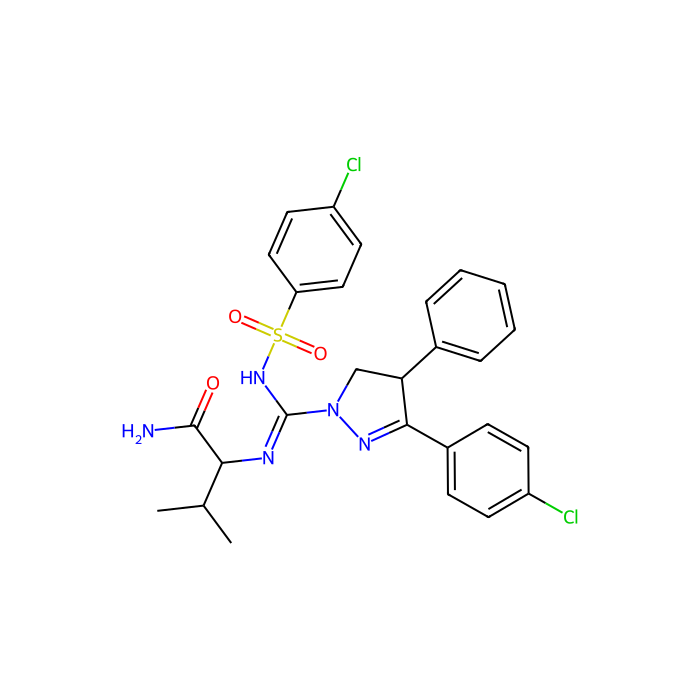
Brief overview: JD-5037 (SKU J413607) is supplied as a Moligand-grade small-molecule ligand for research screening and chemical biology.
CAS: 1392116-14-1 (product data)
CID: 66553204 (product data)
InChIKey: 110858 (as provided in product data; note this is a nonstandard InChIKey format)
SMILES: Not specified for this item; refer to CoA/Spec Sheet.
Molecular formula: Not specified for this item; refer to CoA/Spec Sheet.
Molecular weight: Not specified for this item; refer to CoA/Spec Sheet.
Structural features (general description, literature context — not item-specific specs):
JD-5037 is reported in the literature as a peripherally restricted cannabinoid CB1 receptor antagonist/inverse agonist designed to minimize CNS exposure. Detailed atom-level structure, stereochemistry, and substituent pattern should be confirmed from primary literature or the CoA/SDS for this lot.
2D structure description (general):
Small-molecule, drug-like scaffold with multiple heteroatoms typical of GPCR ligands; exact ring systems, functional groups, and stereocenters are not specified in this listing and must be verified from the certificate of analysis or authoritative databases.
Identity guidance:
For unambiguous confirmation in your lab, use orthogonal methods: HRMS (exact mass), 1H/13C NMR, and, if available, comparison to a verified reference spectrum. Retain the CAS and supplier SKU in your ELN for cross-reference.
Synthetic Utility
JD-5037 is a finished bioactive small molecule and is not typically used as a synthetic intermediate or reagent.
Context and guidance:
Functional group reactivity: Without an item-specific structural disclosure in this listing, no reliable functional group-based reactivity guidance can be provided. Do not assume availability of handles for derivatization (e.g., halogens, amines) without consulting the structure from primary literature or the CoA.
Use in synthesis: If analog generation or tagging is desired (e.g., biotinylation, photoaffinity probes), review the published structure to identify positions tolerating modification and confirm that modifications maintain the desired pharmacology.
Stability during synthetic operations: In the absence of item-specific data, avoid strong acids/bases, prolonged high-temperature steps, and oxidants that may degrade complex heteroaromatic scaffolds typical of GPCR ligands.
Recommended focus for this product:
Employ JD-5037 as a pharmacological probe in binding/functional assays rather than as a building block. If synthetic derivatization is central to your project, procure appropriate intermediates or scaffolds designed for SAR exploration.
Summary:
Synthetic utility is not a primary use-case for this item. Prioritize biological assay deployment, target-validation workflows, and analytical characterization over chemical transformation.
Target Specificity
This section typically applies to biologics (e.g., antibodies) where clone, isotype, and species reactivity are specified. For this small-molecule product, item-specific target binding parameters (Kd, Ki, IC50, selectivity panel results) are not provided in this listing.
Item-specific data: Not specified for this item; refer to CoA/Spec Sheet and primary literature.
Guidance: If using JD-5037 as a pharmacological probe, independently confirm target engagement and selectivity in your system via orthogonal assays (e.g., radioligand binding to CB1, functional antagonism assays, and off-target screening across related GPCRs) before drawing mechanistic conclusions.
Domande frequenti
What is the purity of this product?
This product is supplied at ≥98% purity (chemical assay). Lot-specific values are stated on the Certificate of Analysis.
What is Moligand??
Moligand? is one of Aladdin Scientific's premium product lines, formulated for high-purity applications across multiple workflows. Compared to standard grades in the same workflow, Moligand? products typically offer tighter specifications, more rigorous QC, and stronger lot-to-lot consistency.
How should this product be stored?
Store at ?20 °C. Freezer storage is required to maintain the specified shelf life.
How is this product shipped?
This product ships in an insulated container with ice pads. Unpack on arrival and transfer it to the storage condition stated above.
What are the CAS number, molecular formula and molecular weight?
The CAS Number is 1392116-14-1, the molecular formula is C27H27Cl2N5O3S, and the molecular weight is 572.51 g/mol. InChIKey GTCSIQFTNPTSLO-RPWUZVMVSA-N.
What documentation is provided?
Available product documentation, including Certificates of Analysis (COA), Safety Data Sheets (SDS), and specification sheets, is shown in the product document area. Document availability and access follow the current site policy.
Hai bisogno di aiuto per scegliere la qualità?
La nostra guida alla selezione delle qualità copre purezza, stato dello stabilizzatore e idoneità all'applicazione per tutte le varianti del nostro catalogo.
Utilizziamo i cookie per garantire il corretto funzionamento del sito web e, ove consentito, per migliorare la tua esperienza. Puoi gestire le tue preferenze in qualsiasi momento nelle Impostazioni. Per saperne di più, consulta la nostra Cookie Policy.
Desidera che le inviamo un messaggio quando avremo sconti disponibili?
Ricordamelo più tardi
Grazie! Controlli la sua casella di posta per confermare.
Products are supplied to verified businesses, institutions, and qualified professionals for research and development use only. Not for use in humans, animals, diagnosis, or therapy.

 I2524085