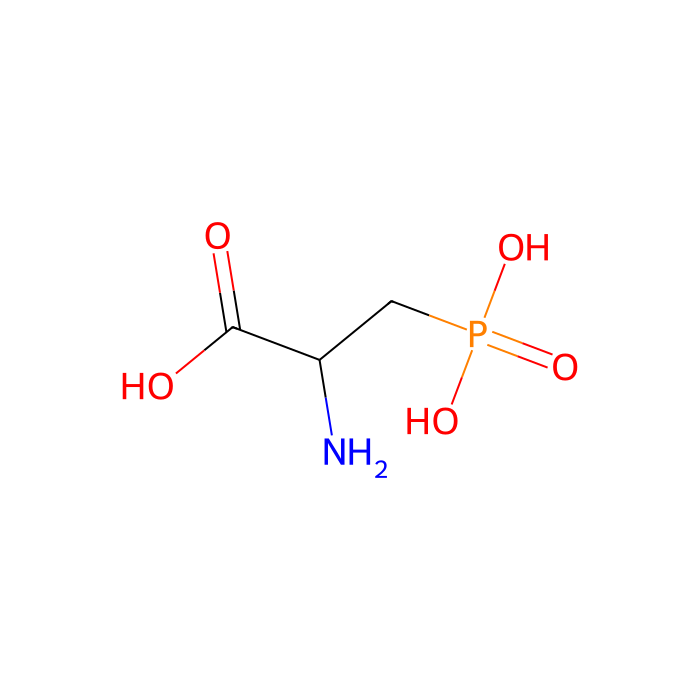
This compound belongs to the class of organic compounds known as l-alpha-amino acids. These are alpha amino acids which have the L-configuration of the alpha-carbon atom.
External Descriptors
Not available
1. Djoumbou Feunang Y, Eisner R, Knox C, Chepelev L, Hastings J, Owen G, Fahy E, Steinbeck C, Subramanian S, Bolton E, Greiner R, and Wishart DS. ClassyFire: Automated Chemical Classification With A Comprehensive, Computable Taxonomy. Journal of Cheminformatics, 2016, 8:61.
Certificati (CoA, COO, BSE/TSE e tabella di analisi)
C of A & Other Certificates(BSE/TSE, COO):
Analytical Chart:
Proprietà chimiche e fisiche
Solubilità
Soluble in water.
Indice di rifrazione
n20D1.56 (Predicted)
Punto di ebollizione (°C)
481.62° C at 760 mmHg (Predicted)
Punto di fusione (°C)
227-229° C
Peso molecolare
169.070 g/mol
XLogP3
-5.200
Hydrogen Bond Donor Count
4
Hydrogen Bond Acceptor Count
6
Rotatable Bond Count
3
Exact Mass
169.014 Da
Monoisotopic Mass
169.014 Da
Topological Polar Surface Area
121.000 Ų
Heavy Atom Count
10
Formal Charge
0
Complexity
174.000
Isotope Atom Count
0
Defined Atom Stereocenter Count
1
Undefined Atom Stereocenter Count
0
Defined Bond Stereocenter Count
0
Undefined Bond Stereocenter Count
0
The total count of all stereochemical bonds
0
Covalently-Bonded Unit Count
1
Calcolatori di soluzioni
Molarity Calculator
Determine the necessary mass, volume, or concentration for preparing a solution.
Dilution Calculator
Determine the dilution needed to prepare a stock solution.
Reconstitution Calculator
Recensioni
Recensioni dei clienti
Application Protocols
Tested application protocols, recommended dilutions, and positive controls are provided only when validated by the manufacturer.
For this item: Not specified for this item; refer to CoA/Spec Sheet.
General note: When preparing working solutions for in vitro research, establish internal SOPs covering dissolution (solvent/buffer choice), pH adjustment, sterilization (if needed), storage, and usage windows. Validate concentration by UV, NMR, or quantitative LC where appropriate.
Biological Roles
General, literature-based context (not item specification; for research use only):
Structural analogy: L-AP3 is an L-glutamate analog wherein a phosphonic acid replaces a distal carboxylate functionality, preserving key charge and hydrogen-bonding features while resisting hydrolysis. This often renders it a stable, non-metabolizable probe in biochemical systems.
Receptor pharmacology tool: Widely used in neuroscience research as a ligand to interrogate metabotropic glutamate receptors (mGluRs). Historically, L-AP3 has served as a reference antagonist for certain mGluR subfamilies in electrophysiological and synaptic transmission studies. Exact selectivity can vary with preparation and physiological conditions; consult primary literature for the specific receptor subtype and species model relevant to your work.
Enzymology and transport: As a zwitterionic amino acid analog, it can interact with amino acid transporters and enzymes in vitro; however, its high polarity generally limits passive membrane permeability, often necessitating extracellular application in slice or cell-based experiments.
Stability in biological media: The phosphonate is resistant to enzymatic hydrolysis compared with phosphate esters, providing sustained presence in aqueous buffers. Protonation state profoundly influences binding and transport; maintaining controlled pH and ionic strength is therefore essential for reproducibility.
Important caveats:
No claims are made here regarding therapeutic utility or in vivo efficacy.
For any biological inference, validate concentration ranges, exposure times, and off-target profiles under your exact assay conditions using appropriate controls.
Buffer Applications
L-AP3 itself is not used as a buffering agent; however, it is routinely prepared and used in buffered aqueous media.
Practical guidance (general):
Common media: phosphate-buffered saline (PBS), HEPES-buffered saline, or artificial cerebrospinal fluid (ACSF) for neurochemical assays.
Dissolution: add to water or buffer with stirring; if needed, adjust pH slightly upward with NaOH/KOH to fully dissolve polyanionic forms. Avoid excessive basicity if biological activity or stereochemistry may be affected.
pH considerations: multiple ionizable groups mean the effective charge state varies strongly with pH. Maintain a consistent pH (often ~7.2–7.4 for physiological work) to ensure reproducibility.
Filtration: sterile-filter through 0.22 µm membranes for cell/tissue applications. Pre-wet hydrophilic membranes to minimize binding losses; adsorption is generally low due to the compound’s ionic nature.
Compatibility: avoid buffers with metals that may chelate strongly to phosphonates if free ligand concentration is critical; chelators (e.g., EGTA) can be included if needed.
Note: Specific buffer recipes, concentrations, and osmolarities should be defined by your protocol. No item-specific buffering capacity or pKa set is provided here; consult primary literature for precise constants of amino-phosphonates.
Green Alternatives
Because L-AP3 is a solid reagent rather than a volatile solvent, “green alternatives” pertain more to solvent/media choices and process design when working with it.
Greener media recommendations (general):
Prefer water or aqueous buffers for dissolution, reactions (e.g., carbodiimide couplings), and workups whenever feasible.
Use bio-based or lower-toxicity cosolvents (e.g., ethanol) instead of higher-toxicity options when an organic component is necessary.
Minimize use of chlorinated reagents for phosphonate esterification; consider alternative activating strategies or enzymatic approaches where possible.
Comparison (illustrative; literature-based):
Water/buffer vs. polar aprotic (DMF/DMAc): aqueous systems reduce worker exposure and waste hazards but may require pH control and salting-out purification strategies.
Ethanol/water vs. methanol/water: ethanol offers lower toxicity; solubility differences are typically modest for ionic substrates like L-AP3.
Process considerations:
Implement telescoped aqueous operations (dissolution, coupling, purification by ion-exchange) to limit solvent switching.
Employ ion-exchange chromatography or membrane separations to avoid large volumes of organic solvents in purification.
Trade-offs: While water-rich systems are preferable, certain transformations (e.g., phosphonate chloridation) may necessitate non-green reagents. In such cases, apply microscale conditions, rigorous containment, and robust waste neutralization to mitigate impact.
Pharmaceutical Uses
This product is supplied strictly for research use only; it is not intended for human or veterinary use, diagnostics, or as a drug substance.
General, non-clinical context (literature/industry practice):
Reference standard/tool compound: may be used as a research reference material in receptor-binding assays or method validation (e.g., LC-MS quantitation in biological matrices) due to its stability and polarity.
Process/development studies: the amino-phosphonate motif is a common bioisostere in medicinal chemistry; L-AP3-derived scaffolds or analytical surrogates can aid in SAR exploration or transporter studies in preclinical settings.
Excipients/formulations: L-AP3 is not known as a pharmacopeial excipient. Its high polarity and acidity would limit direct excipient utility, but salts can be explored for specialized research formulations.
Regulatory note: There is no claim of compendial status (USP/EP/JP) or GMP suitability for this item. If you require pharmaceutical-grade material, request appropriate GMP documentation and compendial testing from qualified suppliers.
Physical Properties
Item-specific specifications (this product):
Appearance: Not specified for this item; refer to CoA/Spec Sheet.
Molecular Formula: Not specified for this item; refer to CoA/Spec Sheet.
Molecular Weight: Not specified for this item; refer to CoA/Spec Sheet.
General/literature properties (for reference; not item specifications):
Molecular formula (literature): C3H8NO5P
Molecular weight (literature): ~169.07 g/mol
Physical state: typically a crystalline, highly polar solid (zwitterionic amino-phosphonic acid)
Solubility: freely soluble in water and aqueous buffers across a broad pH range due to multiple ionizable groups; very low solubility in most aprotic organic solvents (e.g., ethers, hydrocarbons); limited in alcohols unless basified.
Ionization/acid–base: possesses multiple acidic sites (carboxylic acid and two phosphonic OH) and one basic amine; exists as a mixture of protonation states depending on pH. Reported pKa values vary in literature for amino-phosphonates; consult primary sources for quantitative values relevant to your conditions.
Partitioning: effectively non-lipophilic; expected very low logP and high logD(pH 7.4) negative due to polyanionic character.
Hygroscopicity: amino-phosphonates can exhibit hygroscopic tendencies; handle under dry conditions for accurate weighing.
Thermal behavior: typical amino-acid-like solids show high melting/decomposition temperatures; precise mp/thermal profile for this item is not specified here; consult CoA/SDS.
Notes: Provide your own measured values (mp, water content, residual solvents) for method development. Always treat values above as general guidance only unless confirmed on the item’s CoA.
Quality and Grades
Grade/Purity: Not specified for this item; refer to CoA/Spec Sheet.
How to interpret common grades for this class of material (general guidance):
Research or biochemical grade typically indicates suitability for in vitro use, method development, and biochemical assays, with controls on common inorganic impurities and residual solvents.
If labeled as “≥98%” or higher (not specified here), such purity helps minimize confounding biological effects in receptor pharmacology or electrophysiology. Verify by HPLC/NMR as needed.
Low-UV or LC/MS grades emphasize minimal background in chromatographic detection; useful when quantifying AP3 or related analytes in complex matrices.
Stabilizers and counter-ions:
L-AP3 is usually supplied as the free acid; no stabilizers are typically required. Any additives, hydrates, or salt forms would affect assay pH and molar calculations—confirm on the CoA.
Release documentation and QC practices (what to request/expect):
CoA typically includes identity (1H/13C NMR consistent with amino-phosphonate), purity by HPLC, and sometimes titration/elemental analysis.
For bioassay reproducibility, consider verifying optical rotation or chiral purity (e.g., chiral HPLC) to confirm L-enantiomer content if your application is stereoselective.
Bottom line: Use the CoA/Spec Sheet for item-specific acceptance criteria. If absent, establish an internal specification (e.g., assay purity, enantiomeric excess, water content) appropriate for your application.
Reaction and Applications
Chemistry-facing applications of L-AP3 leverage its amino acid functionality coupled with a pendant phosphonic acid, offering orthogonal handles for derivatization and for creating bioisosteric motifs.
Derivatization strategies (general literature guidance):
Amine protection: Boc (Boc2O, aqueous dioxane or THF, base) or Fmoc (Fmoc-Cl) to enable selective reactions at the acid groups.
Carboxyl activation/coupling: form amide derivatives via carbodiimide coupling (EDC/HOBt or DIC/HOAt) in water/DMF mixed media; the phosphonic acid often remains unreactive under mild peptide-coupling conditions.
Phosphonic ester formation: conversion to dialkyl phosphonate typically requires prior activation (e.g., formation of phosphonochloridate with thionyl chloride/POCl3, then alcoholysis) or use of strong dehydrative methods; milder methods include silylation followed by alcohol trapping.
Salt formation: alkali or amine salts improve solubility and can facilitate phase-transfer or crystallization.
Utility as a building block:
Bioisostere installation: the phosphonate group can serve as a tetrahedral, non-hydrolyzable mimic of phosphate or carboxylate in ligands and inhibitors; incorporation into peptidomimetics or fragment libraries is common.
Metal coordination: the {–PO3H2} motif offers chelation to hard metal centers; useful for materials interfaces and surface functionalization studies.
Assay reagent usage (literature context):
Frequently employed as a tool compound in neurochemical research as an analog of L-glutamate. When used in physiological buffers, confirm pH and ionic strength to maintain consistent ionization and activity.
Notes: The strong acidity of the phosphonate can suppress nucleophilicity of the amine; appropriate protection and pH control are key to efficient chemoselective transformations.
Reaction Conditions
General, literature-based guidance for transforming amino-phosphonates like L-AP3 (not item-specific; verify experimentally):
Amide coupling at the carboxyl group:
Solvent: water/DMF (1:1 to 3:1) or pure aqueous with water-soluble carbodiimides.
Reagents: EDC·HCl (1.1–1.5 eq) with NHS or HOBt/HOAt additives; base (NMM or DIPEA) to maintain pH 6.5–7.5.
Temperature/time: 20–25°C, 1–16 h depending on partners. Monitor by LC-MS.
Amine protection (Boc):
Solvent: aqueous dioxane, THF/water, or MeOH.
Reagents: Boc2O (1.2–2.0 eq), NaHCO3/Na2CO3 buffer to keep pH 8–9.
Temperature/time: 0–25°C, 0.5–4 h.
Carboxyl esterification:
Acid-catalyzed in alcohols (MeOH, EtOH) with catalytic HCl/H2SO4, or via diazomethane for methyl esters (observe strict safety controls). Ensure phosphonate compatibility; protect amine first to avoid salt formation.
Phosphonate esterification (more forcing):
Activate with POCl3 or SOCl2 to form phosphonochloridate, then treat with ROH and base at 0–25°C. Alternatively, silylation (e.g., TMSCl/imidazole) followed by alcoholysis can be employed. These steps are water-sensitive; conduct under anhydrous conditions and inert gas.
Salt formation:
Neutralize with NaOH/KOH or amines in water to form mono-/di-salts; isolate by lyophilization.
Purification:
Ion-exchange chromatography (cation or anion exchange) and reverse-phase LC are effective given the ionic nature. Avoid silica gel unless suitably protected/esterified.
These conditions are starting points; optimize stoichiometry, pH, and solvent composition for your substrates and scale.
Safety and Handling
Authoritative safety information for this specific item (GHS classification, pictograms, hazard statements) is Not specified for this item; refer to SDS.
Practical handling guidance (general, literature-based for amino-phosphonates; not product-specific):
Anticipated hazards: low volatility; may cause irritation to eyes, skin, and respiratory tract upon dust generation. Avoid inhalation of powders and contact with eyes/skin.
PPE: laboratory coat, nitrile gloves, and safety glasses as baseline; use a Fume Hood when weighing or preparing solutions to minimize dust exposure.
Storage incompatibilities: avoid strong oxidizers and strong bases/acids when not intended, as they can alter ionization or promote degradation. Keep away from moisture if accurate massing is required (possible hygroscopic uptake).
Spills: avoid creating dust; collect mechanically and rinse the area with water. Dispose according to institutional and local regulations.
First aid (overview; defer to SDS):
Inhalation: move to fresh air; seek medical attention if symptoms persist.
Skin contact: wash with soap and water; remove contaminated clothing.
Eye contact: rinse cautiously with water for several minutes; remove contact lenses if present and easy; seek medical attention if irritation persists.
Ingestion: rinse mouth; do not induce vomiting; seek medical advice.
Fire safety: non-volatile, non-flammable solid by nature; use water spray, CO2, dry chemical depending on surrounding fire. Thermal decomposition may release phosphorus oxides.
Always consult the product’s SDS for definitive hazard, exposure limits, and emergency procedures.
Solvent Selection
L-AP3 is a highly polar, polyfunctional, zwitterionic compound. Its solvation behavior is dominated by strong hydrogen bonding and ionic interactions.
Primary solvents (recommended):
Water and aqueous buffers (e.g., phosphate, HEPES, Tris) are preferred for stock and working solutions. Adjust pH to enhance dissolution if needed.
Dilute base (e.g., NaOH) can convert acidic sites to salts, increasing solubility; re-adjust pH for biological assays.
Secondary/conditional solvents:
Alcohol–water mixtures (methanol/water) can be used for analytical sample prep, though neat alcohols often provide limited solubility without pH adjustment.
DMSO may dissolve small amounts via strong H-bonding, but aqueous stocks are generally superior and more biocompatible.
Poorly suited solvents:
Aprotic, nonpolar media (e.g., hexanes, toluene, ethers) show negligible solubility.
Selection tips:
For biological assays, prepare isotonic aqueous solutions (e.g., PBS, ACSF) and fine-tune pH near physiological values to maintain consistent protonation state.
For synthetic derivatization, operate in mixed aqueous/organic systems or use phase-transfer/ionic media (e.g., water/DMF with coupling reagents). Ensure full dissolution before initiating reactions.
Quick comparison (general):
Water/buffer: highest solubility, best for bioassays and ion-exchange work.
DMSO: acceptable for concentrated stocks when water is impractical; confirm compatibility and final DMSO % in assays.
Alcohols: use in combination with water or after converting to salt/ester forms for better solubility.
Storage and Reconstitution
Item-specific conditions:
Storage Conditions: Store at 2–8°C.
Shipped In: Wet ice.
General guidance (supplemental; not a replacement for item-specific instructions):
Solid storage: keep tightly closed in the original container to minimize moisture uptake. Allow vial to equilibrate to room temperature in a desiccator before opening to reduce condensation.
Reconstitution:
Solvents: dissolve in water or compatible aqueous buffer. Slight pH adjustment with NaOH/KOH can facilitate dissolution due to multiple acidic sites.
Concentration: prepare stocks appropriate for your assay; verify concentration gravimetrically and, if needed, analytically (e.g., quantitative NMR or HPLC).
Sterilization: for cell/tissue work, sterile-filter through a 0.22 µm membrane. Avoid heat sterilization which may induce decomposition.
In-use handling:
Aliquot working solutions to avoid repeated opening. Protect from microbial contamination.
Stability of aqueous solutions depends on pH, ionic strength, and temperature; prepare fresh as needed for sensitive assays.
Note: If longer-term storage of solutions is required, define conditions empirically (e.g., refrigerated stability studies) under your specific buffer and concentration. Always follow the item’s label and CoA; do not exceed the stated 2–8°C storage recommendation without internal validation.
Structure and Identity
Brief overview: L-AP3 is the L-enantiomer of 2-amino-3-phosphonopropionic acid, a small, highly polar amino-phosphonate analog of glutamate used broadly as a research reagent in neurochemistry and as a multifunctional building block in synthesis.
Item-specific identifiers (this product):
CAS: 23052-80-4
SKU: L338646
InChIKey: Not specified for this item; refer to CoA/Spec Sheet.
SMILES: Not specified for this item; refer to CoA/Spec Sheet.
Literature identity (for reference; not item specification):
Preferred IUPAC name (literature): (S)-2-amino-3-phosphonopropanoic acid (L-AP3)
Functional groups: primary amine (alpha to carbonyl), carboxylic acid (alpha-amino acid), and phosphonic acid (–PO(OH)2) on the gamma carbon.
Stereochemistry: single stereocenter at C2; L- (S)-configuration analogous to L-amino acids.
Structural motif: three-carbon backbone bearing an alpha-amino/alpha-carboxylate pair and a terminal phosphonate; a zwitterionic, polyacidic structure with multiple ionization states.
2D description: HOOC–CH(NH2)–CH2–PO(OH)2; the amine and carboxyl are vicinal (alpha-amino acid), while the phosphonate is appended at the third carbon (propionic chain).
Category: Chemical and Biochemical Reagents (research use only).
Synthetic Utility
L-AP3 provides three orthogonal functional handles—primary amine, carboxylic acid, and phosphonic acid—enabling diverse transformations and incorporation into complex architectures.
Orthogonal protection strategies (literature):
Amine: Boc/Fmoc/CBz protection to allow selective acylation or esterification elsewhere.
Carboxyl: convert to methyl/benzyl esters (acid-catalyzed alcoholysis or diazomethane/benzyl bromide with base; ensure compatibility with phosphonate and amine protection).
Phosphonate: protect as dialkyl esters via chloridation–alcoholysis or via silyl phosphonate intermediates; benzyl phosphonate esters permit hydrogenolytic deprotection.
Coupling and conjugation:
Amide bond formation to attach reporter tags, peptides, or polymer linkers (EDC/NHS; HATU in DMF/water with base; maintain pH 6–8 to preserve amine reactivity while limiting phosphonate participation).
Formation of mixed anhydrides or activated esters of the carboxyl group to control chemoselectivity in the presence of the acidic phosphonate.
Materials and surface chemistry:
Multidentate binding via –PO3H2 to metal oxides (TiO2, ZrO2, Fe2O3) enables surface modification; the amine/carboxylate remain available for further functionalization.
Analytical derivatization:
Ion-pairing or derivatization (e.g., dansylation of amine) can enhance detection in LC/fluorescence workflows; phosphonate esterification improves GC amenability when needed.
Tip: Sequence protection/deprotection to harness chemoselectivity—typically protect the amine first, then manipulate carboxyl/phosphonate. Use buffered aqueous/DMF systems to balance solubility and reagent compatibility.
Target Specificity
Target-specific data (e.g., antigen/epitope, clone, species reactivity) apply to biologics such as antibodies and are not relevant to a small-molecule reagent like L-AP3.
Item-specific target information: Not applicable for this product type; no target specificity is provided in the Product Data.
If you require receptor-binding or subtype selectivity data for your application, consult the primary literature for L-AP3 under defined assay conditions.
Domande frequenti
What is the purity of this product?
This product is supplied at ≥97% purity (chemical assay). Lot-specific values are stated on the Certificate of Analysis.
How should this product be stored?
Store at 2–8 °C. Refrigerated storage is required to maintain the specified shelf life.
How is this product shipped?
This product ships chilled on wet ice. Unpack on arrival and transfer it to the storage condition stated above.
What are the CAS number, molecular formula and molecular weight?
The CAS Number is 23052-80-4, the molecular formula is C3H8NO5P, and the molecular weight is 169.07 g/mol. InChIKey LBTABPSJONFLPO-REOHCLBHSA-N.
What documentation is provided?
Available product documentation, including Certificates of Analysis (COA), Safety Data Sheets (SDS), and specification sheets, is shown in the product document area. Document availability and access follow the current site policy.
Utilizziamo i cookie per garantire il corretto funzionamento del sito web e, ove consentito, per migliorare la tua esperienza. Puoi gestire le tue preferenze in qualsiasi momento nelle Impostazioni. Per saperne di più, consulta la nostra Cookie Policy.
Desidera che le inviamo un messaggio quando avremo sconti disponibili?
Ricordamelo più tardi
Grazie! Controlli la sua casella di posta per confermare.
Products are supplied to verified businesses, institutions, and qualified professionals for research and development use only. Not for use in humans, animals, diagnosis, or therapy.