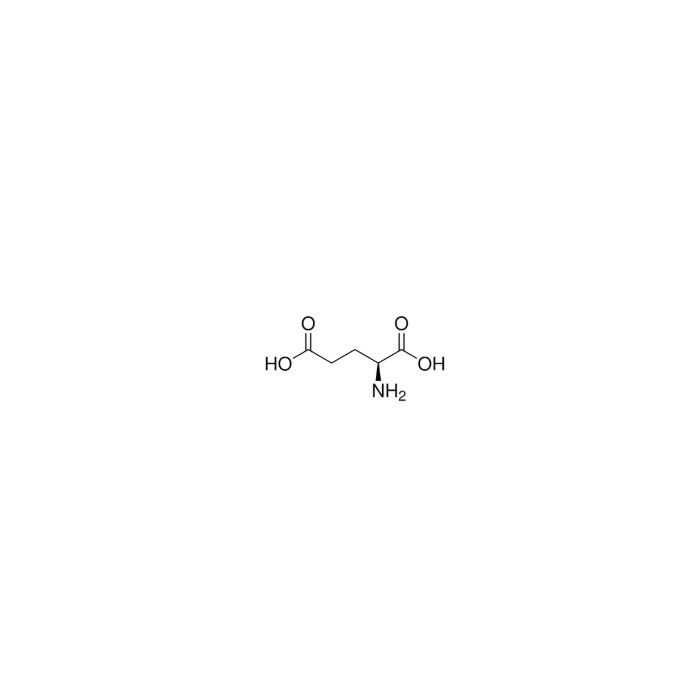
L(+)-Glutamic acid - Animal Free, USP, JP, Ph.Eur., for cell culture, ≥98.5% , CAS No.56-86-0

CAS: 56-86-0 Cat. No.: L774633 Formula: C5H9NO4 Peso molecolare: 147.13 Beilstein Registry Number: 1723801 Numero EC: 200-293-7
Disponibile su ordine
GRADE & PURITY Animal Free ? Animal-free — produced without animal-derived components to reduce contamination risk. Use in biomanufacturing and culture avoiding animal-origin material. USP ? United States Pharmacopeia grade — meets USP monograph specs for pharmaceutical use. Use for drug manufacturing, QC, and applications requiring US compendial compliance. JP ? Japanese Pharmacopoeia grade — conforms to JP monograph standards. Use for pharmaceutical products subject to Japanese regulatory requirements. Ph.Eur. ? European Pharmacopoeia grade — conforms to Ph.Eur. monographs across EU member states. Use for pharmaceutical work needing European compendial compliance. for Cell culture ? Cell-culture grade — low endotoxin and contaminants to support viable cell growth. Use in mammalian/other cell culture media and supplements. ≥98.5%
Synonyms
DTXCID30659 | glt | 1ii5 | Glutamate, L- | Glutamic acid, (S)- | Glutaton | glutamate | L-Glutaminic acid | Gamma-L-Glutamic Acid | EC 200-293-7 | L-glutamic acid | (2S)-2-aminopentanedioate | (S)-Glutamic acid | L-alpha-Aminoglutaric acid
Storage
Room temperature,Argon charged
Shipped In
Normal
★
Size
Germania (EU)
USA*
Price
Qty
100g
L774633-GMP-100g
Su ordinazione · 8–12 settimane
77,14€
500g
L774633-GMP-500g
Su ordinazione · 8–12 settimane
250,69€
Enter a quantity for the sizes you want to add.
🧪
Why this grade

Animal Free, USP, JP, Ph.Eur., for cell culture, ≥98.5% Animal Free,JP,per la coltura cellulare,Ph.Eur.,USP for sensitive chromatographic and analytical workflows requiring minimal baseline interference.

🌡

Storage & shipping

Room temperature,Argon charged Ships Normal Check lot-specific COA for exact specifications.

📋

Quality documents

SDS, COA, datasheet, and spec sheet available for download. Lot-specific COA accessible via lot number lookup.

📚

Literature proof

Cited in 47 peer-reviewed publications across chromatography, organic synthesis, and cross-coupling reactions.

Specifications

Sinonimi
DTXCID30659 | glt | 1ii5 | Glutamate, L- | Glutamic acid, (S)- | Glutaton | glutamate | L-Glutaminic acid | Gamma-L-Glutamic Acid | EC 200-293-7 | L-glutamic acid | (2S)-2-aminopentanedioate | (S)-Glutamic acid | L-alpha-Aminoglutaric acid
Specifiche e purezza
Animal Free, USP, JP, Ph.Eur., for cell culture, ≥98.5%
Condizioni di conservazione di stoccaggio
Room temperature,Argon charged
Spedito in
Normal
Grado
Animal Free, JP, per la coltura cellulare, Ph.Eur., USP
Purezza
≥98.5%
Nomi e identificatori
Sorrisi canonici
N[C@@H](CCC(O)=O)C(O)=O
IUPAC Name
(2S)-2-aminopentanedioic acid
InChIKey
WHUUTDBJXJRKMK-VKHMYHEASA-N
INCHI
1S/C5H9NO4/c6-3(5(9)10)1-2-4(7)8/h3H,1-2,6H2,(H,7,8)(H,9,10)/t3-/m0/s1
Isomeri SMILES
C(CC(=O)O)[C@@H](C(=O)O)N
WGK Germania
1
Peso molecolare
147.13
Beilstein
1723801
Reaxy-Rn
1723799
Reaxys-RN_link_address
https://www.reaxys.com/reaxys/secured/hopinto.do?context=S&query=IDE.XRN=1723799&ln=

Documentazione

📋 Safety Data Sheet (SDS)

Comprehensive hazard, handling, storage, and regulatory compliance document.

Download SDS →

✅ Certificate of Analysis (COA)

Lot-specific quality data. Enter your lot number to retrieve the exact COA.

Look up COA →

📊 Datasheet

Quick-reference summary of product specifications and applications.

View datasheet →

🔬 Specification Sheet

Full quality attributes and acceptance criteria for this grade.

View spec sheet →

Advanced Data

Taxonomic Classification

Taxonomy Tree

KingdomOrganic compounds
SuperclassOrganic acids and derivatives
ClasseCarboxylic acids and derivatives
SubclassAmino acids, peptides, and analogues
Intermediate Tree Nodes Amino acids and derivatives - Alpha amino acids and derivatives
Direct ParentGlutamic acid and derivatives
Alternative Parents L-alpha-amino acids  Amino fatty acids  Dicarboxylic acids and derivatives  Amino acids  Carboxylic acids  Organopnictogen compounds  Organic oxides  Monoalkylamines  Hydrocarbon derivatives  Carbonyl compounds  
Molecular FrameworkAliphatic acyclic compounds
Substituents Glutamic acid or derivatives - Alpha-amino acid - L-alpha-amino acid - Amino fatty acid - Dicarboxylic acid or derivatives - Fatty acid - Fatty acyl - Amino acid - Carboxylic acid - Organic oxide - Primary amine - Organooxygen compound - Organonitrogen compound - Primary aliphatic amine - Organopnictogen compound - Carbonyl group - Organic oxygen compound - Amine - Organic nitrogen compound - Hydrocarbon derivative - Aliphatic acyclic compound
DescrizioneThis compound belongs to the class of organic compounds known as glutamic acid and derivatives. These are compounds containing glutamic acid or a derivative thereof resulting from reaction of glutamic acid at the amino group or the carboxy group, or from the replacement of any hydrogen of glycine by a heteroatom.
External Descriptors Common amino acids - Amino acids
Struttura 3D
Modello di struttura chimica interattiva


Certificati (CoA, COO, BSE/TSE e tabella di analisi)
C of A & Other Certificates(BSE/TSE, COO):
Analytical Chart:

Find and download the COA for your product by matching the lot number on the packaging.

1 results found

Lot NumberCertificate TypeDataOggetto
GMF2609187Certificate of AnalysisJun 23, 2026 L774633
Proprietà chimiche e fisiche
SensibilitàMoisture sensitive.
Rotazione specifica [α]32 ° (C=5, HCl)
Punto di fusione (°C)205°C
Peso molecolare147.130 g/mol
XLogP3-3.700
Hydrogen Bond Donor Count3
Hydrogen Bond Acceptor Count5
Rotatable Bond Count4
Exact Mass147.053 Da
Monoisotopic Mass147.053 Da
Topological Polar Surface Area101.000 Ų
Heavy Atom Count10
Formal Charge0
Complexity145.000
Isotope Atom Count0
Defined Atom Stereocenter Count1
Undefined Atom Stereocenter Count0
Defined Bond Stereocenter Count0
Undefined Bond Stereocenter Count0
The total count of all stereochemical bonds0
Covalently-Bonded Unit Count1
Domande frequenti e articoli
GMP
From Spec to Bench: Understanding and Using USP Grade Reagents
JP Grade Reagents Explained
For Cell Culture
List of Natural Amino Acids
Bio-based Chemicals: From Platform Molecules to Application Scenarios — Trend Insights and Aladdin’s Product Portfolio
Structure, Function, and Applications of Glutamate Dehydrogenase
Key Enzymes in Amino Acid Metabolism: A Mechanistic Framework and Research Applications
G Protein–Coupled Receptors (GPCRs): Structure, Signaling, and Drug Targets
β-Acyloxy Alkenyl Amides (AAAs): A New Approach to Amide Bond and Peptide Bond Construction Worth Attention
Silicon Reagent-Assisted Peptide Synthesis: Research Progress and Methodological Value of Peptide Bond Formation from Unprotected Substrates
From Analytical Instrument to Synthetic Platform: A New Strategy for Reconstructing Automated Flow Solid-Phase Peptide Synthesis with Standard Analytical HPLC
Neurosteroids and Protective Mechanisms in the Central Nervous System
Molecular Basis of Ferroptosis-Immune Metabolism Crosstalk
Methods and Applications for the Determination of Amino Acid Content and Composition
Porous Graphitic Carbon (PGC) Chromatography Columns: Creating New Selectivity for Challenging Separations through Molecular Shape and the π-Electron Cloud on the Graphitic Surface
What Is Synthetic Biology? The Industrialization Pathway from Upstream Reagent Toolchains to Biomanufacturing Applications
Performance Sources and Formulation Applications of Enzyme-Based Ingredients in Daily Chemical Products: Fermentation Transformation, Enzymatic Reactions, and Application Principles
Analysis of Amino Acid-Based Surfactants: Basic Structure, Performance Origins, Category Selection, and Applications in Personal Care Formulations
Formation and Control of Carboxyl- and Hydroxyl-Related Impurities in Peptide Synthesis — Using Asp/Glu and Ser/Thr Residue Side Reactions as Examples
Neuropathological Mechanisms of Cerebral Infarction
TCA Cycle Metabolite Detection Methods and Result Interpretation
Mechanistic Analysis of Topical Glutathione in Skincare: Cellular Redox Regulation, Skin Delivery Challenges, and SLN-Based Delivery Strategies
Analysis of Hydrolyzed Pearl as a Cosmetic Raw Material: Preparation Process, Active Components, and Skincare Formulation Applications
Moisturizing Mechanism of Polyglutamic Acid: From the γ-Glutamyl Structure to Hydration Networks and Surface Film-Forming Behavior
Mechanisms by Which Fructan-Rich Ophiopogon japonicus Tuberous Root Extract Supports Skin Moisturization and Barrier Function
Structural Characteristics of Ergothioneine, OCTN1-Mediated Uptake by Skin Cells, and Antioxidant Mechanisms
Catalytic Mechanisms, Substrate Selectivity, and Metabolic Functions of Amide Hydrolases
Citations of This Product
Calcolatori di soluzioni
Recensioni

Recensioni dei clienti

Domande frequenti

What is the purity of this product?
This product is supplied at ≥98.5% purity (chemical assay). Lot-specific values are stated on the Certificate of Analysis.
What does Animal Free mean?
Animal Free indicates that the material has been processed and tested for specialty industrial processing. Specifications focus on the impurities that affect performance in that application — for example, metal content for electronics, particle size for batteries, refractive index for optics, or moisture content for moisture-sensitive processes.
How should this product be stored?
Store in a cool place under argon. It is supplied under an argon blanket; reseal under inert gas after each use.
What does USP mean?
USP indicates that the material complies with the published monographs of the relevant pharmacopoeia (USP). Specifications include identity, assay, impurity limits, residual solvents and other tests defined in the monograph. USP-compliant material is suitable for pharmacopoeia-compliant pharmaceutical use, including pharmaceutical manufacturing, QC and regulatory submission.
How is this product shipped?
This product ships under standard ambient conditions. No temperature-controlled packaging is required.
What are the CAS number, molecular formula and molecular weight?
The CAS Number is 56-86-0, the molecular formula is C5H9NO4, and the molecular weight is 147.13 g/mol. InChIKey WHUUTDBJXJRKMK-VKHMYHEASA-N.
What documentation is provided?
Available product documentation, including Certificates of Analysis (COA), Safety Data Sheets (SDS), and specification sheets, is shown in the product document area. Document availability and access follow the current site policy.

Shall we send you a message when we have discounts available?

Remind me later

Thank you! Please check your email inbox to confirm.

Oops! Notifications are disabled.