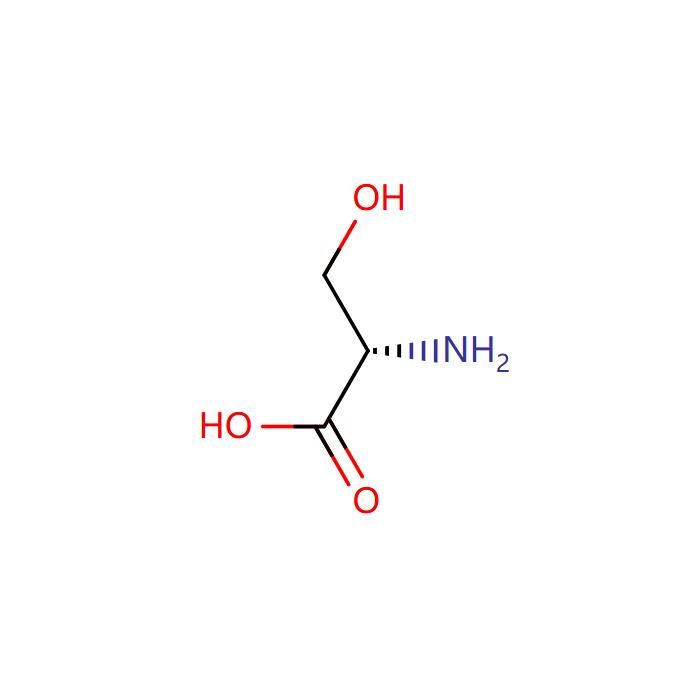
L-Serine - Animal Free, USP, Moligand™, Ph.Eur., for cell culture, ≥98.5% , CAS No.56-45-1

CAS: 56-45-1 Cat. No.: L476400 Formula: HOCH2CH(NH2)CO2H Peso molecolare: 105.09 Beilstein Registry Number: 1721404 Numero EC: 200-274-3
Disponibile su ordine
QUALITÀ & PUREZZA Animal Free ? Animal-free — produced without animal-derived components to reduce contamination risk. Use in biomanufacturing and culture avoiding animal-origin material. USP ? United States Pharmacopeia grade — meets USP monograph specs for pharmaceutical use. Use for drug manufacturing, QC, and applications requiring US compendial compliance. Moligand™ ? Moligand™ — Aladdin's line of ligands and bioactive small molecules. Use for receptor, pathway, and binding studies needing defined small-molecule tools. Ph.Eur. ? European Pharmacopoeia grade — conforms to Ph.Eur. monographs across EU member states. Use for pharmaceutical work needing European compendial compliance. for Cell culture ? Cell-culture grade — low endotoxin and contaminants to support viable cell growth. Use in mammalian/other cell culture media and supplements. ≥98.5%
Synonyms
beta-Hydroxy-L-alanine|SERINE [EP MONOGRAPH]|H-Ser|L-2-Amino-3-hydroxypropionic acid|Serina [Spanish]|SERINE [INN]|2-Amino-3-hydroxypropionic acid|3-Hydroxyalanine|L-SERINE [FCC]|L-Serine;|SERINE [MART.]|.beta.-Hydroxyalanine|(S)-(+)-2-Amino-3-hydroxypropionic acid|(S)-2-Amino-3-hydroxypropanoic acid|(S)-2-amino-3-hydroxy-Propanoic acid|(S)-2-Amino-3-hydroxypropionic acid|beta-Hydroxyalanine|SERINE [VANDF]|(S)-b-Amino-3-hydroxypropionate|alpha-Amino-beta-hydroxypropionic acid|Serine (L-Serine)|Serinum|L-SERINE [USP-RS]|SERINE (USP MONOGRAPH)|L-Alanine, 3-hydroxy-|L-3-Hydroxy-2-aminopropionic acid|Pharmakon1600-01301010|SERINE [INCI]|SERINE [USP MONOGRAPH]|Serina|(-)-Serine|(S)-beta-Amino-3-hydroxypropionate|l-2-Amino-3-hydroxy-propanoic acid|L-3-Hydroxy-2-aminopropionate|(2S)-2-amino-3-hydroxypropanoic acid|(2S)-2-amino-3-hydroxy-propanoic acid|ser|SERINE (II)|(S)-Serine|L-Serin|SER (IUPAC abbrev)|Serine (USP)|(S)-a-Amino-b-hydroxypropionate|(S)-a-Amino-b-hydroxypropionic acid|(S)-2-Amino-3-hydroxypropanoate|(S)-2-amino-3-hydroxy-Propanoate|SERINE [HSDB]|SERINE [II]|H-Ser-OH|L-(-)-Serine|L-SERINE (USP-RS)|serin|serine|2-amino-3-hydroxypropanoate|Serine, L-|2-Amino-3-hydroxypropanoic acid, (S)-|L-SERINE [JAN]|Serinum (Latin)|(L)-SERINE|l serine|SERINE (EP MONOGRAPH)|Serine (VAN)|Serine [USAN:INN]|(S)-alpha-Amino-beta-hydroxypropionate|3-hydroxy-L-Alanine|rac-serine|L-Serine,(S)|Serinum [Latin]|3h-l-serine|(S)-alpha-Amino-beta-hydroxypropionic acid|Propanoic acid, 2-amino-3-hydroxy-, (S)-|Racemic serine|b-Hydroxy-L-alanine|L-3-Hydroxy-alanine|SERINE [MI]|L-serine|SERINE [WHO-DD]|L-Serine - CAS 56-45-1|L-Serine (JP17)|(S)-(-)-Serine|(S)-b-Amino-3-hydroxypropionic acid|Lopac-S-4250
Storage
Room temperature
★
Dimensione
Germania (EU)
USA*
Prezzo
Qtà
25g
L476400-25g
—
2 Disponibile
30,28€
100g
L476400-100g
—
2 Disponibile
84,95€
500g
L476400-500g
1 Disponibile
1 Disponibile
297,55€
Enter a quantity for the sizes you want to add.

Panoramica

Description

L-Serine has been used as a supplement in a medium to culture Chinese hamster ovary TF 70R cell line and in mouse embryonic fibroblast (MEF)-media.

Specifiche

Sinonimi
beta-Hydroxy-L-alanine | SERINE [EP MONOGRAPH] | H-Ser | L-2-Amino-3-hydroxypropionic acid | Serina [Spanish] | SERINE [INN] | 2-Amino-3-hydroxypropionic acid | 3-Hydroxyalanine | L-SERINE [FCC] | L-Serine; | SERINE [MART.] | .beta.-Hydroxyalanine | (S)-(+)-2-Amino-3-hydroxypropionic acid | (S)-2-Amino-3-hydroxypropanoic acid | (S)-2-amin Mostra altro
Specifiche e purezza
Animal Free, USP, Moligand™, Ph.Eur., for cell culture, ≥98.5%
Meccanismi biochimici e fisiologici
L-Serine is a non-essential amino acid that acts as a precursor for nucleotide synthesis. It has roles in the development and function of the central nervous system.Precursor of glycine by serine hydroxymethyltransferase.
Condizioni di conservazione di stoccaggio
Room temperature
Grado
Animal Free, Moligand™, per la coltura cellulare, Ph.Eur., USP
Purezza
≥98.5%
Nomi e identificatori
Pubchem Sid
Pubchem Sid Url
https://pubchem.ncbi.nlm.nih.gov/substance/504750968
SMILES
C(C(C(=O)O)N)O
IUPAC Name
(2S)-2-amino-3-hydroxypropanoic acid
InChIKey
MTCFGRXMJLQNBG-REOHCLBHSA-N
InChI
1S/C3H7NO3/c4-2(1-5)3(6)7/h2,5H,1,4H2,(H,6,7)/t2-/m0/s1
Isomeri SMILES
C([C@@H](C(=O)O)N)O
WGK Germania
1
RTECS
VT8100000
Peso molecolare
105.09
Beilstein
1721404
Reaxys
1721402
Reaxys-RN_link_address
https://www.reaxys.com/reaxys/secured/hopinto.do?context=S&query=IDE.XRN=1721402&ln=

Dati avanzati

Taxonomic Classification

Taxonomy Tree

KingdomOrganic compounds
SuperclassOrganic acids and derivatives
ClasseCarboxylic acids and derivatives
SubclassAmino acids, peptides, and analogues
Intermediate Tree Nodes Amino acids and derivatives - Alpha amino acids and derivatives
Direct ParentSerine and derivatives
Alternative Parents L-alpha-amino acids  Beta hydroxy acids and derivatives  Amino acids  Monocarboxylic acids and derivatives  Carboxylic acids  Primary alcohols  Organopnictogen compounds  Organic oxides  Monoalkylamines  Hydrocarbon derivatives  Carbonyl compounds  
Molecular FrameworkAliphatic acyclic compounds
Substituents Serine or derivatives - Alpha-amino acid - L-alpha-amino acid - Beta-hydroxy acid - Hydroxy acid - Amino acid - Carboxylic acid - Monocarboxylic acid or derivatives - Alcohol - Primary amine - Primary alcohol - Organooxygen compound - Organonitrogen compound - Hydrocarbon derivative - Primary aliphatic amine - Organic oxide - Organopnictogen compound - Carbonyl group - Organic oxygen compound - Amine - Organic nitrogen compound - Aliphatic acyclic compound
DescrizioneThis compound belongs to the class of organic compounds known as serine and derivatives. These are compounds containing serine or a derivative thereof resulting from reaction of serine at the amino group or the carboxy group, or from the replacement of any hydrogen of glycine by a heteroatom.
External Descriptors Common amino acids
Struttura 3D
Modello di struttura chimica interattiva


Obiettivi associati (umani)
GPRC6A Tchem G-protein coupled receptor family C group 6 member A (1 Activities)
Activity TypeActivity Value -log(M)Mechanism of ActionActivity ReferencePublications (PubMed IDs)
F2 Tclin Thrombin (11687 Activities)
Activity TypeRelationActivity valueUnitsAction TypeJournalPubMed IddoiAssay Aladdin ID
ESR1 Tclin Estrogen receptor alpha (17718 Activities)
Activity TypeRelationActivity valueUnitsAction TypeJournalPubMed IddoiAssay Aladdin ID
PGR Tclin Progesterone receptor (8562 Activities)
Activity TypeRelationActivity valueUnitsAction TypeJournalPubMed IddoiAssay Aladdin ID
CHRM2 Tclin Muscarinic acetylcholine receptor M2 (10671 Activities)
Activity TypeRelationActivity valueUnitsAction TypeJournalPubMed IddoiAssay Aladdin ID
HTR1A Tclin Serotonin 1a (5-HT1a) receptor (14969 Activities)
Activity TypeRelationActivity valueUnitsAction TypeJournalPubMed IddoiAssay Aladdin ID
ADRA2A Tclin Alpha-2a adrenergic receptor (9450 Activities)
Activity TypeRelationActivity valueUnitsAction TypeJournalPubMed IddoiAssay Aladdin ID
AR Tclin Androgen Receptor (11781 Activities)
Activity TypeRelationActivity valueUnitsAction TypeJournalPubMed IddoiAssay Aladdin ID
CHRM1 Tclin Muscarinic acetylcholine receptor M1 (12690 Activities)
Activity TypeRelationActivity valueUnitsAction TypeJournalPubMed IddoiAssay Aladdin ID
GABRA1 Tclin GABA receptor alpha-1 subunit (399 Activities)
Activity TypeRelationActivity valueUnitsAction TypeJournalPubMed IddoiAssay Aladdin ID
MAOA Tclin Monoamine oxidase A (11911 Activities)
Activity TypeRelationActivity valueUnitsAction TypeJournalPubMed IddoiAssay Aladdin ID
DRD1 Tclin Dopamine D1 receptor (9720 Activities)
Activity TypeRelationActivity valueUnitsAction TypeJournalPubMed IddoiAssay Aladdin ID
ACHE Tclin Acetylcholinesterase (18204 Activities)
Activity TypeRelationActivity valueUnitsAction TypeJournalPubMed IddoiAssay Aladdin ID
PTGS1 Tclin Cyclooxygenase-1 (9233 Activities)
Activity TypeRelationActivity valueUnitsAction TypeJournalPubMed IddoiAssay Aladdin ID
SLC6A2 Tclin Norepinephrine transporter (10102 Activities)
Activity TypeRelationActivity valueUnitsAction TypeJournalPubMed IddoiAssay Aladdin ID
SLC6A4 Tclin Serotonin transporter (12625 Activities)
Activity TypeRelationActivity valueUnitsAction TypeJournalPubMed IddoiAssay Aladdin ID
ADRA1A Tclin Alpha-1a adrenergic receptor (8359 Activities)
Activity TypeRelationActivity valueUnitsAction TypeJournalPubMed IddoiAssay Aladdin ID
OPRM1 Tclin Mu opioid receptor (19785 Activities)
Activity TypeRelationActivity valueUnitsAction TypeJournalPubMed IddoiAssay Aladdin ID
DRD3 Tclin Dopamine D3 receptor (14368 Activities)
Activity TypeRelationActivity valueUnitsAction TypeJournalPubMed IddoiAssay Aladdin ID
SLC6A3 Tclin Dopamine transporter (10535 Activities)
Activity TypeRelationActivity valueUnitsAction TypeJournalPubMed IddoiAssay Aladdin ID
KCNH2 Tclin HERG (29587 Activities)
Activity TypeRelationActivity valueUnitsAction TypeJournalPubMed IddoiAssay Aladdin ID
PDE3A Tclin Phosphodiesterase 3A (3309 Activities)
Activity TypeRelationActivity valueUnitsAction TypeJournalPubMed IddoiAssay Aladdin ID
HTR2B Tclin Serotonin 2b (5-HT2b) receptor (10323 Activities)
Activity TypeRelationActivity valueUnitsAction TypeJournalPubMed IddoiAssay Aladdin ID
TBXA2R Tclin Thromboxane A2 receptor (5717 Activities)
Activity TypeRelationActivity valueUnitsAction TypeJournalPubMed IddoiAssay Aladdin ID
PDE4A Tclin Phosphodiesterase 4A (1943 Activities)
Activity TypeRelationActivity valueUnitsAction TypeJournalPubMed IddoiAssay Aladdin ID
ADORA3 Tchem Adenosine A3 receptor (15931 Activities)
Activity TypeRelationActivity valueUnitsAction TypeJournalPubMed IddoiAssay Aladdin ID
HRH3 Tclin Histamine H3 receptor (10389 Activities)
Activity TypeRelationActivity valueUnitsAction TypeJournalPubMed IddoiAssay Aladdin ID
KDR Tclin Vascular endothelial growth factor receptor 2 (20924 Activities)
Activity TypeRelationActivity valueUnitsAction TypeJournalPubMed IddoiAssay Aladdin ID
CYP2D6 Tclin Cytochrome P450 2D6 (33882 Activities)
Activity TypeRelationActivity valueUnitsAction TypeJournalPubMed IddoiAssay Aladdin ID
CYP1A2 Tchem Cytochrome P450 1A2 (26471 Activities)
Activity TypeRelationActivity valueUnitsAction TypeJournalPubMed IddoiAssay Aladdin ID
SLC1A4 Tbio Neutral amino acid transporter A (18 Activities)
Activity TypeRelationActivity valueUnitsAction TypeJournalPubMed IddoiAssay Aladdin ID
CYP2C9 Tchem Cytochrome P450 2C9 (32119 Activities)
Activity TypeRelationActivity valueUnitsAction TypeJournalPubMed IddoiAssay Aladdin ID
CYP2C19 Tchem Cytochrome P450 2C19 (29246 Activities)
Activity TypeRelationActivity valueUnitsAction TypeJournalPubMed IddoiAssay Aladdin ID
CYP3A4 Tclin Cytochrome P450 3A4 (53859 Activities)
Activity TypeRelationActivity valueUnitsAction TypeJournalPubMed IddoiAssay Aladdin ID
POLK Tbio DNA polymerase kappa (8653 Activities)
Activity TypeRelationActivity valueUnitsAction TypeJournalPubMed IddoiAssay Aladdin ID
KDM4E Tchem Lysine-specific demethylase 4D-like (40243 Activities)
Activity TypeRelationActivity valueUnitsAction TypeJournalPubMed IddoiAssay Aladdin ID
SLC36A1 Tchem Proton-coupled amino acid transporter 1 (102 Activities)
Activity TypeRelationActivity valueUnitsAction TypeJournalPubMed IddoiAssay Aladdin ID
SLC1A5 Tchem Neutral amino acid transporter B(0) (65 Activities)
Activity TypeRelationActivity valueUnitsAction TypeJournalPubMed IddoiAssay Aladdin ID
Obiettivi associati (non umani)
Pkm Pyruvate kinase isozymes M1/M2 (66 Activities)
Activity TypeRelationActivity valueUnitsAction TypeJournalPubMed IddoiAssay Aladdin ID
Ggt1 Gamma-glutamyltranspeptidase 1 (36 Activities)
Activity TypeRelationActivity valueUnitsAction TypeJournalPubMed IddoiAssay Aladdin ID
lef Anthrax lethal factor (7585 Activities)
Activity TypeRelationActivity valueUnitsAction TypeJournalPubMed IddoiAssay Aladdin ID
BCHE Cholinesterase (8742 Activities)
Activity TypeRelationActivity valueUnitsAction TypeJournalPubMed IddoiAssay Aladdin ID
ffp 4'-phosphopantetheinyl transferase ffp (24982 Activities)
Activity TypeRelationActivity valueUnitsAction TypeJournalPubMed IddoiAssay Aladdin ID
Grin1 Glutamate NMDA receptor (6467 Activities)
Activity TypeRelationActivity valueUnitsAction TypeJournalPubMed IddoiAssay Aladdin ID
Slc16a10 Monocarboxylate transporter 10 (73 Activities)
Activity TypeRelationActivity valueUnitsAction TypeJournalPubMed IddoiAssay Aladdin ID
Gamma-glutamyltranspeptidase (21 Activities)
Activity TypeRelationActivity valueUnitsAction TypeJournalPubMed IddoiAssay Aladdin ID
GAP1 General amino-acid permease GAP1 (481 Activities)
Activity TypeRelationActivity valueUnitsAction TypeJournalPubMed IddoiAssay Aladdin ID
Slc1a5 Amino acid transporter (271 Activities)
Activity TypeRelationActivity valueUnitsAction TypeJournalPubMed IddoiAssay Aladdin ID
Meccanismi d'azione
Certificati (CoA, COO, BSE/TSE e tabella di analisi)
C of A & Other Certificates(BSE/TSE, COO):
Analytical Chart:

Find and download the COA for your product by matching the lot number on the packaging.

12 results found

Lot NumberCertificate TypeDataOggetto
A2404289A2404289Certificate of AnalysisSep 22, 2026 L476400
E2622389E2622389Certificate of AnalysisMay 08, 2026 L476400
E2622390E2622390Certificate of AnalysisMay 08, 2026 L476400
E2622391E2622391Certificate of AnalysisMay 08, 2026 L476400
E2622392E2622392Certificate of AnalysisMay 08, 2026 L476400
E2329546E2329546Certificate of AnalysisMar 11, 2026 L476400
E2329547E2329547Certificate of AnalysisMar 11, 2026 L476400
B2526055B2526055Certificate of AnalysisJan 11, 2024 L476400
G2522048G2522048Certificate of AnalysisJan 11, 2024 L476400
K2524089K2524089Certificate of AnalysisJan 11, 2024 L476400
A2404293A2404293Certificate of AnalysisJan 10, 2024 L476400
A2404291A2404291Certificate of AnalysisJan 09, 2024 L476400
Proprietà chimiche e fisiche
Solubilità H2O: 50mg/mL
Rotazione specifica [α]15° (C=10,HCl(1+5))
Punto di fusione (°C)228°C(dec.)(lit.)
Peso molecolare105.09
XLogP3-3.100
Hydrogen Bond Donor Count3
Hydrogen Bond Acceptor Count4
Rotatable Bond Count2
Exact Mass105.043 Da
Monoisotopic Mass105.043 Da
Topological Polar Surface Area83.600 Ų
Heavy Atom Count7
Formal Charge0
Complexity72.600
Isotope Atom Count0
Defined Atom Stereocenter Count1
Undefined Atom Stereocenter Count0
Defined Bond Stereocenter Count0
Undefined Bond Stereocenter Count0
The total count of all stereochemical bonds0
Covalently-Bonded Unit Count1
Sicurezza e pericoli (GHS)
Segnale
Warning
Indicazioni di pericolo

H315:Causes skin irritation

H319:Causes serious eye irritation

H335:May cause respiratory irritation

Precauzioni

P261:Avoid breathing dust/fume/gas/mist/vapors/spray.

P305+P351+P338:IF IN EYES: Rinse cautiously with water for several minutes. Remove contact lenses if present and easy to do - continue rinsing.

WGK Germania
1
RTECS
VT8100000
Reaxys
1721402
Reaxys-RN_link_address
https://www.reaxys.com/reaxys/secured/hopinto.do?context=S&query=IDE.XRN=1721402&ln=
Indice Merck
8460
Domande frequenti e articoli
From Spec to Bench: Understanding and Using USP Grade Reagents
For Cell Culture
β-Acyloxy Alkenyl Amides (AAAs): A New Approach to Amide Bond and Peptide Bond Construction Worth Attention
Silicon Reagent-Assisted Peptide Synthesis: Research Progress and Methodological Value of Peptide Bond Formation from Unprotected Substrates
From Analytical Instrument to Synthetic Platform: A New Strategy for Reconstructing Automated Flow Solid-Phase Peptide Synthesis with Standard Analytical HPLC
Functional Systems of Plasma Proteins in Metal Transport, Inflammatory Responses, and Tissue Injury
Progress in Research on the S-Adenosylmethionine Cycle and Regulatory Mechanisms of Methyltransfer Reactions
Methods and Applications for the Determination of Amino Acid Content and Composition
Experimental Selection of Burgess Reagent: A Decision Framework for Alcohol Dehydration, Primary Amide/Aldoxime Dehydration, and Oxazoline/Thiazoline Cyclization
Porous Graphitic Carbon (PGC) Chromatography Columns: Creating New Selectivity for Challenging Separations through Molecular Shape and the π-Electron Cloud on the Graphitic Surface
Performance Sources and Formulation Applications of Enzyme-Based Ingredients in Daily Chemical Products: Fermentation Transformation, Enzymatic Reactions, and Application Principles
Formation and Control of Carboxyl- and Hydroxyl-Related Impurities in Peptide Synthesis — Using Asp/Glu and Ser/Thr Residue Side Reactions as Examples
Analysis of Hydrolyzed Pearl as a Cosmetic Raw Material: Preparation Process, Active Components, and Skincare Formulation Applications
Aladdin® Plant Research Related Products
Moisturizing Mechanism of Polyglutamic Acid: From the γ-Glutamyl Structure to Hydration Networks and Surface Film-Forming Behavior
Mechanisms by Which Fructan-Rich Ophiopogon japonicus Tuberous Root Extract Supports Skin Moisturization and Barrier Function
Multilevel Moisturizing Mechanisms of Sodium Hyaluronate and Its Derivatives: Molecular Weight Modulation, Crosslinking, Acetylation, and Major Sites of Action
How Palmitoyl Pentapeptide-4 Acts on the Skin: From the KTTKS Sequence and Skin Delivery to Collagen Matrix Responses
The Combination Logic of Palmitoyl Tripeptide-1 and Palmitoyl Pentapeptide-4: Skin Delivery, Matrix Signaling, and Regulation of Collagen Homeostasis
Citations of This Product
Calcolatori di soluzioni
Recensioni

Recensioni dei clienti

Application Protocols

No tested application protocols are specified for this SKU. General, literature-based guidance for common laboratory uses is provided below; adapt to your system and consult the CoA/SDS.

  • Preparing a sterile aqueous stock (example, research use)

    • Target: 1.0 M L-serine in water (for media/feed preparation where solubility permits)
    • Steps: Weigh appropriate mass under low-dust conditions; dissolve in sterile water with stirring at room temperature (gentle warming ≤37 °C if needed); adjust pH to 7.0–7.4 with NaOH/HCl; bring to volume; 0.2 µm filter; store aliquots at 2–8 °C.
  • Inclusion in cell-culture media

    • Typical use: Add to basal medium to match desired formulation (consult your medium recipe or DOE). Combine under aseptic conditions; verify osmolality and pH post-addition.
  • Protein formulation screening

    • Screen 10–100 mM L-serine with your primary buffer (e.g., 20 mM HEPES, pH 7.4) to assess aggregation and stability by DLS and SEC.

These are illustrative, literature-style procedures for research use only and are not item specifications.

Biological Roles

This section summarizes general biochemical functions of L-serine (literature), distinct from any therapeutic claims.

  • Metabolic hub

    • Precursor in the serine–glycine–one-carbon (SGOC) network, donating one-carbon units via serine hydroxymethyltransferase for nucleotide biosynthesis and methylation cycles (THF-dependent).
    • Contributes to biosynthesis of cysteine (via transsulfuration), sphingolipids (serine palmitoyltransferase), and phosphatidylserine (headgroup exchange with phosphatidylcholine/ethanolamine).
  • Protein chemistry

    • Incorporated as a polar, uncharged residue; side-chain hydroxyl participates in hydrogen bonding and catalysis.
    • Subject to post-translational phosphorylation by serine/threonine kinases; key in signaling cascades.
  • Cellular physiology

    • Supports redox balance and folate-mediated pathways; impacts NADPH generation indirectly through metabolic coupling.
    • Acts as an osmolyte/stabilizer in some protein formulations in vitro.
  • Transport and pH behavior

    • Exists predominantly as a zwitterion near neutral pH; cellular uptake via neutral amino acid transporters (e.g., system ASC/Alanine–Serine–Cysteine transporters) in biological systems (general literature).

Note: These are general biological roles provided for research context. No medical or clinical claims are made for this product. For cell-culture use, align concentrations with your specific medium formulation and process requirements.

Buffer Applications

L-Serine is not a primary buffering agent (its pKa values near 2.2 and 9.2 are far from physiological pH for strong buffering). However, it is frequently included in aqueous formulations as a stabilizing excipient or a component of complex media.

  • Use as a formulation excipient (general)

    • Protein stabilization: Can reduce aggregation via preferential hydration and hydrogen bonding; often combined with sugars or polyols.
    • Osmolality adjustment: Contributes to ionic strength and osmolality without introducing strong buffering capacity.
  • Practical formulation notes

    • Working concentration ranges: 1–100 mM are common in assay buffers and protein formulations; optimize empirically based on target protein/assay.
    • pH control: Pair with a true buffer (e.g., phosphate, HEPES, MOPS) targeting the desired pH range; L-serine will not hold pH on its own near neutrality.
    • Sterilization: Prefer 0.2 µm filtration for sterile solutions; avoid excessive heat that may promote Maillard-type reactions in the presence of reducing sugars.
  • Example buffer context (illustrative; not prescriptive)

    • HEPES-buffered saline + 10–50 mM L-serine to enhance protein stability during storage or chromatography.

For precise buffer recipes and acceptance criteria (pH, conductivity, osmolality) in regulated workflows, validate with small-scale studies and document via CoA/specifications.

Green Alternatives

L-Serine itself is biogenic and typically produced via fermentation, aligning with green chemistry principles. The main opportunities lie in choosing greener solvents and protecting-group strategies during downstream synthesis.

  • Greener choices around serine use

    • Aqueous media: Favor water or buffered water as the primary solvent for dissolving L-serine and for biocatalytic transformations.
    • Biocatalysis: Utilize transaminases, oxidases, or lyases for selective modifications of serine, avoiding stoichiometric reagents.
    • Protection minimization: Choose synthetic routes that avoid unnecessary N/O-protection–deprotection cycles to reduce waste.
  • Comparison of solvent options (general guidance)

    • Water/buffer: Nonflammable, nontoxic, ideal for dissolution and enzymatic steps; may require pH control to maintain stability.
    • Bio-based solvents (e.g., 2-MeTHF) for protected derivatives: Greener alternative to THF for certain coupling/etherification steps; note solubility depends on protecting groups.
    • Ethyl acetate vs chlorinated solvents: Prefer EtOAc for extractions of protected serine derivatives when feasible.
  • Trade-offs

    • High-concentration aqueous feeds may need antimicrobial controls (sterile filtration) rather than chemical preservatives.
    • Some green solvents are incompatible with unprotected amino acids due to low solubility; protected derivatives may be required.

Always tailor choices to your process mass intensity (PMI), E-factor, and lifecycle assessments.

Pharmaceutical Uses

No therapeutic claims are made. The following describes roles in formulation/manufacturing from a materials perspective.

  • Compendial status (item-specific): USP and Ph.Eur. grades indicate conformance to the respective pharmacopeial monographs for L-serine, supporting use as a compendial raw material in regulated settings.

  • Typical roles (general)

    • Excipient: Stabilizer or bulking agent in lyophilized biologics and parenteral solutions (when allowed by formulation design and standards).
    • Processing aid: pH-adjustment co-solute or crystallization modifier in peptide API manufacture.
    • Nutrient: Component of fermentation media for production of biologics and small molecules.
    • Starting material: Chiral pool building block for synthesis of amino-acid–derived APIs and intermediates (via protected derivatives).
  • Quality considerations

    • Identity/purity testing to pharmacopeial monographs; bioburden/endotoxin limits may be specified for parenteral-grade uses—Item-specific limits: Not specified for this item; refer to CoA/Spec Sheet.
    • Residual solvent and elemental impurity compliance per ICH guidelines as applicable to the grade/usage context.

For cGMP manufacturing, perform incoming material qualification, vendor audit, and method verification against the relevant USP/Ph.Eur. monographs.

Physical Properties
  • Item-specific specifications: Not specified for this item; refer to CoA/Spec Sheet.

  • Literature/general reference values (typical for L-Serine; not item specifications)

    • Form/appearance: White crystalline solid (typical)
    • Molecular weight: 105.09 g/mol
    • Acid–base properties: pKa1 (–CO2H) ≈ 2.19; pKa2 (–NH3+) ≈ 9.21; isoelectric point pI ≈ 5.68
    • Solubility: Highly soluble in water (e.g., ~425 g/L at 25 °C reported); sparingly soluble to insoluble in most common organic solvents (MeOH/EtOH: low; practically insoluble in nonpolars)
    • Partitioning: logP (XlogP3) ≈ −3.0; logD7.4 ≪ 0 (very hydrophilic)
    • Melting/decomposition: Decomposes upon heating; reported melt/decomp ~220–230 °C (literature ranges)
    • Optical rotation: [α]D20 typically positive for L-enantiomer in water; magnitude depends on c and T (consult CoA for item-specific value)
    • Hygroscopicity: Mildly hygroscopic; may absorb moisture from air

Notes: Values above are representative literature data to aid method development. For exact release specifications (e.g., water content, heavy metals, optical rotation, specific impurities), consult the item’s CoA/Spec Sheet.

Quality and Grades
  • Item-specific designations (from Product Data)

    • Animal Free: Manufactured without animal-derived components, supporting workflows that require elimination of animal-origin risk (e.g., cell culture in chemically defined or xeno-free media).
    • USP grade: Meets applicable United States Pharmacopeia monograph tests for identity, purity, and quality attributes relevant to compendial L-serine.
    • Ph.Eur. grade: Meets applicable European Pharmacopoeia monograph requirements.
    • Moligand™: Proprietary designation by Aladdin Scientific; indicates alignment with our high-spec ligand/biobuilding-block quality platform (documentation available upon request).
    • For Cell culture: Suitable for preparation of cell-culture media and feeds when used according to aseptic and quality practices.
  • Practical implications

    • Compendial status (USP/Ph.Eur.) facilitates use in regulated environments where pharmacopeial compliance is required for raw materials (e.g., method verification against monographs, traceable testing).
    • Animal Free production reduces adventitious agent risk and is favored in bioproduction and sensitive biological assays.
    • Typical release tests for such grades include identity (IR/HPLC), assay, specific impurities, optical rotation, loss on drying, and residual solvents—Item-specific values: Not specified for this item; refer to CoA/Spec Sheet.
  • Documentation and traceability

    • CoA and, where applicable, TSE/BSE statements and animal-free declarations are provided on request for this SKU.
    • Batch traceability supports reproducibility in media manufacturing and GMP-adjacent research workflows.
Reaction and Applications

L-Serine is broadly applied in life-science production and synthetic chemistry.

  • Life-science and cell-culture uses (aligned with item grade)

    • Media component: Essential supplement in many chemically defined and xeno-free media; contributes to one-carbon metabolism and nucleotide/lipid biosynthesis in cultured cells.
    • Bioprocess feeds: Included in concentrated feeds for CHO and microbial systems; high aqueous solubility enables dense stock solutions.
  • Synthetic chemistry uses (chiral pool building block)

    • Protection strategies: N-protection (Boc, Fmoc, Cbz) and O-protection (TBDMS, benzyl, tert-butyl carbonate) to tune solubility/reactivity.
    • Peptide synthesis: Standard amino acid for SPPS and solution-phase coupling; side-chain unprotected in Fmoc/tBu strategies or protected as tBu ether/carbonate when needed.
    • Functional group interconversions: Side-chain alcohol enables
      • Mitsunobu substitution to introduce O-alkyl or convert to azide/halide derivatives.
      • Oxidation to aldehyde/acid derivatives; intramolecular cyclizations to oxazolidinones.
      • Conversion to epoxides (via halohydrin) furnishing chiral synthons related to glycidol frameworks.
    • Asymmetric synthesis: Chiral auxiliary/scaffold in preparing β-hydroxy-α-amino acid derivatives and β-lactams.
  • Practical notes

    • Drying: For water-sensitive couplings, azeotropically dry protected derivatives; the free amino acid is hygroscopic.
    • Coupling: Employ EDC·HCl/HOBt, DIC/Oxyma, or HATU in DMF/NMP or aqueous-compatible systems; control pH ~8–9 for water-based EDC couplings.
    • Stereochemical integrity: Avoid strong base/heat that can promote racemization at Cα.
Reaction Conditions

General literature guidance for common transformations of L-serine and its protected derivatives (not item specifications):

  • Peptide coupling (solution or SPPS)

    • Reagents: HATU or COMU (1.0–1.2 eq) with DIPEA (2–3 eq) in DMF/NMP at 0–25 °C; reaction times 0.5–2 h. For aqueous coupling, EDC·HCl (1.1–1.5 eq) + Oxyma/HOBt in water/DMF (pH 7.5–8.5).
    • Notes: Side-chain protection (e.g., tBu) may reduce O-acylation; monitor by HPLC.
  • O-Protecting the hydroxyl (TBS ether)

    • Conditions: TBSCl (1.2–1.5 eq), imidazole (3 eq), DMF, 0–25 °C, 2–6 h. Alternative: TBDPSCl for increased robustness.
  • Esterification of the carboxylate

    • Fischer esterification: ROH (solvent/excess), catalytic H2SO4 or HCl(g), 0–25 °C to reflux; protect the amine (e.g., Boc) beforehand to prevent salt formation.
    • Steglich esterification: DCC (1.1 eq), DMAP (0.1 eq), CH2Cl2 or EtOAc at 0–25 °C.
  • Mitsunobu substitution of the side-chain OH

    • Conditions: PPh3 (1.2 eq), DIAD/DEAD (1.2 eq), Nu–H (1.5 eq), THF or toluene, 0–25 °C, 1–6 h; usually on N-protected serine.
  • Oxidation of the side-chain alcohol

    • TEMPO/BAIB or Dess–Martin periodinane in CH2Cl2/MeCN at 0–25 °C to give aldehyde; overoxidation to acid with Pinnick or Jones as needed.
  • Epoxide formation (via halohydrin)

    • Convert –CH2OH to –CH2Cl (e.g., SOCl2 or Appel), then base-induced cyclization (NaH/THF, 0–25 °C) to epoxide; use protected substrates to control chemoselectivity.

Always validate on small scale and monitor for racemization; adjust equivalents and temperature to minimize side reactions.

Safety and Handling
  • Item-specific hazard information: Not specified; refer to the SDS for authoritative GHS classification, pictograms, and H-statements for this catalog item.

  • General handling guidance (literature/standard lab practice)

    • Expected hazard profile: L-Serine is a low-hazard, non-volatile amino acid; may cause mechanical irritation to eyes/skin/respiratory tract as dust. Avoid inhalation of powders.
    • Personal protective equipment (PPE): Safety glasses, lab coat, and suitable gloves (e.g., nitrile). Use dust control (local exhaust) during weighing.
    • Incompatibilities: Strong oxidizers (general caution). Amino acids can participate in Maillard-type reactions with reducing sugars upon heating; avoid unnecessary heat with such mixtures.
    • Thermal behavior: Decomposes on strong heating; avoid generating decomposition fumes.
    • First-aid overview: If inhaled—move to fresh air. Skin/eye contact—rinse with water for several minutes; remove contaminated clothing. If ingested—rinse mouth with water. Seek medical advice if symptoms persist. Always follow your institutional SOPs.
    • Hygiene: Avoid dust formation; keep containers tightly closed to prevent moisture uptake and caking.

Always consult the SDS provided for this specific SKU for definitive hazard, exposure limits, transport, and disposal guidance.

Solvent Selection

As a highly polar, zwitterionic amino acid, L-serine dissolves readily in water and aqueous buffers; it is poorly soluble in most organic solvents.

  • Primary solvent system

    • Water/buffer (pH-dependent): Maximum solubility typically near extreme pH where net charge increases; high solubility also observed near neutral pH due to hydration of the zwitterion.
    • Sterile aqueous solutions are preferred for cell culture and biochemical applications.
  • Limited solubility in organics (general)

    • Alcohols (MeOH/EtOH): low to modest solubility; can be improved by adding water.
    • Polar aprotics (DMF/DMSO): variable; often only moderately soluble unless water is present. For stock solutions destined for biological use, avoid DMSO if not acceptable to the system.
  • Practical tips

    • Adjust pH to 7.0–7.4 for most biological applications; use CO2-independent buffers when required.
    • For high-concentration feeds, warm to 37–50 °C with gentle stirring; avoid prolonged heating.
    • Filter sterilize (0.2 µm) rather than autoclaving if formulation contains heat-labile components.
  • Comparison (selection guidance)

    • Choose L-serine in water/buffer when preparing media, feeds, or enzymatic assay solutions.
    • For synthetic transformations requiring organic media, use protected derivatives (e.g., N-Boc-L-serine esters) to increase solubility and compatibility with aprotic solvents.
Storage and Reconstitution
  • Item-specific storage (from Product Data)

    • Storage conditions: Room temperature
  • General handling and storage guidance (literature/practice)

    • Keep tightly closed in a dry, well-ventilated place. Protect from moisture to avoid caking and variability in weighing.
    • Avoid prolonged exposure to elevated temperatures; store away from incompatible substances and strong oxidizers.
  • Reconstitution (aqueous)

    • Solvent: Water for injection (WFI) or high-purity deionized water for cell-culture/media applications.
    • Concentration: Prepare according to your formulation requirements; L-serine is highly water-soluble. If making >0.5–1.0 M stocks, warm gently (≤37–50 °C) with stirring.
    • pH: Adjust to 7.0–7.4 for most biological applications; for maximum solubility, pH can be adjusted slightly alkaline, then readjusted after dilution if necessary.
    • Sterilization: 0.2 µm filtration recommended; avoid autoclaving mixed solutions containing sugars or reactive components.
  • Solution storage (general)

    • Short term: 2–8 °C for 1–2 weeks (verify by clarity/HPLC where critical).
    • Long term: Aliquot and store at −20 °C to minimize bioburden and degradation. Avoid repeated freeze–thaw; thaw on ice and mix gently.

For precise shelf-life and acceptance criteria, consult the CoA/Spec Sheet for this specific SKU and perform in-use stability studies under your conditions.

Structure and Identity

A proteinogenic, polar, α-amino acid bearing a primary alcohol side chain; widely used as a cell-culture nutrient and chiral building block.

  • Item-specific (from Product Data)

    • SKU: L476400
    • Product name: L-Serine
    • CAS: 56-45-1
    • PubChem CID: 5951
    • InChIKey: 227821 (as provided)
    • Grade/Purity: Animal Free; USP; Moligand™; Ph.Eur.; for Cell culture
    • Storage conditions: Room temperature
  • Computed/Literature identifiers (for reference; not item specifications)

    • Molecular formula: C3H7NO3 (literature)
    • Molecular weight: 105.09 g/mol (literature)
    • Canonical SMILES: NC@@HC(=O)O (L-configuration; literature)
    • InChIKey (L-Serine, literature): MTCFGRXMJLQNBG-REOHCLBHSA-N
  • Structural features (general description)

    • Core motif: α-amino acid (–NH2 at Cα, –CO2H), with chiral Cα in the L-configuration.
    • Side chain: primary alcohol (–CH2–OH), classifying serine as a polar, uncharged residue at neutral pH.
    • Zwitterion formation: at physiological pH, bears –NH3+ and –COO– groups.
    • 2D description in words: A central chiral carbon bound to an amino group, a carboxyl group, a hydrogen, and a hydroxymethyl substituent; the side chain terminates in a hydroxyl.
Synthetic Utility

L-Serine is a versatile chiral pool synthon featuring three reactive handles: a carboxylic acid, a primary amine, and a primary alcohol on a stereodefined α-carbon.

  • Protect–activate toolkit

    • N-protection: Boc, Fmoc, or Cbz to control nucleophilicity during O-functionalization/coupling.
    • O-protection: TBDMS/TBS, benzyl, or carbonate (tBu/benzyl) to prevent undesired side reactions during peptide couplings.
    • Carboxyl activation: Mixed anhydrides, acid chlorides (via Ghosez reagent) or uronium/phosphonium reagents for amide bond formation.
  • Transformations enabled

    • O-alkylation/etherification: Mitsunobu (PPh3/DIAD) on O-protected or directly on the alcohol under appropriate conditions.
    • Oxazolidinone formation from serinol derivatives for conformational control.
    • Epoxide generation from serine-derived halohydrins; access to chiral epoxyalcohols.
    • β-Hydroxy-α-amino acid diversification via aldol-type chemistry and Evans–Tishchenko variants using serine-derived auxiliaries.
    • Peptide and peptidomimetic synthesis: Incorporation into SPPS (Fmoc-Ser(tert-Bu)-OH) and late-stage O-glycosylation or phosphorylation.
  • Retrosynthetic value

    • Enantioenriched source of the (S)-configuration at Cα; downstream inversion or retention can be planned via neighboring-group strategies.
  • Practical cautions

    • Racemization risk during strong base or high-temperature steps; prefer mild bases and low temperatures.
    • Water management: Free serine is hygroscopic; work with protected derivatives in anhydrous organic media.
Target Specificity

Not applicable. This product is a small-molecule amino acid, not an antibody, enzyme, or ligand with defined biological target specificity in the catalog context. For biochemical pathway context, see the “Biological Roles” tab.

Domande frequenti

What is the purity of this product?
This product is supplied at ≥98.5% purity (chemical assay). Lot-specific values are stated on the Certificate of Analysis.
What does Animal Free mean?
Animal Free indicates that the material has been processed and tested for specialty industrial processing. Specifications focus on the impurities that affect performance in that application — for example, metal content for electronics, particle size for batteries, refractive index for optics, or moisture content for moisture-sensitive processes.
What does USP mean?
USP indicates that the material complies with the published monographs of the relevant pharmacopoeia (USP). Specifications include identity, assay, impurity limits, residual solvents and other tests defined in the monograph. USP-compliant material is suitable for pharmacopoeia-compliant pharmaceutical use, including pharmaceutical manufacturing, QC and regulatory submission.
How should this product be stored?
Store at room temperature.
What are the CAS number, molecular formula and molecular weight?
The CAS Number is 56-45-1, the molecular formula is C3H7NO3, and the molecular weight is 105.09 g/mol. InChIKey MTCFGRXMJLQNBG-REOHCLBHSA-N.
What documentation is provided?
Available product documentation, including Certificates of Analysis (COA), Safety Data Sheets (SDS), and specification sheets, is shown in the product document area. Document availability and access follow the current site policy.

Desidera che le inviamo un messaggio quando avremo sconti disponibili?

Ricordamelo più tardi

Grazie! Controlli la sua casella di posta per confermare.

Ops! Le notifiche sono disabilitate.