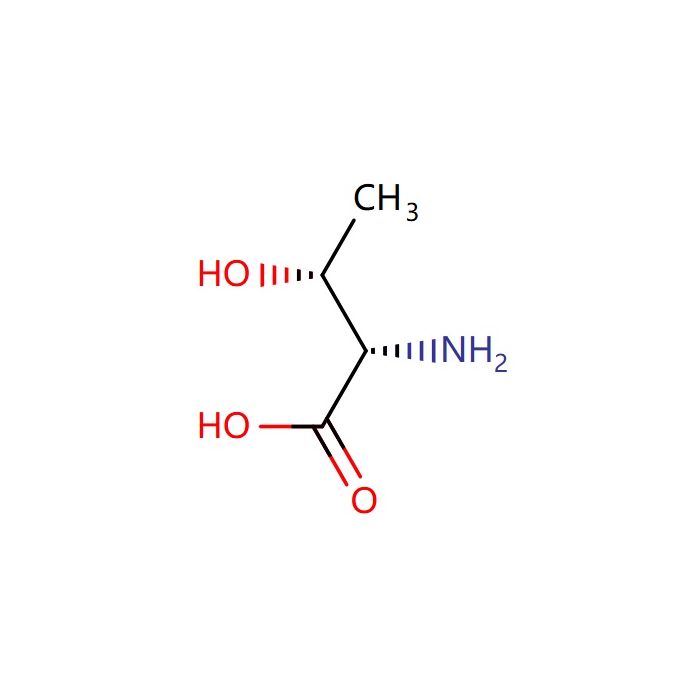
L-Threonine - UltraBio™, Ultra pure, ≥99.5%(NT) , CAS No.72-19-5

CAS: 72-19-5 Cat. No.: L433393 Formula: C4H9NO3 Peso molecolare: 119.13 Beilstein Registry Number: 1721646 Numero EC: 200-774-1
Disponibile su ordine
QUALITÀ & PUREZZA UltraBio™ ? UltraBio™ — Aladdin's line for molecular-biology applications. Use for nuclease-free, high-consistency reagents across molecular workflows. Ultra pure ? Ultra-pure grade with very low impurity content across the board. Use for trace analysis, electronics, or processes intolerant of contamination. ≥99.5%(NT)
Synonyms
L-2-Amino-3-hydroxybutyrate|L-THREONINE [JAN]|(2S,3R)-rel-2-Amino-3-hydroxybutanoic acid|THREONINE [WHO-DD]|Threonine, L- (8CI)|L-alpha-Amino-beta-hydroxybutyric acid|Threonine, DL-|THREONINE [INN]|THREONINE [USP MONOGRAPH]|Treonina [Spanish]|Butanoic acid, 2-amino-3-hydroxy-, (R-(R*,S*))-|L-Thr-OH|L-alpha-Amino-beta-hydroxybutyrate|L-Threonine (9CI)|THREONINE (II)|THREONINE (MART.)|L-THREONINE [USP-RS]|thr|THREONINE [II]|Threoninum (Latin)|THREONINE [INCI]|THREONINE [VANDF]|Threonine, labeled with carbon-14, L-|(2S,3R)-2-amino-3-hydroxybutanoic acid|L-(-)-Threonine|Threonine, L-|Allothreonine, D-|2-Amino-3-hydroxybutanoate|(2S,3R)-2-Amino-3-hydroxybutyric acid|THREONINE [EP MONOGRAPH]|(R-(R*,S*))-2-Amino-3-hydroxybutanoate|L-Threonine (JP17)|Pharmakon1600-01301008|beta-methylserine|(2S,3R)-(-)-Threonine|thre|Threonine #|THREONINE (L)|2-Amino-3-hydroxybutanoic acid, (R-(R*,S*))-|2-amino-3-hydroxybutyric acid|THREONINE (USP MONOGRAPH)|Threonine [USAN:INN]|THREONINE [MI]|Threoninum [Latin]|2-Amino-3-hydroxybutyrate|Treonina|Threonin|L-2-Amino-3-hydroxybutyric acid|L-Threonine (H-Thr-OH)|Threonine (L-Threonine)|Threonine (VAN)|(+/-)-threonine|DL-Threonine|H-Thr|L-Threonine,(S)|THREONINE [HSDB]|(S)-Threonine|Threoninum|[R-(R*,S*)]-2-Amino-3-hydroxybutanoic acid|threonine|(2S,3R)-2-Amino-3-hydroxybutyrate|Threonine (USP)|THREONINE [MART.]|L-(U-14C)Threonine|(R-(R*,S*))-2-Amino-3-hydroxybutanoic acid|L-thr|(2S)-threonine|L-THREONINE [FCC]|[R-(R*,S*)]-2-Amino-3-hydroxybutanoate|L-threonine|L-Threonine;|H-Thr-OH
Storage
Room temperature
Shipped In
Normal
★
Dimensione
Germania (EU)
USA*
Prezzo
Qtà
10g
L433393-10g
Su ordinazione · 8–12 settimane
86,69€
50g
L433393-50g
Su ordinazione · 8–12 settimane
291,47€
250g
L433393-250g
Su ordinazione · 8–12 settimane
793,89€
Enter a quantity for the sizes you want to add.

Panoramica

Other Notes

Preparation of threonine-sepharose, assay and purification of protein kinase C; Amino acid spacing in isotachophoresis on polyacrylamide gel - a critical evaluation; Growth requirement of various microorganisms.

Specifiche

Sinonimi
L-2-Amino-3-hydroxybutyrate | L-THREONINE [JAN] | (2S,3R)-rel-2-Amino-3-hydroxybutanoic acid | THREONINE [WHO-DD] | Threonine, L- (8CI) | L-alpha-Amino-beta-hydroxybutyric acid | Threonine, DL- | THREONINE [INN] | THREONINE [USP MONOGRAPH] | Treonina [Spanish] | Butanoic acid, 2-amino-3-hydroxy-, (R-(R*,S*))- | L-Thr-OH | L-alpha-Amino-be Mostra altro
Specifiche e purezza
UltraBio™, Ultra pure, ≥99.5%(NT)
Condizioni di conservazione di stoccaggio
Room temperature
Spedito in
Normal
Grado
Ultra pure, UltraBio™
Purezza
≥99.5%(NT)
Nomi e identificatori
SMILES
CC(C(C(=O)O)N)O
IUPAC Name
(2S,3R)-2-amino-3-hydroxybutanoic acid
InChIKey
AYFVYJQAPQTCCC-GBXIJSLDSA-N
InChI
1S/C4H9NO3/c1-2(6)3(5)4(7)8/h2-3,6H,5H2,1H3,(H,7,8)/t2-,3+/m1/s1
Isomeri SMILES
C[C@H]([C@@H](C(=O)O)N)O
RTECS
XO8590000
Peso molecolare
119.13
Beilstein
1721646
Reaxys
1098902
Reaxys-RN_link_address
https://www.reaxys.com/reaxys/secured/hopinto.do?context=S&query=IDE.XRN=1098902&ln=

Dati avanzati

Taxonomic Classification

Taxonomy Tree

KingdomOrganic compounds
SuperclassOrganic acids and derivatives
ClasseCarboxylic acids and derivatives
SubclassAmino acids, peptides, and analogues
Intermediate Tree Nodes Amino acids and derivatives - Alpha amino acids and derivatives - Alpha amino acids
Direct ParentL-alpha-amino acids
Alternative Parents Short-chain hydroxy acids and derivatives  Beta hydroxy acids and derivatives  Fatty acids and conjugates  Secondary alcohols  Amino acids  Monocarboxylic acids and derivatives  Carboxylic acids  Organopnictogen compounds  Organic oxides  Monoalkylamines  Hydrocarbon derivatives  Carbonyl compounds  
Molecular FrameworkAliphatic acyclic compounds
Substituents L-alpha-amino acid - Beta-hydroxy acid - Short-chain hydroxy acid - Hydroxy acid - Fatty acid - Amino acid - Secondary alcohol - Carboxylic acid - Monocarboxylic acid or derivatives - Alcohol - Hydrocarbon derivative - Primary amine - Organooxygen compound - Organonitrogen compound - Organic oxide - Primary aliphatic amine - Organopnictogen compound - Organic oxygen compound - Carbonyl group - Organic nitrogen compound - Amine - Aliphatic acyclic compound
DescrizioneThis compound belongs to the class of organic compounds known as l-alpha-amino acids. These are alpha amino acids which have the L-configuration of the alpha-carbon atom.
External Descriptors Common amino acids
Struttura 3D
Modello di struttura chimica interattiva


Obiettivi associati (umani)
F2 Tclin Thrombin (11687 Activities)
Activity TypeRelationActivity valueUnitsAction TypeJournalPubMed IddoiAssay Aladdin ID
ESR1 Tclin Estrogen receptor alpha (17718 Activities)
Activity TypeRelationActivity valueUnitsAction TypeJournalPubMed IddoiAssay Aladdin ID
PGR Tclin Progesterone receptor (8562 Activities)
Activity TypeRelationActivity valueUnitsAction TypeJournalPubMed IddoiAssay Aladdin ID
CHRM2 Tclin Muscarinic acetylcholine receptor M2 (10671 Activities)
Activity TypeRelationActivity valueUnitsAction TypeJournalPubMed IddoiAssay Aladdin ID
HTR1A Tclin Serotonin 1a (5-HT1a) receptor (14969 Activities)
Activity TypeRelationActivity valueUnitsAction TypeJournalPubMed IddoiAssay Aladdin ID
ADRA2A Tclin Alpha-2a adrenergic receptor (9450 Activities)
Activity TypeRelationActivity valueUnitsAction TypeJournalPubMed IddoiAssay Aladdin ID
AR Tclin Androgen Receptor (11781 Activities)
Activity TypeRelationActivity valueUnitsAction TypeJournalPubMed IddoiAssay Aladdin ID
CHRM1 Tclin Muscarinic acetylcholine receptor M1 (12690 Activities)
Activity TypeRelationActivity valueUnitsAction TypeJournalPubMed IddoiAssay Aladdin ID
GABRA1 Tclin GABA receptor alpha-1 subunit (399 Activities)
Activity TypeRelationActivity valueUnitsAction TypeJournalPubMed IddoiAssay Aladdin ID
MAOA Tclin Monoamine oxidase A (11911 Activities)
Activity TypeRelationActivity valueUnitsAction TypeJournalPubMed IddoiAssay Aladdin ID
DRD1 Tclin Dopamine D1 receptor (9720 Activities)
Activity TypeRelationActivity valueUnitsAction TypeJournalPubMed IddoiAssay Aladdin ID
ACHE Tclin Acetylcholinesterase (18204 Activities)
Activity TypeRelationActivity valueUnitsAction TypeJournalPubMed IddoiAssay Aladdin ID
PTGS1 Tclin Cyclooxygenase-1 (9233 Activities)
Activity TypeRelationActivity valueUnitsAction TypeJournalPubMed IddoiAssay Aladdin ID
SLC6A2 Tclin Norepinephrine transporter (10102 Activities)
Activity TypeRelationActivity valueUnitsAction TypeJournalPubMed IddoiAssay Aladdin ID
SLC6A4 Tclin Serotonin transporter (12625 Activities)
Activity TypeRelationActivity valueUnitsAction TypeJournalPubMed IddoiAssay Aladdin ID
ADRA1A Tclin Alpha-1a adrenergic receptor (8359 Activities)
Activity TypeRelationActivity valueUnitsAction TypeJournalPubMed IddoiAssay Aladdin ID
OPRM1 Tclin Mu opioid receptor (19785 Activities)
Activity TypeRelationActivity valueUnitsAction TypeJournalPubMed IddoiAssay Aladdin ID
DRD3 Tclin Dopamine D3 receptor (14368 Activities)
Activity TypeRelationActivity valueUnitsAction TypeJournalPubMed IddoiAssay Aladdin ID
SLC6A3 Tclin Dopamine transporter (10535 Activities)
Activity TypeRelationActivity valueUnitsAction TypeJournalPubMed IddoiAssay Aladdin ID
KCNH2 Tclin HERG (29587 Activities)
Activity TypeRelationActivity valueUnitsAction TypeJournalPubMed IddoiAssay Aladdin ID
PDE3A Tclin Phosphodiesterase 3A (3309 Activities)
Activity TypeRelationActivity valueUnitsAction TypeJournalPubMed IddoiAssay Aladdin ID
HTR2B Tclin Serotonin 2b (5-HT2b) receptor (10323 Activities)
Activity TypeRelationActivity valueUnitsAction TypeJournalPubMed IddoiAssay Aladdin ID
TBXA2R Tclin Thromboxane A2 receptor (5717 Activities)
Activity TypeRelationActivity valueUnitsAction TypeJournalPubMed IddoiAssay Aladdin ID
PDE4A Tclin Phosphodiesterase 4A (1943 Activities)
Activity TypeRelationActivity valueUnitsAction TypeJournalPubMed IddoiAssay Aladdin ID
ADORA3 Tchem Adenosine A3 receptor (15931 Activities)
Activity TypeRelationActivity valueUnitsAction TypeJournalPubMed IddoiAssay Aladdin ID
HRH3 Tclin Histamine H3 receptor (10389 Activities)
Activity TypeRelationActivity valueUnitsAction TypeJournalPubMed IddoiAssay Aladdin ID
KDR Tclin Vascular endothelial growth factor receptor 2 (20924 Activities)
Activity TypeRelationActivity valueUnitsAction TypeJournalPubMed IddoiAssay Aladdin ID
Obiettivi associati (non umani)
Hdac6 Histone deacetylase 6 (222 Activities)
Activity TypeRelationActivity valueUnitsAction TypeJournalPubMed IddoiAssay Aladdin ID
Pkm Pyruvate kinase isozymes M1/M2 (66 Activities)
Activity TypeRelationActivity valueUnitsAction TypeJournalPubMed IddoiAssay Aladdin ID
rep Replicase polyprotein 1ab (378 Activities)
Activity TypeRelationActivity valueUnitsAction TypeJournalPubMed IddoiAssay Aladdin ID
Slc16a10 Monocarboxylate transporter 10 (73 Activities)
Activity TypeRelationActivity valueUnitsAction TypeJournalPubMed IddoiAssay Aladdin ID
GAP1 General amino-acid permease GAP1 (481 Activities)
Activity TypeRelationActivity valueUnitsAction TypeJournalPubMed IddoiAssay Aladdin ID
Slc1a5 Amino acid transporter (271 Activities)
Activity TypeRelationActivity valueUnitsAction TypeJournalPubMed IddoiAssay Aladdin ID
Meccanismi d'azione
Certificati (CoA, COO, BSE/TSE e tabella di analisi)
C of A & Other Certificates(BSE/TSE, COO):
Analytical Chart:

Find and download the COA for your product by matching the lot number on the packaging.

4 results found

Lot NumberCertificate TypeDataOggetto
E2613354E2613354Certificate of AnalysisApr 25, 2026 L433393
E2613355E2613355Certificate of AnalysisApr 25, 2026 L433393
E2613359E2613359Certificate of AnalysisApr 25, 2026 L433393
E2613360E2613360Certificate of AnalysisApr 25, 2026 L433393
Proprietà chimiche e fisiche
SolubilitàH2O: 50mg/mL, clear, colorless
Rotazione specifica [α]-28 ° (C=6, H2O)
Punto di fusione (°C)256 °C (dec.) (lit.)
Peso molecolare119.12
XLogP3-2.900
Hydrogen Bond Donor Count3
Hydrogen Bond Acceptor Count4
Rotatable Bond Count2
Exact Mass119.058 Da
Monoisotopic Mass119.058 Da
Topological Polar Surface Area83.600 Ų
Heavy Atom Count8
Formal Charge0
Complexity93.300
Isotope Atom Count0
Defined Atom Stereocenter Count2
Undefined Atom Stereocenter Count0
Defined Bond Stereocenter Count0
Undefined Bond Stereocenter Count0
The total count of all stereochemical bonds0
Covalently-Bonded Unit Count1
Sicurezza e pericoli (GHS)
Pictogrammi
Segnale
Warning
Indicazioni di pericolo

H302:Harmful if swallowed

H315:Causes skin irritation

H319:Causes serious eye irritation

H335:May cause respiratory irritation

Precauzioni

P261:Avoid breathing dust/fume/gas/mist/vapors/spray.

P264:Wash hands [and …] thoroughly after handling.

P270:Do not eat, drink or smoke when using this product.

P271:Use only outdoors or in a well-ventilated area.

P280:Wear protective gloves/protective clothing/eye protection/face protection.

P330:Rinse mouth.

P301+P312:IF SWALLOWED: call a POISON CENTER/doctor/... IF you feel unwell.

P302+P352:IF ON SKIN: wash with plenty of water.

P304+P340:IF INHALED: Remove person to fresh air and keep comfortable for breathing.

P305+P351+P338:IF IN EYES: Rinse cautiously with water for several minutes. Remove contact lenses if present and easy to do - continue rinsing.

P362+P364:Take off contaminated clothing and wash it before reuse.

P405:Store locked up.

P403+P233:Store in a well-ventilated place. Keep container tightly closed.

P501:Dispose of contents/container to an approved waste disposal plant.

RTECS
XO8590000
Reaxys
1098902
Reaxys-RN_link_address
https://www.reaxys.com/reaxys/secured/hopinto.do?context=S&query=IDE.XRN=1098902&ln=
Indice Merck
9380
Domande frequenti e articoli
UltraBio™: Defining Excellence in Molecular Biology Applications
β-Acyloxy Alkenyl Amides (AAAs): A New Approach to Amide Bond and Peptide Bond Construction Worth Attention
Silicon Reagent-Assisted Peptide Synthesis: Research Progress and Methodological Value of Peptide Bond Formation from Unprotected Substrates
From Analytical Instrument to Synthetic Platform: A New Strategy for Reconstructing Automated Flow Solid-Phase Peptide Synthesis with Standard Analytical HPLC
Methods and Applications for the Determination of Amino Acid Content and Composition
Experimental Selection of Burgess Reagent: A Decision Framework for Alcohol Dehydration, Primary Amide/Aldoxime Dehydration, and Oxazoline/Thiazoline Cyclization
Formation and Control of Carboxyl- and Hydroxyl-Related Impurities in Peptide Synthesis — Using Asp/Glu and Ser/Thr Residue Side Reactions as Examples
Analysis of Hydrolyzed Pearl as a Cosmetic Raw Material: Preparation Process, Active Components, and Skincare Formulation Applications
How Palmitoyl Pentapeptide-4 Acts on the Skin: From the KTTKS Sequence and Skin Delivery to Collagen Matrix Responses
The Combination Logic of Palmitoyl Tripeptide-1 and Palmitoyl Pentapeptide-4: Skin Delivery, Matrix Signaling, and Regulation of Collagen Homeostasis
Citations of This Product
Calcolatori di soluzioni
Recensioni

Recensioni dei clienti

Application Protocols

Not specified for this item; refer to CoA/Spec Sheet and SDS for any product-validated instructions.

General procedural guidance should be sourced from peer-reviewed literature or method SOPs tailored to your application (e.g., media supplementation, peptide synthesis, analytical standards). Avoid treating literature guidance as product-specific validation.

Biological Roles

General biological context (literature; for research use only)

  • Essential amino acid: L-Threonine is one of the 20 proteinogenic amino acids and is essential in many organisms (cannot be synthesized de novo in humans; obtained from diet or media in cell culture).
  • Structural role in proteins: The β-hydroxyl enables hydrogen bonding and contributes to secondary structure stabilization; frequently found at the N-termini of α-helices and in turns; site for O-linked glycosylation and phosphorylation in regulatory pathways.
  • Metabolism: Participates in threonine catabolic routes—threonine dehydratase (to α-ketobutyrate → propionyl-CoA) and threonine dehydrogenase (to glycine + acetyl-CoA). Intersects one-carbon metabolism via glycine/serine pools.
  • Biosynthesis (microbial/plants): Derived from aspartate pathway (aspartate → homoserine → threonine) regulating amino acid homeostasis; exploited industrially by engineered microbes for fermentation production.
  • Osmolyte/stabilizer: Amino acids can stabilize proteins by preferential exclusion effects and modulate glass transition in dried formulations (context-dependent).

Experimental considerations

  • Media formulation: Typical defined media include threonine at sub-millimolar to millimolar concentrations; optimize per cell line and objective.
  • Isotopic studies: 13C/15N-labeled threonine supports fluxomics and proteomics incorporation experiments.
Buffer Applications

L-Threonine is not a standard primary buffering agent. As a zwitterionic amino acid, it exhibits limited buffering capacity near its pKa values, but dedicated buffers (HEPES, phosphate, Tris, MOPS) are generally preferred.

General notes (literature; not product specifications)

  • Approximate pKa values: pKa1 ~2.6 (carboxyl), pKa2 ~9.1 (ammonium). Weak buffering can be achieved near these pH regions, but capacity is low compared to designed Good’s buffers.
  • Practical use: May modestly stabilize pH in specialized formulations containing amino acid blends; adjust with NaOH/HCl as needed.

For robust buffering in biochemical or cell culture workflows, select validated buffer systems and use L-threonine as a nutrient/stabilizer rather than as the principal buffer.

Green Alternatives

Because L-threonine is a bio-based, proteinogenic amino acid produced at scale by fermentation, it is inherently aligned with green chemistry principles compared to petrochemical chiral auxiliaries.

General comparison (literature; not product specifications)

| Aspect | L-Threonine (bio-based) | Protected derivatives (e.g., Fmoc-/Boc-Thr(OtBu)-OH) | |---|---|---| | Source | Renewable (fermentation) | Derived from L-threonine + protecting group reagents (additional steps, solvents) | | Hazard profile | Low hazard solid | Additional hazards from reagents (e.g., isobutylene, DCC/DMAP steps) | | Waste | Minimal for direct aqueous use | More waste from protection/deprotection cycles | | Solvent footprint | Aqueous media feasible | Often requires DMF/NMP/DCM |

Practical guidance

  • Prefer direct use of unprotected L-threonine in aqueous biocatalysis or as a nutrient when feasible.
  • When protection is required, choose greener coupling systems (e.g., DIC/Oxyma in EtOAc/2-MeTHF; water-compatible peptide ligations) and minimize halogenated solvents.
  • Recycle/neutralize aqueous amino acid streams through biological treatment due to high biodegradability.
Pharmaceutical Uses

No therapeutic or clinical claims are made for this product. The following are general formulation roles for amino acids such as L-threonine (literature; not product specifications):

  • Excipient/stabilizer: Amino acids can stabilize proteins and peptides in solution or lyophilized forms by modulating ionic strength, pH microenvironments, and glass transition behavior.
  • Tonicity/osmolarity adjustment: Contributes to osmolality in parenteral-style model systems during formulation development studies (verify pharmacopeial compliance separately).
  • Process aid: Acts as a Maillard reaction suppressor or promoter depending on conditions in model studies; used to probe formulation robustness.
  • Component in culture/media feeds for biomanufacturing development studies.

Regulatory note: Pharmacopeial monographs may exist for L-threonine, but compliance status and grade for this specific item are Not specified for this item; refer to CoA/Spec Sheet.

Physical Properties

Item-specific (from Product Data)

  • Appearance: Not specified for this item; refer to CoA/Spec Sheet.
  • Physical constants (mp/bp/density/solubility/logP/refractive index): Not specified for this item; refer to CoA/Spec Sheet.

Literature/general values (for reference only; not product specifications)

  • Physical state: crystalline solid; zwitterionic at neutral pH
  • Melting point: ~256–263 °C (decomp., literature)
  • Aqueous solubility: high; freely soluble in water (literature reports tens of g/L at ambient T)
  • Solubility in organics: sparingly soluble to insoluble in most nonpolar/aprotic organic solvents (e.g., Et2O, hexanes, toluene)
  • Acid/base properties: pKa1 (CO2H) ~2.6; pKa2 (NH3+) ~9.1 (literature); side-chain –OH is non-ionizing under physiological pH
  • Isoelectric point (pI): ~5.6–5.7 (literature)
  • Partitioning: logP (octanol/water) strongly negative (high hydrophilicity; literature qualitative)

Practical notes (general)

  • Highly hygroscopic uptake is minimal compared to many salts, but solutions should be prepared with CO2-free water to avoid pH drift.
  • As a zwitterion, dissolution rate increases with gentle warming and/or slight pH adjustment toward the isoelectric region.
Quality and Grades

Item-specific (from Product Data)

  • Grade/Purity: UltraBio™, Ultra pure

What this implies (general clarification)

  • UltraBio™, Ultra pure: Indicates exceptional chemical purity and low bioburden/trace contaminants suitable for demanding life-science workflows (buffer/media preparation, biochemical assays). While exact impurity cutoffs (metals, endotoxin/bioburden, UV, residual solvents) are not specified here, such grades prioritize high assay and low particulates/organics.
  • Use cases aligned to this grade: Preparation of cell culture supplements, enzymology buffers, protein refolding/stabilization studies, analytical calibration (amino acid analysis).

Verification

  • For quantitative limits (e.g., assay %, heavy metals, microbial/endotoxin, residual solvents), and chromatographic identity, consult the item’s CoA/Spec Sheet. Do not substitute literature values for specifications.
Reaction and Applications

Item-specific manufacturer applications

  • Not specified for this item; refer to CoA/Spec Sheet.

General research applications (literature; not product specifications)

  • Biochemistry: Essential amino acid supplement in defined media; substrate/standard in amino acid analysis; stabilizer/osmolyte in protein formulations.
  • Enzymology: Substrate for threonine dehydratase/dehydrogenase; probe for O-linked glycosylation at threonine residues in peptide models.
  • Materials/chemo-selective ligation: Use as chiral precursor; β-hydroxyl directs selective transformations.

Reaction families and practical notes (general)

  • Protection strategies: N-protection (Boc, Fmoc, Cbz) and O-protection on the β–OH (e.g., tBu) to prevent side reactions during peptide coupling.
  • Coupling chemistry: Standard peptide couplings (HATU/HOAt, HBTU/HOBt, EDCI/Oxyma) under mild base (DIPEA) at 0–25 °C; monitor for O→N acyl transfer in unprotected systems.
  • Chemoselectivity: The β–OH can participate in intramolecular ester formation or dehydration under harsh conditions; control temperature/pH.
  • Chiral pool synthesis: L-Threonine serves as a starting material for β-amino alcohols, epoxides (via Mitsunobu-type inversion then cyclization), and as a handle for constructing polyketide-like fragments.
Reaction Conditions

The following are general, literature-based conditions for common L-threonine manipulations (guidance only; not product specifications):

  • N-Protecting (Boc): Dissolve L-threonine (or its ester) in aqueous dioxane or THF/H2O with NaHCO3 or Na2CO3 (pH 8–9). Add Boc2O (1.1–1.5 eq) at 0–25 °C; 1–4 h. Workup by acidification and extraction or ion-exchange.
  • O-tBu protection: Use acid-labile tBu ether via isobutylene/H2SO4 or via tBu-protecting reagents on protected amino acid derivatives; modern practice favors side-chain protection as tBu ester on the β–OH in Fmoc-Thr(tBu)-OH prepared via standard peptide building block routes.
  • Amide coupling (peptide bond): In DMF or NMP, add carboxyl component (protected Thr), HATU or DIC/Oxyma, and DIPEA at 0–25 °C; 0.5–3 h. Monitor by LC-MS/HPLC. Typical isolated yields for dipeptides: 70–95% (substrate-dependent).
  • Esterification: MeOH or tBuOH with catalytic HCl/H2SO4 (Fischer) at 0–25 °C for sensitive derivatives; protect amine first to prevent salt formation/side reactions.
  • Mitsunobu inversion at β–OH: DEAD/DIAD and PPh3 in THF with a suitable nucleophile (e.g., p-nitrobenzoate) at 0–25 °C; subsequent hydrolysis to reveal inverted alcohol. Handle with care due to reagent hazards; consider greener alternatives.

Always control pH and temperature to prevent racemization and dehydration. Employ anhydrous conditions for peptide couplings to minimize hydrolysis.

Safety and Handling

Item-specific (from Product Data)

  • Hazard information (Signal word, H-statements, GHS classification, pictograms): Not specified for this item; refer to SDS.
  • Storage conditions: Room temperature
  • Shipping: Normal

General safety guidance (literature/standard lab practice; not a substitute for SDS)

  • Expected hazard profile: Many amino acids, including L-threonine, are generally considered low hazard and often not classified under GHS; however, always verify with the product-specific SDS.
  • PPE: Lab coat, safety glasses, and appropriate gloves (e.g., nitrile). Avoid dust generation; use a dust mask or local exhaust if airborne particulates may form.
  • Handling: Avoid inhalation and contact with eyes/skin. Use clean tools to prevent bioburden in solutions intended for sterile applications.
  • First aid (overview): If inhaled, move to fresh air. If on skin/eyes, rinse with water. If ingested, rinse mouth with water. Seek medical attention if irritation persists (follow SDS instructions).
  • Incompatibilities: Strong oxidizers (general), strong mineral acids/bases can degrade or racemize; aldehydes/ketones may react slowly (Schiff base/Maillard-type chemistry) in heated/alkaline conditions.
  • Environmental: Biodegradable; avoid release of concentrated solutions into wastewater without proper assessment.
Solvent Selection

Compound type and polarity (general)

  • L-Threonine is a highly polar, hydrophilic α-amino acid (zwitterion at neutral pH). It is best handled in water or aqueous buffers.

Miscibility/solubility trends (literature/general)

  • Water: Freely soluble; solubility increases with temperature.
  • Alcohols (MeOH, EtOH): Limited to moderate solubility; often improved by slight heating.
  • Polar aprotics (DMSO, DMF): Soluble; DMSO can be used for concentrated stock solutions when aqueous incompatibility exists.
  • Nonpolar solvents (hexanes, toluene, ethers): Essentially insoluble.

Selection guidance

  • Analytical workflows: Use ultrapure water (18 MΩ·cm) or LC-MS–grade water; adjust pH to ~5.6–7.4 depending on method. For amino acid analysis, mobile phases are typically aqueous with volatile modifiers (e.g., FA, NH4FA) after derivatization.
  • Biochemical assays: Prepare in sterile-filtered PBS or HEPES-buffered saline; confirm compatibility of ionic strength and pH with the target enzyme or cell system.
  • Synthetic transformations: For protection/coupling chemistry, use mixed aqueous/organic systems or polar aprotics (DMF, NMP) with base and coupling reagents.

Small comparison (general)

  • Water vs DMSO: Water maximizes biological compatibility; DMSO enables higher concentration stocks but may perturb enzymes/cells above 0.1–1% v/v.
Storage and Reconstitution

Item-specific (from Product Data)

  • Storage conditions: Room temperature
  • Shipped in: Normal

General guidance (literature; not product specifications)

  • Solid storage: Keep tightly capped in a clean, dry container. Protect from excessive humidity. For long-term analytical use, store in a desiccator to minimize moisture uptake.
  • Solution preparation: Dissolves readily in water. Prepare using high-purity water (e.g., 18 MΩ·cm). Adjust pH as required (commonly pH 5.5–7.4 for biological work). Sterile-filter (0.22 µm) for cell-based applications.
  • Concentrated stocks: Aqueous or DMSO stocks can be prepared; verify compatibility of DMSO with downstream systems. Label and date solutions; avoid repeated freeze–thaw.
  • Stability: Aqueous solutions are generally stable refrigerated for short periods; minimize exposure to elevated pH and temperature to prevent degradation/racemization. For extended storage, prepare aliquots and freeze if appropriate for your workflow.

For exact stability, assay, and impurity limits of this item, consult the product’s CoA/Spec Sheet.

Structure and Identity

Item-specific (from Product Data)

  • Product: L-Threonine (SKU: L433393)
  • CAS: 72-19-5
  • CID: 6288
  • InChIKey: Not specified for this item; refer to CoA/Spec Sheet.
  • SMILES: Not specified for this item; refer to CoA/Spec Sheet.
  • Molecular formula: Not specified for this item; refer to CoA/Spec Sheet.
  • Molecular weight: Not specified for this item; refer to CoA/Spec Sheet.

Literature/general identity (for reference only)

  • Common name: L-2-amino-3-hydroxybutyric acid (proteinogenic α-amino acid)
  • Typical molecular formula (literature): C4H9NO3
  • Typical molecular weight (literature): 119.12 g/mol
  • Chiral centers: 2 (L-configuration at the α-carbon; threo configuration with β-OH)
  • Functional groups: α-amino (–NH2), carboxylic acid (–CO2H), secondary alcohol (β–OH)

2D structural description (general)

  • Backbone: HO–CH(–CH3)–CH(NH2)–CO2H. The α-carbon bears –NH2 and –CO2H; the β-carbon carries –OH and –CH3 (threo relationship). Zwitterionic forms dominate in neutral aqueous media.
Synthetic Utility

L-Threonine is a versatile chiral pool building block with two stereocenters and bifunctional reactivity.

Key functional handles (general)

  • α-Amino/α-carboxyl pair: Enables peptide bond formation; N-protection (Boc/Fmoc/Cbz) and esterification of the acid are routine.
  • β-Hydroxyl group: Permits O-protection (e.g., tBu, benzyl), activation (e.g., sulfonates), or intramolecular transformations (epoxidation from β-halo derivatives).

Representative transformations (literature)

  • Peptide synthesis: L-Thr derivatives (e.g., Fmoc-Thr(tBu)-OH) incorporated via HATU/HBTU/DIC–Oxyma protocols; attention to O→N acyl migration.
  • Chiral auxiliaries/ligands: Conversion to β-amino alcohol motifs valued in asymmetric catalysis and as resolving agents.
  • Epoxide access: Mitsunobu inversion at Cβ–OH followed by intramolecular cyclization to give epoxides for downstream opening with nucleophiles.
  • β-Functionalization: Formation of β-halo or β-azido derivatives via activation of the alcohol, enabling further diversification.
  • Decarboxylative or oxidative routes: Generation of aldehydes/ketones from protected threonine for polyketide fragments.

Retrosynthetic value

  • Readily available, enantiomerically pure starting point that embeds two stereocenters for fragment assembly with high stereochemical economy.
Target Specificity

Not applicable. This product is a small-molecule amino acid, not a biological targeting reagent (e.g., antibody, enzyme inhibitor). No antigen/epitope or species specificity applies.

Domande frequenti

What does UltraBio? mean?
UltraBio? indicates that the product has been processed and tested for biological and biochemical applications. Specifications may include endotoxin limits, microbial controls, sterility, low DNase/RNase/protease activity, and verified biological activity where relevant.
What does Ultra pure mean?
Ultra pure is a defined analytical purity tier suitable for general analytical and reagent applications. It specifies a minimum assay percentage, controlled limits on common impurities (water, heavy metals, residue on ignition), and lot-to-lot consistency. Ultra pure is one of several purity tiers — choose based on the sensitivity and regulatory requirements of your method.
How should this product be stored?
Store at room temperature.
How is this product shipped?
This product ships under standard ambient conditions. No temperature-controlled packaging is required.
What are the CAS number, molecular formula and molecular weight?
The CAS Number is 72-19-5, the molecular formula is C4H9NO3, and the molecular weight is 119.13 g/mol. InChIKey AYFVYJQAPQTCCC-GBXIJSLDSA-N.
What documentation is provided?
Available product documentation, including Certificates of Analysis (COA), Safety Data Sheets (SDS), and specification sheets, is shown in the product document area. Document availability and access follow the current site policy.

Desidera che le inviamo un messaggio quando avremo sconti disponibili?

Ricordamelo più tardi

Grazie! Controlli la sua casella di posta per confermare.

Ops! Le notifiche sono disabilitate.