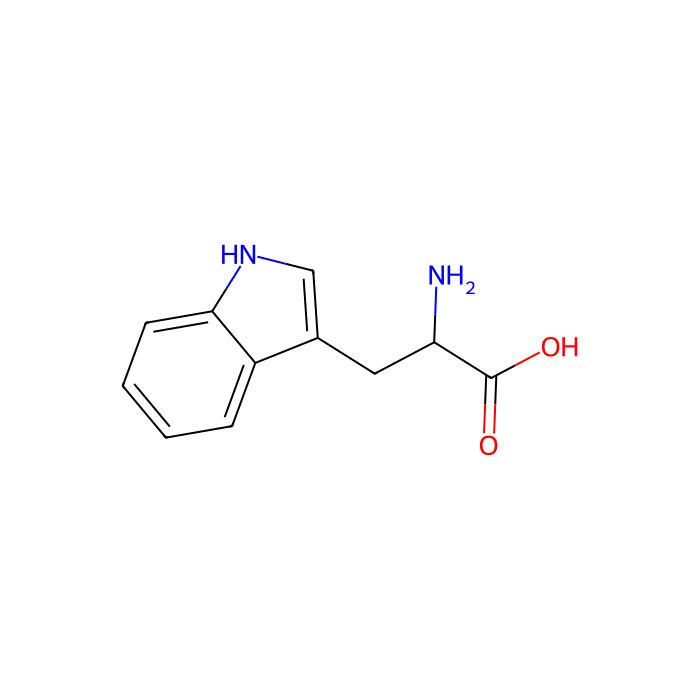
L-Tryptophan - Moligand™, ≥99% , CAS No.73-22-3

CAS: 73-22-3 Cat. No.: T103480 Formula: C11H12N2O2 Peso molecolare: 204.23 Beilstein Registry Number: 86197 Numero EC: 200-795-6
Disponibile su ordine
GRADE & PURITY Moligand™ ? Moligand™ — Aladdin's line of ligands and bioactive small molecules. Use for receptor, pathway, and binding studies needing defined small-molecule tools. ≥99%
Synonyms
TRP | TRYPTOPHAN [USP MONOGRAPH] | Tryptophanum | Tryptan | 1H-Indole-3-alanine | L-Trp | TRYPTOPHAN [INCI] | (S)-2-Amino-3-(3-indolyl)propionic acid | (S)-Tryptophan | 2a4m | TRYPTOPHAN [USAN] | (-)-Tryptophan | 1qaw | 3-Indol-3-ylalanine | Htrp | TRYPTO
Storage
Room temperature
Shipped In
Normal
★
Size
Germania (EU)
USA*
Price
Qty
25g
T103480-25g
—
Disponibile ≥10
8,59€
100g
T103480-100g
3 Disponibile
3 Disponibile
19,87€
500g
T103480-500g
—
3 Disponibile
78,01€
Enter a quantity for the sizes you want to add.
🧪
Why this grade

Moligand™, ≥99% Moligand™ for sensitive chromatographic and analytical workflows requiring minimal baseline interference.

🌡

Storage & shipping

Room temperature Ships Normal Check lot-specific COA for exact specifications.

📋

Quality documents

SDS, COA, datasheet, and spec sheet available for download. Lot-specific COA accessible via lot number lookup.

📚

Literature proof

Cited in 440 peer-reviewed publications across chromatography, organic synthesis, and cross-coupling reactions.

Specifications

Sinonimi
TRP | TRYPTOPHAN [USP MONOGRAPH] | Tryptophanum | Tryptan | 1H-Indole-3-alanine | L-Trp | TRYPTOPHAN [INCI] | (S)-2-Amino-3-(3-indolyl)propionic acid | (S)-Tryptophan | 2a4m | TRYPTOPHAN [USAN] | (-)-Tryptophan | 1qaw | 3-Indol-3-ylalanine | Htrp | TRYPTO
Specifiche e purezza
Moligand™, ≥99%
Meccanismi biochimici e fisiologici
Essential amino acid which is necessary for normal growth in infants and for nitrogen balance in adults. Used as an antidepressant, anxiolytic and sleep aid. Precursor to niacin, indole alkaloids, serotonin and melatonin.
Condizioni di conservazione di stoccaggio
Room temperature
Spedito in
Normal
Grado
Moligand™
Nota
Wherever possible, you should prepare and use solutions on the same day. However, if you need to make up stock solutions in advance, we recommend that you store the solution as aliquots in tightly sealed vials at -20°C. Generally, these will be useable for up to one month. Before use, and prior to opening the vial we recommend that you allow your product to equilibrate to room temperature for at least 1 hour. Need more advice on solubility, usage and handling? Please visit our frequently asked questions (FAQ) page for more details.
Purezza
≥99%
Nomi e identificatori
Pubchem Sid
Pubchem Sid Url
https://pubchem.ncbi.nlm.nih.gov/substance/488180046
Sorrisi canonici
C1=CC=C2C(=C1)C(=CN2)CC(C(=O)O)N
IUPAC Name
(2S)-2-amino-3-(1H-indol-3-yl)propanoic acid
InChIKey
QIVBCDIJIAJPQS-VIFPVBQESA-N
INCHI
1S/C11H12N2O2/c12-9(11(14)15)5-7-6-13-10-4-2-1-3-8(7)10/h1-4,6,9,13H,5,12H2,(H,14,15)/t9-/m0/s1
Isomeri SMILES
C1=CC=C2C(=C1)C(=CN2)C[C@@H](C(=O)O)N
Peso molecolare
204.23
Beilstein
86197
Reaxy-Rn
86196
Reaxys-RN_link_address
https://www.reaxys.com/reaxys/secured/hopinto.do?context=S&query=IDE.XRN=86196&ln=

Documentazione

📋 Safety Data Sheet (SDS)

Comprehensive hazard, handling, storage, and regulatory compliance document.

Download SDS →

✅ Certificate of Analysis (COA)

Lot-specific quality data. Enter your lot number to retrieve the exact COA.

Look up COA →

📊 Datasheet

Quick-reference summary of product specifications and applications.

View datasheet →

🔬 Specification Sheet

Full quality attributes and acceptance criteria for this grade.

View spec sheet →

Advanced Data

Taxonomic Classification

Taxonomy Tree

KingdomOrganic compounds
SuperclassOrganoheterocyclic compounds
ClasseIndoles and derivatives
SubclassIndolyl carboxylic acids and derivatives
Intermediate Tree Nodes Not available
Direct ParentIndolyl carboxylic acids and derivatives
Alternative Parents L-alpha-amino acids  3-alkylindoles  Aralkylamines  Substituted pyrroles  Benzenoids  Heteroaromatic compounds  Amino acids  Monocarboxylic acids and derivatives  Carboxylic acids  Azacyclic compounds  Organopnictogen compounds  Organic oxides  Monoalkylamines  Hydrocarbon derivatives  Carbonyl compounds  
Molecular FrameworkAromatic heteropolycyclic compounds
Substituents Indolyl carboxylic acid derivative - Alpha-amino acid - Alpha-amino acid or derivatives - L-alpha-amino acid - 3-alkylindole - Indole - Aralkylamine - Benzenoid - Substituted pyrrole - Heteroaromatic compound - Pyrrole - Amino acid or derivatives - Amino acid - Carboxylic acid derivative - Carboxylic acid - Monocarboxylic acid or derivatives - Azacycle - Amine - Primary aliphatic amine - Hydrocarbon derivative - Organic oxide - Organic oxygen compound - Organic nitrogen compound - Carbonyl group - Organonitrogen compound - Organooxygen compound - Primary amine - Organopnictogen compound - Aromatic heteropolycyclic compound
DescrizioneThis compound belongs to the class of organic compounds known as indolyl carboxylic acids and derivatives. These are compounds containing a carboxylic acid chain (of at least 2 carbon atoms) linked to an indole ring.
External Descriptors Common amino acids
Struttura 3D
Modello di struttura chimica interattiva


Obiettivi associati (umani)
SLC36A1 Tchem Proton-coupled amino acid transporter 1 (1 Activities)
Activity TypeActivity Value -log(M)Mechanism of ActionActivity ReferencePublications (PubMed IDs)
GPR139 Tchem Probable G-protein coupled receptor 139 (3 Activities)
Activity TypeActivity Value -log(M)Mechanism of ActionActivity ReferencePublications (PubMed IDs)
DHFR Tclin Dihydrofolate reductase (3072 Activities)
Activity TypeRelationActivity valueUnitsAction TypeJournalPubMed IddoiAssay Aladdin ID
CA2 Tclin Carbonic anhydrase II (17698 Activities)
Activity TypeRelationActivity valueUnitsAction TypeJournalPubMed IddoiAssay Aladdin ID
TSHR Tclin Thyroid stimulating hormone receptor (29986 Activities)
Activity TypeRelationActivity valueUnitsAction TypeJournalPubMed IddoiAssay Aladdin ID
DNMT1 Tclin DNA (cytosine-5)-methyltransferase 1 (978 Activities)
Activity TypeRelationActivity valueUnitsAction TypeJournalPubMed IddoiAssay Aladdin ID
CA3 Tclin Carbonic anhydrase III (753 Activities)
Activity TypeRelationActivity valueUnitsAction TypeJournalPubMed IddoiAssay Aladdin ID
CA6 Tclin Carbonic anhydrase VI (993 Activities)
Activity TypeRelationActivity valueUnitsAction TypeJournalPubMed IddoiAssay Aladdin ID
CA1 Tclin Carbonic anhydrase I (13240 Activities)
Activity TypeRelationActivity valueUnitsAction TypeJournalPubMed IddoiAssay Aladdin ID
LDHB Tchem L-lactate dehydrogenase B chain (463 Activities)
Activity TypeRelationActivity valueUnitsAction TypeJournalPubMed IddoiAssay Aladdin ID
MPO Tchem Myeloperoxidase (1002 Activities)
Activity TypeRelationActivity valueUnitsAction TypeJournalPubMed IddoiAssay Aladdin ID
ALB Tchem Serum albumin (2651 Activities)
Activity TypeRelationActivity valueUnitsAction TypeJournalPubMed IddoiAssay Aladdin ID
ARSA Tbio Cerebroside-sulfatase (655 Activities)
Activity TypeRelationActivity valueUnitsAction TypeJournalPubMed IddoiAssay Aladdin ID
CA5B Tclin Carbonic anhydrase VB (957 Activities)
Activity TypeRelationActivity valueUnitsAction TypeJournalPubMed IddoiAssay Aladdin ID
CA5A Tclin Carbonic anhydrase VA (1168 Activities)
Activity TypeRelationActivity valueUnitsAction TypeJournalPubMed IddoiAssay Aladdin ID
CA14 Tclin Carbonic anhydrase XIV (1305 Activities)
Activity TypeRelationActivity valueUnitsAction TypeJournalPubMed IddoiAssay Aladdin ID
MMP3 Tchem Matrix metalloproteinase 3 (3433 Activities)
Activity TypeRelationActivity valueUnitsAction TypeJournalPubMed IddoiAssay Aladdin ID
CYP2D6 Tclin Cytochrome P450 2D6 (33882 Activities)
Activity TypeRelationActivity valueUnitsAction TypeJournalPubMed IddoiAssay Aladdin ID
KYAT1 Tbio Kynurenine--oxoglutarate transaminase I (96 Activities)
Activity TypeRelationActivity valueUnitsAction TypeJournalPubMed IddoiAssay Aladdin ID
CA12 Tclin Carbonic anhydrase XII (6231 Activities)
Activity TypeRelationActivity valueUnitsAction TypeJournalPubMed IddoiAssay Aladdin ID
CYP1A2 Tchem Cytochrome P450 1A2 (26471 Activities)
Activity TypeRelationActivity valueUnitsAction TypeJournalPubMed IddoiAssay Aladdin ID
CYP2C9 Tchem Cytochrome P450 2C9 (32119 Activities)
Activity TypeRelationActivity valueUnitsAction TypeJournalPubMed IddoiAssay Aladdin ID
CYP2C19 Tchem Cytochrome P450 2C19 (29246 Activities)
Activity TypeRelationActivity valueUnitsAction TypeJournalPubMed IddoiAssay Aladdin ID
CA9 Tclin Carbonic anhydrase IX (8255 Activities)
Activity TypeRelationActivity valueUnitsAction TypeJournalPubMed IddoiAssay Aladdin ID
CYP3A4 Tclin Cytochrome P450 3A4 (53859 Activities)
Activity TypeRelationActivity valueUnitsAction TypeJournalPubMed IddoiAssay Aladdin ID
HEK293 (82097 Activities)
Activity TypeRelationActivity valueUnitsAction TypeJournalPubMed IddoiAssay Aladdin ID
HepG2 (196354 Activities)
Activity TypeRelationActivity valueUnitsAction TypeJournalPubMed IddoiAssay Aladdin ID
FEN1 Tchem Flap endonuclease 1 (12055 Activities)
Activity TypeRelationActivity valueUnitsAction TypeJournalPubMed IddoiAssay Aladdin ID
SLC7A5 Tchem L-type amino acid transporter 1 (388 Activities)
Activity TypeRelationActivity valueUnitsAction TypeJournalPubMed IddoiAssay Aladdin ID
HIF1A Tchem Hypoxia-inducible factor 1 alpha (6027 Activities)
Activity TypeRelationActivity valueUnitsAction TypeJournalPubMed IddoiAssay Aladdin ID
IDO1 Tchem Indoleamine 2,3-dioxygenase (6650 Activities)
Activity TypeRelationActivity valueUnitsAction TypeJournalPubMed IddoiAssay Aladdin ID
POLI Tchem DNA polymerase iota (116820 Activities)
Activity TypeRelationActivity valueUnitsAction TypeJournalPubMed IddoiAssay Aladdin ID
ABCC2 Tchem Canalicular multispecific organic anion transporter 1 (1191 Activities)
Activity TypeRelationActivity valueUnitsAction TypeJournalPubMed IddoiAssay Aladdin ID
ALPL Tchem Alkaline phosphatase, tissue-nonspecific isozyme (1551 Activities)
Activity TypeRelationActivity valueUnitsAction TypeJournalPubMed IddoiAssay Aladdin ID
EHMT2 Tchem Histone-lysine N-methyltransferase, H3 lysine-9 specific 3 (93046 Activities)
Activity TypeRelationActivity valueUnitsAction TypeJournalPubMed IddoiAssay Aladdin ID
PLAA Tchem Phospholipase A-2-activating protein (44 Activities)
Activity TypeRelationActivity valueUnitsAction TypeJournalPubMed IddoiAssay Aladdin ID
GPR17 Tchem Uracil nucleotide/cysteinyl leukotriene receptor (291 Activities)
Activity TypeRelationActivity valueUnitsAction TypeJournalPubMed IddoiAssay Aladdin ID
KDM4E Tchem Lysine-specific demethylase 4D-like (40243 Activities)
Activity TypeRelationActivity valueUnitsAction TypeJournalPubMed IddoiAssay Aladdin ID
LMNA Tbio Prelamin-A/C (36751 Activities)
Activity TypeRelationActivity valueUnitsAction TypeJournalPubMed IddoiAssay Aladdin ID
BLM Tchem Bloom syndrome protein (4248 Activities)
Activity TypeRelationActivity valueUnitsAction TypeJournalPubMed IddoiAssay Aladdin ID
PMP22 Tbio Peripheral myelin protein 22 (699 Activities)
Activity TypeRelationActivity valueUnitsAction TypeJournalPubMed IddoiAssay Aladdin ID
KMT2A Tchem Histone-lysine N-methyltransferase MLL (17327 Activities)
Activity TypeRelationActivity valueUnitsAction TypeJournalPubMed IddoiAssay Aladdin ID
SLCO1B1 Tchem Solute carrier organic anion transporter family member 1B1 (2672 Activities)
Activity TypeRelationActivity valueUnitsAction TypeJournalPubMed IddoiAssay Aladdin ID
MPHOSPH8 Tbio M-phase phosphoprotein 8 (656 Activities)
Activity TypeRelationActivity valueUnitsAction TypeJournalPubMed IddoiAssay Aladdin ID
BAZ2B Tchem Bromodomain adjacent to zinc finger domain protein 2B (56204 Activities)
Activity TypeRelationActivity valueUnitsAction TypeJournalPubMed IddoiAssay Aladdin ID
SLCO1B3 Tchem Solute carrier organic anion transporter family member 1B3 (2517 Activities)
Activity TypeRelationActivity valueUnitsAction TypeJournalPubMed IddoiAssay Aladdin ID
SLC16A10 SLC16A10 protein (28 Activities)
Activity TypeRelationActivity valueUnitsAction TypeJournalPubMed IddoiAssay Aladdin ID
MEN1 Tchem Menin/Histone-lysine N-methyltransferase MLL (48157 Activities)
Activity TypeRelationActivity valueUnitsAction TypeJournalPubMed IddoiAssay Aladdin ID
Obiettivi associati (non umani)
Ca7 Carbonic anhydrase VII (3 Activities)
Activity TypeRelationActivity valueUnitsAction TypeJournalPubMed IddoiAssay Aladdin ID
Ca13 Carbonic anhydrase XIII (322 Activities)
Activity TypeRelationActivity valueUnitsAction TypeJournalPubMed IddoiAssay Aladdin ID
CA4 Carbonic anhydrase IV (1713 Activities)
Activity TypeRelationActivity valueUnitsAction TypeJournalPubMed IddoiAssay Aladdin ID
Tdo2 Tryptophan 2,3-dioxygenase (8 Activities)
Activity TypeRelationActivity valueUnitsAction TypeJournalPubMed IddoiAssay Aladdin ID
Pkm Pyruvate kinase isozymes M1/M2 (66 Activities)
Activity TypeRelationActivity valueUnitsAction TypeJournalPubMed IddoiAssay Aladdin ID
Iap Intestinal alkaline phosphatase (419 Activities)
Activity TypeRelationActivity valueUnitsAction TypeJournalPubMed IddoiAssay Aladdin ID
Carbonic anhydrase (69 Activities)
Activity TypeRelationActivity valueUnitsAction TypeJournalPubMed IddoiAssay Aladdin ID
Klebsiella pneumoniae (43867 Activities)
Activity TypeRelationActivity valueUnitsAction TypeJournalPubMed IddoiAssay Aladdin ID
Staphylococcus aureus (210822 Activities)
Activity TypeRelationActivity valueUnitsAction TypeJournalPubMed IddoiAssay Aladdin ID
Escherichia coli (133304 Activities)
Activity TypeRelationActivity valueUnitsAction TypeJournalPubMed IddoiAssay Aladdin ID
Aspergillus niger (16508 Activities)
Activity TypeRelationActivity valueUnitsAction TypeJournalPubMed IddoiAssay Aladdin ID
Bacillus subtilis (32866 Activities)
Activity TypeRelationActivity valueUnitsAction TypeJournalPubMed IddoiAssay Aladdin ID
Saccharomyces cerevisiae (19171 Activities)
Activity TypeRelationActivity valueUnitsAction TypeJournalPubMed IddoiAssay Aladdin ID
Plasmodium falciparum (966862 Activities)
Activity TypeRelationActivity valueUnitsAction TypeJournalPubMed IddoiAssay Aladdin ID
Candida albicans (78123 Activities)
Activity TypeRelationActivity valueUnitsAction TypeJournalPubMed IddoiAssay Aladdin ID
Fusarium oxysporum (3998 Activities)
Activity TypeRelationActivity valueUnitsAction TypeJournalPubMed IddoiAssay Aladdin ID
Felis catus (3858 Activities)
Activity TypeRelationActivity valueUnitsAction TypeJournalPubMed IddoiAssay Aladdin ID
Rattus norvegicus (775804 Activities)
Activity TypeRelationActivity valueUnitsAction TypeJournalPubMed IddoiAssay Aladdin ID
CHO-K1 (1115 Activities)
Activity TypeRelationActivity valueUnitsAction TypeJournalPubMed IddoiAssay Aladdin ID
rep Replicase polyprotein 1ab (378 Activities)
Activity TypeRelationActivity valueUnitsAction TypeJournalPubMed IddoiAssay Aladdin ID
pfk 6-phospho-1-fructokinase (7870 Activities)
Activity TypeRelationActivity valueUnitsAction TypeJournalPubMed IddoiAssay Aladdin ID
Ca15 Carbonic anhydrase 15 (173 Activities)
Activity TypeRelationActivity valueUnitsAction TypeJournalPubMed IddoiAssay Aladdin ID
Txnrd1 Thioredoxin reductase 1, cytoplasmic (45279 Activities)
Activity TypeRelationActivity valueUnitsAction TypeJournalPubMed IddoiAssay Aladdin ID
Amphibalanus improvisus (34 Activities)
Activity TypeRelationActivity valueUnitsAction TypeJournalPubMed IddoiAssay Aladdin ID
ftmPT1 Brevianamide F prenyltransferase (40 Activities)
Activity TypeRelationActivity valueUnitsAction TypeJournalPubMed IddoiAssay Aladdin ID
TGR Thioredoxin glutathione reductase (28579 Activities)
Activity TypeRelationActivity valueUnitsAction TypeJournalPubMed IddoiAssay Aladdin ID
Mapt Microtubule-associated protein tau (6 Activities)
Activity TypeRelationActivity valueUnitsAction TypeJournalPubMed IddoiAssay Aladdin ID
ffp 4'-phosphopantetheinyl transferase ffp (24982 Activities)
Activity TypeRelationActivity valueUnitsAction TypeJournalPubMed IddoiAssay Aladdin ID
CAN2 Carbonic anhydrase 2 (140 Activities)
Activity TypeRelationActivity valueUnitsAction TypeJournalPubMed IddoiAssay Aladdin ID
Slc16a10 Monocarboxylate transporter 10 (73 Activities)
Activity TypeRelationActivity valueUnitsAction TypeJournalPubMed IddoiAssay Aladdin ID
SLC16A2 Monocarboxylate transporter 8 (28 Activities)
Activity TypeRelationActivity valueUnitsAction TypeJournalPubMed IddoiAssay Aladdin ID
ispF 2-C-methyl-D-erythritol 2,4-cyclodiphosphate synthase (31 Activities)
Activity TypeRelationActivity valueUnitsAction TypeJournalPubMed IddoiAssay Aladdin ID
GAP1 General amino-acid permease GAP1 (481 Activities)
Activity TypeRelationActivity valueUnitsAction TypeJournalPubMed IddoiAssay Aladdin ID
Slc1a5 Amino acid transporter (271 Activities)
Activity TypeRelationActivity valueUnitsAction TypeJournalPubMed IddoiAssay Aladdin ID
Carbonic anhydrase-like protein, putative (25 Activities)
Activity TypeRelationActivity valueUnitsAction TypeJournalPubMed IddoiAssay Aladdin ID
Meccanismi d'azione
Certificati (CoA, COO, BSE/TSE e tabella di analisi)
C of A & Other Certificates(BSE/TSE, COO):
Analytical Chart:

Find and download the COA for your product by matching the lot number on the packaging.

49 results found

Lot NumberCertificate TypeDataOggetto
J2609794Certificate of AnalysisOct 17, 2026 T103480
J2609793Certificate of AnalysisOct 17, 2026 T103480
J2609786Certificate of AnalysisOct 17, 2026 T103480
J2609780Certificate of AnalysisOct 17, 2026 T103480
H2604659Certificate of AnalysisAug 11, 2026 T103480
H2604665Certificate of AnalysisAug 11, 2026 T103480
H2604666Certificate of AnalysisAug 11, 2026 T103480
H2604669Certificate of AnalysisAug 11, 2026 T103480
H2604677Certificate of AnalysisAug 11, 2026 T103480
A2622500Certificate of AnalysisJan 26, 2026 T103480
A2622499Certificate of AnalysisJan 26, 2026 T103480
A2622501Certificate of AnalysisJan 26, 2026 T103480
F2503628Certificate of AnalysisJun 07, 2025 T103480
F2503627Certificate of AnalysisJun 07, 2025 T103480
E2521612Certificate of AnalysisJun 02, 2025 T103480
E2521611Certificate of AnalysisMay 30, 2025 T103480
L2426044Certificate of AnalysisDec 27, 2024 T103480
L2426045Certificate of AnalysisDec 27, 2024 T103480
L2426047Certificate of AnalysisDec 27, 2024 T103480
L2423545Certificate of AnalysisDec 25, 2024 T103480
G2431525Certificate of AnalysisAug 02, 2024 T103480
G2431492Certificate of AnalysisAug 02, 2024 T103480
G2431494Certificate of AnalysisAug 02, 2024 T103480
G2431500Certificate of AnalysisAug 02, 2024 T103480
G2431501Certificate of AnalysisAug 02, 2024 T103480
C2421754Certificate of AnalysisMar 01, 2024 T103480
C2421743Certificate of AnalysisMar 01, 2024 T103480
I2205128Certificate of AnalysisMay 24, 2023 T103480
C23071114Certificate of AnalysisMar 10, 2023 T103480
C23071117Certificate of AnalysisMar 10, 2023 T103480
C23071144Certificate of AnalysisMar 09, 2023 T103480
C23071193Certificate of AnalysisMar 09, 2023 T103480
C23071110Certificate of AnalysisMar 09, 2023 T103480
B2318514Certificate of AnalysisSep 09, 2022 T103480
J2318804Certificate of AnalysisSep 09, 2022 T103480
I2205321Certificate of AnalysisSep 09, 2022 T103480
I2205123Certificate of AnalysisSep 09, 2022 T103480
I2205126Certificate of AnalysisSep 09, 2022 T103480
I2205125Certificate of AnalysisSep 09, 2022 T103480
D2507038Certificate of AnalysisSep 09, 2022 T103480
E2421072Certificate of AnalysisMay 26, 2022 T103480
D2312230Certificate of AnalysisMay 26, 2022 T103480
D2410026Certificate of AnalysisMay 26, 2022 T103480
E2224090Certificate of AnalysisMay 26, 2022 T103480
L2308051Certificate of AnalysisMay 26, 2022 T103480
E2224093Certificate of AnalysisMay 26, 2022 T103480
E2224095Certificate of AnalysisMay 26, 2022 T103480
E2224096Certificate of AnalysisMay 26, 2022 T103480
E2224230Certificate of AnalysisMay 26, 2022 T103480
Proprietà chimiche e fisiche
SolubilitàSlightly soluble in water; Degree of Solubility in water: 11.4 g/l 25 °C; Slightly soluble in Ethanol; Very slightly soluble in Alcohol; Insoluble in Chloroform,Ether
Rotazione specifica [α]-30.5 to -32.5 deg(C=1, H2O)
Punto di fusione (°C)277°C
Peso molecolare204.220 g/mol
XLogP3-1.100
Hydrogen Bond Donor Count3
Hydrogen Bond Acceptor Count3
Rotatable Bond Count3
Exact Mass204.09 Da
Monoisotopic Mass204.09 Da
Topological Polar Surface Area79.100 Ų
Heavy Atom Count15
Formal Charge0
Complexity245.000
Isotope Atom Count0
Defined Atom Stereocenter Count1
Undefined Atom Stereocenter Count0
Defined Bond Stereocenter Count0
Undefined Bond Stereocenter Count0
The total count of all stereochemical bonds0
Covalently-Bonded Unit Count1
Domande frequenti e articoli
Synthesis of molecular block “two-sided” indole
11 Common Methods for Protein Concentration Determination
Niacin (Vitamin B3): Structural Features, Metabolic Roles, and Application Landscape
NAD (Nicotinamide Adenine Dinucleotide): From a Metabolic Coenzyme to Homeostatic Regulation and Application Targets
Indole Product Navigation: How N-Position State, the C3 Connection Handle, and Core Scaffold Variants Map to Synthetic Interfaces and Research Uses (Tables A–E)
β-Acyloxy Alkenyl Amides (AAAs): A New Approach to Amide Bond and Peptide Bond Construction Worth Attention
Silicon Reagent-Assisted Peptide Synthesis: Research Progress and Methodological Value of Peptide Bond Formation from Unprotected Substrates
From Analytical Instrument to Synthetic Platform: A New Strategy for Reconstructing Automated Flow Solid-Phase Peptide Synthesis with Standard Analytical HPLC
Low-Racemization Control in Peptide Synthesis: An Inverse N→C Peptide Synthesis Strategy via Activated α-Aminoesters
Methods and Applications for the Determination of Amino Acid Content and Composition
Analysis of Hydrolyzed Pearl as a Cosmetic Raw Material: Preparation Process, Active Components, and Skincare Formulation Applications
Sources, Host-Regulatory Mechanisms, and Tumor-Immune Effects of Gut Microbiota-Derived Metabolites
Catalytic Mechanisms of the Aminotransferase Family and Regulation of Amino Acid Metabolism
Citations of This Product
Calcolatori di soluzioni
Recensioni

Recensioni dei clienti

Application Protocols

No item-specific, validated protocols are provided for SKU T103480. Refer to your laboratory SOPs. General literature practices include:

  • Preparation of aqueous stocks

    • Weigh appropriate mass to achieve 1–100 mM final concentration; dissolve in water acidified with dilute HCl or basified with NaOH to enhance solubility; adjust to the desired buffer and pH; filter (0.22 μm) if required.
  • Fluorescence standardization

    • Prepare serial dilutions (e.g., 1–50 μM) in phosphate buffer, pH 7.4; excite at 280–295 nm; record emission 300–450 nm; minimize light exposure and avoid quenchers.
  • Peptide synthesis (solution or solid-phase)

    • Use protected derivatives (e.g., Fmoc-L-Trp-OH) under standard coupling cycles; protect indole if side reactions are observed.

These are general literature guidelines and not validated for this specific item; adjust to your system and regulatory requirements.

Biological Roles

Literature/general information for L-tryptophan (no medical/clinical claims):

  • Essential amino acid

    • Incorporated into proteins via ribosomal translation (codon UGG). The indole side chain contributes to protein folding, π–π stacking, cation–π interactions, and membrane association.
  • Spectroscopic probe

    • Endogenous tryptophan residues serve as intrinsic fluorophores in proteins, reporting on conformational changes and local environment via shifts in emission maxima and quantum yield.
  • Metabolic pathways

    • Precursor to indolealkyl metabolites including serotonin and melatonin via the tryptophan hydroxylase pathway.
    • Precursor to kynurenine, quinolinic acid, and ultimately NAD+/NADP+ through the kynurenine pathway.
    • Catabolism intersects immune-relevant pathways (e.g., indoleamine 2,3-dioxygenase) in cell biology studies.
  • Cell culture/media

    • Component of many defined media and feeds used in research cell culture; concentration must be controlled to avoid depletion or light-induced degradation.
  • Reactivity in biological matrices

    • Susceptible to photooxidation and reactive oxygen species; experimental designs often minimize light/oxidant exposure when assaying proteins/peptides rich in tryptophan.
Buffer Applications

L-tryptophan is not itself a buffering agent. However, it is routinely prepared and used in buffered solutions for spectroscopy and biochemical studies.

  • Practical guidance (literature/general)

    • Stock solutions: dissolve in water adjusted to pH 2–4 (dilute HCl) or pH 9–11 (NaOH) to enhance solubility; typical stock ranges 1–100 mM depending on application.
    • Common buffers: phosphate (pH 6–8), acetate (pH 4–5.5), Tris (pH 7–9). Prepare the tryptophan stock in a slightly acidic/basic solution, then mix into the final buffer to target pH while avoiding precipitation near pI (~5.9).
    • Spectroscopy: for fluorescence, use low-absorbance buffers and avoid components that quench indole fluorescence (e.g., iodide, heavy metals). Keep ionic strength moderate and remove particulates by 0.22 μm filtration.
  • Recipes and specs

    • Exact buffer recipes, concentrations, and filter-sterilization parameters are application-dependent and Not specified for this item; refer to your protocol/SOP.
  • Stability considerations

    • Minimize light exposure and air/oxidants; consider adding inert gas overlay for long measurements. Prepare fresh solutions when high photochemical fidelity is required.
Green Alternatives

Given L-tryptophan’s inherent suitability for aqueous systems, greener strategies focus on solvent selection and minimizing protecting-group waste.

  • Prefer aqueous over aprotic polar solvents (literature/general)

    • Use water or aqueous buffers for dissolution, analytics, and biocatalysis instead of DMSO/DMF when feasible.
  • Protected derivatives vs direct use

    • Direct aqueous-phase transformations (e.g., enzymatic couplings) can avoid protection/deprotection steps and associated solvent-intensive workups.
  • Example comparison (literature/general)

    • Aqueous buffer (pH-adjusted) vs DMSO stocks
      • Greenness: water is renewable, low-toxicity; DMSO has higher life-cycle impact.
      • Performance: aqueous stocks are ideal for biological assays; DMSO enables higher concentrations but may interfere with sensitive systems.
    • Enzymatic peptide ligation (e.g., sortase, ligases) vs traditional carbodiimide couplings
      • Greenness: enzyme methods often run in water at ambient temperature with fewer hazardous reagents.
  • Waste minimization

    • Use solid-phase peptide synthesis with greener solvents where validated (e.g., Me-THF or green DMF replacements under development), and optimize coupling to reduce excess reagents.
  • Note

    • Item-specific green certifications are Not specified for this item; refer to CoA/Spec Sheet.
Pharmaceutical Uses

No therapeutic claims. The following are literature/general roles of L-tryptophan in formulation and manufacturing contexts:

  • Excipient/processing roles (literature/general)

    • Amino acid excipient in some biopharmaceutical formulations, contributing to protein stabilization via preferential interactions and UV screening.
    • Component of amino acid mixtures and cell culture media used in bioprocess development.
  • Compendial status

    • L-Tryptophan monographs exist in major pharmacopeias (e.g., USP/EP/JP) for suitable grades; compliance status for this specific item is Not specified for this item; refer to CoA/Spec Sheet.
  • Quality considerations

    • Enantiomeric purity (L-enantiomer content), related indole impurities, residual solvents, and bioburden/endotoxin may be critical for regulated uses; for this research-use-only product, confirm fit-for-purpose via CoA.
  • Handling in formulation

    • Protect from light/oxidation to limit indole degradation. Control pH away from pI to maintain solubility in aqueous preparations.
  • Note

    • This product is designated For research use only (as provided) and is not intended for human or animal therapeutic use.
Physical Properties

Note: Values below are literature/general references for L-tryptophan; they are not item-specific specifications for SKU T103480.

  • Appearance: Not specified for this item; refer to CoA/Spec Sheet.
  • Melting point: ~289–290 °C (decomposes) (literature)
  • Boiling point: Not applicable (decomposes before boiling) (literature)
  • Density (solid): Not commonly reported; Not specified for this item; refer to CoA/Spec Sheet.
  • Solubility (literature)
    • Water (25 °C): ~10–12 g/L; solubility increases in acidic or basic media due to ionization
    • Insoluble in nonpolar solvents; sparingly soluble in many alcohols; limited solubility in DMSO/DMF unless warmed or ionized
  • pKa values (literature)
    • pKa1 (–CO2H): ~2.38
    • pKa2 (–NH3+): ~9.39
    • Indole N is very weakly acidic (pKa << 0; not protonated under neutral conditions)
  • Isoelectric point pI: ~5.89 (literature)
  • LogP/logD (literature)
    • XlogP3 (neutral): approximately −1.1; note that the zwitterionic form dominates near neutral pH and governs partitioning
  • UV/Vis (literature)
    • Strong UV absorbance near 280 nm; ε280 ≈ 5,500 M−1 cm−1 in aqueous solution depending on pH and ionic strength
  • Optical rotation (literature)
    • [α]D may vary with concentration and solvent; commonly reported around −30° to −32° (c ≈ 1, H2O), but exact value depends on conditions. Not specified for this item; refer to CoA/Spec Sheet.
Quality and Grades
  • Item-specific grade

    • Grade: Moligand™ (as provided). Specific acceptance criteria (purity assay, metals, residual solvents, UV cutoff, microbial limits) are Not specified for this item; refer to CoA/Spec Sheet.
  • About Moligand™ grade (general description)

    • The Moligand™ line is positioned for research use in synthesis and life-science workflows where batch-to-batch consistency and well-controlled impurities are important. Typical expectations include tight control of organic impurities, moisture, and form (salt/tautomer/solvate) suitable for reproducible experimental outcomes. Exact specifications, if any (e.g., chiral purity, heavy metals), must be confirmed on the lot-specific CoA.
  • What to verify for L-tryptophan (practical guidance)

    • Enantiomeric purity (L-isomer content) and overall assay (e.g., HPLC) are critical for biochemical and peptide applications.
    • Water content (Karl Fischer), inorganic ions (e.g., sulfate, chloride), and bioburden/endotoxin may be relevant for sensitive biological assays. Not specified for this item; refer to CoA/Spec Sheet.
    • Particle size and flow properties may influence dissolution and weighing precision in formulation or media prep.
  • Stabilizers/antioxidants

    • None indicated in Product Data. If stabilizers are present, they will be listed on the CoA/SDS. Not specified for this item; refer to CoA/Spec Sheet.
Reaction and Applications

This product is primarily used as a biochemical standard and chiral building block, with additional roles in spectroscopy.

  • Biochemical and analytical uses (literature/general)

    • UV/fluorescence standard: strong absorbance at 280 nm and fluorescence emission ~350 nm (excitation 280–295 nm) make L-tryptophan a common calibration and protein quantitation aid.
    • Media/component: used in defined media or as a supplement in biochemical studies and enzyme assays (non-sterile laboratory use unless otherwise specified).
    • Derivatization for chromatography: reacts with OPA, FMOC-Cl, dansyl chloride for amino analysis by HPLC; conditions typically mild and aqueous.
  • Synthetic/chiral pool applications (literature/general)

    • Chiral building block in peptide synthesis (via Fmoc/Boc-protected derivatives, and methyl/tert-butyl esters of the carboxyl group).
    • Indole functionalization: electrophilic substitution (e.g., halogenation) at C-2/C-3 after appropriate protection; enables cross-coupling (e.g., Suzuki) on derived halides.
    • Amide couplings: EDCI, HATU, or DIC/HOBt in DMF/NMP/MeCN with base (DIPEA) at 0–25 °C, typically 0.5–12 h for peptide extensions.
  • Practical tips

    • Protect the α-amine (e.g., Fmoc/Boc) and carboxyl (ester) under peptide coupling to prevent oligomerization and racemization.
    • The indole ring is prone to oxidation and electrophilic attack; avoid harsh oxidants and strong acids. Work under inert atmosphere for sensitive transformations.
    • Maintain pH control in aqueous systems to ensure solubility; avoid precipitation near the isoelectric point during formulation or assay setup.
Reaction Conditions

General literature guidance for transformations involving L-tryptophan and its protected derivatives:

  • Peptide coupling

    • Solvents: DMF, NMP, or MeCN; for SPPS, DMF or greener validated alternatives.
    • Reagents: HATU/HBTU (1.0–1.2 equiv), DIPEA (2–4 equiv) or EDCI (1.1–1.5 equiv) with HOBt/Oxyma.
    • Temperature/time: 0–25 °C, 15 min–12 h depending on sterics; monitor by HPLC/MS. Avoid prolonged basic conditions to minimize racemization.
  • Protection/deprotection

    • Fmoc protection: Fmoc-OSu in aqueous/organic biphasic or DMF with base; deprotect with 20% piperidine in DMF (minutes) for SPPS.
    • Boc protection: Boc2O with base (NaHCO3/Na2CO3) in dioxane/water; deprotect with TFA in CH2Cl2; protect indole N if required.
    • Esterification: MeOH/HCl (cat.) or tert-BuOH with acid catalysts; avoid conditions that promote indole decomposition.
  • Indole functionalization

    • Halogenation: NBS/NCS (0.9–1.1 equiv) in DMF/AcOH at 0–25 °C, minutes to hours; monitor to avoid over-bromination.
    • Cross-coupling (on halo-derivatives): Pd(PPh3)4 or Pd(dppf)Cl2 (1–5 mol%), base (K2CO3/Cs2CO3), toluene/THF/H2O or dioxane/H2O, 50–90 °C, 2–16 h.
  • Analytical/spectroscopic use

    • UV/Fluorescence: λmax(abs) ~280 nm; emission ~350 nm in water; avoid quenchers and adjust pH away from pI for clear solutions.
  • Yields and optimization

    • Highly substrate- and method-dependent; refer to specific procedures. No item-specific reaction performance is specified for SKU T103480.
Safety and Handling

Item-specific hazard classification not provided for SKU T103480. Always consult the product SDS for authoritative information.

  • GHS information (item-specific)

    • Signal word: Not specified for this item; refer to SDS.
    • Hazard statements: Not specified for this item; refer to SDS.
    • Pictograms: Not specified for this item; refer to SDS.
  • General safety considerations (literature/general)

    • L-tryptophan is a non-volatile solid; handle as a laboratory chemical. Avoid dust generation and inhalation.
    • Use standard PPE: lab coat, safety glasses, and appropriate chemical-resistant gloves. Employ local exhaust if dust may form.
    • Incompatibilities: strong oxidizers, nitrosating agents; prolonged exposure to strong acids/bases or high heat can cause decomposition and indole oxidation.
    • Thermal hazards: decomposes on strong heating; do not melt for purification.
  • First aid (overview; defer to SDS)

    • Inhalation: move to fresh air; seek medical advice if symptoms persist.
    • Skin/eye contact: rinse with water for several minutes; remove contaminated clothing; seek medical attention if irritation persists.
    • Ingestion: rinse mouth; do not induce vomiting; seek medical attention.
  • Spill/Disposal (general)

    • Avoid creating dust; collect mechanically or dampen and wipe. Dispose of contents/container in accordance with local regulations and institutional policies.
Solvent Selection

L-Tryptophan is a zwitterionic, aromatic amino acid with limited solubility in neutral water but greatly enhanced solubility when ionized. Solvent choice should consider ionization state, downstream use, and compatibility with analytics.

  • Polarity and miscibility (literature/general)

    • Strongly hydrophilic when ionized; minimal solubility in nonpolar solvents.
    • Aqueous buffers (pH <2.5 or >9.5) increase solubility via protonation/deprotonation.
    • Moderate solubility in polar aprotic solvents (DMSO, DMF) can be achieved with warming or minimal base/acid; however, aqueous systems are generally preferred for bioassays.
  • Practical selection tips

    • For biochemical assays: dissolve in water or buffer adjusted modestly away from pI (~5.9). pH 2–4 (dilute HCl) or pH 9–11 (NaOH) typically affords clear stocks; neutralize after dilution into assay media.
    • For peptide coupling: use DMF/NMP with protected derivatives (e.g., Fmoc-L-Trp-OH or Boc-L-Trp-OH) to ensure solubility and compatibility with coupling reagents.
    • For fluorescence/UV standards: prepare in phosphate or Tris buffers, avoiding high ionic strength or quenchers (e.g., iodide) when measuring emission.
  • Comparison (literature/general)

    • Tryptophan vs tyrosine/phenylalanine: tryptophan exhibits stronger absorbance at 280 nm and higher fluorescence quantum yield; choose tryptophan when higher sensitivity is needed.
    • Aqueous buffer vs DMSO: water/buffer is greener and better for biological relevance; DMSO can be used for concentrated stocks but may impact assays.
Storage and Reconstitution
  • Item-specific storage/shipping (from Product Data)

    • Storage Conditions: Room temperature
    • Shipped In: Normal
  • Stability notes (general)

    • Keep tightly closed in a dry, well-ventilated place. Protect from light to minimize indole photooxidation. Avoid prolonged exposure to elevated humidity and heat.
  • Reconstitution guidance (literature/general)

    • Water/buffer: To prepare concentrated stocks, dissolve L-tryptophan in water adjusted to pH 2–4 (dilute HCl) or pH 9–11 (NaOH), then dilute into the working buffer and readjust pH as needed.
    • Organic media: For non-aqueous applications, limited solubility in DMSO/DMF can be improved with gentle warming and sonication; consider using protected derivatives for synthetic work.
    • Sterilization: If sterility is required for research applications, filter through a 0.22 μm membrane under aseptic conditions.
  • Storage of solutions (general)

    • Short-term (hours–days): 2–8 °C, protected from light.
    • Long-term: Aliquot and store at −20 °C to reduce degradation; avoid repeated freeze–thaw cycles.
  • Specifications such as allowable moisture, assay, or stabilizers are Not specified for this item; refer to CoA/Spec Sheet.

  • Research Use Note: For research use only (as provided).

Structure and Identity

Overview: L-Tryptophan is an aromatic, proteinogenic α-amino acid bearing an indole side chain and an L-configured stereocenter at the α-carbon.

  • Item-specific identifiers (from Product Data)

    • SKU: T103480
    • Product Name: L-Tryptophan
    • CAS: 73-22-3
    • CID: 6305
    • InChIKey: 298119 (as provided)
    • Grade: Moligand™
  • Structure description (literature/general)

    • Molecular formula: C11H12N2O2 (literature)
    • Molecular weight: 204.23 g/mol (literature)
    • Stereochemistry: L-configuration at the α-carbon; absolute configuration typically S in the CIP system (literature)
    • Core features: primary α-amine (–NH2), carboxylic acid (–CO2H), and a bicyclic indole (benzene fused to pyrrole) appended via a methylene (–CH2–) at indole C-3 (literature)
    • SMILES (L-isomer, one of several valid): NC@@HC(=O)O (literature)
    • InChIKey (L-tryptophan, literature): QIVBCDIJIAJPQS-VIFPVBQESA-N
  • 2D structure in words (literature/general)

    • An α-amino acid backbone (–NH2–CH(R)–CO2H) where R = –CH2–indole. The indole ring comprises a five-membered pyrrolic ring (containing one ring NH) fused to a benzene ring, providing a planar aromatic system capable of π–π interactions and UV absorption near 280 nm.
Synthetic Utility

As a chiral pool molecule, L-tryptophan enables access to complex scaffolds that capitalize on its indole functionality and stereodefined α-center.

  • Functional group handles (literature/general)

    • α-Amino and carboxyl groups for amide/peptide couplings; typical protection as Fmoc-L-Trp-OH or Boc-L-Trp-OH, and temporary esterification (Me/tert-Bu esters).
    • Indole ring amenable to electrophilic substitution (C-2/C-3), metalation, and cross-coupling after prior halogenation or directed functionalization.
  • Representative transformations

    • Peptide bond formation using carbodiimides (DIC/EDC) or uronium salts (HATU/HBTU) with base (DIPEA), often in DMF/NMP.
    • Side-chain elaboration: C-2 halogenation (NBS/NCS under controlled conditions) followed by Suzuki–Miyaura to install aryl/alkenyl groups; ensure protection to prevent overreaction.
    • Asymmetric syntheses: exploitation of the chiral center in auxiliary-like strategies; conversion to tryptophan-derived oxazolones or N-acyl imidazoliums for stereospecific elaboration.
  • Selectivity and protection

    • Indole N is weakly basic; N-protection (e.g., Boc, Ts) can suppress undesired N-alkylation/acyla tion during harsh conditions.
    • Racemization risk during coupling can be mitigated by low temperatures, fast-acting coupling reagents, and additives (e.g., HOAt, Oxyma).
  • Retrosynthetic value

    • Serves as a starting point for tryptamine/tryptophol derivatives, β-carbolines, and natural product fragments that retain the indole motif and L-stereochemistry.
Target Specificity

Not applicable. This product is a small-molecule amino acid, not an antibody, enzyme, or affinity reagent. No target/epitope specificity is defined for SKU T103480.

Shall we send you a message when we have discounts available?

Remind me later

Thank you! Please check your email inbox to confirm.

Oops! Notifications are disabled.