QUALITÀ & PUREZZAMoligand™?Moligand™ — Aladdin's line of ligands and bioactive small molecules. Use for receptor, pathway, and binding studies needing defined small-molecule tools.≥99%
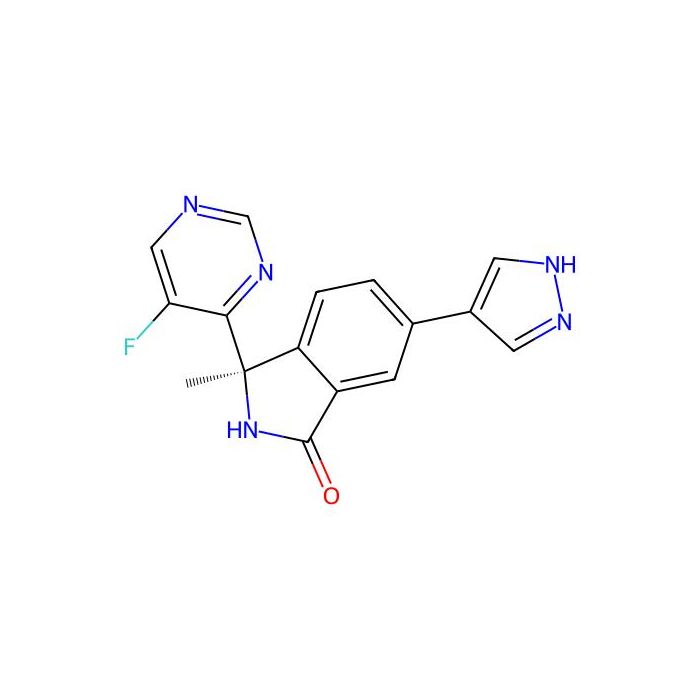
This compound belongs to the class of organic compounds known as isoindolones. These are aromatic polycyclic compounds that an isoindole bearing a ketone.
External Descriptors
Not available
1. Djoumbou Feunang Y, Eisner R, Knox C, Chepelev L, Hastings J, Owen G, Fahy E, Steinbeck C, Subramanian S, Bolton E, Greiner R, and Wishart DS. ClassyFire: Automated Chemical Classification With A Comprehensive, Computable Taxonomy. Journal of Cheminformatics, 2016, 8:61.
Determine the necessary mass, volume, or concentration for preparing a solution.
Dilution Calculator
Determine the dilution needed to prepare a stock solution.
Reconstitution Calculator
Recensioni
Recensioni dei clienti
Application Protocols
No item-specific, validated application protocols are provided in this listing. The following general RUO workflow is commonly used for small-molecule ligands in discovery campaigns.
Stock preparation (general):
Equilibrate vial to room temperature in a desiccated environment. Prepare a 10–50 mM stock in anhydrous DMSO by weight. Vortex and, if needed, gently sonicate or warm (≤40 °C) to dissolve. Record exact concentration.
Serial dilution for assays:
Prepare intermediate dilutions in DMSO (e.g., 10-point 1:3 or 1:2 serials). Transfer to assay buffer to achieve final DMSO ≤0.1–0.5% v/v, adjusting per assay tolerance.
Include vehicle controls matching the highest DMSO content in test wells.
Assay controls and artifacts:
Add detergent (e.g., 0.01–0.05% Tween-20) only if compatible, to minimize aggregation artifacts. Consider redox cycling and fluorescence controls for optical assays.
Plate handling:
Use low-binding plates appropriate for the assay modality (e.g., black clear-bottom for fluorescence, white plates for luminescence). Seal to limit evaporation; equilibrate plates to assay temperature before reading.
Data quality:
Run in technical triplicate and biological duplicate at minimum. Fit dose–response with a four-parameter logistic model; report Hill slope and confidence intervals.
Note: Adjust steps per your SOPs. For any batch-specific recommendations, consult the CoA/Spec Sheet.
Biological Roles
Item-specific biological target(s) or mechanism(s) for LY3177833 are not provided in this listing. The following points reflect general considerations for small-molecule ligands used in research.
Putative function: As a coded research ligand, LY3177833 may act as an inhibitor, activator, modulator, or binder of a biochemical target; confirm the exact modality from primary literature or the product CoA if disclosed.
Use cases: Tool compounds support target validation, pathway probing, and assay development (e.g., benchmarking potency, evaluating structure–activity relationships, or serving as a positive control when appropriate).
Off-target considerations: Many discovery ligands exhibit polypharmacology at higher concentrations. Employ counterscreens and panel profiling (e.g., kinome, GPCR, ion channels, or custom off-target sets) consistent with your target class.
Aggregation and interference: Screen for colloidal aggregation (detergent sensitivity, dynamic light scattering) and redox/fluorescent interference that can confound readouts.
ADME properties: Without item-specific data, infer nothing. If needed, assess permeability (PAMPA/Caco-2), stability (microsomes/hepatocytes), and solubility (kinetic vs. thermodynamic) experimentally before biological interpretation.
Important: No clinical or therapeutic claims are made. This product is for research use only. Verify any literature-derived target associations for LY3177833 independently and reconcile with batch documentation prior to decision-making in discovery programs.
Buffer Applications
LY3177833 is not a buffering agent. However, buffer compatibility is critical for assays using this small molecule.
Solvent-to-buffer dilution: Prepare a high-concentration DMSO stock (e.g., 10–50 mM), then perform serial dilutions in assay buffer to a final DMSO concentration typically ≤0.1–0.5% v/v (optimize per assay).
Common assay buffers (general examples):
Enzyme assays: 20–50 mM HEPES or Tris, pH 7.0–7.5, with 100–150 mM NaCl and 0.01–0.05% Tween-20 if compatible; include 1–2 mM DTT or TCEP only if the target requires reducing conditions.
Binding assays (SPR/ITC/MST): 10–50 mM HEPES or phosphate, 100–300 mM NaCl, 0.005–0.05% surfactant as needed to suppress nonspecific binding.
Precipitation control: Add buffer as the final component; vortex immediately after each dilution step. Inspect for turbidity and consider including low percentages of co-solvent (e.g., 0.1–1% EtOH) if consistent with the assay.
Adsorption mitigation: Use low-binding polypropylene or glass vials and plate types validated for hydrophobic ligands; precondition plasticware with buffer containing carrier protein (e.g., 0.1 mg/mL BSA) only when compatible with the readout.
Note: No item-specific pKa or solubility data are provided here. Tailor buffer systems empirically and document final DMSO/co-solvent percentages for reproducibility.
Green Alternatives
While LY3177833 is a discrete small molecule (not a solvent or reagent used in bulk), greener choices relate to solvent selection and assay workflows.
Prefer DMSO as the primary stock solvent when feasible; it is relatively benign, has low volatility, and broad solvency. Keep DMSO content ≤0.5% v/v in bioassays to minimize cytotoxicity and environmental load.
Replace DMF/NMP with:
Aqueous co-solvent blends (water + small % ethanol or propylene glycol) where solubility allows.
PEG-400 or glycerol as viscosity modifiers for difficult actives in biophysical assays (verify readout compatibility).
Minimize single-use plastics by using solvent-resistant, reusable glass vials and low-adsorption tips/tubes; consolidate plating runs to reduce waste.
Comparison (general; literature-based):
DMSO: lower hazard profile than DMF/NMP; excellent solvency; biodegradable concerns are minimal relative to amide solvents.
Ethanol/IPA: renewable feedstocks; good for intermediate dilutions; volatility may aid recovery but requires ventilation.
PEG-400/Glycerol: low toxicity; may affect viscosity and mixing—validate in kinetic assays.
Operational improvements:
Right-size aliquots to avoid repeated freeze–thaw cycles and disposal of expired material.
Implement microscale screening (nL–µL) using acoustic dispensing to reduce solvent use and chemical footprint.
Note: These are workflow-level green measures; no item-specific environmental metrics are provided in this listing.
Pharmaceutical Uses
This product is supplied strictly for research use and is not intended for human or veterinary applications, diagnostics, or as a drug substance/excipient.
Regulatory status: Research use only (RUO). No pharmacopeial monograph or clinical-grade designation is indicated in this listing.
Formulation relevance (research context): If used as a tool compound in preclinical experiments, dissolution typically involves DMSO-based concentrates followed by dilution in appropriate vehicles (e.g., buffered saline with acceptable co-solvent). Such practices must be developed and qualified by the user; no item-specific formulation guidance is provided here.
Manufacturing/CMC: Not applicable. There are no specifications for GMP production, residual solvent limits, elemental impurities, or stability protocols in this listing. For any translational work, independent sourcing under appropriate quality systems would be required.
Caution:
Do not incorporate in any product intended for therapeutic, diagnostic, or food/cosmetic use.
All use must comply with institutional regulations and local laws governing RUO materials.
For any interest in elevated quality tiers (e.g., reference standard grade, documented impurity profiling), contact technical support with the SKU and lot to discuss available documentation. Without explicit disclosure, assume only RUO suitability.
Physical Properties
Item-specific physicochemical specifications are not disclosed in this catalog record.
Appearance: Not specified for this item; refer to CoA/Spec Sheet.
Molecular weight: Not specified for this item; refer to CoA/Spec Sheet.
Molecular formula: Not specified for this item; refer to CoA/Spec Sheet.
Melting point (MP): Not specified for this item; refer to CoA/Spec Sheet.
Boiling point (BP): Not applicable/rarely reported for research solids; Not specified for this item; refer to CoA/Spec Sheet.
Density: Not specified for this item; refer to CoA/Spec Sheet.
Refractive index: Not applicable (solid) unless oil; Not specified for this item; refer to CoA/Spec Sheet.
Aqueous solubility: Not specified for this item; refer to CoA/Spec Sheet.
LogP/logD, pKa: Not specified for this item; refer to CoA/Spec Sheet.
General guidance for discovery compounds (literature/good practice):
Many screening ligands are supplied as off-white to light-colored solids or films; dissolution is typically in anhydrous DMSO (10–50 mM stocks) with sonication and gentle warming (≤40 °C).
If hydrophobic, co-solvent blends (DMSO:PEG-400:water or DMSO:EtOH:water) can enhance solubility for assay dilutions. Filter through 0.22 µm to remove particulates if required by the assay.
For mass balance: verify concentration by UV-Vis if a chromophore is known (ε from literature) or by quantitative 1H NMR using an internal standard (e.g., DSS, TSP) in deuterated solvent.
Note: Do not treat the above generalities as specifications. For batch-specific numeric values, consult the product’s CoA/Spec Sheet and SDS.
Quality and Grades
Grade: Moligand™ (as listed)
What Moligand™ typically implies (general description; not item-specific specifications):
Curated small-molecule/ligand material intended for discovery screening, hit validation, and assay development.
Batch documentation: CoA with identity confirmation (commonly HPLC and MS; sometimes NMR), and traceable lot information suitable for reproducible screening campaigns.
Packaging optimized for low-mass handling (minimizing adsorption and atmospheric exposure), facilitating DMSO stock preparation.
What is specific to this item:
Product name/identifier: LY3177833, CAS 1627696-51-8, CID 81689696.
Purity, residual solvents, and detailed analytical parameters: Not specified for this item; refer to CoA/Spec Sheet.
Guidance on grade selection:
For biochemical/biophysical assays, Moligand-grade materials are generally appropriate, provided purity and identity meet your lab’s internal thresholds.
For structure–activity relationship (SAR) or orthogonal target assays, verify lot-to-lot consistency via in-house HPLC and LC–MS. If you require low-UV absorbance solvents or ultra-trace metal control (e.g., for catalysis), request expanded CoA or consider alternate grades when offered.
Documentation and compliance:
Research use only. Not for diagnostic or therapeutic use. Include the SKU/lot on all data records to ensure traceability in screening data warehouses.
Reaction and Applications
This product is supplied for use as a research ligand/small molecule in discovery workflows rather than as a synthetic reagent. Consequently, conventional “reaction application” notes (e.g., as a reagent or catalyst) are not typically applicable.
Applicable research applications (discovery context):
Biochemical/biophysical screening: evaluate binding or modulation of a target protein using enzyme inhibition assays, SPR, ITC, MST, DSF, or thermal shift assays.
Cell-based pharmacology: concentration–response measurements in reporter or viability assays to establish potency and apparent selectivity (ensure DMSO controls and solubility checks to avoid colloidal aggregation artifacts).
Orthogonal profiling: confirm activity across assay formats (e.g., enzymatic turnover vs. binding readouts) to mitigate assay interference chemistry (AIC).
Reference standard: use in LC–MS method development, retention time locking, and stability-indicating method qualification if structural information is available from the CoA.
Good practices:
Validate identity and purity prior to screening (HPLC-UV/MS; optional 1H NMR) and reconfirm after hit triage.
Conduct detergent sensitivity and redox cycling controls when applicable to the target class.
Use staged dilutions from high-concentration DMSO stocks to minimize precipitation; visually inspect wells/plates.
Note: If you intend to derivatize or immobilize LY3177833 for target engagement studies, obtain structural details and reactive handles from the CoA/literature first.
Reaction Conditions
Conventional synthetic reaction conditions are not applicable to this product in its intended use as a research ligand. No catalytic or reagent roles are claimed here.
If you plan ancillary chemistry (derivatization for probes, immobilization, or isotopic labeling), proceed only after confirming the structure and reactive functional groups from the CoA/literature. General considerations:
Solvents: Anhydrous DMSO, DMF, or acetonitrile are frequently used for amide couplings or alkylations on complex ligands; ensure compatibility with the compound’s stability profile.
Catalysts/reagents: For bioconjugation, NHS ester formation (for amines) or CuAAC click chemistry (for azide/alkyne handles) are common, but require appropriate handles on the molecule.
Workup/purification: Use reverse-phase preparative HPLC with volatile buffers (e.g., ammonium formate/acetate) for polar ligands; monitor by LC–MS.
All the above are general, literature-based practices and not item-specific recommendations. Without structural disclosure, expected yields, times, and stoichiometries cannot be responsibly provided.
Safety and Handling
Safety information provided in this listing is limited; always consult the SDS for authoritative guidance.
GHS/labeling (as provided for this item):
Signal word: Not specified for this item; refer to SDS.
H-statements: Not specified for this item; refer to SDS.
GHS classification/pictograms: Not specified for this item; refer to SDS.
General laboratory precautions (good practice for small-molecule ligands):
Handle in a chemical fume hood. Avoid inhalation of dust, vapors, or aerosols. Prevent skin and eye contact.
Personal protective equipment: lab coat, safety glasses (ANSI Z87.1 or equivalent), and appropriate chemically resistant gloves (e.g., nitrile). Change gloves regularly when handling DMSO solutions, which can facilitate dermal uptake.
Storage incompatibilities: Segregate from strong oxidizers and acids/bases until compatibility is confirmed. Avoid moisture if the compound is hydrolytically labile (check CoA/SDS).
First aid (overview; defer to SDS): rinse eyes/skin with water for ≥15 minutes upon contact; remove contaminated clothing. If inhaled, move to fresh air. If ingested, rinse mouth—seek medical attention.
Spill/accidental release: Absorb with inert material, collect in appropriate waste container. Decontaminate area with suitable solvent/detergent per SDS.
Waste: Dispose according to local regulations; organic small molecules and DMSO/DMF solutions are typically hazardous organic waste streams.
Special risks: No item-specific hazards are listed here. If the compound is light-, heat-, or air-sensitive, follow additional precautions noted on the CoA and SDS.
Solvent Selection
As a discovery small molecule with unspecified solubility data, a solvent strategy should prioritize assay compatibility and compound stability.
Primary stock solvents (general practice):
DMSO (anhydrous): default for 10–50 mM stocks; excellent solvency for diverse chemotypes; miscible with aqueous assay buffers after serial dilution. Use dry, oxygen-free DMSO for air/moisture-sensitive substances.
DMF or NMP: backup for poorly soluble compounds; verify assay tolerance and cytotoxicity if used at >0.5% v/v in biological systems.
Assay dilution co-solvents (when needed):
Ethanol or isopropanol (molecular biology grade), PEG-400, or Captisol solutions for difficult actives; validate against assay readout interference.
Polarity/miscibility profile:
Not specified for this item; refer to CoA/Spec Sheet and literature. Begin with DMSO; if precipitation occurs upon dilution, test incremental cosolvent percentages (e.g., 0.1–1% EtOH) and surfactant-free conditions to avoid false positives.
Practical tips:
Warm to 25–37 °C and vortex/sonicate to aid dissolution; avoid exceeding 40 °C unless stability is confirmed.
Filter 10–50 mM stocks through low-binding 0.22 µm PTFE if particulates persist; pre-rinse filters with solvent to minimize analyte loss.
Record actual concentrations by weight-in/weight-out or quantitative NMR for compounds lacking strong chromophores.
Comparison (general):
DMSO: high solvency, broadly assay-compatible ≤0.5% v/v.
DMF/NMP: higher solvency but more assay interference risk.
Aqueous buffers: use after staged dilution; add last to minimize precipitation.
Storage and Reconstitution
Item-specific conditions (as provided):
Storage: Store at 2–8 °C.
Shipping: Shipped on wet ice.
General reconstitution guidance for small-molecule ligands (not item-specific specifications):
Upon receipt, allow the sealed container to equilibrate to room temperature before opening to avoid condensation. Work quickly in a low-humidity environment.
Prepare concentrated stocks in anhydrous DMSO (typical 10–50 mM). If permissible for your assay, small portions of ethanol or PEG-400 can aid dissolution of highly lipophilic compounds.
Aliquot stocks into low-binding microvials to minimize headspace and avoid repeated freeze–thaw cycles.
Suggested solution storage (general best practice; verify stability with CoA/SDS):
Solid (unopened): 2–8 °C as specified.
DMSO stock solutions: store at −20 °C to −80 °C, protected from light; use within weeks to months depending on stability testing. Thaw at room temperature, mix gently, and inspect for precipitate or discoloration before use.
Aqueous working solutions: prepare fresh immediately before experiments; discard after use unless stability has been established by the user.
Stability notes:
Light, oxygen, and moisture sensitivities are not specified for this item; protect from light and moisture as a precaution.
For batch-specific shelf-life, impurity limits, and retest dates, consult the CoA/Spec Sheet.
Research use only. Not for human or veterinary use.
Structure and Identity
Brief summary: LY3177833 is supplied as a Moligand-class small molecule for discovery research; detailed structural identifiers are partially undisclosed in this catalog entry.
InChIKey: 184727 (as provided; note: truncated/atypical format in this listing)
SMILES: Not specified for this item; refer to CoA/Spec Sheet.
Molecular formula: Not specified for this item; refer to CoA/Spec Sheet.
Molecular weight: Not specified for this item; refer to CoA/Spec Sheet.
Structural features (general notes):
The precise 2D/3D structure is not disclosed in this listing. Users may consult the cited PubChem CID for a literature depiction, when available (literature; verify against the product CoA before use in regulated workflows).
As a small-molecule ligand, LY3177833 is expected to contain heteroatom-bearing pharmacophores (common in discovery compounds), but item-specific functional groups are not specified here.
2D structure description (general):
Not specified for this item; refer to CoA/Spec Sheet and primary literature for ring systems, substituent patterns, and stereochemistry if applicable.
Identity verification tips:
Cross-check CAS and CID with an orthogonal identifier (LC–MS [accurate mass], 1H/13C NMR, and HPLC purity) prior to biological screening.
When available, match the supplied batch’s CoA spectral data to internal reference spectra before scale-up or in vivo–adjacent testing (research use only).
Synthetic Utility
LY3177833 is provided as a finished small-molecule ligand for screening and target modulation studies; it is not positioned as a synthetic building block in this listing.
Building-block usage: Not typically applicable without detailed structural disclosure. If the structure includes functional handles (e.g., amine, carboxyl, halide), custom derivatization might be possible for probe synthesis (e.g., biotinylation, fluorophore conjugation), but confirm from the CoA/literature first.
Immobilization/affinity probes: Should a suitable attachment site exist distal to the pharmacophore, LY3177833 could, in principle, be appended to linkers for chemoproteomics or pull-down assays. Such work requires a thorough SAR review to avoid abolishing activity.
Analytical reference: The compound can serve as a reference standard for LC–MS or HPLC method development once retention behavior and mass spectral features are confirmed on your system.
Recommendation:
If synthetic utility is desired, request full structural information and consider ordering additional material for route scouting, impurity tracking, and stability testing. Absent item-specific reactivity data, no further synthetic guidance is provided here to avoid unwarranted assumptions.
Target Specificity
Specific molecular target(s), binding partners, or selectivity profiles for LY3177833 are not provided in this catalog entry.
No antibody/biologic attributes (antigen, epitope, clone, isotype, species reactivity) apply to this small-molecule product.
User guidance:
If a putative target for LY3177833 is known from literature, verify activity in at least two orthogonal assay formats and include appropriate negative controls, counterscreens, and interference checks (fluorescence, redox, aggregation).
Document concentration–response curves with full replication and report the exact final DMSO percentage to support reproducibility.
Item-specific note: For any lot/batch, consult the CoA/Spec Sheet or contact technical support for available target annotations. In the absence of such information, treat LY3177833 as an unannotated ligand for exploratory screening.
Domande frequenti
What is the purity of this product?
This product is supplied at ≥99% purity (chemical assay). Lot-specific values are stated on the Certificate of Analysis.
What is Moligand??
Moligand? is one of Aladdin Scientific's premium product lines, formulated for high-purity applications across multiple workflows. Compared to standard grades in the same workflow, Moligand? products typically offer tighter specifications, more rigorous QC, and stronger lot-to-lot consistency.
How should this product be stored?
Store at 2–8 °C. Refrigerated storage is required to maintain the specified shelf life.
How is this product shipped?
This product ships chilled on wet ice. Unpack on arrival and transfer it to the storage condition stated above.
What are the CAS number, molecular formula and molecular weight?
The CAS Number is 1627696-51-8, the molecular formula is C16H12FN5O, and the molecular weight is 309.30 g/mol. InChIKey KNLVLWZENYQYRT-MRXNPFEDSA-N.
What documentation is provided?
Available product documentation, including Certificates of Analysis (COA), Safety Data Sheets (SDS), and specification sheets, is shown in the product document area. Document availability and access follow the current site policy.
Hai bisogno di aiuto per scegliere la qualità?
La nostra guida alla selezione delle qualità copre purezza, stato dello stabilizzatore e idoneità all'applicazione per tutte le varianti del nostro catalogo.
Utilizziamo i cookie per garantire il corretto funzionamento del sito web e, ove consentito, per migliorare la tua esperienza. Puoi gestire le tue preferenze in qualsiasi momento nelle Impostazioni. Per saperne di più, consulta la nostra Cookie Policy.
Desidera che le inviamo un messaggio quando avremo sconti disponibili?
Ricordamelo più tardi
Grazie! Controlli la sua casella di posta per confermare.
Products are supplied to verified businesses, institutions, and qualified professionals for research and development use only. Not for use in humans, animals, diagnosis, or therapy.


 H2627339