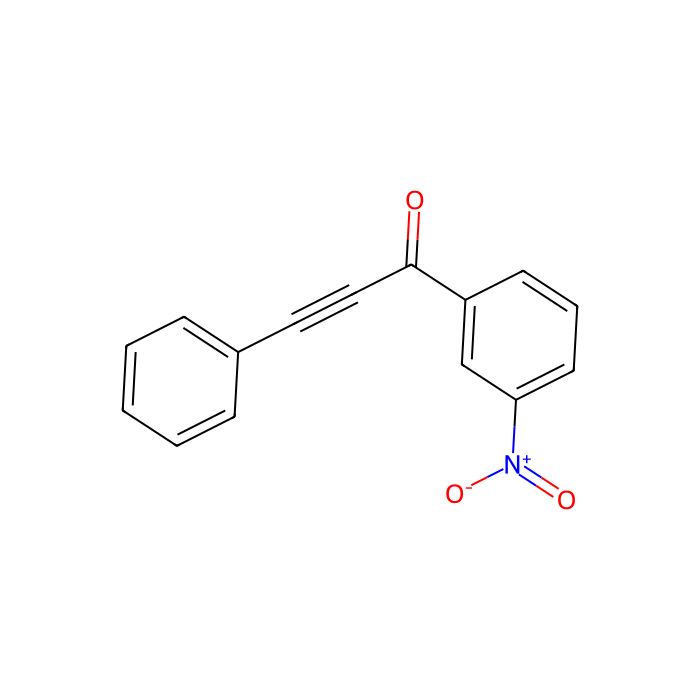
MLS000532223 - ≥98% , CAS No.16616-39-0

CAS: 16616-39-0 Cat. No.: M412611 Formula: C15H9NO3 Peso molecolare: 251.24
Disponibile su ordine
GRADE & PURITY ≥98%
Synonyms
F81737 | cid_781112 | CHEBI:116656 | MLS-532223 | UNM-0000305817 | Q27200961 | 1-(3-nitrophenyl)-3-phenyl-2-propyn-1-one | Oprea1_216744 | Cambridge id 5213884 | UNM000011092001 | AKOS040759414 | BDBM43210 | EX-A7536 | MS-23548 | 2-Propyn-1-one, 1-(3-nitr
Storage
Protected from light,Store at -20°C
Shipped In
Ice chest + Ice pads
★
Size
Germania (EU)
USA*
Price
Qty
5mg
M412611-5mg
—
1 Disponibile

85,82€

129,21€
Salva 43,39 € (33.58%)
25mg
M412611-25mg
—
1 Disponibile

289,74€

434,65€
Salva 144,91 € (33.34%)
50mg
M412611-50mg
—
1 Disponibile

522,29€

783,48€
Salva 261,19 € (33.34%)
100mg
M412611-100mg
—
1 Disponibile

938,81€

1.408,25€
Salva 469,45 € (33.34%)
Enter a quantity for the sizes you want to add.
🧪

Why this grade

≥98% for sensitive chromatographic and analytical workflows requiring minimal baseline interference.

🌡

Storage & shipping

Protected from light,Store at -20°C Ships Ice chest + Ice pads Check lot-specific COA for exact specifications.

📋

Quality documents

SDS, COA, datasheet, and spec sheet available for download. Lot-specific COA accessible via lot number lookup.

📚

Literature proof

Cited in 0 peer-reviewed publications across chromatography, organic synthesis, and cross-coupling reactions.

Panoramica

Information

MLS000532223 MLS000532223 is a high affinity, selective inhibitor of Rho family GTPases with EC50 ranging from 16 μM to 120 μM.


Targets

Rho (Cell-free assay) 16 μM(EC50)

Specifications

Sinonimi
F81737 | cid_781112 | CHEBI:116656 | MLS-532223 | UNM-0000305817 | Q27200961 | 1-(3-nitrophenyl)-3-phenyl-2-propyn-1-one | Oprea1_216744 | Cambridge id 5213884 | UNM000011092001 | AKOS040759414 | BDBM43210 | EX-A7536 | MS-23548 | 2-Propyn-1-one, 1-(3-nitr
Specifiche e purezza
≥98%
Meccanismi biochimici e fisiologici
MLS000532223 is a high affinity, selective inhibitor of Rho family GTPases with EC50 ranging from 16 μM to 120 μM.
Condizioni di conservazione di stoccaggio
Protected from light,Store at -20°C
Spedito in
Ice chest + Ice pads
Questo prodotto richiede spedizione a catena fredda. I servizi di terra e altri servizi economici non sono disponibili.
Tipo di azione
INHIBITOR
Purezza
≥98%
Proprietà del prodotto
ALogP3.719
hba_count1
Legame rotabile4
Nomi e identificatori
Pubchem Sid504760150
Pubchem Sid Urlhttps://pubchem.ncbi.nlm.nih.gov/substance/504760150
Sorrisi canoniciC1=CC=C(C=C1)C#CC(=O)C2=CC(=CC=C2)[N+](=O)[O-]
IUPAC Name1-(3-nitrophenyl)-3-phenylprop-2-yn-1-one
InChIKeyJODIUOIVYGKAJH-UHFFFAOYSA-N
INCHI1S/C15H9NO3/c17-15(10-9-12-5-2-1-3-6-12)13-7-4-8-14(11-13)16(18)19/h1-8,11H
Isomeri SMILES C1=CC=C(C=C1)C#CC(=O)C2=CC(=CC=C2)[N+](=O)[O-]
Peso molecolare 251.24
Reaxy-Rn 1979286
Reaxys-RN_link_address https://www.reaxys.com/reaxys/secured/hopinto.do?context=S&query=IDE.XRN=1979286&ln=

Documentazione

📋 Safety Data Sheet (SDS)

Comprehensive hazard, handling, storage, and regulatory compliance document.

Download SDS →

✅ Certificate of Analysis (COA)

Lot-specific quality data. Enter your lot number to retrieve the exact COA.

Look up COA →

📊 Datasheet

Quick-reference summary of product specifications and applications.

View datasheet →

🔬 Specification Sheet

Full quality attributes and acceptance criteria for this grade.

View spec sheet →

Advanced Data

Taxonomic Classification

Taxonomy Tree

KingdomOrganic compounds
SuperclassPhenylpropanoids and polyketides
ClasseLinear 1,3-diarylpropanoids
SubclassNot available
Intermediate Tree Nodes Not available
Direct ParentLinear 1,3-diarylpropanoids
Alternative Parents Nitrobenzenes  Nitroaromatic compounds  Benzoyl derivatives  Aryl ketones  Alpha,beta-unsaturated ketones  Propargyl-type 1,3-dipolar organic compounds  Organic oxoazanium compounds  Organopnictogen compounds  Organonitrogen compounds  Organic oxides  Hydrocarbon derivatives  
Molecular FrameworkAromatic homomonocyclic compounds
Substituents Linear 1,3-diarylpropanoid - Nitrobenzene - Nitroaromatic compound - Benzoyl - Aryl ketone - Monocyclic benzene moiety - Benzenoid - Alpha,beta-unsaturated ketone - Ketone - C-nitro compound - Organic nitro compound - Allyl-type 1,3-dipolar organic compound - Organic oxoazanium - Propargyl-type 1,3-dipolar organic compound - Organic 1,3-dipolar compound - Hydrocarbon derivative - Organic oxide - Organooxygen compound - Organonitrogen compound - Organopnictogen compound - Organic nitrogen compound - Organic oxygen compound - Aromatic homomonocyclic compound
DescrizioneThis compound belongs to the class of organic compounds known as linear 1,3-diarylpropanoids. These are organic compounds with a structure based on a C6-C3-C6 skeleton, where the two benzene rings are not linked together.
External Descriptors Not available
Struttura 3D
Modello di struttura chimica interattiva


Obiettivi associati (umani)
HSP90AA1 Tchem Heat shock protein HSP 90-alpha (1 Activities)
Activity TypeActivity Value -log(M)Mechanism of ActionActivity ReferencePublications (PubMed IDs)
VDR Tclin Vitamin D receptor (26531 Activities)
Activity TypeRelationActivity valueUnitsAction TypeJournalPubMed IddoiAssay Aladdin ID
PLK1 Tchem Serine/threonine-protein kinase PLK1 (28605 Activities)
Activity TypeRelationActivity valueUnitsAction TypeJournalPubMed IddoiAssay Aladdin ID
ALDH1A1 Tchem Aldehyde dehydrogenase 1A1 (77053 Activities)
Activity TypeRelationActivity valueUnitsAction TypeJournalPubMed IddoiAssay Aladdin ID
HSP90AA1 Tchem Heat shock protein HSP 90-alpha (4115 Activities)
Activity TypeRelationActivity valueUnitsAction TypeJournalPubMed IddoiAssay Aladdin ID
GLP1R Tclin Glucagon-like peptide 1 receptor (111429 Activities)
Activity TypeRelationActivity valueUnitsAction TypeJournalPubMed IddoiAssay Aladdin ID
HEK293 (82097 Activities)
Activity TypeRelationActivity valueUnitsAction TypeJournalPubMed IddoiAssay Aladdin ID
HepG2 (196354 Activities)
Activity TypeRelationActivity valueUnitsAction TypeJournalPubMed IddoiAssay Aladdin ID
POLI Tchem DNA polymerase iota (116820 Activities)
Activity TypeRelationActivity valueUnitsAction TypeJournalPubMed IddoiAssay Aladdin ID
HTT Tchem Huntingtin (19182 Activities)
Activity TypeRelationActivity valueUnitsAction TypeJournalPubMed IddoiAssay Aladdin ID
EHMT2 Tchem Histone-lysine N-methyltransferase, H3 lysine-9 specific 3 (93046 Activities)
Activity TypeRelationActivity valueUnitsAction TypeJournalPubMed IddoiAssay Aladdin ID
SNCA Tchem Alpha-synuclein (10960 Activities)
Activity TypeRelationActivity valueUnitsAction TypeJournalPubMed IddoiAssay Aladdin ID
TDP1 Tchem Tyrosyl-DNA phosphodiesterase 1 (345557 Activities)
Activity TypeRelationActivity valueUnitsAction TypeJournalPubMed IddoiAssay Aladdin ID
SMN1 Tchem Survival motor neuron protein (34246 Activities)
Activity TypeRelationActivity valueUnitsAction TypeJournalPubMed IddoiAssay Aladdin ID
SMAD3 Tchem Mothers against decapentaplegic homolog 3 (68039 Activities)
Activity TypeRelationActivity valueUnitsAction TypeJournalPubMed IddoiAssay Aladdin ID
GMNN Tbio Geminin (128009 Activities)
Activity TypeRelationActivity valueUnitsAction TypeJournalPubMed IddoiAssay Aladdin ID
ATAD5 Tbio ATPase family AAA domain-containing protein 5 (122566 Activities)
Activity TypeRelationActivity valueUnitsAction TypeJournalPubMed IddoiAssay Aladdin ID
BAZ2B Tchem Bromodomain adjacent to zinc finger domain protein 2B (56204 Activities)
Activity TypeRelationActivity valueUnitsAction TypeJournalPubMed IddoiAssay Aladdin ID
ATXN2 Tbio Ataxin-2 (54410 Activities)
Activity TypeRelationActivity valueUnitsAction TypeJournalPubMed IddoiAssay Aladdin ID
RGS4 Tchem Regulator of G-protein signaling 4 (13867 Activities)
Activity TypeRelationActivity valueUnitsAction TypeJournalPubMed IddoiAssay Aladdin ID
MEN1 Tchem Menin/Histone-lysine N-methyltransferase MLL (48157 Activities)
Activity TypeRelationActivity valueUnitsAction TypeJournalPubMed IddoiAssay Aladdin ID
GLS Tchem Glutaminase kidney isoform, mitochondrial (16997 Activities)
Activity TypeRelationActivity valueUnitsAction TypeJournalPubMed IddoiAssay Aladdin ID
CGA Tbio Glycoprotein hormones alpha chain (29278 Activities)
Activity TypeRelationActivity valueUnitsAction TypeJournalPubMed IddoiAssay Aladdin ID
Obiettivi associati (non umani)
ampC Beta-lactamase AmpC (62480 Activities)
Activity TypeRelationActivity valueUnitsAction TypeJournalPubMed IddoiAssay Aladdin ID
Cruzipain (33337 Activities)
Activity TypeRelationActivity valueUnitsAction TypeJournalPubMed IddoiAssay Aladdin ID
Plasmodium falciparum (966862 Activities)
Activity TypeRelationActivity valueUnitsAction TypeJournalPubMed IddoiAssay Aladdin ID
Npsr1 Neuropeptide S receptor (260 Activities)
Activity TypeRelationActivity valueUnitsAction TypeJournalPubMed IddoiAssay Aladdin ID
Hsf1 Heat shock factor protein 1 (5445 Activities)
Activity TypeRelationActivity valueUnitsAction TypeJournalPubMed IddoiAssay Aladdin ID
Luciferin 4-monooxygenase (66902 Activities)
Activity TypeRelationActivity valueUnitsAction TypeJournalPubMed IddoiAssay Aladdin ID
Txnrd1 Thioredoxin reductase 1, cytoplasmic (45279 Activities)
Activity TypeRelationActivity valueUnitsAction TypeJournalPubMed IddoiAssay Aladdin ID
TGR Thioredoxin glutathione reductase (28579 Activities)
Activity TypeRelationActivity valueUnitsAction TypeJournalPubMed IddoiAssay Aladdin ID
Mapt Microtubule-associated protein tau (6 Activities)
Activity TypeRelationActivity valueUnitsAction TypeJournalPubMed IddoiAssay Aladdin ID
Mitf Microphthalmia-associated transcription factor (11 Activities)
Activity TypeRelationActivity valueUnitsAction TypeJournalPubMed IddoiAssay Aladdin ID
Rorc Nuclear receptor ROR-gamma (89407 Activities)
Activity TypeRelationActivity valueUnitsAction TypeJournalPubMed IddoiAssay Aladdin ID
Impa1 Inositol monophosphatase 1 (16203 Activities)
Activity TypeRelationActivity valueUnitsAction TypeJournalPubMed IddoiAssay Aladdin ID
NS1 Nonstructural protein 1 (33327 Activities)
Activity TypeRelationActivity valueUnitsAction TypeJournalPubMed IddoiAssay Aladdin ID
RPL19A 60S ribosomal protein L19-A (106 Activities)
Activity TypeRelationActivity valueUnitsAction TypeJournalPubMed IddoiAssay Aladdin ID
HSP90 (947 Activities)
Activity TypeRelationActivity valueUnitsAction TypeJournalPubMed IddoiAssay Aladdin ID
vpr Aberrant vpr protein (14595 Activities)
Activity TypeRelationActivity valueUnitsAction TypeJournalPubMed IddoiAssay Aladdin ID
Meccanismi d'azione
Certificati (CoA, COO, BSE/TSE e tabella di analisi)
C of A & Other Certificates(BSE/TSE, COO):
Analytical Chart:

Find and download the COA for your product by matching the lot number on the packaging.

4 results found

Lot NumberCertificate TypeDataOggetto
G2221015Certificate of AnalysisMay 09, 2025 M412611
G2221016Certificate of AnalysisMay 09, 2025 M412611
G2221017Certificate of AnalysisMay 09, 2025 M412611
G2221018Certificate of AnalysisMay 09, 2025 M412611
Proprietà chimiche e fisiche
SolubilitàSolubility (25°C) In vitro DMSO: 50 mg/mL (199.01 mM); Water: Insoluble; Ethanol: Insoluble;
SensibilitàLight sensitive
DMSO (mg/mL) Solubilità massima50
DMSO (mM) Solubilità massima199.012896035663
Acqua (mg/mL) Solubilità massima<1
Peso molecolare251.240 g/mol
XLogP33.700
Hydrogen Bond Donor Count0
Hydrogen Bond Acceptor Count3
Rotatable Bond Count2
Exact Mass251.058 Da
Monoisotopic Mass251.058 Da
Topological Polar Surface Area62.900 Ų
Heavy Atom Count19
Formal Charge0
Complexity406.000
Isotope Atom Count0
Defined Atom Stereocenter Count0
Undefined Atom Stereocenter Count0
Defined Bond Stereocenter Count0
Undefined Bond Stereocenter Count0
The total count of all stereochemical bonds0
Covalently-Bonded Unit Count1
Calcolatori di soluzioni
Recensioni

Recensioni dei clienti

Application Protocols

No tested or validated application protocols are provided in the Product Data for this item.

Not specified for this item; refer to CoA/Spec Sheet. If using in screening workflows, follow institutionally validated SOPs for:

  • Plate handling and compound dispensing (acoustic or pin tools) with DMSO stocks.
  • Control layout (vehicle/positive/negative), assay window checks, Z’‑factor qualification.
  • Data QC, hit confirmation, and counterscreens to identify assay interference.
    These workflow notes are general and should not be construed as product‑specific validation.
Biological Roles

Item‑specific biological function or target information is not provided.

General considerations for small‑molecule library members:

  • Unknown mechanism a priori: Unless a target annotation exists (not supplied here), treat the compound as an uncharacterized test article. Establish activity in a primary assay and confirm in orthogonal/counter assays to exclude artifacts (e.g., redox cycling, colloidal aggregation, detergent sensitivity).
  • Chemotype risk assessment: Once the structure is confirmed (via CAS/CID/CoA), evaluate with PAINS and aggregator filters, and check liability substructures (reactive electrophiles, metal chelators, fluorescence interferents).
  • ADME-relevant properties: Predict logP, pKa, TPSA after retrieving the structure to guide permeability and solubility expectations in cells or biochemical systems—strictly for research context.
  • Selectivity profiling: If activity emerges, expand to a panel of related targets and assess off‑target readouts early to avoid confounding SAR.

Important note:

  • This product is labeled For research use only and is not intended for diagnostic, therapeutic, or other clinical uses. Any biological roles, if present, must be determined experimentally by the user.
Buffer Applications

This item is not a buffering reagent. No intrinsic buffering system or pH range is specified.

General assay buffer guidance when dosing small molecules from organic stock solutions:

  • Vehicle control: Match the final cosolvent (e.g., DMSO) concentration in all wells/tubes, usually ≤0.1–1% v/v depending on assay tolerance.
  • Buffer selection: Choose buffers with minimal compound interaction and optical interference (e.g., HEPES, PBS, Tris), guided by the assay’s pH requirements and the compound’s ionization state once known.
  • Surfactant use: For aggregation-prone chemotypes, consider low levels of non-ionic surfactant (e.g., 0.01–0.05% Tween‑20) if compatible with the assay, and validate that activity is not detergent-sensitive.
  • Order of addition: Add concentrated compound stock last with rapid mixing to avoid local supersaturation/precipitation.

Item‑specific buffer properties: Not specified for this item; refer to CoA/Spec Sheet if any special requirements are indicated.

Green Alternatives

In the absence of structural data for this specific item, greener practice guidance focuses on solvent and process choices during handling and assay setup.

General greener choices for dissolution and assay dilution:

  • Prefer DMSO or ethanol over more hazardous, high‑boiling aprotics (e.g., DMF, NMP) when solubility allows.
  • Use acetonitrile sparingly and recover via solvent recycling where feasible.
  • Minimize organic cosolvent in aqueous assays (target ≤0.1–0.5% v/v where compatible) and standardize across controls.

Illustrative comparison (general; not item‑specific):

  • DMSO: Broad solubility, low volatility, good assay compatibility; moderate environmental score; hygroscopic.
  • Ethanol: Renewable origin possible, benign profile; limited solubility for very lipophilic compounds.
  • DMF/NMP: Powerful solvents but reproductive toxicity concerns; avoid when alternatives suffice.
  • MeCN: Useful, lower viscosity than DMSO; toxicity/flammability require controls; recover where possible.

Operational improvements:

  • Use amber, reusable glassware and reduce single‑use plastics where assay design allows.
  • Right‑size aliquots to avoid discard of thawed material.
  • Implement micro‑scale solubility screens to minimize solvent waste.
  • Consolidate cold shipments with other materials to reduce packaging footprint, consistent with product stability requirements.

Note: When the compound structure is known, solvent substitution decisions should be re‑evaluated using specific solubility/stability data.

Pharmaceutical Uses

No pharmacopeial status, excipient role, or formulation use is provided for this item.

General note for research compounds:

  • This product is supplied as a research‑use only small molecule. It is not approved as an API, excipient, or diagnostic agent.
  • If used as an internal reference material or in preformulation‑style laboratory studies, confirm identity/purity (e.g., LC‑MS, qNMR) and establish basic stability profiles (light, temperature, pH) before generating comparative data.
  • Avoid implying suitability for human or veterinary use; do not incorporate into clinical or GMP workflows without appropriate qualification and regulatory assessment.

Item‑specific pharmaceutical data (compendial monographs, residual solvent limits, elemental impurities): Not specified for this item; refer to CoA/Spec Sheet.

Physical Properties

Item‑specific properties (from Product Data):

  • Appearance: Not specified for this item; refer to CoA/Spec Sheet.
  • Molecular formula: Not specified for this item; refer to CoA/Spec Sheet.
  • Molecular weight: Not specified for this item; refer to CoA/Spec Sheet.

Common physicochemical parameters (literature/general, not item‑specific):

  • Without the structural formula, we cannot report reliable values for melting point, boiling point, density, logP, pKa, refractive index, vapor pressure, or UV/Vis characteristics. These parameters are highly structure‑dependent.

Practical guidance (general):

  • For small molecules in screening libraries, initial dissolution is commonly attempted in anhydrous DMSO (e.g., 10–50 mM stock). If DMSO is unsuitable, secondary solvents often evaluated include DMF, ethanol, methanol, or acetonitrile, followed by dilution into aqueous buffers with 0.1–1% v/v organic cosolvent.
  • If the structure shows ionizable groups (once confirmed from CoA/database), predicted pKa values can inform buffer pH selection for solubility and assay compatibility.
  • When UV detection is intended (HPLC/UPLC), determine the compound’s specific UV cutoff and extinction coefficients from CoA or a verified database before setting detection wavelengths.

Bottom line:

  • All item‑specific physical property values are currently Not specified for this item; refer to CoA/Spec Sheet.
Quality and Grades

Item‑specific quality information:

  • Grade/Purity: Not specified for this item; refer to CoA/Spec Sheet.
  • Stabilizers/Inhibitors: Not specified for this item; refer to CoA/Spec Sheet.
  • Appearance: Not specified for this item; refer to CoA/Spec Sheet.

Context for screening library compounds (general):

  • Library members are typically provided at high chemical purity suitable for research screening (commonly ≥90–95% by HPLC/UPLC), but this threshold is not specified for this item. The exact acceptance criteria (purity basis, residual solvents, water, and identity confirmation by NMR/LC‑MS) must be verified on the accompanying CoA.
  • If a stabilizer is present (e.g., to suppress oxidation, hydrolysis, or photolysis), it will be declared on the CoA. Absence of a declared stabilizer does not imply unlimited stability—adhere to the light‑protected, −20 °C storage.

Recommendations:

  • Request the latest CoA/Spec Sheet for this specific lot to confirm: assay purity basis (UV vs ELSD), chromatographic method, residual solvent profile, water content (KF), identity (MS/NMR), and any metal/halide/peroxide limits if applicable.
  • For quantitative applications (e.g., reference standard work), perform in‑house verification (orthogonal LC methods, qNMR) if specifications are critical to your workflow.
Reaction and Applications

This product is listed as a small‑molecule/library compound rather than a preparative reagent; no manufacturer reaction use is specified.

Research applications (general for library members):

  • High‑throughput screening (HTS) and HCS: Evaluate as a test article in biochemical or cell‑based assays to identify activity profiles. Use appropriate negative/vehicle controls to normalize DMSO or other solvent effects.
  • Probe development starting point: If activity is observed, analog expansion and SAR can be pursued; confirm structure and purity via independent analytical methods prior to scale‑up.
  • Analytical reference: May serve as a non‑compendial reference for method development (LC‑MS retention behavior, recovery studies), contingent on confirmed identity and purity.

Practical tips (general):

  • Solution prep: Make fresh, light‑protected DMSO stocks (10–50 mM typical) and aliquot to avoid freeze–thaw.
  • Controls: Run orthogonal counterscreens to rule out assay artifacts (fluorescence interference, redox cycling, aggregation).
  • Data integrity: Track lot numbers and exact concentration by weight-in and validated purity (or qNMR) for accurate µM conversion.

Not applicable to this item:

  • Because no structure or reactivity class is provided, specific synthetic reaction families (e.g., cross‑coupling, cycloadditions) are not described here. Consult the CoA/structure before attempting any chemical transformations.
Reaction Conditions

No reaction conditions are specified for this product, and the absence of structural information precludes recommending named reaction conditions tailored to this molecule.

General guidance (only if pursuing derivatization after confirming structure):

  • Solvents: Begin with dry DMSO, DMF, MeCN, or alcohols as appropriate to the functional groups; switch to greener options (EtOH, 2‑propanol) when feasible.
  • Temperature: Start at ambient and escalate cautiously; monitor for light‑induced degradation given the product’s light sensitivity.
  • Bases/Acids: Choose mild, non‑nucleophilic bases (DIPEA, K2CO3) or acids (AcOH, TFA) depending on functionality.
  • Catalysts: If cross‑coupling is relevant (pending structure), standard Pd(0/II) systems with phosphine or NHC ligands may apply; confirm halide/boronate presence first.
  • Monitoring: LC‑MS and TLC under amber lighting; include dark controls to assess photostability.

Expected yields, times, or selectivity: Not specified for this item; consult primary literature after establishing the exact structure.

Safety and Handling

Item‑specific safety information provided:

  • Storage Conditions: Store at −20 °C, protected from light.
  • Shipping: Ice chest + ice pads (cold chain).
  • Signal word / H‑statements / GHS classification / pictograms: Not specified for this item; refer to SDS.

General laboratory precautions (defer to SDS for authoritative guidance):

  • PPE: Use appropriate lab coat, safety glasses, and chemically resistant gloves. Handle in a fume hood to avoid inhalation of dust/vapors and to control exposure during weighing or solution prep.
  • Light sensitivity: Protect from light as indicated; work under reduced ambient light or use amber glassware/foil-wrapped vials.
  • Thermal sensitivity: Keep cold; avoid repeated temperature cycling. Allow vial to equilibrate to room temperature in a desiccator before opening to minimize moisture ingress/condensation.
  • Incompatibilities: Unknown without structure. As a conservative practice, keep away from strong oxidizers/reducers and reactive acids/bases until compatibility is confirmed.
  • Hygiene: Avoid skin/eye contact and ingestion. Wash hands and contaminated surfaces after handling.

First‑aid overview (general):

  • Inhalation: Move to fresh air; seek medical attention if symptoms persist.
  • Skin/eyes: Rinse with water for at least 15 minutes; remove contaminated clothing; obtain medical advice.
  • Ingestion: Rinse mouth; do not induce vomiting unless directed by medical personnel.

Always consult the product‑specific SDS for definitive hazard, response, spill, and disposal instructions.

Solvent Selection

Item‑specific solvent compatibility is not available. The guidance below is general for small molecules used in screening and discovery.

General solvent strategy:

  • Primary stock solvent (common): Anhydrous DMSO (amber vial) due to broad solvating power and assay compatibility at ≤0.1–1% v/v final.
  • Secondary options: DMF, acetonitrile, ethanol, or methanol when DMSO is unsuitable; consider compound functionality once known (acids/bases, H‑bond donors/acceptors, lipophilicity).
  • Aqueous use: Prepare concentrated organic stock and dilute into buffer; add stock last with vigorous mixing to avoid local precipitation.
  • Low‑solubility cases: Warm gently (≤40 °C), vortex, or brief bath sonication. For bases/acids, adjust pH to favor ionization if compatible with the assay.

Selection considerations (general):

  • Polarity and dielectric: Unknown for this item. If the structure is retrieved (via CAS/CID), use predicted logP/pKa to choose between polar aprotic (DMSO/DMF/MeCN) vs protic (MeOH/EtOH) media.
  • Assay interference: Minimize UV‑absorbing solvents for photometric assays and maintain constant organic content across controls.
  • Stability: Protect from light as specified; avoid strongly acidic/basic solvents unless stability is established by stress testing.

Documentation:

  • Record solvent lot, water content (if critical), and final assay cosolvent percentage. Verify absence of precipitate visually or by light scattering after dilution.
Storage and Reconstitution

Item‑specific facts from Product Data:

  • Storage Conditions: Store at −20 °C, protected from light.
  • Shipped In: Ice chest + ice pads (maintain cold chain on receipt).
  • Research Use: For research use only.

General guidance for small‑molecule reconstitution and handling (not item‑specific):

  • Before opening: Allow the sealed vial to equilibrate to room temperature in a desiccator to prevent moisture condensation. Work under low light or use amber glassware given light sensitivity.
  • Reconstitution solvent: Anhydrous DMSO is commonly used to prepare concentrated stocks (e.g., 10–50 mM). Alternate solvents (DMF, MeCN, EtOH, MeOH) may be evaluated based on confirmed structure and solubility.
  • Aliquoting: Prepare single‑use aliquots to avoid repeated freeze–thaw. Store aliquots at −20 °C in amber vials or foil‑wrapped tubes.
  • Thawing: Warm to room temperature before opening; vortex to ensure homogeneity. Brief sonication or gentle warming (≤40 °C) can aid dissolution if needed.
  • Aqueous dilution: Add the organic stock to buffer last with vigorous mixing; keep final organic content consistent across controls. Inspect for precipitation.

Stability/retention times, water/peroxide/metal limits, and UV cutoff: Not specified for this item; refer to CoA/Spec Sheet.

Disposal: Follow institutional and local regulations for organic chemical waste; protect from light until disposal.

Structure and Identity

Brief overview: This listing is a small-molecule library member supplied for research and screening workflows. Detailed structural identifiers are not provided in the product data below.

  • SKU: M412611
  • Product Name: MLS000532223 (internal/library identifier)
  • Category Path: 全部 / 可售 / 小分子和化合物库
  • CAS: 16616-39-0
  • PubChem CID: 781112
  • InChIKey (as provided): 165641
  • SMILES: Not specified for this item; refer to CoA/Spec Sheet.
  • Chemical Name: Not specified for this item; refer to CoA/Spec Sheet.

Item‑specific facts from Product Data:

  • Molecular formula: Not specified for this item; refer to CoA/Spec Sheet.
  • Molecular weight: Not specified for this item; refer to CoA/Spec Sheet.

Structural features (general note):

  • Because the structure (SMILES/InChI) is not supplied in the Product Data, functional groups, ring systems, and stereochemistry cannot be described here. For planning experiments, consult the latest CoA/Spec Sheet or authoritative databases using the CAS (16616-39-0) or CID (781112) to confirm exact structure prior to use.

2D structure description (general):

  • Not available from the provided data. Users should retrieve structural depictions from PubChem or vendor CoA before designing assays, assessing solubility, or predicting reactivity.
Synthetic Utility

No structural information is provided; therefore, specific synthetic transformations for this exact molecule cannot be detailed.

General perspectives if employing a library compound in synthesis or as a reference:

  • Reference standard: May be used to benchmark chromatographic methods or as a comparator in reaction monitoring once identity and purity are verified.
  • Derivatization: If the structure contains typical handles (amines, carboxylates, halides, phenols—determined after consulting CoA/structure), late‑stage diversification (amide coupling, alkylation/acylation, Suzuki/SNAr, O‑alkylation) could be explored for SAR.
  • Stability‑led planning: Confirm sensitivity to light (product specifies light protection) and assess acid/base/oxidative stability before selecting reaction conditions or protection strategies.
  • Analytical enabling: Develop LC‑MS methods with dual detection (UV + MS or CAD) to track both parent and potential degradation/derivatives during exploratory chemistry.

Item‑specific reactivity class, functional groups, and named reaction compatibility: Not specified for this item; refer to CoA/Spec Sheet and verified structure.

Target Specificity

No target, enzyme, receptor, or pathway specificity is provided for this item in the Product Data.

  • Item‑specific target/epitope/clone/isotype information: Not applicable and not specified.
  • If biological testing is planned, treat this as an unannotated small molecule and establish target engagement with proper biochemical/biophysical assays (e.g., enzymology with controls, thermal shift, SPR/ITC, CETSA), followed by orthogonal confirmation.

Please consult the CoA, SDS, or internal databases if any target annotations become available for specific lots.

Shall we send you a message when we have discounts available?

Remind me later

Thank you! Please check your email inbox to confirm.

Oops! Notifications are disabled.