GRADE & PURITYMoligand™?Moligand™ — Aladdin's line of ligands and bioactive small molecules. Use for receptor, pathway, and binding studies needing defined small-molecule tools.10 mM in DMSO
Certificati (CoA, COO, BSE/TSE e tabella di analisi)
C of A & Other Certificates(BSE/TSE, COO):
Analytical Chart:
Calcolatori di soluzioni
Molarity Calculator
Determine the necessary mass, volume, or concentration for preparing a solution.
Dilution Calculator
Determine the dilution needed to prepare a stock solution.
Reconstitution Calculator
Recensioni
Recensioni dei clienti
Application Protocols
No tested applications or recommended dilutions are specified for this item. The following are general, non–item-specific suggestions for small-molecule ligands in discovery assays.
Stock solution: Dissolve in anhydrous DMSO to 10–50 mM (or the highest fully soluble concentration). Filter through 0.2 µm PTFE if needed.
Working solutions: Serially dilute in DMSO, then spike into assay buffer/media to achieve target concentrations with uniform vehicle (% v/v) across wells.
Controls: Include vehicle-only controls, and where possible, a mechanistically distinct reference compound.
Light sensitivity: Use amber vials/plates and minimize exposure times.
Data integrity: Record batch/lot, exact stock concentration, and freeze–thaw count. Verify concentration by qNMR or LC-UV when feasible.
Note: For any specialized application (e.g., SPR, ITC, electrophysiology), follow instrument- and assay-specific best practices and confirm compound solubility/stability under those conditions.
Biological Roles
Biological function and target specificity for this item are not specified in the provided data. The product is categorized as a small-molecule research ligand (Moligand™), implying use in exploratory biological studies.
Potential roles in research workflows (general guidance)
Target engagement studies: Assess binding to proteins or receptors using biophysical assays (SPR, MST, ITC) when a target is known internally.
Pathway interrogation: Apply in cellular assays to probe signaling cascades; confirm on-target effects with orthogonal assays and, where possible, structurally unrelated controls.
Structure–activity relationship (SAR): Use as a reference in SAR matrices when analogs are available in your library.
Controls and validation
Validate potency and selectivity under your assay conditions; published potencies and selectivity (if any) may not translate across systems. For this item, literature values are not included here; consult internal references or the CoA.
Monitor compound stability (hydrolysis, photolysis, oxidation) during incubation—light protection and inert atmosphere in storage suggest sensitivity.
Disclaimer
For research use only. No medical, diagnostic, or clinical applications are implied.
Buffer Applications
This item is a research ligand rather than a buffering agent. No dedicated buffer system or pH-range specifications are provided.
Practical notes (general)
When preparing assay dilutions, use a validated biological buffer (e.g., PBS, HBSS, HEPES, or assay-specific media) and introduce the compound via a DMSO or ethanol stock to the desired final percentage.
Check for precipitation upon dilution into aqueous buffers; if observed, increase the proportion of co-solvent within assay tolerance or use solubilizing aids compatible with your assay (e.g., cyclodextrins, surfactants at low ppm), validating for interference.
Maintain consistent vehicle concentration across control and treatment conditions.
Green Alternatives
Green chemistry considerations are typically framed for solvents and bulk reagents. For a specialized discovery ligand supplied in milligram-scale, the main opportunities are in handling and formulation rather than replacing the compound.
Greener practice suggestions (general)
Minimize DMSO usage by preparing higher-concentration master stocks and performing accurate micro-dilutions to reduce solvent waste.
Prefer ethanol/water systems where compatible with solubility and assay, recognizing potential changes in permeability and assay interference.
Use microscale assay formats (384/1536-well) to curtail chemical consumption and waste generation.
Implement closed, inert storage with reliable inventory tracking to prevent discard due to repeated freeze–thaw degradation.
Comparison (contextual)
Replacing a specific ligand with a “greener” analog is generally not feasible without altering biological profile. Instead, prioritize:
Recyclable consumables (glass vials over certain plastics), mindful of adsorption.
Note: No item-specific greener substitute is proposed because the compound’s structure and role are not specified in the provided data.
Pharmaceutical Uses
No pharmacopeial status or excipient/formulation role is provided for this material. It is supplied strictly for research use only.
Context for R&D environments (general)
Can serve as a reference or tool compound during early discovery screening, hit validation, or mechanism studies.
If used to inform developability assessments, evaluate solubility, permeability, and chemical stability using preformulation-style experiments. These assessments are for research decisions only and are not equivalent to GMP characterization.
Regulatory note
This product is not intended for human or veterinary use, diagnostic procedures, or as an API/excipient. No compendial monograph (USP/EP/JP) or Grade is claimed beyond Moligand™. Item-specific specs such as residual solvents, heavy metals, or bioburden are not specified; refer to CoA/Spec Sheet if required for your internal quality standards.
Physical Properties
Item-specific physicochemical constants are not provided with this listing. Where values are critical, consult the CoA or request the Specification Sheet.
Appearance: Not specified for this item; refer to CoA/Spec Sheet.
Melting point (literature/computed): Not specified for this item; refer to CoA/Spec Sheet.
Boiling point (literature/computed): Not specified for this item; refer to CoA/Spec Sheet.
Density (literature/computed): Not specified for this item; refer to CoA/Spec Sheet.
LogP / logD (literature/computed): Not specified for this item; refer to CoA/Spec Sheet.
pKa (literature/computed): Not specified for this item; refer to CoA/Spec Sheet.
Refractive index: Not applicable to solids; for liquids: Not specified for this item; refer to CoA/Spec Sheet.
Solubility: Not specified for this item; refer to CoA/Spec Sheet. General practice for discovery ligands is dissolution in anhydrous DMSO for primary stock, then dilution into assay buffer/medium as needed.
Notes for experimental planning (general)
If lyophilized or as a solid, prepare gravimetrically and verify concentration by UV-Vis only if a validated extinction coefficient is available; otherwise prefer quantitative NMR (qNMR) or LC-UV with external standards.
Record temperature/humidity during weighing if the compound is hygroscopic (status not specified; verify on CoA).
Quality and Grades
Grade/Purity designation: Moligand™
What Moligand™ typically signifies (general catalog context)
Denotes a small-molecule ligand intended for research screening and chemical biology workflows (e.g., assay development, target engagement studies). It emphasizes suitability for discovery applications rather than bulk process chemistry.
While many screening ligands are supplied at high purity suitable for bioassays and analytical work, the exact purity, residual solvents, water content, and elemental/metals limits are not specified for this item; refer to CoA/Spec Sheet.
Quality control considerations (practical guidance)
Request and retain the batch-specific CoA documenting identity (NMR/HRMS), chromatographic purity (HPLC/UPLC), and where available water/residual solvent data (KF/GC).
If low UV background is needed (e.g., LC-UV detection), verify UV cutoff/absorbance profile in the CoA or by in-house scan before use. Value for this item: Not specified.
For bioassays, consider endotoxin and microbial burden requirements; such attributes are typically not controlled for chemical ligands unless stated. For this item: Not specified.
Implications for use
The −80 °C, light-protected, argon storage suggests sensitivity to thermal degradation, photooxidation, and/or air/moisture; handle accordingly.
If you require orthogonal purity criteria (qNMR assay, chiral purity), confirm availability or perform in-house testing.
Reaction and Applications
This product is positioned as a research ligand within a small-molecule library rather than a synthetic reagent. No specific chemical reactivity or transformation applications are provided.
Applicable use cases (discovery/assay context)
Biochemical and cellular screening: Evaluate target engagement, pathway modulation, or phenotypic outcomes in vitro. Exact target class and mechanism: Not specified for this item.
Assay development: Positive/negative control exploration, establishing dynamic range, and validating readouts such as fluorescence, luminescence, or label-free modalities.
Biophysical methods: Test binding by SPR, MST, ITC, or DSF where solubility and stability permit.
Not typically applicable
This item is not described as a building block, catalyst, or solvent; therefore, topics such as cross-coupling, protection/deprotection, or stoichiometric reagent roles are not applicable here.
Practical notes
Maintain consistent DMSO content across assay wells to mitigate vehicle effects.
Confirm compound stability under assay conditions (exposure to light, temperature cycles, aqueous buffers). Use LC-MS to monitor degradation if needed.
For light-sensitive materials, employ amberware and limit exposure during liquid handling.
Reaction Conditions
Not applicable: This item is not supplied as a synthetic reagent, and no reaction chemistry or processing conditions are specified.
If handling in solution (general lab practices)
Prepare concentrated DMSO stocks under inert atmosphere if sensitivity is suspected; store aliquots at −80 °C, protected from light.
For any exploratory transformations you may attempt internally, establish conditions only after obtaining full structural information and assessing functional group compatibility. No literature or item-specific conditions are provided here.
Safety and Handling
Safety data specific to this item are not provided in the current product record. Always review the official SDS before handling.
GHS Classification, Signal Word, H-Statements, Pictograms: Not specified for this item; refer to SDS.
Primary storage directives (from Product Data):
Store at −80 °C
Protect from light
Argon charged (maintain inert atmosphere)
Shipping condition: Dry ice packs + cold packs (keep frozen upon receipt; do not leave at ambient).
General laboratory precautions for research ligands
Work in a fume hood or containment appropriate to volatility/dust potential.
Prevent moisture/oxygen exposure if the vial is inerted; recap promptly and purge headspace with argon after use when feasible.
Avoid contact with oxidizers, strong acids/bases, or reactive metals until compatibility is known (actual incompatibilities: Not specified; check SDS).
First-aid overview (general)
Inhalation: Move to fresh air; seek medical attention if symptoms persist.
Skin/eye contact: Rinse with water for ≥15 minutes; remove contaminated clothing.
Ingestion: Rinse mouth; do not induce vomiting unless directed by medical personnel.
Waste handling
Collect in organic solid or halogenated/non-halogenated solvent waste as appropriate to your dissolution medium; follow institutional hazardous waste protocols.
Solvent Selection
Item-specific solubility and polarity data are not provided. The following guidance is general for small-molecule research ligands.
Primary stock preparation: Anhydrous DMSO is the most common vehicle for discovery ligands due to broad solvency and assay compatibility at ≤0.1–1% v/v final.
Alternative vehicles: Depending on functional groups, consider DMF, NMP, ethanol, or water with co-solvent. Without structural data, confirm experimentally.
Aqueous work: If aqueous solubility is unknown, prepare a DMSO stock and dilute into buffer with vigorous mixing; maintain final DMSO below assay tolerance.
Inert handling: Given the argon-charged storage, use dry, deoxygenated solvents and minimize headspace oxygen/water.
Quick comparison (general)
DMSO: highest solvency; potential assay interference at higher %.
DMF/NMP: strong solvents; consider cytotoxicity and extraction of plastics; use glass vials.
EtOH/MeOH: greener, but lower solvency for lipophilic analytes.
Practical tips
Filter stocks (0.2 µm PTFE) if particles persist; avoid adsorption losses by using low-bind plastics or glass.
Record actual achieved concentration by UV or qNMR where possible; nominal gravimetric values can deviate if hygroscopic/solvate forms are present (not specified for this item).
Storage: Store at −80 °C, protected from light, and under argon.
Shipping: Dispatched on dry ice packs + cold packs; keep frozen upon receipt.
Best practices (general for small-molecule ligands)
Upon receipt, allow the sealed vial to equilibrate to room temperature in a desiccator before opening to prevent condensation. If the vial is frost-covered, warm in a sealed bag with desiccant.
If multiple uses are anticipated, aliquot under inert gas into low-dead-volume, amber glass vials. Minimize headspace and re-purge with argon before freezing.
Avoid repeated freeze–thaw cycles; track usage with an aliquot log.
Reconstitution guidance (non–item-specific)
Prepare a concentrated DMSO stock (e.g., 10–50 mM) using anhydrous solvent. If solubility is limited, consider DMF or ethanol, validating assay compatibility.
For aqueous applications, dilute the organic stock into buffer with vigorous mixing; inspect for precipitation. If needed, gently warm or sonicate briefly, avoiding prolonged exposure to light.
Stability notes
Item-specific stability, hygroscopicity, and photolysis rates are not specified for this item; refer to CoA/Spec Sheet. Perform a small-scale pilot to verify stability under your exact conditions.
Structure and Identity
Concise identity summary for rapid catalog verification.
SKU: N1494443
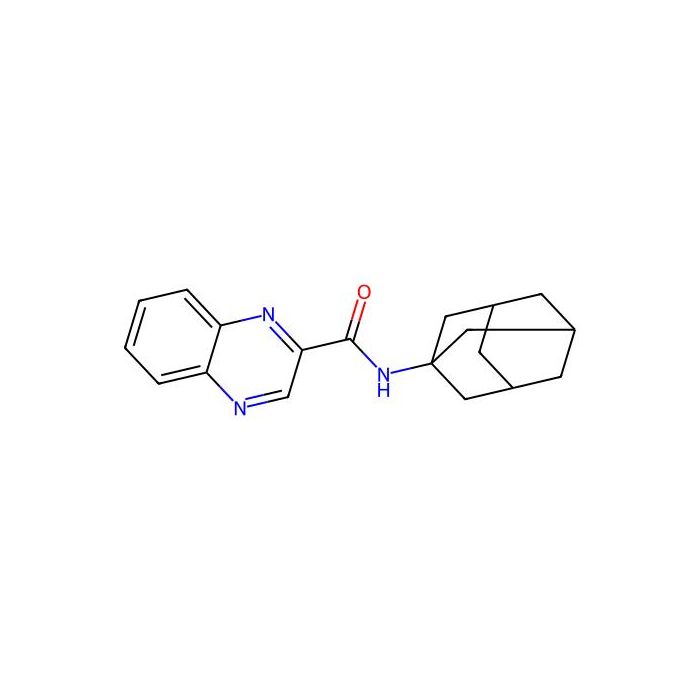
Product Name: NPS 2390
CAS: 226878-01-9
PubChem CID: 7067728
Molecular Formula: Not specified for this item; refer to CoA/Spec Sheet.
Molecular Weight: Not specified for this item; refer to CoA/Spec Sheet.
InChIKey: Not specified for this item; refer to CoA/Spec Sheet.
SMILES: Not specified for this item; refer to CoA/Spec Sheet.
Synonyms / Chemical Name: Not specified for this item; refer to CoA/Spec Sheet.
Structural features (general notes)
Item-specific 2D/3D structure and functional groups are not provided in the current data package. Consult the certificate of analysis (CoA) or the product specification sheet for definitive structural descriptors and stereochemical information.
Category context: listed under “小分子和化合物库” (small molecules and compound libraries), indicating a small-molecule research ligand supplied for screening/discovery workflows.
How to confirm identity in the lab (general guidance)
Use HRMS, 1H/13C NMR, and HPLC/UPLC purity profiling against a reference spectrum from the CoA/Spec Sheet.
If a structure is provided in your internal documentation, consider FTIR as a rapid orthogonal check (functional group confirmation).
Synthetic Utility
No synthetic role is described for this product, and structure-specific reactivity information is not provided. It is not positioned as a building block, reagent, or catalyst.
General guidance if derivatization is contemplated in a research setting
Without a disclosed structure, routine transformations (e.g., N-alkylation/acylation, cross-coupling, oxidation/reduction) cannot be advised. Obtain structural details and functional-group map from the CoA or internal records before planning chemistry.
If analog generation is desired, consider late-stage diversification only after verifying stability to proposed conditions and the absence of interfering protecting groups or sensitive motifs (e.g., nitroso, diazo, peroxide-prone moieties).
Recommendation
Treat this item as a finished reference ligand. For synthetic campaigns, procure or design well-annotated building blocks with known functional handles instead.
Target Specificity
Target, mechanism of action, selectivity panel, and binding constants are not specified for this product entry.
If your internal program associates NPS 2390 with a defined target, document assay conditions, Kd/IC50/EC50, and selectivity counterscreens locally.
For publication or data packages, include batch identifiers and link results to the specific CoA for traceability.
Need help choosing the grade?
Our grade selection guide covers purity, stabilizer status, and application suitability for all variants in our catalog.
We use cookies to ensure the website functions properly and, where permitted, to improve your experience. You can manage your preferences at any time in Settings. Learn more in our Cookie Policy.
Shall we send you a message when we have discounts available?
Remind me later
Thank you! Please check your email inbox to confirm.
Products are supplied to verified businesses, institutions, and qualified professionals for research and development use only. Not for use in humans, animals, diagnosis, or therapy.