Recombinant alpha Synuclein Antibody - Anticorpo primario, specific to alpha Synuclein, Rabbit IgG

Cat. No.: Ab088511
Disponibile su ordine
QUALITÀ & PUREZZA Recombinant ? Recombinant — produced via recombinant expression for defined sequence and consistency. Use for reproducible, animal-free proteins of known origin. ExactAb™ ? ExactAb™ — Aladdin's antibody line emphasizing precision and validated quality. Use for reliable, specificity-validated antibody applications. Validated ? Validated grade — performance confirmed in defined applications before release. Use when you want documented assurance the reagent works as stated. 0.55 mg/mL
Application
IHC, WB
Host species
Coniglio
Reactive species
Umano
Isotype
Rabbit IgG
Conjugation
Unconjugated
★
Dimensione
Germania (EU)
USA*
Prezzo
Qtà
10μl
Ab088511-10μl
—
2 Disponibile
86,69€
50μl
Ab088511-50μl
—
1 Disponibile
225,53€
100μl
Ab088511-100μl
Su ordinazione · 8–12 settimane
364,36€
1ml
Ab088511-1ml
Su ordinazione · 8–12 settimane
2.950,23€
Enter a quantity for the sizes you want to add.
🧪
Perché questa qualità

ExactAb™, Validated, Recombinant, 0.55 mg/mL ExactAb™,Recombinant,Validated per flussi di lavoro cromatografici e analitici sensibili che richiedono un'interferenza minima della linea di base.

🌡

Stoccaggio e spedizione

Store at -20°C,Avoid repeated freezing and thawing Spedizione Ice chest + Ice pads. Consultare il COA specifico del lotto per le specifiche esatte.

📋

Documenti di qualità

SDS, COA, scheda tecnica e scheda delle specifiche disponibili per il download. COA specifico del lotto accessibile tramite ricerca per numero di lotto.

📚

Prova documentale

Citato in 0 pubblicazioni peer-reviewed su cromatografia, sintesi organica e reazioni di accoppiamento incrociato.

Panoramica

Rabbit anti Human alpha Synuclein Antibody, Recombinant, could be used for WB, IHC and so on.
Application:
WB: 1/500-1/1000
IHC: 1/50-1/100
Protein Function:
May be involved in the regulation of dopamine release and transport. Induces fibrillization of microtubule-associated protein tau. Reduces neuronal responsiveness to various apoptotic stimuli, leading to a decreased caspase-3 activation.

Specifiche

Product Name
Recombinant alpha Synuclein Antibody - Anticorpo primario, specific to alpha Synuclein, Rabbit IgG
Sinonimi
Alpha synucleinantibody | Alpha-synuclein antibody | Alpha-synuclein, isoform NACP140antibody | alphaSYN antibody | MGC105443 antibody | MGC110988 antibody | MGC127560 antibody | MGC64356 antibody | NACP antibody | Non A beta component of AD amyloidantibo
Specifiche e purezza
ExactAb™, Validated, Recombinant, 0.55 mg/mL
Specie ospite
Coniglio
Specificità
alpha Synuclein
Immunogeno
A synthetic peptide derived from human Alpha Synuclein (AA 1-140).
Controllo positivo
WB: HUVEC, HEK293 and HeLa cell lysates. IHC: Mouse testis tissue.
Coniugazione
Unconjugated
Grado
ExactAb™, Recombinant, Validated
Isotipo
Rabbit IgG
Tipo di catena leggera
kappa
SDS-PAGE
150 kDa
Metodo di purificazione
Protein A purified
Concentrazione
0.55 mg/mL
Product Line
Prodotti biologici
Stoccaggio e spedizione
Forma
Liquid
Condizioni di conservazione di stoccaggio
Store at -20°C,Avoid repeated freezing and thawing
Spedito in
Ice chest + Ice pads
Stabilità e conservazione
Store at 4°C short term (1-2 weeks). Store at -20°C long term (24 months). Upon receipt, it is recommended to aliquot. Avoid freeze/thaw cycle.
Immagini

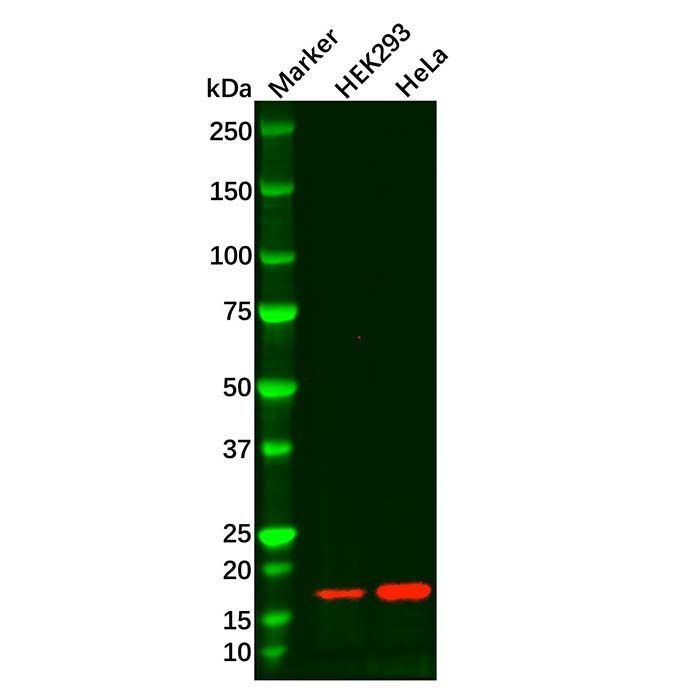
Recombinant alpha Synuclein Antibody (Ab088511) - Western Blot
All lanes: Recombinant alpha Synuclein Antibody (Ab088511) at 1/1000 dilution
Samples: Lysates at 20 µg per lane
Secondary: Goat Anti-Rabbit IgG H&L (HRP) (Ab170144) at 1/20000 dilution

Predicted band size: 14 kDa
Observed band size: 17 kDa
Exposure time: 100.1 s

Recombinant alpha Synuclein Antibody (Ab088511) - Western Blot
All lanes: Recombinant alpha Synuclein Antibody (Ab088511) at 1/1000 dilution
Samples: Lysates at 20 µg per lane
Secondary: Goat Anti-Rabbit IgG H&L (HRP) (Ab170144) at 1/20000 dilution

Predicted band size: 14 kDa
Observed band size: 17 kDa
Exposure time: 7.5 s

Recombinant alpha Synuclein Antibody (Ab088511) - IHC
Immunohistochemistry analysis of paraffin-embedded mouse testis using Recombinant alpha Synuclein Antibody (Ab088511). High-pressure and temperature Sodium Citrate pH 6.0 was used for antigen retrieval.

Applicazione
Applicazione
Dilution info
WB

1/500-1/1000

IHC

1/50 - 1/100

Documentazione

📋 Scheda di dati di sicurezza (SDS)

Documento completo su pericoli, manipolazione, stoccaggio e conformità normativa.

<<<<<<< HEAD Scarica SDS → ======= Scarica SDS → >>>>>>> release248-p3

✅ Certificato di analisi (COA)

Dati di qualità specifici del lotto. Inserisci il numero di lotto per recuperare il COA esatto.

Cerca COA →

📊 Scheda tecnica

Riepilogo di riferimento rapido delle specifiche e applicazioni del prodotto.

Visualizza scheda tecnica →

🔬 Scheda delle specifiche

Attributi di qualità completi e criteri di accettazione per questa qualità.

Visualizza scheda delle specifiche →

Dati avanzati

Obiettivi associati (umani)
SNCA Tchem Alpha-synuclein (0 Activities)
Activity TypeActivity Value -log(M)Mechanism of ActionActivity ReferencePublications (PubMed IDs)
Meccanismi d'azione
Certificati (CoA, COO, BSE/TSE e tabella di analisi)
C of A & Other Certificates(BSE/TSE, COO):
Analytical Chart:

Find and download the COA for your product by matching the lot number on the packaging.

2 results found

Lot NumberCertificate TypeDataOggetto
ZJ24F0303216ZJ24F0303216Certificate of AnalysisJan 22, 2026 Ab088511
ZJ24F0303217ZJ24F0303217Certificate of AnalysisMar 14, 2024 Ab088511
Domande frequenti e articoli
Calcolatori di soluzioni
Recensioni

Recensioni dei clienti

Application Protocols

Not specified for this item; refer to the CoA/Spec Sheet for tested applications, recommended dilutions, controls, and any special blocking or antigen retrieval conditions.

Shipping and storage from product data for planning:

  • Shipped in ice chest with ice pads.
  • Store at −20°C and avoid repeated freeze–thaw cycles (aliquot upon first thaw).

For any application (WB, IHC, IF, ELISA, IP, etc.), titration and matrix-specific optimization are recommended once item-specific guidance is obtained.

Biological Roles

Target background (alpha-synuclein; literature/general):

  • Alpha-synuclein (gene: SNCA) is a small, intrinsically disordered, presynaptic protein highly enriched in neurons. It associates with synaptic vesicle membranes via amphipathic N-terminal repeats and can adopt α-helical structure upon lipid binding.
  • Proposed functions include modulation of synaptic vesicle trafficking, regulation of SNARE complex assembly, and influence on neurotransmitter release probability. It can form multimeric states and transient helically folded conformers on membranes.
  • Post-translational modifications (PTMs) such as phosphorylation (e.g., Ser129), nitration, truncation, and ubiquitination modulate conformation, membrane affinity, and protein-protein interactions. Detection of specific PTMs often requires epitope-verified antibodies.
  • Aggregation pathway (biophysical context): Alpha-synuclein can transition from monomers to oligomers and fibrils under certain conditions in vitro, a process influenced by lipid composition, ionic strength, pH, mutations, and crowding agents. Distinct conformers/strains have been characterized biophysically.
  • Cellular trafficking and turnover involve chaperone-mediated autophagy, macroautophagy, and the ubiquitin-proteasome system; dysregulation influences steady-state levels and distribution.

Implications for assay design (general):

  • Choice of antibody epitope (N-terminus, NAC core, C-terminus, or PTM-specific) affects detection of monomer vs. aggregated species and membrane-bound vs. cytosolic pools. For Ab088511, the epitope is not specified; consult the CoA to ensure alignment with your experimental objective.
Buffer Applications

Direct buffer-making guidance is not typically applicable to an antibody product. However, buffers are central to its performance.

General practical guidance (not item-specific):

  • Capture/detection assays: PBS or TBS at pH 7.2–7.6 with 0.05% Tween-20 for washing; blocking agents such as BSA or casein reduce nonspecific binding. For alpha-synuclein, avoid high detergents when probing membrane interactions.
  • Sample handling: Include protease and phosphatase inhibitors when preserving native PTMs; chelators (EDTA) can prevent metal-catalyzed oxidation.
  • Storage buffer: Stabilizers like 10–50% glycerol and sugars (trehalose) can reduce freeze–thaw stress at −20°C; presence/absence for this item is not specified.

For this SKU, exact formulation, pH, and excipients are not provided; refer to CoA/Spec Sheet for buffer composition if needed for compatibility with your workflow.

Green Alternatives

Greenness considerations for antibody reagents (general):

  • Aqueous systems: Antibodies are used in water-based buffers, avoiding hazardous organic solvents typical of small-molecule chemistry.
  • Cold-chain efficiency: The product ships with ice packs; consolidating shipments and minimizing dry ice usage can reduce environmental impact while maintaining quality.
  • Stabilization to reduce waste: Aliquoting to prevent freeze–thaw degradation reduces product loss and repeat orders/shipping.

Alternatives and tradeoffs (general):

  • Preservatives: Sodium azide offers microbial control but is hazardous to aquatic life; alternatives include low-temperature storage or sterile filtration, acknowledging reduced shelf-life without preservatives.
  • Single-use plastics vs. glass: Low-protein-binding plastics reduce loss but increase waste; glass can adsorb protein. Choose based on concentration and recovery needs.

Item-specific greener options: Not specified for this item. If conjugation or preservatives are critical to your sustainability criteria, consult the CoA to select an appropriate format (e.g., preservative-free for cell-based workflows with adequate asepsis).

Pharmaceutical Uses

This product is provided strictly for research use only (per product data) and is not intended for diagnostic or therapeutic use.

Relevant non-clinical uses (general):

  • Process development and analytical assays: As a capture/detection reagent for alpha-synuclein quantification in research samples (biochemical assays, biophysical studies, cellular lysates).
  • Reference reagent in assay qualification: Recombinant antibodies with sequence-defined production can serve as consistent controls during method development and transfer.
  • Conjugate precursor: May be amenable to labeling with enzymes, fluorophores, or biotin for research workflows; conjugation status for this item is not specified.

Regulatory notes (general):

  • Not a pharmacopeial article. No GMP status is claimed in the product data. For regulated workflows, obtain additional documentation (CoA, TSE/BSE statements, adventitious agent testing) as required.

Item-specific formulation roles, excipient status, or compendial listings: Not specified for this item; refer to CoA/Spec Sheet.

Physical Properties

Item-specific physical properties: Not specified for this item; refer to CoA/Spec Sheet.

General properties for antibodies (literature/typical values, not item-specific):

  • Molecular weight: ~150 kDa for IgG; Fab ~50 kDa; scFv ~25–30 kDa. Actual format for this product is not specified.
  • Isoelectric point (pI): commonly between ~6.5–9.0 depending on sequence and glycosylation.
  • Solubility: Highly soluble in aqueous buffers (PBS, TBS) at mg/mL levels; sensitive to aggregation at extremes of pH, ionic strength, or temperature.
  • Stability considerations: Repeated freeze–thaw can promote aggregation and loss of activity. Stabilizers (e.g., trehalose, glycerol, carrier proteins) may be used, but none are specified for this item.
  • Optical properties: Protein absorbance at 280 nm (A280) with ε dependent on sequence; typical IgG ε280 ~210,000 M−1 cm−1 (literature). Use spectrophotometry for concentration determination if extinction coefficient is known.
  • Formulation matrix, concentration, and excipients: Not specified for this item; consult CoA.

Practical notes (general):

  • Gentle mixing (no vigorous vortex) and low-protein-binding plastics help maintain monomeric state.
  • Filter sterilization (0.22 μm) can remove particulates but may reduce recovery if concentration is low.
Quality and Grades

Item-specific designations:

  • Grade/Purity: Recombinant, ExactAb™, Validated (as listed for this item).

What these designations generally imply (general guidance; not a substitute for CoA):

  • Recombinant antibody: Sequence-defined production in a controlled expression system (e.g., mammalian or HEK/CHO), providing lot-to-lot consistency relative to hybridoma or polyclonal sources. Reduced risk of isotype drift; amenable to engineering for performance.
  • ExactAb™: Manufacturer branding typically indicating a precisely defined antibody construct and stringent release criteria. For this catalog, treat as a marker of sequence and performance consistency. Specific release tests for this SKU are not listed; refer to CoA/Spec Sheet for details (purity, concentration, endotoxin, host/isotype, and validation data).
  • Validated: Indicates the antibody has undergone application-specific or target-specific verification by the supplier. The exact validation methods, tested species, and assay formats for Ab088511 are not specified here; consult the CoA.

What to look for on the CoA/Spec Sheet (recommended):

  • Antibody format (IgG, Fab, scFv), isotype, host species, expression system, concentration, purity method (SDS-PAGE/HPLC), endotoxin level, and binding validation (ELISA/Western blot/IHC).
  • Preservatives or stabilizers (e.g., azide, glycerol, BSA) if present.

Bottom line: Treat Ab088511 as a high-consistency recombinant reagent, with final acceptance based on the item’s CoA.

Reaction and Applications

This section is not typically applicable to antibodies, which are biological affinity reagents rather than reagents for chemical synthesis or named organic reactions.

For practical use, see:

  • Target Specificity: for the biomolecular target recognized by this antibody.
  • Application Protocols: for assay types and recommended conditions (not specified for this item; consult CoA/Spec Sheet).

General note: Antibodies serve in binding-driven applications (capture, detection, enrichment) rather than chemical transformations. They may be conjugated (enzymes, fluorophores, biotin) for assay utility, but conjugation status for this item is not specified.

Reaction Conditions

Not applicable: There are no standard “reaction conditions” for antibody use in the synthetic chemistry sense.

General handling conditions for assays (not item-specific):

  • Typical incubation temperatures: 4°C (overnight) to room temperature (1–2 h) depending on assay.
  • Typical buffers: PBS/TBS with blockers and mild detergents as required by assay format.
  • Agitation: Gentle rocking/rotation to improve binding kinetics without inducing shear.

For Ab088511, specific incubation times, concentrations, and assay-validated conditions are not provided; refer to the CoA/Spec Sheet for any validated application notes.

Safety and Handling

Hazard classification: Not specified for this item; refer to SDS for authoritative safety information. No GHS signal word/pictograms are provided in the product data.

General laboratory safety for protein antibodies:

  • PPE: Wear lab coat, suitable gloves (e.g., nitrile), and safety glasses. Avoid inhalation of aerosols; handle solutions in a clean area.
  • Biosafety: Recombinant antibodies are non-infectious reagents but may be produced in biological systems. Handle as non-sterile laboratory reagent unless otherwise specified.
  • Incompatibilities: Avoid strong acids/bases and oxidants that can denature proteins; avoid metal-catalyzed oxidation. Do not mix with microbial contamination; use aseptic technique if sterility is required.
  • Thermal sensitivity: Maintain cold chain; prolonged exposure to ambient temperature can reduce binding activity.
  • Freeze–thaw: The product explicitly states “Avoid repeated freezing and thawing.” Aliquot upon first thaw to minimize activity loss.
  • First aid (general): In case of skin/eye contact, rinse with water. If inhaled or ingested, seek medical advice and show SDS. No special antidotes are applicable for protein reagents.
  • Spill/cleanup: Absorb with inert material, clean surfaces with aqueous detergent, and dispose according to institutional biosafety procedures.

Shipping/storage from product data:

  • Shipped: Ice chest + ice pads.
  • Storage: Store at −20°C; avoid repeated freeze–thaw cycles.
Solvent Selection

Not typically applicable: Antibodies are supplied and used in aqueous buffers, not organic solvents.

General guidance (for context only):

  • Preferred media: Phosphate-buffered saline (PBS) or Tris-buffered saline (TBS), often with 0.01–0.1% nonionic surfactant (e.g., Tween-20) for assay buffers to reduce nonspecific adsorption. Carrier proteins or polyols may be present to stabilize, but none are specified for this item.
  • Avoid: Strongly denaturing conditions (high chaotropes, >50% organic solvent), extreme pH (<5 or >9 without stabilizers), and high shear.
  • Compatibility: For immunoassays, buffer additives (salt, detergent, protein blockers) should be optimized to preserve epitope recognition on alpha-synuclein while minimizing background.

For this SKU, the exact formulation buffer and any stabilizers are not specified; refer to the CoA/Spec Sheet.

Storage and Reconstitution

Item-specific storage and handling (from product data):

  • Storage conditions: Store at −20°C.
  • Avoid repeated freezing and thawing: Aliquot material upon first thaw to preserve activity.
  • Shipping: Ice chest + ice pads.

Not specified for this item; refer to CoA/Spec Sheet:

  • Form (liquid vs. lyophilized), concentration, buffer composition, preservatives/stabilizers (e.g., sodium azide, glycerol, BSA), and recommended reconstitution solvent/volume if lyophilized.

General best practices (context only):

  • If lyophilized: Reconstitute gently with sterile, antibody-compatible buffer (e.g., PBS) to the desired concentration; allow to sit on ice to fully dissolve, then mix by gentle inversion. Avoid vigorous vortexing.
  • If liquid: Keep on ice during use; return promptly to −20°C. For storage ≤−20°C, formats containing 30–50% glycerol can be stored without freezing; presence of glycerol for this item is not specified.
  • Storage containers: Use low-protein-binding tubes. Label aliquots with lot number, concentration, and date.

Always consult the item’s CoA/Spec Sheet for definitive instructions tailored to this SKU.

Structure and Identity

Item-specific identifiers: Not specified for this item; refer to CoA/Spec Sheet.

General description (literature/typical for recombinant antibodies):

  • This product is a recombinant antibody raised against the protein alpha-synuclein (SNCA). As a recombinant reagent, the variable regions are encoded from defined sequences to ensure lot-to-lot consistency compared with hybridoma-derived monoclonals or polyclonals.
  • Typical architecture for an IgG-class antibody (literature): two identical heavy chains and two identical light chains forming a Y-shaped heterotetramer stabilized by inter-chain disulfides. The antigen-binding fragments (Fabs) contain the CDR loops responsible for epitope recognition on alpha-synuclein.
  • Molecular formula, SMILES, InChI, and InChIKey are not conventionally defined for antibodies and are not applicable here; identity is established by sequence, binding, and protein analytics.
  • Molecular weight (literature typical): ~150 kDa for a full-length IgG; other recombinant formats (e.g., scFv, Fab) can be smaller. The exact format for this item is not specified; refer to CoA/Spec Sheet.
  • Structural features (literature): Immunoglobulin β-sandwich domains (Ig folds) in variable and constant regions; N-linked glycosylation may be present depending on expression system and isotype.

Item-specific fields

  • SKU: Ab088511
  • Name: Recombinant alpha Synuclein Antibody
  • Grade/Purity: Recombinant, ExactAb™, Validated (manufacturer designations)
  • Target: alpha-synuclein (protein); additional specificity details not specified for this item.
Synthetic Utility

Not applicable: Antibodies are biological affinity reagents and are not used as building blocks or catalysts in synthetic organic chemistry.

For experimental workflows, see Biological Roles, Target Specificity, and Application Protocols (note: application details are not specified for this item; consult CoA/Spec Sheet).

Target Specificity

Item-specific information provided by product data:

  • Target name: alpha-synuclein (SNCA) — inferred from product name. Additional details are not specified for this item; refer to CoA/Spec Sheet.

Not specified for this item (refer to CoA/Spec Sheet):

  • Epitope/region (N-terminus, NAC domain, C-terminus, or PTM-specific)
  • Species reactivity (human/mouse/rat/other)
  • Clone designation and isotype (IgG subclass, light chain type)
  • Host/expression system and antibody format (IgG, Fab, scFv)
  • Cross-reactivity with beta/gamma-synuclein or other proteins

Note: Epitope and species validation are critical for study design in alpha-synuclein biology; please verify on the CoA before use.

Domande frequenti

What does ExactAb? mean?
ExactAb? indicates the product has been validated for use in rigorous antibody validation workflows. Validation may include positive/negative control samples, signal-to-noise testing, and protocol-specific QC. Lot-specific test data is published on the Certificate of Analysis where available.
What does Recombinant mean?
Recombinant is a defined analytical purity tier suitable for workflows requiring a specific validated property. It specifies a minimum assay percentage, controlled limits on common impurities (water, heavy metals, residue on ignition), and lot-to-lot consistency. Recombinant is one of several purity tiers — choose based on the sensitivity and regulatory requirements of your method.
How should this product be stored?
Store at ?20 °C. Avoid repeated freeze–thaw cycles. Aliquot into single-use volumes before freezing.
How is this product shipped?
This product ships in an insulated container with ice pads. Unpack on arrival and transfer it to the storage condition stated above.
What documentation is provided?
Available product documentation, including Certificates of Analysis (COA), Safety Data Sheets (SDS), and specification sheets, is shown in the product document area. Document availability and access follow the current site policy.
Which species reactivity has this antibody been validated against?
Validated reactivity is listed on the PDP and on each lot's datasheet. We validate against the most commonly tested species for the target (Recombinant alpha Synuclein Antibody); cross-reactivity in untested species may exist but is not guaranteed. Contact technical support for specific species inquiries.

Hai bisogno di aiuto per scegliere la qualità?

La nostra guida alla selezione delle qualità copre purezza, stato dello stabilizzatore e idoneità all'applicazione per tutte le varianti del nostro catalogo.

Visualizza la guida alle qualità Recombinant → Visualizza la guida alle qualità Validated → Visualizza la guida alle qualità ExactAb™ →

Prodotti correlati

Goat Anti-Rabbit IgG H&L Antibody - Anticorpo secondario, for ELISA,LF,GICA various applications, from Rabbit, generated in Goat
Goat Anti-Rabbit IgG H&L (AF594) - Anticorpo secondario, IgG
Goat Anti-Rabbit IgG H&L (Biotin) - Anticorpo secondario, IgG
Goat Anti-Rabbit IgG H&L (AF488) - Anticorpo secondario, IgG
Goat Anti-Rabbit IgG H&L (AF405) - Anticorpo secondario, IgG
Donkey Anti-Rabbit IgG H&L (AF647) - Anticorpo secondario, specific to , IgG
Donkey Anti-Rabbit IgG H&L (Biotin) - Anticorpo secondario, IgG
Goat Anti-Rabbit IgG H&L (HRP) - Anticorpo secondario
Goat Anti-Rabbit IgG H&L Antibody - Anticorpo secondario, Goat IgG
Goat Anti-Rabbit IgG H&L (Biotin) - Anticorpo secondario
Goat Anti-Rabbit IgG H&L (Cy5) - Anticorpo secondario
Goat Anti-Rabbit IgG H&L (FITC) - Anticorpo secondario
Goat Anti-Rabbit IgG H&L (TRITC) - Anticorpo secondario
Goat Anti-Rabbit IgG H&L (Biotin) - Anticorpo secondario, Goat IgG
Goat Anti-Rabbit IgG H&L (HRP) - Anticorpo secondario, Goat IgG
Goat Anti-Rabbit IgG H&L (Cy5) - Anticorpo secondario, Goat IgG
Goat Anti-Rabbit IgG H&L (TRITC) - Anticorpo secondario, Goat IgG
Goat Anti-Rabbit IgG H&L (FITC) - Anticorpo secondario, Goat IgG
Goat Anti-Rabbit IgG H&L (PE) - Anticorpo secondario, Goat IgG
Goat Anti-Rabbit IgG H&L (APC) - Anticorpo secondario, Goat IgG
MAb di topo per l'alfa-sinucleina - Anticorpo primario, specific to Alpha-synuclein, Mouse IgG2a
Goat Anti-Rabbit IgG H&L (AF647) - Anticorpo secondario, Goat IgG
Goat Anti-Rabbit IgG H&L (AF405) - Anticorpo secondario, Goat IgG
Goat Anti-Rabbit IgG H&L (AF555) - Anticorpo secondario, Goat IgG
Goat Anti-Rabbit IgG H&L (AF546) - Anticorpo secondario, specific to Rabbit IgG
Goat Anti-Rabbit IgG H&L (AF700) - Anticorpo secondario, specific to Rabbit IgG
Goat Anti-Rabbit IgG H&L (AF488) - Anticorpo secondario
Goat Anti-Rabbit IgG H&L (AF647) (Ready to use) - Anticorpo secondario, specific to Rabbit IgG

Desidera che le inviamo un messaggio quando avremo sconti disponibili?

Ricordamelo più tardi

Grazie! Controlli la sua casella di posta per confermare.

Ops! Le notifiche sono disabilitate.