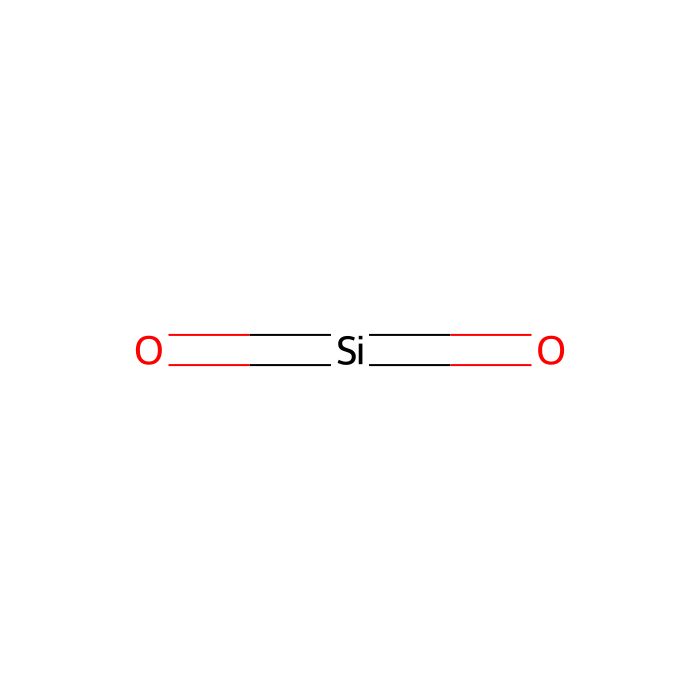
Silica micropowder - ≥99.9% metals basis, sphere,35μm , CAS No.14808-60-7

CAS: 14808-60-7 Cat. No.: S305533 Formula: SiO2 Peso molecolare: 60.08 Numero EC: 238-878-4
Disponibile su ordine
QUALITÀ & PUREZZA ≥99.9% metals basis sphere,35μm
Synonyms
Sand|Silica|Quartz|Cristobalite
Storage
Room temperature
Shipped In
Normal
★
Dimensione
Germania (EU)
USA*
Prezzo
Qtà
100g
S305533-100g
—
5 Disponibile
25,08€
500g
S305533-500g
1 Disponibile
4 Disponibile
60,65€
Enter a quantity for the sizes you want to add.

Specifiche

Sinonimi
Sand | Silica | Quartz | Cristobalite
Specifiche e purezza
≥99.9% metals basis, sphere,35μm
Condizioni di conservazione di stoccaggio
Room temperature
Spedito in
Normal
Purezza
≥99.9% metals basis
Nomi e identificatori
Pubchem Sid
SMILES
O=[Si]=O
IUPAC Name
dioxosilane
InChIKey
VYPSYNLAJGMNEJ-UHFFFAOYSA-N
InChI
1S/O2Si/c1-3-2
Isomeri SMILES
O=[Si]=O
RTECS
VV7328000
CAS alternativo
60676-86-0
Peso molecolare
60.08
Reaxys
6114654
Reaxys-RN_link_address
https://www.reaxys.com/reaxys/secured/hopinto.do?context=S&query=IDE.XRN=6114654&ln=

Dati avanzati

Taxonomic Classification

Taxonomy Tree

KingdomInorganic compounds
SuperclassMixed metal/non-metal compounds
ClasseMetalloid organides
SubclassMetalloid oxides
Intermediate Tree Nodes Not available
Direct ParentMetalloid oxides
Alternative Parents Metalloid salts  Inorganic salts  Inorganic oxides  
Molecular FrameworkNot available
Substituents Metalloid oxide - Inorganic oxide - Inorganic salt - Inorganic metalloid salt
DescrizioneThis compound belongs to the class of inorganic compounds known as metalloid oxides. These are inorganic compounds containing an oxygen atom of an oxidation state of -2, in which the heaviest atom bonded to the oxygen is a metalloid.
External Descriptors silicon oxide
Struttura 3D
Modello di struttura chimica interattiva


Certificati (CoA, COO, BSE/TSE e tabella di analisi)
C of A & Other Certificates(BSE/TSE, COO):
Analytical Chart:

Find and download the COA for your product by matching the lot number on the packaging.

26 results found

Lot NumberCertificate TypeDataOggetto
J2621713J2621713Certificate of AnalysisOct 23, 2026 S305533
J2621712J2621712Certificate of AnalysisOct 23, 2026 S305533
J2621765J2621765Certificate of AnalysisOct 23, 2026 S305533
I2617704I2617704Certificate of AnalysisSep 20, 2026 S305533
I2617703I2617703Certificate of AnalysisSep 20, 2026 S305533
I2617702I2617702Certificate of AnalysisSep 20, 2026 S305533
F2623386F2623386Certificate of AnalysisJun 26, 2026 S305533
F2623385F2623385Certificate of AnalysisJun 26, 2026 S305533
A2606487A2606487Certificate of AnalysisJan 09, 2026 S305533
A2606488A2606488Certificate of AnalysisJan 09, 2026 S305533
A2606486A2606486Certificate of AnalysisJan 08, 2026 S305533
E2430499E2430499Certificate of AnalysisJun 06, 2024 S305533
E2430519E2430519Certificate of AnalysisJun 06, 2024 S305533
E2430489E2430489Certificate of AnalysisJun 06, 2024 S305533
E2430498E2430498Certificate of AnalysisJun 05, 2024 S305533
H2328818H2328818Certificate of AnalysisSep 05, 2023 S305533
H2328817H2328817Certificate of AnalysisSep 05, 2023 S305533
H2328815H2328815Certificate of AnalysisSep 04, 2023 S305533
H2328816H2328816Certificate of AnalysisSep 04, 2023 S305533
D2323201D2323201Certificate of AnalysisApr 25, 2023 S305533
D2323200D2323200Certificate of AnalysisApr 25, 2023 S305533
D2323199D2323199Certificate of AnalysisApr 25, 2023 S305533
D2323197D2323197Certificate of AnalysisApr 25, 2023 S305533
I2201188I2201188Certificate of AnalysisSep 06, 2022 S305533
H2118385H2118385Certificate of AnalysisAug 27, 2021 S305533
I2202188I2202188Certificate of AnalysisAug 27, 2021 S305533
Proprietà chimiche e fisiche
Indice di rifrazione1.544
Punto di ebollizione (°C)2230°C
Punto di fusione (°C)1670°C
Peso molecolare60.08
XLogP3
Hydrogen Bond Donor Count0
Hydrogen Bond Acceptor Count2
Rotatable Bond Count0
Exact Mass59.9668 Da
Monoisotopic Mass59.9668 Da
Topological Polar Surface Area34.100 Ų
Heavy Atom Count3
Formal Charge0
Complexity18.300
Isotope Atom Count0
Defined Atom Stereocenter Count0
Undefined Atom Stereocenter Count0
Defined Bond Stereocenter Count0
Undefined Bond Stereocenter Count0
The total count of all stereochemical bonds0
Covalently-Bonded Unit Count1
Sicurezza e pericoli (GHS)
Pictogrammi
Segnale
Danger
Indicazioni di pericolo

H332:Harmful if inhaled

H351:Suspected of causing cancer

H371:May cause damage to organs

H372:Causes damage to organs through prolonged or repeated exposure

H373:May causes damage to organs through prolonged or repeated exposure

Precauzioni

P260:Do not breathe dust/fume/gas/mist/vapors/spray.

P261:Avoid breathing dust/fume/gas/mist/vapors/spray.

P264:Wash hands [and …] thoroughly after handling.

P270:Do not eat, drink or smoke when using this product.

P271:Use only outdoors or in a well-ventilated area.

P280:Wear protective gloves/protective clothing/eye protection/face protection.

P304+P340:IF INHALED: Remove person to fresh air and keep comfortable for breathing.

P405:Store locked up.

P501:Dispose of contents/container to an approved waste disposal plant.

P203:Obtain, read and follow all safety instructions before use.

P318:if exposed or concerned, get medical advice.

P317:Get emergency medical help.

P308+P316:IF exposed or concerned: Get emergency medical help immediately.

P319:Get medical help if you feel unwell.

RTECS
VV7328000
Reaxys
6114654
Reaxys-RN_link_address
https://www.reaxys.com/reaxys/secured/hopinto.do?context=S&query=IDE.XRN=6114654&ln=
Domande frequenti e articoli
Semiconductor Materials and Their Properties
Ceramic Materials Guide: Basic Definitions, Classification Framework, and Research-Task-Oriented Selection (with Product Navigation and Tables 1–4)
How Matting Agents in Coatings Build Low-Gloss Coating Surfaces: Mechanisms, Formulation Trade-Offs, and Product Selection
Guide to Selecting Polyurethane Coating Systems: Application Analysis for Wood, Flooring, Plastics, Automotive, and Industrial Protection
Capable of Swelling, Adsorption, and Cation Exchange: What Makes Montmorillonite Clay Different?
Application Positioning, Scenario Selection, and Key Use Considerations for Chlorinated Rubber Resin in Coatings
Formulation Design of Chlorinated Rubber Coatings: Component Synergy and Performance Control
What Is Silica Sol: Mechanism of Action, Application Scenarios, and Selection Criteria for Nanosilica Dispersions
Types, Mechanisms of Action, Key Quality Indicators, and Selection and Application of Common Cellulose Ethers in Wall Putty
What Are the Differences Between Polyvinyl Alcohol 1788, 2488, and 2699? Understanding Workability, Bonding Strength, and Relative Water Resistance from the Perspective of Degree of Polymerization and Degree of Hydrolysis
Why Do Rust Spots Appear on Neutral Wall Putty? Iron Sources, Moisture Migration, Oxidative Color Development, and Prevention Measures
Common Problems and Formulation Adjustment Strategies for Neutral Putty Under High Summer Temperatures
Differences and Application Selection of Cassava- and Corn-Based Pregelatinized Starch in Neutral Putty Formulations
Citations of This Product
Calcolatori di soluzioni
Recensioni

Recensioni dei clienti

Desidera che le inviamo un messaggio quando avremo sconti disponibili?

Ricordamelo più tardi

Grazie! Controlli la sua casella di posta per confermare.

Ops! Le notifiche sono disabilitate.