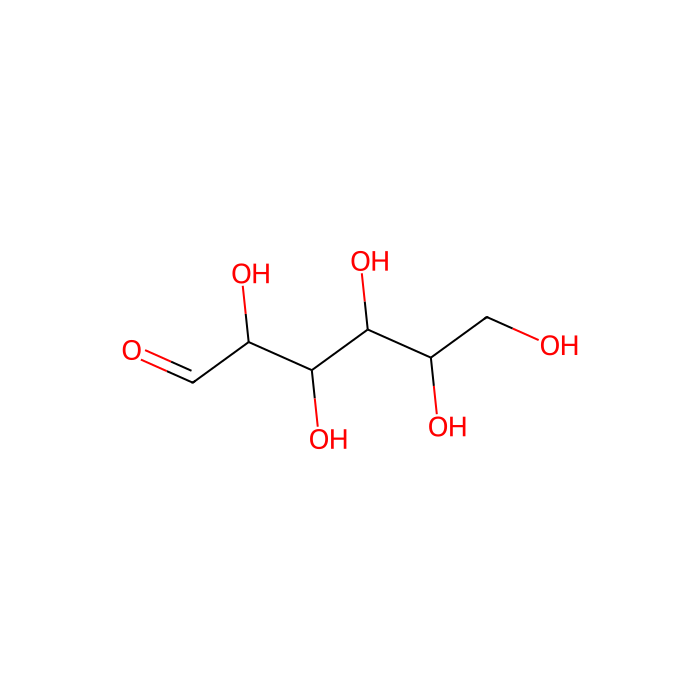
D-(+)-Glucose - Moligand™, Standard for GC, ≥99.5%(GC) , CAS No.50-99-7

CAS: 50-99-7 Cat. No.: G116304 分子式: C6H12O6 分子量: 180.16 Beilstein Registry Number: 1724615 EC番号: 200-075-1
注文可能
グレード&純度 Moligand™ ? Moligand™ — Aladdin's line of ligands and bioactive small molecules. Use for receptor, pathway, and binding studies needing defined small-molecule tools. Standard for GC ? GC reference standard — characterized compound for calibrating GC methods. Use to build calibration curves and verify GC quantitation. ≥99.5%(GC)
Synonyms
ANHYDROUS DEXTROSE [II]|GLUCOSE [MI]|D-Glucose;Grape sugar;Glucopyranose|GLUCOSE [WHO-DD]|(C13)D-Glucose|Glucose (C-14)|(2R,3S,4R,5R)-2,3,4,5,6-pentakis(oxidanyl)hexanal|Glucose (C-13)|D-Glucose, labeled with tritium|Glucose-40|DL-Glucose|Glucose [JAN]|Glucose liquid|Dextrose, anhydrous|rel-(2R,3S,4R,5R)-2,3,4,5,6-Pentahydroxyhexanal|UREA-FORMALDEHYDERESIN|(U-14C)Glucose|Sugar, grape|GLO|D(+)-Glucose;(2R,3S,4R,5R)-2,3,4,5,6-Pentahydroxyhexanal|(14C)D-Glucose|Glucose, liquid|Dextrose (D-glucose)|Sirup|(2R,3S,4R,5R)-2,3,4,5,6-pentahydroxyhexanal|aldehydo-D-glucose|N-METHYLPYRROLIDONE [USP-RS]|Glucose Anhydrous|D(+)-Glucose|anhydrous dextrose (open form)|D-(U-14C)Glucose|DEXTROSE (CONSTITUENT OF CRANBERRY LIQUID PREPARATION) [DSC]|D-Glucose, labeled with carbon-14|GLUCOSE [INCI]|Insta-Glucose|(14C)-Glucose|(U-13C)-D-glucose|ANHYDROUS DEXTROSE [USP MONOGRAPH]|D-GLUCOSE,2-(ACETYLAMINO)-4-O-[2-(ACETYLAMINO)-2-DEOXY-4-O-SULFO-B-D-GALACTOPYRANOSYL]-2-DEOXY-|Glucose, liquid [NF]|ethyl 2-(diethoxyphosphoryl)ethanoate|GLUCOSE [HSDB]|Dextrose Anhydrous
Storage
Room temperature,Argon charged
Shipped In
Normal
★
サイズ
USA
ドイツ (EU)*
価格
個数
5g
G116304-5g
2 在庫あり
—

$23.90

$28.90
保存 $5.00 (17.30%)
Enter a quantity for the sizes you want to add.

概要

D(+)Glucose, Anhydrous is a granular monosaccharide.
A primary source of energy for living organisms

仕様

同義語
ANHYDROUS DEXTROSE [II] | GLUCOSE [MI] | D-Glucose;Grape sugar;Glucopyranose | GLUCOSE [WHO-DD] | (C13)D-Glucose | Glucose (C-14) | (2R,3S,4R,5R)-2,3,4,5,6-pentakis(oxidanyl)hexanal | Glucose (C-13) | D-Glucose, labeled with tritium | Glucose-40 | DL-Glucose | Glucose [JAN] | Glucose liquid | Dextrose, anhydrous | rel-(2R,3S,4R,5R)-2,3,4, もっと見る
仕様と純度
Moligand™, Standard for GC, ≥99.5%(GC)
保管条件
Room temperature,Argon charged
入荷
Normal
等級
Moligand™, Standard for GC
純度
≥99.5%(GC)
名前と識別子
パブケム・シド
SMILES
OC[C@H]1O[C@H](O)[C@H](O)[C@@H](O)[C@@H]1O
IUPAC Name
(2R,3S,4R,5R)-2,3,4,5,6-pentahydroxyhexanal
InChIKey
GZCGUPFRVQAUEE-SLPGGIOYSA-N
InChI
1S/C6H12O6/c7-1-3(9)5(11)6(12)4(10)2-8/h1,3-6,8-12H,2H2/t3-,4+,5+,6+/m0/s1
異性体SMILES
C([C@H]([C@H]([C@@H]([C@H](C=O)O)O)O)O)O
WGKドイツ
1
RTECS
LZ6600000
分子量
180.16
Beilstein
1724615
Reaxys
1281608
Reaxys-RN_link_address
https://www.reaxys.com/reaxys/secured/hopinto.do?context=S&query=IDE.XRN=1281608&ln=

詳細データ

Taxonomic Classification

Taxonomy Tree

KingdomOrganic compounds
SuperclassOrganic oxygen compounds
分類Organooxygen compounds
SubclassCarbohydrates and carbohydrate conjugates
Intermediate Tree Nodes Monosaccharides
Direct ParentHexoses
Alternative Parents Medium-chain aldehydes  Beta-hydroxy aldehydes  Alpha-hydroxyaldehydes  Secondary alcohols  Polyols  Primary alcohols  Organic oxides  Hydrocarbon derivatives  
Molecular FrameworkAliphatic acyclic compounds
Substituents Hexose monosaccharide - Medium-chain aldehyde - Beta-hydroxy aldehyde - Alpha-hydroxyaldehyde - Secondary alcohol - Polyol - Organic oxide - Hydrocarbon derivative - Primary alcohol - Carbonyl group - Aldehyde - Alcohol - Aliphatic acyclic compound
説明This compound belongs to the class of organic compounds known as hexoses. These are monosaccharides in which the sugar unit is a is a six-carbon containing moeity.
External Descriptors aldehydo-glucose - D-glucose
3 D構造
インタラクティブ化学構造モデル


関連ターゲット(非人間)
Hdac6 Histone deacetylase 6 (222 Activities)
Activity TypeRelationActivity valueUnitsAction TypeJournalPubMed IddoiAssay Aladdin ID
rep Replicase polyprotein 1ab (378 Activities)
Activity TypeRelationActivity valueUnitsAction TypeJournalPubMed IddoiAssay Aladdin ID
作用メカニズム
証明書(CoA、COO、BSE/TSEと分析図)
C of A & Other Certificates(BSE/TSE, COO):
Analytical Chart:

Find and download the COA for your product by matching the lot number on the packaging.

14 results found

Lot NumberCertificate Type日付商品
K2606155K2606155Certificate of AnalysisNov 11, 2026 G116304
I2624646I2624646Certificate of AnalysisSep 30, 2026 G116304
E2620473E2620473Certificate of AnalysisJun 08, 2026 G116304
L2522382L2522382Certificate of AnalysisDec 26, 2025 G116304
G2523603G2523603Certificate of AnalysisJul 26, 2025 G116304
E2523328E2523328Certificate of AnalysisMay 29, 2025 G116304
E2324627E2324627Certificate of AnalysisMar 04, 2025 G116304
B2309563B2309563Certificate of AnalysisNov 14, 2024 G116304
L2223038L2223038Certificate of AnalysisOct 21, 2024 G116304
H2405204H2405204Certificate of AnalysisAug 14, 2024 G116304
K2215100K2215100Certificate of AnalysisNov 19, 2022 G116304
H2202240H2202240Certificate of AnalysisAug 11, 2022 G116304
F2218356F2218356Certificate of AnalysisJun 21, 2022 G116304
C2219347C2219347Certificate of AnalysisMar 23, 2022 G116304
化学的性質と物理的性質
溶解度Soluble in water (0.9 g/ml at 25 °C), alcohol (slightly), methanol ( at 20 °C), absolute alcohol (very sparingly), ether (very sparingly), acetone (very sparingly), hot glacial acetic acid, pyridine, aniline, ethanol (<1 mg/mL at 25 °C), and DMSO (36 m
感度Moisture sensitive.
比旋光度[α]53 ° (C=10, H2O)
融点(°C)146°C
分子量180.16
XLogP3-2.900
Hydrogen Bond Donor Count5
Hydrogen Bond Acceptor Count6
Rotatable Bond Count5
Exact Mass180.063 Da
Monoisotopic Mass180.063 Da
Topological Polar Surface Area118.000 Ų
Heavy Atom Count12
Formal Charge0
Complexity138.000
Isotope Atom Count0
Defined Atom Stereocenter Count4
Undefined Atom Stereocenter Count0
Defined Bond Stereocenter Count0
Undefined Bond Stereocenter Count0
The total count of all stereochemical bonds0
Covalently-Bonded Unit Count1
安全と危険(GHS)
WGKドイツ
1
RTECS
LZ6600000
Reaxys
1281608
Reaxys-RN_link_address
https://www.reaxys.com/reaxys/secured/hopinto.do?context=S&query=IDE.XRN=1281608&ln=
メルク指数
4459
よくある質問と記事
Culture scheme of neural stem cells
Human Whole Blood Platelet Separation Protocol
Standard for GC: A Practical Guide
Mag-Fluo-4 AM Magnesium/Calcium Ion Fluorescent Probe: Properties, Experimental Use, and Aladdin Metal Ion Fluorescent Probe Selection Guide
Functional Sweetener Maltitol: Physicochemical Properties, Application Practices, and Aladdin Product Selection Guide
Technical Analysis and Clinical Applications of Lactate Dehydrogenase
Molecular Characteristics and Technological Applications of Hexokinase
An Introduction to Research-Grade Carbohydrates: Decoding the “Glycan Language” and a Product-Selection Guide (with Tables 1–3)
Trehalose: Physicochemical Characteristics, Manufacturing Processes, and Application Guidelines
Isomerases: Overview and Recommended Application Technical Guide
Recent Advances in Methods for Measuring Plant Fiber-Related Indices and Application-Oriented Selection
Functions and Significance of Common Physiological and Biochemical Indices in Animals and Plants
Recent Advances in Methods for Measuring Starch-Related Indices in Plants and Their Application-Oriented Selection
Glucose Content Determination: A Systematic Review of Detection Principles, Method Validation, and Research Application Frameworks
Physicochemical Properties of Diphenylamine, Analytical Applications, and a Review of Its DNA Colorimetric Reaction
Functional Properties, Application Scenarios, and Manufacturing Processes of Maltotetraose (G4): A Review
Pyran and the “Pyran Family” Research Selection Guide: Key Structural Points, a Classification Roadmap, and Experimental Selection Navigation
What a Disagreement in Specific Rotation Results Reveals About Method Control: Why Specific Rotation Values for Chiral Samples Cannot Be Discussed Apart from Measurement Conditions
From Sucrose to Monosaccharides: Key Enzymatic Nodes and Regulatory Logic in Sugar Conversion
Galactose-Related Precursor Conversion and Redox Regulation in Plant Ascorbate Biosynthesis
Structural Characteristics, Operational Methods, and Separation Applications of Dextran Gels
Effects of Cell Sample Preservation Systems on Morphological Integrity, Anticoagulant Stability, and Analytical Results
Significance of CK, CK-MB, and CK-MM Testing in the Interpretation of Tissue Injury
Why Do Cancer Cells Synthesize Their Own Fatty Acids? From the De Novo Fatty Acid Synthesis Pathway to Experimental Assessment
Experimental Research on Candidate Probiotics: From Strain Identification and Mechanistic Evaluation to Product Selection
Porous Graphitic Carbon (PGC) Chromatography Columns: Creating New Selectivity for Challenging Separations through Molecular Shape and the π-Electron Cloud on the Graphitic Surface
How Alkyl Polyglucosides (APG) Differ from Cocamidopropyl Betaine (CAPB): Structure, Foam Performance, and Applications in Personal Care and Household-Care Formulations
Role of Alkyl Glucosides APG in Cleaning Formulations: Structural Features, Core Performance, and Selection Considerations
Signal Transduction Mechanism of Graphene Biosensors: From Molecular Recognition to Electrical/Optical Signal Readout and Materials Selection
What Is Synthetic Biology? The Industrialization Pathway from Upstream Reagent Toolchains to Biomanufacturing Applications
Performance Sources and Formulation Applications of Enzyme-Based Ingredients in Daily Chemical Products: Fermentation Transformation, Enzymatic Reactions, and Application Principles
Establishment and Evaluation Methods of Diabetic Animal Models
Experimental Evaluation of the Synergistic Actions of Endoglucanase, CBH I, and β-Glucosidase in Lignocellulosic Saccharification
β-Galactosidase: Mechanism, Structural Basis, and Application Guide
β-Hydroxybutyrate Detection Methods and Metabolic Significance: Comparative Applications of Enzymatic Assays, Blood Ketone Meters, and LC-MS
Comparison of Reducing Sugar Detection Methods: Selection of Fehling’s Reagent, Benedict’s Method, DNS Method, and HPLC
Experimental Applications of Carboxymethyl Cellulose (CMC) Solution in Enzyme Assays, Suspension Systems, and Functional Materials
Enzymatic Preparation of D-Mannose: Isomerization Conversion, Polysaccharide Hydrolysis, and Process Control
The Skin Anti-Aging Mechanisms of α-Lipoic Acid: ALA/DHLA Redox Cycling, the Antioxidant Network, and Regulation of Collagen AGE Formation
Skin Anti-Aging Mechanisms of Carnosine and Decarboxy Carnosine: Active Carbonyl Scavenging, Oxidative-Stress Buffering, and Inhibition of Collagen Glycation Cross-Linking
The Moisturizing and Low-Moisture Protective Mechanisms of Trehalose: From Its α,α-1,1 Structure and Hydration Dynamics to In Vitro Skin Barrier Research
β-Galactosidase: Mechanism, Structural Basis, and Application Guide
Moisturizing Mechanisms of Tremella fuciformis Polysaccharides: From Polysaccharide Structure and Hydration Rheology to Dynamic Film Formation on the Skin Surface
Mechanisms by Which Fructan-Rich Ophiopogon japonicus Tuberous Root Extract Supports Skin Moisturization and Barrier Function
How Does Collagen Tripeptide Act on the Skin: Stratum Corneum Delivery, Matrix Protection, and Regulation of Collagen Homeostasis
What Determines Collagen Function: From Triple-Helix Formation to Hierarchical Assembly, Crosslink Maturation, and Dynamic Remodeling
1,8-Naphthyridine-Based Aldose Reductase Inhibitors: Scaffold Construction, In Vitro Inhibitory Activity, and Directions for Structural Optimization
How Arbutin Regulates Melanin Production: α/β Anomeric Configuration and Tyrosinase Action
What Is Direct Compression? Process Characteristics, Suitability Criteria, and Excipient Selection
Effect of Glycosylation on the Hydrophilic–Lipophilic Partitioning and Solubility Behavior of Natural Products—Quercetin, Isoquercitrin, and Rutin as Examples
Glycosidic Bond Structure and Cleavage Mechanisms—Chemical and Enzymatic Cleavage of O-, N-, S-, and C-Glycosides
Effects of Sample Processing on Natural Glycoside Composition—Tissue Disruption, Endogenous Enzymatic Transformation, Drying, and Pre-Extraction Treatment
Structural Elucidation of Unknown Flavonoid O-Glycosides—Molecular Formula, Aglycone and Sugar Composition, Linkage Positions, and Anomeric Configurations
Citations of This Product
ソリューション計算機
レビュー

顧客レビュー

グレードの選択でお困りですか?

当社のグレード選定ガイドでは、カタログ内のすべてのバリエーションについて、純度、安定剤の状態、用途への適合性を網羅しています。

Moligand™ グレードガイドを見る → Standard for GC グレードガイドを見る →

Shall we send you a message when we have discounts available?

Remind me later

Thank you! Please check your email inbox to confirm.

Oops! Notifications are disabled.