
Determine the necessary mass, volume, or concentration for preparing a solution.
このグレードを選ぶ理由
Ultra dry, ≥99.9%, water≤30 ppm Ultra dry ベースライン干渉を最小限に抑える必要がある、感度の高いクロマトグラフィーおよび分析ワークフロー向け。
保管・配送
Room temperature FedEx DG Service に出荷。正確な仕様については、ロット固有の COA をご確認ください。
品質書類
SDS、COA、データシート、仕様書をダウンロードできます。ロット固有の COA はロット番号検索で入手可能です。
文献的裏付け
クロマトグラフィー、有機合成、クロスカップリング反応に関する 7070 件の査読済み論文で引用されています。
概要
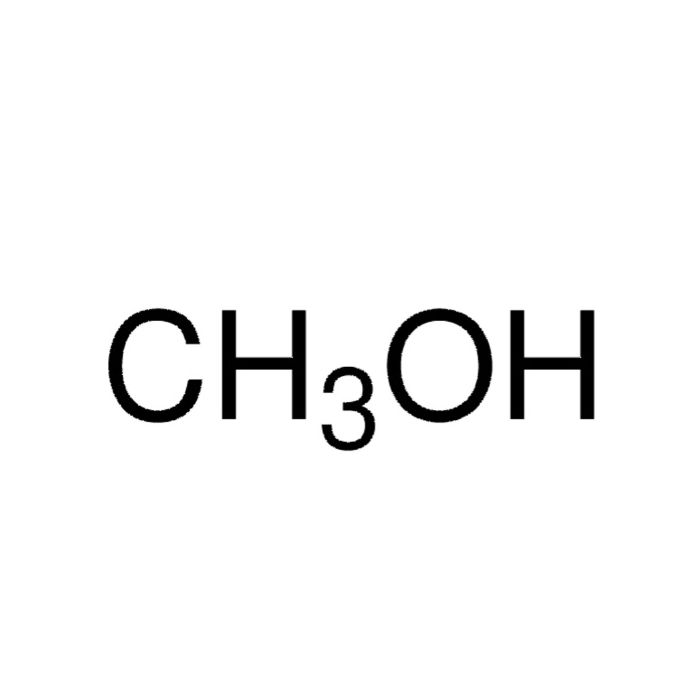
Methanol is an industrial organic solvent commonly used in organic synthesis. It is being considered as a potential hydrogen source in fuel cell technology due to its high H/C ratio, low propensity for soot generation, relatively low reforming temperature and its liquid state at room temperature. The olefins (ethylene or propylene) formed from methanol via MTO (methanol-to-olefins) process, can be an alternative to oil and gas to produce hydrocarbon fuels.
Application
Methanol has been used for fixing the tissues during preparation of thin giemsa stained blood smears. It has been used in the purification step during the synthesis of pyocyanin, a toxic compound found in Pseudomonas aeruginosa . Methanol has been used in following applications: Used for the synthesis and purification of pyocyanin, spectrophotometric estimation of pyocyanin concentration, and the calculation of pyocyanin molar concentration using spectrophotometer absorption data. Used as a component of staining solution used in karyotyping. Used as a component of staining solution to stain cell colonies in colony formation assay.
仕様
仕様と純度
Ultra dry, ≥99.9%, water≤30 ppm
保管条件
Room temperature
入荷
FedEx DG Service
等級
Ultra dry
純度
≥99.9%
名前と識別子
カノニカル・スマイル
CO
IUPAC Name
methanol
InChIKey
OKKJLVBELUTLKV-UHFFFAOYSA-N
INCHI
1S/CH4O/c1-2/h2H,1H3
異性体SMILES
CO
WGKドイツ
1
RTECS
1
UN番号
1230
包装グループ
II
分子量
32.04
Beilstein
3662861
ドキュメント
📋 安全データシート(SDS)
危険性、取扱い、保管、および規制遵守を網羅した包括的な文書。
<<<<<<< HEAD SDS をダウンロード → ======= SDS をダウンロード → >>>>>>> release248-p3詳細データ
Taxonomic Classification
Taxonomy Tree
- Kingdom Organic compounds
- Superclass Organic oxygen compounds
- 分類 Organooxygen compounds
- Subclass Alcohols and polyols
- 分類 Organooxygen compounds
- Superclass Organic oxygen compounds
| Kingdom | Organic compounds |
|---|---|
| Superclass | Organic oxygen compounds |
| 分類 | Organooxygen compounds |
| Subclass | Alcohols and polyols |
| Intermediate Tree Nodes | Not available |
| Direct Parent | Primary alcohols |
| Alternative Parents | Hydrocarbon derivatives |
| Molecular Framework | Aliphatic acyclic compounds |
| Substituents | Hydrocarbon derivative - Primary alcohol - Aliphatic acyclic compound |
| 説明 | This compound belongs to the class of organic compounds known as primary alcohols. These are compounds comprising the primary alcohol functional group, with the general structure RCOH (R=alkyl, aryl). |
| External Descriptors | a short-chain alcohol |
3 D構造
インタラクティブ化学構造モデル
証明書(CoA、COO、BSE/TSEと分析図)
C of A & Other Certificates(BSE/TSE, COO):
Analytical Chart:
Find and download the COA for your product by matching the lot number on the packaging.
| Lot Number | Certificate Type | 日付 | 商品 |
|---|---|---|---|
 I2624112 | Certificate of Analysis | Oct 13, 2026 | M1521045 |
| I2624113 | Certificate of Analysis | Oct 10, 2026 | M1521045 |
| G2618039 | Certificate of Analysis | Aug 01, 2026 | M1521045 |
| G2618040 | Certificate of Analysis | Aug 01, 2026 | M1521045 |
| E2614127 | Certificate of Analysis | May 20, 2026 | M1521045 |
| E2614128 | Certificate of Analysis | May 20, 2026 | M1521045 |
化学的性質と物理的性質
| 屈折率 | 1.329 |
|---|---|
| 引火点(°F) | 49.5 °F |
| 引火点(°C) | 9.7 °C |
| 沸点(°C) | 64.7°C |
| 融点(°C) | -97.8°C |
| 分子量 | 32.042 g/mol |
| XLogP3 | -0.500 |
| Hydrogen Bond Donor Count | 1 |
| Hydrogen Bond Acceptor Count | 1 |
| Rotatable Bond Count | 0 |
| Exact Mass | 32.0262 Da |
| Monoisotopic Mass | 32.0262 Da |
| Topological Polar Surface Area | 20.200 Ų |
| Heavy Atom Count | 2 |
| Formal Charge | 0 |
| Complexity | 2.000 |
| Isotope Atom Count | 0 |
| Defined Atom Stereocenter Count | 0 |
| Undefined Atom Stereocenter Count | 0 |
| Defined Bond Stereocenter Count | 0 |
| Undefined Bond Stereocenter Count | 0 |
| The total count of all stereochemical bonds | 0 |
| Covalently-Bonded Unit Count | 1 |
よくある質問と記事
Citations of This Product
ソリューション計算機
レビュー
顧客レビュー
グレードの選択でお困りですか?
当社のグレード選定ガイドでは、カタログ内のすべてのバリエーションについて、純度、安定剤の状態、用途への適合性を網羅しています。
Ultra dry グレードガイドを見る →関連商品
Methanol - ≥99.9%, for GC/MS analysis of volatile organics , CAS No.67-56-1
Methanol - ≥99.9%(GC) , CAS No.67-56-1
メタノール - 無水, ≥99.8%, H2O≤100ppm , CAS No.67-56-1
メタノール - AR、99.5%以上 , CAS No.67-56-1
メタノール - PureSpectra™、ACS、スペクトラム純度99.9%以上 , CAS No.67-56-1
メタノール - 超乾燥, ≥99.8%, H2O≤20ppm , CAS No.67-56-1
メタノール - クロマトグラフィープラスグレード、99.9%以上 , CAS No.67-56-1
Methanol - HPLC grade, ≥99.9% , CAS No.67-56-1
Methanol - ACS , CAS No.67-56-1
Methanol - Standard for GC, ≥99.9%(GC) , CAS No.67-56-1
Methanol - analytical standard, ≥99.9% , CAS No.67-56-1
Methanol - Column Chromatography Elution Grade , CAS No.67-56-1
Remind me later
Products are supplied to verified businesses, institutions, and qualified professionals for research and development use only. Not for use in humans, animals, diagnosis, or therapy.
Copyright © 2023–present Aladdin Scientific Corporation. All rights reserved.