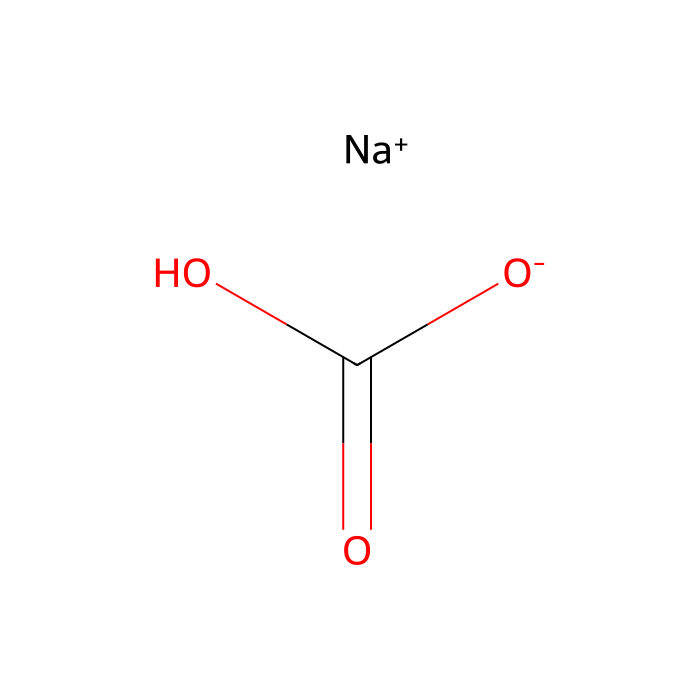
Sodium bicarbonate - HPLC grade, ≥99.8% , CAS No.144-55-8

CAS: 144-55-8 Cat. No.: S112337 分子式: NaHCO3 分子量: 84.01 Beilstein Registry Number: 4153970 EC番号: 205-633-8
注文可能
グレード&純度 HPLC grade ? HPLC grade — purity and low UV-absorbing impurities suited to liquid chromatography. Use as the everyday solvent/reagent for routine HPLC. ≥99.8%
Synonyms
Baking soda | Natrii hydrogencarbonas | Natrum bicarbonicum | Sodium hydrogen carbonate | Natrii hydrogenocarbonas | Natrium bicarbonicum | AssuredBug Bite Relief | Monosodium hydrogen carbonate | Sel De vichy | CHEBI:32139 | natriumhydrogencarbonat
Storage
Room temperature,Argon charged
Shipped In
Normal
★
サイズ
USA
ドイツ (EU)*
価格
個数
500g
S112337-500g
3 在庫あり
—

$65.90

$80.90
保存 $15.00 (18.54%)
Enter a quantity for the sizes you want to add.
🧪
このグレードを選ぶ理由

HPLC grade, ≥99.8% HPLC grade ベースライン干渉を最小限に抑える必要がある、感度の高いクロマトグラフィーおよび分析ワークフロー向け。

🌡

保管・配送

Room temperature,Argon charged Normal に出荷。正確な仕様については、ロット固有の COA をご確認ください。

📋

品質書類

SDS、COA、データシート、仕様書をダウンロードできます。ロット固有の COA はロット番号検索で入手可能です。

📚

文献的裏付け

クロマトグラフィー、有機合成、クロスカップリング反応に関する 1650 件の査読済み論文で引用されています。

概要

Sodium bicarbonate is a commonly used laboratory chemical. The compound can react with both acids and bases, therefore it can be used as a neutralizer. When reacting with bases the compound forms carbonates. Sodium bicarbonate may be used to remove or wash acidic impurities from a crude liquid to yield a purer sample. Sodium bicarbonate reacts with the carboxyl groups to give a fast-forming and effervescent CO2 formation which has been used to test for the presence of carboxylic groups in proteins. Sodium bicarbonate has been observed to significantly decrease serum potassium levels as well as increase blood pH and bicarbonate concentration. The compound has been recorded to decrease the duration of peripheral nerve block in rats when when added to Lidocaine.
A commonly used laboratory pH neutralizer that reacts with acids and bases.

仕様

同義語
Baking soda | Natrii hydrogencarbonas | Natrum bicarbonicum | Sodium hydrogen carbonate | Natrii hydrogenocarbonas | Natrium bicarbonicum | AssuredBug Bite Relief | Monosodium hydrogen carbonate | Sel De vichy | CHEBI:32139 | natriumhydrogencarbonat
仕様と純度
HPLC grade, ≥99.8%
保管条件
Room temperature,Argon charged
入荷
Normal
等級
HPLC grade
純度
≥99.8%
名前と識別子
カノニカル・スマイル
C(=O)(O)[O-].[Na+]
IUPAC Name
sodium;hydrogen carbonate
InChIKey
UIIMBOGNXHQVGW-UHFFFAOYSA-M
INCHI
1S/CH2O3.Na/c2-1(3)4;/h(H2,2,3,4);/q;+1/p-1
異性体SMILES
C(=O)(O)[O-].[Na+]
RTECS
VZ0950000
代替CAS番号
144-55-8,7542-12-3 (unspecified hydrochloride salt)
MeSH用語
Baking Soda;Bicarbonate, Sodium;Carbonic Acid Monosodium Salt;Hydrogen Carbonate, Sodium;Soda, Baking;Sodium Bicarbonate;Sodium Hydrogen Carbonate
分子量
84.01
Beilstein
4153970

ドキュメント

📋 安全データシート(SDS)

危険性、取扱い、保管、および規制遵守を網羅した包括的な文書。

<<<<<<< HEAD SDS をダウンロード → ======= SDS をダウンロード → >>>>>>> release248-p3

✅ 分析証明書(COA)

ロット固有の品質データ。ロット番号を入力して、正確な COA を取得してください。

COA を検索 →

📊 データシート

製品仕様と用途のクイックリファレンス概要。

データシートを見る →

🔬 仕様書

このグレードの完全な品質特性と合格基準。

仕様書を見る →

詳細データ

Taxonomic Classification

Taxonomy Tree

KingdomOrganic compounds
SuperclassOrganic acids and derivatives
分類Organic carbonic acids and derivatives
SubclassOrganic carbonic acids
Intermediate Tree Nodes Not available
Direct ParentOrganic carbonic acids
Alternative Parents Carbonate salts  Organic sodium salts  Organic oxides  Hydrocarbon derivatives  Carbonyl compounds  
Molecular FrameworkAliphatic acyclic compounds
Substituents Carbonate salt - Carbonic acid - Organic alkali metal salt - Organic oxygen compound - Organic oxide - Hydrocarbon derivative - Organic sodium salt - Organic salt - Organooxygen compound - Carbonyl group - Aliphatic acyclic compound
説明This compound belongs to the class of organic compounds known as organic carbonic acids. These are compounds comprising the carbonic acid functional group.
External Descriptors one-carbon compound - organic sodium salt
3 D構造
インタラクティブ化学構造モデル


関連ターゲット(人間)
CA2 Tclin Carbonic anhydrase II (17698 Activities)
Activity TypeRelationActivity valueUnitsAction TypeJournalPubMed IddoiAssay Aladdin ID
CA1 Tclin Carbonic anhydrase I (13240 Activities)
Activity TypeRelationActivity valueUnitsAction TypeJournalPubMed IddoiAssay Aladdin ID
CA5A Tclin Carbonic anhydrase VA (1168 Activities)
Activity TypeRelationActivity valueUnitsAction TypeJournalPubMed IddoiAssay Aladdin ID
CA9 Tclin Carbonic anhydrase IX (8255 Activities)
Activity TypeRelationActivity valueUnitsAction TypeJournalPubMed IddoiAssay Aladdin ID
Homo sapiens (32628 Activities)
Activity TypeRelationActivity valueUnitsAction TypeJournalPubMed IddoiAssay Aladdin ID
CA5B Tclin Carbonic anhydrase V (54 Activities)
Activity TypeRelationActivity valueUnitsAction TypeJournalPubMed IddoiAssay Aladdin ID
関連ターゲット(非人間)
CA4 Carbonic anhydrase IV (1713 Activities)
Activity TypeRelationActivity valueUnitsAction TypeJournalPubMed IddoiAssay Aladdin ID
Carbonic anhydrase (69 Activities)
Activity TypeRelationActivity valueUnitsAction TypeJournalPubMed IddoiAssay Aladdin ID
Colletotrichum musae (107 Activities)
Activity TypeRelationActivity valueUnitsAction TypeJournalPubMed IddoiAssay Aladdin ID
Trypanosoma cruzi (99888 Activities)
Activity TypeRelationActivity valueUnitsAction TypeJournalPubMed IddoiAssay Aladdin ID
Fusarium verticillioides (912 Activities)
Activity TypeRelationActivity valueUnitsAction TypeJournalPubMed IddoiAssay Aladdin ID
rep Replicase polyprotein 1ab (378 Activities)
Activity TypeRelationActivity valueUnitsAction TypeJournalPubMed IddoiAssay Aladdin ID
Lasiodiplodia theobromae (193 Activities)
Activity TypeRelationActivity valueUnitsAction TypeJournalPubMed IddoiAssay Aladdin ID
Venturia inaequalis (72 Activities)
Activity TypeRelationActivity valueUnitsAction TypeJournalPubMed IddoiAssay Aladdin ID
Astrosclerin-3 (80 Activities)
Activity TypeRelationActivity valueUnitsAction TypeJournalPubMed IddoiAssay Aladdin ID
Malus domestica (19 Activities)
Activity TypeRelationActivity valueUnitsAction TypeJournalPubMed IddoiAssay Aladdin ID
Thielaviopsis paradoxa (80 Activities)
Activity TypeRelationActivity valueUnitsAction TypeJournalPubMed IddoiAssay Aladdin ID
作用メカニズム
証明書(CoA、COO、BSE/TSEと分析図)
C of A & Other Certificates(BSE/TSE, COO):
Analytical Chart:

Find and download the COA for your product by matching the lot number on the packaging.

12 results found

Lot NumberCertificate Type日付商品
G2222810G2222810Certificate of AnalysisMay 09, 2026 S112337
C2617309C2617309Certificate of AnalysisMar 09, 2026 S112337
C2618469C2618469Certificate of AnalysisMar 09, 2026 S112337
C2618475C2618475Certificate of AnalysisMar 09, 2026 S112337
E2521591E2521591Certificate of AnalysisMay 12, 2025 S112337
E2521603E2521603Certificate of AnalysisMay 12, 2025 S112337
J2430603J2430603Certificate of AnalysisOct 18, 2024 S112337
G2222807G2222807Certificate of AnalysisJul 11, 2022 S112337
C2203120C2203120Certificate of AnalysisFeb 16, 2022 S112337
C2203289C2203289Certificate of AnalysisFeb 16, 2022 S112337
B2207507B2207507Certificate of AnalysisJan 19, 2022 S112337
D2113131D2113131Certificate of AnalysisApr 22, 2021 S112337
化学的性質と物理的性質
溶解度Soluble in water (50 mg/ml). Insoluble in ethanol.
感度Moisture Sensitive
屈折率1.500
融点(°C)270°C
分子量84.007 g/mol
XLogP3
Hydrogen Bond Donor Count1
Hydrogen Bond Acceptor Count3
Rotatable Bond Count0
Exact Mass83.9823 Da
Monoisotopic Mass83.9823 Da
Topological Polar Surface Area60.400 Ų
Heavy Atom Count5
Formal Charge0
Complexity33.900
Isotope Atom Count0
Defined Atom Stereocenter Count0
Undefined Atom Stereocenter Count0
Defined Bond Stereocenter Count0
Undefined Bond Stereocenter Count0
The total count of all stereochemical bonds0
Covalently-Bonded Unit Count2
よくある質問と記事
Fura-2 AM Staining Protocol
Introduction: “Suitable for HPLC” (HPLC Grade)
FAQs on Animal Cell Culture Media
Frequently Asked Questions about Cell Culture
Operational Guide for Fluorescent Labeling of Antibodies Using AF594 NHS Ester
FAQ on Cell Culture Serum
General Principles of Antibody Labeling with NHS-Activated Esters, F/P Calculation, and Troubleshooting Guide
TEMPO-Catalyzed Oxidation Quick Reference (Alcohol Oxidation Focus): Three Regeneration Routes (NaOCl / Cu–O₂ / PIDA) + Selection & Troubleshooting
Physicochemical Properties, Staining Mechanisms, and Practical Application Specifications of Hematoxylin
Installing a Redox Switch on Biomolecules: Principles, Conjugation Essentials, and an Application Guide for ATTO MB2 NHS ester
Selection of Common Research Salts: A Task Map for Alkali Metal Salts & Alkaline Earth Metal Salts (with Product Tables 1–6)
Why Acridine Can Turn “Trace Molecules” into a Measurable Light Signal: A Mechanistic, Selection, and Troubleshooting Guide to Acridinium Ester Chemiluminescent Immunoassays (Including Product Tables 1–4)
2-Methylpyridine–Borane (2-Picoline·BH₃) Reductive Amination Guide: Process Drivers for Replacing NaBH₃CN, the Practical Operating Window, and Scale-Up/Quench Close-Out Essentials (Including Product Tables 1–3)
Amino Acid Oxidases: Oxygen-Dependent Oxidative Deamination Systems and Their Analytical and Applied Uses
Phytase: Enzymological Properties, Mechanism of Action, and Applications in Feed and Food
Chlorophyll: Structural Features, Physicochemical Properties, and Key Points for Research and Industrial Applications
Understanding Cbz (Benzyloxycarbonyl): Selection Logic and Practical Value of a Classical Amino Protecting Group
The Methodological Value of DSC: Building NHS-Type Activated Intermediates and Deciding When to Use Them
Technical Comparison and Method Selection for Hydroxyproline Determination
Coupling Mechanisms Between Terminal Reducing-Power Allocation in Photosynthetic Electron Transport and Metabolic Demand
Boc₂O Selection Cannot Be Judged by Protection Installation Alone: Experimental Decision-Making from Substrate Nucleophilicity and Medium Effects to Deprotection Pathways
Experimental Judgment in Oxyma Coupling Systems: Coupling Efficiency, Racemization Control, and the HCN Risk in DIC-Based Systems
Injectable Thermosensitive Gels: Gelation Behavior, Rheological Properties, and Drug Release Characteristics
Experimental Assessment of Fmoc Introduction Routes: Impurity Profile Differences, Raw Material Carryover, and Quality Control
From Functional Groups to Experimental Decision-Making: Protein Crosslinker Selection and Experimental Essentials
PVAc, VAE, and Vinyl Acetate-Based Emulsions: Film-Forming Logic and Performance Boundaries in Architectural Coatings
Application of Shellac, a Natural Film-Forming Resin, in Coatings: Alcohol-Soluble Fast-Drying Film Formation, Sealing and Repair, and Performance Boundaries
Why LABSA (Sulfonic Acid) Is Commonly Used in Household Cleaning Formulations: Neutralization Mechanism, Detergency Action, and Formulation Application Points
Differences, Mechanisms of Action, and Selection of Sodium Metasilicate and Sodium Tripolyphosphate in Detergent and Cleaning Formulations
Differences, Functions, and Selection Guidelines for Sodium Hydroxide Flakes, Granules, Liquid Caustic Soda, and Caustic Soda in Household and Personal Care Product Manufacturing: The Functional and Application Logic of Sodium Hydroxide
Why Daily Chemical Formulations Need Alkaline Ingredients: From pH Adjustment and Saponification to Detergency Boosting and Selection Logic
Why Limonene Can Soften Greasy Soils Yet Is Difficult to Dissolve in Water: Understanding the Cleaning Mechanism and Formulation Applications of Naturally Derived Solvents from Molecular Structure
How Can Sodium Tripolyphosphate (STPP) Be Replaced? From Detergency Mechanisms to Formulation Choices for Low-Phosphorus/Phosphorus-Free Builder Systems
More Than a pH Adjuster: Mechanisms, Selection Logic, and Alternative Acid Source Analysis of Citric Acid in Home-Care Cleaning
Sodium Metasilicate in Cleaning Applications: Hydration-Form Differences, Mechanisms of Action, and Selection Logic
Differences and Application Selection of Cassava- and Corn-Based Pregelatinized Starch in Neutral Putty Formulations
Skin Mechanism of Action of Pro-Xylane: From C-Xyloside Priming and CS/DS Chain Remodeling to the Dermal–Epidermal Junction
How Cyclization Changes Peptide Behavior: Conformational Preorganization, Skin Delivery, and Integrin Binding, Using Cyclopeptide-5 as an Example
Reactions and Applications of 3,3-Difluoroallyl Sulfonium Salts (DFASs): Small-Molecule gem-Difluoroallylation, Selective Peptide Modification, and Subsequent Functionalization
Why Primary and Secondary Amines Have Difficulty Participating Directly in the Classical Mitsunobu Reaction: Mechanism, Inversion of Configuration, and Reaction Scope of BEHT-Mediated Alcohol Amination
Citations of This Product
ソリューション計算機
レビュー

顧客レビュー

グレードの選択でお困りですか?

当社のグレード選定ガイドでは、カタログ内のすべてのバリエーションについて、純度、安定剤の状態、用途への適合性を網羅しています。

HPLC grade グレードガイドを見る →

Shall we send you a message when we have discounts available?

Remind me later

Thank you! Please check your email inbox to confirm.

Oops! Notifications are disabled.