"}

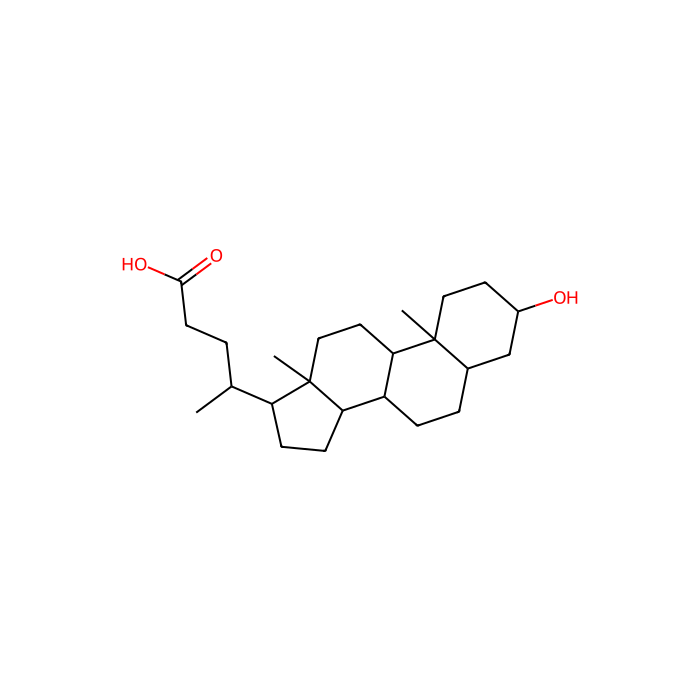
Lithocholic acid - Moligand™, 10mM in DMSO , Agonist of Farnesoid X receptor;Agonist of GPBA receptor;Agonist of Pregnane X receptor;Agonist of Vitamin D receptor, CAS No.434-13-9, Agonist of Farnesoid X receptor;Agonist of GPBA receptor;Agonist of Pregnane X receptor;Agonist of Vitamin D receptor

재고 있음
SKU
L408630
Grouped product items
제품 이름 수량
[L408630-1ml] Lithocholic acid
US$27.90

FXR Agonists

Information

Lithocholic acid Lithocholic acid is a toxic secondary bile acid, causes intrahepatic cholestasis, has tumor-promoting activity, its toxic effect can be protected after it activates the vitamin D receptor , PXR and FXR .
In vitro

Lithocholic acid (LCA) is a hydrophobic secondary bile acid that is primarily formed in the intestine by the bacterial 7α-dehydroxylation of chenodeoxycholic acid. LCA causes intrahepatic cholestasis (cessation or impairment of bile flow). LCA activates PXR (pregnane X receptor), and the LCA-induced severe liver damage can be protected by the activation of PXR. LCA is a ligand for farnesoid X receptor (FXR) with EC50 of 3.8 μM. LCA directly binds VDR (vitamin D receptor) with Ki of 29μM, activates VDR (vitamin D receptor) 30 μM, with much more sensitivity than the other nuclear receptors (eg. PXR, FXR), and its toxic effect is thus protected. LCA has tumor-promoting activity, inhibits mammalian DNA Polymerase β with IC50 of 15 μM.

In vivo

Administration of LCA and its conjugates to rodents causes intrahepatic cholestasis,a pathogenic state characterized by decreased bile flow and the accumulation of bile constituents in the liver and blood. In DMH (dimethyldydrazine)-induced murine carcinogenesis model, LCA suppresses apoptosis almost completely in premalignant colon. LCA activates VDR, induces expression in vivo of CYP3A, a cytochrome P450 enzyme that detoxifies LCA in the liver and intestine.
Cell Data

cell lines:

Concentrations:~30 μM

Incubation Time:Incubation Time:

Powder Purity:≥100%

추가 정보

추가 정보
CAS434-13-9
집중력10mM in DMSO
동의어Cholan-24-oic acid, 3-hydroxy-, (3α,5β)-
사양 및 순도Moligand™, 10mM in DMSO
보관 조건Store at -80°C
배송Dry ice packs + Cold packs
Product Description

Information

Lithocholic acid Lithocholic acid is a toxic secondary bile acid, causes intrahepatic cholestasis, has tumor-promoting activity, its toxic effect can be protected after it activates the vitamin D receptor , PXR and FXR .
In vitro

Lithocholic acid (LCA) is a hydrophobic secondary bile acid that is primarily formed in the intestine by the bacterial 7α-dehydroxylation of chenodeoxycholic acid. LCA causes intrahepatic cholestasis (cessation or impairment of bile flow). LCA activates PXR (pregnane X receptor), and the LCA-induced severe liver damage can be protected by the activation of PXR. LCA is a ligand for farnesoid X receptor (FXR) with EC50 of 3.8 μM. LCA directly binds VDR (vitamin D receptor) with Ki of 29μM, activates VDR (vitamin D receptor) 30 μM, with much more sensitivity than the other nuclear receptors (eg. PXR, FXR), and its toxic effect is thus protected. LCA has tumor-promoting activity, inhibits mammalian DNA Polymerase β with IC50 of 15 μM.

In vivo

Administration of LCA and its conjugates to rodents causes intrahepatic cholestasis,a pathogenic state characterized by decreased bile flow and the accumulation of bile constituents in the liver and blood. In DMH (dimethyldydrazine)-induced murine carcinogenesis model, LCA suppresses apoptosis almost completely in premalignant colon. LCA activates VDR, induces expression in vivo of CYP3A, a cytochrome P450 enzyme that detoxifies LCA in the liver and intestine.
Cell Data

cell lines:

Concentrations:~30 μM

Incubation Time:Incubation Time:

Powder Purity:≥100%

용해성Solubility (25°C) In vitro      
EC 번호207-099-1
분자 공식C24H40O3

리뷰

고객 리뷰

Shall we send you a message when we have discounts available?

Remind me later

Thank you! Please check your email inbox to confirm.

Oops! Notifications are disabled.

Copyright © 2023-present Aladdin Scientific Corp All rights reserved.