Determine the necessary mass, volume, or concentration for preparing a solution.
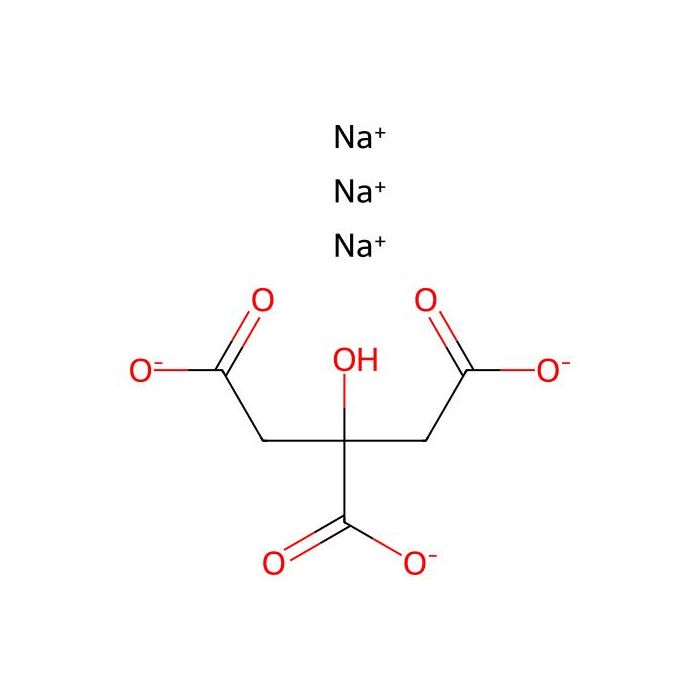
Citrate Concentrated Solution - 1 M in H2O , CAS No.68-04-2
Disponível para encomenda
GRADE & PURITY 1 M in H2O
Storage
Room temperature
Shipped In
Normal

1 M in H2O for sensitive chromatographic and analytical workflows requiring minimal baseline interference.
Room temperature Ships Normal Check lot-specific COA for exact specifications.
SDS, COA, datasheet, and spec sheet available for download. Lot-specific COA accessible via lot number lookup.
Cited in 2092 peer-reviewed publications across chromatography, organic synthesis, and cross-coupling reactions.
Comprehensive hazard, handling, storage, and regulatory compliance document.
Download SDS →Lot-specific quality data. Enter your lot number to retrieve the exact COA.
Look up COA →Full quality attributes and acceptance criteria for this grade.
View spec sheet →Taxonomy Tree
| Kingdom | Organic compounds |
|---|---|
| Superclass | Organic acids and derivatives |
| Classe | Carboxylic acids and derivatives |
| Subclass | Tricarboxylic acids and derivatives |
| Intermediate Tree Nodes | Not available |
| Direct Parent | Tricarboxylic acids and derivatives |
| Alternative Parents | Tertiary alcohols Carboxylic acid salts Carboxylic acids Organic sodium salts Organic oxides Hydrocarbon derivatives Carbonyl compounds |
| Molecular Framework | Aliphatic acyclic compounds |
| Substituents | Tricarboxylic acid or derivatives - Tertiary alcohol - Carboxylic acid salt - Organic alkali metal salt - Carboxylic acid - Organic oxygen compound - Organic oxide - Hydrocarbon derivative - Organic sodium salt - Organic salt - Organooxygen compound - Carbonyl group - Alcohol - Aliphatic acyclic compound |
| Descrição | This compound belongs to the class of organic compounds known as tricarboxylic acids and derivatives. These are carboxylic acids containing exactly three carboxyl groups. |
| External Descriptors | organic sodium salt |
Find and download the COA for your product by matching the lot number on the packaging.
| Lot Number | Certificate Type | Data | Item |
|---|---|---|---|
 A2606609 | Certificate of Analysis | Jan 08, 2026 | C1501304 |
| Ponto de fusão (°C) | 150 °C (decomposition) |
|---|---|
| Peso molecular | 258.070 g/mol |
| XLogP3 | |
| Hydrogen Bond Donor Count | 1 |
| Hydrogen Bond Acceptor Count | 7 |
| Rotatable Bond Count | 2 |
| Exact Mass | 257.973 Da |
| Monoisotopic Mass | 257.973 Da |
| Topological Polar Surface Area | 141.000 Ų |
| Heavy Atom Count | 16 |
| Formal Charge | 0 |
| Complexity | 211.000 |
| Isotope Atom Count | 0 |
| Defined Atom Stereocenter Count | 0 |
| Undefined Atom Stereocenter Count | 0 |
| Defined Bond Stereocenter Count | 0 |
| Undefined Bond Stereocenter Count | 0 |
| The total count of all stereochemical bonds | 0 |
| Covalently-Bonded Unit Count | 4 |
No item-specific, validated application protocols are provided for this product. General guidance (literature) for using citrate solutions:
For method-critical work, establish in-house SOPs and consult the CoA/Spec Sheet for any product-specific directions.
This section provides biochemical context (literature) for the citrate ion; it does not imply biological testing of this specific product.
Central metabolism:
Metal binding and transport:
pH homeostasis:
Macromolecular interactions:
Note: These roles are provided for mechanistic understanding in research settings. This product is designated for research use only (per Product Data).
Citrate/citric acid is a versatile buffer system for pH control in the acidic to mildly acidic range.
Effective pH range (literature): ~3.0–6.2 (pKa1 ≈ 3.13; pKa2 ≈ 4.76; pKa3 ≈ 6.40 at 25 °C).
Preparing working buffers (general guidance):
Example recipes (literature, for planning only):
Applications:
Practical notes:
Citrate buffers are generally aligned with green chemistry principles: aqueous, non-volatile, and derived from a biogenic acid (citric acid). Nevertheless, buffer choice can impact energy, waste, and toxicity profiles.
Comparative view (literature-based):
| Buffer system | pH range (effective) | Metal chelation | Biodegradability | Notes | | --- | --- | --- | --- | --- | | Citrate/citric acid | ~3.0–6.2 | Moderate | High | Aqueous, low hazard; can inhibit metalloenzymes. | | Acetate/acetic acid | ~3.6–5.6 | Low | High | Minimal metal binding; simple, low toxicity. | | Phosphate (Na/K) | ~6.0–8.0 | Low–moderate (Ca3(PO4)2 ppt) | High | Precipitates with Ca2+; widely used, benign. | | Succinate/succinic acid | ~4.0–6.0 | Low | High | Aliphatic dicarboxylate, low chelation. | | MES/Good’s buffers | ~5.5–6.7 | Very low | Moderate | Low metal binding; synthesized, costlier.
Tradeoffs:
Practical sustainability steps:
Provided for formulation context only (literature). This product is for research use only and is not supplied with a pharmacopoeial certification unless explicitly stated on the CoA.
Excipient roles (literature):
Compendial status (literature):
Practical formulation notes:
Item-specific properties (solution):
Literature properties (solute: trisodium citrate):
Note: The measurable properties of this Citrate Concentrated Solution (e.g., refractive index, density) are concentration-dependent and are not specified for this catalog item.
Item-specific grade/purity: Not specified for this item; refer to CoA/Spec Sheet.
Interpreting possible grades (general guidance):
Stabilizers/antimicrobials: None are stated for this product. If sterility or preservative-free status is critical (e.g., enzyme assays, cell culture), verify via CoA/Spec Sheet.
What to verify before use:
Note: In the absence of item-specific specifications, users should qualify the solution in their methods or adjust/sterilize by filtration before critical experiments.
Citrate solutions are used broadly as pH buffers and as mild chelating/reducing agents in aqueous chemistry.
Buffering and chelation:
Nanomaterials (literature):
Protein and enzyme workflows:
Sample preparation and analytical chemistry:
Practical tips:
Representative conditions are provided from literature to guide planning; adjust to your system.
Buffering reactions:
Gold nanoparticle synthesis (Turkevich–Frens, literature):
Metal ion masking (analytical, literature):
Notes:
GHS classification, signal word, pictograms, H-statements: Not specified for this item; refer to the SDS for authoritative safety information.
General safety considerations (literature/good practice):
Always consult the product SDS for definitive hazard, exposure limits, and emergency procedures.
This product is an aqueous citrate solution; separate solvent selection is typically unnecessary for direct buffer use.
Polarity and miscibility (general):
When to choose citrate buffer vs alternatives:
Practical notes:
Storage conditions (from Product Data): Room temperature. Avoid extreme temperatures; keep container tightly closed to prevent evaporation and concentration drift.
Shipping (from Product Data): Shipped under normal conditions.
Research use note: For research use only.
Handling and preparation:
Note: Exact shelf life, concentration, and pH are not specified for this item; consult the CoA/Spec Sheet for definitive storage limits and any preservatives present.
A concentrated, aqueous citrate stock solution intended for laboratory/research workflows. The solute is commonly trisodium citrate (often supplied as the dihydrate) corresponding to the CAS below.
Product identity (from Product Data):
Literature structural details (for trisodium citrate):
Stereochemistry: The citrate anion is achiral as commonly encountered in salts under ambient conditions.
Note: Exact concentration, counterion hydration state in solution, and any additives for this item are not specified; consult the product CoA/Spec Sheet for definitive identity details of the supplied solution.
Citrate serves as a multifunctional reagent in aqueous synthetic and materials chemistry (literature context):
Practical guidance:
Not applicable. This product is a chemical buffer solution and is not an antibody, probe, or biologic with target/epitope specificity.