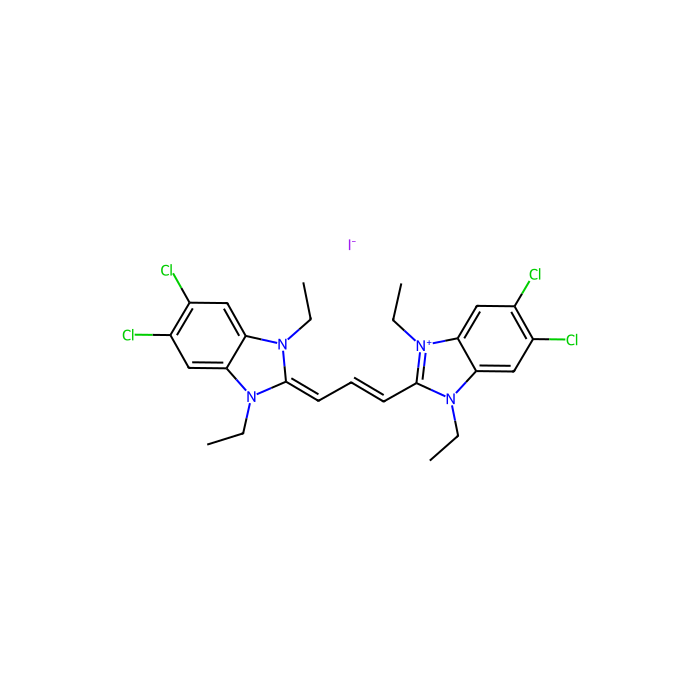
JC-1 - ≥95% , CAS No.3520-43-2

CAS: 3520-43-2 Cat. No.: J125134 Fórmula: C25H27Cl4IN4 Peso molecular: 652.23 Número CE: 812-509-2 PubChem CID: 5492929
Disponível para encomenda
GRAU & PUREZA ≥95%
Synonyms
CBIC2 | JC1 | JC 1 | (E)-5,6-dichloro-2-(3-(5,6-dichloro-1,3-diethyl-1H-benzo[d]imidazol-2(3H)-ylidene)prop-1-en-1-yl)-1,3-diethyl-1H-benzo[d]imidazol-3-ium iodide | AS-73126 | 5,6-Dichloro-2-[(Z)-3-(5,6-dichloro-1,3-diethylbenzimidazol-3-ium-2-yl)prop-2-
Storage
Protected from light,Store at -20°C,Argon charged,Desiccated
Shipped In
Ice chest + Ice pads
★
Tamanho
USA
Alemanha (EU)*
Preço
Qtd
5mg
J125134-5mg
2 Em stock
—
63,90US$
25mg
J125134-25mg
2 Em stock
—
189,90US$
50mg
J125134-50mg
2 Em stock
—
279,90US$
Enter a quantity for the sizes you want to add.
🧪
Por que este grau

≥95% para fluxos de trabalho cromatográficos e analíticos sensíveis que exigem interferência mínima da linha de base.

🌡

Armazenamento e envio

Protected from light,Store at -20°C,Argon charged,Desiccated Envio Ice chest + Ice pads. Consulte o COA específico do lote para obter as especificações exatas.

📋

Documentos de qualidade

SDS, COA, ficha técnica e folha de especificações disponíveis para download. COA específico do lote acessível por meio de pesquisa por número de lote.

📚

Comprovação documental

Citado em 17 publicações revisadas por pares nas áreas de cromatografia, síntese orgânica e reações de acoplamento cruzado.

Visão geral

JC-1 is a fluorescent lipophilic carbocyanine dye, which can be used to measure mitochondrial membrane potential.
A dual-emission potential-sensitive probe that can be used to measure mitochondrial membrane potential. JC-1 is a green-fluorescent (λex 520 nm) monomer at low membrane potential. At higher potentials, JC-1 forms red-fluorescent (λem 596 nm ) "J-aggregates," which exhibit broad excitation and very narrow emission spectra. The ratio of red to green fluorescence of JC-1 is dependent only on membrane potential, and not influenced by mitochondrial size, shape, or density.

The decrease of mitochondrial membrane potential is a landmark event in the early stage of apoptosis. The decrease of cell membrane potential can be easily detected by the transition of JC-1 from red fluorescence to green fluorescence, and the transition from red fluorescence to green fluorescence of JC-1 can also be used as an early detection indicator of apoptosis.

The maximum excitation wavelength of JC-1 monomer is 514nm and the maximum emission wavelength is 529nm; the maximum excitation wavelength of JC-1 polymer is 585nm and the maximum emission wavelength is 590nm. For actual observation, use the conventional settings for observing red fluorescence and green fluorescence.

The commonly used concentration range of JC-1 for detecting the mitochondrial membrane potential of cells is 1-20μg/mL, and the suitable concentration of JC-1 for many cells is 10μg/mL.

Precautions

If the amount of JC-1 used at a time is small, each tube needs to be appropriately divided to avoid repeated freeze-thaw.

For your safety and health, please wear lab coats and disposable gloves.

Especificações

Sinónimos
CBIC2 | JC1 | JC 1 | (E)-5,6-dichloro-2-(3-(5,6-dichloro-1,3-diethyl-1H-benzo[d]imidazol-2(3H)-ylidene)prop-1-en-1-yl)-1,3-diethyl-1H-benzo[d]imidazol-3-ium iodide | AS-73126 | 5,6-Dichloro-2-[(Z)-3-(5,6-dichloro-1,3-diethylbenzimidazol-3-ium-2-yl)prop-2-
Especificações e pureza
≥95%
Condições de armazenamento de armazenamento
Protected from light,Store at -20°C,Argon charged,Desiccated
Enviado em
Ice chest + Ice pads
Este produto requer transporte de cadeia fria. Serviços terrestres e outros serviços econômicos não estão disponíveis.
Nota
Wherever possible, you should prepare and use solutions on the same day. However, if you need to make up stock solutions in advance, we recommend that you store the solution as aliquots in tightly sealed vials at -20°C. Generally, these will be useable for up to one month. Before use, and prior to opening the vial we recommend that you allow your product to equilibrate to room temperature for at least 1 hour. Need more advice on solubility, usage and handling? Please visit our frequently asked questions (FAQ) page for more details.
Pureza
≥95%
Nomes e identificadores
Pubchem Sid
Pubchem Sid Url
https://pubchem.ncbi.nlm.nih.gov/substance/504763893
Sorrisos canónicos
CCN1C2=CC(=C(C=C2[N+](=C1C=CC=C3N(C4=CC(=C(C=C4N3CC)Cl)Cl)CC)CC)Cl)Cl.[I-]
IUPAC Name
5,6-dichloro-2-[(E)-3-(5,6-dichloro-1,3-diethylbenzimidazol-3-ium-2-yl)prop-2-enylidene]-1,3-diethylbenzimidazole;iodide
InChIKey
FYNNIUVBDKICAX-UHFFFAOYSA-M
INCHI
1S/C25H27Cl4N4.HI/c1-5-30-20-12-16(26)17(27)13-21(20)31(6-2)24(30)10-9-11-25-32(7-3)22-14-18(28)19(29)15-23(22)33(25)8-4;/h9-15H,5-8H2,1-4H3;1H/q+1;/p-1
SMILES isoméricas
CCN1C2=CC(=C(C=C2[N+](=C1/C=C/C=C3N(C4=CC(=C(C=C4N3CC)Cl)Cl)CC)CC)Cl)Cl.[I-]
PubChem CID
5492929
Peso molecular
652.23

Documentação

📋 Ficha de dados de segurança (FDS)

Documento abrangente sobre perigos, manuseamento, armazenamento e conformidade regulamentar.

<<<<<<< HEAD Baixar SDS → ======= Baixar SDS → >>>>>>> release248-p3

✅ Certificado de análise (COA)

Dados de qualidade específicos do lote. Introduza o número de lote para obter o COA exato.

Consultar COA →

📊 Ficha técnica

Resumo de referência rápida das especificações e aplicações do produto.

Ver ficha técnica →

🔬 Folha de especificações

Atributos de qualidade completos e critérios de aceitação para este grau.

Ver folha de especificações →

Dados avançados

Taxonomic Classification

Taxonomy Tree

KingdomOrganic compounds
SuperclassOrganoheterocyclic compounds
ClasseBenzimidazoles
SubclassNot available
Intermediate Tree Nodes Not available
Direct ParentBenzimidazoles
Alternative Parents N-substituted imidazoles  Benzenoids  Aryl chlorides  Heteroaromatic compounds  Ketene acetals  Azacyclic compounds  Organopnictogen compounds  Organonitrogen compounds  Organochlorides  Organic iodide salts  Hydrocarbon derivatives  
Molecular FrameworkAromatic heteropolycyclic compounds
Substituents Benzimidazole - Aryl chloride - Aryl halide - Benzenoid - N-substituted imidazole - Azole - Heteroaromatic compound - Imidazole - Ketene acetal or derivatives - Azacycle - Organic nitrogen compound - Organohalogen compound - Organochloride - Organonitrogen compound - Organic salt - Organic iodide salt - Hydrocarbon derivative - Organopnictogen compound - Aromatic heteropolycyclic compound
DescriçãoThis compound belongs to the class of organic compounds known as benzimidazoles. These are organic compounds containing a benzene ring fused to an imidazole ring (five member ring containing a nitrogen atom, 4 carbon atoms, and two double bonds).
External Descriptors cyanine dye - organic iodide salt
Estrutura 3D
Modelo de Estrutura Química Interativa


Alvos associados (não humanos)
Abcb1b P-glycoprotein 1 (174 Activities)
Activity TypeRelationActivity valueUnitsAction TypeJournalPubMed IddoiAssay Aladdin ID
Mecanismos de ação
Certificados(CoA,COO,BSE/TSE e Mapa de Análise)
C of A & Other Certificates(BSE/TSE, COO):
Analytical Chart:

Find and download the COA for your product by matching the lot number on the packaging.

13 results found

Lot NumberCertificate TypeDataItem
D2617443D2617443Certificate of AnalysisApr 08, 2026 J125134
D2617444D2617444Certificate of AnalysisApr 08, 2026 J125134
D2617448D2617448Certificate of AnalysisApr 08, 2026 J125134
G2509024G2509024Certificate of AnalysisJul 22, 2025 J125134
L2103724L2103724Certificate of AnalysisJun 09, 2025 J125134
D2507073D2507073Certificate of AnalysisApr 19, 2025 J125134
K2405029K2405029Certificate of AnalysisNov 12, 2024 J125134
K2224596K2224596Certificate of AnalysisSep 13, 2024 J125134
K2224597K2224597Certificate of AnalysisSep 13, 2024 J125134
K2224598K2224598Certificate of AnalysisSep 13, 2024 J125134
L2312076L2312076Certificate of AnalysisDec 20, 2023 J125134
L2103714L2103714Certificate of AnalysisSep 19, 2023 J125134
G1917104G1917104Certificate of AnalysisMar 14, 2023 J125134
Propriedades químicas e físicas
SolubilidadeDMSO
Sensibilidadelight sensitive;Moisture sensitive;air sensitive
Peso molecular652.200 g/mol
XLogP3
Hydrogen Bond Donor Count0
Hydrogen Bond Acceptor Count3
Rotatable Bond Count6
Exact Mass652.001 Da
Monoisotopic Mass650.003 Da
Topological Polar Surface Area15.300 Ų
Heavy Atom Count34
Formal Charge0
Complexity625.000
Isotope Atom Count0
Defined Atom Stereocenter Count0
Undefined Atom Stereocenter Count0
Defined Bond Stereocenter Count1
Undefined Bond Stereocenter Count0
The total count of all stereochemical bonds1
Covalently-Bonded Unit Count2
FAQs e artigos
A Comprehensive Technical Article on Endoplasmic Reticulum and Organelle Staining Reagents
Understanding Cyanine Dyes: Structure & Mechanism, Channel Selection, Troubleshooting Essentials, and a Product Selection Roadmap (with 6 Category Tables)
Comparative Guide and Selection Framework for Common Fluorophores
Oxidative Stress and Experimental Interpretation Framework for ROS, JC-1, MPTP, and Calcium Indicators in Mitochondrial Function Assessment
Mitochondrial Isolation: Major Methods, Applicability Boundaries, and Quality Control
Application Comparison of the Neutral Red Assay and the MTT/CCK-8 Assays in Cytotoxicity Testing
Fluorescent Dyes in Life Science Research: Classification, Labeling Principles, and Experimental Applications
Construction and Evaluation Strategy of a Gentamicin-Induced Cell Injury Model
Neuropathological Mechanisms of Cerebral Infarction
Summary of Research Advances in Oxidative Stress
Mitochondrial Stress Signaling and Disease
Summary of Cell Staining Methods
Structural Characteristics of Ergothioneine, OCTN1-Mediated Uptake by Skin Cells, and Antioxidant Mechanisms
Translatome Remodeling during Fasting and Ketogenic Diets and Metabolic Vulnerabilities in Pancreatic Cancer
Targeting Mitochondria: Intervention Strategies for Tumor Energy Metabolism
Citations of This Product
Calculadoras de soluções
Revisões

Avaliações dos Clientes

Application Protocols

The following are literature-based, general protocols for research use. Optimize per cell type, instrument, and plate format.

A. Live-cell microscopy (culture cells):

  • Prepare 1–5 mM JC-1 stock in DMSO. Warm PBS/HBSS and culture medium to 37°C.
  • Dilute stock into prewarmed PBS/HBSS to 2–5 µM (final DMSO ≤0.1%).
  • Replace medium with JC-1 working solution; incubate 20 min at 37°C protected from light.
  • Wash 1–2× with warm buffer; add fresh buffer or phenol red–free medium.
  • Image promptly: green channel Ex 485–500/Em 515–545 nm; red channel Ex 535–560/Em 575–620 nm.
  • Include depolarized control (e.g., 10 µM CCCP for 10–15 min) to validate response.

B. Flow cytometry:

  • Stain cells in suspension with 2–10 µM JC-1 for 15–30 min at 37°C.
  • Wash with warm buffer, resuspend in buffer devoid of dye.
  • Acquire using FL1 (FITC) for monomer and FL2 (PE) for aggregates; analyze red/green ratio.
  • Set voltages/compensation using single-stained and depolarized controls.

C. Plate-reader assay (96-well):

  • Seed cells uniformly; stain with 2–5 µM JC-1 for 20–30 min at 37°C.
  • Wash gently; measure fluorescence with dual-emission: Ex 485 nm, Em 530 nm (monomer) and Ex 535–545 nm, Em 585–595 nm (aggregate).
  • Report red/green ratio per well.

Notes:

  • Avoid high serum during staining.
  • Work quickly and protect from light.
  • If high background is observed, reduce dye concentration or increase wash steps.
Biological Roles

Scope: JC-1 itself does not have endogenous biological roles; it is an exogenous fluorescent probe used to interrogate a fundamental bioenergetic parameter (ΔΨm) in cells (research use only).

Mechanistic basis (literature/general):

  • JC-1 is a lipophilic cation that distributes across membranes according to the Nernst potential. A high negative membrane potential across the inner mitochondrial membrane drives accumulation of the cation into the matrix.
  • At sufficient intra-mitochondrial concentration, JC-1 forms ordered J-aggregates that exhibit a bathochromic shift (red emission). In depolarized mitochondria, dye remains monomeric (green emission). The red/green emission ratio thus reports ΔΨm independent of absolute dye amount.
  • The process is reversible: depolarization (e.g., by protonophores) causes disassembly of aggregates and a shift to green signal.

Experimental considerations:

  • Plasma membrane potential and dye efflux pumps can influence distribution; short incubations at 37°C and washed imaging help isolate the mitochondrial signal.
  • pH and ionic strength modulate aggregation equilibria; maintaining physiological pH (~7.2–7.4) improves reproducibility.
  • Photophysics: cyanine dyes can undergo photobleaching and photoinduced isomerization; minimizing excitation intensity maintains ratiometric stability.

Use domains:

  • Live-cell microscopy, flow cytometry, and high-content screening for mitochondrial health and bioenergetics in cultured cells, primary cells, and isolated mitochondria preparations (methodological context; no clinical use).
Buffer Applications

JC-1 is not a buffering agent. However, buffer choice affects staining performance (literature/practice):

  • Recommended carriers: • PBS or HBSS without phenol red for imaging to reduce background fluorescence.
    • Serum-free medium during staining; serum proteins can bind cyanines and alter aggregation.
    • Include glucose (e.g., 5–10 mM) to maintain cell metabolism during incubations.
  • pH: Maintain physiological pH 7.2–7.4; significant pH deviations can influence dye aggregation and mitochondrial function.
  • Ions: Standard Ca2+/Mg2+ levels are acceptable. Avoid high bicarbonate without CO2 equilibration; osmolarity changes may perturb ΔΨm.
  • Filtration: Filter working solutions (0.2 µm) to remove particulates/aggregates that elevate background.

Typical working solution prep (literature example):

  • Dilute a DMSO stock of JC-1 into warm PBS or HBSS to a final 1–10 µM immediately before use; final DMSO ≤0.1–0.2% v/v. Mix gently and use promptly.

Note: For fixed-cell imaging, JC-1 is generally not suitable as ΔΨm collapses upon fixation; measure in live cells whenever possible.

Green Alternatives

Context: JC-1 is a chlorinated carbocyanine iodide salt. From a green chemistry perspective, considerations include halogen content, DMSO/DMF usage for solubilization, and potential persistence of fluorescent dyes in waste streams.

Potential alternatives (literature/general; selection depends on assay needs):

  • TMRE/TMRM (tetramethylrhodamine derivatives):
    • Pros: single-emission probes with robust ΔΨm sensitivity; often used at low nanomolar concentrations; good for live-cell imaging.
    • Cons: not ratiometric; signal depends on dye loading and cell size; photobleaching can occur.
  • DiOC6(3) (3,3′-dihexyloxacarbocyanine iodide):
    • Pros: sensitive mitochondrial stain.
    • Cons: non-ratiometric; higher nonspecific binding; still uses halogenated cyanines.
  • Safranin O or Rhodamine 123:
    • Pros: established ΔΨm indicators; may be less halogenated.
    • Cons: non-ratiometric (R123), different spectral properties; can have efflux issues.

Comparison highlights:

  • JC-1’s ratiometric readout reduces artifacts from loading/illumination, improving data quality but at the cost of more complex spectra and potential aggregate artifacts.
  • TMRE/TMRM yield simpler workflows and often lower background but require careful control of loading concentration and imaging parameters.

Greener practice tips:

  • Minimize DMSO volume by preparing concentrated stocks and aliquoting to reduce waste.
  • Use amber vials, work under low light to reduce losses from degradation.
  • Collect dye-containing waste for specialized disposal; avoid drain disposal.
Pharmaceutical Uses

This product is a research-use-only fluorescent probe and is not intended for pharmaceutical formulation, diagnostic, or therapeutic applications.

Formulation context (general information):

  • JC-1 is not an excipient and has no compendial (USP/Ph. Eur.) monograph as a pharmaceutical ingredient to the best of common literature knowledge.
  • In drug discovery research settings, JC-1 may be used in screening assays to assess compound effects on cellular bioenergetics (assay reagent, not a formulation component).

Regulatory note:

  • For any regulated use, qualification would require full characterization, impurity profiling, and validation not provided here. This product is supplied strictly for research use only, as stated in the Product Data.
Physical Properties

Item-specific specifications:

  • Appearance: Not specified for this item; refer to CoA/Spec Sheet.
  • Grade/Purity: Not specified for this item; refer to CoA/Spec Sheet.

Literature/general properties (for JC-1 iodide; for reference only):

  • Physical state: orange-red crystalline solid; strongly light sensitive.
  • Solubility: sparingly soluble in water; readily soluble in DMSO and DMF; soluble to moderately soluble in ethanol and methanol; forms aggregates in aqueous buffers depending on ionic strength and ΔΨm context (in cells).
  • λmax (absorbance, monomer vs J-aggregate, literature): • Abs/Em (monomer/green): Excitation ~485–490 nm, emission ~525–535 nm.
    • Abs/Em (J-aggregate/red): Excitation ~525–545 nm, emission ~585–595 nm.
    Exact spectra may vary by solvent/matrix.
  • pKa/logP: Not typically defined in aqueous terms due to dicationic polymethine nature; reported as highly lipophilic cation (literature qualitative).
  • Melting/decomposition: dyes of this class often decompose on heating; specific MP for this lot is not specified; refer to CoA/Spec Sheet.
  • Density, refractive index, vapor pressure, BP: Not applicable/Not typically defined for this ionic organic dye; not specified for this item; refer to CoA/Spec Sheet.

Notes:

  • Photobleaching and photoisomerization can occur; minimize light exposure.
  • Spectral properties are environment-dependent (solvent polarity, aggregation, membrane potential).
Quality and Grades

Item-specific status:

  • Grade/Purity: Not specified for this item; refer to CoA/Spec Sheet.

Guidance on grades for fluorescent probes (general):

  • Research grade fluorescent dyes are typically assessed for identity (NMR/MS), dye content, and fluorescence performance (quantum yield/absorption profile). Some suppliers specify counterion content (e.g., iodide), water/ash content, and absence of fluorescent impurities that increase background.
  • For microscopy/FCM use, low particulate content and high dye purity reduce background and nonspecific staining; spectral homogeneity minimizes lot-to-lot variance in excitation/emission.
  • Stabilizer/anti-oxidant: Not specified for this item; refer to CoA/Spec Sheet. Many cyanines are packaged under inert gas and desiccation to minimize oxidation/photooxidation (consistent with this product’s storage guidance).
  • Documentation to request when qualifying lots: CoA with HPLC purity, identity data (MS), residual solvent profile, and performance testing notes in a standard cell line or liposomal system.

What is specific for this item:

  • Storage is specified as protected from light, at −20°C, argon charged, desiccated, indicating sensitivity to moisture/oxygen and photodegradation. Shipment is cold-packed (ice chest + ice pads) to maintain stability during transit.
Reaction and Applications

This product is a fluorescent indicator dye rather than a synthetic reagent. Applications are in analytical cell biology and bioimaging (research use only).

Key research applications (literature/general):

  • Mitochondrial membrane potential (ΔΨm) assessment: • In polarized mitochondria, JC-1 accumulates and forms J-aggregates with red fluorescence (~585–595 nm emission).
    • In depolarized mitochondria, it remains monomeric with green fluorescence (~525–535 nm emission).
    • The red/green ratio provides a ratiometric readout that normalizes for dye loading and cell number.
  • Formats: live-cell fluorescence microscopy, plate readers (dual-emission), and flow cytometry (e.g., FL1/FL2 or FITC/PE channels).
  • Controls: use uncouplers (e.g., CCCP or FCCP) to collapse ΔΨm (green shift) and oligomycin/pyruvate to maintain polarization (red aggregates) for assay validation.

Practical tips:

  • Warm cells and buffers to 37°C before staining to promote consistent accumulation.
  • Incubate 15–30 min at 37°C with 1–10 µM JC-1; then wash with buffer to reduce background (concentrations are literature guidance; optimize per cell type).
  • Minimize exposure to intense light to limit photobleaching and photoconversion.
  • Avoid high serum during staining; protein binding can alter aggregate formation.

Data analysis:

  • Use ratio of aggregate (red) to monomer (green) signal rather than absolute intensity. Establish instrument settings with single-stained and depolarized controls.
Reaction Conditions

Not applicable in the conventional synthetic sense: JC-1 is used as a staining reagent, not as a reactant. The following provides assay-condition guidance (literature/practice) rather than chemical reaction conditions.

Typical assay conditions for ΔΨm measurements:

  • Stock: 1–5 mM in DMSO, stored at −20°C, protected from light.
  • Working concentration: 1–10 µM (optimize per cell type).
  • Temperature/time: 37°C incubation for 15–30 min; wash and analyze promptly.
  • Controls: depolarize with 5–50 µM CCCP/FCCP for 10–20 min prior to or during staining to define green baseline; include vehicle control.
  • Readouts: • Microscopy: excite 485–500 nm (monomer) and 535–560 nm (aggregate); collect 515–545 nm (green) and 575–620 nm (red).
    • Flow cytometry: FITC and PE channels (FL1 and FL2) with appropriate compensation.

Expected outcomes: cells with intact ΔΨm show higher red/green ratio; depolarized cells shift to green-dominant signal. Always calibrate instrument settings using positive/negative controls.

Safety and Handling

Authoritative safety data: Always consult the product SDS for definitive information.

Item-specific hazard fields:

  • Signal word: Not specified for this item; refer to SDS.
  • H-statements: Not specified for this item; refer to SDS.
  • GHS classification: Not specified for this item; refer to SDS.
  • Pictograms: Not specified for this item; refer to SDS.

General laboratory safety guidance (literature/practice):

  • PPE: laboratory coat, safety glasses, and appropriate chemically resistant gloves (e.g., nitrile). Avoid skin/eye contact and inhalation of dust or aerosols.
  • Handling: JC-1 is light sensitive—work under reduced light or amber lighting. Prepare solutions in a fume hood to avoid inhalation of DMSO/solvent vapors. Avoid contamination of stock with water to prevent hydrolysis/aggregation.
  • Incompatibilities: strong oxidizers, strong acids/bases may degrade the polymethine chromophore. Avoid reactive nucleophiles and bleaching agents.
  • Special risks: dyes can be stains; prevent contact with surfaces and clothing. Organic dyes may have unknown chronic toxicity—use prudent practices. Solutions in DMSO can enhance dermal absorption; avoid skin contact.
  • First aid (overview; defer to SDS):
    • Inhalation: move to fresh air; seek medical attention if symptoms persist.
    • Skin/eye contact: rinse with water for at least 15 minutes; remove contaminated clothing; seek medical advice.
    • Ingestion: rinse mouth; do not induce vomiting; seek medical attention.
  • Waste: Collect dye-containing solutions as hazardous organic waste. Do not discharge to drains. Decontaminate glassware with appropriate organic solvent then detergent.

Storage per Product Data:

  • Store at −20°C, protected from light, under argon, desiccated. Ship on ice in insulated packaging.
Solvent Selection

Relevance: JC-1 is supplied as a solid dye for preparation of stock solutions. It is not used as a reaction solvent; this section addresses dissolution for assay stock preparation.

Solubility and solvent choices (literature/general):

  • Primary stock solvent: DMSO is preferred due to high solubility and dye stability. Typical stock: 1–5 mM (e.g., 1–2 mg/mL). Filter-sterilize (0.2 µm) if needed.
  • Alternative solvents: DMF (good), ethanol or methanol (moderate; may lower stability and promote aggregation in aqueous dilution). Water: poor solubility; use only for immediate working solutions and expect monomer/aggregate behavior to vary.
  • Aqueous buffers for working solutions: PBS, HBSS, or serum-free culture medium. Add dye from a concentrated DMSO stock to limit final DMSO to ≤0.1–0.2% v/v to maintain cell health (literature practice). Avoid bovine serum albumin at high levels during staining, as protein can bind cyanines and alter response.

Selection notes:

  • Use DMSO for stable, aliquoted freezer stocks.
  • For flow cytometry/microscopy, prepare fresh working solutions in warm, phenol red–free buffers when possible to reduce background.
  • If precipitation/aggregates appear upon dilution, sonicate briefly or warm to 37°C and mix; avoid prolonged storage of aqueous working solutions.

Comparison (literature):

  • DMSO vs ethanol: DMSO provides higher solubility and stability; ethanol is more volatile and may evaporate during staining, altering concentration.
Storage and Reconstitution

Item-specific storage (from Product Data):

  • Store at −20°C, protected from light, argon charged, desiccated.
  • Shipped in an ice chest with ice pads to maintain low temperature.

Reconstitution (general literature guidance):

  • Solvent: Dissolve JC-1 in anhydrous DMSO to 1–2 mg/mL (≈1.5–3 mM depending on MW). Vortex gently until fully dissolved.
  • Filtration: Optional 0.2 µm PTFE syringe filter to remove particulates.
  • Aliquoting: Dispense into amber, low-bind microtubes (e.g., 10–50 µL) under low light to minimize freeze–thaw cycles.
  • Storage of stock: −20°C or below, desiccated, under inert gas as per item guidance. Avoid repeated freeze–thaw; thaw on ice and keep protected from light during use. Properly stored stocks are typically stable for several months (literature); verify performance before critical experiments.

Working solutions:

  • Prepare immediately before use by diluting stock into prewarmed buffer/medium to final 1–10 µM.
  • Use within a few hours; do not store aqueous working solutions due to aggregation and photobleaching risk.

Additional notes:

  • Label aliquots with preparation date and concentration.
  • Avoid moisture ingress; keep caps tightly closed and vials in desiccant-containing secondary containers during storage.
Structure and Identity

Brief overview: JC-1 is a lipophilic cationic carbocyanine dye widely used as a mitochondrial membrane potential (ΔΨm) indicator in cells (research use only).

  • SKU: J125134
  • Product name: JC-1
  • CAS: 3520-43-2
  • PubChem CID: 5492929
  • InChIKey (as provided): 95535 (note: format appears truncated; refer to CoA/SDS for definitive identifier)
  • SMILES: Not specified for this item; refer to CoA/Spec Sheet.
  • Molecular formula: Not specified for this item; refer to CoA/Spec Sheet.
    • Typical literature (for iodide salt): C27H30Cl4N4I
  • Molecular weight: Not specified for this item; refer to CoA/Spec Sheet.
    • Typical literature (for iodide salt): ~652.3 g/mol

Structural features (general description):

  • Core scaffold: a carbocyanine (cyanine) chromophore bridging two benzimidazolium rings.
  • Substitution pattern: each benzimidazolium is 5,5′,6,6′-tetrachloro-substituted; N atoms are quaternized with ethyl groups (1,1′,3,3′-tetraethyl), giving overall dicationic character with iodide as counterion (literature).
  • Functional groups: benzimidazolium cations (two), polymethine chain (conjugated), chloro substituents (four), ethyl substituents (four).
  • 2D structure in words: two chlorinated benzimidazolium rings are connected by a three-carbon polymethine chain; each benzimidazolium bears two ethyl groups on the nitrogens; the dye is typically isolated as the iodide salt (literature).
Synthetic Utility

JC-1 is a specialized fluorescent dye probe and is not typically used as a synthetic building block or reagent.

General chemistry note (literature):

  • The molecule comprises two benzimidazolium units linked by a polymethine chain; such cyanines are typically end products rather than intermediates. Their reactivity is dominated by photophysical properties rather than functional group transformations.
  • While benzimidazolium salts can, in principle, undergo nucleophilic substitution or counterion exchange, such reactions would degrade or alter the chromophore and are not part of routine synthetic workflows.

Recommendation:

  • For synthetic transformations requiring benzimidazole chemistry, use simpler benzimidazole derivatives rather than a fully elaborated cyanine dye like JC-1.
Target Specificity

This section is typically applicable to antibodies or affinity reagents with defined antigen targets. JC-1 is a small-molecule fluorescent probe and does not have an antigen/epitope specificity.

Contextual note (general): JC-1 accumulates in energized mitochondria due to membrane potential rather than binding a specific biomolecular target. No clone, isotype, or species reactivity applies.

Perguntas frequentes

What is the purity of this product?
This product is supplied at ≥95% purity (chemical assay). Lot-specific values are stated on the Certificate of Analysis.
How should this product be stored?
Store at ?20 °C, protected from light, desiccated, under argon. It is supplied under an argon blanket; reseal under inert gas after each use.
How is this product shipped?
This product ships in an insulated container with ice pads. Unpack on arrival and transfer it to the storage condition stated above.
What are the CAS number, molecular formula and molecular weight?
The CAS Number is 3520-43-2, the molecular formula is C25H27Cl4IN4, and the molecular weight is 652.23 g/mol. InChIKey FYNNIUVBDKICAX-UHFFFAOYSA-M.
What documentation is provided?
Available product documentation, including Certificates of Analysis (COA), Safety Data Sheets (SDS), and specification sheets, is shown in the product document area. Document availability and access follow the current site policy.

Deseja que lhe enviemos uma mensagem quando tivermos descontos disponíveis?

Lembrar-me mais tarde

Obrigado! Por favor, verifique a sua caixa de entrada de e-mail para confirmar.

Ops! As notificações estão desativadas.