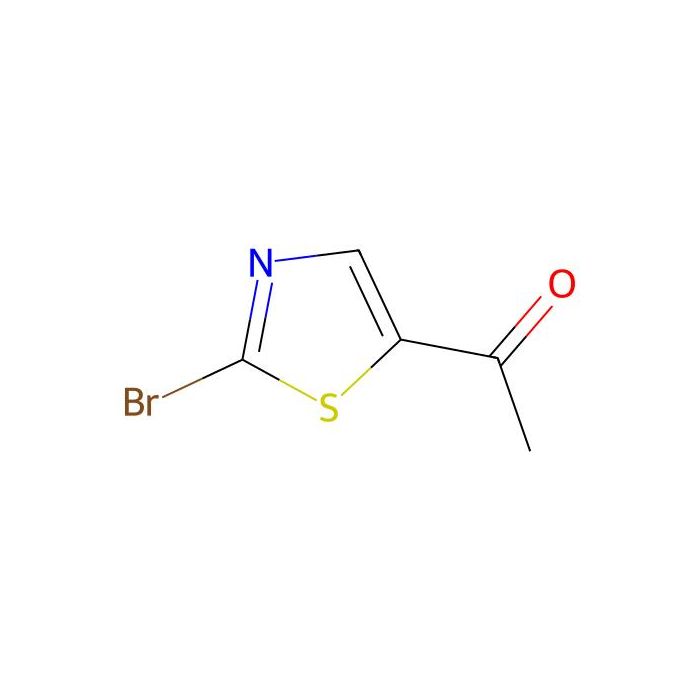
This compound belongs to the class of organic compounds known as aryl alkyl ketones. These are ketones have the generic structure RC(=O)R', where R = aryl group and R'=alkyl group.
External Descriptors
Not available
1. Djoumbou Feunang Y, Eisner R, Knox C, Chepelev L, Hastings J, Owen G, Fahy E, Steinbeck C, Subramanian S, Bolton E, Greiner R, and Wishart DS. ClassyFire: Automated Chemical Classification With A Comprehensive, Computable Taxonomy. Journal of Cheminformatics, 2016, 8:61.
Determine the necessary mass, volume, or concentration for preparing a solution.
Dilution Calculator
Determine the dilution needed to prepare a stock solution.
Reconstitution Calculator
Reviews
Customer Reviews
Application Protocols
No application protocols (e.g., WB, IHC, IF, FC) apply to this small-molecule reagent. For synthetic use, refer to the Reaction Conditions, Reaction & Applications, and Synthetic Utility sections for general laboratory guidance.
Biological Roles
Item-specific biological role: None specified; this product is supplied for research use only and is not intended for biological administration.
General context (literature)
Thiazoles are prevalent in biology (e.g., thiamine/vitamin B1 contains a thiazolium core). However, 1-(2-bromothiazol-5-yl)ethanone itself is a synthetic intermediate with no established endogenous role.
As a heteroaromatic aryl bromide/ketone, it may be used in medicinal chemistry programs as a scaffold for structure–activity relationship (SAR) exploration of targets where thiazoles are privileged motifs. Any biological activity would derive from derivatives synthesized from this building block.
Practical notes
If used for biochemical assays, prepare fresh DMSO stock solutions, verify purity by LC–MS, and assess potential assay interference from the heteroaromatic chromophore (e.g., UV absorbance or fluorescence quenching). Avoid exceeding typical DMSO carrier limits in assays (≤1–2% v/v).
Buffer Applications
This compound is not a buffering reagent and is not typically used to prepare biochemical buffer systems.
Guidance
For aqueous workups or derivatizations involving this ketone, select an appropriate buffer (e.g., acetate, phosphate, carbonate) based on the reaction needs, but the compound itself does not provide buffering capacity.
When forming oximes/hydrazones, mildly acidic aqueous/organic media (acetate buffer pH ~4–5) are commonly employed (general literature guidance).
Green Alternatives
Greener processing choices (general guidance)
Replace chlorinated solvents: Prefer EtOAc or Me-THF/CPME over DCM/chloroform for extractions and chromatography where feasible.
Lower-toxicity coupling solvents: Use 2-MeTHF, CPME, or MeCN instead of DMF/NMP/dioxane when compatible with catalyst/base systems.
Aqueous bases: In Suzuki couplings, aqueous K2CO3/K3PO4 with biphasic greener solvents can reduce solvent burden.
Comparison snapshot (literature/general)
THF vs 2-MeTHF: 2-MeTHF is sourced from renewables, has higher boiling point, and often improves phase separation; both dissolve bases and organometallics well.
Dioxane vs MeCN: Dioxane is a probable carcinogen; MeCN is less hazardous and easier to remove, though water miscibility may require careful workup.
DCM vs EtOAc: EtOAc offers lower toxicity and better environmental profile; however, DCM can be necessary for highly apolar mixtures—evaluate case by case.
Catalyst and base choices
Ligand-efficient Pd systems (e.g., Pd-PEPPSI, precatalysts with bulky biaryl phosphines) can enable lower loadings and shorter times, reducing waste.
Solid-supported catalysts or flow chemistry can facilitate catalyst recovery and minimize metal contamination.
Trade-offs
Greener solvents may alter solubility or reaction rates; screen small-scale before scale-up. Ensure that less polar media still solubilize inorganic bases or consider phase-transfer conditions.
Pharmaceutical Uses
Item-specific status
No pharmacopeial monograph or excipient designation is provided for this item. It is sold for research use only.
General formulation/manufacturing context (literature/general)
Role: Synthetic intermediate/building block for discovery chemistry. The 2-bromothiazole motif allows late-stage diversification by cross-coupling; the acetyl moiety enables rapid modulation of physicochemical properties via α-substitution or carbonyl derivatization.
Considerations for process development: Metal-catalyzed steps may introduce residual Pd/Ni; implement appropriate scavenging and controls if scaling. Ketone can participate in side reactions (e.g., aldol) under basic conditions—optimize reaction quench and crystallization to control impurity profiles.
Solid form selection: If moved beyond discovery, polymorph/solvate screening of derivatives prepared from this intermediate is standard; no such data are supplied for this item.
Physical Properties
Item-specific specifications
Appearance: Not specified for this item; refer to CoA/Spec Sheet.
Grade/Purity: Not specified for this item; refer to CoA/Spec Sheet.
Molecular weight: Not specified for this item; refer to CoA/Spec Sheet. (Calculated literature value ~206.05 g/mol provided below for reference.)
Literature/computed properties (for general guidance; not item specifications)
Physicochemical character: heteroaromatic aryl bromide and aryl methyl ketone; expected to be a low-volatility solid or low-melting solid.
Solubility (qualitative, literature expectation): sparingly soluble in water; soluble in polar aprotic organic solvents such as DMSO, DMF, acetonitrile; also expected to dissolve in chlorinated solvents (DCM, chloroform) and moderately in ethyl acetate and toluene.
Lipophilicity: moderate (aryl bromide and heteroatoms); logP not found in standard databases at time of writing.
UV absorption: conjugated heteroaromatic ketone expected to show strong UV absorbance in 220–320 nm region; exact cutoff/ε not located.
Not located in public domain/literature
Melting/boiling point, density, refractive index, water content, metal content, and UV cutoff: Not specified for this item; refer to CoA/Spec Sheet.
Quality & Grades
Item-specific grade/purity
Grade/Purity: Not specified for this item; refer to CoA/Spec Sheet.
Guidance on interpreting grades (general information)
Research grade: Suitable for most synthetic and discovery applications. If HPLC or spectroscopic assays are sensitive to trace impurities, request CoA with detailed impurity profile.
Analytical/Reagent grade: Typically tighter limits on non-volatile residue and metals; beneficial for catalysis-sensitive cross-couplings.
Stabilizers: None specified for this item. If stabilizers or inhibitors are present in similar aryl bromide products, they are typically absent or at trace levels; verify on CoA if your application is catalyst-sensitive.
Purity considerations specific to this scaffold (general)
Potential impurities: Debrominated thiazoles, regioisomers, residual halogenating reagents, and aldol/self-condensation byproducts of the acetyl moiety under basic conditions.
Impact on applications: Trace halides/acidic species can poison palladium catalysts; consider brief pre-wash (e.g., with aqueous bicarbonate) or recrystallization if cross-coupling yields are suboptimal.
Documentation
For lot-specific assay, residual solvent profile, metals, and water content: Not specified for this item; refer to CoA/Spec Sheet.
Reaction & Applications
This bifunctional building block is engineered for parallel diversification at the C2 position (via the aryl bromide) and at the acetyl α-position/carbonyl.
Cross-coupling at C2 (literature)
Suzuki–Miyaura: couples with (hetero)aryl- and vinyl-boronic acids/esters using Pd(dppf)Cl2, Pd(PPh3)4, or Pd-PEPPSI catalysts; bases K2CO3, Cs2CO3, or K3PO4 in dioxane/H2O, toluene/H2O, or MeCN.
Stille/Negishi/Kumada: installs diverse Csp2/Csp3 groups; careful with ketone compatibility—protect or buffer strongly basic reagents.
Buchwald–Hartwig amination: formation of 2-aminothiazoles using Pd2(dba)3/XPhos or BrettPhos ligands under mild conditions.
Carbonyl/enolate chemistry at the acetyl moiety (literature)
α-Functionalization: LDA or LHMDS (−78 to 0 C) for alkylation, acylation, or aldol; electrophiles include alkyl halides, aldehydes, or Michael acceptors.
Oxime/hydrazone formation: hydroxylamine or hydrazines in alcohols with catalytic acid; useful for downstream reductions (e.g., Wolff–Kishner) or traceless ligation.
Reductions: Chemoselective reductions (NaBH(OAc)3, NaBH4/CeCl3) can yield secondary alcohols; more forcing conditions risk debromination.
Heteroaromatic manipulation (literature)
Halogen–metal exchange: n-BuLi at −78 C generates 2-lithio intermediates from related 2-bromothiazoles; the carbonyl must be protected or conditions tuned to avoid addition.
Electrophilic substitution on the ring is subdued; directed metalation at C4 is possible with strong bases for further diversification.
Use cases in discovery chemistry (general)
Rapid library generation: install varied C2 substituents (aryl, vinyl, alkynyl, amine) while modulating the acetyl α-substitution to explore SAR.
Conjugation handle: convert ketone to oxime/semicarbazone as a handle for purification or linkage chemistry.
Reaction Conditions
The following are literature/general conditions typical for 2-bromothiazole-derived aryl bromides and aryl methyl ketones. Adjust to substrate/catalyst demands; these are not item-specific specifications.
Suzuki–Miyaura coupling (C2 diversification)
Catalyst: 1–5 mol% Pd(dppf)Cl2·DCM or Pd(PPh3)4.
Base: 2–3 equiv K2CO3 or K3PO4.
Solvent: 1,4-dioxane/H2O (4:1), MeCN/H2O, or 2-MeTHF/H2O.
Temperature/time: 70–100 C, 2–12 h.
Notes: Heteroaryl boronates may benefit from microporous bases (Cs2CO3) and polar media; add water to enhance transmetalation.
Notes: Carbonyl generally tolerated; avoid very strong nucleophiles that could add to the ketone.
Enolate alkylation/aldol of acetyl group
Base: LDA or LHMDS (1.1–1.5 equiv) generated in situ at −78 C.
Solvent: dry THF or 2-MeTHF.
Electrophile: primary alkyl bromides/iodides (−78→0 C), or aldehydes for aldol at −78→−20 C.
Notes: Quench with buffered NH4Cl; avoid prolonged warm basic conditions to limit side reactions.
Oxime formation
Reagents: NH2OH·HCl (1.2–2.0 equiv), pyridine or AcONa as base.
Solvent: EtOH/MeOH or MeCN with a bit of water.
Conditions: rt–50 C, 1–6 h.
Halogen–metal exchange (specialized)
Base: n-BuLi or t-BuLi (1.1 equiv) at −78 C in Et2O/THF.
Notes: Risk of nucleophilic addition to the ketone; mask carbonyl (e.g., ketal) or use milder zincation (TMPZnCl·LiCl) when possible.
Safety & Handling
Item-specific GHS information
Signal Word: Not specified for this item; refer to SDS.
H-Statements: Not specified for this item; refer to SDS.
GHS Classification and pictograms: Not specified for this item; refer to SDS.
General safety considerations for brominated heteroaromatic ketones (literature/commonsense laboratory practice)
Likely hazards: May cause skin/eye irritation; harmful if swallowed; dust may be irritating. Avoid inhalation of dusts and contact with skin or eyes.
PPE: Use lab coat, safety goggles, and appropriate chemical-resistant gloves (e.g., nitrile). Handle in a fume hood.
Incompatibilities: Strong bases can induce enolate formation and potential side reactions; strong oxidizers may react with the thiazole sulfur; strong reducing agents may react with the aryl bromide or carbonyl.
Reactivity notes: Not an ether—peroxide formation is not a concern. Aryl bromide can undergo metal–halogen exchange with very strong organolithiums; exercise caution at low temperatures.
First-aid overview (consult SDS for authoritative instructions)
Skin/eye contact: Rinse with plenty of water for at least 15 minutes; remove contaminated clothing; seek medical attention if irritation persists.
Inhalation: Move to fresh air; seek medical attention if symptoms occur.
Ingestion: Rinse mouth; do not induce vomiting; seek medical attention.
Handling/storage
Minimize dust generation; keep container tightly closed. Use dry techniques and protect from moisture if long-term storage is planned.
Always defer to the product-specific SDS for detailed and up-to-date safety information.
Solvent Selection
Polarity and miscibility (literature-based guidance)
Compound class: moderately polar heteroaromatic aryl bromide with an aryl methyl ketone.
Expected solubility: good in DMSO, DMF, NMP, acetonitrile, dichloromethane, chloroform; moderate in ethyl acetate and toluene; poor in alkanes; very low in water.
Choosing solvents by task
Cross-coupling: 1,4-dioxane, toluene, THF, CPME, or Me-THF often with added water (for Suzuki) to solubilize inorganic base; acetonitrile for Buchwald–Hartwig amination variants.
Enolate chemistry: Dry THF, 2-MeTHF, or DME at −78 to 0 C with LDA/LHMDS. For higher temperatures, toluene or DME with Mg- or Zn-enolates.
Carbonyl derivatization (oximes/hydrazones): EtOH/MeOH, acetonitrile, or aqueous alcohols with acid catalysis.
Purification: Normal-phase silica with DCM/EtOAc/hexanes gradients; if tailing occurs (heteroaromatics), add 0.1–1% TEA to the eluent.
Small comparison (general)
DCM vs EtOAc: DCM offers strong solvency and fast evaporation; EtOAc is a greener, less toxic alternative that often suffices for workup and chromatography.
DMF/NMP vs MeCN: MeCN frequently gives comparable coupling performance with easier removal and lower toxicity.
THF vs 2-MeTHF/CPME: greener ethers with higher boiling points and improved safety profiles may replace THF in many cases.
Storage & Reconstitution
Item-specific storage
Storage Conditions: Room temperature (as provided in Product Data).
Shipped in: Not specified for this item; refer to CoA/Spec Sheet.
General storage guidance (for heteroaromatic aryl bromide ketones)
Keep tightly closed in a dry container; protect from prolonged exposure to light and moisture. For multi-month storage, consider desiccation and inert atmosphere (e.g., nitrogen/argon) to preserve quality.
If hygroscopic behavior is observed, store with desiccant and reseal promptly after use.
Reconstitution/solution preparation (general)
Solvents: DMSO, DMF, acetonitrile, dichloromethane, or ethyl acetate typically dissolve this scaffold. For aqueous assay stocks, prepare a DMSO concentrate (e.g., 10–50 mM) and dilute into buffer with vigorous mixing to avoid precipitation.
Filtration: For HPLC or bioassay use, pass solutions through a 0.2 µm PTFE syringe filter.
Stability: Avoid strong bases and nucleophiles in solution unless intended for reaction; solutions in aprotic solvents are generally stable for days at ambient conditions, but prepare fresh when possible.
Research use note
For research use only. Not for human or veterinary use.
Structure & Identity
A brominated thiazole bearing an acetyl group, providing both a C(aryl)–Br cross-coupling handle and a reactive aryl methyl ketone for enolate and carbonyl chemistry.
A planar thiazole ring where the 2-position is substituted by bromine (electron-withdrawing, good leaving group for cross-coupling), and the 5-position is bonded to a carbonyl carbon of an acetyl group (–C(=O)–CH3). The carbonyl lies conjugated with the heteroaromatic ring, enabling resonance stabilization of the ketone and acidity of the methyl protons for enolate formation.
Synthetic Utility
Orthogonal handles
C(2)–Br (on thiazole): versatile for Pd-catalyzed cross-couplings (Suzuki, Stille, Negishi, Sonogashira after bromide activation), Ni-catalyzed couplings, or nucleophilic substitutions after halogen–metal exchange.
Aryl methyl ketone: enolizable; supports α-alkylation/acylation, aldol condensations, and conversion to oximes/hydrazones/semicarbazones; reducible to secondary alcohols.
Retrosynthetic value (general)
Enables convergent assembly: install heteroaryl core early, then diversify at C2 via coupling and at the α-carbon via enolate chemistry—useful for parallel library synthesis.
Chemoselectivity levers: Protecting-group-free strategies possible by choosing catalysts tolerant of ketones (e.g., Buchwald ligands) or by transiently masking the carbonyl (as ketal/oxime) during strongly basic/organometallic steps.
Typical transformations (literature)
Suzuki with ArB(OH)2 or ArBpin; base K3PO4/K2CO3; solvent dioxane/H2O or MeCN; 60–100 C.
Buchwald–Hartwig amination with primary/secondary amines; Pd2(dba)3 + XPhos/BrettPhos; NaOtBu or Cs2CO3; toluene/MeCN; 60–100 C.
α-Functionalization via LDA/LHMDS in THF/2-MeTHF at −78 to 0 C; subsequent trapping with alkyl halides, aldehydes (aldol), or Michael acceptors.
Carbonyl derivatization to oximes (NH2OH·HCl, pyridine or AcOH, EtOH/MeOH, rt–50 C) or hydrazones/semicarbazones for purification or downstream reductions.
Target Specificity
Not applicable. This product is a small-molecule chemical building block, not a biological targeting reagent (e.g., antibody, oligonucleotide). No antigen/epitope or species reactivity data apply.
Frequently Asked Questions
What is the purity of this product?
This product is supplied at ≥95% purity (chemical assay). Lot-specific values are stated on the Certificate of Analysis.
We use cookies to ensure the website functions properly and, where permitted, to improve your experience. You can manage your preferences at any time in Settings. Learn more in our Cookie Policy.
Shall we send you a message when we have discounts available?
Remind me later
Thank you! Please check your email inbox to confirm.
Products are supplied to verified businesses, institutions, and qualified professionals for research and development use only. Not for use in humans, animals, diagnosis, or therapy.