
Source cross-coupling catalysts for C–C and C–heteroatom bond formation. Use this page to compare catalyst options for Suzuki, Buchwald–Hartwig, Sonogashira, and related transformations.
Cross-Coupling Catalysts
Browse by type, application, or key specifications such as purity, grade, packaging, and handling requirements.
4 products
Popular Products
- CyclohexyldiphenylphosphineIn Stock Item #: C115369View ProductPricing & Pack Sizes
Technical Identifiers
- IUPAC Name
- cyclohexyl(diphenyl)phosphane
- SMILES
- C1CCC(CC1)P(C2=CC=CC=C2)C3=CC=CC=C3
- InChIKey
- ZXKWUYWWVSKKQZ-UHFFFAOYSA-N
- InChI
- 1S/C18H21P/c1-4-10-16(11-5-1)19(17-12-6-2-7-13-17)18-14-8-3-9-15-18/h1-2,4-7,10-13,18H,3,8-9,14-15H2
- Synonyms
- Diphenylcyclohexylphosphine | FT-0636122 | BCP05539 | Cyclohexyldiphenylphosphine | Cyclohexyl diphenyl phosphine | D...
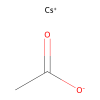
- Ccesium acetateSolid ≥95%In Stock Item #: C305845View ProductPricing & Pack Sizes
Technical Identifiers
- IUPAC Name
- cesium;acetate
- SMILES
- CC(=O)[O-].[Cs+]
- InChIKey
- ZOAIGCHJWKDIPJ-UHFFFAOYSA-M
- InChI
- 1S/C2H4O2.Cs/c1-2(3)4;/h1H3,(H,3,4);/q;+1/p-1
- Synonyms
- Acetic Acid Cesium Salt
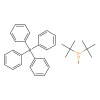
- Di-tert-butylmethylphosphonium TetraphenylborateCAS: 853073-44-6 Formula: C33H42BP Molecular Weight: 480.48Out of Stock Item #: D155650View ProductPricing & Pack Sizes
Technical Identifiers
- IUPAC Name
- ditert-butyl(methyl)phosphanium;tetraphenylboranuide
- SMILES
- [B-](C1=CC=CC=C1)(C2=CC=CC=C2)(C3=CC=CC=C3)C4=CC=CC=C4.CC(C)(C)[PH+](C)C(C)(C)C
- InChIKey
- GPICDLFVQCUBQN-UHFFFAOYSA-O
- InChI
- 1S/C24H20B.C9H21P/c1-5-13-21(14-6-1)25(22-15-7-2-8-16-22,23-17-9-3-10-18-23)24-19-11-4-12-20-24;1-8(2,3)10(7)9(4,5)6/h1-20H;1-7H3/q-1;/p+1
- Synonyms
- GPICDLFVQCUBQN-UHFFFAOYSA-O | MFCD08276365 | AKOS025295829 | D3330 | Di-tert-butylmethylphosphonium Tetraphenylborate...
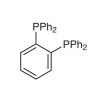
- 1,2-Bis(diphenylphosphino)benzeneCAS: 13991-08-7 Formula: C6H4[P(C6H5)2]2 Molecular Weight: 446.46In Stock Item #: B129163View ProductPricing & Pack Sizes
Technical Identifiers
- IUPAC Name
- (2-diphenylphosphanylphenyl)-diphenylphosphane
- SMILES
- C1=CC=C(C=C1)P(C2=CC=CC=C2)C3=CC=CC=C3P(C4=CC=CC=C4)C5=CC=CC=C5
- InChIKey
- NFRYVRNCDXULEX-UHFFFAOYSA-N
- InChI
- 1S/C30H24P2/c1-5-15-25(16-6-1)31(26-17-7-2-8-18-26)29-23-13-14-24-30(29)32(27-19-9-3-10-20-27)28-21-11-4-12-22-28/h1-24H
- Synonyms
- SY038943 | A807594 | EN300-7396611 | FT-0636988 | o-Bis(diphenylphosphino)benzene | SC11532 | (2-dimethylphosphanylph...

Fast Shipping Same-day shipping on in-stock items
Technical Details Quality & specification info on every product page
Pack Size Options Multiple packaging sizes with pricing access from listing
R&D Use Only Products supplied for research and development use
Frequently Asked Questions
How do I choose the right Cross-Coupling Catalysts for my reaction?
Match catalyst structure to your substrate scope, desired selectivity, and reaction conditions. Cross-Coupling Catalysts differ in metal center, ligand framework, and electronic properties. Run small-scale screening with 2-3 candidates before committing to scale-up.
What specifications matter most when comparing Cross-Coupling Catalysts?
Focus on purity (typically ≥95%), particle size or solubility for heterogeneous systems, moisture and air sensitivity, catalyst loading recommendations, and turnover number from published data. Check storage conditions carefully.
How should Cross-Coupling Catalysts be handled and stored?
Most cross-coupling catalysts require inert atmosphere storage (argon or nitrogen). Some are air- and moisture-sensitive — use a glovebox or Schlenk line for measurement. Refrigerated storage at 2-8°C extends shelf life for many products.
Are pre-formed metal complexes available?
Yes. Many cross-coupling catalysts are stocked as pre-formed, ready-to-use complexes that eliminate the need for in-situ ligation. This improves reproducibility and reduces handling of sensitive precursors.