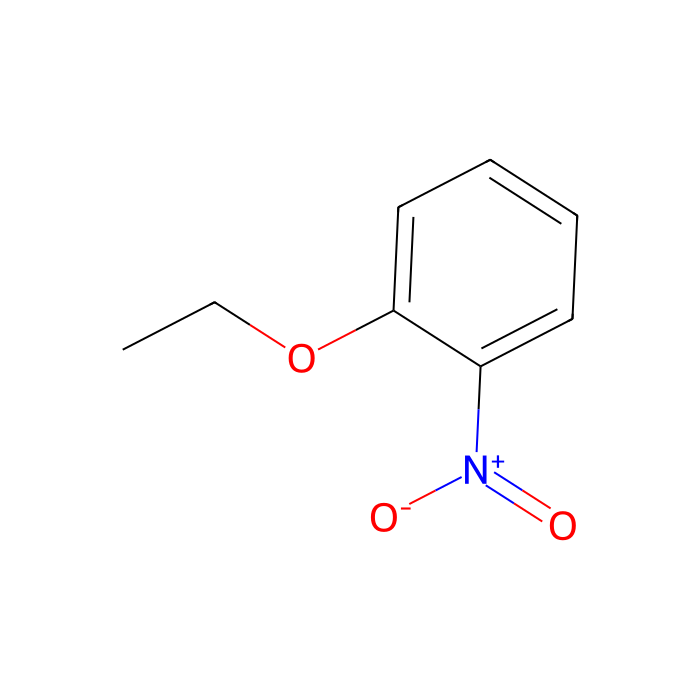
This compound belongs to the class of organic compounds known as nitrophenyl ethers. These are aromatic compounds containing a nitrobenzene moiety that carries an ether group on the benzene ring.
External Descriptors
Not available
1. Djoumbou Feunang Y, Eisner R, Knox C, Chepelev L, Hastings J, Owen G, Fahy E, Steinbeck C, Subramanian S, Bolton E, Greiner R, and Wishart DS. ClassyFire: Automated Chemical Classification With A Comprehensive, Computable Taxonomy. Journal of Cheminformatics, 2016, 8:61.
Determine the necessary mass, volume, or concentration for preparing a solution.
Dilution Calculator
Determine the dilution needed to prepare a stock solution.
Reconstitution Calculator
Reviews
Customer Reviews
Application Protocols
No vendor-tested biological or analytical application protocols are provided for this item. Not specified for this item; refer to CoA/Spec Sheet.
General laboratory use notes (non-validated suggestions):
For hydrogenation screens, charge substrate in EtOH with 5–10 wt% Pd/C (relative to substrate), sparge with N2 then H2, and shake at 2–3 bar H2, 25–40 °C. Monitor by HPLC-UV.
For O-dealkylation, cool dry DCM to 0 °C, add BBr3 slowly under inert atmosphere, then the substrate; allow to warm to RT and stir until complete. Quench cautiously and neutralize before workup.
These are illustrative only; develop and validate procedures under your lab’s SOPs.
Biological Roles
This product is a synthetic nitroaromatic reagent and is not intended for biological use. No endogenous biological role is associated with 2-nitrophenetole.
General context (literature):
Nitroaromatic compounds can undergo bioreductive transformations in microbial or enzymatic systems, forming hydroxylamines/anilines; however, such pathways are context-dependent and not a basis for use.
The aryl–NO2 chromophore provides strong UV absorbance, which may be leveraged for analytical detection in biochemical fractionation, but the compound itself is not a buffer, cofactor, or metabolite.
Research Use Note: For research use only (Product Data). Avoid any clinical, diagnostic, or in vivo applications.
Buffer Applications
Not typically applicable. 2-Nitrophenetole is a hydrophobic organic reagent and does not function as an aqueous buffer component. For experimental planning, refer instead to Reaction & Applications, Synthetic Utility, and Solvent Selection for relevant guidance.
Green Alternatives
Greener solvent choices for reactions involving 2-nitrophenetole (general/literature guidance):
Prefer EtOAc, MeTHF, or CPME over chlorinated solvents where feasible; these provide good solvency for nitroaromatics with improved environmental profiles versus DCM/CHCl3.
For hydrogenations, ethanol or isopropanol can replace THF or toluene, providing benign workups and lower VOC impact.
Alternative starting materials (context-dependent):
2-Nitrophenol as a greener, more polar substrate when direct phenol chemistry is intended (avoids dealkylation step), though it may present handling challenges due to acidity.
2-Nitroanisole (methyl ether) may allow milder demethylation (e.g., BBr3) compared with ethyl ether cleavage; consider trade-offs in volatility and worker exposure.
DCM: excellent solvency; high environmental/health concern; difficult waste stream.
EtOAc: good solvency, biodegradable, easy removal; may require larger volumes for highly hydrophobic substrates.
MeTHF/CPME: water-tolerant, form biphasic systems beneficial for extractions; may have peroxidation risks—monitor peroxides and use inhibitors if stored long-term.
Alcohols (EtOH/i-PrOH): renewable content available; suitable for hydrogenation and some reductions; may promote competing solvolysis under strong acid conditions.
Selection should balance EHS metrics (E-factor, worker exposure), process safety, and product quality.
Pharmaceutical Uses
No direct excipient or pharmacopeial status is provided for this item. Not specified for this item; refer to CoA/Spec Sheet.
General, non-clinical context:
2-Nitrophenetole and its derivatives may serve as synthetic intermediates en route to aryl amines, phenols, and heterocycles used during medicinal chemistry campaigns or process development.
In preclinical/process labs, nitroaryl ethers can be used to prototype protecting-group strategies (e.g., masked phenols) or to adjust electronic properties of aromatic scaffolds.
Strictly for research and manufacturing development use. No medical or clinical claims are made or implied.
Physical Properties
Item-specific (from Product Data):
Appearance: Not specified for this item; refer to CoA/Spec Sheet.
Grade/Purity: Not specified for this item; refer to CoA/Spec Sheet.
Molecular Formula: Not specified for this item; refer to CoA/Spec Sheet.
Molecular Weight: Not specified for this item; refer to CoA/Spec Sheet.
Literature/typical properties for 2-nitrophenetole (for reference only; not item specifications):
Physical state: typically a pale yellow liquid near ambient temperature for many nitroaryl ethers; solidification possible near lower temperatures depending on isomeric purity.
Density: nitroaromatic ethers generally exhibit densities >1.0 g/mL due to the nitro group; exact value should be verified on the CoA.
Boiling point: nitroaryl ethers commonly boil in the 250–290 °C range at 1 atm; consult primary data for this isomer before distillation planning.
Solubility: very low in water; high solubility in common organic solvents (EtOAc, ether, toluene, DCM, THF, alcohols).
UV/Vis: aryl–NO2 chromophore shows π→π* and n→π* bands in the near-UV; useful for HPLC-UV tracking (literature behavior).
Partitioning: expected to be moderately hydrophobic (positive logP typical for nitroaryl ethers; literature value should be consulted for exact number).
Note: Use the item’s CoA/Spec Sheet for definitive numerical specifications and any analytical acceptance criteria.
Quality & Grades
Item-specific grade/purity: Not specified for this item; refer to CoA/Spec Sheet.
Shipping: FedEx DG Service (Product Data), indicating classification as a regulated Dangerous Good for transport; ensure proper packaging and documentation for reshipment.
Storage: Room temperature (Product Data). Protect from light/heat sources and moisture ingress for best stability.
Interpreting common grades (general guidance):
Research/technical grade: suitable for synthesis and process development; impurity profile defined on CoA.
Analytical/AR grade: tighter metallic/acid/base impurities; often accompanied by chromatography suitability data.
HPLC/UV grade (if applicable): low background absorbance in UV; important if used as internal standard or reference.
Stabilizers/inhibitors: Not specified for this item; refer to CoA/Spec Sheet. Nitroaryl ethers typically do not require polymerization inhibitors.
What to check on receipt:
Identity confirmation: 1H/13C NMR consistent with o-substitution pattern; MS m/z consistent with literature MW; IR bands for nitro (asymmetric/symmetric ~1530–1550 and ~1340–1370 cm−1, literature) and aryl ether C–O stretches.
Purity: GC or HPLC assay; assess positional isomer content (o-/m-/p- nitrophenetole ratio) if relevant to your process.
Reaction & Applications
2-Nitrophenetole is a versatile nitroaryl building block and a useful masked-phenol precursor.
Key transformations (literature):
Nitro reduction → o-ethoxyaniline: via catalytic hydrogenation (H2, Pd/C, PtO2, or Raney Ni) or transfer/metal–acid reductions (Fe/HCl, SnCl2/HCl, Zn/NH4Cl). The resulting aniline is valuable for dye, agrochemical, and heterocycle syntheses.
O-Dealkylation → 2-nitrophenol: achieved by strong Lewis acids (e.g., BBr3, sometimes AlCl3) or concentrated hydrobromic/hydroiodic acid under reflux; provides access to ortho-nitrophenol without additional nitration steps.
Nitrile oxide cycloadditions and further functionalization of the aniline/phenol derivatives (post-reduction/deprotection) enable ortho-directed metalation and intramolecular cyclizations.
Strategic uses in synthesis:
Orthogonal handles: the combination of an electron-withdrawing –NO2 and an aryl–O–alkyl ether supports sequential chemoselective operations (reduce –NO2 first or cleave ether first, depending on compatibility).
Protecting-group logic: the ethoxy group can serve as a removable protecting group for 2-nitrophenol when harsher conditions are acceptable.
Practical considerations:
Regioisomers: confirm ortho isomer enrichment; isomeric impurities can alter reactivity and product distribution.
Hydrogenation: control temperature and H2 pressure to avoid over-reduction or ether cleavage; filter catalysts carefully to remove pyrophoric residues.
Acid-mediated cleavage: plan for corrosion control and neutralization; monitor by TLC/HPLC using the strong UV response of the nitro chromophore.
Reaction Conditions
General literature guidance for common transformations of 2-nitrophenetole (not product specifications):
Catalytic hydrogenation (Ar–NO2 → Ar–NH2):
Catalyst: 5–10% Pd/C (0.5–5 mol% Pd) or Raney Ni.
Solvent: EtOH, i-PrOH, EtOAc, or THF.
Conditions: 1–5 bar H2, 20–50 °C; monitor by HPLC/GC. Typical conversions in 1–6 h on lab scale; avoid over-reduction or ether cleavage by controlling temperature and acid co-catalysts.
Temperature: 50–90 °C; 1–8 h depending on scale and stirring efficiency. Work up with basification and extraction.
O-Dealkylation to 2-nitrophenol:
BBr3 (1.5–3.0 equiv) in dry DCM at −78 to 0 °C addition, then warm to RT for several hours to overnight; quench cautiously with MeOH/water.
Alternatively, 48% HBr (3–10 equiv) reflux 6–24 h; corrosion control and off-gas handling required.
Analytics and control:
TLC/HPLC with UV detection (254–300 nm) tracks consumption due to strong nitro chromophore.
GC may be feasible depending on bp; use on-column or high-temp methods if needed.
Adjust conditions to substrate purity, scale, and EHS constraints; consult primary literature for your specific transformation.
Safety & Handling
GHS details (Product Data):
Signal Word: Not specified for this item; refer to SDS.
H-Statements: Not specified for this item; refer to SDS.
GHS Classification/Pictograms: Not specified for this item; refer to SDS.
General safety guidance for nitroaromatic ethers (literature/industry practice):
Hazards: Many nitroaromatics can be harmful if swallowed, inhaled, or in contact with skin; irritant to eyes/skin; combustible liquid. Avoid generating aerosols or mists.
PPE: Use lab coat, safety glasses or face shield, and appropriate chemical-resistant gloves (e.g., nitrile). Work in a fume hood to avoid inhalation.
Incompatibilities: Strong reducing agents (risk of exothermic reduction of –NO2), strong oxidizers, strong bases/acids under heating (may cause ether cleavage or nitrated byproduct formation). Avoid contact with alkali metals and reactive hydrides.
Stability: Aromatic ethers are generally stable; aryl–alkyl ethers are far less prone to peroxide formation than dialkyl ethers, but prudent peroxide testing for aged, opened bottles is good practice if large-scale distillation is planned.
Fire response: Use CO2, dry chemical, or alcohol-resistant foam. Cool containers with water spray. Combustion may produce NOx.
First aid overview: If inhaled—move to fresh air; seek medical attention if symptoms occur. Skin contact—wash with soap/water. Eye contact—rinse cautiously for several minutes; remove contacts. Ingestion—rinse mouth; do not induce vomiting; seek medical advice.
Always consult the product-specific SDS for authoritative hazard and response information.
Solvent Selection
2-Nitrophenetole is a hydrophobic nitroaryl ether, generally used as a substrate/reagent rather than as a solvent.
Solubility/miscibility (literature/general):
Water: very low solubility.
Organic: soluble in ethers (THF, MTBE), esters (EtOAc), chlorinated solvents (DCM, CHCl3), aromatics (toluene, xylene), and alcohols (EtOH, i-PrOH) to varying extents.
Polarity considerations:
The nitro group increases polarity and dipole moment, facilitating dissolution in mid-polar aprotic media (e.g., DCM, EtOAc) while maintaining compatibility with nonpolar aromatics (toluene).
Selection by application:
Catalytic hydrogenation to o-ethoxyaniline: EtOH, EtOAc, or THF commonly used; choose based on catalyst wetting and hydrogen uptake.
Chemoselective reductions with metal/acid systems (Fe/HCl, SnCl2/HCl): mixed aqueous–organic systems (EtOH/water) or protic solvents.
O-dealkylation (e.g., HBr/AcOH or BBr3): DCM or CH2Cl2/hexanes for Lewis acids; acetic acid or neat HBr for protic routes.
Comparison (general guidance):
DCM vs EtOAc: DCM often affords faster dissolution and better phase separation in workups; EtOAc is greener and compatible with many reductions.
Toluene vs THF: toluene favors higher temperature operations; THF improves solubility and mass transfer at lower temperatures but requires water control.
Storage & Reconstitution
Storage (Product Data): Room temperature. Keep container tightly closed in a cool, well-ventilated area. Protect from ignition sources and strong reagents.
Shipping: FedEx DG Service (Product Data) — receive and store according to your institution’s DG handling procedures.
Reconstitution: Not applicable. Supplied as a neat substance; no reconstitution required.
Handling practices (general):
If material is viscous or partially solidified at low temperature, gently warm to ambient and homogenize before sampling.
Minimize headspace oxygen and moisture exposure for long-term storage (use dry nitrogen blanket if repeatedly opened on scale).
Container compatibility: Glass recommended; avoid reactive metals and ensure closures are solvent-resistant.
Always consult the product’s SDS and CoA for item-specific stability data and any additional storage notes.
Structure & Identity
2-Nitrophenetole is an ortho-nitro-substituted aryl ethyl ether (o-nitrophenetole), commonly used as a nitroaromatic building block.
Item-specific (from Product Data):
CAS: 610-67-3
CID: 11889
InChIKey: Not specified for this item; refer to CoA/Spec Sheet. (Product Data entry is non-standard)
SMILES: Not specified for this item; refer to CoA/Spec Sheet.
Literature identity (for reference only, not item specification):
Structural features: benzene ring bearing an ethoxy (–OCH2CH3) substituent and an ortho nitro (–NO2) group; aryl–O–alkyl ether; strongly electron-withdrawing nitro group ortho to the ether oxygen.
2D structural description: a six-membered aromatic ring with adjacent substituents at positions 1 and 2; position 1 is bonded to an ether oxygen leading to an ethyl chain (–O–CH2–CH3), and position 2 bears a nitro group (N doubly bonded to one O and singly bonded to an O− in the canonical resonance form). No stereocenters; planar aromatic core with conjugation between the aryl ring and the nitro group.
Synthetic Utility
Functional group reactivity (literature):
Nitro group: reducible to aniline; can participate in N–O bond transformations, diazotization after reduction, and Sandmeyer-type substitutions on the resulting anilinium salts.
Aryl ether (–OEt): removable under Lewis acidic or strongly protic conditions to reveal 2-nitrophenol; relatively stable toward bases and many nucleophiles, enabling chemoselective sequences.
Retrosynthetic value:
As a convergent intermediate, 2-nitrophenetole can be transformed either to the ortho-ethoxyaniline or to 2-nitrophenol, providing a branch point for multiple target classes (azo dyes, benzoxazoles, salicylate analogs after reduction/cyclization steps).
Named/typical operations:
Bechamp-type or catalytic hydrogenation reductions of Ar–NO2.
BBr3-mediated O-dealkylation (more commonly used for aryl methyl ethers, but applicable under forcing conditions to ethyl ethers).
Directed ortho metalation (DoM) on suitably protected aniline/phenol derivatives derived from this substrate.
Practical notes:
Regioselectivity: confirm ortho configuration; m/p isomers, if present, will diverge in downstream chemistry.
Workup: nitroaromatics often show strong UV; leverage HPLC-UV for in-process control; thoroughly remove acidic Lewis acids to prevent post-reaction cleavage.
Target Specificity
Not applicable. This product is a small-molecule chemical reagent, not a biological targeting agent (e.g., antibody, enzyme inhibitor probe with defined target selectivity in this listing). No target specificity data are provided in the Product Data.
Frequently Asked Questions
How should this product be stored?
Store at room temperature.
What is the purity of this product, and how is it determined?
This product is supplied at ≥98% purity, determined by gas chromatography (GC). Lot-specific values are stated on the Certificate of Analysis.
How is this product shipped?
This product is classified as dangerous goods and ships via FedEx DG Service. Ground and other economy services are not available, and delivery to some destinations or address types may be restricted.
What are the CAS number, molecular formula and molecular weight?
The CAS Number is 610-67-3, the molecular formula is C8H9NO3, and the molecular weight is 167.16 g/mol. InChIKey XGLGESCVNJSAQY-UHFFFAOYSA-N.
What documentation is provided?
Available product documentation, including Certificates of Analysis (COA), Safety Data Sheets (SDS), and specification sheets, is shown in the product document area. Document availability and access follow the current site policy.
We use cookies to ensure the website functions properly and, where permitted, to improve your experience. You can manage your preferences at any time in Settings. Learn more in our Cookie Policy.
Shall we send you a message when we have discounts available?
Remind me later
Thank you! Please check your email inbox to confirm.
Products are supplied to verified businesses, institutions, and qualified professionals for research and development use only. Not for use in humans, animals, diagnosis, or therapy.