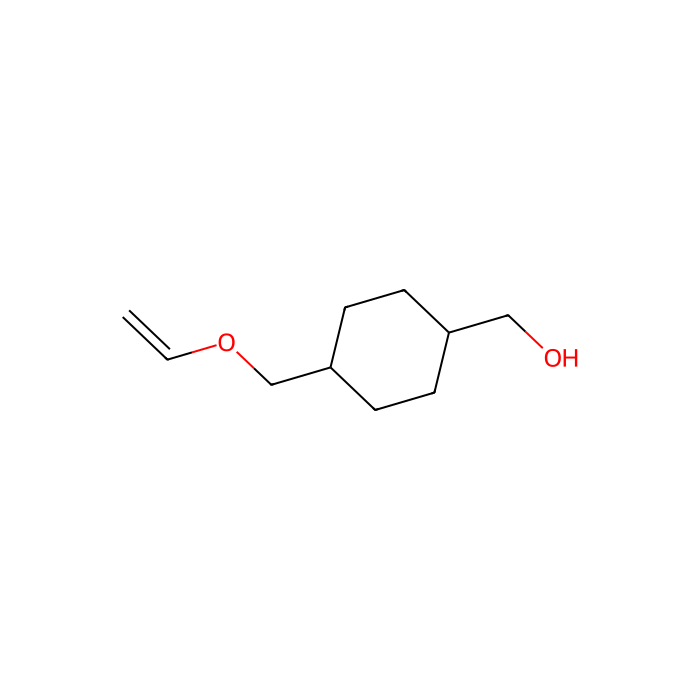
This compound belongs to the class of organic compounds known as primary alcohols. These are compounds comprising the primary alcohol functional group, with the general structure RCOH (R=alkyl, aryl).
External Descriptors
Not available
1. Djoumbou Feunang Y, Eisner R, Knox C, Chepelev L, Hastings J, Owen G, Fahy E, Steinbeck C, Subramanian S, Bolton E, Greiner R, and Wishart DS. ClassyFire: Automated Chemical Classification With A Comprehensive, Computable Taxonomy. Journal of Cheminformatics, 2016, 8:61.
H412:Harmful to aquatic life with long lasting effects
Solution Calculators
Molarity Calculator
Determine the necessary mass, volume, or concentration for preparing a solution.
Dilution Calculator
Determine the dilution needed to prepare a stock solution.
Reconstitution Calculator
Reviews
Customer Reviews
Application Protocols
No assay or bioanalytical application protocols are specified for this item. For materials uses:
Photocuring (general outline): Mix monomer with 0.5–3 wt% onium photoinitiator, de-gas, cast as thin film, and irradiate with 365–405 nm LED while monitoring tack or conversion (FTIR, 1620–1640 cm−1 band decrease). Optimize initiator, dose, and atmosphere.
Thiol–ene network formation: Combine with multifunctional thiol (1:1 equivalents), add 0.1–1 wt% photoinitiator, purge with N2, and expose to UV/LED; post-bake (50–80 °C) if needed.
These are general literature practices; adapt to your system and consult primary sources. No item-specific validated protocols are provided.
Biological Roles
This compound is designed for synthetic/materials applications and is not known to play roles in natural biochemical pathways.
Not typically a metabolite, cofactor, or signaling molecule. No known endogenous receptors or enzymes are associated with this specific structure (literature generalization for vinyl-ether–functionalized cycloaliphatics).
Any biological testing should be conducted strictly as part of research workflows; it is not intended for food, cosmetic, or clinical use.
For toxicology, environmental fate, or biodegradation information, consult the SDS and relevant literature; such data are not specified for this item.
Buffer Applications
Not typically applicable. 4-(Vinyloxymethyl)cyclohexanemethanol is a hydrophobic organic reagent/monomer, not a buffering agent. For aqueous work, select an appropriate buffer system (e.g., phosphate, HEPES) independently; avoid strong acids in contact with this compound if vinyl ether integrity must be maintained.
Green Alternatives
Context: Vinyl-ether systems are attractive alternatives to (meth)acrylates for low-odor, low-sensitization UV-curing and can cure under cationic conditions with comparatively low VOC content. Greener process choices relate to solvent, initiator, and energy input rather than the monomer identity alone.
Greener choices and trade-offs (general guidance):
Solvent selection: Prefer ethyl acetate, 2-MeTHF, or water-lean emulsions over chlorinated solvents when feasible. Trade-off: donor solvents may retard cationic polymerization; validate performance.
Photoinitiation vs. thermal cure: UV/LED curing reduces thermal energy demand. Trade-off: photoinitiators may have persistence/tox profiles; choose lower-tox iodonium salts or onium salts with benign counterions where possible.
Bio-based feedstocks: Cycloaliphatic motifs can sometimes be sourced from terpene derivatives; vinyl ethers from bioethanol routes. Availability and cost vary.
Alternatives to vinyl ethers:
Acrylates/methacrylates: very fast radical cure; broader initiator options. Trade-off: higher shrinkage and potential skin sensitization.
Allyl ethers: lower reactivity than vinyl ethers in cationic cure; may require harsher conditions but can be less acid-labile.
Mini comparison (literature-based, qualitative):
Vinyl ether vs. acrylate: lower shrink/sensitization, compatible with cationic cure; acrylate generally faster in radical cure but higher odor.
2-MeTHF vs. DCM as processing solvent: renewable, lower toxicity, similar solvency for many organics; DCM simplifies workup but is non-green and regulated.
Pharmaceutical Uses
No direct excipient or pharmacopeial role is specified for this item; refer to CoA/Spec Sheet. In a research/manufacturing context, vinyl-ether–bearing alcohols may be explored as intermediates for synthetic route development or as monomeric components in medical device coatings after comprehensive biocompatibility assessment. This product is for research use only and not for human or veterinary applications.
Physical Properties
Item-specific specifications: Not specified for this item; refer to CoA/Spec Sheet.
General/literature expectations for compounds of this class (context only; not item specifications):
Physical state: typically a colorless to pale liquid for low–MW vinyl ether alcohols.
Boiling point: many C10 aliphatic di-heteroatom compounds boil in the 180–230 °C range (literature context, wide range; not specific to this item).
Density: often ~0.95–1.00 g/mL at 20–25 °C for oxygenated cycloaliphatics (literature context).
Solubility: expected to be miscible with common organic solvents (EtOAc, THF, toluene, dichloromethane, alcohols). Water solubility likely limited to modest due to one OH vs hydrophobic ring (literature expectation).
Reactivity-relevant traits: the vinyl ether is nucleophilic and acid-sensitive; the primary alcohol is hydrogen-bond donating and can engage in esterification and substitution.
Note: For exact values (bp, mp, refractive index, water content, residual inhibitors, etc.), consult the item’s CoA/Spec Sheet. Do not treat the above contextual ranges as specifications.
Quality & Grades
Item-specific grade/purity: Not specified for this item; refer to CoA/Spec Sheet.
Interpreting common grades (general guidance):
Reagent/AR grade: Suitable for most synthetic work; typical impurity controls but not optimized for trace analysis.
High-purity or “for polymerization” grade (if applicable): May be controlled for inhibitors, moisture, and residual acidic/basic species to prevent premature polymerization or side reactions.
HPLC grade (for solvents): Low UV background and particulates; typically not applicable here as this is a reagent/monomer, not a mobile-phase solvent.
Stabilizers/inhibitors: Not specified for this item; refer to CoA/Spec Sheet. Vinyl ether monomers are sometimes shipped with trace inhibitors; removal (e.g., by basic alumina or distillation under reduced pressure) should be validated and performed immediately before use if low-inhibitor material is required for polymerization.
What to check on receipt (best practices):
Appearance, GC purity, inhibitor content (if any), moisture (Karl Fischer), acid number, and UV absorbance (if photochemistry is intended).
Reaction & Applications
Materials science relevance (from Category Path): As a vinyl-ether–functionalized cycloaliphatic alcohol, this compound is well-suited as a reactive diluent, crosslinkable monomer, or comonomer in UV/EB-curable systems and cationically cured resins. The primary alcohol offers ancillary derivatization to tailor polarity or anchor to substrates.
Cationic photopolymerization: Vinyl ethers polymerize rapidly with onium salt photoinitiators (e.g., diaryliodonium), enabling fast curing at ambient temperature with low shrink stress relative to acrylates.
Thiol–ene click chemistry: Efficient anti-Markovnikov hydrothiolation across the vinyl ether under photoinitiation, affording sulfide adducts; useful for network formation with multifunctional thiols.
Acid-catalyzed cleavage (de-vinylation): Vinyl ethers are acid-labile; hydrolysis yields the corresponding alcohol (here, regeneration of the –CH2–OH on the ether oxygen) plus acetaldehyde—useful for temporary protection/latency strategies.
Alcohol derivatization: The –CH2OH can be esterified (acrylates, carbonates), carbamated, or converted to sulfonates (tosylate/mesylate) for subsequent SN2 elaboration, enabling installation of additional functionality or crosslink sites.
Practical considerations:
Exclude strong acids unless cleavage/polymerization is intended. Work under dry, inert conditions; protect from light during storage. For photoprocesses, select initiators with absorption matched to the light source and include oxygen scavenging or inerting to minimize inhibition.
Reaction Conditions
General, literature-based guidance for transformations of vinyl ethers and primary alcohols (not item specifications):
Cationic photopolymerization of the vinyl ether:
Initiator: 0.5–3 mol% diaryliodonium or triarylsulfonium salt (e.g., [Ph2I]+ BF4−).
Catalyst: 0.1–5 mol% Brønsted acid (e.g., PPTS, TsOH) in MeOH, acetone/H2O, or DCM/H2O biphasic.
Temp: 0–25 °C; monitor by GC/1H NMR; typically 0.5–4 h.
Alcohol derivatization (esterification):
Conditions: DCC/DMAP in DCM (0–25 °C, 2–12 h) or acyl chloride + base (Et3N, 0–25 °C).
Caution: Avoid strong acids/bases that might cleave or polymerize the vinyl ether; maintain low temperature and anhydrous media.
Safety & Handling
Item-specific GHS/SDS information: Not specified for this item; refer to SDS for authoritative hazard classifications, pictograms, and H-statements.
General hazards for vinyl ethers and aliphatic alcohols (literature/experience-based guidance):
Flammability: Organic liquids with vinyl ether functionality are commonly flammable; keep away from ignition sources and hot surfaces.
Polymerization tendency: Vinyl ethers can undergo cationic polymerization (thermally or under acid/UV initiation). Avoid strong acids and store away from light/UV. Work under inert atmosphere when possible.
Incompatibilities: Strong acids (promote cleavage/polymerization), strong oxidizers (may oxidize alcohol or alkene), and strong electrophiles. Avoid peroxides and radical initiators unless intended for reaction.
Handling/PPE: Use gloves (e.g., nitrile), lab coat, and splash goggles. Employ fume hood to control vapors and minimize exposure.
First aid (general): Inhalation—move to fresh air; Skin—wash with soap/water; Eyes—rinse cautiously with water for several minutes; Ingestion—rinse mouth, seek medical attention. Always follow the SDS.
Spill response: Contain with inert absorbent, prevent ignition, ventilate area, and dispose of according to local regulations.
Always defer to the product-specific SDS for definitive safety, toxicity, and regulatory guidance.
Solvent Selection
This material is a bifunctional reagent/monomer rather than a general-purpose solvent. However, solvent choice strongly influences its handling and reactivity.
Polarity/miscibility (literature expectations):
Good solubility in moderately polar organics (ethyl acetate, THF, acetone), chlorinated solvents (DCM), and aromatics (toluene). Miscibility with lower alcohols is expected; water miscibility likely limited.
Choosing a solvent by application:
Cationic UV/acid-catalyzed polymerization: Use low-basicity, low-nucleophilicity solvents (e.g., CH2Cl2, toluene, cyclohexane). Avoid donor solvents that quench cations (e.g., pyridine) or strong protic media.
Thiol–ene click additions: Ethyl acetate, MeCN, or toluene under photoinitiation; oxygen exclusion improves rate/yield.
Functional-group transformations at the alcohol (esterification, tosylation): DCM (with base and coupling reagents) or DMF (for sulfonylation and SN2 steps). Dry conditions favored.
Acid-sensitive operations: Prefer neutral, aprotic solvents; avoid strong acids in media that could trigger vinyl ether cleavage.
Practical tip: When scale-up requires heat, select solvents with appropriate bp to limit hydrolysis or unwanted polymerization; maintain inert atmosphere, exclude moisture, and protect from light.
Storage & Reconstitution
Item-specific storage: Room temperature (per Product Data). Shipped under normal conditions.
Stabilizers/inhibitors: Not specified for this item; refer to CoA/Spec Sheet.
Best-practice guidance for vinyl ethers (general):
Store in tightly sealed, amber glass under inert gas (N2/Ar) to limit moisture, oxygen, and light exposure.
Avoid contact with acids, radical initiators, and elevated temperatures during storage to minimize polymerization or hydrolysis.
If supplied with inhibitor, record lot inhibitor level; if removed, use promptly and document handling.
Reconstitution: Not applicable; supplied neat. If dilution is required, use dry, inhibitor-compatible solvents (e.g., toluene, DCM, EtOAc) and prepare fresh.
Always consult the product’s COA/SDS for definitive storage and stability information. For research use only.
Structure & Identity
A bifunctional, aliphatic building block featuring a primary alcohol and a pendant vinyl ether, suitable for materials and synthetic chemistry.
SMILES: Not specified for this item; refer to CoA/Spec Sheet.
Computed/literature identity (non-item-specific; for context):
Molecular formula (computed): C10H18O2
Molecular weight (computed): ~170.25 g/mol
Core structural features: A 1,4-disubstituted cyclohexane ring bearing (i) a primary hydroxymethyl group (–CH2OH) and (ii) a vinyloxymethyl substituent (–CH2–O–CH=CH2). The vinyl ether is an electron-rich alkene adjacent to oxygen; no stereocenters are inherent unless arising from ring conformation (no defined absolute stereochemistry).
A cyclohexane ring with two para-like (1,4) substituents. One substituent is –CH2OH. The opposite carbon bears –CH2–O–CH=CH2, in which the terminal double bond is conjugated to oxygen (vinyl ether). No aromatic rings; entirely aliphatic.
Synthetic Utility
Functional-group handles:
Primary alcohol (–CH2OH): amenable to esterification (e.g., with acryloyl chloride to introduce an acrylate for dual-cure systems), carbonate/carbamate formation, Mitsunobu inversion with suitable nucleophiles, or conversion to sulfonates (Ts/Ms) for SN2 elaboration to halides, azides, etc.
Vinyl ether (–O–CH=CH2): electron-rich alkene that undergoes cationic polymerization, acid-catalyzed hydrolysis (revealing the parent alcohol on oxygen and liberating acetaldehyde), radical additions (thiol–ene), and oxidative transformations.
Retrosynthetic value:
The vinyl ether can serve as a temporary protecting/latent group for the oxygen, enabling orthogonal manipulations at the cyclohexylmethyl alcohol. Subsequent mild acid treatment releases the free alcohol.
The cyclohexane core provides conformational rigidity and hydrophobic bulk useful in tuning glass transition and modulus in polymer networks.
Integration into multifunctional architectures:
Sequential modification of the alcohol followed by thiol–ene or cationic cure at the vinyl ether allows staged network formation.
Conversion of the alcohol to a coupling handle (e.g., isocyanate- or acid-terminated species) enables incorporation into polyurethanes or polyesters while retaining the vinyl ether for post-curing.
Target Specificity
Not applicable. This product is a small-molecule reagent/monomer and does not possess biological target specificity, antigen/epitope recognition, clone, or isotype characteristics.
Frequently Asked Questions
How should this product be stored?
Store at room temperature.
How is this product shipped?
This product ships under standard ambient conditions. No temperature-controlled packaging is required.
What are the CAS number, molecular formula and molecular weight?
The CAS Number is 114651-37-5, the molecular formula is C10H18O2, and the molecular weight is 170.25 g/mol. InChIKey INRGAWUQFOBNKL-UHFFFAOYSA-N.
What documentation is provided?
Available product documentation, including Certificates of Analysis (COA), Safety Data Sheets (SDS), and specification sheets, is shown in the product document area. Document availability and access follow the current site policy.
We use cookies to ensure the website functions properly and, where permitted, to improve your experience. You can manage your preferences at any time in Settings. Learn more in our Cookie Policy.
Shall we send you a message when we have discounts available?
Remind me later
Thank you! Please check your email inbox to confirm.
Products are supplied to verified businesses, institutions, and qualified professionals for research and development use only. Not for use in humans, animals, diagnosis, or therapy.