GRADE & PURITYMoligand™?Moligand™ — Aladdin's line of ligands and bioactive small molecules. Use for receptor, pathway, and binding studies needing defined small-molecule tools.10 mM in DMSO
Determine the necessary mass, volume, or concentration for preparing a solution.
Dilution Calculator
Determine the dilution needed to prepare a stock solution.
Reconstitution Calculator
Reviews
Customer Reviews
Application Protocols
No vendor-tested biological application protocols are provided for AMG-009 in this listing.
General workflow examples (not item-specific)
HTS/Assay dosing: Prepare a DMSO stock (e.g., 10 mM), acoustically or volumetrically dispense into assay plates to achieve final test concentrations, keeping vehicle constant. Include positive and negative controls and replicate wells.
Orthogonal confirmation: Re-test apparent actives with an alternate readout or counter-screen to exclude assay interference (e.g., fluorescence quenching, redox cycling, aggregation).
Analytics: Confirm concentration and integrity by LC–UV/MS before and after assay where results are decision-critical.
For detailed, item-specific instructions, refer to your internal SOPs and the compound’s CoA/SDS.
Biological Roles
Item-specific biological targets, pathways, and mechanisms for AMG-009 are not disclosed in this listing.
General guidance for screening compounds (not item-specific)
Biological role assignment is empirical: activity, potency, and selectivity are determined experimentally across panels of assays (e.g., enzyme inhibition, GPCR binding, ion channel modulation, phenotypic readouts).
Follow-up studies may include target deconvolution (chemoproteomics, CETSA, DARTS), genetic validation (CRISPR/siRNA), and orthogonal biophysical methods (SPR, DSF, ITC) to confirm direct interactions.
ADME profiling (plasma protein binding, microsomal stability, permeability, and solubility) helps contextualize observed cellular effects and guide SAR.
Important notice
No biological or therapeutic claims are made for AMG-009. It is supplied strictly for research use to enable hypothesis testing and discovery workflows.
Buffer Applications
This product is not a buffering agent. No item-specific pKa or buffer capacity information is available.
Practical note (general)
When dosing small molecules into aqueous assay buffers, maintain constant vehicle (typically 0.1–1% DMSO), pre-warm buffers to reduce precipitation, and, if compatible with your biology, consider low-level nonionic surfactant (e.g., 0.01–0.05% Tween-20) to mitigate aggregation.
Always validate that the buffer composition does not chemically degrade the compound (monitor by LC–MS over the assay timeframe).
Green Alternatives
Because AMG-009 is a screening compound, the main environmental leverage is in solvent and workflow choices during handling, not in substituting the compound itself.
Greener handling strategies (general; not item-specific)
Prefer DMSO over DMF for stock solutions when compatible; DMSO is generally considered a safer polar aprotic option with favorable EHS profiles.
Minimize solvent volumes via microplate formats and acoustic dispensing to reduce waste.
Use aqueous buffers with minimal organic co-solvent in assays (≤1% v/v DMSO) while confirming assay performance.
For analytical cleanup, consider ethanol or isopropanol as alternatives to acetonitrile where method performance allows.
Comparison of common solvents (general)
DMSO: High solvency, lower volatility, widely accepted in bioassays; disposal still required as organic waste.
Acetonitrile: Excellent for LC but higher environmental burden and supply volatility; recover/recycle where feasible.
DMF: Effective but with greater EHS concerns; restrict to cases where strictly necessary.
Operational tips
Consolidate compound handling sessions to limit repeated thawing and minimize solvent use.
Adopt solvent recycling for LC mobile phases where validated.
Note: No greener “alternative compound” is applicable; AMG-009’s identity is fixed for screening purposes.
Pharmaceutical Uses
No excipient role, pharmacopeial status, or manufacturing application is specified for AMG-009. This product is not offered for clinical use.
General context (not item-specific)
Screening compounds can support pre-formulation research by providing early insights into solubility, stability, and solid-state properties, but any such work remains in the discovery/research domain.
Compliance note
For research use only. Not for human or veterinary diagnostic or therapeutic use.
Physical Properties
Item-specific specifications
Appearance: Not specified for this item; refer to CoA/Spec Sheet.
Melting point (MP): Not specified for this item; refer to CoA/Spec Sheet.
Boiling point (BP): Not specified for this item; refer to CoA/Spec Sheet.
Density: Not specified for this item; refer to CoA/Spec Sheet.
Solubility: Not specified for this item; refer to CoA/Spec Sheet.
LogP/logD, pKa, refractive index: Not specified for this item; refer to CoA/Spec Sheet.
General considerations for Moligand™ small molecules (literature/practice; not item-specific)
Most screening compounds are formulated for dissolution in anhydrous DMSO to 10–50 mM working stocks, then diluted into assay buffers immediately before use to limit precipitation and adsorption to plastics.
For aqueous work, co-solvent strategies (e.g., 0.1–1% DMSO in buffer) are common to maintain compound in solution and to standardize vehicle controls.
If hygroscopic or light-sensitive behavior is suspected from the CoA or structure, handle under dry, inert conditions and minimize light exposure; use amber vials and purge headspace with nitrogen/argon as appropriate.
Note: In the absence of disclosed physico-chemical data for AMG-009, treat all property-dependent operations as empirical—perform small-scale solubility and stability checks under your intended assay conditions.
What Moligand™ generally implies (program-level description; not item-specific specs)
Intended for research screening, target validation, and SAR follow-up. Compounds are typically identity-confirmed (e.g., LC–MS and/or NMR) and provided at purity suitable for biological screening and cheminformatics workflows.
Documentation: Certificate of Analysis (CoA) provides identity confirmation methods, purity assessment methodology, and any stabilizer/additive information if applicable.
Formulation/packaging: Library members are commonly supplied as dry film or DMSO stock in microtubes or plate wells to support HTS/HCS logistics. Exact format for AMG-009 is not specified in this listing.
Important item-specific notes
Purity percentage, residual solvents, water content, stabilizers, and metal/halide limits: Not specified for this item; refer to CoA/Spec Sheet.
UV cutoff, LC–MS method parameters, and acceptance criteria: Not specified for this item; refer to CoA/Spec Sheet.
Recommendations
Verify batch-specific data on the CoA before use in regulated analyses.
For parallel screening, harmonize vehicle (DMSO %) across assay plates and record lot/batch identifiers to ensure data traceability.
Reaction & Applications
This product is positioned as a screening-grade small molecule rather than a synthetic reagent. Consequently, classical synthetic reaction families (e.g., cross-couplings, carbonyl chemistry) are not the primary use case for AMG-009.
Relevant applications (general for Moligand™ library members)
Biochemical and cell-based assay screening: Use as a test article in enzyme, receptor, ion channel, or phenotypic assays to identify activity signals and guide SAR.
Chemical biology probes (post-validation): Upon confirmation of activity and selectivity, derivatives may be prepared to interrogate pathways or for target deconvolution.
Analytical method development: Serve as a reference analyte for LC–MS method setup, stability-indicating assays, and sample preparation validation.
Physicochemical profiling: Determine solubility, lipophilicity (logD), permeability (PAMPA/MDCK), and stability (microsomal, plasma) to inform developability.
Practical tips (general)
Control for aggregation and redox artifacts by including detergent screens and orthogonal assay formats.
Assess compound stability in DMSO stock over freeze–thaw cycles and time-at-temperature. Where feasible, store as dry film to maximize longevity, reconstituting immediately before use.
Use matched vehicle controls and, when possible, orthogonal detection modalities (e.g., fluorescence vs. mass readouts) to mitigate interference.
Reaction Conditions
Not applicable to AMG-009 as a finished screening compound; no item-specific synthetic reaction conditions are provided.
General recommendations for handling in assays (not item-specific)
Stock preparation: Dissolve in anhydrous DMSO to an empirically chosen concentration (commonly 10–50 mM), filter if needed (PTFE or PES, 0.2 µm), and verify by quantitative NMR or LC–MS when critical.
Dosing: Dilute into assay buffer to the desired final concentration, ensuring constant vehicle control. Mix gently to avoid foaming and adsorption losses.
Stability checks: Run short-term (hours to days) stability assays at assay temperature and pH to confirm integrity over the experimental window.
For any chemical reactions involving this compound (e.g., analog synthesis), consult structure-specific literature once structural information is available.
Safety & Handling
GHS and hazard data
Signal word: Not specified for this item; refer to SDS.
H-statements: Not specified for this item; refer to SDS.
GHS classification/pictograms: Not specified for this item; refer to SDS.
General laboratory precautions (good practice; not item-specific)
Use in a fume hood, avoid inhalation and skin/eye contact. Wear appropriate PPE: lab coat, safety glasses, and chemically resistant gloves (e.g., nitrile). Consider double-gloving when handling DMSO solutions to limit transdermal transport of solutes.
Avoid generating dust or aerosols. Keep containers tightly closed to prevent moisture uptake and volatilization losses.
First aid (overview; defer to SDS for specifics): In case of contact, rinse affected area with copious water; remove contaminated clothing. If inhaled, move to fresh air. Seek medical attention as needed. In case of ingestion, rinse mouth; do not induce vomiting; obtain medical attention.
Storage incompatibilities: Until specific functional groups are known, segregate from strong oxidizers, strong acids/bases, and strong reducing agents. Avoid prolonged light and heat exposure.
Spill and disposal: Absorb small spills with inert material; collect for organic hazardous waste disposal per institutional and local regulations.
Always consult the SDS supplied for AMG-009 for authoritative hazard classification and response measures.
Solvent Selection
Item-specific solubility and polarity class are not disclosed for AMG-009. The guidance below reflects standard practices for small-molecule screening compounds (general; not item-specific specifications).
Primary stock solvent: DMSO is the de facto solvent for HTS libraries due to broad solvency and assay compatibility at 0.1–1% v/v in aqueous buffers.
Secondary solvents (if needed): DMF or acetonitrile can be used for sample preparation and analytics; methanol or ethanol may assist in co-solvent systems. Validate assay tolerance to organic content.
Aqueous work: Prepare concentrated DMSO stocks (e.g., 10–50 mM), then dilute into buffered media immediately before use. Include matching vehicle controls to account for DMSO effects.
Solubility scouting: Employ a tiered approach (DMSO → DMSO/H2O 1:9 → buffer with surfactant such as 0.01–0.05% Tween-20 if biologically acceptable). Monitor by visual inspection and analytical QC (UV–Vis, LC).
Comparison (general)
DMSO: highest likelihood of dissolving diverse chemotypes; excellent for cryostorage.
ACN/MeOH: strong eluents for LC, good for intermediate solubility; more volatile and less suitable for long-term storage.
2-MeTHF/EtOAc: greener but limited for polar/ionizable structures and bioassays.
Note: Confirm AMG-009’s specific solvency profile from its CoA or by a small-scale solubility screen.
Storage & Reconstitution
Storage (from product data)
Store at −80°C.
Shipped in dry ice packs + cold packs to maintain frozen/cold chain.
Item-specific stabilizers, form, and concentration: Not specified for this item; refer to CoA/Spec Sheet.
General reconstitution guidance for screening compounds (not item-specific)
Allow container to equilibrate to room temperature in a desiccated environment before opening to prevent condensation. If supplied as dry film, briefly centrifuge to collect material at the bottom of the vial.
Dissolve in anhydrous DMSO to prepare a concentrated stock (commonly 10–50 mM), vortex gently, and, if necessary, sonicate briefly. Verify clarity; if particulates persist, consider sterile filtration (0.2 µm PTFE/PES) and re-check concentration analytically.
Aliquot into single-use portions in inert, low-bind vials or plate wells; backfill with inert gas if long-term storage is anticipated. Minimize headspace.
Freeze at −80°C. Avoid repeated freeze–thaw cycles; thaw only what is needed for immediate use. Record freeze–thaw count if re-use is unavoidable.
Stability note
Long-term stability, solution shelf life, and light/moisture sensitivity are not specified; perform small-scale stability assessments under your exact handling conditions and consult the CoA/SDS for any item-specific cautions.
Research Use Note
For research use only.
Structure & Identity
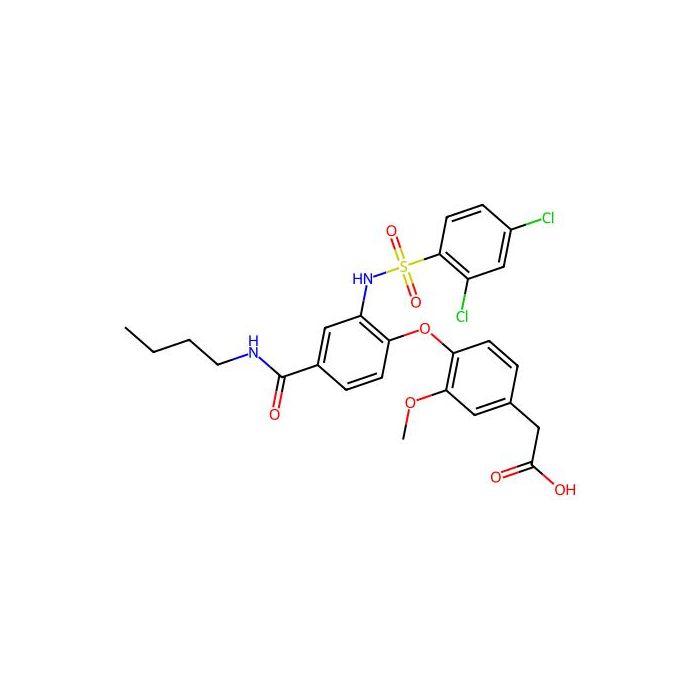
Brief overview: AMG-009 (SKU A1498878) is supplied as a small-molecule screening reagent in Aladdin’s Moligand™ format. The precise structural identity is not disclosed in this listing.
Product name: AMG-009
Catalog/SKU: A1498878
CAS: 1027847-67-1
PubChem CID: 10483360
InChIKey: Not specified for this item; refer to CoA/Spec Sheet.
SMILES: Not specified for this item; refer to CoA/Spec Sheet.
Molecular formula: Not specified for this item; refer to CoA/Spec Sheet.
Molecular weight: Not specified for this item; refer to CoA/Spec Sheet.
Structural features
Item-specific structural motifs (ring systems, heteroatoms, stereochemistry): Not specified for this item; refer to CoA/Spec Sheet.
2D structure description (general guidance)
As a Moligand™ library member, AMG-009 is a discrete, single small-molecule entity suitable for screening and follow-up SAR. Without a disclosed structure, no functional-group or stereochemical commentary can be provided here. Request the CoA/structure sheet if needed under your project’s confidentiality framework.
Synthetic Utility
AMG-009 is supplied as a discrete small molecule for screening rather than as a synthetic reagent or building block. Without a disclosed structure, specific reactivity or functional group transformations cannot be described.
General uses in synthesis-adjacent workflows (not item-specific)
Analytical reference standard: Useful for calibrating chromatographic methods, retention-time indexing, and MS response characterization.
Derivatization for probe development: If structural information becomes available, analogs may be synthesized to install reporter handles (e.g., photoaffinity tags, fluorophores, biotin) for target engagement studies.
Stability-indicating method development: Assess degradation pathways under stress conditions (acid/base, oxidative, thermal, photolytic) to inform handling.
Note: For any preparative chemistry involving AMG-009 or derivatives, obtain and review the structural data and protection/deprotection strategies appropriate to the functional groups involved.
Target Specificity
No target, epitope, or specificity information is provided for AMG-009.
Item-specific target class, binding site, Kd/IC50/EC50 values, and selectivity panels: Not specified for this item; refer to CoA/Spec Sheet or internal project data.
This product is intended for exploratory screening where specificity must be established experimentally by the end user.
Frequently Asked Questions
What is Moligand??
Moligand? is one of Aladdin Scientific's premium product lines, formulated for high-purity applications across multiple workflows. Compared to standard grades in the same workflow, Moligand? products typically offer tighter specifications, more rigorous QC, and stronger lot-to-lot consistency.
How should this product be stored?
Store at ?80 °C. Ultra-low temperature storage is required to maintain the specified shelf life.
How is this product shipped?
This product ships frozen with dry ice and cold packs. Unpack on arrival and transfer it to the storage condition stated above; handle dry ice with insulated gloves in a ventilated area.
What are the CAS number, molecular formula and molecular weight?
The CAS Number is 1027847-67-1, the molecular formula is C26H26Cl2N2O7S, and the molecular weight is 581.46 g/mol.
What documentation is provided?
Available product documentation, including Certificates of Analysis (COA), Safety Data Sheets (SDS), and specification sheets, is shown in the product document area. Document availability and access follow the current site policy.
Need help choosing the grade?
Our grade selection guide covers purity, stabilizer status, and application suitability for all variants in our catalog.
We use cookies to ensure the website functions properly and, where permitted, to improve your experience. You can manage your preferences at any time in Settings. Learn more in our Cookie Policy.
Shall we send you a message when we have discounts available?
Remind me later
Thank you! Please check your email inbox to confirm.
Products are supplied to verified businesses, institutions, and qualified professionals for research and development use only. Not for use in humans, animals, diagnosis, or therapy.