GRADE & PURITYMoligand™?Moligand™ — Aladdin's line of ligands and bioactive small molecules. Use for receptor, pathway, and binding studies needing defined small-molecule tools.10mM in DMSO
Moligand™, 10mM in DMSO Moligand™ for sensitive chromatographic and analytical workflows requiring minimal baseline interference.
🌡
Storage & shipping
Store at -80°C Ships Dry ice packs + Cold packs Check lot-specific COA for exact specifications.
📋
Quality documents
SDS, COA, datasheet, and spec sheet available for download. Lot-specific COA accessible via lot number lookup.
📚
Literature proof
Cited in 0 peer-reviewed publications across chromatography, organic synthesis, and cross-coupling reactions.
Overview
Information
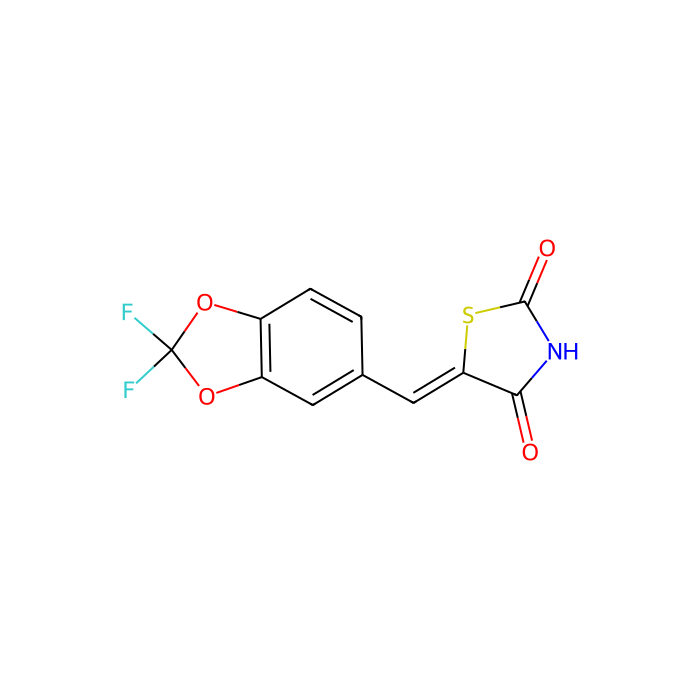
AS-604850 is a selective, ATP-competitivePI3Kγinhibitor withIC50of 250 nM, over 80-fold selectivity for PI3Kγ than PI3Kδ/β, and 18-fold more selective for PI3Kγ than PI3Kα. In vitro
AS-604850 is ATP-competitive PI3Kγ inhibitor with Ki values of 0.18 μM. AS-604850 is isoform selective inhibitor of PI3Kγ with over 30-fold selectivity for PI3Kδ and β, and 18-fold selectivity over PI3Kα. (PI3Kα: IC50 = 4.5 μM, PI3Kγ and β: IC50 > 20μM) AS-604850 is capable of inhibiting C5a-mediated PKB phosphorylation in RAW264 mouse macrophages with an IC50 with 10 μM. AS-604850 blocks MCP-1-mediated chemotaxis in Pik3cg +/+ monocytes in a concentration- dependent manner, with an IC50 of 21 mM, but dosn\'t affect chemotaxis in Pik3cg-/- cells, indicating that AS-604850 acts through PI3Kγ. AS-604850 diminishes glycochenodeoxycholate (GCDC) induced Akt-phosphorylation and apoptosis in rat hepatocytes. AS-604850 diminishes bile salt-induced apoptosis in HepG2 Ntcp and Huh7-Ntcp cells. AS604850 causes a concentration-dependent suppression of chemotactic responses of EoL-1 cells and blood eosinophils to platelet-activating factor (PAF).
In vivo
AS-604850 reduces RANTES-induced peritoneal neutrophil recruitment with a ED50 of 42.4 mg/kg. In the thioglycollate-induced peritonitis model, oral administration of 10 mg/kg AS-604850 results in a 31% reduction of neutrophil recruitment. Cell Data
AS-604850 is a selective, ATP-competitive PI3Kγ inhibitor with IC50 of 250 nM, over 80-fold selectivity for PI3Kγ than PI3Kδ/β, and 18-fold more selective for PI3Kγ than PI3Kα.
Storage
Store at -80°C
Shipped In
Dry ice packs + Cold packs
This product requires cold chain shipping. Ground and other economy services are not available.
Grade
Moligand™
Action Type
INHIBITOR
Mechanism of action
Inhibitor of phosphatidylinositol-4;5-bisphosphate 3-kinase catalytic subunit alpha;Inhibitor of phosphatidylinositol-4;5-bisphosphate 3-kinase catalytic subunit gamma
Determine the necessary mass, volume, or concentration for preparing a solution.
Dilution Calculator
Determine the dilution needed to prepare a stock solution.
Reconstitution Calculator
Reviews
Customer Reviews
Application Protocols
No vendor-tested biological application protocols (e.g., WB, IHC, IF, FC) are provided in the Product Data. The following general, non-validated procedures are commonly used for small-molecule tool compounds and should be optimized empirically:
General DMSO stock and dilution (research use only):
Equilibrate vial to room temperature in a desiccator to avoid condensation; open under dry air or nitrogen if moisture-sensitive.
Prepare a concentrated stock (e.g., 10–50 mM) in anhydrous DMSO. Vortex until fully dissolved; brief sonication may help if compatible.
Aliquot into low-bind, amber microtubes (e.g., 10–50 µL) to minimize freeze–thaw.
Store aliquots at -80°C. Thaw on ice just before use. Discard aliquots after use; avoid repeated freeze–thaw cycles.
For biochemical assays, dilute stock into assay buffer to desired concentrations, keeping final DMSO constant across all conditions (commonly 0.1–0.5% v/v).
For cell assays, pretest vehicle tolerance and compound precipitation; gently mix after dosing and incubate per assay requirements.
Quality controls:
Verify identity/purity by LC-MS before critical studies.
Run vehicle-only and, if applicable, reference-compound controls to benchmark assay performance.
All procedures are guidance only; adapt to your system and refer to institutional SOPs.
Biological Roles
Item-specific biological target annotations are not provided in the Product Data. The following context is offered as general, literature-based background and should not be construed as a claim about this specific lot:
Literature describes AS-604850 as a selective small-molecule probe used to interrogate intracellular signaling, particularly phosphoinositide 3-kinase pathways in biochemical and cellular models. Users should verify the intended target and selectivity profile from primary references and the CoA/SDS before experimental use.
As a tool compound, it is commonly applied to study pathway modulation, target engagement, and downstream biochemical consequences in cell lines or lysate systems under carefully controlled conditions.
Bioactive small molecules of this class may exhibit off-target interactions at higher concentrations; accordingly, implement orthogonal assays (e.g., chemical genetics, rescue with inactive analogs, CRISPR knockout) to confirm on-target effects.
For quantitative pharmacology in vitro, characterize concentration–response relationships (e.g., EC50/IC50) in the specific biological context, since potency can shift with cell line, protein abundance, ATP levels, or assay format.
No clinical or therapeutic claims are made. Use strictly for research, with appropriate controls to distinguish target-mediated activity from vehicle or assay artifacts.
Buffer Applications
This product is not a buffer component. However, it is typically dispensed into established buffer systems for biochemical or cell-based assays.
Practical guidance:
Prepare concentrated DMSO stocks and dilute into assay buffers immediately before use to limit precipitation.
Maintain constant vehicle concentration across all wells/tubes (e.g., 0.1% DMSO) to control for solvent effects.
Common assay buffers (general examples):
Kinase/enzymology: HEPES or Tris (pH 7.2–7.5), Mg2+/Mn2+ as required, 0.01–0.05% Tween-20, 1–2 mM DTT if compatible.
Cell culture: Complete media with serum; ensure final DMSO concentration is tolerated by the cell line.
Filter sterilize buffers where sterility is required and verify that surfactants/reducing agents do not interfere with the assay readout.
Item-specific buffer compatibility and stability are not provided and must be determined empirically.
Green Alternatives
As a bioactive screening compound, AS-604850 is not a process solvent or bulk reagent where traditional green chemistry substitutions typically apply. Nevertheless, greener handling choices can be made in solution preparation and assay workflows:
Prefer DMSO over DMF or NMP for stock solutions when feasible, owing to lower toxicity profile and better biodegradation data relative to DMF/NMP. Keep DMSO volume fractions minimal in assays.
Use aqueous buffers with minimal co-solvent content, and consider surfactants (e.g., polysorbates) only if validated as non-interfering with assay readouts.
Implement microscale assays (low-volume plates, acoustic dispensing) to reduce chemical usage and waste.
Employ closed, light-protected vials and cold-chain logistics to extend shelf life, reducing the need for frequent re-preparation of solutions.
Segregate and properly dispose of DMSO/organic waste to enable recovery streams where available.
Because compound-specific environmental and toxicological data are not provided in the Product Data, consult the SDS and institutional EHS resources for waste minimization and greener laboratory practices tailored to your workflow.
Pharmaceutical Uses
This product is supplied strictly for research use and discovery workflows, not for human or veterinary administration.
Research and development context (general):
Can serve as a tool compound in target validation, pathway mapping, and early discovery assays to inform structure–activity relationships and phenotypic outcomes.
May be used as a reference inhibitor/ligand in screening cascades, counterscreens, and orthogonal assays to benchmark assay performance (e.g., Z′ factor determination) and to verify dynamic range.
Suitable for mechanistic studies such as time-course modulation, combination studies with orthogonal probes, and washout/recovery experiments to assess reversibility.
Regulatory/compendial status:
No pharmacopeial monograph or excipient role is indicated in the Product Data. Any GMP or clinical development use is outside the scope of this listing.
Formulation guidance for research only:
Prepare DMSO stocks (e.g., 10–50 mM), store at -80°C, and dilute into assay media immediately before use. Confirm solubility and avoid exceeding vehicle tolerance in biological systems.
All uses must comply with institutional policies and applicable regulations for non-clinical research materials.
Physical Properties
Item-specific physicochemical specifications are not provided with this listing and should be confirmed on the item’s CoA/Spec Sheet.
Appearance: Not specified for this item; refer to CoA/Spec Sheet.
Melting point (MP): Not specified for this item; refer to CoA/Spec Sheet.
Boiling point (BP): Not applicable/reported for solids; Not specified for this item; refer to CoA/Spec Sheet.
Density: Not specified for this item; refer to CoA/Spec Sheet.
Refractive index: Not applicable for solids; Not specified for this item; refer to CoA/Spec Sheet.
Solubility: For small-molecule screening ligands of this class, a common practice is to dissolve in anhydrous DMSO to prepare concentrated stocks (e.g., 10–50 mM), then dilute into aqueous buffers immediately before use; confirm actual solubility experimentally for this lot. Item-specific aqueous/organic solubility: Not specified for this item; refer to CoA/Spec Sheet.
LogP / pKa: Not specified for this item; refer to CoA/Spec Sheet.
General handling notes (good practice):
Filter-sterilize stock solutions (0.22 µm PTFE) if sterility is required for cell work and compound is compatible.
Avoid repeated warming of frozen DMSO stocks to limit precipitation and degradation.
Use amber vials if the compound is reported/photosensitive; verify from CoA/SDS.
Quality & Grades
Supplied grade: Moligand™ (Product Data).
What Moligand™ typically implies (general description):
A screening- and discovery-oriented grade intended for biochemical, cellular, and target-engagement studies, with emphasis on identity/assay fitness over chromatographic or elemental ultra-trace specs.
Lots are commonly qualified by identity (e.g., NMR/HRMS) and purity suitable for research assays. Exact analytical methods and acceptance criteria are item-specific.
Item-specific notes:
Purity, stabilizers, residual solvents, and elemental/UV specs: Not specified for this item; refer to CoA/Spec Sheet.
Intended use: For research use only (Product Data). Not for human or veterinary use.
Practical guidance for this grade:
For quantitative SAR, biophysics, or chemoproteomics, confirm lot purity and counter-ion/solvate state from the CoA.
For sensitive readouts (e.g., optical assays), confirm absence of interfering chromophores/fluorophores via blank controls.
If required, repurify in-house (e.g., by preparative HPLC) and document the new purity before critical studies.
Reaction & Applications
This product is supplied as a bioactive small molecule for screening and target-engagement studies, not as a general-purpose synthetic reagent or catalyst.
Not typically used as a solvent, base, nucleophile, electrophile, or ligand for metal catalysis in preparative synthesis.
For discovery applications, it may be applied as a tool compound in biochemical assays, cell-based assays, and mechanistic studies. Optimize vehicle, dosing, and exposure time based on assay needs.
If using in chemical biology workflows (general guidance):
Validate compound identity and purity by orthogonal methods (e.g., LC-MS, 1H NMR) before critical experiments.
Establish dose–response curves with appropriate vehicle controls to rule out assay artifacts.
Confirm reversibility/irreversibility and time-dependence of effects by washout or dilution assays.
Synthesis-related applications are not generally applicable to this item. For building-block or reagent needs, consider dedicated synthetic reagents available elsewhere in the catalog.
Reaction Conditions
Not applicable in the conventional synthetic sense: AS-604850 is a bioactive small molecule used in assays rather than a reagent for chemical transformations.
Assay-oriented conditions (general guidance):
Stock preparation: Dissolve in anhydrous DMSO (typical 10–50 mM). Vortex and, if needed, gently warm to ~25–37°C to aid dissolution. Avoid prolonged heating.
Dilution: Add DMSO stocks to pre-equilibrated assay buffer or cell culture media with thorough mixing; keep final DMSO ≤0.1–0.5% v/v unless validated otherwise.
Incubation: Time, temperature, and dosing depend on the specific biological assay. Establish time courses and concentration–response curves empirically.
Controls: Include vehicle controls, positive control ligands (if available), and orthogonal readouts to verify on-target effects.
Stability: Maintain on ice during assay setup if stability at room temperature is uncertain; minimize light exposure when applicable. Item-specific stability data: Not specified for this item; refer to CoA/Spec Sheet.
For chemical synthesis protocols, this item is not recommended; select dedicated reagents from the catalog.
Safety & Handling
GHS classification, signal word, pictograms, H-statements: Not specified for this item; refer to SDS for authoritative safety information.
Primary hazards (general for bioactive small molecules): Potential acute toxicity, skin/eye/respiratory irritation, and unknown chronic hazards. Handle in a fume hood and minimize exposure.
PPE: Laboratory coat, nitrile gloves, safety glasses; upgrade to chemical splash goggles and double-gloving for concentrated solutions or prolonged handling.
Engineering controls: Use in a certified chemical fume hood; avoid aerosolization when pipetting DMSO stocks.
Incompatibilities: Avoid strong oxidizers and strong acids/bases unless compatibility is known. Use dry, aprotic solvents (e.g., anhydrous DMSO) for stock preparation to prevent hydrolysis of moisture-sensitive motifs.
First aid (summary; consult SDS):
Skin/eye contact: Rinse with water for ≥15 min; remove contaminated clothing; seek medical attention if irritation persists.
Inhalation: Move to fresh air; seek medical attention if symptoms occur.
Ingestion: Rinse mouth; do not induce vomiting; seek medical attention.
Waste disposal: Treat as hazardous organic waste. Collect solutions and contaminated materials in properly labeled containers per institutional and local regulations.
Transport/packaging: Shipped on dry ice/cold packs (Product Data). Maintain cold chain to -80°C storage on receipt.
Always defer to the product-specific SDS and institutional EHS guidance.
Solvent Selection
AS-604850 is handled as a bioactive small molecule rather than used as a reaction solvent. Selection focuses on stock-solution preparation and assay compatibility.
Primary stock solvent (typical practice): Anhydrous DMSO due to high solvating power for heteroaromatic, lipophilic ligands and excellent miscibility with aqueous assay buffers upon dilution.
Secondary options (if compatible): DMF, ethanol, or aqueous buffer with co-solvent and surfactant (e.g., ≤1% DMSO + 0.01% Tween-80) after verifying solubility and stability.
Aqueous work: Minimize final DMSO content in biological assays (commonly ≤0.1–0.5% v/v) to reduce vehicle effects; validate tolerance for the specific system.
Adsorption control: Reduce nonspecific binding by using low-bind plasticware or adding inert carrier protein (e.g., 0.1% BSA) where appropriate and compatible with the assay readout.
Photostability/oxidation: If the compound is light- or air-sensitive (verify from CoA/SDS), prepare and store stocks under inert atmosphere and light protection.
Comparison (general):
DMSO: highest solvency, broad assay compatibility; may affect membrane integrity at >1% v/v.
DMF: similar solvency but less favored in live-cell assays due to toxicity.
Ethanol: volatile, lower solvency for many kinase-like scaffolds but biocompatible at low %; precipitation risk on dilution.
Item-specific solubility parameters are not provided and should be confirmed empirically for this lot.
Storage & Reconstitution
Storage (as supplied): Store at -80°C (Product Data). Maintain cold chain on receipt (shipped with dry ice packs + cold packs; Product Data).
Container recommendations: Keep in tightly sealed, chemically compatible, low-bind containers. Protect from moisture and, if relevant, from light. Purge headspace with inert gas if the compound is air/moisture sensitive (verify from CoA/SDS).
Reconstitution:
Preferred: Reconstitute in anhydrous DMSO to prepare concentrated stocks (e.g., 10–50 mM), then aliquot and refreeze at -80°C.
Alternative solvents (only if verified compatible): DMF or ethanol. Confirm complete dissolution and stability before use.
Working solutions: Prepare immediately before use by diluting into assay buffer or media. Keep final DMSO content minimal and consistent across samples.
Freeze–thaw: Avoid repeated freeze–thaw cycles. Use single-use aliquots to preserve integrity.
Stability: Item-specific stability and shelf-life after reconstitution are not specified; refer to CoA/Spec Sheet and assess empirically (e.g., by periodic LC-MS).
For research use only. Do not use for diagnostic or therapeutic purposes.
Structure & Identity
Product overview: AS-604850 (SKU: A408881) is listed in Aladdin’s Moligand™ small-molecule/compound library category for research use.
CAS: 648449-76-7 (Product Data)
PubChem CID: 11492951 (Product Data)
SMILES: Not specified for this item; refer to CoA/Spec Sheet.
InChIKey: Not specified for this item; refer to CoA/Spec Sheet.
Molecular formula: Not specified for this item; refer to CoA/Spec Sheet.
Molecular weight: Not specified for this item; refer to CoA/Spec Sheet.
Structural features (general, literature):
Reported in the literature as a heteroaromatic, drug-like small molecule used as a biochemical probe in kinase signaling studies. Specific ring systems, substituent positions, and stereochemistry should be confirmed from primary databases (e.g., PubChem for CID 11492951) and the item CoA.
2D structure (descriptive, literature):
Compact, polycyclic/heteroaryl scaffold consistent with kinase-focused chemotypes; likely contains multiple heteroatoms enabling H-bonding interactions in enzyme active sites. Exact atom connectivity and functional groups must be verified from authoritative structure records and the item specification.
Synthetic Utility
AS-604850 is not provided as a synthetic reagent or building block and is not typically employed as a coupling partner, catalyst, or protecting group reagent.
If the compound is used in chemical biology or probe development, derivatization (e.g., linker installation for affinity capture or fluorescence tagging) should be guided by structure–activity data from the literature to avoid disrupting key pharmacophores.
For custom analog generation, employ standard medicinal chemistry tactics (e.g., heteroaryl substitutions, bioisosteres) guided by the known scaffold—consult primary structure records (e.g., PubChem CID 11492951) and literature SAR.
Item-specific reactivity, functional group tolerance, or protecting group strategies are not provided in the Product Data. For preparative synthetic needs, consider purchasing appropriate building blocks and reagents tailored to the intended transformations.
Target Specificity
Target specificity information (e.g., primary target, selectivity profile, potency values) is not provided in the Product Data for this item. To avoid overinterpretation, no target or potency claims are made here.
Researchers may consult primary literature and databases linked to CAS 648449-76-7 or PubChem CID 11492951 for background information, then confirm suitability for their assay system.
For this specific catalog item, rely on the CoA/Spec Sheet and SDS for any available characterization and use guidance.
Need help choosing the grade?
Our grade selection guide covers purity, stabilizer status, and application suitability for all variants in our catalog.
We use cookies to ensure the website functions properly and, where permitted, to improve your experience. You can manage your preferences at any time in Settings. Learn more in our Cookie Policy.
Shall we send you a message when we have discounts available?
Remind me later
Thank you! Please check your email inbox to confirm.
Products are supplied to verified businesses, institutions, and qualified professionals for research and development use only. Not for use in humans, animals, diagnosis, or therapy.