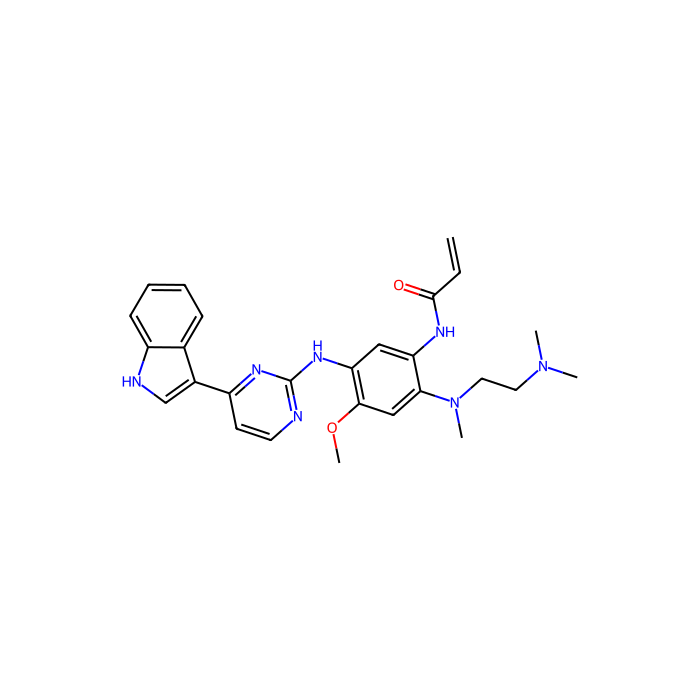
AZ5104 - Moligand™, ≥97% , Inhibitor of epidermal growth factor receptor, CAS No.1421373-98-9, Inhibitor of epidermal growth factor receptor

CAS: 1421373-98-9 Cat. No.: A413734 Formula: C27H31N7O2 Molecular Weight: 485.58
AVAILABLE TO ORDER
GRADE & PURITY Moligand™ ? Moligand™ — Aladdin's line of ligands and bioactive small molecules. Use for receptor, pathway, and binding studies needing defined small-molecule tools. ≥97%
Synonyms
2-Propenamide, N-(2-((2-(dimethylamino)ethyl)methylamino)-5-((4-(1H-indol-3-yl)-2-pyrimidinyl)amino)-4-methoxyphenyl)- | AKOS025404698 | CCG-269587 | 2DWZ6SE1E1 | N-(2-[2-Dimethylaminoethyl-methylamino]-5-{[4-(1H-indol-3-yl)pyrimidin-2-yl]amino}-4-methoxy
Storage
Store at -20°C
Shipped In
Ice chest + Ice pads
★
Size
Germany (EU)
USA*
Price
Qty
5mg
A413734-5mg
—
3 In stock

€25.08

€38.09
Save €13.02 (34.17%)
10mg
A413734-10mg
—
3 In stock

€37.23

€56.32
Save €19.09 (33.90%)
25mg
A413734-25mg
—
3 In stock

€81.48

€122.26
Save €40.78 (33.36%)
50mg
A413734-50mg
Made to order · 8–12 wks

€105.78

€158.71
Save €52.93 (33.35%)
100mg
A413734-100mg
—
3 In stock

€190.82

€286.27
Save €95.45 (33.34%)
200mg
A413734-200mg
Made to order · 8–12 wks

€343.54

€515.35
Save €171.81 (33.34%)
Enter a quantity for the sizes you want to add.
🧪

Why this grade

Moligand™, ≥97% Moligand™ for sensitive chromatographic and analytical workflows requiring minimal baseline interference.

🌡

Storage & shipping

Store at -20°C Ships Ice chest + Ice pads Check lot-specific COA for exact specifications.

📋

Quality documents

SDS, COA, datasheet, and spec sheet available for download. Lot-specific COA accessible via lot number lookup.

📚

Literature proof

Cited in 0 peer-reviewed publications across chromatography, organic synthesis, and cross-coupling reactions.

Overview

Information

AZ5104, the demethylated metabolite of AZD-9291, is a potentEGFRinhibitor withIC50of <1 nM, 6 nM, 1 nM, and 25 nM for EGFR (L858R/T790M), EGFR (L858R), EGFR (L861Q), and EGFR (wildtype), respectively. Phase 1.


Targets

EGFR (L858R/T790M) ; EGFR (L861Q) ; EGFR (L858R) ; ErbB4 ; EGFR (wildtype) 15117,<1 nM; 1 nM; 6 nM; 7 nM; 25 nM


In vitro

AZ5104 shows great potency against ex19del (2 nM in PC-9), T790M (2 nM in H1975), and wild-type EGFR (33 nM in LOVO) cell lines. AZ5104 causes inhibition of cell viability with IC50 of 3.3 nM, 2.6 nM, 80 nM, and 53 nM for H1975 (T790M/L858R), PC-9 (ex19del), Calu 3 (WT), and NCI-H2073 (WT), respectively.


In vivo

In both C/L858R and C/L+T mice, AZ5104 (5 mg/kg/d, p.o.) induces significant and sustained tumor regression.


Cell Research(from reference)

Cell lines:H1975 (T790M/L858R), PC-9 (ex19del), Calu 3 (WT), and NCI-H2073 (WT) cells 

Incubation Time:96 h 

Specifications

Synonyms
2-Propenamide, N-(2-((2-(dimethylamino)ethyl)methylamino)-5-((4-(1H-indol-3-yl)-2-pyrimidinyl)amino)-4-methoxyphenyl)- | AKOS025404698 | CCG-269587 | 2DWZ6SE1E1 | N-(2-[2-Dimethylaminoethyl-methylamino]-5-{[4-(1H-indol-3-yl)pyrimidin-2-yl]amino}-4-methoxy
Specifications & Purity
Moligand™, ≥97%
Biochemical and Physiological Mechanisms
AZ5104, the demethylated metabolite of AZD-9291, is a potent EGFR inhibitor with IC50 of <1 nM, 6 nM, 1 nM, and 25 nM for EGFR (L858R/T790M), EGFR (L858R), EGFR (L861Q), and EGFR (wildtype), respectively. Phase 1.
Storage
Store at -20°C
Shipped In
Ice chest + Ice pads
This product requires cold chain shipping. Ground and other economy services are not available.
Grade
Moligand™
Action Type
INHIBITOR
Mechanism of action
Inhibitor of epidermal growth factor receptor
Purity
≥97%
Product Properties
ALogP4.465
hba_count4
HBD Count3
Rotatable Bond10
Names and Identifiers
Pubchem Sid504772143
Pubchem Sid Urlhttps://pubchem.ncbi.nlm.nih.gov/substance/504772143
Canonical SmilesCN(C)CCN(C)C1=CC(=C(C=C1NC(=O)C=C)NC2=NC=CC(=N2)C3=CNC4=CC=CC=C43)OC
IUPAC NameN-[2-[2-(dimethylamino)ethyl-methylamino]-5-[[4-(1H-indol-3-yl)pyrimidin-2-yl]amino]-4-methoxyphenyl]prop-2-enamide
InChIKeyIQNVEOMHJHBNHC-UHFFFAOYSA-N
INCHI1S/C27H31N7O2/c1-6-26(35)30-22-15-23(25(36-5)16-24(22)34(4)14-13-33(2)3)32-27-28-12-11-21(31-27)19-17-29-20-10-8-7-9-18(19)20/h6-12,15-17,29H,1,13-14H2,2-5H3,(H,30,35)(H,28,31,32)
Isomeric SMILES CN(C)CCN(C)C1=CC(=C(C=C1NC(=O)C=C)NC2=NC=CC(=N2)C3=CNC4=CC=CC=C43)OC
Molecular Weight 485.58
Reaxy-Rn 23334191
Reaxys-RN_link_address https://www.reaxys.com/reaxys/secured/hopinto.do?context=S&query=IDE.XRN=23334191&ln=

Documentation

📋 Safety Data Sheet (SDS)

Comprehensive hazard, handling, storage, and regulatory compliance document.

Download SDS →

✅ Certificate of Analysis (COA)

Lot-specific quality data. Enter your lot number to retrieve the exact COA.

Look up COA →

📊 Datasheet

Quick-reference summary of product specifications and applications.

View datasheet →

🔬 Specification Sheet

Full quality attributes and acceptance criteria for this grade.

View spec sheet →

Advanced Data

Taxonomic Classification

Taxonomy Tree

KingdomOrganic compounds
SuperclassBenzenoids
ClassBenzene and substituted derivatives
SubclassAnilides
Intermediate Tree Nodes Not available
Direct Parent2'-Aminoanilides
Alternative Parents Aminophenyl ethers  Methoxyanilines  Indoles  Phenoxy compounds  Anisoles  N-arylamides  Methoxybenzenes  Dialkylarylamines  Aminopyrimidines and derivatives  Alkyl aryl ethers  Substituted pyrroles  Acrylic acids and derivatives  Heteroaromatic compounds  Trialkylamines  Amino acids and derivatives  Secondary carboxylic acid amides  Azacyclic compounds  Carbonyl compounds  Hydrocarbon derivatives  Organic oxides  
Molecular FrameworkAromatic heteropolycyclic compounds
Substituents 2'-aminoanilide - Indole or derivatives - Indole - Aminophenyl ether - Methoxyaniline - Phenol ether - Tertiary aliphatic/aromatic amine - N-arylamide - Phenoxy compound - Dialkylarylamine - Aniline or substituted anilines - Methoxybenzene - Anisole - Alkyl aryl ether - Aminopyrimidine - Pyrimidine - Substituted pyrrole - Pyrrole - Heteroaromatic compound - Acrylic acid or derivatives - Secondary carboxylic acid amide - Tertiary aliphatic amine - Amino acid or derivatives - Carboxamide group - Tertiary amine - Azacycle - Carboxylic acid derivative - Ether - Organoheterocyclic compound - Amine - Organic nitrogen compound - Carbonyl group - Hydrocarbon derivative - Organic oxygen compound - Organic oxide - Organooxygen compound - Organonitrogen compound - Aromatic heteropolycyclic compound
DescriptionThis compound belongs to the class of organic compounds known as 2'-aminoanilides. These are organic compounds containing an anilide moieties that carries an amino group at the 2-position of the benzene ring.
External Descriptors Not available
3D Structure
Interactive Chemical Structure Model


Associated Targets(Human)
EGFR Tclin Epidermal growth factor receptor (1 Activities)
Activity TypeActivity Value -log(M)Mechanism of ActionActivity ReferencePublications (PubMed IDs)
EGFR Tclin Epidermal growth factor receptor erbB1 (33727 Activities)
Activity TypeRelationActivity valueUnitsAction TypeJournalPubMed IddoiAssay Aladdin ID
KCNH2 Tclin HERG (29587 Activities)
Activity TypeRelationActivity valueUnitsAction TypeJournalPubMed IddoiAssay Aladdin ID
IGF1R Tclin Insulin-like growth factor I receptor (8605 Activities)
Activity TypeRelationActivity valueUnitsAction TypeJournalPubMed IddoiAssay Aladdin ID
NCI-H1975 (4994 Activities)
Activity TypeRelationActivity valueUnitsAction TypeJournalPubMed IddoiAssay Aladdin ID
A-431 (6446 Activities)
Activity TypeRelationActivity valueUnitsAction TypeJournalPubMed IddoiAssay Aladdin ID
ERBB2 Tclin Epidermal growth factor receptor (487 Activities)
Activity TypeRelationActivity valueUnitsAction TypeJournalPubMed IddoiAssay Aladdin ID
Associated Targets(non-human)
Hdac6 Histone deacetylase 6 (222 Activities)
Activity TypeRelationActivity valueUnitsAction TypeJournalPubMed IddoiAssay Aladdin ID
Mus musculus (284745 Activities)
Activity TypeRelationActivity valueUnitsAction TypeJournalPubMed IddoiAssay Aladdin ID
rep Replicase polyprotein 1ab (378 Activities)
Activity TypeRelationActivity valueUnitsAction TypeJournalPubMed IddoiAssay Aladdin ID
Plasma (328 Activities)
Activity TypeRelationActivity valueUnitsAction TypeJournalPubMed IddoiAssay Aladdin ID
Mechanisms of Action
Certificates(CoA,COO,BSE/TSE and Analysis Chart)
C of A & Other Certificates(BSE/TSE, COO):
Analytical Chart:

Find and download the COA for your product by matching the lot number on the packaging.

4 results found

Lot NumberCertificate TypeDateItem
G2502212Certificate of AnalysisJul 08, 2025 A413734
G2201207Certificate of AnalysisApr 03, 2025 A413734
G2201208Certificate of AnalysisApr 03, 2025 A413734
G2201209Certificate of AnalysisApr 03, 2025 A413734
Chemical and Physical Properties
SolubilitySolubility (25°C) In vitro DMSO: 97 mg/mL (199.76 mM); Ethanol: 5 mg/mL warmed with 50ºC Water: bath (10.29 mM); Water: Insoluble;
DMSO(mg / mL) Max Solubility97
DMSO(mM) Max Solubility199.7611104
Water(mg / mL) Max Solubility<1
Molecular Weight485.600 g/mol
XLogP33.800
Hydrogen Bond Donor Count3
Hydrogen Bond Acceptor Count7
Rotatable Bond Count10
Exact Mass485.254 Da
Monoisotopic Mass485.254 Da
Topological Polar Surface Area98.400 Ų
Heavy Atom Count36
Formal Charge0
Complexity722.000
Isotope Atom Count0
Defined Atom Stereocenter Count0
Undefined Atom Stereocenter Count0
Defined Bond Stereocenter Count0
Undefined Bond Stereocenter Count0
The total count of all stereochemical bonds0
Covalently-Bonded Unit Count1
Solution Calculators
Reviews

Customer Reviews

Application Protocols

Tested applications and recommended dilutions are not specified for this item in our catalog. Please refer to the CoA/Spec Sheet and peer-reviewed literature for protocol details.

General, non-binding guidance for common use-cases

  • Biochemical enzyme assays
    • Prepare a DMSO stock (e.g., 10 mM). Serially dilute in assay buffer keeping final DMSO ≤0.5% v/v.
    • Pre-incubate compound with enzyme when assessing covalent/time-dependent inhibition (e.g., 15–60 min) before substrate addition.
  • Cell-based assays
    • Dilute DMSO stock into culture medium to desired concentrations (often nM–µM). Maintain consistent vehicle controls.
    • Monitor pathway biomarkers (e.g., phospho-proteins) at multiple time points to capture kinetics.
  • Analytical reference use
    • For LC–MS/MS, prepare calibration standards and QCs in matrix-matched solutions. Assess carryover and stability (bench-top, autosampler, freeze–thaw).

Important

  • These are general pointers only and are not product-validated protocols. Optimize conditions for your system and consult the SDS for safe handling.
Biological Roles

Context (literature; not item specifications)

  • AZ5104 is widely described as a bioactive small-molecule probe in the epidermal growth factor receptor (EGFR) inhibitor chemical space. It has been reported as a metabolite/analog related to third‑generation covalent EGFR inhibitors and is used to interrogate EGFR signaling and resistance mechanisms in preclinical research.

Typical use-cases in discovery biology

  • Biochemical enzyme assays: Determination of inhibitory potency and kinetics against recombinant kinase domains, including time-dependent covalent engagement studies.
  • Cellular pathway studies: Assessment of pathway phosphorylation readouts (e.g., EGFR autophosphorylation status) and downstream effectors using immunoblot or phospho-proteomics, with careful controls to avoid off-target interpretations.
  • Chemoproteomics: Target engagement profiling and off-target mapping via activity-based protein profiling or thermal proteome profiling.
  • ADME/PK: Tool compound for metabolic stability, permeability, and protein binding studies in vitro; may serve as an analytical reference standard for LC–MS/MS quantitation in matrices.

Caveats

  • Biological potency can be assay- and context-dependent. Confirm target engagement using orthogonal methods and appropriate genetic controls.
  • Avoid extrapolating in vitro findings to in vivo or clinical outcomes; this product is for research use only.

Item-specific statement

  • No biological activity specifications or guaranteed targets are provided for this catalog item; consult primary literature for performance characteristics.
Buffer Applications

This item is a bioactive small molecule and does not function as a buffering agent. It is therefore not used to establish or maintain solution pH.

Practical notes for assay buffers (general guidance)

  • Prepare a concentrated DMSO stock of the compound, then dilute into the pre-made assay buffer (e.g., PBS, HEPES-buffered saline, or kinase assay buffer) with vigorous mixing to avoid localized supersaturation.
  • Keep final DMSO content low (commonly ≤0.1–0.5% v/v) to minimize effects on enzyme activity or cell viability.
  • If precipitation is observed on dilution, consider adding a small amount of co-solvent compatible with your assay, or pre-warm the buffer to room temperature.

Item-specific buffer specifications

  • None provided for this item; refer to the CoA/Spec Sheet and your internal assay SOPs.
Green Alternatives

Green chemistry considerations are less applicable to this item because it is a specialized bioactive probe used at micromolar or lower concentrations, not a bulk solvent or reagent. Nevertheless, the following practices can reduce environmental impact:

  • Solvent minimization

    • Use the minimal DMSO volume needed for concentrated stocks; prepare aliquots to avoid wastage from repeated thawing.
    • For assay dilutions, optimize protocols to keep organic cosolvent content as low as possible while maintaining solubility and assay performance.
  • Greener choices in ancillary steps

    • Where feasible, replace DMF/NMP with DMSO or ethanol for cleaning steps, acknowledging compatibility constraints.
    • Employ microscale assay formats (1536-/384-well) to reduce solvent and compound consumption.
  • Waste handling

    • Segregate halogenated vs non-halogenated waste according to institutional policies. Although use amounts are small, bioactive compounds should be treated as hazardous chemical waste to prevent environmental release.
  • Procurement & lifecycle

    • Order quantities appropriate to study scope to minimize expiration and disposal. Utilize desiccated, cold-chain storage to prolong shelf life and reduce the need for repeat shipments.

Given the compound’s role as a research probe rather than a process reagent, substitution with a “greener alternative compound” is generally driven by biological selectivity needs rather than environmental criteria.

Pharmaceutical Uses

Scope

  • This product is supplied strictly for research use only. It is not intended for human or veterinary use, diagnostic procedures, or as an active pharmaceutical ingredient (API).

Relevant non-clinical contexts (general)

  • Reference standard: May be employed as a reference compound in analytical method development and validation (e.g., LC–MS/MS) for preclinical pharmacokinetic and metabolism studies.
  • Formulation research: Useful for evaluating solubilization strategies (e.g., cyclodextrins, lipid-based vehicles, or co-solvent systems) for in vitro delivery and stability studies.
  • Comparator in screening cascades: Serves as a benchmark inhibitor in target-class assays to set assay windows and validate screening performance.

Regulatory and compendial status

  • No pharmacopeial monograph is indicated for this item. GMP status is not claimed.

Item-specific information

  • Grade: Moligand™ (research-grade). No clinical or excipient grade is specified for this product.
  • Specifications such as residual solvents, elemental impurities, and microbiological limits are not provided; consult the CoA/Spec Sheet for any available quality attributes.
Physical Properties

Item-specific specifications

  • Appearance: Not specified for this item; refer to CoA/Spec Sheet.
  • Molecular Formula: Not specified for this item; refer to CoA/Spec Sheet.
  • Molecular Weight: Not specified for this item; refer to CoA/Spec Sheet.
  • Melting point, boiling point, density, refractive index, water/peroxide/metal limits, and UV cutoff: Not specified for this item; refer to CoA/Spec Sheet.

Literature/general properties for this chemical class (context, not item specifications)

  • Physical state: Many kinase-targeted small molecules are isolated as crystalline solids or amorphous powders.
  • Solubility profile: Typically formulated as DMSO stock solutions for screening; aqueous solubility is often limited and may require cosolvents or cyclodextrin-based vehicles. Final assay media DMSO is commonly kept at ≤0.1–0.5% v/v to mitigate cell stress.
  • Acid/base behavior: Presence of tertiary/secondary amines in this class often imparts weak basicity; salts (e.g., HCl) can increase aqueous solubility. Verify salt form on the CoA.
  • Lipophilicity: Many covalent EGFR-family probes have moderate-to-high logP/logD; exact value must be checked in source literature or CoA.

Practical notes

  • If preparing high-concentration DMSO stocks (e.g., 10–50 mM), warm gently (room temperature) and vortex to aid dissolution; avoid heating above 40 °C without confirming thermal stability.
  • Filter sterilization (0.22 µm PTFE) is advisable for cell-based assays; confirm filter compatibility.
  • Always rely on the item’s CoA/SDS for definitive specifications.
Quality & Grades

Item-specific details

  • Grade/Purity: Moligand™ (research small-molecule/ligand grade).
  • Purity level, residual solvents, and analytical release tests: Not specified for this item; refer to CoA/Spec Sheet.

What Moligand™ typically implies (general guidance)

  • Intended for screening, target validation, and mechanistic studies rather than for clinical use.
  • Lots are commonly accompanied by identity confirmation (e.g., 1H NMR/LC–MS/HPLC). Exact methods and acceptance criteria must be confirmed on the CoA.

Analytical considerations for this compound class

  • Identity: LC–MS with exact mass of molecular ion; retention-time match to reference. If covalent-warhead containing (e.g., acrylamide), confirm integrity by MS and 1H/13C NMR (vinyl protons, amide carbonyl).
  • Purity by HPLC/UPLC: Choose a gradient capable of resolving late-eluting hydrophobic peaks; detect at multiple wavelengths (e.g., 220–320 nm) to monitor aromatic/amide chromophores. Low UV background solvents (HPLC grade) are recommended for accurate purity assessment.
  • Solid-state form: Free base vs. salt form affects solubility and melting behavior; verify label and CoA.

Stabilizer and additives

  • Stabilizers/antioxidants: Not specified for this item; refer to CoA/Spec Sheet.

Documentation

  • For qualification or assay reproducibility, retain the lot-specific CoA, analytical traces, and any reference spectra supplied with the material.
Reaction & Applications

This product is primarily a bioactive small molecule for research probing and screening rather than a synthetic reagent. As such, it is not typically employed as a stoichiometric reagent, catalyst, or solvent in preparative organic reactions.

Relevant research applications (general, literature-based context)

  • Chemical biology: Used as a tool compound in kinase signaling studies, including covalent target engagement experiments, time-dependent inhibition profiling, and washout kinetics analyses.
  • Target validation: Dose–response assays, CETSA/thermal shift, and chemoproteomic pull-downs with appropriate controls can map target and off-target interactions.
  • ADME/PK method development: Reference standard for LC–MS bioanalysis, stability testing (microsomal/S9 stability), and metabolite identification workflows.

Not typically applicable

  • It is not generally used in named organic reactions or as a building block; for synthetic transformations and building-block chemistry, see our dedicated reagent categories.

Practical guidance

  • Prepare fresh DMSO stocks and minimize freeze–thaw cycles to preserve integrity.
  • Employ rigorous negative/vehicle controls and, where appropriate, orthogonal assays (biochemical and cellular) to confirm on-target effects.
  • For covalent probe classes, consider time-dependent incubation protocols and mass-shift confirmation in recombinant protein assays.
Reaction Conditions

Not typically applicable. AZ5104 is provided as a bioactive small molecule for biological and analytical studies, not as a reagent or catalyst for chemical synthesis.

General guidance for biological assay conditions (literature-based context)

  • Stock preparation: DMSO stock solutions are common (e.g., 10–50 mM). Aliquot to avoid freeze–thaw cycles.
  • Biochemical assays: Incubation times for covalent kinase probes can range from minutes to hours; temperature typically 25–37 °C. Include time-dependence in IC50 determination where appropriate.
  • Cellular assays: Dose ranges often span low nM to low µM depending on cell context; final DMSO concentrations typically ≤0.1–0.5% v/v. Verify exposure time (e.g., 1–24 h) per assay design.
  • Analytical characterization: Stability can be evaluated in PBS or assay buffer at room temperature and 37 °C, and in microsomes/S9 for metabolic stability; detection by LC–MS/MS.

Item-specific parameters (temperature, pH, catalysts, yields) are not relevant or specified for this product.

Safety & Handling

Safety classification

  • GHS Classification: Not specified for this item; refer to SDS.
  • Signal Word: Not specified for this item; refer to SDS.
  • H-Statements / P-Statements: Not specified for this item; refer to SDS.
  • Pictograms: Not specified for this item; refer to SDS.

General laboratory handling guidance (non-authoritative; defer to SDS)

  • Personal protective equipment: lab coat, safety glasses, and appropriate chemical-resistant gloves (e.g., nitrile). Handle in a chemical fume hood to avoid inhalation of dust or aerosols.
  • Avoid contact with skin, eyes, and clothing. Prevent ingestion and inhalation. Wash hands thoroughly after handling.
  • Dust control: Minimize dust generation; use antistatic measures if weighing fine powders.
  • Incompatibilities: Strong oxidizers and strong acids/bases may degrade typical arylamide/acrylamide motifs; segregate accordingly. Verify with SDS for this specific material.

First-aid overview (consult SDS for full instructions)

  • Inhalation: Move to fresh air; seek medical attention if symptoms persist.
  • Skin/eye contact: Rinse with water for at least 15 minutes. Remove contaminated clothing.
  • Ingestion: Rinse mouth; do not induce vomiting; seek medical attention.

Storage & shipping (from Product Data)

  • Storage: Store at −20 °C.
  • Shipped: Ice chest + ice pads.

Special risks

  • Small-molecule bioactives may have potent biological effects at low concentrations. Avoid exposure and environmental release. Dispose of waste according to institutional and local regulations.
Solvent Selection

Item-specific solvent specs are not provided; guidance below is general for kinase-focused, arylamide/acrylamide small molecules used as research probes.

  • Polarity and miscibility

    • Often moderately lipophilic; DMSO is the solvent of choice for preparing concentrated stocks (e.g., 10–50 mM), due to broad solvating power.
    • Limited solubility in pure water is common; aqueous working solutions are typically achieved by DMSO dilution into buffer/media.
  • Preferred solvents (general)

    • DMSO: Excellent solvency; compatible with most biochemical assays at ≤0.1–0.5% v/v final DMSO.
    • DMF or NMP: Alternative stock solvents if DMSO is unsuitable; assess assay tolerance and cytotoxicity.
    • Ethanol/MeOH: Can aid co-solvation but may affect biological assays; verify tolerance.
  • Buffer compatibility

    • Phosphate- or HEPES-buffered saline is commonly used; add the DMSO stock last with vigorous mixing to avoid precipitation. Use surfactant (e.g., 0.01–0.05% Tween 80) only if validated for the assay.
  • Practical tips

    • Warm to room temperature and vortex to dissolve; avoid elevated temperatures unless stability is confirmed.
    • Filter sterilize DMSO stock through 0.22 µm PTFE if sterility is required.
  • When to choose alternatives

    • If precipitation occurs upon dilution, consider adding a small amount of co-solvent (PEG400, ethanol) or preparing a salt form (if available) to enhance aqueous solubility. Validate any changes for assay performance.
Storage & Reconstitution

Item-specific storage and shipping

  • Storage Conditions: Store at −20 °C (Product Data).
  • Shipped In: Ice chest + ice pads (Product Data).

Stability and handling (item-specific specs not provided; follow general best practices)

  • Protect from light and moisture. Keep container tightly closed under inert headspace if possible (e.g., dry nitrogen) after opening.
  • Minimize freeze–thaw by preparing single-use aliquots upon first dissolution.

Reconstitution guidance (general)

  • Solvent: DMSO is commonly used to prepare concentrated stocks of kinase-targeted small molecules. If a salt form is supplied, verify solvent compatibility.
  • Concentration: Choose a stock appropriate for your assay (e.g., 10–50 mM), ensuring full dissolution. Warm gently to room temperature and vortex; avoid heating above 40 °C unless stability is documented.
  • Sterility: For cell-based assays, filter through a 0.22 µm PTFE membrane after dissolution if needed.

In-use storage

  • Short term (days to 1–2 weeks): 2–8 °C for DMSO stocks when protected from moisture; confirm stability empirically.
  • Long term (weeks to months): −20 °C or below. Avoid repeated freeze–thaw.

Specifications such as water content, residual solvents, or exact shelf-life are not provided for this item; consult the lot-specific CoA and SDS for authoritative guidance.

Structure & Identity

Overview: AZ5104 is listed in our Moligand small-molecule collection as a research-use chemical probe.

  • Item-specific (Product Data)

    • SKU: A413734
    • Product Name: AZ5104
    • CAS: 1421373-98-9
    • PubChem CID: 71496460
    • InChIKey: 147904 (as provided)
    • SMILES: Not specified for this item; refer to CoA/Spec Sheet.
    • Molecular Formula: Not specified for this item; refer to CoA/Spec Sheet.
    • Molecular Weight: Not specified for this item; refer to CoA/Spec Sheet.
    • Grade: Moligand™ (research small-molecule/ligand grade)
    • Research Use Note: For research use only
  • Literature/General identity notes (for context only)

    • AZ5104 is described in the literature as a bioactive small molecule used as a kinase-targeted research probe and is known as a metabolite/analog in the third‑generation EGFR inhibitor chemical space (literature).
    • Structural features reported in the literature for this class include: anilide/arylamide core, a Michael-acceptor acrylamide functionality enabling covalent binding to cysteine residues, and heteroaromatic rings contributing to target engagement. Exact atom connectivity should be confirmed from an authenticated structure file.
  • 2D structural description (general for this chemical class; verify against CoA)

    • Typically comprises an anilide framework bearing an acrylamide side chain (conjugated C=C–C(=O)–NH–Ar), with additional heteroaryl substituents and a tertiary amine-containing side chain that modulates solubility and basicity. This description is provided as contextual background and must be verified against the official structure for this specific lot.
Synthetic Utility

This catalog item is a finished small-molecule probe and is not typically used as a synthetic building block or reagent.

General notes (for researchers working with related chemotypes)

  • If structural modification is of interest (e.g., SAR exploration), synthetic routes in the literature for EGFR covalent inhibitors often involve:
    • Construction of heteroaryl cores (e.g., substituted anilides/heteroaryls) via Suzuki/Miyaura or Buchwald–Hartwig couplings.
    • Introduction of acrylamide “warheads” by acylation (e.g., acryloyl chloride or activated acrylates) onto anilines or amines late in the sequence to minimize side reactions.
    • Installation of dimethylamino-alkyl side chains by nucleophilic substitution or reductive amination.
  • Purification strategies typically leverage reverse-phase chromatography due to compound lipophilicity and polarity from amide/amine functions.

Caution

  • Because the present product is not supplied as an intermediate, any derivatization or coupling attempts should begin from dedicated synthetic precursors. Use of this item as a starting material is generally inefficient and not recommended except for analytical derivatizations.
Target Specificity

Item-specific data

  • Validated targets, selectivity panels, binding constants, and enzyme inhibition data are not specified for this catalog item. Refer to the CoA/Spec Sheet and primary literature.

General literature context

  • AZ5104 is reported in the literature as a kinase-directed chemical probe in the EGFR inhibitor class, with covalent interaction potential via an acrylamide warhead. Actual target specificity can depend on assay system, protein isoform/mutations, and experimental conditions.

Guidance for users

  • Establish target engagement with orthogonal assays (e.g., biochemical inhibition, phospho-protein readouts, CETSA/TPP, and proteomics-based covalent labeling as applicable).
  • Use appropriate genetic controls (knockdown/knockout or mutant overexpression) to attribute phenotypes to on-target effects.
  • Do not extrapolate literature selectivity directly to your system without verification.

Shall we send you a message when we have discounts available?

Remind me later

Thank you! Please check your email inbox to confirm.

Oops! Notifications are disabled.