GRADE & PURITYMoligand™?Moligand™ — Aladdin's line of ligands and bioactive small molecules. Use for receptor, pathway, and binding studies needing defined small-molecule tools.≥98%
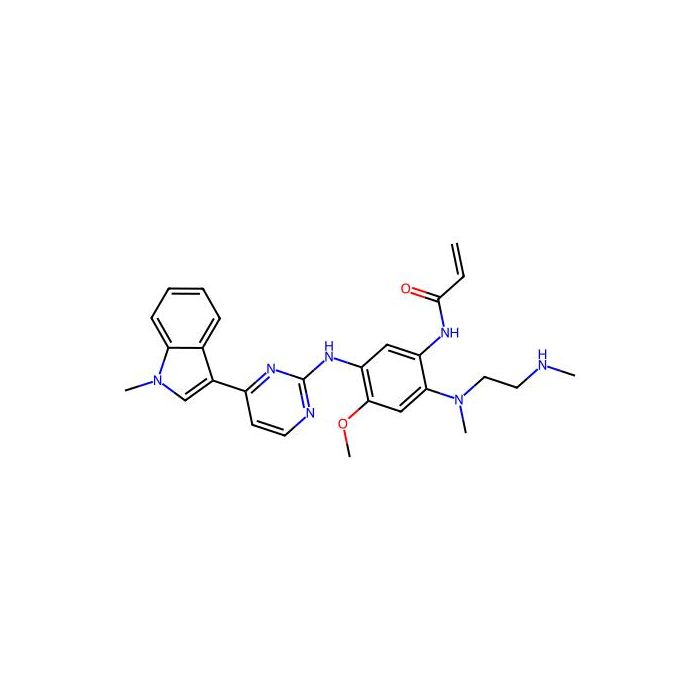
This compound belongs to the class of organic compounds known as 2'-aminoanilides. These are organic compounds containing an anilide moieties that carries an amino group at the 2-position of the benzene ring.
External Descriptors
Not available
1. Djoumbou Feunang Y, Eisner R, Knox C, Chepelev L, Hastings J, Owen G, Fahy E, Steinbeck C, Subramanian S, Bolton E, Greiner R, and Wishart DS. ClassyFire: Automated Chemical Classification With A Comprehensive, Computable Taxonomy. Journal of Cheminformatics, 2016, 8:61.
Determine the necessary mass, volume, or concentration for preparing a solution.
Dilution Calculator
Determine the dilution needed to prepare a stock solution.
Reconstitution Calculator
Reviews
Customer Reviews
Application Protocols
Item-specific validated protocols
None are provided for AZ7550 in this listing (e.g., no WB/IHC/IF/FC or biochemical assay conditions are specified). Please refer to your internal SOPs or literature associated with this compound’s CAS/CID.
Documentation
For concentration, solvent, and handling recommendations specific to this lot, consult the CoA/Spec Sheet and SDS. Perform pilot experiments to establish working dilutions and exposure times compatible with your assay system.
Biological Roles
Scope
No target, pathway, or MOA information is provided in this catalog entry for AZ7550. The points below outline how small-molecule ligands are typically positioned in research—not clinical—contexts.
General research roles (non-clinical)
Chemical probe/ligand candidate: Used to interrogate protein function by modulating binding or activity in biochemical or cellular systems.
Tool compound in systems biology: Applied in dose–response studies to perturb signaling nodes and infer network behavior.
Chemical genetics: Screening across mutant panels or CRISPR-edited backgrounds to associate phenotypes with molecular targets.
Profiling/annotation: Employed in broad panel assays (e.g., kinome, GPCRome) to develop preliminary selectivity maps when a target class is suspected from literature.
Practical guidance
Establish the vehicle control and ensure the final solvent concentration is compatible with the biological system to avoid confounding toxicity.
Verify chemical stability in relevant media (buffer, serum-containing cell culture) via LC–MS time-course to confirm exposure.
Consider nonspecific aggregation controls (detergent supplementation, dynamic light scattering) to distinguish true binding from colloidal effects.
Note: Item-specific biological targets or roles for AZ7550 are not specified in this listing. Consult literature associated with CAS 1421373-99-0 and CID 71496459 for any peer-reviewed annotations.
Buffer Applications
Applicability
AZ7550 is not a buffering reagent. However, small-molecule ligands are commonly dosed into physiological buffers for biochemical and cellular assays.
Practical guidance (general)
Prepare a concentrated DMSO stock and dilute into assay buffers such as PBS, HEPES, or Tris while mixing to avoid local supersaturation. Keep final DMSO ≤0.1–1% v/v where assay-permitted.
For low-solubility compounds, include modest levels of co-solvent (e.g., ethanol) or non-ionic surfactant (e.g., 0.01–0.05% Tween-20) if compatible with the readout.
Filter solutions (0.22 µm) only if the compound is known to be filter-stable and non-adsorptive; otherwise, centrifuge to clarify.
Maintain light protection (foil wrap, amber vials) and, if feasible, cool during preparation to align with the product’s light/cold storage guidance.
Not item-specific
No buffer pKa/pH range or formulation recipe is provided for AZ7550. For experiment design, follow your assay’s validated buffer system and confirm compound solubility and stability empirically.
Green Alternatives
Context
As a research ligand, AZ7550’s principal environmental footprint typically arises from the choice and volume of solvents used during stock preparation, dilutions, and cleanup. Item-specific green metrics are not available.
Greener solvent considerations (general)
Where compatible with solubility and assay performance, prefer ethanol or water–ethanol co-solvent systems over DMF or high DMSO fractions.
For formulation-style screening, explore propylene carbonate, Cyrene™, or propylene glycol/PEG400 as less hazardous alternatives, recognizing potential viscosity and assay-interference tradeoffs.
Employ microscale preparations, minimize waste, and use amber polypropylene vials to reduce the need for repeated preparations due to photodegradation.
Reference standard in analytical method development (e.g., LC–MS calibration) during early discovery if the compound is studied in-house.
Preformulation screening: Solubility profiling across pH and excipient space (e.g., cyclodextrins, PEGs) to understand developability in a research setting.
ADME/PK in vitro assays: Metabolic stability (microsomes/S9), plasma protein binding, permeability (PAMPA/MDCK), and solubility screens—subject to institutional approvals.
Compliance and documentation
For any regulated workstreams, request the latest CoA and SDS and assess internal requirements for reference standards (traceability, impurity thresholds).
Note: There are no pharmacopeial monographs or excipient roles indicated for AZ7550 in this listing. Do not use in humans or animals for therapeutic purposes.
Physical Properties
Item-specific physical data
Appearance: Not specified for this item; refer to CoA/Spec Sheet.
Melting point (MP): Not specified for this item; refer to CoA/Spec Sheet.
Boiling point (BP): Not specified for this item; refer to CoA/Spec Sheet.
Density: Not specified for this item; refer to CoA/Spec Sheet.
Refractive index: Not applicable/not specified; refer to CoA/Spec Sheet.
Solubility: Not specified for this item; refer to CoA/Spec Sheet.
LogP / pKa: Not specified for this item; refer to CoA/Spec Sheet.
Practical guidance (general knowledge for small-molecule ligands; not item-specific)
Many discovery ligands are prepared as DMSO stock solutions (e.g., 10–50 mM) then diluted into assay buffers to ≤0.1–1% v/v DMSO to minimize solvent effects.
If poor solubility is encountered, consider co-solvents such as DMF, ethanol, or PEG400 and gentle warming/sonication. Avoid strong base/acid unless compatible with your assay.
For analytical characterization, typical methods include HPLC/UPLC for purity and LC–MS for identity. If a UV chromophore is present, spectra can assist in tracking compound during workflows.
Note: Definitive thermophysical and spectral values for AZ7550 are not included in this listing; consult the CoA/Spec Sheet for item-specific specifications and any available analytical data.
Quality & Grades
Item-specific details
Grade: Moligand™ (Aladdin small-molecule ligand format for research use). Specific numerical purity, water/metal limits, and stabilizers are not specified for this item; refer to CoA/Spec Sheet.
What Moligand™ implies (general context; not item-specific specs)
Moligand™ offerings are oriented toward screening, target validation, and chemical-biology use. Lots are commonly supported by identity confirmation (e.g., LC–MS) and purity assessment (e.g., HPLC/UPLC). Exact analytical criteria may vary by item—see CoA.
Packaging and handling emphasize compound integrity: inert-gas headspace, light protection, and cold-chain logistics to limit hydrolysis, oxidation, or photolysis.
Practical guidance for users
For assay reproducibility, record lot number and maintain consistent solvent, dilution, and storage protocols.
If your workflow requires specialized quality attributes (e.g., low UV background for chromatographic detectors, trace-metal specifications, or residual solvent limits), request the latest CoA/Spec Sheet and, if needed, a custom QC package.
Before large screens, verify solution stability under assay conditions (e.g., 24–72 h in buffer at operating temperature) by LC–MS or HPLC.
Note: In the absence of item-level specifications in this catalog entry, the CoA/Spec Sheet is the authoritative source for analytical acceptance criteria and any stabilizers used.
Reaction & Applications
Scope and relevance
AZ7550 is presented as a research ligand rather than a synthetic reagent. No manufacturer reaction examples are provided for this item.
Applications in discovery workflows (general; non-clinical)
Target engagement assays: CETSA/thermal shift, DARTS, or NanoBRET target engagement to qualitatively/quantitatively assess binding in cells or lysates.
Biochemical inhibition/activation studies against purified proteins or complexes, subject to assay design and available target information from literature.
Phenotypic screening: Utilize in cell-based readouts to generate activity fingerprints and seed SAR hypotheses when used alongside analogs.
Affinity-based profiling: SPR, BLI, ITC, or TSA to characterize binding kinetics/thermodynamics if the target is known or hypothesized.
Cheminformatics/registration: Use CAS/CID to cross-reference public databases and collate literature around AZ7550 for hypothesis building.
Practical considerations (general)
Prepare concentration-verified stock solutions (qNMR or UV if chromophore known) and employ serial dilutions to minimize carryover error.
Control the final DMSO% (commonly ≤0.1–1% v/v) in assays; include vehicle controls and, if available, reference ligands for benchmarking.
Given light and air sensitivity indications (argon, light protection), minimize exposure during assay setup; use amber vials, pre-chilled blocks, and rapid dilutions.
Note: No item-specific reaction chemistry or named synthetic transformations are provided for AZ7550.
Reaction Conditions
Not typically applicable
AZ7550 is not provided as a reaction reagent, and no structure or functional groups are disclosed, so item-specific reaction conditions cannot be recommended.
General notes for handling during solution preparation (not reaction chemistry)
Work under low light and, where feasible, an inert atmosphere, consistent with the product’s storage guidance (argon, −20°C, light protection).
Use anhydrous solvents for stock preparation if hydrolysis is a concern. Prepare small aliquots to reduce freeze–thaw cycles.
Validate stability at your intended assay temperature and duration via LC–MS.
If derivatization is pursued (general only)
Choose conditions based on verified functional groups (from structural data). For example, amide couplings (EDC/HOBt or HATU/DIPEA) in DMF/DCM at 0–25°C; cross-couplings with Pd catalysts in polar aprotics at 50–100°C. These are generic templates and must not be taken as item-specific for AZ7550.
Conclusion
For AZ7550, rely on the CoA/Spec Sheet and literature for any experimental parameters beyond solution handling.
Safety & Handling
Item-specific hazard data
GHS classification / pictograms / H-statements / signal word: Not specified for this item; refer to SDS.
Known storage constraints (from Product Data)
Store at −20°C, protected from light, argon charged (maintain an inert, dry headspace).
Shipping: Ice chest + ice pads.
General laboratory precautions (defer to SDS for authoritative guidance)
Handle as a potentially hazardous small molecule. Use appropriate PPE: lab coat, safety glasses, nitrile gloves. Work in a fume hood to avoid inhalation of dust/vapors/aerosols.
Avoid exposure to air, moisture, and light if the compound is air-/moisture-/photosensitive (inferred by argon charge and light protection). Keep containers tightly closed; purge headspace with inert gas after use.
Prevent contact with strong oxidizers, strong acids/bases, and reactive metals unless compatibility is documented.
First aid (overview): in case of skin/eye contact, rinse with water for ≥15 minutes and remove contaminated clothing; if inhaled, move to fresh air; if ingested, seek medical attention. Provide SDS to responders.
Spill response: contain, avoid dust formation, absorb with inert material, and dispose of as organic chemical waste per institutional and local regulations.
Always consult the current SDS for AZ7550 for definitive hazard, exposure limits, decomposition hazards, and recommended firefighting measures.
Solvent Selection
Applicability
AZ7550 is supplied as a discovery ligand; specific solubility data are not provided. The guidance below is general for small molecules and should be confirmed empirically for this item.
General solvent strategy (literature/general practice)
Primary stock solvent: DMSO (anhydrous) is typically preferred for 10–50 mM stocks, thanks to broad solubilizing power and assay compatibility at ≤0.1–1% v/v.
Alternative co-solvents: DMF, ethanol (absolute), isopropanol, and PEG400 can assist with difficult solubilization. A mixed-solvent approach (e.g., DMSO:EtOH or DMSO:PEG400) may improve stability and dose linearity.
Aqueous use: Dilute DMSO stocks into assay buffers (e.g., HEPES, PBS) under vigorous mixing to minimize precipitation. Pre-wet plasticware with buffer containing the final DMSO percentage to mitigate adsorption.
Polarity/miscibility (general notes)
DMSO and DMF are fully miscible with water; ethanol is miscible up to high percentages. For hydrophobic ligands, include non-ionic surfactants (e.g., 0.01–0.05% Tween-20 or Pluronic F-127) where assay-tolerated to prevent aggregation.
Comparison (general)
DMSO: highest solvating power; potential enzyme inhibition at >1%.
Ethanol: greener, volatile; lower solvency for highly lipophilic molecules.
PEG400: excellent stabilization, higher viscosity; may affect readouts if used at high %.
Item-specific solubility parameters for AZ7550 are not specified; refer to CoA/Spec Sheet.
Storage & Reconstitution
Item-specific storage (from Product Data)
Storage temperature: −20°C
Protection: Store protected from light
Atmosphere:Argon charged (maintain inert headspace; recap promptly and purge after use)
Shipping: Ice chest + ice pads (cold chain)
General reconstitution guidance (not item-specific; verify empirically)
Allow vial to equilibrate to room temperature in the dark before opening to prevent condensation.
Prepare a concentrated anhydrous DMSO stock (e.g., 10–50 mM) if compatible; gently warm (≤40°C) and sonicate if needed. Do not overheat or expose to bright light.
Dispense into single-use aliquots in amber vials or light-protective tubes. Minimize headspace and backfill with argon or nitrogen before freezing.
Store aliquots at −20°C (or per CoA guidance). Avoid repeated freeze–thaw cycles; thaw on ice or at room temperature shielded from light.
For aqueous assays, dilute the DMSO stock into buffer under vigorous mixing; keep final DMSO low (commonly ≤0.1–1% v/v) to maintain assay integrity.
Notes
Item-specific parameters such as exact solubility, stability in specific buffers, and solution shelf-life are not specified for this item; refer to CoA/Spec Sheet.
Dispose of unused solutions according to institutional chemical waste protocols.
Structure & Identity
Brief overview: AZ7550 (SKU A768931) is supplied in Aladdin’s Moligand™ format as a research-only small molecule for screening and discovery workflows.
Item-specific facts (from Product Data)
Product name / code: AZ7550 / A768931
CAS: 1421373-99-0
PubChem CID: 71496459
Grade: Moligand™ (research-use ligand format)
InChIKey: Not specified for this item; refer to CoA/Spec Sheet.
SMILES: Not specified for this item; refer to CoA/Spec Sheet.
Molecular formula: Not specified for this item; refer to CoA/Spec Sheet.
Molecular weight: Not specified for this item; refer to CoA/Spec Sheet.
Structural features (general note)
The exact 2D/3D structure, ring systems, and functional groups are not provided in the listing. Please consult the CoA/Spec Sheet or SDS for structural identifiers.
How to describe the (unknown) 2D structure in words
Without SMILES/InChI or a structure image, definitive description of heteroatoms, aromaticity, stereocenters, or functional motifs is not possible here. If you require cheminformatics-ready identifiers (SMILES, InChI, InChIKey) for registration or ELN use, contact Aladdin Technical Support for the item-specific documentation.
Synthetic Utility
Applicability
AZ7550 is marketed as a research ligand, not as a synthetic building block, and no functional-group information is provided. Consequently, specific transformations or named-reaction roles cannot be assigned here.
General guidance (when derivatization is desired; not item-specific)
If structural information is available from the CoA or literature, identify derivatizable handles (e.g., aryl halide, amine, carboxyl, hydroxyl) and plan late-stage diversification accordingly (e.g., amide coupling, Suzuki, Buchwald–Hartwig, SNAr).
Maintain inert, anhydrous conditions if the scaffold is air/moisture sensitive (consistent with argon-charged storage).
Characterize intermediates and final products by LC–MS, NMR, and HPLC; confirm retention of the parent scaffold’s integrity when preparing analogs.
Caveat
Without disclosed structure, proposing concrete synthetic disconnections or conditions would be speculative. Please consult the CoA/Spec Sheet or primary literature associated with CAS 1421373-99-0 for any established synthetic routes.
Target Specificity
Item-specific data
No target, enzyme, receptor, or pathway specificity is provided for AZ7550 in this catalog entry.
Guidance
If you require validated target annotations, consult peer-reviewed literature indexed by CAS 1421373-99-0 or CID 71496459, or perform in-house profiling (e.g., panel screening, chemoproteomics) to establish selectivity.
Note: Any claims of specificity should be based on experimental evidence; none are supplied here.
Need help choosing the grade?
Our grade selection guide covers purity, stabilizer status, and application suitability for all variants in our catalog.
We use cookies to ensure the website functions properly and, where permitted, to improve your experience. You can manage your preferences at any time in Settings. Learn more in our Cookie Policy.
Shall we send you a message when we have discounts available?
Remind me later
Thank you! Please check your email inbox to confirm.
Products are supplied to verified businesses, institutions, and qualified professionals for research and development use only. Not for use in humans, animals, diagnosis, or therapy.

 I2616204