GRADE & PURITYMoligand™?Moligand™ — Aladdin's line of ligands and bioactive small molecules. Use for receptor, pathway, and binding studies needing defined small-molecule tools.10 mM in DMSO
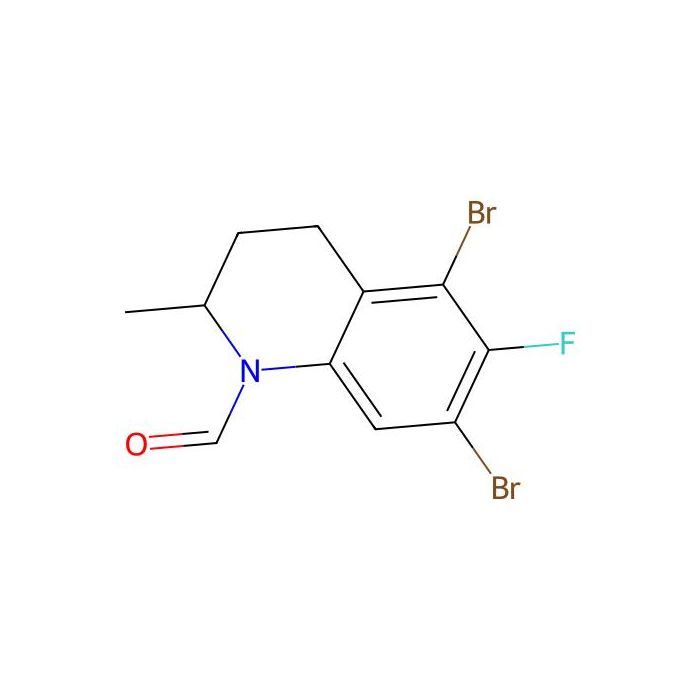
CE3F4 is a selective antagonist of exchange protein directly activated by cAMP ( Epac1 ), with IC 50 s of 10.7 μM and 66 μM for Epac1 and Epac2(B), respectively.
Specifications
Specifications & Purity
Moligand™, 10 mM in DMSO
Storage
Argon charged,Store at -80°C
Shipped In
Dry ice packs + Cold packs
This product requires cold chain shipping. Ground and other economy services are not available.
Determine the necessary mass, volume, or concentration for preparing a solution.
Dilution Calculator
Determine the dilution needed to prepare a stock solution.
Reconstitution Calculator
Reviews
Customer Reviews
Application Protocols
No item-specific, validated application protocols are provided in the listing.
General guidance for small-molecule screening (practice-based):
Biochemical assays: Prepare a dilution series (e.g., 10-point, 3-fold) from a concentrated DMSO stock; keep final DMSO constant (e.g., 0.5% v/v). Include positive and vehicle controls.
Cell assays: Filter-sterilize if appropriate (0.22 µm PTFE for DMSO stocks). Titrate compound to identify non-cytotoxic, effective concentrations. Confirm DMSO tolerance for the cell model.
Orthogonal confirmation: Validate hits with an independent assay modality (e.g., enzymatic readout vs thermal shift) and assess aggregation artifacts (detergent sensitivity tests) before assigning mechanism.
For any protocol requiring compound-specific parameters, consult the CoA/Spec Sheet and perform pilot experiments.
Biological Roles
Item-specific biological targets, pathways, or mechanisms are not provided in this listing.
General considerations for Moligand library compounds:
Role in research: Small molecules like CE3F4 are used as chemical probes or hits in screening campaigns to interrogate biological pathways, modulate enzyme activities, or perturb protein–protein interactions in vitro and in cells.
Follow-up characterization: After identifying activity, mechanistic studies (e.g., kinetics for enzymes, CETSA for cellular target engagement, or CRISPR knockdown rescue) can help ascribe on-target effects.
ADME/physchem: If pursuing deeper biological characterization, determine aqueous solubility, lipophilicity, permeability (e.g., PAMPA/MDCK), and metabolic stability (microsomes/S9). None of these parameters are specified for this item; refer to CoA/Spec Sheet or generate in-house.
Note: No medical or clinical uses are claimed or implied. This product is for research use only.
Buffer Applications
This product is a small-molecule screening compound and is not a buffering agent. It has no defined buffering range or buffer recipes associated with it.
Practical note:
When using in aqueous assays, prepare a concentrated stock in DMSO (or another suitable solvent) and dilute into the assay buffer, keeping final vehicle concentration consistent across controls and samples. Verify compound stability in the specific buffer, pH, and temperature used.
Green Alternatives
This product is a discovery screening compound rather than a process solvent or bulk reagent. “Green alternative” considerations therefore mainly concern solvent/vehicle choices and handling practices during use.
Greener handling choices (general guidance):
Prefer low-toxicity, low-VOC vehicles where compatible: aqueous buffers with minimal DMSO (≤0.1–0.5% v/v) instead of higher DMSO percentages.
If organic vehicles are required, ethanol or isopropanol can be greener alternatives to DMF/NMP, recognizing their narrower solubility windows and higher volatility.
Minimize waste: use micro-scale assays, sealed microplates to reduce evaporation and emissions, and accurate aliquoting to avoid repeated freeze–thaw and discard.
Comparison (general, not item-specific):
DMSO vs DMF/NMP: DMSO often offers a better EHS profile and broad solubility; DMF/NMP provide strong solvation but face stricter regulatory scrutiny.
Ethanol/IPA vs DMSO: more benign and renewable but may not dissolve hydrophobic scaffolds; assess assay tolerance and precipitation risk.
Operational green practices:
Use amber vials and chilled blocks to prolong stability and reduce decomposition.
Consolidate shipments on dry ice to lower logistics footprint when practical and permitted by stability requirements.
Pharmaceutical Uses
No excipient role, pharmacopeial monograph, or formulation standard is provided for this item.
Research-use context (general):
CE3F4, as a Moligand library compound, may be used in preclinical discovery research (e.g., screening and target validation) but is not supplied or qualified for GMP manufacturing or clinical use.
If formulation studies are pursued for research, common vehicles include DMSO, aqueous buffers with co-solvents, or lipid/surfactant systems; confirm compound stability and compatibility experimentally.
Statement of use: For research use only.
Physical Properties
Item-specific physico-chemical data have not been provided in the product listing.
Appearance: Not specified for this item; refer to CoA/Spec Sheet.
Melting point: Not specified for this item; refer to CoA/Spec Sheet.
Boiling point: Not specified for this item; refer to CoA/Spec Sheet.
Density: Not specified for this item; refer to CoA/Spec Sheet.
Refractive index: Not specified for this item; refer to CoA/Spec Sheet.
Solubility: Not specified for this item; refer to CoA/Spec Sheet. (General practice for Moligand library compounds is dissolution in anhydrous DMSO to make concentrated stocks.)
LogP/logD, pKa: Not specified for this item; refer to CoA/Spec Sheet.
General guidance (literature/practice, not item-specific):
Library screening compounds are commonly formulated as 10–50 mM DMSO stocks for biochemical or cell-based assays.
If aqueous use is needed, co-solvent approaches (DMSO 0.1–1% v/v into buffer) or surfactant-assisted solubilization may be applied after small-scale compatibility checks.
Quality & Grades
Grade/Purity: Moligand™
What Moligand™ typically implies (general information for this grade):
Intended use: Small-molecule ligand/library grade for discovery screening, target engagement studies, and SAR exploration in research settings.
Typical QC elements for library compounds (general, not item-specific): Identity confirmation by LC–MS and/or NMR; assessment of purity by HPLC/UPLC. Exact test methods, acceptance criteria, and any stabilizers are not specified for this item; refer to CoA/Spec Sheet.
Absorbance/fluorescence profile: Not specified for this item; refer to CoA/Spec Sheet. For optical assays, verify background signal and interference.
What is specific to this item from Product Data:
Storage: Argon charged; store at –80°C. Shipped on dry ice packs + cold packs.
Appearance: Not specified for this item; refer to CoA/Spec Sheet.
Implications for users:
The inert-gas charging and ultra-low storage suggest sensitivity to air, moisture, and/or slow degradation at higher temperatures. Maintain inert handling where practical, minimize time at ambient temperature, and aliquot to reduce freeze–thaw cycles.
For critical work (e.g., quantitative screening), confirm identity and purity with in-house analytics upon receipt.
Reaction & Applications
Primary use case: As a Moligand™ small-molecule, CE3F4 is positioned for discovery screening and target engagement studies rather than as a synthetic reagent.
Applicable research applications (general for library compounds):
Biochemical target screening: enzyme or binding assays to profile activity/affinity; generate preliminary structure–activity insights when combined with related chemotypes.
Cell-based phenotypic assays: evaluate pathway modulation via high-content imaging, reporter assays, or viability readouts.
Chemoinformatics: docking and pharmacophore alignment if structure is available from CoA or registry; prioritize analog design for SAR.
Not typically applicable:
It is not primarily supplied for use as a stoichiometric reagent or catalyst in named organic reactions. If derivatization or conjugation is intended, obtain the full structure and functional-group map from the CoA and confirm compatibility.
Practical tips:
Prepare concentrated, single-use DMSO aliquots under inert atmosphere if the compound is air/moisture sensitive.
Document lot number and preparation details; verify stability under assay conditions (time, temperature, light).
Reaction Conditions
Not typically applicable. CE3F4 is provided as a Moligand library compound for screening, not as a reagent or catalyst with defined reaction conditions.
General laboratory use conditions (practice-based):
Stock preparation: Dissolve in anhydrous DMSO to 10–50 mM under inert atmosphere if sensitive; vortex and, if needed, sonicate briefly.
Working solutions: Dilute into assay buffers or media to the desired final concentration while maintaining a constant vehicle percentage across controls.
Stability checks: Monitor clarity/precipitation, UV–vis (if chromophore present), or LC–MS to confirm integrity over the assay timeframe.
Safety & Handling
Safety information specific to this item is not provided in the listing. Treat as a research chemical of unknown toxicity and handle accordingly.
GHS classification: Not specified for this item; refer to SDS.
Signal word / H-statements / Pictograms: Not specified for this item; refer to SDS.
General precautions (good laboratory practice):
Wear appropriate PPE: lab coat, safety glasses, and nitrile gloves.
Handle in a fume hood to avoid inhalation of dust/aerosols or solvent vapors.
Avoid skin/eye contact and ingestion. Wash thoroughly after handling.
Storage incompatibilities: Abide by provided storage guidance (argon charged; –80°C). Keep away from moisture, oxidants, acids/bases until compatibility is known. Use inert atmosphere to minimize hydrolysis/oxidation if the compound is air/moisture sensitive.
Special risks: Many small organic compounds may be combustible; avoid ignition sources. If formulated in DMSO, enhance dermal exposure controls due to DMSO’s skin-permeation properties.
First-aid overview (general):
Inhalation: Move to fresh air; seek medical attention if symptoms persist.
Skin/eye contact: Rinse with water for at least 15 minutes; remove contaminated clothing; seek medical attention as needed.
Ingestion: Rinse mouth; do not induce vomiting; seek medical attention.
Always defer to the product’s SDS and institutional risk assessments for authoritative safety data.
Solvent Selection
Because CE3F4 is provided as a Moligand library compound with no item-specific solubility data, select solvents using a staged approach.
General recommendations (practice-based, not item-specific specifications):
Primary stock solvent: Anhydrous DMSO is the default choice for small-molecule screening stocks (10–50 mM). Benefits: broad solvating power, low volatility, and compatibility at ≤1% v/v with many biochemical and cell-based assays.
Alternative solvents if DMSO is unsuitable: DMF or NMP (strong polar aprotics), ethanol or isopropanol (more volatile, better for rapid drying), or PEG-400 (viscous, enhances aqueous delivery). Verify assay compatibility first.
Aqueous systems: Use co-solvent strategies (e.g., 0.1–1% DMSO in buffer). Consider adding surfactants (e.g., 0.01% Tween-20) or cyclodextrins if precipitation persists, subject to assay tolerance.
Small comparison (general):
DMSO: widest solubility window; cell-compatible at low %; can carry compounds through skin—use PPE.
Ethanol/IPA: greener, volatile; limited solubility for very lipophilic compounds; may perturb membranes.
Practical tips:
Start with micro-scale solubility checks (visual clarity, nephelometry) at target working concentrations.
Filter 0.22 µm if needed; avoid adsorption by pre-wetting filters with solvent.
Record final vehicle % in all assays to ensure reproducibility.
Storage & Reconstitution
Storage conditions (from Product Data): Argon charged; store at –80°C. Shipped on dry ice packs + cold packs.
Container handling: Keep vials tightly sealed. Minimize exposure to air and moisture; purge headspace with inert gas after opening if feasible.
Light protection: If the compound is light sensitive (not specified), use amber vials/foil wrap.
Reconstitution (general guidance for library compounds):
Solvent: Use anhydrous DMSO to prepare a concentrated stock (e.g., 10–50 mM). Actual solubility limit is not specified for this item; determine empirically.
Procedure: Allow vial to equilibrate to dry ice temperature in a chilled block before opening. Briefly cool the solvent, add minimal volume, vortex until fully dissolved. If necessary, warm gently to room temperature for dissolution, avoiding prolonged exposure.
Aliquoting: Dispense single-use aliquots (e.g., 10–50 µL) in inert-gas–purged, low-bind tubes; refreeze promptly at –80°C.
Freeze–thaw: Avoid repeated cycles; discard partially used aliquots to maintain consistency.
Stability: Not specified for this item; refer to CoA/Spec Sheet. Verify integrity by LC–MS or HPLC before critical experiments.
Research Use Note: For research use only.
Structure & Identity
Brief overview: CE3F4 (SKU C1494138) is sold as a Moligand-grade small-molecule screening compound in Aladdin’s small-molecule/compound library category.
SKU: C1494138
Product Name: CE3F4
CAS: 143703-25-7
PubChem CID: 21781066 (catalog cross-reference)
Molecular Formula: Not specified for this item; refer to CoA/Spec Sheet.
Molecular Weight: Not specified for this item; refer to CoA/Spec Sheet.
SMILES: Not specified for this item; refer to CoA/Spec Sheet.
InChIKey: Not specified for this item; refer to CoA/Spec Sheet.
Structural features: Not specified for this item; refer to CoA/Spec Sheet.
2D structural description (general): As a Moligand library member, CE3F4 is intended for target engagement and SAR exploration. Specific ring systems/functional groups are not provided in this listing. For exact structure, consult the item’s CoA/Spec Sheet or the cited registry entries.
Synthetic Utility
This item is supplied as a screening ligand/small molecule and is not positioned as a synthetic reagent or building block in the catalog entry. Without a disclosed structure and functional-group map, synthetic transformation planning is not applicable.
If derivatization is desired (general advice):
Obtain the full structure (from CoA/Spec Sheet or registry) and identify functional handles amenable to diversification.
Consider late-stage functionalization strategies only after confirming that the parent scaffold tolerates the chemistry.
Target Specificity
Target/epitope/clone/isotype-style details apply to biologics and antibodies and are not applicable to this small-molecule product.
Item-specific target information: Not specified for this item; refer to CoA/Spec Sheet and any provided literature references for target or pathway annotations relevant to CE3F4.
Need help choosing the grade?
Our grade selection guide covers purity, stabilizer status, and application suitability for all variants in our catalog.
We use cookies to ensure the website functions properly and, where permitted, to improve your experience. You can manage your preferences at any time in Settings. Learn more in our Cookie Policy.
Shall we send you a message when we have discounts available?
Remind me later
Thank you! Please check your email inbox to confirm.
Products are supplied to verified businesses, institutions, and qualified professionals for research and development use only. Not for use in humans, animals, diagnosis, or therapy.