Determine the necessary mass, volume, or concentration for preparing a solution.
Taxonomy Tree
| Kingdom | Inorganic compounds |
|---|---|
| Superclass | Mixed metal/non-metal compounds |
| Class | Transition metal organides |
| Subclass | Transition metal oxides |
| Intermediate Tree Nodes | Not available |
| Direct Parent | Transition metal oxides |
| Alternative Parents | Inorganic salts Inorganic oxides |
| Molecular Framework | Not available |
| Substituents | Transition metal oxide - Inorganic oxide - Inorganic salt |
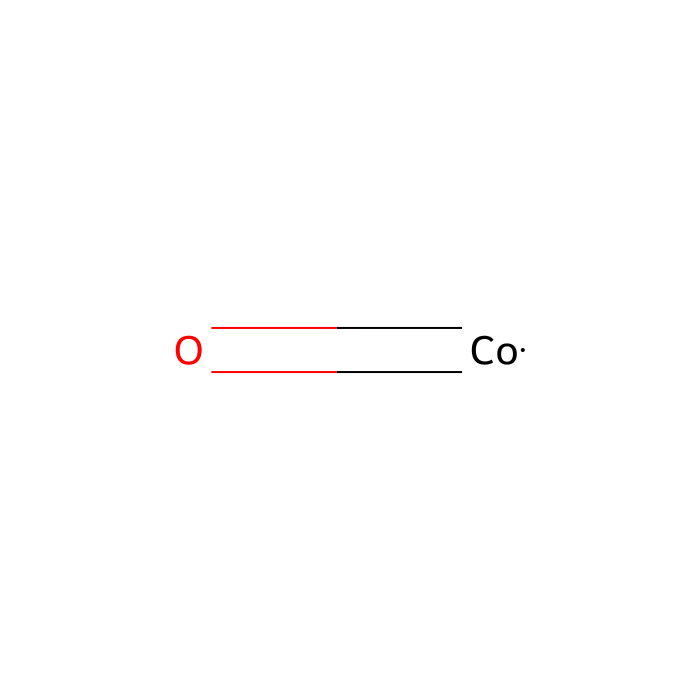
| Description | This compound belongs to the class of inorganic compounds known as transition metal oxides. These are inorganic compounds containing an oxygen atom of an oxidation state of -2, in which the heaviest atom bonded to the oxygen is a transition metal. |
| External Descriptors | Not available |
Find and download the COA for your product by matching the lot number on the packaging.
| Lot Number | Certificate Type | Date | Item |
|---|---|---|---|
| Certificate of Analysis | Jun 24, 2026 | C141461 | |
| Certificate of Analysis | Apr 07, 2026 | C141461 | |
| Certificate of Analysis | Jul 03, 2025 | C141461 | |
| Certificate of Analysis | Dec 07, 2024 | C141461 | |
| Certificate of Analysis | Nov 29, 2024 | C141461 |
| Melt Point | 895℃ |
|---|---|
| Molecular Weight | 74.93 |
| XLogP3 | |
| Hydrogen Bond Donor Count | 0 |
| Hydrogen Bond Acceptor Count | 1 |
| Rotatable Bond Count | 0 |
| Exact Mass | 74.9281 Da |
| Monoisotopic Mass | 74.9281 Da |
| Topological Polar Surface Area | 17.100 Ų |
| Heavy Atom Count | 2 |
| Formal Charge | 0 |
| Complexity | 2.000 |
| Isotope Atom Count | 0 |
| Defined Atom Stereocenter Count | 0 |
| Undefined Atom Stereocenter Count | 0 |
| Defined Bond Stereocenter Count | 0 |
| Undefined Bond Stereocenter Count | 0 |
| The total count of all stereochemical bonds | 0 |
| Covalently-Bonded Unit Count | 1 |
H301:Toxic if swallowed
H317:May cause an allergic skin reaction
H330:Fatal if inhaled
H334:May cause allergy or asthma symptoms or breathing difficulties if inhaled
H350:May cause cancer
H360:May damage fertility or the unborn child
H410:Very toxic to aquatic life with long lasting effects
P201:Obtain special instructions before use.
P202:Do not handle until all safety precautions have been read and understood.
P260:Do not breathe dust/fume/gas/mist/vapors/spray.
P264:Wash hands [and …] thoroughly after handling.
P270:Do not eat, drink or smoke when using this product.
P271:Use only outdoors or in a well-ventilated area.
P272:Contaminated work clothing should not be allowed out of the workplace.
P273:Avoid release to the environment.
P280:Wear protective gloves/protective clothing/eye protection/face protection.
P284:[In case of inadequate ventilation] Wear respiratory protection.
P391:Collect spillage.
P302+P352:IF ON SKIN: wash with plenty of water.
P308+P313:IF exposed or concerned: Get medical advice/attention.
P333+P313:IF SKIN irritation or rash occurs: Get medical advice/attention.
P342+P311:IF experiencing respiratory symptoms: Call a POISON CENTER/doctor/...
P405:Store locked up.
P403+P233:Store in a well-ventilated place. Keep container tightly closed.
P501:Dispose of contents/container to an approved waste disposal plant.
P301+P310+P330:IF SWALLOWED: Rinse mouth.Immediately call a POISON CENTER/doctor/.
P304+P340+P310:IF INHALED: Remove person to fresh air and keep comfortable for breathing. Immediately call a POISON CENTER/ doctor.
No bioassay or immunoassay protocols apply to this inorganic oxide. For materials and analytical workflows, consider the following general, literature-based procedures (not product specifications):
Preparation of a 1000 mg/L Co standard from CoO
Oxidation to Co3O4
Reduction to Co (catalyst activation)
Always adjust conditions to your equipment scale and consult the SDS/CoA for safety and item-specific details.
This product is an inorganic solid for research/materials use; it is not intended for biological systems.
Literature context (not product claims)
Lab guidance
Safety reminder
Cobalt(II) oxide is not a buffering agent and is essentially insoluble in water. It is not used to prepare biochemical buffers.
Cobalt compounds are inherently hazardous and critical metals; “greener” choices focus on safer processing, reduced solvent/energy usage, and closed-loop cobalt handling.
Process-level alternatives (literature; balance benefits vs tradeoffs)
Example comparison (literature; not product specifications)
Practical tips
Cobalt(II) oxide is not employed as a pharmaceutical excipient and has no approved role in drug formulation. It is an inorganic raw material for research and materials manufacturing only.
Manufacturing context (literature)
Compliance note
Reminder
Item-specific (from Product Data)
Literature/Reference values (typical for cobalt(II) oxide; not product specifications)
Not specified for this item; refer to CoA/Spec Sheet
Item-specific (from Product Data)
What this means
Practical implications for users
Related guidance
Materials synthesis
Analytical/elemental chemistry
Mechanistic/practical tips
Named/related processes (literature)
The following are literature/general conditions for common operations involving cobalt(II) oxide; they are not product specifications.
Acid dissolution to prepare cobalt standards/solutions
Oxidation to Co3O4 (spinel)
Reduction to metallic cobalt (catalyst precursor activation)
Solid-state synthesis of cobalt ferrite (example)
Safety/quality notes
Item-specific (from Product Data)
Literature-based safety guidance (general; defer to the product SDS for authoritative information)
Cobalt(II) oxide is a water-insoluble inorganic solid. Solvent selection concerns its dissolution or dispersion for processing or analysis, rather than its use as a solvent.
Item-specific
Literature guidance (general)
When to choose vs alternatives
Item-specific (from Product Data)
General storage guidance (literature/practice)
Reconstitution/Preparation notes
Stability
Documentation
Research Use Note
Brief overview: Cobalt(II) oxide is an inorganic binary oxide of cobalt in the +2 oxidation state, widely used as a cobalt source in materials synthesis, ceramics, catalysis, and analytical chemistry.
Item-specific (from Product Data)
Literature/Computed (for identity/reference; not item specifications)
Notes
Role as cobalt source
Transformations and conversions (literature)
Retrosynthetic value
Practical tips
Not applicable. This product is an inorganic material (cobalt(II) oxide), not a biological targeting reagent (e.g., antibody, ligand, probe). No antigen, epitope, species reactivity, clone, or isotype information applies.
Our grade selection guide covers purity, stabilizer status, and application suitability for all variants in our catalog.
View for Elemental analysis grade guide →