Determine the necessary mass, volume, or concentration for preparing a solution.
Dilution Calculator
Determine the dilution needed to prepare a stock solution.
Reconstitution Calculator
Reviews
Customer Reviews
Application Protocols
No tested application protocols are provided in the Product Data for this item.
Tested applications (WB, IHC, IF, FC, etc.): Not applicable—this is a small-molecule compound, not an antibody or enzyme reagent with standardized protocols.
General protocol pointers for small-molecule tool compounds (literature/general):
Compound handling: Thaw a single-use aliquot on ice, prepare working dilutions in vehicle, and add to assay plates promptly. Avoid repeated freeze–thaw cycles.
Enzyme assay workflow: Prepare master mix (buffer, cofactors, substrate), preincubate compound with enzyme if required (e.g., 10–30 min), initiate with substrate, and monitor signal over time.
Cell-based workflow: Treat cells with compound at a range of concentrations and time points; include vehicle-only and known-control treatments. Harvest for endpoint assays (e.g., Western blot, reporter readouts) following validated SOPs.
For item-specific, validated protocols, please consult the CoA/Spec Sheet or contact technical support with your application details.
Biological Roles
Item-specific biological targets for DUB-IN-3 are not provided in the Product Data. The following describes general context for deubiquitinase (DUB) research tools (literature/general):
Ubiquitin system overview: Protein ubiquitination regulates proteostasis, signaling, and trafficking. DUBs remove ubiquitin from substrates or process ubiquitin precursors, counterbalancing E3 ligases.
DUB inhibitor tool compounds: These small molecules are used to interrogate DUB catalytic mechanisms, substrate specificity, and pathway dependencies. They can help map causal links between ubiquitination states and phenotypes in biochemical or cellular systems.
Enzyme classes: Many DUBs are cysteine proteases (e.g., USP, UCH, OTU, MJD families), while others are metalloproteases (JAMM family). Selectivity is a major challenge; off-target activity, including redox or cysteine-reactive liabilities, should be profiled.
Experimental considerations:
Confirm on-target engagement using orthogonal assays (activity-based probes, CETSA/thermal profiling, or target knockdown/knockout controls).
Assess cytotoxicity and general stress responses to avoid confounding interpretations.
Note: No therapeutic or clinical claims are implied. This material is provided strictly for research use in laboratory settings.
Buffer Applications
DUB-IN-3 is a small-molecule bioactive; it does not itself serve as a buffer component. However, it is commonly handled in buffers during biochemical and cell-based assays. Item-specific solubility and buffer compatibility are not provided and should be determined empirically.
General practices (for enzyme/cellular assays):
Stock preparation: Dissolve in anhydrous DMSO (typical 10–50 mM). Store frozen aliquots and dilute into assay buffer immediately before use.
Typical assay buffers (examples; adjust per enzyme system):
Tris-HCl or HEPES, 25–50 mM, pH 7.4–8.0 (literature, general)
50–150 mM NaCl for ionic strength
0.5–5 mM DTT or TCEP for cysteine DUBs if compatible with the compound’s stability
0.01%–0.05% Tween-20 may reduce nonspecific binding/aggregation; verify no assay interference
Vehicle control: Match final DMSO across conditions (commonly ≤0.1–1% v/v).
Solubility check: After dilution, visually inspect and, if available, use nephelometry or light scattering to confirm absence of precipitation.
For cell-based work:
Prepare intermediate dilutions in culture medium containing the vehicle to achieve final desired concentration with minimal solvent.
Include viability controls and time-course studies to decouple acute toxicity from target engagement.
Note: Composition, pH ranges, and stabilizers are general literature guidance; item-specific properties are not specified for this product.
Green Alternatives
For small-molecule bioactive work, “green alternatives” primarily concern solvent and process choices rather than replacement of the compound itself.
Prefer greener solvents for cleaning and sample preparation when feasible:
Replace dichloromethane and DMF in workups with ethyl acetate or 2-MeTHF where compatible.
For stock solutions, DMSO is widely used in biology; consider ethanol or aqueous cosolvent systems (buffer + ≤10–20% ethanol) if solubility and assay tolerance allow.
Minimize solvent volumes:
Use high-concentration stocks (e.g., 10–50 mM) to reduce vehicle volume in assays and waste streams.
Waste management:
Segregate halogenated and non-halogenated waste; use microplate-based workflows to reduce solvent usage.
Comparison (general guidance):
DMSO: Excellent solvency; fully miscible with water; relatively benign but can facilitate dermal absorption—handle carefully.
Ethanol: Renewable feedstock; generally lower toxicity; may not dissolve highly lipophilic compounds.
2-MeTHF: Bio-based alternative to THF for synthetic steps; not typically used for biological stock solutions but useful for preparative steps if analog synthesis is performed.
Note: No item-specific green chemistry data are provided. Apply institutional green-chemistry policies and solvent selection guides (e.g., CHEM21 or ACS GCI) to associated workflows.
Pharmaceutical Uses
DUB-IN-3 is supplied strictly for research use only. No pharmaceutical, therapeutic, or clinical applications are claimed or supported.
Pharmacopeial status: Not specified for this item; refer to CoA/Spec Sheet.
Excipient/CMC role: Not applicable—this is a research compound, not an excipient.
Formulation relevance (laboratory only): If used in preclinical research assays, compound stocks are typically prepared in DMSO and diluted into biological media or buffers. Any in vivo formulation development, stability studies, or PK assessment lies outside the scope of this catalog listing and requires comprehensive safety and regulatory evaluation by the end user.
Important: This product is not intended for diagnostic use, human consumption, or use in humans or animals. All handling should comply with institutional and regulatory frameworks for research chemicals.
Physical Properties
Item-specific physicochemical properties have not been provided in the Product Data for DUB-IN-3.
Appearance: Not specified for this item; refer to CoA/Spec Sheet.
Molecular weight: Not specified for this item; refer to CoA/Spec Sheet.
Molecular formula: Not specified for this item; refer to CoA/Spec Sheet.
Melting point: Not specified for this item; refer to CoA/Spec Sheet.
Boiling point: Not applicable/unknown for a solid bioactive; Not specified for this item; refer to CoA/Spec Sheet.
Density: Not specified for this item; refer to CoA/Spec Sheet.
Solubility: Not specified for this item; refer to CoA/Spec Sheet. (General practice: many small-molecule screening compounds are dissolved in anhydrous DMSO at 10–50 mM and diluted into assay buffer; verify experimentally.)
LogP/logD: Not specified for this item; refer to CoA/Spec Sheet.
pKa: Not specified for this item; refer to CoA/Spec Sheet.
Refractive index: Not applicable for solids; Not specified for this item; refer to CoA/Spec Sheet.
General laboratory considerations (literature/general):
Many DUB-targeted tool compounds are moderately lipophilic; they often require DMSO or DMF for stock solutions and exhibit limited aqueous solubility. Empirical solubility testing (serial dilution with visual inspection or nephelometry) is recommended before high-throughput screening.
If hygroscopicity or polymorphism is a concern, establish a handling SOP: equilibrate at room temperature in a desiccator prior to weighing, then promptly re-cap and return to low-temperature storage.
Quality & Grades
Item-specific grade and purity are not provided in the Product Data for DUB-IN-3.
Grade/purity: Not specified for this item; refer to CoA/Spec Sheet.
General guidance for small-molecule research compounds:
Research-grade materials are typically suitable for biochemical assays, target validation, and screening. Lot-specific CoA commonly includes identity confirmation (e.g., 1H NMR/LC–MS), purity by HPLC/UPLC (% area), and water/volatile content if applicable. Confirm acceptance criteria on the CoA.
If low UV background is needed (e.g., analytical HPLC method development), verify UV cutoff/impurities on the CoA or develop a gradient and detector wavelength compatible with the chromophore of the compound.
Stabilizers: None are specified for this item. If stabilizers or formers (e.g., TFA salt) are present in a given lot, this will be declared on the CoA/Spec Sheet; assess potential assay interference.
Trace metals/elemental impurities: Not specified for this item; refer to CoA/Spec Sheet. For sensitive applications (e.g., metalloprotein biochemistry), consider additional purification or metal scavenging if needed.
Recommendation: Prior to quantitative biology or SAR work, document the lot number, verify purity and identity from the CoA, and, if critical, perform in-house orthogonal checks (e.g., quantitative NMR, HRMS).
Reaction & Applications
This product is cataloged as a small-molecule research compound rather than a synthetic reagent; thus, it is not typically used as a substrate, catalyst, or solvent in preparative organic reactions.
Applicable research uses (general, for bioactive tool compounds):
Biochemical assays: Evaluation in enzyme activity or binding assays (e.g., ubiquitin-processing enzymes) to probe mechanism-of-action or rank-order structure–activity relationships. Select readouts such as fluorogenic ubiquitin–AMC cleavage, Ub–Pro–fluorophore conjugates, or activity-based probes, with vehicle controls.
Cell-based studies: Assessment of pathway modulation using Western blot of ubiquitination markers, reporter assays, or proteomics. Carefully validate cytotoxicity and off-target effects across a concentration range; include DMSO-matched controls.
Chemoproteomics: If reactive handles or photoaffinity analogs are available in your project, they may be used to explore target engagement and selectivity profiles (general concept).
Not provided for this item:
Manufacturer “Applications” text is not available in the Product Data.
Any item-specific reactivity or assay parameters are not specified; consult the CoA/Spec Sheet and SDS, and optimize conditions empirically.
Reaction Conditions
Not typically applicable—DUB-IN-3 is a research-grade small molecule intended for biochemical or cellular assays, not a reagent for chemical transformations.
General assay-condition guidance (literature/general):
Enzyme assays: 25–37°C, buffered at pH 7.4–8.0 (e.g., HEPES or Tris), with reducing agent as required by the enzyme class (e.g., 1–5 mM DTT for cysteine DUBs). Reaction time commonly 10–60 minutes for kinetic reads; ensure linear regime.
Compound dosing: Prepare serial dilutions in DMSO; maintain constant vehicle in all wells (≤0.1–1% v/v). Include no-enzyme, no-substrate, and vehicle controls to establish baselines.
Readouts: Fluorogenic ubiquitin substrates (e.g., Ub–AMC), FRET pairs, or gel-based deubiquitination assays can quantify activity. For cellular readouts, immunoblotting for ubiquitin conjugates or reporter assays are common.
Data quality: Incorporate technical triplicates, positive/negative controls, and evaluate Z′-factor for high-throughput screens.
Note: No item-specific assay conditions, kinetic parameters, or stability data are provided for DUB-IN-3; optimize empirically for your system and consult the CoA/Spec Sheet for any available guidance.
Safety & Handling
GHS and hazard data are not provided in the Product Data for this item.
GHS classification: Not specified for this item; refer to SDS.
Signal word: Not specified for this item; refer to SDS.
Hazard statements (H-phrases) and pictograms: Not specified for this item; refer to SDS.
General laboratory safety (professional guidance; defer to SDS):
Handle in a chemical fume hood with appropriate PPE: lab coat, safety glasses, and suitable gloves (e.g., nitrile). Avoid inhalation of dust/aerosols and skin contact.
Storage incompatibilities: Avoid strong oxidizers, strong acids/bases, and reactive acylating/alkylating agents unless compatibility is known. Keep container tightly closed and moisture-protected.
First aid overview: If skin contact occurs, wash with soap and water; for eye contact, rinse cautiously with water for several minutes; if inhaled, move to fresh air; if ingested, rinse mouth. Seek medical attention according to institutional SOPs and SDS guidance.
Spill and waste: For small spills, absorb with inert material and dispose of as hazardous chemical waste per local regulations. Prevent release to drains. Decontaminate surfaces after cleanup.
Thermal stability: Given the specified storage at −80°C, avoid repeated temperature cycling; minimize time at ambient conditions during handling.
Always consult the product-specific SDS for authoritative hazard information and response measures before use.
Solvent Selection
No item-specific solubility data are provided; select solvents empirically with assay compatibility in mind.
Primary stock solvents (general best practice):
Anhydrous DMSO (common for hydrophobic screening compounds)
DMF or ethanol as alternatives if DMSO is unsuitable for the assay
Aqueous use: Prepare concentrated organic stock (e.g., 10–50 mM in DMSO) and dilute into aqueous assay buffer with final DMSO typically ≤0.1–1% v/v to limit vehicle effects. Verify that the compound remains in solution (no precipitation or turbidity) at working concentrations.
Polarity/miscibility (general): DMSO and DMF are fully miscible with water and many organic solvents, facilitating titration into buffers. Ethanol offers lower solvent stress in some biological systems but can reduce solubility for very lipophilic compounds.
Selection tips:
For enzyme assays (e.g., deubiquitinase activity measurements), DMSO at ≤0.5% v/v is commonly tolerated; confirm with control wells.
For biophysical methods (SPR/DSF), match vehicle in sample and reference to control refractive index/fluorescence baseline shifts.
When working near solubility limits, include 0.01–0.05% non-ionic surfactant (e.g., Tween-20) only if compatible with the assay; validate against controls.
Note: Definitive solubility, partitioning, and precipitation thresholds for DUB-IN-3 are not specified for this item; refer to CoA/Spec Sheet and establish empirically.
Storage & Reconstitution
Item-specific storage conditions are provided in the Product Data.
Storage: Store at −80°C.
Shipping: Shipped on dry ice packs + cold packs to maintain low temperature during transit.
Reconstitution and handling (general best practices for small-molecule bioactives; item-specific values not provided):
Solvent: If compatible with your assay, dissolve in anhydrous DMSO to prepare a concentrated stock (e.g., 10–50 mM). Actual solubility for DUB-IN-3 is not specified for this item; verify empirically.
Aliquoting: Dispense single-use aliquots into inert, solvent-resistant microtubes. Minimize headspace and moisture exposure.
Freeze–thaw: Avoid repeated freeze–thaw cycles; thaw on ice immediately before use and return unused stock to −80°C promptly. Discard aliquots if precipitation, discoloration, or assay performance drift is observed.
Light/moisture: If the compound is light- or moisture-sensitive (not specified for this item), protect from light and keep desiccated. Store in tightly closed vials.
Aqueous working solutions: Prepare immediately before use and keep at 2–8°C during the experiment as needed. Do not store diluted aqueous solutions unless stability has been established in your lab.
Always consult the CoA/Spec Sheet and SDS for lot-specific guidance on stability, solubility, and safe handling.
Structure & Identity
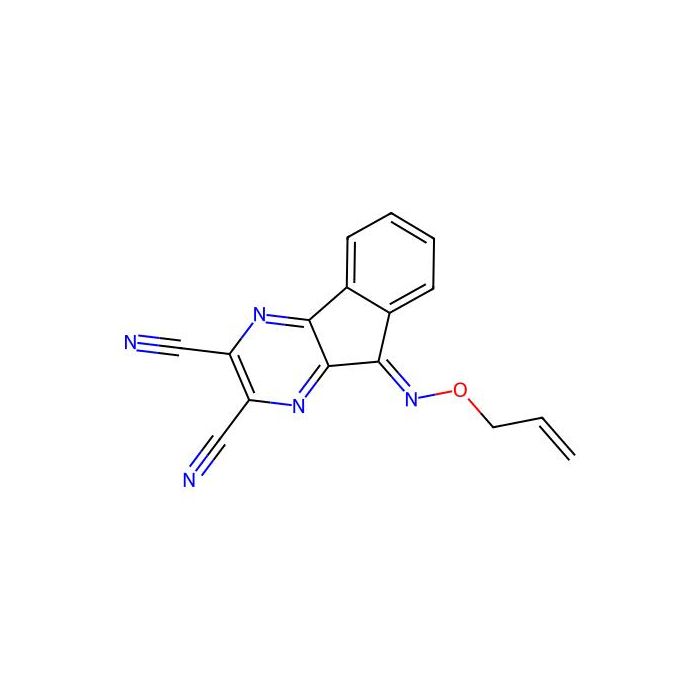
Brief description: DUB-IN-3 is listed in our catalog as a small-molecule research compound from a deubiquitinase (DUB)-inhibitor screening class. Item-specific structure descriptors are not provided in the Product Data.
Chemical name: Not specified for this item; refer to CoA/Spec Sheet.
CAS: 924296-17-3
Molecular formula: Not specified for this item; refer to CoA/Spec Sheet.
Molecular weight: Not specified for this item; refer to CoA/Spec Sheet.
SMILES: Not specified for this item; refer to CoA/Spec Sheet.
InChIKey: Not specified for this item; refer to CoA/Spec Sheet.
CID: Not specified for this item; refer to CoA/Spec Sheet.
Structural features (general context, literature):
Compounds developed as DUB inhibitors often feature heteroaromatic scaffolds and amide/urea/sulfonamide linkages designed to engage catalytic or regulatory sites of cysteine or metalloprotease DUBs (literature, general trend). The exact features for DUB-IN-3 are not specified here.
2D structure description (general guidance):
Without SMILES/InChI, a precise depiction cannot be provided for this item. Please consult the CoA/Spec Sheet or SDS for the authoritative structure graphic and identifiers.
Identity assurance:
For publication or screening records, cite: “DUB-IN-3, CAS 924296-17-3 (Aladdin SKU D655080).” Cross-verify exact structure, synonyms, and registry identifiers against the CoA/Spec Sheet prior to method development or biological evaluation.
Synthetic Utility
DUB-IN-3 is positioned as a bioactive screening compound rather than a synthetic building block or reagent. As such, it is not typically used to form new bonds or as a catalyst in routine organic synthesis.
General considerations (for those synthesizing analogs, literature/general):
Scaffold diversification of DUB-inhibitor chemotypes often exploits amide/urea couplings, heteroaryl cross-couplings (e.g., Suzuki–Miyaura, Buchwald–Hartwig), and sulfonamide formations to access SAR around binding motifs.
Protecting-group strategies should balance stability in late-stage functionalizations with compatibility to sensitive motifs intended to interact with catalytic cysteine residues or metal-coordinating elements in DUBs.
Purification: Reverse-phase preparative HPLC is frequently required to achieve high purity for biological testing; finalize as free base/free acid or salt form per stability and solubility demands.
Item-specific reactivity, functional groups, and synthetic handles for DUB-IN-3 are not specified for this item; consult the CoA/Spec Sheet and primary literature if you plan bespoke synthesis or derivatization.
Target Specificity
Target specificity data are not provided in the Product Data for DUB-IN-3.
Item-specific target, enzyme family, isoform selectivity, and binding constants: Not specified for this item; refer to CoA/Spec Sheet and primary literature if available.
General guidance (for DUB research tools, literature/general):
Verify on-target activity with orthogonal methods (activity-based probes, competition assays, CETSA, or siRNA/CRISPR controls).
Profile selectivity across representative DUB panels and non-DUB proteases to identify off-target liabilities.
Assess redox reactivity and covalency potential if working with cysteine protease DUBs; include glutathione/nucleophile counterscreens to deconvolute nonspecific reactivity.
We use cookies to ensure the website functions properly and, where permitted, to improve your experience. You can manage your preferences at any time in Settings. Learn more in our Cookie Policy.
Shall we send you a message when we have discounts available?
Remind me later
Thank you! Please check your email inbox to confirm.
Products are supplied to verified businesses, institutions, and qualified professionals for research and development use only. Not for use in humans, animals, diagnosis, or therapy.