GFAP Mouse mAb - Primary antibody, specific to GFAP, IgG2a

Cat. No.: Ab179926
AVAILABLE TO ORDER
GRADE & PURITY Carrier Free ? Carrier-free — supplied without added carrier protein/stabilizer. Use when carriers (e.g. BSA) would interfere with conjugation or sensitive assays. ExactAb™ ? ExactAb™ — Aladdin's antibody line emphasizing precision and validated quality. Use for reliable, specificity-validated antibody applications. Azide Free ? Azide-free — without sodium azide preservative. Use in conjugations, cell work, or assays where azide is toxic or inhibitory. Validated ? Validated grade — performance confirmed in defined applications before release. Use when you want documented assurance the reagent works as stated. High Performance ? High-performance grade with optimized purity and performance characteristics. Use for sensitive analyses where ordinary grades fall short. PBS Only ? PBS-only formulation — supplied in phosphate-buffered saline with no other additives. Use when you need a clean PBS buffer free of stabilizers/carriers. 0.5 mg/mL
Application
WB
Host species
Mouse
Reactive species
Human, Mouse
Isotype
Mouse IgG2a
Clone Number
EF03/4D5
Conjugation
Unconjugated
★
Size
Germany (EU)
USA*
Price
Qty
10μl
Ab179926-10μl
—
9 In stock
€69.33
50μl
Ab179926-50μl
—
2 In stock
€225.53
100μl
Ab179926-100μl
—
2 In stock
€364.36
1ml
Ab179926-1ml
Made to order · 8–12 wks
€2,950.23
Enter a quantity for the sizes you want to add.
🧪
Why this grade

Carrier Free,ExactAb™,Azide Free,Validated,High Performance,PBS Only,0.5 mg/mL Azide Free,Carrier Free,ExactAb™,High Performance,PBS Only,Validated for sensitive chromatographic and analytical workflows requiring minimal baseline interference.

🌡

Storage & shipping

Store at -20°C,Avoid repeated freezing and thawing Ships Ice chest + Ice pads Check lot-specific COA for exact specifications.

📋

Quality documents

SDS, COA, datasheet, and spec sheet available for download. Lot-specific COA accessible via lot number lookup.

📚

Literature proof

Cited in 0 peer-reviewed publications across chromatography, organic synthesis, and cross-coupling reactions.

Overview

Application
WB: 1/2,000-1/10,000 ; Predicted molecular weight: 50 kDa

Specifications

Product Name
GFAP Mouse mAb - Primary antibody, specific to GFAP, IgG2a
Synonyms
wu:fb34h11 antibody | ALXDRD antibody | cb345 antibody | etID36982.3 antibody | FLJ42474 antibody | FLJ45472 antibody | GFAP antibody | GFAP_HUMAN antibody | gfapl antibody | Glial fibrillary acidic protein antibody | Intermediate filament protein antibod
Specifications & Purity
Carrier Free,ExactAb™,Azide Free,Validated,High Performance,PBS Only,0.5 mg/mL
Host species
Mouse
Specificity
GFAP
Immunogen
Recombinant full length protein corresponding to Human GFAP
Positive Control
WB: Mouse brain tissue lysate
Conjugation
Unconjugated
Grade
Azide Free, Carrier Free, ExactAb™, High Performance, PBS Only, Validated
Isotype
IgG2a
Light Chain Type
kappa
SDS-PAGE
150 kDa
Purification Method
Protein A purified
Concentration
0.5 mg/mL
Product Line
Biological Products
Storage and Shipping
Form
Liquid
Storage
Store at -20°C,Avoid repeated freezing and thawing
Shipped In
Ice chest + Ice pads
Stability And Storage
Store at +4°C short term (1-2 weeks). Store at -20°C or -80°C. Upon receipt, it is recommended to aliquot. Avoid freeze/thaw cycle.
Images

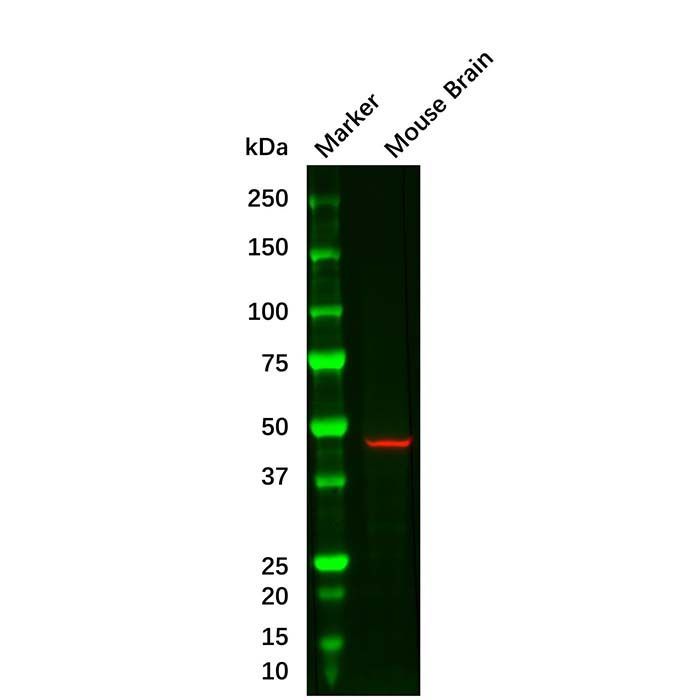
GFAP Mouse mAb (Ab179926) - Western Blot
All lanes: Vinculin Antibody (Ab179926) at 0.5 μg/mL
Samples: Lysate at 20 µg
Secondary: Goat Anti-Mouse IgG H&L (HRP) at 1/20000 dilution

Predicted band size: 50.0 kDa
Observed band size: 45.9 kDa
Exposure time: 66.3 s 

Application
Application
Dilution info
WB

1/2,000-1/10,000 ; Predicted molecular weight: 50 kDa

Documentation

📋 Safety Data Sheet (SDS)

Comprehensive hazard, handling, storage, and regulatory compliance document.

<<<<<<< HEAD Download SDS → ======= Download SDS → >>>>>>> release248-p3

✅ Certificate of Analysis (COA)

Lot-specific quality data. Enter your lot number to retrieve the exact COA.

Look up COA →

📊 Datasheet

Quick-reference summary of product specifications and applications.

View datasheet →

🔬 Specification Sheet

Full quality attributes and acceptance criteria for this grade.

View spec sheet →

Advanced Data

Associated Targets(Human)
GFAP Tbio Glial fibrillary acidic protein (0 Activities)
Activity TypeActivity Value -log(M)Mechanism of ActionActivity ReferencePublications (PubMed IDs)
Certificates (CoA,COO,BSE/TSE and Analysis Chart)
C of A & Other Certificates(BSE/TSE, COO):
Analytical Chart:

Find and download the COA for your product by matching the lot number on the packaging.

3 results found

Lot NumberCertificate TypeDateItem
ZJ23F1202273ZJ23F1202273Certificate of AnalysisDec 28, 2023 Ab179926
ZJ23F1202274ZJ23F1202274Certificate of AnalysisDec 28, 2023 Ab179926
ZJ23F1202275ZJ23F1202275Certificate of AnalysisDec 28, 2023 Ab179926
Documents & Articles
Solution Calculators
Reviews

Customer Reviews

Application Protocols

Item-specific

  • Tested applications, recommended dilutions, incubation times/temperatures, antigen retrieval details, and positive control samples: Not specified for this item; refer to CoA/Spec Sheet.

General protocol outlines (literature/general knowledge; adjust to your system)

  • Western blot: Prepare denatured lysates, run SDS-PAGE, transfer to PVDF/nitrocellulose, block, incubate with primary anti-GFAP mAb (optimize dilution), wash, incubate with species-appropriate secondary, develop via chemiluminescence/fluorescence.
  • IHC/IF: Fix tissue/cells, perform antigen retrieval as needed, block, incubate with primary, wash, apply fluorophore- or enzyme-conjugated secondary, counterstain/mount, image.
  • IP: Incubate lysate with antibody and Protein A/G support (choice depends on isotype; isotype not specified here), wash, elute, analyze by WB or MS.

These are general templates and not validated for this specific lot. Optimize conditions empirically and consult any available datasheet for item-specific recommendations.

Biological Roles

Target overview: GFAP (glial fibrillary acidic protein)

  • Function (literature): GFAP is a type III intermediate filament protein predominantly expressed in astrocytes. It contributes to cytoskeletal architecture, astrocyte mechanical strength, and process extension, and participates in responses to CNS injury and gliosis.
  • Isoforms and assembly: GFAP exists as multiple isoforms generated by alternative splicing; monomers polymerize into filaments with vimentin and other IF proteins (literature general knowledge).
  • Expression context: High in mature astrocytes; detectable in radial glia, ependymal cells, and certain neural progenitors depending on developmental stage and region.
  • Research relevance: Widely used as an astrocyte lineage and activation marker; enables mapping of astroglial networks, neurodevelopmental studies, and characterization of in vitro neural cultures.

This section summarizes general biology of the antigen and does not constitute usage validation for this specific antibody lot. For item-specific performance versus GFAP isoforms and species, consult the CoA/Spec Sheet if available.

Buffer Applications

Item-specific

  • Supplied in: PBS Only (from Product Data). Exact pH and salt composition are not specified; refer to CoA/Spec Sheet.

General buffer considerations for antibody workflows (literature/general knowledge)

  • Dilution buffers: PBS or TBS at pH ~7.2–7.6. Add 0.05–0.1% Tween-20 for washes in WB/IHC to reduce nonspecific binding (ensure compatibility with your detection system).
  • Blocking: Choose blockers appropriate to the assay (e.g., serum, casein, fish gelatin). For carrier-free antibodies, you may add blocking proteins at the application step as needed.
  • Storage buffer adjustments: In the absence of azide (this product is Azide Free), maintain sterility; optional 0.02–0.05% sodium azide is commonly used for long-term storage of non–peroxidase assays, but this would conflict with the “Azide Free” attribute and some applications; consider sterile filtration and aliquoting instead.
  • Antigen retrieval buffers (IHC): Citrate (pH 6.0) or Tris-EDTA (pH 9.0) are commonly used; conditions must be optimized for GFAP epitopes and tissue fixation (general guidance).

These are general practices; verify compatibility with your protocol and the item’s datasheet.

Green Alternatives

Context: For antibody reagents, sustainability focuses on formulation, shipping, and experimental design rather than substituting a greener solvent.

  • Azide Free: Eliminates azide-related aquatic toxicity and hazardous waste concerns; consider sterile technique or low-biotoxin preservatives if compatible with your assay to maintain shelf-life without azide.
  • Carrier Free: Reduces non-biodegradable protein additives and simplifies downstream purification of conjugates, decreasing resource use in cleanup steps.
  • Shipping & storage: Product ships with ice packs (from Product Data). Consolidating orders and minimizing dry-ice shipments can lower cold-chain environmental impact.

Greener practice suggestions (general/literature)

  • Miniaturize immunoassays (micro-volume staining, capillary-based WB) to reduce reagent consumption and waste.
  • Use reusable staining chambers and low-plastic workflows; select non-toxic detergents and block reagents when possible.
  • Buffer selection: PBS prepared in-house from concentrates can reduce packaging; validate pH/ionic strength to maintain antibody stability.

No direct “alternative chemical” is applicable for a target-specific mAb; sustainability gains are best achieved via workflow optimization and careful inventory management to avoid repeated freeze–thaw cycles and wastage.

Pharmaceutical Uses

Not applicable as a finished pharmaceutical. This product is designated for research use only.

General notes (non-clinical, formulation/manufacturing context)

  • Monoclonal antibodies can serve as analytical reagents in bioprocess development (e.g., QC immunoassays) or as affinity ligands in purification studies. However, no such use is specified for this item.
  • No pharmacopeial monograph, GMP status, or excipient role is provided. Do not use in human or veterinary applications.
Physical Properties

Item-specific

  • Molecular weight (exact), molecular formula, extinction coefficient, concentration, isotype, and formulation details beyond “PBS Only”: Not specified for this item; refer to CoA/Spec Sheet.

General/literature values for IgG-class antibodies

  • Typical molecular weight: ~150 kDa for full-length IgG; ~50 kDa (heavy chain) and ~25 kDa (light chain) under reducing SDS-PAGE (literature).
  • Physical state: Usually supplied as an aqueous solution or lyophilizate; this item indicates “PBS Only,” suggesting phosphate-buffered saline vehicle; presence of other excipients not specified.
  • pI: Monoclonal antibodies commonly exhibit pI ~6–9 depending on sequence (literature; item-specific pI not specified).
  • Solubility: Readily soluble in aqueous buffers (PBS, TBS) at neutral pH (literature).
  • Stability factors: Temperature, freeze–thaw cycling, pH, and ionic strength strongly influence aggregation and activity (general guidance).

Note: Do not construe the above as product specifications. For exact values (protein concentration, buffer composition, and any stabilizers) consult the CoA/Spec Sheet.

Quality & Grades

Item-specific quality attributes (from Product Data)

  • Carrier Free: No protein carriers (e.g., BSA) added. Facilitates conjugation (enzymes, fluorophores) and minimizes background in sensitive assays.
  • ExactAb™: Branded quality designation; typically denotes stringent lot-to-lot consistency and accuracy of concentration/identity (interpretation; consult datasheet for specifics).
  • Azide Free: No sodium azide preservative. Important for compatibility with live cells, primary neuron/astrocyte cultures, and peroxidase-based assays (azide inhibits HRP).
  • Validated; High Performance: Indicates in-house validation and performance benchmarking; specific validated applications and metrics are not provided here.
  • PBS Only: Supplied in phosphate-buffered saline; absence of other excipients/stabilizers is implied but not item-spec confirmed beyond “PBS Only”.

Implications for experimental design (general guidance)

  • Without carriers and azide, the antibody is well-suited for custom labeling and functional assays but may require stricter aseptic handling to prevent microbial growth.
  • Lot documentation: For exact concentration, purity profile, residuals, and isotype/clone information, consult the CoA/Spec Sheet.

Note: No additional numeric specifications (e.g., concentration, endotoxin) are provided; do not assume values beyond the statements above.

Reaction & Applications

As a monoclonal antibody, this product is used in immunoassays rather than chemical synthesis.

Item-specific (from Product Data)

  • No specific tested applications or protocols provided. Validated/High Performance is stated but not tied to particular methods.

General research applications for anti-GFAP monoclonal antibodies (literature/general knowledge)

  • Immunocytochemistry/Immunofluorescence (ICC/IF): Detection of GFAP in cultured astrocytes or neural stem cell derivatives; often requires permeabilization and appropriate secondary antibodies.
  • Immunohistochemistry (IHC): Visualization of astrocytic intermediate filaments in fixed brain or spinal cord sections; antigen retrieval conditions depend on fixation and tissue processing.
  • Western blot (WB): Denatured GFAP detection; common apparent band ~49–55 kDa (isoform- and species-dependent; literature typical). Optimize sample prep to preserve intermediate filament integrity.
  • Immunoprecipitation (IP)/Co-IP: Enrichment of GFAP from cell/tissue lysates for downstream analysis.
  • Flow cytometry (less common): Possible in permeabilized cells for intracellular GFAP.

Note: The above are general use-cases; they are not confirmed for this specific lot. Optimize antibody dilution, incubation time, and detection systems empirically, and consult the CoA/Spec Sheet for any item-specific validation data.

Reaction Conditions

Classical chemical reaction conditions are not applicable to monoclonal antibody usage.

General assay conditions (literature/general knowledge)

  • Temperature: Many immunoassays incubate at room temperature or 4°C; elevated temperatures can accelerate binding but may increase background.
  • Time: Primary antibody incubations range from 1–2 h at RT to overnight at 4°C depending on assay and antigen abundance.
  • Buffers: PBS or TBS with defined blockers and detergents as appropriate to the assay.

These points are provided as general guidance, not item-specific recommendations. For this particular product, no tested conditions are specified; consult the CoA/Spec Sheet and optimize empirically.

Safety & Handling

Item-specific hazard information

  • GHS Classification, Signal Word, H/P Statements, and Pictograms: Not specified for this item; refer to the SDS.
  • Research Use: For research use only (as provided).

General safety guidance for protein antibodies (literature/general knowledge)

  • Handle using good laboratory practice. Wear appropriate PPE: lab coat, gloves, safety glasses. Avoid ingestion, inhalation of aerosols, and skin/eye contact.
  • Biological origin considerations: Although purified and intended for research, treat as potentially bioactive material. Avoid microbial contamination; work aseptically when appropriate.
  • Incompatibilities: Avoid strong oxidizers and extremes of pH that can denature proteins. Avoid foaming and vigorous vortexing that can induce aggregation.
  • First aid (general): In case of skin/eye contact, rinse with water. If inhaled, move to fresh air. If ingested, rinse mouth. Seek medical attention if symptoms persist. Defer to SDS for authoritative measures.
  • Thermal sensitivity: Follow storage guidance strictly; repeated freeze–thaw can degrade performance.

Always consult the product’s SDS and institutional EHS policies for definitive hazard classification and emergency procedures.

Solvent Selection

This product is a protein antibody formulated for aqueous use; organic solvent selection is generally not applicable.

Item-specific

  • Buffer system: PBS Only (from Product Data). This typically supports stability at neutral pH and isotonic ionic strength. Exact composition (phosphate concentration, NaCl, pH) is not specified; refer to CoA/Spec Sheet.

General guidance (literature)

  • Preferred matrices: PBS or TBS for dilutions; add protein stabilizers (e.g., 0.1–1% inert protein or 0.05% nonionic surfactant) only if compatible with your assay. For this item, “Carrier Free” implies no carriers are included; adding them is user-dependent.
  • Avoid: High percentages of organic solvents (acetone, acetonitrile, methanol, DMSO) which can denature or precipitate antibodies. If conjugation requires organic cosolvent, keep below denaturation thresholds and validate.
  • pH considerations: Maintain near-neutral pH (6.8–7.6) for most storage/assay conditions unless your protocol defines otherwise.

Select buffers based on downstream application (IHC, IF, WB, IP), antigen retrieval, and detection system compatibility rather than classical solvent polarity comparisons.

Storage & Reconstitution

Item-specific (from Product Data)

  • Storage: Store at -20°C. Avoid repeated freezing and thawing.
  • Shipping: Ice chest + ice pads.
  • Formulation: PBS Only; Carrier Free; Azide Free. Exact PBS composition and protein concentration: Not specified for this item; refer to CoA/Spec Sheet.

General handling guidance (literature/general knowledge)

  • Upon receipt: Inspect for container integrity and temperature. Briefly centrifuge to collect liquid from cap/threads.
  • Aliquoting: Divide into single-use aliquots to prevent freeze–thaw cycles; store at recommended temperature. For short-term use (days to a week), 4°C storage may be acceptable if sterility is maintained; validate stability in your lab.
  • Reconstitution: If supplied lyophilized (not specified here), reconstitute in sterile PBS or assay buffer to the desired concentration, mixing gently to avoid foaming. Allow solution to equilibrate on ice before use.
  • Sterility: Being azide-free, maintain aseptic technique; consider 0.22 µm sterile filtration after reconstitution/preparation if compatible with your application.

Always refer to the CoA/Spec Sheet for lot-specific storage buffer, concentration, and any additional stabilizers or recommended storage nuances.

Structure & Identity

Item-specific (from Product Data)

  • Product: GFAP Mouse mAb (SKU: Ab179926)
  • Type: Mouse monoclonal antibody (mAb) targeting GFAP
  • Grade/Attributes: Carrier Free; ExactAb™; Azide Free; Validated; High Performance; PBS Only
  • CAS, CID, InChIKey, SMILES: Not specified for this item; refer to CoA/Spec Sheet.

General antibody structure (literature/general knowledge)

  • Typical architecture: Immunoglobulin G (IgG)-class monoclonal with two identical heavy chains and two identical light chains forming a Y‑shaped heterotetramer stabilized by disulfide bonds.
  • Approximate mass: ~150 kDa for intact IgG (literature typical); actual mass/isotype for this item: Not specified for this item; refer to CoA/Spec Sheet.
  • Antigen: GFAP (glial fibrillary acidic protein), an intermediate filament protein predominantly expressed in astrocytes.
  • 2D description in words: Two Fab arms (antigen-binding fragments) with variable domains that recognize GFAP epitopes; one Fc stem (constant domains) mediating effector functions (class/isotype-specific; not specified here).
Synthetic Utility

Not typically applicable. As a target-specific monoclonal antibody, this product is not a synthetic building block or reagent for chemical transformations.

For research uses, see the Reaction & Applications and Application Protocols sections for immunoassay-oriented guidance.

Target Specificity

Item-specific (from Product Data/Product Name)

  • Antigen/Target: GFAP (glial fibrillary acidic protein)
  • Host: Mouse monoclonal antibody (mAb)
  • Clone, isotype/subclass, epitope mapping, species reactivity, and cross-reactivity: Not specified for this item; refer to CoA/Spec Sheet.

No additional specificity data are provided. Users should confirm reactivity in their system and consult the datasheet when available.

Frequently Asked Questions

What does ExactAb? mean?
ExactAb? indicates the product has been validated for use in rigorous antibody validation workflows. Validation may include positive/negative control samples, signal-to-noise testing, and protocol-specific QC. Lot-specific test data is published on the Certificate of Analysis where available.
What does Carrier Free mean?
Carrier Free indicates that the material has been processed and tested for specialty industrial processing. Specifications focus on the impurities that affect performance in that application — for example, metal content for electronics, particle size for batteries, refractive index for optics, or moisture content for moisture-sensitive processes.
How should this product be stored?
Store at ?20 °C. Avoid repeated freeze–thaw cycles. Aliquot into single-use volumes before freezing.
How is this product shipped?
This product ships in an insulated container with ice pads. Unpack on arrival and transfer it to the storage condition stated above.
What documentation is provided?
Available product documentation, including Certificates of Analysis (COA), Safety Data Sheets (SDS), and specification sheets, is shown in the product document area. Document availability and access follow the current site policy.
Which species reactivity has this antibody been validated against?
Validated reactivity is listed on the PDP and on each lot's datasheet. We validate against the most commonly tested species for the target (GFAP Mouse mAb); cross-reactivity in untested species may exist but is not guaranteed. Contact technical support for specific species inquiries.

Need help choosing the grade?

Our grade selection guide covers purity, stabilizer status, and application suitability for all variants in our catalog.

View Carrier Free grade guide → View Validated grade guide → View ExactAb™ grade guide → View Azide Free grade guide → View High Performance grade guide → View PBS Only grade guide →

Related Products

Goat Anti-Mouse IgG H&L Antibody - Secondary antibody, for ELISA,LF,GICA various applications, from Mouse, generated in Goat
Goat Anti-Mouse IgG H&L (HRP) - Secondary antibody, for WB,ELISA,IHC-P various applications, from Mouse, generated in Goat, IgG
Rabbit Anti-Mouse IgG H&L (HRP) - Secondary antibody, IgG
Rabbit Anti-Mouse IgG antibody - Secondary antibody
Goat Anti-Mouse IgG H&L (FITC) - Secondary antibody
Goat Anti-Mouse IgG H&L (TRITC) - Secondary antibody
Goat Anti-Mouse IgG H&L Antibody - Secondary antibody, Goat IgG
Goat Anti-Mouse IgG H&L (Cy5) - Secondary antibody
Goat Anti-Mouse IgG H&L (HRP) - Secondary antibody
Goat Anti-Mouse IgG H&L (Biotin) - Secondary antibody
GFAP Antibody - Primary antibody, specific to GFAP, Rabbit IgG
Rabbit Anti-Mouse IgG (HRP) - Secondary antibody
Rabbit Anti-Mouse IgG (Biotin) - Secondary antibody
Goat Anti-Mouse IgG H&L (HRP) - Secondary antibody, Goat IgG
Goat Anti-Mouse IgG H&L (TRITC) - Secondary antibody, Goat IgG
Goat Anti-Mouse IgG H&L (Biotin) - Secondary antibody, Goat IgG
Goat Anti-Mouse IgG H&L (FITC) - Secondary antibody, Goat IgG
Goat Anti-Mouse IgG H&L (Cy5) - Secondary antibody, Goat IgG
GFAP Mouse mAb - Primary antibody, specific to GFAP, IgG2a
Goat Anti-Mouse IgG H&L (PE) - Secondary antibody, Goat IgG
Goat Anti-Mouse IgG H&L (APC) - Secondary antibody, Goat IgG
GFAP Mouse mAb - Primary antibody, specific to GFAP, IgG2a
Goat Anti-Mouse IgG H&L (Alkaline Phosphatase) - Secondary antibody, Goat IgG
Goat Anti-Mouse IgG H&L (AF405) - Secondary antibody, Goat IgG
Goat Anti-Mouse IgG H&L (AF647) - Secondary antibody, Goat IgG
Goat Anti-Mouse IgG H&L (AF555) - Secondary antibody, specific to Mouse IgG, Goat IgG
Goat Anti-Mouse IgG H&L (AF700) - Secondary antibody, specific to Mouse IgG, Goat IgG
Goat Anti-Mouse IgG H&L (PE-Cy5) - Secondary antibody, specific to Mouse IgG
Centrose patent anti-dysadherin (anti-Dysadherin) - Primary antibody, specific to FXYD5
Goat Anti-Mouse IgG H&L (AF488) - Secondary antibody
Goat Anti-Mouse IgG H&L (PE-Cy7) - Secondary antibody
Goat Anti-Mouse IgG H&L (AF750) - Secondary antibody
Goat Anti-Mouse IgG H&L (AF546) - Secondary antibody
Goat Anti-Mouse IgG H&L (Oregon Green 488) - Secondary antibody
Goat Anti-Mouse IgG H&L (Cy3) - Secondary antibody

Shall we send you a message when we have discounts available?

Remind me later

Thank you! Please check your email inbox to confirm.

Oops! Notifications are disabled.