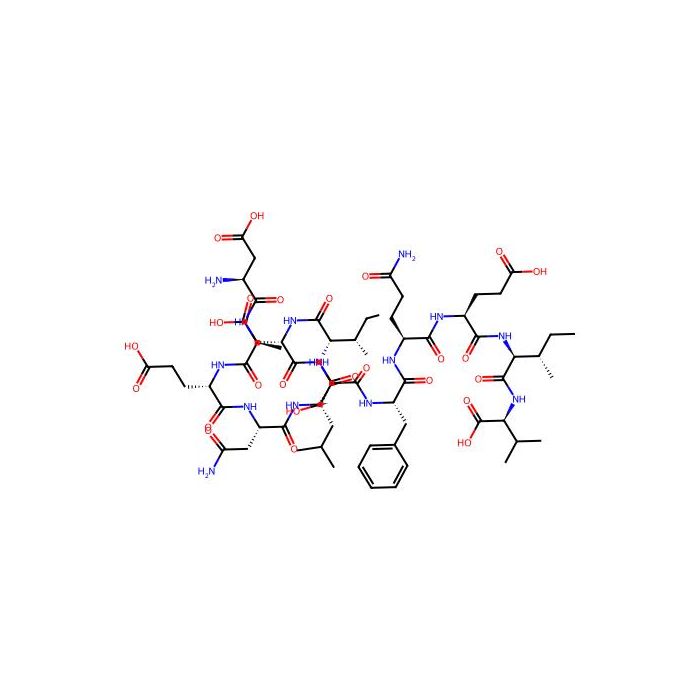
GNRH Precursor (14-26) - ≥98% , CAS No.100111-07-7

CAS: 100111-07-7 Cat. No.: G930431 PubChem CID: 16131399
AVAILABLE TO ORDER
GRADE & PURITY ≥98%
Storage
Protected from light,Desiccated,Store at -80°C
Shipped In
Dry ice packs + Cold packs
★
Size
Germany (EU)
USA*
Price
Qty
1mg
G930431-1mg
Made to order · 8–12 wks
€87.55
5mg
G930431-5mg
Made to order · 8–12 wks
€209.04
10mg
G930431-10mg
Made to order · 8–12 wks
€330.52
Enter a quantity for the sizes you want to add.
🧪
Why this grade

≥98% for sensitive chromatographic and analytical workflows requiring minimal baseline interference.

🌡

Storage & shipping

Protected from light,Desiccated,Store at -80°C Ships Dry ice packs + Cold packs Check lot-specific COA for exact specifications.

📋

Quality documents

SDS, COA, datasheet, and spec sheet available for download. Lot-specific COA accessible via lot number lookup.

📚

Literature proof

Cited in 0 peer-reviewed publications across chromatography, organic synthesis, and cross-coupling reactions.

Specifications

Specifications & Purity
≥98%
Storage
Protected from light,Desiccated,Store at -80°C
Shipped In
Dry ice packs + Cold packs
This product requires cold chain shipping. Ground and other economy services are not available.
Purity
≥98%
Names and Identifiers
Canonical Smiles
CCC(C)C(C(=O)NC(C(C)C)C(=O)O)NC(=O)C(CCC(=O)O)NC(=O)C(CCC(=O)N)NC(=O)C(CC1=CC=CC=C1)NC(=O)C(CO)NC(=O)C(CC(=O)O)NC(=O)C(C(C)CC)NC(=O)C(CC(C)C)NC(=O)C(CC(=O)N)NC(=O)C(CCC(=O)O)NC(=O)C(C)NC(=O)C(CC(=O)O)N
IUPAC Name
(4S)-5-[[(2S)-4-amino-1-[[(2S)-1-[[(2S,3S)-1-[[(2S)-1-[[(2S)-1-[[(2S)-1-[[(2S)-5-amino-1-[[(2S)-4-carboxy-1-[[(2S,3S)-1-[[(1S)-1-carboxy-2-methylpropyl]amino]-3-methyl-1-oxopentan-2-yl]amino]-1-oxobutan-2-yl]amino]-1,5-dioxopentan-2-yl]amino]-1-oxo-3-phenylpropan-2-yl]amino]-3-hydroxy-1-oxopropan-2-yl]amino]-3-carboxy-1-oxopropan-2-yl]amino]-3-methyl-1-oxopentan-2-yl]amino]-4-methyl-1-oxopentan-2-yl]amino]-1,4-dioxobutan-2-yl]amino]-4-[[(2S)-2-[[(2S)-2-amino-3-carboxypropanoyl]amino]propanoyl]amino]-5-oxopentanoic acid
InChIKey
SLLIDJFLMJLJIA-CXWSTQGDSA-N
INCHI
1S/C65H101N15O25/c1-10-31(7)51(80-61(100)39(23-29(3)4)73-59(98)41(26-45(68)83)75-56(95)37(18-21-46(84)85)70-53(92)33(9)69-54(93)35(66)25-48(88)89)63(102)76-42(27-49(90)91)60(99)77-43(28-81)62(101)74-40(24-34-15-13-12-14-16-34)58(97)72-36(17-20-44(67)82)55(94)71-38(19-22-47(86)87)57(96)79-52(32(8)11-2)64(103)78-50(30(5)6)65(104)105/h12-16,29-33,35-43,50-52,81H,10-11,17-28,66H2,1-9H3,(H2,67,82)(H2,68,83)(H,69,93)(H,70,92)(H,71,94)(H,72,97)(H,73,98)(H,74,101)(H,75,95)(H,76,102)(H,77,99)(H,78,103)(H,79,96)(H,80,100)(H,84,85)(H,86,87)(H,88,89)(H,90,91)(H,104,105)/t31-,32-,33-,35-,36-,37-,38-,39-,40-,41-,42-,43-,50-,51-,52-/m0/s1
Isomeric SMILES
CC[C@H](C)[C@@H](C(=O)N[C@@H](C(C)C)C(=O)O)NC(=O)[C@H](CCC(=O)O)NC(=O)[C@H](CCC(=O)N)NC(=O)[C@H](CC1=CC=CC=C1)NC(=O)[C@H](CO)NC(=O)[C@H](CC(=O)O)NC(=O)[C@H]([C@@H](C)CC)NC(=O)[C@H](CC(C)C)NC(=O)[C@H](CC(=O)N)NC(=O)[C@H](CCC(=O)O)NC(=O)[C@H](C)NC(=O)[C@H](CC(=O)O)N
Alternate CAS
100111-07-7
PubChem CID
16131399
MeSH Entry Terms
AAGALASPGGIV;GNRH precursor (14-26);GNRH precursor(14-26);H.Asp-Ala-Glu-Asn-Leu-Ile-Asp-Ser-Phe-Gln-Glu-Ile-Val.OH;pHGnRH(14-26)

Documentation

📋 Safety Data Sheet (SDS)

Comprehensive hazard, handling, storage, and regulatory compliance document.

<<<<<<< HEAD Download SDS → ======= Download SDS → >>>>>>> release248-p3

✅ Certificate of Analysis (COA)

Lot-specific quality data. Enter your lot number to retrieve the exact COA.

Look up COA →

📊 Datasheet

Quick-reference summary of product specifications and applications.

View datasheet →

🔬 Specification Sheet

Full quality attributes and acceptance criteria for this grade.

View spec sheet →

Advanced Data

Taxonomic Classification

Taxonomy Tree

KingdomOrganic compounds
SuperclassOrganic Polymers
ClassPolypeptides
SubclassNot available
Intermediate Tree Nodes Not available
Direct ParentPolypeptides
Alternative Parents Peptides  Phenylalanine and derivatives  Pentacarboxylic acids and derivatives  Glutamic acid and derivatives  Glutamine and derivatives  Asparagine and derivatives  Aspartic acid and derivatives  Isoleucine and derivatives  Leucine and derivatives  N-acyl-L-alpha-amino acids  Valine and derivatives  Serine and derivatives  Alpha amino acid amides  Alanine and derivatives  Amphetamines and derivatives  N-acyl amines  Amino acids  Secondary carboxylic acid amides  Primary carboxylic acid amides  Carboxylic acids  Monoalkylamines  Hydrocarbon derivatives  Carbonyl compounds  Organic oxides  Primary alcohols  
Molecular FrameworkAromatic homomonocyclic compounds
Substituents Polypeptide - Alpha peptide - Phenylalanine or derivatives - Pentacarboxylic acid or derivatives - Glutamine or derivatives - Glutamic acid or derivatives - Asparagine or derivatives - Aspartic acid or derivatives - Leucine or derivatives - Isoleucine or derivatives - N-acyl-l-alpha-amino acid - N-acyl-alpha amino acid or derivatives - N-acyl-alpha-amino acid - Valine or derivatives - Alpha-amino acid amide - Serine or derivatives - Alanine or derivatives - Amphetamine or derivatives - N-substituted-alpha-amino acid - Alpha-amino acid or derivatives - N-acyl-amine - Fatty amide - Fatty acyl - Benzenoid - Monocyclic benzene moiety - Amino acid or derivatives - Amino acid - Carboxamide group - Secondary carboxylic acid amide - Primary carboxylic acid amide - Carboxylic acid derivative - Carboxylic acid - Organic nitrogen compound - Alcohol - Organooxygen compound - Carbonyl group - Primary alcohol - Primary amine - Hydrocarbon derivative - Amine - Organic oxide - Organic oxygen compound - Organonitrogen compound - Primary aliphatic amine - Aromatic homomonocyclic compound
DescriptionThis compound belongs to the class of organic compounds known as polypeptides. These are peptides containing ten or more amino acid residues.
External Descriptors Not available
3D Structure
Interactive Chemical Structure Model


Certificates (CoA,COO,BSE/TSE and Analysis Chart)
C of A & Other Certificates(BSE/TSE, COO):
Analytical Chart:
Chemical and Physical Properties
Molecular Weight1492.600 g/mol
XLogP3-6.000
Hydrogen Bond Donor Count21
Hydrogen Bond Acceptor Count26
Rotatable Bond Count50
Exact Mass1491.71 Da
Monoisotopic Mass1491.71 Da
Topological Polar Surface Area668.000 Ų
Heavy Atom Count105
Formal Charge0
Complexity3090.000
Isotope Atom Count0
Defined Atom Stereocenter Count15
Undefined Atom Stereocenter Count0
Defined Bond Stereocenter Count0
Undefined Bond Stereocenter Count0
The total count of all stereochemical bonds0
Covalently-Bonded Unit Count1
Solution Calculators
Reviews

Customer Reviews

Application Protocols

General handling and example workflows (context; not item-specific)

  • Reconstitution

    • Allow vial to equilibrate to room temperature in a desiccator before opening.
    • Add sterile water to a small portion of the expected final volume. If insoluble, incrementally add 0.1–1% acetic acid or a minimal volume of DMSO, then dilute with buffer.
    • Mix gently; avoid vigorous vortexing that can cause foaming/aggregation.
  • Aliquoting and storage

    • Prepare single‑use aliquots to avoid repeated freeze–thaw.
    • Store aliquots at −80 °C, protected from light. Record concentration on each aliquot.
  • Example assay setups

    • Enzymatic processing assay: Incubate peptide with candidate prohormone convertase under optimized buffer (e.g., 20–50 mM HEPES, pH 7.0–7.5, 1–2 mM Ca2+ if required by enzyme) at 30–37 °C; analyze products by LC‑MS.
    • ELISA coating/control: Coat high‑binding plates with 0.5–2 μg/mL peptide in carbonate buffer, pH 9.6, overnight at 4 °C; block, then proceed with antibody screening. Optimize concentrations empirically.
    • LC‑MS standard: Prepare a calibration series in 0.1% formic acid in water/acetonitrile; use low‑adsorption vials; quantify using extracted ion chromatograms.

Note

  • No item‑specific, validated application protocols are provided for SKU G930431. Optimize conditions for your system and consult the CoA/Spec Sheet for sequence‑dependent constraints.
Biological Roles

General background (literature; not item-specific)

  • GnRH biology: Gonadotropin‑releasing hormone (GnRH) is synthesized as a preprohormone comprising a signal peptide, the GnRH decapeptide, and a C‑terminal GnRH‑associated peptide (GAP). The precursor undergoes post‑translational processing in the secretory pathway to yield the active GnRH and GAP.
  • Precursor fragments: Defined segments of the preprohormone (such as residues 14–26) can be used to interrogate biosynthetic processing steps (signal peptide cleavage, prohormone convertase recognition) and to map antibody epitopes within the precursor region.
  • Cellular context: Prepro‑GnRH is expressed in specific hypothalamic neurons and in some peripheral tissues; regulated secretion and processing contribute to neuroendocrine control.
  • Experimental use of fragments: Short peptides enable controlled studies of enzyme specificity, peptide transport, and interactions with chaperones without the complexity of the full preprohormone.

Notes for researchers

  • The functional properties and subcellular localization relevance of a given fragment depend on its exact sequence and modifications (e.g., N‑terminal signal peptide features vs prosegment motifs). Confirm the sequence for precise biological interpretation.

Item-specific statement

  • For SKU G930431 (GNRH Precursor (14–26)), no sequence or modification information is provided here; consult the CoA/Spec Sheet to align the fragment with known domains of prepro‑GnRH.
Buffer Applications

Not typically applicable.

  • This product is a peptide analyte/standard rather than a buffering agent. It does not define a classical buffer system with a target pH range.
  • For dissolution and assay preparation, select buffers compatible with your downstream application (e.g., phosphate, HEPES, Tris for general biochemistry; ammonium bicarbonate/acetate for MS). Optimize pH/ionic strength to maintain peptide solubility and integrity.
Green Alternatives

Context: As a peptide reagent, environmental impact arises mainly from solvents and workup rather than from the peptide itself.

Greener choices (general guidance)

  • Prefer aqueous media: Use water or mild aqueous buffers for dissolution and assays whenever feasible.
  • Minimize hazardous co‑solvents: If a co‑solvent is necessary, select DMSO (used sparingly) over chlorinated solvents. Avoid HFIP/TFA except where essential, and remove promptly under controlled conditions.
  • Volatile, MS‑compatible buffers: Ammonium bicarbonate or ammonium acetate can replace phosphate/Tris for workflows ending in MS, reducing waste treatment complexity.

Comparison (general; not item-specific)

  • Water/buffer: Lowest hazard; best EHS profile; may require pH adjustment for solubility.
  • DMSO: Widely accepted; manageable EHS profile; bioassay interference possible—validate minimal %.
  • HFIP or strong fluorinated acids: Effective for difficult sequences but higher toxicity and environmental burden—use only when necessary and in closed systems with capture.

Operational practices

  • Scale solutions to immediate need; aliquot and freeze to avoid repeated thawing and disposal of unused material.
  • Use micro‑purification (spin desalting) instead of large‑volume solvent exchanges when changing buffers.
  • Consolidate solvent streams and follow institutional green chemistry guidelines for peptide work.
Pharmaceutical Uses

Not applicable to this catalog item.

  • This product is supplied strictly for research use only. No claims are made regarding suitability for human or veterinary use, diagnosis, or therapy.
  • In a formulation science context (general), synthetic peptides may serve as analytical standards or process controls in manufacturing development; however, no pharmacopeial status, excipient role, or GMP grade is specified for SKU G930431.
  • Any cGMP or clinical manufacturing application would require dedicated quality documentation and qualification beyond the scope of this research reagent.
Physical Properties

Item-specific (Product Data)

  • Appearance: Not specified for this item; refer to CoA/Spec Sheet.
  • Molecular weight: Not specified for this item; refer to CoA/Spec Sheet.

General/literature values and considerations for short peptides (context; not specifications)

  • State: Typically obtained as a lyophilized solid.
  • Solubility: Sequence‑dependent. Many 10–20mer peptides dissolve in water, dilute aqueous acid (e.g., 0.1%–1% acetic acid or TFA), or basic buffer (e.g., 10–50 mM ammonium bicarbonate). Hydrophobic sequences may require co‑solvents (e.g., DMSO) before dilution with aqueous buffer.
  • pI/logP: Determined by the residue composition (counts of Lys/Arg/His vs Asp/Glu) and termini status. Without the sequence, these cannot be predicted here.
  • Hygroscopicity: Peptides are often hygroscopic and can absorb moisture, impacting mass and handling.
  • Stability: Most peptides are stable when lyophilized, protected from light and moisture, and stored at −80 °C; solutions are less stable and benefit from aliquoting and low‑temperature storage.

Practical guidance (general)

  • For initial dissolution, start with high‑purity water; if insoluble, add minimal DMSO or small amounts of dilute acid/base, then bring to the desired aqueous buffer.
  • Filter sterilization (0.22 μm) can be used for cell‑free assays if compatible with peptide and application.

All specific numeric properties (mp, bp, density, pKa, nD) are not provided for this item.

Quality & Grades

Item-specific (Product Data)

  • Grade/Purity: Not specified for this item; refer to CoA/Spec Sheet.

General guidance for peptide quality (context; not specifications)

  • Typical peptide grades: Crude (unpurified), desalted, and purified grades (e.g., >70%, >85%, >90–95% HPLC). High‑purity peptides are recommended for biochemical assays, binding studies, and analytical standards.
  • Characterization: Peptides are commonly released with analytical HPLC chromatograms and MS data (ESI‑MS/MALDI) to verify identity and estimate purity. Amino acid analysis or NMR may be provided for select sequences.
  • Counter‑ions and form: TFA salt is common after RP‑HPLC purification; alternative counter‑ions (e.g., acetate, chloride) may be available on request. Counter‑ion content can influence mass and solubility.
  • Modifications: C‑terminal amidation and N‑terminal acetylation can improve stability or mimic native contexts; presence/absence must be confirmed on the CoA for this item.
  • Endotoxin/bioburden: For cell‑free biochemical assays, typical peptide QC does not include endotoxin testing unless specified. For cell‑based work, low‑endotoxin specifications may be desirable.

Actionable note

  • Because grade/purity and termini/counter‑ion are not specified for SKU G930431, verify suitability for your assay via the CoA/Spec Sheet and, if necessary, perform incoming QC (HPLC/MS) under your method.
Reaction & Applications

Item-specific (Product Data)

  • Manufacturer applications: Not specified in the catalog entry beyond the product name.

General research applications for GnRH precursor fragments (context; not specifications)

  • Prohormone processing studies: Substrate or standard in assays probing endoproteolytic cleavage of the GnRH precursor by prohormone convertases and carboxypeptidases.
  • Receptor biology and binding controls: Although the active decapeptide is GnRH, precursor fragments can serve as negative controls or mapping tools in receptor binding experiments and signaling studies.
  • Immunochemistry: Peptide antigens for generating or characterizing antibodies against defined epitopes within the GnRH precursor; standards for epitope mapping assays.
  • Proteomics and analytics: LC‑MS calibration standards, retention time markers, or internal standards; method development for peptide separations on RP‑HPLC.
  • Structural/biophysical: Model systems for studying conformation, aggregation, or sequence‑dependent interactions in aqueous/organic media.

Practical considerations

  • Verify sequence and termini before designing assays; processing enzymes and antibodies are sequence‑context sensitive.
  • Use high‑purity material for kinetic or binding work; quantify accurately (drying to constant weight is recommended due to hygroscopicity).
  • For mass spectrometry, avoid non‑volatile buffers; prefer ammonium salts and volatile acids.

Note: No specific application testing is provided for this SKU; design experiments accordingly and validate performance in‑house.

Reaction Conditions

Not a classical reactant for small‑molecule synthesis; however, common operations involving peptides (general guidance; not item-specific) include:

  • Dissolution: 0.1–1% acetic acid or TFA in water, or minimal DMSO followed by dilution with buffer. Gentle sonication may help. Avoid high temperatures.
  • Conjugations:
    • NHS ester labeling (e.g., fluorescent dyes): pH 7.5–8.5 in phosphate or bicarbonate buffer; minutes to hours at room temperature; protect from light.
    • Maleimide–thiol coupling: pH 6.5–7.5 in PBS or HEPES; avoid amines that quench maleimides; proceed for 0.5–2 h at RT.
    • EDC/NHS carboxyl activation: pH ~5.0–6.0 for activation; coupling at pH 7–8; use fresh reagents.
  • Enzymatic assays: For protease mapping, use compatible buffers (e.g., 20–50 mM HEPES or Tris, physiological salt), 25–37 °C; monitor by LC‑MS.
  • Analytical separations: RP‑HPLC on C18 using water/acetonitrile with 0.05–0.1% formic acid or TFA; gradients tailored to hydrophobicity.

Notes

  • Reaction times, temperatures, and yields depend on the actual residue composition and termini of the peptide. Validate conditions at small scale.
  • Remove excess reagents by spin desalting or RP micro‑purification when purity is critical for downstream assays.
Safety & Handling

Item-specific (Product Data)

  • GHS classification: Not specified for this item; refer to SDS.
  • Signal word / H‑statements / Pictograms: Not specified for this item; refer to SDS.
  • Research use: For research use only.
  • Storage conditions: Protect from light; keep desiccated; store at −80 °C. Shipped on dry ice packs + cold packs.

General safety guidance for peptides (not item-specific; consult SDS for authoritative information)

  • Hazards: Short synthetic peptides are generally considered low volatility and low acute hazard chemicals; however, dust formation should be avoided. Sensitization is possible in rare cases.
  • PPE: Use lab coat, safety glasses, and appropriate gloves. Avoid inhalation of powders and contact with skin/eyes. Handle inside a clean area or fume hood when weighing.
  • Incompatibilities: Strong oxidizers may degrade susceptible residues (e.g., Met, Cys, Trp). Avoid extremes of pH and prolonged exposure to light (photo‑labile residues) or elevated temperature.
  • First aid (overview): If inhaled, move to fresh air; if on skin/eyes, rinse with water; if ingested, rinse mouth. Seek medical attention according to institutional procedures. Provide SDS to healthcare professionals.
  • Spill/cleanup: Avoid dust; gently sweep/collect solids; dampen with water or buffer if necessary; dispose per institutional and local regulations.
  • Waste: Dispose of peptide solutions/solids as chemical waste; avoid drain disposal unless permitted.
Solvent Selection

Applicability: As a synthetic peptide, solvent choice is driven by sequence hydrophobicity/charge and intended application.

General/literature guidance (not item-specific)

  • Primary solvents: Water or aqueous buffers are preferred when the peptide is sufficiently polar/charged. Start with sterile water.
  • Adjusting solubility:
    • Acidic: 0.1%–1% acetic acid or TFA can protonate basic residues and improve solubility.
    • Basic: 10–50 mM ammonium bicarbonate or dilute NaOH facilitates dissolution of acidic peptides.
    • Organic co‑solvents: Minimal DMSO, DMF, or acetonitrile can pre‑dissolve hydrophobic peptides before slow dilution into buffer.
  • Miscibility profile: DMSO and DMF are miscible with water and are common peptide co‑solvents; limit final DMSO to ≤1–5% for most biochemical assays.
  • Avoid: Strong oxidants and prolonged exposure to neat organic solvents if sequence contains oxidation‑sensitive residues (e.g., Met/Cys/Trp).

Practical tips

  • Sonication and gentle warming (room temperature) can assist dissolution; avoid elevated temperatures that promote degradation.
  • If aggregation occurs upon dilution, add organic co‑solvent first, then titrate aqueous buffer; consider salt strength (50–150 mM) to minimize electrostatic aggregation.
  • Filter with low protein‑binding membranes (e.g., PVDF, PES) if sterile solutions are required.

Comparison (general)

  • Water/buffer: Green, biocompatible; best first choice.
  • DMSO: Excellent solvency; may affect bioassays—validate.
  • HFIP: Powerful for β‑sheet/aggregating peptides, but volatile/toxic—reserve for difficult cases and handle in a hood.
Storage & Reconstitution

Item-specific (Product Data)

  • Storage: Store at −80 °C, protected from light, in a desiccated state.
  • Shipping: Shipped on dry ice packs + cold packs.

General best practices for peptides (context; not specifications)

  • Upon receipt: Keep frozen. Allow to warm to room temperature in a desiccator before opening to prevent condensation.
  • Reconstitution solvents: Start with sterile water. If needed for solubility, use 0.1–1% acetic acid (or TFA) or minimal DMSO before dilution with buffer compatible with your assay.
  • Concentration determination: Use UV at 205 nm or sequence‑based extinction at 214/280 nm when applicable; weighbacks can be unreliable due to residual moisture/counter‑ions.
  • Aliquoting: Prepare single‑use aliquots, flush headspace with inert gas if possible, and refreeze immediately at −80 °C.
  • Stability: Lyophilized peptides are typically stable for months at −80 °C when dry and protected from light. Aqueous solutions have limited stability; store at −20 to −80 °C and avoid multiple freeze–thaw cycles.
  • Adsorption: Use low‑bind tubes and vials, especially at low μM–nM concentrations.

Not provided for this item

  • Appearance, exact molecular weight/formula, termini/counter‑ion, and buffer composition are not specified; refer to the CoA/Spec Sheet for definitive instructions.
Structure & Identity

Item-specific (Product Data)

  • Product name: GNRH Precursor (14-26)
  • CAS: 100111-07-7
  • PubChem CID: 16131399
  • InChIKey: 339014 (as provided)
  • SMILES: Not specified for this item; refer to CoA/Spec Sheet.
  • Molecular formula: Not specified for this item; refer to CoA/Spec Sheet.
  • Molecular weight: Not specified for this item; refer to CoA/Spec Sheet.

General/literature description

  • Compound type: Synthetic peptide fragment corresponding to residues 14–26 of the gonadotropin‑releasing hormone (GnRH) precursor (prepro‑GnRH).
  • Structural features: Linear oligopeptide comprised of proteinogenic L‑amino acids (exact sequence not provided). Typical peptide backbone with amide bonds connecting α‑amino and α‑carboxyl groups; side‑chain functionality depends on sequence (not specified here).
  • 2D structure (described): A linear chain of 13 amino acid residues (positions 14 through 26 within the precursor), each residue contributing an amide linkage, with an N‑terminus (free amine or protected/capped, not specified) and a C‑terminus (free acid or amide, not specified). Side chains may include polar, charged, or hydrophobic groups depending on the actual sequence.

Notes

  • Exact stereochemistry, termini capping (e.g., Ac‑/‑NH2), disulfides, and sequence-dependent motifs are not specified for this catalog item. Consult the CoA/Spec Sheet for definitive structural details.
Synthetic Utility

Limited applicability; this is a peptide product intended primarily as a biological/analytical reagent.

General context (not item-specific)

  • Method development: Useful as a test article for RP‑HPLC gradient optimization, column selection, and MS tuning for peptides in the ~10–20 residue range.
  • Conjugation chemistry: Can be incorporated into bioconjugates (e.g., carrier protein conjugates for immunization, fluorophore labeling) via N‑terminus, C‑terminus, or side chains (e.g., Lys, Cys if present). Actual options depend on the sequence and termini.
  • Reference standard: Employed as an external or internal standard in peptide quantification assays (UV, MS) once exact extinction coefficients/masses are established from the sequence.

Practical advice

  • Confirm termini (free vs capped) to choose coupling strategies (e.g., NHS ester for N‑terminus, EDC/NHS for C‑terminus, maleimide for Cys thiol if present).
  • For analytical standards, accurately determine peptide content (e.g., by amino acid analysis or quantitative NMR) to correct for counter‑ion/water content.

Item-specific note

  • No sequence/termini information is provided for SKU G930431; consult CoA/Spec Sheet before planning conjugation or analytical standardization.
Target Specificity

Not applicable.

  • This product is a peptide fragment, not an antibody or affinity reagent with defined target/epitope specificity claims.
  • If used as an antigen or blocking peptide in immunoassays, its “specificity” will derive from the exact sequence overlap with the target antibody—sequence details are not provided here and must be obtained from the CoA/Spec Sheet.

Frequently Asked Questions

What is the purity of this product?
This product is supplied at ≥98% purity (chemical assay). Lot-specific values are stated on the Certificate of Analysis.
How should this product be stored?
Store at ?80 °C, protected from light, desiccated. Keep the container tightly closed with desiccant — the material is moisture-sensitive.
How is this product shipped?
This product ships frozen with dry ice and cold packs. Unpack on arrival and transfer it to the storage condition stated above; handle dry ice with insulated gloves in a ventilated area.
What are the CAS number, molecular formula and molecular weight?
The CAS Number is 100111-07-7. InChIKey SLLIDJFLMJLJIA-CXWSTQGDSA-N.
What documentation is provided?
Available product documentation, including Certificates of Analysis (COA), Safety Data Sheets (SDS), and specification sheets, is shown in the product document area. Document availability and access follow the current site policy.

Shall we send you a message when we have discounts available?

Remind me later

Thank you! Please check your email inbox to confirm.

Oops! Notifications are disabled.