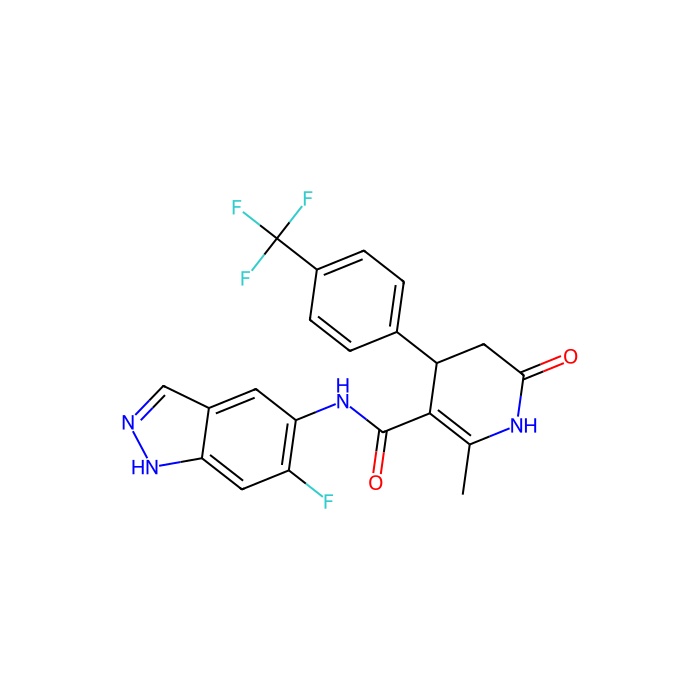
GSK429286A - Moligand™, 10mM in DMSO , Inhibitor of Rho associated coiled-coil containing protein kinase 1;Inhibitor of ribosomal protein S6 kinase A1, CAS No.864082-47-3, Inhibitor of Rho associated coiled-coil containing protein kinase 1;Inhibitor of ribosomal protein S6 kinase A1
GSK429286A - Moligand™, 10mM in DMSO , Inhibitor of Rho associated coiled-coil containing protein kinase 1;Inhibitor of ribosomal protein S6 kinase A1, CAS No.864082-47-3, Inhibitor of Rho associated coiled-coil containing protein kinase 1;Inhibitor of ribosomal protein S6 kinase A1
GRADE & PURITYMoligand™?Moligand™ — Aladdin's line of ligands and bioactive small molecules. Use for receptor, pathway, and binding studies needing defined small-molecule tools.10mM in DMSO
Moligand™, 10mM in DMSO Moligand™ for sensitive chromatographic and analytical workflows requiring minimal baseline interference.
🌡
Storage & shipping
Store at -80°C Ships Dry ice packs + Cold packs Check lot-specific COA for exact specifications.
📋
Quality documents
SDS, COA, datasheet, and spec sheet available for download. Lot-specific COA accessible via lot number lookup.
📚
Literature proof
Cited in 0 peer-reviewed publications across chromatography, organic synthesis, and cross-coupling reactions.
Overview
Information
GSK429286A (RHO-15) is a selective inhibitor ofROCK1andROCK2withIC50of 14 nM and 63 nM, respectively. In vitro
GSK429286A slightly inhibits RSK and p70S6K with IC50 of 0.78 μM and 1.94 μM, respectively. GSK429286A significantly inhibits rat aortic ring dilation with IC50 of 190 nM. GSK429286A at 1 μM reduces ROCK2 activity over 20-fold, under conditions in which the only other kinase tested that is significantly inhibited is MSK1 whose activity is reduced ~5-fold. GSK429286A is a more selective ROCK2 inhibitor than the widely utilized ROCK inhibitor Y-27632 as assessed on kinase-specificity panel, and does not significantly inhibit LRRK2 even at doses as high as 30 μM (500-fold higher than IC50 of inhibition of ROCK2). Like GSK269962A but not sunitinib, GSK429286A treatment at 10 μM ablates basal or G14V-Rho mutant induced phosphorylation of MYPT at Thr850 in HEK-293 cells to a similar extent as H-1152 and Y-27632, consistent with ROCK mediating this phosphorylation, whereas GSK429286A does not inhibit ERM protein phosphorylation either in the presence or absence of G14V-Rho.
In vivo
GSK429286A has 61% oral bioavailability in male Sprague-Dawley rats. Oral administration of GSK429286A at single doses of 3-30 mg/kg dramatically reduces mean arterial pressure in the spontaneously hypertensive rats (SHRs) in a dose-dependent manner, with a maximum decrease of 50 mmHg after approximately 2 hours treatment at dose of 30 mg/kg. Cell Data
Determine the necessary mass, volume, or concentration for preparing a solution.
Dilution Calculator
Determine the dilution needed to prepare a stock solution.
Reconstitution Calculator
Reviews
Customer Reviews
Application Protocols
Tested applications and recommended conditions from Product Data: Not specified for this item; refer to CoA/Spec Sheet.
General workflow suggestions (non-binding guidance):
Prepare a concentrated DMSO stock (e.g., 10–50 mM) based on solubility; store aliquots at −80°C to avoid freeze–thaw.
For biochemical assays: Titrate across a logarithmic concentration range to determine IC50; maintain constant ATP concentrations and include appropriate positive/negative controls.
For cell-based assays: Establish a vehicle control, assess cell health (e.g., via viability dyes), and verify compound exposure by monitoring precipitation or turbidity after dosing.
Record final DMSO concentration and exposure time in all reports for reproducibility.
For validated, item-specific dilutions, incubation times, and positive control recommendations, consult the CoA/Spec Sheet or internal method SOPs.
Biological Roles
Research use note (from Product Data): For research use only.
Literature context (not item-specific claims):
GSK429286A is widely described in the literature as a potent inhibitor used to interrogate kinase-mediated signaling, frequently within the Rho-associated protein kinase (ROCK) axis. Such probes are applied to study cytoskeletal organization, cell contractility, migration, and barrier function. Always confirm the exact target profile for your lot/form via primary references.
Utility in experimental biology (general guidance):
Biochemical assays: Employed to measure enzyme inhibition kinetics, derive IC50/Ki values under defined ATP/substrate conditions, and assess selectivity across kinase panels.
Cell-based assays: Used in dose–response and time-course studies to modulate pathway activity; include vehicle controls and orthogonal inhibitors where possible.
Mechanistic studies: Combine with genetic perturbations (e.g., siRNA/CRISPR) to triangulate on-target effects versus compensatory pathways, and to differentiate ROCK1 vs ROCK2 contributions when relevant.
Selectivity and off-targets (general caution):
Kinase inhibitors can show concentration-dependent polypharmacology. Determine assay-relevant free concentrations (consider protein binding) and corroborate phenotypes with complementary chemotypes or rescue experiments.
Data integrity:
Document the exact salt form, stock concentration, and final DMSO percentage. Confirm stability under assay conditions (temperature, light exposure) to avoid time-dependent loss of activity.
Buffer Applications
Not typically applicable. GSK429286A is a bioactive small molecule, not a buffering agent.
Practical tip: Prepare stock solutions in DMSO and dilute into your existing assay buffer system (e.g., PBS, HBSS, or specialized enzyme/cell assay buffers) while maintaining a consistent vehicle percentage across all conditions.
Buffer composition, pH range, and ionic strength should be dictated by the biological assay, not by this compound. Item-specific buffer-related specifications are Not specified for this item; refer to CoA/Spec Sheet if provided.
Green Alternatives
Applicability:
As a bioactive screening ligand used at micromolar levels, the primary environmental considerations pertain to solvent choice (typically DMSO) and waste minimization rather than substitution of the active itself.
Greener handling strategies (general):
Minimize DMSO volumes by preparing higher-concentration stocks and aliquoting to reduce repeated freeze–thaw and waste.
Use aqueous assay buffers with the lowest feasible DMSO carryover while maintaining solubility and consistent exposure.
Consolidate and segregate DMSO-containing waste for appropriate disposal; avoid unnecessary halogenated solvent use in associated analytical workflows unless required.
Comparative notes (solvent perspective; general):
DMSO vs. DMF/NMP: DMSO is generally preferred for bioassays due to lower toxicity profile and better acceptance; avoid DMF/NMP where possible.
Analytical sample prep: Favor acetonitrile/water systems for LC–MS sample preparation over chlorinated solvents when compatible with the analyte.
Supplier transparency:
Item-specific stabilizers, residual solvents, and impurity profiles are Not specified for this item; refer to CoA/Spec Sheet for decisions impacting green chemistry metrics (E-factor, PMI) in larger-scale method development.
Pharmaceutical Uses
Scope and limitations:
This product is offered for research use only and is not intended for human or veterinary use, clinical diagnostics, or as a pharmaceutical excipient.
Formulation context (general research guidance):
In discovery settings, small-molecule ligands like GSK429286A are commonly formulated as DMSO stocks and dosed into in vitro or ex vivo systems. For in vivo research (if pursued under appropriate approvals), vehicles may include aqueous buffers with limited DMSO, surfactants (e.g., polysorbates), or solubilizing co-solvents; such uses require compound-specific validation which is outside the scope of this product listing.
Pharmacopoeial status:
No pharmacopeia monograph is indicated. Any reference-standard use would require independent qualification with validated analytical methods.
Manufacturing note:
No GMP status is claimed. For regulated applications, source GMP-grade materials or qualify research-grade material per internal SOPs.
Any excipient roles, dosage-form guidance, or compendial requirements are Not specified for this item; refer to CoA/Spec Sheet and internal QA policies.
Physical Properties
Item-specific physico-chemical specifications:
Appearance: Not specified for this item; refer to CoA/Spec Sheet.
Melting point: Not specified for this item; refer to CoA/Spec Sheet.
Boiling point: Not applicable for a high-melting organic solid; Not specified for this item; refer to CoA/Spec Sheet.
Density: Not specified for this item; refer to CoA/Spec Sheet.
Solubility: Not specified for this item; refer to CoA/Spec Sheet.
LogP/logD: Not specified for this item; refer to CoA/Spec Sheet.
pKa(s): Not specified for this item; refer to CoA/Spec Sheet.
Refractive index: Not applicable to solids; Not specified for this item; refer to CoA/Spec Sheet.
Practical handling expectations (general/literature guidance, not item-specific specs):
Many kinase-focused small molecules are supplied as solids formulated for reconstitution in anhydrous DMSO to prepare concentrated stocks (e.g., 10–50 mM), followed by dilution into aqueous assay buffers. Actual solubility for this item must be verified experimentally or via CoA.
Compounds of this class can exhibit limited water solubility and may require co-solvent strategies (DMSO first, then gradual dilution into buffer with vigorous mixing). Avoid precipitate formation when final DMSO exceeds assay tolerances.
Hygroscopicity and polymorphism can influence apparent melting characteristics; consult the CoA for definitive physical constants before analytical method development.
Quality & Grades
Grade/Purity (from Product Data): Moligand™.
What Moligand™ signifies (general description of the grade):
Moligand™ designates a screening-grade small-molecule ligand suitable for discovery biology and chemogenomic applications. These materials are typically QC-verified for identity (e.g., LC–MS, MS/MS, and/or NMR) and prepared to support high-throughput screening (HTS), hit validation, and mechanism-of-action studies.
While many screening ligands meet high purity thresholds to minimize assay interference, specific numerical purity, residual solvent content, counter-ion content, and salt form must be confirmed on the item’s CoA/Spec Sheet. We do not state unstated specifications.
What this means for your work:
Identity confirmation: Expect traceable analytical confirmation of identity; match lot-specific data to your internal control spectra when necessary.
Assay readiness: The grade aligns with routine preparation of DMSO stock solutions and use in biochemical or cell-based assays with standard DMSO carryover limits.
Data reproducibility: Use the lot-specific CoA to document exact form (free base vs. salt), water content (if applicable), and any stabilizers.
Stabilizers/antioxidants: Not specified for this item; refer to CoA/Spec Sheet.
Regulatory note:
For research use only (per Product Data). Not for human or veterinary use, diagnostic procedures, or clinical applications.
Reaction & Applications
Chemical reaction reagent use:
This product is supplied as a Moligand™ small-molecule screening ligand and is not typically employed as a stoichiometric reagent, catalyst, or synthetic auxiliary. Therefore, classical synthetic reaction applications (e.g., cross-couplings, condensations) are not generally applicable.
Research applications (general, literature context):
GSK429286A is reported in the literature as a bioactive probe used in cell signaling and enzymology studies. Users commonly apply such probes to interrogate kinase pathways, cytoskeletal dynamics, or related signaling cascades in biochemical or cell-based formats. Consult primary literature to align concentration ranges and exposure times with your model system.
Practical guidance:
Prepare accurate DMSO stocks, verify solubility/clarity after dilution, and include vehicle controls matching final DMSO.
Incorporate positive/negative pathway controls and, when available, orthogonal chemotypes to confirm on-target phenotypes.
Validate activity and stability with pilot time-course and dose–response curves in the intended assay matrix.
For synthetic chemistry needs:
If you intend to derivatize or immobilize the molecule for target engagement studies (e.g., probes, photoaffinity tags), obtain structure-confirmed details (SMILES/InChI) from the CoA or primary databases to design routes and ensure correct functional handle placement.
Reaction Conditions
Not typically applicable. This product is a screening-grade small molecule rather than a reagent for chemical synthesis.
For biological assay conditions (general guidance; not item-specific):
Stock preparation: Dissolve in anhydrous DMSO; filter if necessary (0.2 µm PTFE) to remove particulates.
Dosing: Serially dilute stocks to achieve desired final assay concentrations while keeping DMSO constant across wells/samples.
Temperature/light: Many bioactives are light- and temperature-sensitive; minimize ambient exposure during setup, and consider amberware.
Controls: Include vehicle controls and, when appropriate, orthogonal probes or inactive analogs.
Any item-specific optimal conditions, stability data, or yields are Not specified for this item; refer to CoA/Spec Sheet and primary literature for GSK429286A.
Safety & Handling
GHS/Classification from Product Data:
Signal word: Not specified for this item; refer to SDS.
Hazard statements (H-codes): Not specified for this item; refer to SDS.
GHS classification/pictograms: Not specified for this item; refer to SDS.
General laboratory precautions (guidance; defer to SDS for authority):
Handle in a fume hood with appropriate PPE: lab coat, safety glasses, and nitrile gloves. Avoid inhalation of dust or aerosols and prevent skin/eye contact.
Avoid exposure to strong oxidizers and incompatible reagents until specific incompatibilities are known from the SDS.
When reconstituting in DMSO, prevent dermal exposure; DMSO can enhance transdermal absorption of solutes.
First-aid overview (general):
Skin/eye contact: Rinse with water for at least 15 minutes; remove contaminated clothing. Seek medical advice.
Inhalation: Move to fresh air; seek medical attention if symptoms develop.
Ingestion: Rinse mouth; do not induce vomiting; seek medical attention.
Spill and disposal:
Small spills: Adsorb with inert material, collect for chemical waste. Prevent dust generation.
Dispose of waste and DMSO-containing solutions according to institutional and local regulations.
Storage-related risks:
Product Data specifies storage at −80°C; avoid repeated freeze–thaw of the solid or solutions. Protect from light and moisture unless otherwise stated in the CoA/SDS.
Solvent Selection
Primary reconstitution solvent (best practice for kinase-targeted ligands; general guidance):
Anhydrous DMSO is typically preferred for initial stock solutions due to broad solubilizing power and assay compatibility at low final percentages (commonly ≤0.1–0.5% v/v in biological assays). Confirm this item’s solubility empirically.
Co-solvent and dilution strategies (general):
Prepare a concentrated DMSO stock (e.g., 10–50 mM), then dilute into aqueous buffer (e.g., HBSS, PBS, or assay-specific buffer) under vortexing to minimize precipitation.
If precipitation occurs, consider adding a small percentage of co-solvent (DMSO maintained within assay tolerance) or using serum-containing media that can improve apparent solubility via binding.
Solvent compatibility notes:
Alcohols (MeOH, EtOH) can sometimes dissolve less lipophilic ligands but may adversely affect biological assays; DMSO remains the standard.
Avoid nonpolar solvents (hexanes, toluene) for aqueous assay workflows; they are generally unsuitable for dosing and incompatible with typical biological systems.
Comparison (general considerations):
DMSO vs. DMF: DMSO is more commonly accepted in bioassays and is less volatile; DMF is rarely preferred due to cytotoxicity concerns.
Aqueous-only: Feasible if the compound is sufficiently hydrophilic; otherwise, the risk of precipitation and variable exposure is high.
Critical reminder: Item-specific solubility and solvent tolerances are Not specified for this item; refer to CoA/Spec Sheet.
Storage & Reconstitution
Storage conditions (from Product Data):
Store at −80°C.
Shipped on dry ice packs + cold packs to maintain low temperature during transit.
Handling and aliquoting (best practice; general):
Upon receipt, allow the shipping container to equilibrate briefly to avoid condensation, then transfer immediately to a −80°C freezer.
If supplied as a solid, partition into single-use aliquots in a dry, inert environment to minimize moisture uptake. If supplied as a solution, aliquot into low-bind, airtight vials.
Reconstitution (general guidance; not item-specific specifications):
Use anhydrous DMSO to prepare a concentrated stock. Mix thoroughly (vortex/sonication as needed) until fully dissolved. If necessary, warm gently to room temperature, avoiding prolonged heat or light exposure.
Filter through a 0.2 µm PTFE syringe filter if particulates persist.
For working solutions, dilute the DMSO stock into pre-warmed buffer/media with rapid mixing to prevent precipitation. Keep final DMSO within assay tolerances.
Stability and freeze–thaw:
Avoid repeated freeze–thaw; dispense single-use aliquots. Track cumulative time at ambient and 4°C during setup.
Any item-specific stability data (solution shelf-life, light sensitivity) are Not specified for this item; refer to CoA/Spec Sheet and SDS before long-term storage of solutions.
Structure & Identity
Item-specific identifiers from Product Data:
SKU: G407935
Product Name: GSK429286A
CAS: 864082-47-3
PubChem CID: 11373846
InChIKey: Not specified for this item; refer to CoA/Spec Sheet.
SMILES: Not specified for this item; refer to CoA/Spec Sheet.
Molecular Formula: Not specified for this item; refer to CoA/Spec Sheet.
Molecular Weight: Not specified for this item; refer to CoA/Spec Sheet.
Structural features (general context; literature):
GSK429286A is widely referenced in the literature as a small-molecule kinase-targeted probe. Detailed 2D structure, stereochemistry (if any), and functional group composition should be confirmed against an authoritative database or the product’s CoA.
2D structure description (general guidance):
As a bioactive screening ligand, the scaffold typically includes heteroatoms (N, O, possibly halogens) to engage ATP-binding pockets via hydrogen-bond donor/acceptor motifs. Exact ring systems, substituents, and protonation state are literature-specific and must be verified for this exact catalog item before use in structure-based work.
Synthetic Utility
Applicability:
GSK429286A is supplied as a bioactive small molecule for screening and mechanistic biology; it is not commonly used as a synthetic building block or reagent.
If derivatization is planned (general considerations):
Obtain definitive structural information (SMILES, InChIKey, salt form) prior to route design.
Map potential points of diversification that avoid disrupting the pharmacophore (e.g., regions distal from hinge-binding motifs if the target is a kinase), guided by literature SAR.
Consider late-stage functionalization strategies or use of linkers for affinity matrices and target-engagement assays (e.g., biotinylation, photoaffinity tags), but confirm that modifications preserve activity.
Analytical support:
Develop LC–MS methods to monitor parent and derivatives; verify purity and identity after each step. Orthogonal NMR confirmation is recommended for final materials.
Bottom line:
Traditional synthetic utility sections (named reactions, catalyst choices) are not directly relevant. Treat this product as a finished probe unless you explicitly embark on analogue synthesis with documented structural data.
Target Specificity
Item-specific target information provided in Product Data: Not specified for this item; refer to CoA/Spec Sheet.
Note:
While literature often associates GSK429286A with defined kinase targets, Aladdin Scientific only reports target specificity here when provided in the product’s official documentation. Please consult peer-reviewed sources and the lot-specific CoA for definitive target annotations and selectivity profiles.
Need help choosing the grade?
Our grade selection guide covers purity, stabilizer status, and application suitability for all variants in our catalog.
We use cookies to ensure the website functions properly and, where permitted, to improve your experience. You can manage your preferences at any time in Settings. Learn more in our Cookie Policy.
Shall we send you a message when we have discounts available?
Remind me later
Thank you! Please check your email inbox to confirm.
Products are supplied to verified businesses, institutions, and qualified professionals for research and development use only. Not for use in humans, animals, diagnosis, or therapy.