Determine the necessary mass, volume, or concentration for preparing a solution.
10mM in DMSO for sensitive chromatographic and analytical workflows requiring minimal baseline interference.
Store at -80°C Ships Dry ice packs + Cold packs Check lot-specific COA for exact specifications.
SDS, COA, datasheet, and spec sheet available for download. Lot-specific COA accessible via lot number lookup.
Cited in 0 peer-reviewed publications across chromatography, organic synthesis, and cross-coupling reactions.
Information
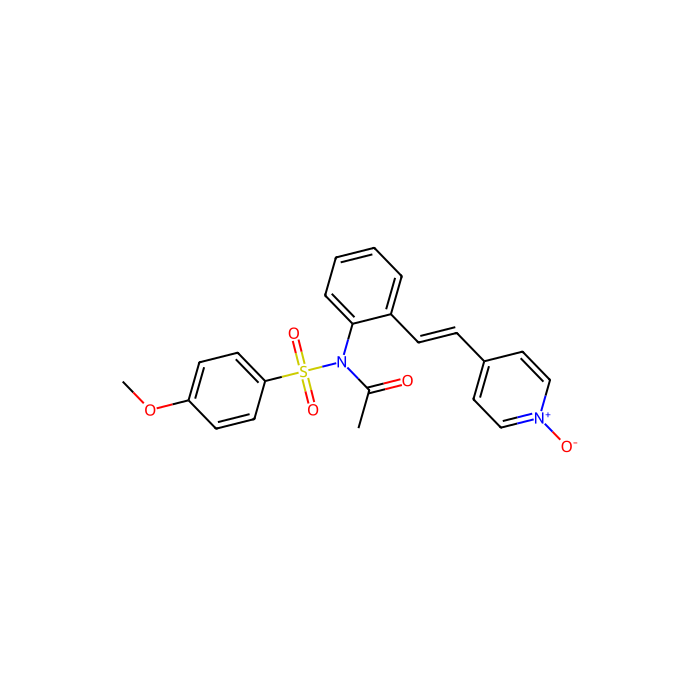
HMN-214 is a prodrug of HMN-176, which alters the cellular spatial orientation of Plk1.
In vitro
HMN-214 is an oral prodrug that is rapidly converted to HMN-176. The in vitro data of HMN-214 are scarce. However, HMN-176, active metabolite of HMN-214, shows potent and broad-spectrumanti-tumor activity against various cancer cells, including HeLa, PC-3, DU-145, MIAPaCa-2, U937, MCF-7, A549, and WiDr, with a mean IC50 value of 118 nM. HMN-176 is also cytotoxic to drug-resistant human and murine cell lines, including P388/CDDP, P388/VCR, K2/CDDP, and K2/VP-16, with IC50 values ranging from 143 nM–265 nM. In HeLa cells, HMN-176 (3 μM) blocks cell cycle at G2/M phase. In Doxorubicin-resistant K2/ARS cells, HMN-176 inhibits cell growth with an IC50 value of 2 μM. HMN-176 (3 μM) down-regulates the expression of the multidrug resistance gene (MDR1), due to the disturbance of NF-Y transcription factor binding to the MDR1 promoter. In human RPE1 and CFPAC-1 cells, HMN-176 (2.5 μM) delays satisfaction of the spindle assembly checkpoint. HMN-176 (250 nM–2.5 μM) inhibits meiotic spindle assembly and aster formationin Spisula oocytes. HMN-176 (2.5 μM) also inhibits aster microtubule formation from human centrosomes. These results indicate that the anti-tumor activity of HMN-176 is at least partially via disrupting centrosome-mediated MT assembly during mitosis.
In vivo
HMN-214 is an oral pro-drug of HMN-176 with improved oral absorption. HMN-214 (30 mg/kg) triggers no obvious neurotoxicity in mice. In mouse xenograft model of PC-3, A549, and WiDr cells, HMN-214 (10 mg/kg–20 mg/kg) inhibits tumor growth. In nude mice model bearing multidrug-resistant KB-A.1 cells, HMN-214 (10 mg/kg–20 mg/kg) significantly suppresses MDR1 mRNA expression.
Cell Data
cell lines:
Concentrations:0–10 μM, dissolved in DMSO
Incubation Time:72 hours
Powder Purity:≥99%
Comprehensive hazard, handling, storage, and regulatory compliance document.
Download SDS →Lot-specific quality data. Enter your lot number to retrieve the exact COA.
Look up COA →Full quality attributes and acceptance criteria for this grade.
View spec sheet →| Solubility | Solubility (25°C) In vitro DMSO: 24 mg/mL (99.3 mM); Ethanol: 2 mg/mL (8.27 mM); Water: Insoluble; |
|---|
No manufacturer-verified application protocols are provided for this item. The following general guidance may assist in planning experiments with small-molecule tool compounds; validate and optimize for your system.
These are generic, non-validated suggestions. No specific dilution factors, positive controls, or validated applications are claimed for this product.
Context (literature, general): HMN-214 is cited in the literature as a bioactive small molecule used as a tool compound in studies of cell-cycle/mitotic regulation. External sources describe HMN-214 in connection with modulation of serine/threonine kinase pathways involved in mitosis. Specific biochemical targets and binding parameters should be verified from primary literature and your in-house assays.
Important
This product is not a buffering agent. Buffer preparation guidance is generally not applicable.
For buffer formulation components (Tris, HEPES, phosphate, etc.), please refer to dedicated buffering reagents in our catalog.
Green chemistry considerations are not directly applicable to HMN-214 as a bioactive library compound (it is not used as a solvent or commodity reagent). However, the following general practices can reduce environmental impact when handling small-molecule screening compounds:
Comparison (general)
These are general sustainability guidelines; they do not change the specifications or recommended storage of this item.
No excipient or pharmacopeial status is claimed for this item. HMN-214 is supplied strictly for research use only.
For excipients or GMP-grade actives, consult our regulated-materials portfolio.
Item-specific physicochemical specifications are not provided in this listing.
Important
Practical guidance
This product is a bioactive small-molecule library compound and is not typically employed as a stoichiometric reagent, catalyst, or solvent in synthetic organic reactions.
If you require a synthetic intermediate or a functionalized analog for chemistry workflows, consult our catalog for building blocks tailored to your target transformation.
Not applicable. HMN-214 is not offered for use as a reagent or catalyst; no reaction-condition guidance applies.
General laboratory handling for assay preparation (non-reaction use):
Any numerical reaction temperatures, catalysts, or yields would be irrelevant to this product’s intended use and are therefore not provided.
Safety data specific to this item are not included in this listing; handle as a potentially hazardous research chemical.
Always consult the official SDS for authoritative safety information before use.
Since HMN-214 is supplied as a research compound rather than a solvent or reagent, solvent selection relates to preparing stock solutions for screening and in vitro assays.
Comparison (general guidance)
Reconstitution (general guidance; not item-specific)
Always consult the current CoA and SDS for lot-specific handling and storage guidance.
Brief overview: HMN-214 is listed as a bioactive small molecule in our compound library. Item-specific structural identifiers are not supplied in this listing; see notes below for literature references.
Notes
HMN-214 is not positioned as a synthetic intermediate or reagent in this catalog entry; therefore, conventional synthetic utility (e.g., as a coupling partner, catalyst, or protecting group) is not applicable.
For synthetic projects, we recommend selecting purpose-built building blocks and reagents from our catalog, which include halogenated aromatics, boronates, carboxylic acids, amines, and heterocycles designed for cross-coupling and amide-bond formation.
Item-specific target annotations are not provided in this listing.
For validated reference inhibitors/activators with defined target data and QC documentation, please inquire about our annotated probe collections.