Hsp60 Mouse mAb - Primary antibody, specific to Hsp60, Mouse IgG1

Cat. No.: Ab169190
AVAILABLE TO ORDER
GRADE & PURITY Carrier Free ? Carrier-free — supplied without added carrier protein/stabilizer. Use when carriers (e.g. BSA) would interfere with conjugation or sensitive assays. Azide Free ? Azide-free — without sodium azide preservative. Use in conjugations, cell work, or assays where azide is toxic or inhibitory. Validated ? Validated grade — performance confirmed in defined applications before release. Use when you want documented assurance the reagent works as stated. High Performance ? High-performance grade with optimized purity and performance characteristics. Use for sensitive analyses where ordinary grades fall short. PBS Only ? PBS-only formulation — supplied in phosphate-buffered saline with no other additives. Use when you need a clean PBS buffer free of stabilizers/carriers. ≥95%(SDS-PAGE) 1.0 mg/mL
Application
Flow Cytometry, IF/ICC, WB
Host species
Mouse
Reactive species
Human
Isotype
Mouse IgG1
Clone Number
EF02/2E10
Conjugation
Unconjugated
★
Size
Germany (EU)
USA*
Price
Qty
10μl
Ab169190-10μl
—
In stock ≥10
€69.33
50μl
Ab169190-50μl
—
In stock ≥10
€180.40
100μl
Ab169190-100μl
—
9 In stock
€291.47
1ml
Ab169190-1ml
—
1 In stock
€2,429.58
Enter a quantity for the sizes you want to add.
🧪
Why this grade

Carrier Free,Azide Free,Validated,High Performance,PBS Only,≥95%(SDS-PAGE),1.0 mg/mL Azide Free,Carrier Free,High Performance,PBS Only,Validated for sensitive chromatographic and analytical workflows requiring minimal baseline interference.

🌡

Storage & shipping

Store at -20°C,Avoid repeated freezing and thawing Ships Ice chest + Ice pads Check lot-specific COA for exact specifications.

📋

Quality documents

SDS, COA, datasheet, and spec sheet available for download. Lot-specific COA accessible via lot number lookup.

📚

Literature proof

Cited in 0 peer-reviewed publications across chromatography, organic synthesis, and cross-coupling reactions.

Overview

Application
WB: 1/1,000 - 1/200,000; Predicted molecular weight: 61.0 KDa
ICC/IF: 1/200
Flow: 1/800 - 1/200,000

Specifications

Product Name
Hsp60 Mouse mAb - Primary antibody, specific to Hsp60, Mouse IgG1
Synonyms
60 kDa chaperonin antibody | 60 kDa heat shock protein, mitochondrial antibody | CH60_HUMAN antibody | Chaperonin 60 antibody | Chaperonin, 60-KD antibody | CPN60 antibody | fa04a05 antibody | GROEL antibody | heat shock 60kDa protein 1 (chaperonin) antib
Specifications & Purity
Carrier Free,Azide Free,Validated,High Performance,PBS Only,≥95%(SDS-PAGE),1.0 mg/mL
Host species
Mouse
Specificity
Hsp60
Immunogen
Recombinant full length protein corresponding to Human Hsp60
Positive Control
WB: HEK293, HeLa, HepG2, A549, MOTL-4, MCF-7, Jurkat, K562, A431 and THP-1 Whole cell Lysates ICC/IF: U-2 OS cells Flow: Jurkat cells
Conjugation
Unconjugated
Grade
Azide Free, Carrier Free, High Performance, PBS Only, Validated
Isotype
Mouse IgG1
Light Chain Type
kappa
SDS-PAGE
150.0 KDa
Purification Method
Protein A purified
Concentration
1.0 mg/mL
Product Line
Biological Products
Storage and Shipping
Form
Liquid
Storage
Store at -20°C,Avoid repeated freezing and thawing
Shipped In
Ice chest + Ice pads
Stability And Storage
Store at 4°C short term (1-2 weeks). Store at -20°C or -80°C. Avoid freeze / thaw cycle.
Images

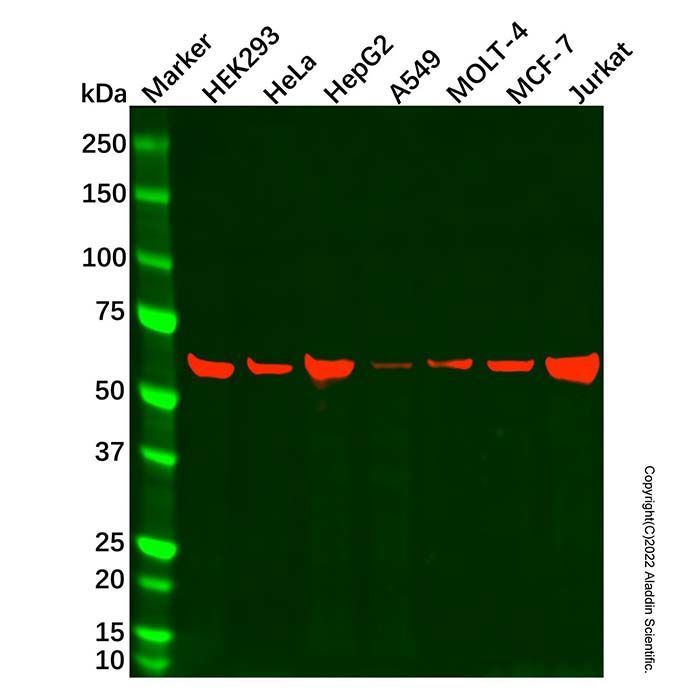
Hsp60 Mouse mAb (Ab169190) - Western Blot
All lanes: Hsp60 Mouse Antibody (Ab169190) at 1/20000 dilution
Samples: Lysates at 20 µg per lane
Secondary: Goat Anti-Mouse IgG H&L (HRP) at 1/20000 dilution

Predicted band size: 61 kDa
Observed band size: 58 kDa
Exposure time: 15.0 s 

Hsp60 Mouse mAb (Ab169190) - Western Blot
All lanes: Hsp60 Mouse Antibody (Ab169190) at 1/20000 dilution
Samples: Lysates at 20 µg per lane
Secondary: Goat Anti-Mouse IgG H&L (HRP) at 1/20000 dilution

Predicted band size: 61 kDa
Observed band size: 61 kDa
Exposure time: 4.0 s 

Hsp60 Mouse mAb (Ab169190) - Flow Cytometry
Overlay histogram showing Jurkat cells stained with Hsp60 Mouse mAb (Ab169190) (Red). Cells were fixed and permeabilized with 100% methanol. A Goat Anti-Mouse IgG H&L (PE) (Ab179006) was used as the secondary antibody. Unlabeled sample (Black) was used as a negative control. The mouse IgG (Ab170221) was used as an isotype control (Blue).

Hsp60 Mouse mAb (Ab169190) - ICC/IF
IF analysis of Hsp60 (Green) in U-2 OS cells. The cells were fixed and permeabilized with 100% methanol for 5 minutes, and blocked with 2% BSA for 1 hour at room temperature. Cells were stained with Hsp60 Mouse mAb (Ab169190) at 5.0 μg/mL in blocking buffer for 2 hour at RT and then incubated with Goat Anti-Mouse IgG H&L (FITC) (Ab179003) at a dilution of 1/500 for 1 hour at room temperature in the dark. Cells were counterstained with DAPI (Blue). Images were taken on the confocal laser scanning microscope.

Application
Application
Dilution info
IF/ICC

1/200

Flow Cytometry

1/800 - 1/200,000

WB

1/1,000 - 1/200,000; Predicted molecular weight: 61.0 KDa

Documentation

📋 Safety Data Sheet (SDS)

Comprehensive hazard, handling, storage, and regulatory compliance document.

<<<<<<< HEAD Download SDS → ======= Download SDS → >>>>>>> release248-p3

✅ Certificate of Analysis (COA)

Lot-specific quality data. Enter your lot number to retrieve the exact COA.

Look up COA →

📊 Datasheet

Quick-reference summary of product specifications and applications.

View datasheet →

🔬 Specification Sheet

Full quality attributes and acceptance criteria for this grade.

View spec sheet →

Advanced Data

Associated Targets(Human)
HSPD1 Tbio 60 kDa heat shock protein, mitochondrial (0 Activities)
Activity TypeActivity Value -log(M)Mechanism of ActionActivity ReferencePublications (PubMed IDs)
HSPD1 Tbio Heat shock protein HSP 60 (26 Activities)
Activity TypeRelationActivity valueUnitsAction TypeJournalPubMed IddoiAssay Aladdin ID
Mechanisms of Action
Certificates (CoA,COO,BSE/TSE and Analysis Chart)
C of A & Other Certificates(BSE/TSE, COO):
Analytical Chart:

Find and download the COA for your product by matching the lot number on the packaging.

10 results found

Lot NumberCertificate TypeDateItem
ZJ24F1114042ZJ24F1114042Certificate of AnalysisSep 08, 2026 Ab169190
ZJ24F1114043ZJ24F1114043Certificate of AnalysisSep 08, 2026 Ab169190
ZJ24F1114044ZJ24F1114044Certificate of AnalysisSep 08, 2026 Ab169190
ZJ24F0809905ZJ24F0809905Certificate of AnalysisJun 23, 2026 Ab169190
ZJ24F0809906ZJ24F0809906Certificate of AnalysisJun 23, 2026 Ab169190
ZJ24F0809932ZJ24F0809932Certificate of AnalysisJun 23, 2026 Ab169190
ZJ24F0606530ZJ24F0606530Certificate of AnalysisMar 18, 2026 Ab169190
ZJ24F0606531ZJ24F0606531Certificate of AnalysisMar 18, 2026 Ab169190
ZJ24F0606532ZJ24F0606532Certificate of AnalysisMar 18, 2026 Ab169190
ZJ24R0600698ZJ24R0600698Certificate of AnalysisJun 23, 2024 Ab169190
Documents & Articles
Solution Calculators
Reviews

Customer Reviews

Application Protocols

Item-specific, tested applications and recommended dilutions are not provided in the Product Data. Please consult the CoA/Spec Sheet.

General starting-point guidance (not item-specific; optimize empirically):

  • Western blot (WB): 1:1,000–1:5,000 in TBST + 5% BSA or milk; incubate 1 h at RT or overnight at 4°C.
  • Immunofluorescence (IF/ICC): 1:100–1:500 in PBS/0.1% Triton X-100 + 1–3% BSA; incubate 1 h at RT or overnight at 4°C.
  • Immunohistochemistry (IHC-P): 1:100–1:400 after heat-mediated antigen retrieval; use polymer-based anti-mouse detection.
  • Immunoprecipitation (IP): 1–5 µg antibody per mg lysate protein as a starting estimate.

Controls and validation (general):

  • Positive controls: Heat-shocked cells or tissues with robust mitochondrial content.
  • Negative controls: Isotype control (match host/isotype), secondary-only control, peptide competition if epitope peptide is available.

These are literature-based norms; exact performance for this product should be confirmed experimentally.

Biological Roles

Focus: Hsp60 (Heat shock protein 60), the antigen targeted by this antibody.

General/literature knowledge (biochemistry context, not item-specific claims):

  • Hsp60 (also known as chaperonin CPN60 or HSPD1 in humans) is a mitochondrial chaperonin that assists protein folding in concert with co-chaperonin Hsp10 (HSPE1). It facilitates ATP-dependent refolding of imported or stress-denatured proteins within the mitochondrial matrix.
  • Regulation: Expression of Hsp60 can increase in response to cellular stressors (e.g., heat shock, oxidative stress), coordinating proteostasis.
  • Cellular localization: Predominantly mitochondrial; reports of extramitochondrial pools (cytosol, cell surface, extracellular vesicles) exist in certain contexts (literature), often assay- and cell-type-dependent.
  • Structural aspects: Hsp60 assembles into double-ring tetradecamers (7-mer rings) that encapsulate substrate proteins; ATP binding/hydrolysis drives conformational cycling.
  • Research utility: Hsp60 serves as a robust mitochondrial marker in microscopy and Western blotting and as a readout for stress responses, mitochondrial biogenesis, or quality control.

Note: The above information provides biological background for experimental design. This product is for research use only and is not intended for diagnostic or therapeutic applications.

Buffer Applications

Antibodies are used within standard biological buffer systems rather than to formulate buffers themselves. For this product:

  • Item-specific fact: Supplied in PBS only (Product Data). Exact PBS composition is not specified; refer to CoA/Spec Sheet.

Practical (general) buffer usage with antibodies:

  • Dilution buffers: PBS or TBS at pH 7.2–7.6. For immunoassays, include 0.05–0.1% Tween-20 (PBST/TBST) to reduce nonspecific binding, and 0.1–5% blocking protein (BSA, milk, or serum) as appropriate.
  • Sample buffers: For WB detection of Hsp60, prepare lysates in RIPA or other denaturing buffers with protease inhibitors; antigen denaturation is typically achieved with Laemmli buffer + heat.
  • Antigen retrieval (IHC): Citrate buffer (pH ~6) or Tris-EDTA (pH ~9) may improve epitope exposure; optimize conditions empirically.
  • IP buffers: Use non-denaturing buffers (e.g., 20–50 mM Tris, 150 mM NaCl, 0.1% NP-40/Triton) to preserve protein–protein interactions when immunoprecipitating Hsp60 complexes.

Note: Because this lot is azide-free, maintain sterility and consider single-use aliquots to avoid microbial growth in PBS-based stocks.

Green Alternatives

Green chemistry considerations for antibody reagents focus on preservative choices, buffer systems, and cold-chain logistics rather than solvent replacement:

  • Preservatives: This product is azide-free, which avoids acute aquatic toxicity associated with sodium azide and prevents formation of metal azides in plumbing. If antimicrobial control is needed post-receipt, consider low-toxicity alternatives (e.g., ProClin or thimerosal-free options) at minimal effective concentrations, mindful of assay compatibility.
  • Buffers: PBS is broadly benign and aligns with low-hazard aqueous systems. Minimize use of halogenated solvents or high-VOC reagents during conjugations; employ aqueous-compatible chemistries where possible.
  • Cold-chain efficiency: Consolidate orders to reduce packaging waste and optimize shipment scheduling to limit dry-ice/ice pack use.
  • Reusability: For IP workflows, use reusable magnetic/protein A/G resins where compatible; regenerate under mild conditions to extend lifetime and reduce waste.

Comparison (general):

  • Azide-containing antibody stocks: Offer antimicrobial protection but pose drain disposal hazards. Azide-free (this item) reduces those hazards but requires stricter aseptic handling and frozen storage.
  • Carrier-containing formats: Improve stability at 2–8°C but complicate downstream conjugation and can increase bio-load. Carrier-free (this item) minimizes additives and facilitates chemical coupling, at the cost of greater handling care.
Pharmaceutical Uses

This is a research-grade antibody. No clinical or diagnostic use is intended or implied.

  • Item-specific facts: Grade descriptors include Carrier Free, Azide Free, Validated, High Performance, PBS Only. No pharmacopeial grade or GMP status is specified for this item; refer to CoA/Spec Sheet if needed.

General formulation context (non-clinical):

  • Research antibodies may be used as analytical reagents during bioprocess or formulation development (e.g., as capture/detection reagents in process ELISAs), but translation to regulated use requires comprehensive qualification that is beyond the scope of this product.
  • Excipient considerations: Carrier-free format lacks stabilizers such as BSA, trehalose, or glycerol; users may add such excipients in their own labs for method development if compatible with their assays.

Summary: Not specified for any pharmaceutical or diagnostic application. For research use only.

Physical Properties

Item-specific specifications for this antibody preparation:

  • Concentration, protein content, and excipients: Not specified for this item; refer to CoA/Spec Sheet.
  • Appearance: Not specified for this item; refer to CoA/Spec Sheet.
  • pH and ionic strength: Supplied in PBS only (Product Data); exact composition not specified for this item.
  • Osmolality, viscosity, refractive index: Not specified for this item; refer to CoA/Spec Sheet.

General/literature properties for antibodies (contextual, not item-specific specs):

  • Typical IgG molecular weight: ~150 kDa (literature), varying with isotype and glycosylation.
  • Solubility: Highly soluble in aqueous buffers (PBS, TBS). Avoid strong denaturants (8 M urea, >4–6 M guanidine HCl) unless application requires denaturation (e.g., Western blot sample prep).
  • Stability: Antibodies are temperature-sensitive proteins; freeze–thaw cycling can lead to aggregation and loss of activity. Aliquoting is recommended.
  • Isoelectric point (pI): IgGs typically pI ~6–9 (literature), isotype- and sequence-dependent.

Notes:

  • Because this product is carrier-free and azide-free, no protein stabilizers or antimicrobial preservatives are included unless otherwise stated. Users may optionally add carrier proteins (e.g., 0.1% BSA) in their own lab if compatible with the intended assay, recognizing that doing so changes the reagent composition.
Quality & Grades

Item-specific quality descriptors (from Product Data):

  • Carrier Free: Supplied without protein stabilizers (e.g., BSA) or glycerol unless otherwise noted. Advantages: precise mass balance in conjugations, reduced background in certain assays. Considerations: greater sensitivity to adsorption/aggregation; handle gently and aliquot.
  • Azide Free: No sodium azide preservative. Advantages: compatible with live-cell assays, peroxidase-based detection, and primary cell work. Considerations: increased risk of microbial growth; maintain sterility and store frozen.
  • PBS Only: Supplied in phosphate-buffered saline. Exact PBS composition is not specified for this item; refer to CoA/Spec Sheet.
  • Validated: Indicates performance has been verified by the manufacturer for one or more applications; however, specific tested applications and dilutions are not listed here. See Application Protocols and CoA.
  • High Performance: Denotes elevated purity/activity relative to internal standards; specific metrics (purity %, endotoxin, aggregation, binding titer) are not specified for this item.

Interpretation for use:

  • For conjugation (e.g., HRP, fluorophores, biotin), carrier-free format is ideal; buffer exchange into amine-free buffers may be required depending on chemistry.
  • For routine immunoassays, users may supplement with 0.05–0.1% carrier protein and 0.02–0.05% preservative (e.g., ProClin) in their own labs if compatible, acknowledging that the supplied product is carrier-free/azide-free by design.
Reaction & Applications

This antibody is designed for immunodetection of Hsp60 in research workflows. While item-specific tested uses are not provided here, the following are common applications for mouse monoclonal antibodies against intracellular proteins (general guidance):

  • Western blot (WB): Detect denatured Hsp60 in cell/tissue lysates following SDS-PAGE and transfer. Use anti-mouse secondary IgG-HRP or -fluorophore. Include loading controls and heat-shock induction as positive control where appropriate.
  • Immunofluorescence (IF) / Immunocytochemistry (ICC): Visualize mitochondrial Hsp60 localization in fixed/permeabilized cells using appropriate detergents (e.g., 0.1–0.3% Triton X-100) and anti-mouse fluorescent secondary antibodies.
  • Immunohistochemistry (IHC): Detect Hsp60 in fixed tissue sections; antigen retrieval conditions (citrate or EDTA buffers) require empirical optimization for epitope exposure.
  • Immunoprecipitation (IP): Enrich Hsp60 from lysates; pair with Protein G/A matrices compatible with the (unspecified) isotype—test empirically.
  • ELISA: If the epitope is preserved in the coated format, mAbs can be used as capture or detection reagents.

Practical tips (general):

  • Because the product is carrier-free and azide-free, maintain sterile technique to reduce contamination, and aliquot upon first thaw. Validate working dilutions empirically, starting with common ranges (e.g., WB 1:1,000–1:5,000; IF/IHC 1:100–1:500) and optimizing for signal-to-noise.
Reaction Conditions

Classical reaction-condition guidance (solvents, catalysts, yields) is not applicable to antibodies. Instead, consider conditions relevant to immunoassays and conjugations (general/literature guidance):

  • Western blot: Denature samples in Laemmli buffer (SDS + DTT/βME) and boil 5–10 min; block membranes in 5% milk/BSA in TBST; primary incubation typically 1–16 h at 4–25°C; optimize antibody dilution empirically.
  • IF/IHC: Fix with paraformaldehyde or formalin; permeabilize (e.g., 0.1–0.3% Triton X-100) for intracellular Hsp60; block with serum/BSA; primary incubation 1–16 h at 4–25°C.
  • IP: Incubate lysate with antibody 1–4 h at 4°C; capture with Protein A/G beads compatible with mouse isotypes; wash with mild detergent buffers; elute under low pH (glycine pH ~2.8) followed by immediate neutralization.
  • Conjugations (carrier-free advantage): Perform NHS-ester labeling in amine-free buffer (pH 8.3) at 4–25°C for 30–60 min; quench and purify by desalting/SEC. Verify DOL (degree of labeling) spectroscopically.

Item-specific parameters (tested dilutions, buffers, incubation times): Not specified for this item; refer to CoA/Spec Sheet.

Safety & Handling

Authoritative safety information should be obtained from the SDS.

Item-specific hazard information (from Product Data):

  • GHS classification, signal word, pictograms, H-statements: Not specified for this item; refer to SDS.
  • Shipping: Ice chest + ice pads (cold-chain).
  • Storage: Store at -20°C; avoid repeated freezing and thawing.

General safety guidance for antibodies (literature/practice):

  • PPE: Laboratory coat, nitrile gloves, and safety glasses are recommended when handling protein reagents and biological buffers.
  • Biosafety: Although recombinant/ascites-derived antibodies typically pose low biological risk, handle as potentially bioactive protein solutions. Practice good microbiological hygiene to avoid contamination, especially for azide-free formulations.
  • Incompatibilities: Avoid microbial contamination; azide-free buffers lack preservative. Avoid repeated freeze–thaw and prolonged exposure to temperatures above 4°C. Avoid strong oxidants or proteases.
  • First aid (general): In case of contact with eyes/skin, rinse with water. If inhaled (mists/aerosols), move to fresh air. If ingested, rinse mouth and seek medical advice. Always consult SDS.
  • Waste: Dispose of proteinaceous solutions according to institutional guidelines; azide-free composition minimizes concerns about heavy metal azide formation in plumbing, but standard precautions still apply.
  • Special risks: Protein aggregation upon thermal stress or freeze–thaw can reduce performance; aliquot promptly after first thaw.
Solvent Selection

Not a solvent. This reagent is a protein antibody supplied in aqueous PBS.

Practical guidance (general):

  • Compatible diluents: PBS or TBS at physiological ionic strength; for blocking/dilution in immunoassays, PBS/TBS containing 0.05–0.1% protein (e.g., BSA) and 0.05% non-ionic detergent (e.g., Tween-20) are commonly used if compatible with the assay.
  • Avoid: Organic solvents (MeOH, ACN, DMSO) can denature antibodies at appreciable fractions; use only trace amounts if required for antigen solubilization and validate empirically.
  • pH considerations: Maintain near-neutral pH (6.8–7.6) for stability unless performing deliberate elutions (e.g., low-pH IP elution), which should be brief and followed by neutralization.

Selection vs alternatives:

  • PBS vs TBS: Phosphate can interfere in certain phospho-specific assays or with calcium/magnesium-dependent interactions; TBS may be preferred in such cases. This product is supplied in PBS only; buffer exchange can be performed by the user if needed.
Storage & Reconstitution

Item-specific storage/shipping (from Product Data):

  • Storage conditions: Store at -20°C; avoid repeated freezing and thawing.
  • Shipped in: Ice chest + ice pads (cold chain).
  • Formulation: Carrier Free, Azide Free, PBS Only. Exact PBS composition, protein concentration, and any additional excipients are not specified for this item; refer to CoA/Spec Sheet.

Handling and aliquoting (general best practices):

  • Upon receipt: Inspect for container integrity. If frozen, thaw on ice. Mix gently by inversion—avoid vigorous vortexing.
  • Aliquoting: Immediately aliquot into single-use portions in low-protein-binding tubes to minimize freeze–thaw cycles and surface adsorption. For long-term storage, -80°C is commonly used in many labs; confirm compatibility with your workflow.
  • Optional stabilizers (user-added, if compatible): 0.05–0.1% carrier protein (e.g., BSA) and/or 10–50% glycerol can enhance stability for storage at -20°C or 2–8°C; note that the supplied product is carrier-free and azide-free by design.
  • Microbial control: Because the product is azide-free, maintain aseptic technique. Consider sterile filtration (0.22 µm) of diluted working solutions prepared in a biosafety cabinet.
  • Light and temperature: Protect from prolonged light and keep on ice during use.

Reconstitution: If provided lyophilized (not specified here), reconstitute with sterile PBS or water to the desired concentration, mix gently, and allow to fully dissolve on ice. For exact instructions, consult the CoA/Spec Sheet.

Research Use: For research use only.

Structure & Identity

Brief overview: This product is a mouse-derived monoclonal antibody directed against Hsp60, supplied carrier-free and azide-free in PBS.

  • Item-specific facts (from Product Data):

    • Product name: Hsp60 Mouse mAb (SKU: Ab169190)
    • Type: Mouse monoclonal antibody (mAb); carrier-free, azide-free; PBS only
    • Molecular formula: Not specified for this item; refer to CoA/Spec Sheet.
    • Molecular weight: Not specified for this item; refer to CoA/Spec Sheet.
    • SMILES / InChIKey / CAS / CID: Not applicable for proteins; not specified for this item.
  • General structure (literature/general knowledge):

    • Typical IgG architecture: two identical heavy chains and two identical light chains, linked via disulfide bonds, forming a Y-shaped molecule with variable (Fab) regions and a constant (Fc) region.
    • Common overall mass: IgG class antibodies are typically ~150 kDa (literature), though engineered or fragmented formats vary.
    • Binding: Variable domains confer specificity to the Hsp60 antigen epitope; clone and epitope details are not specified for this item.
    • Post-translational features: Disulfide bonds stabilize the tertiary/quaternary structure; potential glycosylation on Fc depends on isotype/subclass (not specified for this item).
  • 2D/functional description (literature):

    • Two antigen-binding sites (paratopes) at the tips of Fab arms recognize Hsp60 epitopes; the Fc tail mediates secondary detection in immunoassays via anti-mouse secondary antibodies.
Synthetic Utility

Not a small-molecule building block; synthetic organic transformations are not applicable.

Relevant laboratory utilities (general for antibodies):

  • As an affinity reagent, a monoclonal antibody against Hsp60 can be immobilized on solid supports (e.g., NHS-activated agarose, magnetic beads) to create immunoaffinity matrices for selective enrichment of Hsp60 and associated complexes.
  • Conjugation chemistry: Carrier-free format facilitates covalent modification with enzymes (HRP, AP), fluorophores (NHS-esters, maleimides after mild reduction), or biotin (NHS-biotin). Buffer exchange into amine-free buffers (e.g., 50 mM NaHCO3, pH 8.3) is recommended prior to NHS-ester labeling.
  • Surface coupling: For biosensors (SPR/BLI), immobilize via amine coupling (EDC/NHS) or capture strategies (anti-mouse Fc). Optimize immobilization levels to balance signal and kinetics.

Note: These are general strategies; specific reactivity and performance parameters (e.g., labeling stoichiometry, kinetic constants) are not specified for this item and should be empirically determined.

Target Specificity

Only information from Product Data is provided here:

  • Target antigen: Hsp60
  • Antibody type: Mouse monoclonal antibody (mAb)
  • Host species: Mouse
  • Clone, isotype, epitope, and species reactivity: Not specified for this item; refer to CoA/Spec Sheet.

Notes:

  • Without clone/isotype data, selection of Protein A vs Protein G for IP and the choice of subclass-specific secondary antibodies should be confirmed empirically or from the CoA.
  • Cross-reactivity and validation species are not provided; users should validate in their system of interest.

Frequently Asked Questions

What is the purity of this product, and how is it determined?
This product is supplied at ≥95% purity, determined by SDS-PAGE. Lot-specific values are stated on the Certificate of Analysis.
What does Azide Free mean?
Azide Free indicates that the material has been processed and tested for specialty industrial processing. Specifications focus on the impurities that affect performance in that application — for example, metal content for electronics, particle size for batteries, refractive index for optics, or moisture content for moisture-sensitive processes.
What does Carrier Free mean?
Carrier Free indicates that the material has been processed and tested for specialty industrial processing. Specifications focus on the impurities that affect performance in that application — for example, metal content for electronics, particle size for batteries, refractive index for optics, or moisture content for moisture-sensitive processes.
How should this product be stored?
Store at ?20 °C. Avoid repeated freeze–thaw cycles. Aliquot into single-use volumes before freezing.
How is this product shipped?
This product ships in an insulated container with ice pads. Unpack on arrival and transfer it to the storage condition stated above.
What documentation is provided?
Available product documentation, including Certificates of Analysis (COA), Safety Data Sheets (SDS), and specification sheets, is shown in the product document area. Document availability and access follow the current site policy.
Which species reactivity has this antibody been validated against?
Validated reactivity is listed on the PDP and on each lot's datasheet. We validate against the most commonly tested species for the target (Hsp60 Mouse mAb); cross-reactivity in untested species may exist but is not guaranteed. Contact technical support for specific species inquiries.

Need help choosing the grade?

Our grade selection guide covers purity, stabilizer status, and application suitability for all variants in our catalog.

View Carrier Free grade guide → View Validated grade guide → View Azide Free grade guide → View High Performance grade guide → View PBS Only grade guide →

Related Products

Goat Anti-Mouse IgG H&L Antibody - Secondary antibody, for ELISA,LF,GICA various applications, from Mouse, generated in Goat
Goat Anti-Mouse IgG H&L (HRP) - Secondary antibody, for WB,ELISA,IHC-P various applications, from Mouse, generated in Goat, IgG
Mouse IgG - Isotype Control Antibody, generated in Rat, >95%, IgG
Rabbit Anti-Mouse IgG H&L (HRP) - Secondary antibody, IgG
BALB/c Mouse IgG - Isotype Control Antibody, IgG
Rabbit Anti-Mouse IgG antibody - Secondary antibody
Goat Anti-Mouse IgG H&L (FITC) - Secondary antibody
Goat Anti-Mouse IgG H&L (TRITC) - Secondary antibody
Goat Anti-Mouse IgG H&L Antibody - Secondary antibody, Goat IgG
Goat Anti-Mouse IgG H&L (Cy5) - Secondary antibody
Goat Anti-Mouse IgG H&L (HRP) - Secondary antibody
Goat Anti-Mouse IgG H&L (Biotin) - Secondary antibody
Hsp60 Mouse mAb - Primary antibody, specific to HSPD1, Mouse IgG2a
Rabbit Anti-Mouse IgG (HRP) - Secondary antibody
Rabbit Anti-Mouse IgG (Biotin) - Secondary antibody
Goat Anti-Mouse IgG H&L (HRP) - Secondary antibody, Goat IgG
Goat Anti-Mouse IgG H&L (TRITC) - Secondary antibody, Goat IgG
Goat Anti-Mouse IgG H&L (Biotin) - Secondary antibody, Goat IgG
Goat Anti-Mouse IgG H&L (FITC) - Secondary antibody, Goat IgG
Goat Anti-Mouse IgG H&L (Cy5) - Secondary antibody, Goat IgG
Goat Anti-Mouse IgG H&L (PE) - Secondary antibody, Goat IgG
Goat Anti-Mouse IgG H&L (APC) - Secondary antibody, Goat IgG
Mouse IgG (Biotin) - Isotype Control Antibody, Mouse IgG
Mouse IgG (PE) - Isotype Control Antibody, Mouse IgG
Mouse IgG (APC) - Isotype Control Antibody, Mouse IgG
Mouse IgG (FITC) - Isotype Control Antibody, Mouse IgG
Mouse IgG2a-Fc - Isotype Control Antibody, Mouse IgG2a
Goat Anti-Mouse IgG H&L (Alkaline Phosphatase) - Secondary antibody, Goat IgG
Goat Anti-Mouse IgG H&L (AF405) - Secondary antibody, Goat IgG
Goat Anti-Mouse IgG H&L (AF647) - Secondary antibody, Goat IgG
Mouse IgG2b-kappa, anti-Spike RBD - Isotype Control Antibody, specific to Spike RBD, Mouse IgG2b
Mouse IgG2a-kappa, anti-Spike RBD - Isotype Control Antibody, specific to Spike RBD, Mouse IgG2a
Mouse IgG3-kappa, anti-HEL - Isotype Control Antibody, specific to HEL, Mouse IgG3
Mouse IgG2c-kappa, anti-HEL - Isotype Control Antibody, specific to HEL, Mouse IgG2c
Mouse lgG2A(D265A)-kappa, anti-HEL - Isotype Control Antibody, specific to HEL, Mouse IgG2a(D265A)
Mouse IgG1(D265A)-kappa, anti-HEL - Isotype Control Antibody, specific to HEL, Mouse IgG1(D265A)
Mouse IgG (AF488) - Isotype Control Antibody, IgG
Mouse IgG (PerCP) - Isotype Control Antibody, IgG
Mouse IgG (AF405) - Isotype Control Antibody, IgG
Mouse IgG (AF647) - Isotype Control Antibody, IgG
Goat Anti-Mouse IgG H&L (AF555) - Secondary antibody, specific to Mouse IgG, Goat IgG
Mouse IgG (AF700) - Isotype Control Antibody, IgG
Goat Anti-Mouse IgG H&L (AF700) - Secondary antibody, specific to Mouse IgG, Goat IgG
Mouse IgG (PE-Cy5) - Isotype Control Antibody
Mouse IgG (PE-Cy7) - Isotype Control Antibody
Mouse IgG2b-kappa, anti-E8L - Isotype Control Antibody, specific to E8L
Mouse IgG2a-kappa, anti-A29L - Isotype Control Antibody, specific to A29L
Mouse IgG2c-kappa (AF647), anti-HEL - Isotype Control Antibody, specific to HEL
Mouse IgG2c-kappa (AF700), anti-HEL - Isotype Control Antibody, specific to HEL
Mouse IgG2c-kappa (AF405), anti-HEL - Isotype Control Antibody, specific to HEL
Mouse IgG2c-kappa (Biotin), anti-HEL - Isotype Control Antibody, specific to HEL
Mouse IgG2a-kappa (APC), anti-Spike RBD - Isotype Control Antibody, specific to Spike RBD
Mouse IgG2a-kappa (FITC), anti-Spike RBD - Isotype Control Antibody, specific to Spike RBD
Mouse IgG2a-kappa (AF700), anti-Spike RBD - Isotype Control Antibody, specific to Spike RBD
Mouse IgG2a-kappa (AF647), anti-Spike RBD - Isotype Control Antibody, specific to Spike RBD
Mouse IgG2a-kappa (AF555), anti-Spike RBD - Isotype Control Antibody, specific to Spike RBD
Mouse IgG2a-kappa (AF405), anti-Spike RBD - Isotype Control Antibody, specific to Spike RBD
Mouse IgG2c-kappa (FITC), anti-HEL - Isotype Control Antibody, specific to HEL
Mouse IgG2c-kappa (AF555), anti-HEL - Isotype Control Antibody, specific to HEL
Mouse IgG2c-kappa (APC), anti-HEL - Isotype Control Antibody, specific to HEL
Mouse IgG2c-kappa (PE), anti-HEL - Isotype Control Antibody, specific to HEL
Mouse IgG2a-kappa (Biotin), anti-Spike RBD - Isotype Control Antibody, specific to Spike RBD
Mouse IgG2a-Fc (Biotin) - Isotype Control Antibody
Mouse IgG2a-Fc (FITC) - Isotype Control Antibody
Mouse IgG (AF555) - Isotype Control Antibody
Mouse IgG2b-kappa (Biotin), anti-Spike RBD - Isotype Control Antibody, specific to Spike RBD
Mouse IgG2b-kappa (FITC), anti-Spike RBD - Isotype Control Antibody, specific to Spike RBD
Mouse IgG2b-kappa (APC), anti-Spike RBD - Isotype Control Antibody, specific to Spike RBD
Mouse IgG2b-kappa (APC-Cy7), anti-Spike RBD - Isotype Control Antibody, specific to Spike RBD
Goat Anti-Mouse IgG H&L (PE-Cy5) - Secondary antibody, specific to Mouse IgG
Centrose patent anti-dysadherin (anti-Dysadherin) - Primary antibody, specific to FXYD5
Mouse IgG2a-kappa (AF405), anti-A29L - Isotype Control Antibody, specific to A29L
Mouse IgG2a-kappa (AF488), anti-A29L - Isotype Control Antibody, specific to A29L
Mouse IgG2a-kappa (AF647), anti-A29L - Isotype Control Antibody, specific to A29L
Mouse IgG2a-kappa (AF700), anti-A29L - Isotype Control Antibody, specific to A29L
Mouse IgG2a-kappa (Biotin), anti-A29L - Isotype Control Antibody, specific to A29L
Mouse IgG2a-kappa (FITC), anti-A29L - Isotype Control Antibody, specific to A29L
Mouse IgG3-kappa (Biotin), anti-HEL - Isotype Control Antibody, specific to HEL
Mouse IgG3-kappa (FITC), anti-HEL - Isotype Control Antibody, specific to HEL
Mouse IgG3-kappa (PE), anti-HEL - Isotype Control Antibody, specific to HEL
Mouse IgG3-kappa (AF488), anti-HEL - Isotype Control Antibody, specific to HEL
Mouse IgG3-kappa (APC), anti-HEL - Isotype Control Antibody, specific to HEL
Mouse IgG3-kappa (AF647), anti-HEL - Isotype Control Antibody, specific to HEL
Mouse IgG2b-kappa (AF555), anti-Spike RBD - Isotype Control Antibody, specific to Spike RBD
Goat Anti-Mouse IgG H&L (AF488) - Secondary antibody
Goat Anti-Mouse IgG H&L (PE-Cy7) - Secondary antibody
Mouse IgG (PE-Cy5.5) - Isotype Control Antibody
Goat Anti-Mouse IgG H&L (AF750) - Secondary antibody
Mouse IgG2a-kappa (AF555), anti-A29L - Isotype Control Antibody, specific to A29L
Mouse IgG2a-kappa (PE-Cy5.5), anti-A29L - Isotype Control Antibody, specific to A29L
Goat Anti-Mouse IgG H&L (AF546) - Secondary antibody
Goat Anti-Mouse IgG H&L (Oregon Green 488) - Secondary antibody
Goat Anti-Mouse IgG H&L (Cy3) - Secondary antibody
Mouse IgG2a-kappa (APC), anti-A29L - Isotype Control Antibody, specific to A29L
Mouse IgG3-kappa (AF555), anti-HEL - Isotype Control Antibody, specific to HEL
Mouse IgG (PE-AF647) - Isotype Control Antibody
Hsp60 Mouse mAb (Biotin) - Primary antibody, specific to Hsp60
Hsp60 Mouse mAb (HRP) - Primary antibody, specific to Hsp60

Shall we send you a message when we have discounts available?

Remind me later

Thank you! Please check your email inbox to confirm.

Oops! Notifications are disabled.