Human IgG (AF700) - Isotype Control Antibody

Cat. No.: Ab215379
AVAILABLE TO ORDER
GRADE & PURITY ExactAb™ ? ExactAb™ — Aladdin's antibody line emphasizing precision and validated quality. Use for reliable, specificity-validated antibody applications. Validated ? Validated grade — performance confirmed in defined applications before release. Use when you want documented assurance the reagent works as stated. 0.5 mg/mL
Application
Flow Cytometry
Host species
Human
Isotype
Human IgG
Conjugation
AF700
★
Size
Germany (EU)
USA*
Price
Qty
10μg
Ab215379-10μg
—
6 In stock
€51.98
100μg
Ab215379-100μg
—
1 In stock
€104.04
500μg
Ab215379-500μg
Made to order · 8–12 wks
€225.53
Enter a quantity for the sizes you want to add.
🧪
Why this grade

ExactAb™, Validated, 0.5 mg/mL ExactAb™,Validated for sensitive chromatographic and analytical workflows requiring minimal baseline interference.

🌡

Storage & shipping

Store at 2-8°C,Protected from light,Do not freeze Ships Wet ice,Do not freeze Check lot-specific COA for exact specifications.

📋

Quality documents

SDS, COA, datasheet, and spec sheet available for download. Lot-specific COA accessible via lot number lookup.

📚

Literature proof

Cited in 0 peer-reviewed publications across chromatography, organic synthesis, and cross-coupling reactions.

Overview

Human IgG Antibody; Isotype Control Antibody, could be used for Flow Cytometry.

Specifications

Product Name
Human IgG (AF700) - Isotype Control Antibody
Synonyms
Human IgG
Specifications & Purity
ExactAb™, Validated, 0.5 mg/mL
Host species
Human
Conjugation
AF700
Excitation (nm)
Red Laser(633nm)
Emission(nm)
719nm
Ex/Em(nm)
Ex:696nm;Em:719nm
Grade
ExactAb™, Validated
Purification Method
Affinity chromatography
Concentration
0.5 mg/mL
Product Line
Biological Products
Storage and Shipping
Storage
Store at 2-8°C,Protected from light,Do not freeze
Shipped In
Wet ice,Do not freeze
Stability And Storage
The antibody solution should be stored undiluted between 2°C and 8°C, and protected from prolonged exposure to light. Do not freeze.
Images

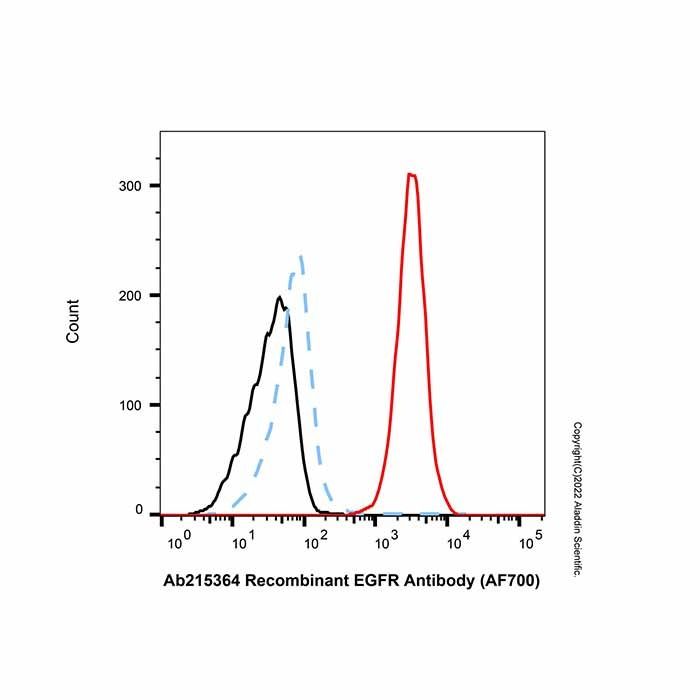
Human IgG (AF700) (Ab215379) - Flow Cytometry
Flow cytometry analysis of EGFR expression by A431 cells (red) compared to an isotype control (blue). Cells were stained with Recombinant EGFR Antibody (AF700) (Ab215364) at 5μL/test for 1 hour at 4°C. Blue - Human IgG (AF700) (Ab215379). Black - Unlabelled control, cells without incubation with primary antibody.

Application
Application
Dilution info
Flow Cytometry

Use at an assay dependent concentration.
Each lot of this antibody is quality control tested by flow cytometric analysis as negative control. Use at concentrations comparable to those of the speci

Documentation

📋 Safety Data Sheet (SDS)

Comprehensive hazard, handling, storage, and regulatory compliance document.

<<<<<<< HEAD Download SDS → ======= Download SDS → >>>>>>> release248-p3

✅ Certificate of Analysis (COA)

Lot-specific quality data. Enter your lot number to retrieve the exact COA.

Look up COA →

📊 Datasheet

Quick-reference summary of product specifications and applications.

View datasheet →

🔬 Specification Sheet

Full quality attributes and acceptance criteria for this grade.

View spec sheet →

Advanced Data

Certificates (CoA,COO,BSE/TSE and Analysis Chart)
C of A & Other Certificates(BSE/TSE, COO):
Analytical Chart:

Find and download the COA for your product by matching the lot number on the packaging.

3 results found

Lot NumberCertificate TypeDateItem
ZJ25F0319777ZJ25F0319777Certificate of AnalysisOct 08, 2026 Ab215379
ZJ25F0319778ZJ25F0319778Certificate of AnalysisOct 08, 2026 Ab215379
ZJ25F0319779ZJ25F0319779Certificate of AnalysisOct 08, 2026 Ab215379
Documents & Articles
Solution Calculators
Reviews

Customer Reviews

Application Protocols

Tested applications, recommended working dilutions, positive controls, and instrument filter recommendations for this specific SKU are Not specified for this item; refer to CoA/Spec Sheet.

General, literature-based starting points (to be optimized by the user):

  • Flow cytometry: Begin titration at 0.05–1.0 µg per 1×10^6 cells in 50–100 µL; adjust to achieve optimal staining index while minimizing background.
  • Immunofluorescence (cells/tissues): Start at 1–10 µg/mL with appropriate blocking (e.g., 1–5% normal serum or 1% BSA) and permeabilization if targeting intracellular epitopes.
  • Western blot: For far‑red detection, use imagers with ~700 nm channels; dilute according to membrane binding and background; typical ranges span 0.1–1 µg/mL.
  • Controls: Include unstained, single‑stained, fluorescence‑minus‑one (FMO), and isotype/fluorochrome controls as appropriate.

These are non‑item‑specific guidelines. Follow the product’s CoA/Spec Sheet and your instrument manufacturer’s recommendations for filter sets and compensation.

Biological Roles
  • Immunoglobulin G (IgG) overview (literature)
    • IgG is the most abundant antibody isotype in human serum and interstitial fluid. It mediates antigen neutralization, opsonization, complement activation, and Fc receptor engagement, thereby orchestrating adaptive immune responses.
    • Structural features include two antigen‑binding sites (Fab) generated by V(D)J recombination and somatic hypermutation, and an Fc region that dictates effector functions and half‑life via FcRn interactions.
    • Human IgG subclasses (IgG1–IgG4) differ in hinge flexibility, disulfide patterns, and effector functions.
  • Fluorophore conjugation (literature)
    • Covalent labeling with AF700 enables optical detection without altering the protein’s primary sequence; however, excessive labeling may reduce antigen affinity or alter Fc interactions.
    • Far‑red/near‑IR emission allows reduced cellular autofluorescence and deeper tissue penetration relative to shorter wavelengths.
  • Relevance to research use (general)
    • AF700‑conjugated IgG is commonly used as a detection reagent in immunoassays, controls for compensation and gating in flow cytometry, and tools for multiplex imaging.

Item-specific biological context

  • Target, subclass, host species, and affinity characteristics for this product are Not specified for this item; refer to CoA/Spec Sheet.

Note: All roles summarized here describe general IgG biology and fluorophore behavior; this product is supplied strictly for research use, not for diagnostic or therapeutic applications (per Product Data: For research use only).

Buffer Applications

This product is an antibody conjugate rather than a buffering agent. It does not serve as a primary pH buffer system.

  • Practical note
    • Use standard biological buffers (e.g., PBS or TBS at pH ~7.2–7.6, literature) as diluents and wash solutions when employing this reagent in immunoassays.
    • Additives such as 0.1–1% BSA and 0.01–0.05% Tween‑20 can reduce nonspecific binding where compatible with the assay and the antibody’s intended use.

Item-specific buffer composition and recommended dilutions are Not specified for this item; refer to CoA/Spec Sheet.

Green Alternatives

For a fluorescent antibody reagent, “green” considerations emphasize waste minimization, safer components, and durable signal to reduce repeat experiments.

  • Resource and waste reduction (general)
    • Use minimal effective staining volumes and microtiter formats to reduce reagent consumption and biohazard waste.
    • Adopt validated panel designs and robust controls to minimize repeats (lowering consumables/energy footprint).
  • Safer chemistries and materials (general)
    • Prefer azide‑free formulations when downstream live‑cell use is required; handle sodium azide (if present; Not specified for this item) with care to avoid heavy‑metal azide formation in plumbing.
    • Choose low‑fluorescence, recyclable plastics or glass when compatible with your protocol.
  • Photophysics tradeoffs (literature)
    • AF700 offers long‑wavelength detection that can reduce phototoxicity compared to shorter‑wavelength dyes in live‑cell imaging; however, AF700 is typically used for fixed cells/tissues and flow cytometry.
    • Alternatives such as APC (protein fluorophore) may provide higher brightness but are more sensitive to fixation/photobleaching in some contexts; selection depends on instrument configuration and assay durability needs.

Comparison snapshot (literature, general)

  • AF700: Ex ~695–705 nm, Em ~720–723 nm; good for multiplexing with minimal visible-range overlap; moderate brightness; light sensitive.
  • AF647/APC: Brighter channels with slightly shorter emission; may demand tighter compensation and can increase spectral spillover.

Item-specific preservative content, buffer composition, and sustainability certifications: Not specified for this item; refer to CoA/Spec Sheet.

Pharmaceutical Uses

This reagent is provided for laboratory research use only (per Product Data) and is not intended for diagnostic, therapeutic, or in vivo clinical applications.

  • Context (general/literature)
    • Immunoglobulins are used clinically as biologic therapeutics and as critical reagents in regulated diagnostics; however, this product is not qualified for such uses.
    • AF700 is a research‑grade fluorophore for optical detection; no pharmacopeial status is implied.
  • Appropriate uses for this item
    • Research assays such as flow cytometry, immunofluorescence microscopy, or other fluorescence‑based detection workflows where far‑red/near‑IR channels are available.

Any claims of GMP status, sterility for parenteral use, or clinical validation are Not specified for this item; refer to CoA/Spec Sheet and institutional policies. Do not use in humans or for diagnostic procedures.

Physical Properties
  • Appearance: Not specified for this item; refer to CoA/Spec Sheet.
  • Formulation/buffer composition: Not specified for this item; refer to CoA/Spec Sheet.
  • Concentration: Not specified for this item; refer to CoA/Spec Sheet.
  • Molecular weight: For IgG, typical ~150 kDa (literature). Exact MW for this preparation depends on isotype, glycosylation, and dye load; Not specified for this item; refer to CoA/Spec Sheet.
  • pI/pKa: IgG subclasses typically have isoelectric points in the ~7–9 range (literature); dye conjugation can shift apparent pI. Item-specific values: Not specified for this item; refer to CoA/Spec Sheet.
  • Solubility: IgG is soluble in aqueous buffers (e.g., PBS, TBS) at neutral pH (literature). Avoid extreme pH or high organic content to prevent denaturation.
  • Spectral properties (AF700; literature values)
    • Excitation maximum: ~695–705 nm (commonly excited with 633–640 nm lasers)
    • Emission maximum: ~720–723 nm
    • Stokes shift: ~15–25 nm
    • Extinction coefficient and quantum yield depend on dye supplier and environment; item-specific figures: Not specified for this item; refer to CoA/Spec Sheet.
  • Stability considerations (general)
    • AF700 is light sensitive; protect from light during handling.
    • Protein stability is optimized at 2–8°C with antimicrobial preservatives; repeated freeze–thaw can lead to aggregation and fluorescence loss.

All numerical values above, where provided, are literature/typical; this listing does not specify item-level physico-chemical specifications. Refer to the CoA/Spec Sheet for definitive data.

Quality & Grades
  • Item-specific quality designation
    • Grade/Purity: ExactAb™, Validated (from Product Data).
  • Interpretation and implications (general)
    • “Validated” typically indicates the manufacturer has performed defined quality checks (e.g., functionality, identity, conjugate performance) against internal criteria. Exact validation parameters for this item are Not specified; refer to CoA/Spec Sheet.
    • “ExactAb™” appears to denote a branded quality system emphasizing lot-to-lot consistency and rigorous release testing. Specific program details and acceptance criteria are Not specified for this item; consult the supplier’s quality documentation.
  • What to expect in high-quality AF700-conjugated IgG (general guidance)
    • Controlled degree of labeling (DOL) to balance brightness and antigen binding; low free dye content.
    • Verified spectral performance in the far-red/near-IR channel and minimal aggregation (e.g., by SEC or DLS).
    • Identity/purity confirmation of the IgG backbone (e.g., SDS-PAGE under reducing/non‑reducing conditions).
    • Functional validation in one or more use cases (e.g., flow cytometry or immunofluorescence) appropriate to the conjugate—specific tested applications for this item are Not specified; see CoA.
  • Documentation
    • Certificate of Analysis (CoA)/Spec Sheet should state lot-specific details such as concentration, buffer, preservative, DOL, and recommended storage. Where absent in this listing: Not specified for this item; refer to CoA/Spec Sheet.

Use this reagent within validated assay frameworks and document instrument settings to ensure reproducibility across lots.

Reaction & Applications

As a fluorescently labeled IgG reagent, this product is used in bioanalytical detection rather than chemical synthesis. Typical research applications (general/literature):

  • Flow cytometry (FACS): AF700 provides a far‑red channel that is efficiently excited by 633–640 nm lasers, aiding high‑parameter panels with reduced spillover into APC/Cy7 and PE‑Cy7 when properly compensated.
  • Immunofluorescence microscopy: AF700 can minimize autofluorescence and enable deeper tissue imaging due to near‑IR emission, beneficial for multiplexed staining with visible‑range fluorophores.
  • Western blot/IF on membranes or tissue sections: Far‑red detection can lower background and expand multiplex capability with conventional imagers equipped for ~700 nm channels.
  • Controls: AF700‑conjugated IgG may serve as an isotype or fluorochrome control to set gates/thresholds and compensation matrices (application depends on the IgG specificity; item-specific role is Not specified for this item; refer to CoA/Spec Sheet).

Practical tips (general)

  • Protect from light during all steps; keep samples on ice when feasible to preserve binding and fluorescence.
  • Titrate the reagent in the intended matrix (cells/tissue) to determine the minimal saturating amount; this improves staining index and reduces background.
  • Include proper single‑stain controls and compensation/unstained controls, especially when using multiple near‑IR channels.

Note: Specific tested applications, recommended dilutions, and target/host details for this item are Not specified; consult the CoA/Spec Sheet.

Reaction Conditions

Classical synthetic reaction conditions are not applicable. For assay workflows using this fluorescent IgG, consider the following general, literature-based handling conditions:

  • Staining/incubation (general)
    • Temperature: 4–25°C depending on assay; lower temperatures (4–8°C) help preserve cell viability in flow cytometry and reduce internalization; room temperature can increase kinetics in fixed‑cell staining.
    • Time: 10–60 min typical for flow cytometry; 30–120 min (or overnight at 4°C) for tissue/cell immunofluorescence.
    • Buffer: PBS/TBS with carrier protein (e.g., 0.1–1% BSA) to reduce nonspecific binding; detergent (0.01–0.05% Tween‑20) for permeabilized IF.
  • Light management
    • Protect from light at all times; perform incubations in foil‑wrapped tubes/plates.
  • Wash conditions
    • 2–3 washes with assay buffer typically suffice; avoid harsh centrifugation that could damage cells.
  • Instrument settings (general)
    • Excitation with 633–640 nm laser; detect with ~710/50–730/45 bandpass filters. Compensation required in multicolor panels.

All item‑specific recommended dilutions, lot‑specific buffer, concentration, and validated protocols are Not specified for this item; refer to CoA/Spec Sheet and optimize empirically for your system.

Safety & Handling
  • GHS/SDS
    • Signal word, pictograms, H‑statements, classification: Not specified for this item; refer to SDS.
    • While many antibody reagents are not classified as hazardous mixtures, always consult the SDS for authoritative guidance.
  • General precautions (good laboratory practice)
    • Wear appropriate PPE: lab coat, gloves (nitrile), and safety glasses.
    • Handle under low-light conditions to preserve AF700 fluorescence; minimize exposure to intense room lighting.
    • Avoid generating aerosols; work in a clean area to prevent microbial contamination of protein solutions.
  • Incompatibilities and stability (general)
    • Avoid strong oxidants, extremes of pH (<5, >9), and high concentrations of organic solvents that can denature proteins.
    • Sodium azide (if present; not specified here) is incompatible with copper/lead plumbing—dispose according to institutional guidance.
    • Do not freeze this product (per Product Data). Freeze–thaw can cause aggregation and fluorochrome degradation.
  • First-aid overview (general)
    • Skin/eye contact: Rinse with water for several minutes; remove contaminated clothing. Seek medical attention if irritation persists.
    • Ingestion/inhalation: Rinse mouth, move to fresh air; seek medical advice per SDS.
  • Spill and waste
    • Absorb small spills with inert material, collect as laboratory chemical waste.
    • Treat as bioinert proteinaceous material unless otherwise indicated by SDS; decontaminate work surfaces.

Always defer to the product’s SDS and institutional EHS policies for hazard classification, exposure controls, and disposal.

Solvent Selection

This product is an aqueous protein conjugate, not an organic solvent. Selection considerations focus on compatible diluents and assay buffers.

  • Compatible media (general)
    • Phosphate-buffered saline (PBS) or Tris-buffered saline (TBS), pH ~7.2–7.6 (literature).
    • Protein stabilizers such as 0.1–1% BSA and mild detergents (0.01–0.05% Tween‑20) may reduce nonspecific binding (check assay compatibility). Item-specific buffer contents: Not specified for this item; refer to CoA/Spec Sheet.
  • Avoid (general)
    • High percentages of organic solvents (e.g., >10–20% ethanol, methanol, DMSO) that can perturb protein structure and dye fluorescence.
    • Extreme pH or high ionic strengths that promote aggregation.
  • Photophysics and instrument channels (literature)
    • AF700 is optimally detected in far-red/near‑IR channels with 633–640 nm excitation and ~720 nm emission filters.
  • When to choose AF700 vs alternatives (general)
    • Choose AF700 for multiplex panels where emission >700 nm reduces spectral overlap with FITC/PE/PerCP and many tandem dyes.
    • Alternatives include APC (~660/680 nm) or Alexa Fluor 647; AF700’s longer emission can ease compensation but is typically dimmer than APC (tradeoff, literature).

All item‑specific diluent recommendations and preservative content: Not specified for this item; consult the CoA/Spec Sheet and optimize empirically for your assay.

Storage & Reconstitution
  • Storage (from Product Data)
    • Store at 2–8°C.
    • Protect from light.
    • Do not freeze.
    • Shipped on wet ice; do not freeze during transport.
  • Handling (general)
    • Equilibrate to working temperature gradually; keep on ice during setup to preserve fluorescence and binding.
    • Mix gently by inversion—avoid vigorous vortexing or frothing to minimize aggregation.
    • If supplied lyophilized (not specified), reconstitute with the recommended buffer and allow gentle mixing until fully dissolved. For this item, reconstitution status is Not specified for this item; refer to CoA/Spec Sheet.
  • Aliquoting and freeze–thaw
    • Because freezing is contraindicated for this item, prepare light‑protected, refrigerated working aliquots instead of freezing. If freezing is unavoidable in your workflow, verify compatibility; however, Product Data state “Do not freeze.”
  • Stability and shelf life
    • Lot‑specific expiry and stability after opening are Not specified for this item; refer to CoA/Spec Sheet. Minimize repeated cap openings and maintain aseptic technique to extend usable life.
  • Adsorption loss
    • To reduce adsorption to plastic, consider adding carrier protein (e.g., BSA) to diluents when compatible with the assay.

Always follow the CoA/Spec Sheet for buffer composition, preservatives, and any special storage instructions unique to the lot.

Structure & Identity

Human IgG (AF700) is a fluorophore-conjugated immunoglobulin G reagent intended for research applications requiring far‑red/near‑IR fluorescence detection.

  • Item-specific identifiers
    • SKU: Ab215379
    • Product name: Human IgG (AF700)
    • Grade/Purity: ExactAb™, Validated (from Product Data)
    • CAS, CID, InChIKey, SMILES: Not specified for this item; refer to CoA/Spec Sheet.
  • Macromolecular identity (general/literature)
    • Immunoglobulin G (IgG) is a Y‑shaped glycoprotein (~150 kDa, literature) composed of two heavy and two light chains linked by disulfide bonds.
    • Typical domains: two antigen‑binding Fab arms and one Fc domain; multiple inter- and intra-chain disulfide bridges stabilize the tertiary/quaternary structure.
  • Conjugate identity (general/literature)
    • AF700 denotes a far‑red/near‑IR fluorescent dye commonly excited by 633–640 nm lasers with emission centered ~720 nm (literature). The dye is typically covalently attached to lysine side chains via NHS ester chemistry (literature), yielding a heterogeneous degree of labeling (DOL); specific DOL for this item: Not specified for this item; refer to CoA/Spec Sheet.
  • Structural features described in words (general)
    • Protein backbone with N‑linked glycosylation on the Fc region (IgG, literature) and multiple pendant AF700 chromophores attached to accessible primary amines on the protein surface. No defined small‑molecule SMILES applies to the conjugate macromolecule.

Note: Exact primary sequence, isotype subclass, species of origin, and conjugation metrics are Not specified for this item; refer to CoA/Spec Sheet.

Synthetic Utility

Not typically applicable. Human IgG (AF700) is a biomolecular detection reagent rather than a synthetic building block or catalyst.

  • For chemists integrating bioassays into synthetic workflows (general)
    • Use AF700‑conjugated IgG as a fluorescence reporter in immunoassays to evaluate target expression on cells or materials produced in synthetic biology or bioconjugation projects.
    • If performing further conjugation, note that residual reactive groups are generally quenched in supplied antibody conjugates; item-specific availability of reactive handles is Not specified for this item; refer to CoA/Spec Sheet.

No named organic reactions, stoichiometric roles, or solvent selection for synthesis are applicable to this item.

Target Specificity

Only information derivable from Product Data and name is provided here.

  • Target/Antigen: Human IgG (from product name)
  • Conjugate: AF700 (far‑red/near‑IR fluorophore)
  • Species reactivity: Human (implied by target name)

Not specified for this item; refer to CoA/Spec Sheet for the following details:

  • Clone, isotype/subclass, host species, and epitope mapping.
  • Cross‑reactivity to other species or immunoglobulin classes.
  • Affinity/avidity, degree of labeling (DOL), and functional validation data.

Note: If this reagent is a labeled human IgG rather than an anti‑human IgG antibody, its intended use may be as an isotype or fluorochrome control. The exact nature is Not specified for this item; consult the CoA/Spec Sheet.

Frequently Asked Questions

What does ExactAb? mean?
ExactAb? indicates the product has been validated for use in rigorous antibody validation workflows. Validation may include positive/negative control samples, signal-to-noise testing, and protocol-specific QC. Lot-specific test data is published on the Certificate of Analysis where available.
What does Validated mean?
Validated indicates the product has been validated for use in rigorous antibody validation workflows. Validation may include positive/negative control samples, signal-to-noise testing, and protocol-specific QC. Lot-specific test data is published on the Certificate of Analysis where available.
How should this product be stored?
Store at 2–8 °C, protected from light. Do not freeze. Freezing may cause irreversible damage to this material.
How is this product shipped?
This product ships chilled on wet ice. Unpack on arrival and transfer it to the storage condition stated above.
What documentation is provided?
Available product documentation, including Certificates of Analysis (COA), Safety Data Sheets (SDS), and specification sheets, is shown in the product document area. Document availability and access follow the current site policy.
Which species reactivity has this antibody been validated against?
Validated reactivity is listed on the PDP and on each lot's datasheet. We validate against the most commonly tested species for the target (Human IgG (AF700)); cross-reactivity in untested species may exist but is not guaranteed. Contact technical support for specific species inquiries.

Need help choosing the grade?

Our grade selection guide covers purity, stabilizer status, and application suitability for all variants in our catalog.

View Validated grade guide → View ExactAb™ grade guide →

Related Products

Human IgG - Isotype Control Antibody, for WB,CLIA,LF,EIA,PRTIA various applications, generated in Human, >95%, IgG
Human IgG2-Kappa - Isotype Control Antibody, Human IgG2
Human IgG3-kappa - Isotype Control Antibody, Human IgG3
Human IgG1-kappa, anti-Spike RBD - Isotype Control Antibody, specific to Spike RBD, Human IgG1
Human IgG4-kappa - Isotype Control Antibody, IgG4
Human IgG (FITC) - Isotype Control Antibody, IgG
Human IgG (APC) - Isotype Control Antibody, IgG
Human IgG (PE) - Isotype Control Antibody, IgG
Human IgG1(P331S/E430G)-kappa, anti-HEL - Isotype Control Antibody, specific to HEL, Human IgG1(P331S/E430G)
Human IgG1(D265A/N297A)-kappa, anti-HEL - Isotype Control Antibody, specific to HEL, Human IgG1(D265A/N297A)
Human IgG1(K409R/E356D/M358L)-kappa, anti-HEL - Isotype Control Antibody, specific to HEL, Human IgG1(K409R/E356D/M358L)
Human IgG1(P329G/E356D/M358L)-kappa, anti-HEL - Isotype Control Antibody, specific to HEL, Human IgG1(P329G/E356D/M358L)
Human IgG1(F405L)-kappa, anti-HEL - Isotype Control Antibody, specific to HEL, Human IgG1(F405L)
Human IgG1(N297Q)-kappa, anti-HEL - Isotype Control Antibody, specific to HEL, Human IgG1(N297Q)
Human IgG (Biotin) - Isotype Control Antibody, IgG
Human IgG1(N297S)-kappa, anti-HEL - Isotype Control Antibody, specific to HEL, Human IgG1(N297S)
Human IgG1(E233A/L235A)-kappa, anti-HEL - Isotype Control Antibody, specific to HEL, Human IgG1(E233A/L235A)
Human IgG1(K214R/N297A)-kappa, anti-HEL - Isotype Control Antibody, specific to HEL, Human IgG1(K214R/N297A)
Human IgG1(K214R/L234A/L235A)-kappa, anti-HEL - Isotype Control Antibody, specific to HEL, Human IgG1(K214R/L234A/L235A)
Human IgG1(N297A/E356D/M358L)-kappa, anti-HEL - Isotype Control Antibody, specific to HEL, Human IgG1(N297A/E356D/M358L)
Human IgG1(L234F/L235E)-kappa, anti-HEL - Isotype Control Antibody, specific to HEL, Human IgG1(L234F/L235E)
Human IgG1(D265A)-kappa, anti-HEL - Isotype Control Antibody, specific to HEL, Human IgG1(D265A)
Human IgG1(K214R/L234F/L235E/P331S)-kappa, anti-HEL - Isotype Control Antibody, specific to HEL, Human IgG1(K214R/L234F/L235E/P331S)
Human IgG1(K214R/E356D/M358L)-kappa, anti-HEL - Isotype Control Antibody, specific to HEL, Human IgG1(K214R/E356D/M358L)
Human IgG1(L234A/L235A/G237A)-kappa, anti-HEL - Isotype Control Antibody, specific to HEL, Human IgG1(L234A/L235A/G237A)
Human IgG1(L234A/L235A/F405L)-kappa, anti-HEL - Isotype Control Antibody, specific to HEL, Human IgG1(L234A/L235A/F405L)
Human IgG1(D270N)-kappa, anti-HEL - Isotype Control Antibody, specific to HEL, Human IgG1(D270N)
Human IgG4(S228P)-kappa, anti-HEL - Isotype Control Antibody, specific to HEL, Human IgG4(S228P)
Human IgG1(N297A)-kappa, anti-HEL - Isotype Control Antibody, specific to HEL, Human IgG1(N297A)
Human IgG4(S228P/L235E/P329G)-kappa, anti-HEL - Isotype Control Antibody, specific to HEL, Human IgG4(S228P/L235E/P329G)
Human IgG1-lambda1, anti-Spike RBD - Isotype Control Antibody, specific to Spike RBD, Human IgG1
Human IgG1-lambda2, anti-Spike RBD - Isotype Control Antibody, specific to Spike RBD, Human IgG1
Human IgG1-kappa (AF405), anti-Spike RBD - Isotype Control Antibody, specific to Spike RBD
Human IgG1-kappa (AF647), anti-Spike RBD - Isotype Control Antibody, specific to Spike RBD
Human IgG1-kappa (APC), anti-Spike RBD - Isotype Control Antibody, specific to Spike RBD
Human IgG1-kappa (Biotin), anti-Spike RBD - Isotype Control Antibody, specific to Spike RBD
Human IgG1-kappa (AF700), anti-Spike RBD - Isotype Control Antibody, specific to Spike RBD
Human IgG1-kappa (FITC), anti-Spike RBD - Isotype Control Antibody, specific to Spike RBD
Human IgG1-kappa (AF555), anti-Spike RBD - Isotype Control Antibody, specific to Spike RBD
Human IgG (AF647) - Isotype Control Antibody
Human IgG (AF488) - Isotype Control Antibody
Human IgG (AF405) - Isotype Control Antibody
Human IgG (AF555) - Isotype Control Antibody

Shall we send you a message when we have discounts available?

Remind me later

Thank you! Please check your email inbox to confirm.

Oops! Notifications are disabled.