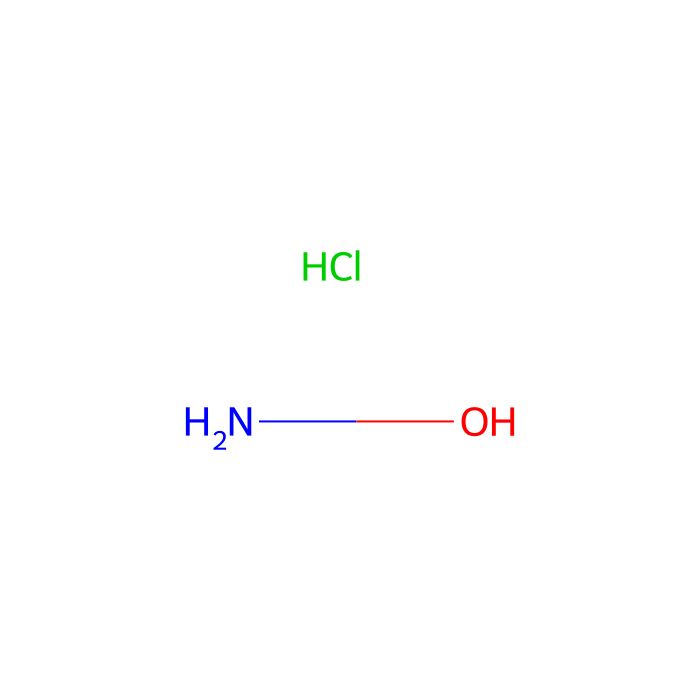
Hydroxylammonium chloride - 10mM in DMSO , CAS No.5470-11-1

CAS: 5470-11-1 Cat. No.: H424660 Formula: H3NO·HCl Molecular Weight: 69.49 EC Number: 226-798-2
AVAILABLE TO ORDER
GRADE & PURITY 10mM in DMSO
Synonyms
hydroxyamine HCl salt|hydroxylamine.hydrochloride|hydroxilamine hyrochloride|hydroxylamine hydrogen chloride|Hydroxylamine-HCl|hydroxylamine-HCl salt|hydroxylamme hydrochloride|hydroxy lamine hydrochloride|hydroxyl amine hydrochloride|HYDROXYLAMINE CHLOROHYDRATE|N-hydroxylamine hydrochloride salt|Hydroxyamine.hydrochloride|Hydroxylamine hydrochloride|hydroxyl-amine hydrochloride|HONH2.HCl|HONH2-HCl|hydroxylaminhydrochloride|hydroxylamin-hydrochloride|NH2OH.HCl|NH2-OH.HCl|hydroxylamine HCl salt|Hydroxyamine (hydrochloride)|hydroxyamine-hydrochloride|hydroxyiamine hydrochloride salt|Hydroxyamine hydrochloride|hydroxy-amine hydrochloride|hydroxylamine hydrochloric acid|amino alcohol HCl salt|H2NOH.HCl|H2N-OH.HCl|hydroxylamine hydochloride|Oxammonium hydrochloride|hydroxylaminehydrochloride|hydroxylamine-hydrochloride|H2NOH HCl|hydrochloric acid hydroxylamine|hydroxylamin hydrochloride|hydroxylamine hydrochloric acid salt|HYDROXYLAMINE, HYDROCHLORIDE|Hydroxylamine. hydrochloride|hydroxyamine hydrogen chloride|HYDROXYLAMINE HYDROCHLORIDE [MI]|NH2OH hydrochloride|hydroxyamine HCl|4-(4-((2S,3R,4S,5S,6R)-3,4,5-trihydroxy-6-(hydroxymethyl)tetrahydro-2H-pyran-2-yloxy)phenyl)butan-2-one|hydroxyamine monohydrochloride|Hydroxylamine HCl|HYDROXYLAMINE HCL [INCI]|hydroxylamine monohydrogen chloride|hydroxylamine monohydrochloride|hydroxylamine hydrochlorid|HCl H2NOH|hydroxyl amine-hydrochloride|hydroxylamine hydrochlorde|hydroxylamine hyrochloride|Hydroxylarnine hydrochloride|hydroxyamine hydrochloride salt|hydroxylamine.HCl|hydroxilamine hydrochloride|hydroxyl amine hydro chloride|N-hydroxylamine hydrochloride|hydoxylamine hydrochloride|hydroxylamine hydrocloride|H 9876|Hydroxylamine-d3 deuteriochloride|hydroxylaminehydrochlorid|amine-N-oxide hydro-chloride|Chloride, Hydroxylammonium pound>>Hydrochloride, Hydroxylamine|hydroxylamine;hydrochloride|NH2OH HCl|hydroxyl amine HCl|Hydroxylaminium chloride|5,7-dihydroxy-6-methoxy-2-phenylchromen-4-one.|hydroxylamine hydrochloride salt
Storage
Store at -80°C
Shipped In
Dry ice packs + Cold packs
★
Size
Germany (EU)
USA*
Price
Qty
1ml
H424660-1ml
—
2 In stock

€51.11

€60.65
Save €9.55 (15.74%)
Enter a quantity for the sizes you want to add.

Overview

Hydroxylamine hydrochloride is a compound used as a catalyst, copolymerization inhibitor, and swelling agent that acts as a potent reducing agent, converting aldehydes and ketones to oximes. It also exhibits activity of converting acid chlorides to hydroxamic acids. It is also a MAO inhibitor and inhibits platelet aggregation.
An agent used as a catalyst and copolymerization inhibitor.

Specifications

Synonyms
hydroxyamine HCl salt | hydroxylamine.hydrochloride | hydroxilamine hyrochloride | hydroxylamine hydrogen chloride | Hydroxylamine-HCl | hydroxylamine-HCl salt | hydroxylamme hydrochloride | hydroxy lamine hydrochloride | hydroxyl amine hydrochloride | HYDROXYLAMINE CHLOROHYDRATE | N-hydroxylamine hydrochloride salt | Hydroxyamine.hydroch Show more
Specifications & Purity
10mM in DMSO
Biochemical and Physiological Mechanisms
MAO inhibitor; inhibits platelet aggregation.
Storage
Store at -80°C
Shipped In
Dry ice packs + Cold packs
This product requires cold chain shipping. Ground and other economy services are not available.
Names and Identifiers
Pubchem Sid
SMILES
NO.Cl
IUPAC Name
hydroxylamine;hydrochloride
InChIKey
WTDHULULXKLSOZ-UHFFFAOYSA-N
InChI
1S/ClH.H3NO/c;1-2/h1H;2H,1H2
Isomeric SMILES
NO.Cl
UN Number
2923
Packing Group
I
Molecular Weight
69.49
Reaxys
3539763
Reaxys-RN_link_address
https://www.reaxys.com/reaxys/secured/hopinto.do?context=S&query=IDE.XRN=3539763&ln=

Advanced Data

Taxonomic Classification

Taxonomy Tree

KingdomInorganic compounds
SuperclassHomogeneous non-metal compounds
ClassHalogen organides
SubclassHalogen hydrides
Intermediate Tree Nodes Not available
Direct ParentHalogen hydrides
Alternative Parents Inorganic hydrides  
Molecular FrameworkNot available
Substituents Halogen hydride - Inorganic hydride
DescriptionThis compound belongs to the class of inorganic compounds known as halogen hydrides. These are inorganic compounds in which the heaviest atom bonded to a hydrogen atom is a halogen.
External Descriptors organic molecular entity
3D Structure
Interactive Chemical Structure Model


Certificates (CoA,COO,BSE/TSE and Analysis Chart)
C of A & Other Certificates(BSE/TSE, COO):
Analytical Chart:
Chemical and Physical Properties
SensitivityHygroscopic,Air Sensitive
Melt Point155-157°C
Molecular Weight69.49
XLogP3
Hydrogen Bond Donor Count3
Hydrogen Bond Acceptor Count2
Rotatable Bond Count0
Exact Mass68.9981 Da
Monoisotopic Mass68.9981 Da
Topological Polar Surface Area46.300 Ų
Heavy Atom Count3
Formal Charge0
Complexity2.000
Isotope Atom Count0
Defined Atom Stereocenter Count0
Undefined Atom Stereocenter Count0
Defined Bond Stereocenter Count0
Undefined Bond Stereocenter Count0
The total count of all stereochemical bonds0
Covalently-Bonded Unit Count2
Safety and Hazards(GHS)
Pictogram(s)
GHS05,   GHS07,   GHS08,   GHS09
Signal
Danger
Hazard Statements

H290:May be corrosive to metals

H302:Harmful if swallowed

H312:Harmful in contact with skin

H315:Causes skin irritation

H317:May cause an allergic skin reaction

H319:Causes serious eye irritation

H351:Suspected of causing cancer

H373:May causes damage to organs through prolonged or repeated exposure

H400:Very toxic to aquatic life

Precautionary Statements

P234:Keep only in original container.

P260:Do not breathe dust/fume/gas/mist/vapors/spray.

P261:Avoid breathing dust/fume/gas/mist/vapors/spray.

P264:Wash hands [and …] thoroughly after handling.

P270:Do not eat, drink or smoke when using this product.

P272:Contaminated work clothing should not be allowed out of the workplace.

P273:Avoid release to the environment.

P280:Wear protective gloves/protective clothing/eye protection/face protection.

P321:Specific treatment (see ... on this label).

P330:Rinse mouth.

P390:Absorb spillage to prevent material damage.

P391:Collect spillage.

P302+P352:IF ON SKIN: wash with plenty of water.

P305+P351+P338:IF IN EYES: Rinse cautiously with water for several minutes. Remove contact lenses if present and easy to do - continue rinsing.

P333+P313:IF SKIN irritation or rash occurs: Get medical advice/attention.

P362+P364:Take off contaminated clothing and wash it before reuse.

P405:Store locked up.

P406:Store in corrosive resistant/... container with a resistant inner liner.

P501:Dispose of contents/container to an approved waste disposal plant.

P203:Obtain, read and follow all safety instructions before use.

P264+P265:Wash hands [and …] thoroughly after handling. Do not touch eyes.

P301+P317:IF SWALLOWED: Get medical help.

P318:if exposed or concerned, get medical advice.

P317:Get emergency medical help.

P337+P317:If eye irritation persists: Get medical help.

P332+P317:If skin irritation occurs: Get medical help.

P319:Get medical help if you feel unwell.

Reaxys
3539763
Reaxys-RN_link_address
https://www.reaxys.com/reaxys/secured/hopinto.do?context=S&query=IDE.XRN=3539763&ln=
Class
8, 6.1
Merck Index
4828
Documents & Articles
Alginate : An Overview of Extraction and Purification Processes, Quality Identification, and Multidomain Applications
Reconsidering N-Acyl Amino Protecting Groups: Deprotection Differences, Strategic Roles, and Experimental Selection of Ac, Bz, and Tfa
The Methodological Value of Boc-Oxyma: Low-Racemization Coupling, Route Continuity, and Extended Applications
Triphenylphosphine Dibromide (PPh₃Br₂) Is More Than Just a Brominating Reagent: Experimental Selection Logic from Alcohol-to-Alkyl Bromide Conversion to Carboxylic Acid Activation and One-Pot Esterification, Vinyl Bromide Formation, and Nitrile Constructi
How to Construct Nitriles: Route Selection Across Direct Introduction, Precursor Dehydration, Oxidation/Dehydrogenation, and Cyanide-Free Processes
From Functional Groups to Experimental Decision-Making: Protein Crosslinker Selection and Experimental Essentials
Why Do Rust Spots Appear on Neutral Wall Putty? Iron Sources, Moisture Migration, Oxidative Color Development, and Prevention Measures
Common Chromogenic Reagents and Method Selection for Copper Ion Content Determination
Comparison of Iron Content Detection Methods: TPTZ, 1,10-Phenanthroline, Ferrozine, 2,2'-Bipyridine, and Instrumental Analysis
How to Evaluate Reaction Generality through Substrate Scope: From the Number of Examples to Standardized Substrate Selection
Citations of This Product
Solution Calculators
Reviews

Customer Reviews

Shall we send you a message when we have discounts available?

Remind me later

Thank you! Please check your email inbox to confirm.

Oops! Notifications are disabled.