GRADE & PURITYMoligand™?Moligand™ — Aladdin's line of ligands and bioactive small molecules. Use for receptor, pathway, and binding studies needing defined small-molecule tools.10 mM in DMSO
Moligand™, 10 mM in DMSO Moligand™ for sensitive chromatographic and analytical workflows requiring minimal baseline interference.
🌡
Storage & shipping
Protected from light,Store at -80°C Ships Dry ice packs + Cold packs Check lot-specific COA for exact specifications.
📋
Quality documents
SDS, COA, datasheet, and spec sheet available for download. Lot-specific COA accessible via lot number lookup.
📚
Literature proof
Cited in 26 peer-reviewed publications across chromatography, organic synthesis, and cross-coupling reactions.
Overview
α-Ionone (alpha-Ionone) is an activator of the olfactory receptor OR10A6 . α-Ionone induces apoptosis by activating OR10A6 and increasing the phosphorylation of the LATS-YAP-TAZ signaling axis in the Hippo pathway. α-Ionone can inhibit tumor formation both in vivo and in vitro.
Specifications
Specifications & Purity
Moligand™, 10 mM in DMSO
Storage
Protected from light,Store at -80°C
Shipped In
Dry ice packs + Cold packs
This product requires cold chain shipping. Ground and other economy services are not available.
Determine the necessary mass, volume, or concentration for preparing a solution.
Dilution Calculator
Determine the dilution needed to prepare a stock solution.
Reconstitution Calculator
Reviews
Customer Reviews
Application Protocols
No item-specific tested biological assay protocols are provided for this product. For general laboratory use:
Preparation of stock solutions (example): dissolve α-ionone at 10–100 mM in DMSO or ethanol; vortex to clarity. Filter through 0.22 µm PTFE if particulate is present.
Dosing into assays: add stock to buffered systems to achieve final vehicle ≤0.1–1% v/v; mix thoroughly to avoid microdroplets. Consider using cyclodextrins or nonionic surfactants for higher apparent solubility.
Analytical QC: verify identity by GC–MS or LC–MS and purity/isomer ratio by GC-FID/HPLC-UV before critical experiments.
For validated, application-specific protocols, refer to relevant literature or develop in-house SOPs.
Biological Roles
General biological context (no clinical claims):
Origin: α-Ionone is an apocarotenoid formed by oxidative cleavage or rearrangement of carotenoids. It occurs naturally in certain essential oils and contributes to violet/raspberry-like aromas.
Olfactory interactions: acts as an odorant ligand for human and animal olfactory receptors, enabling its use as a reference compound in chemosensory research and receptor screening (literature).
Metabolism: in mammals, expected to undergo Phase I oxidation (allylic/benzylic oxidation, carbonyl reduction) via cytochrome P450s and alcohol/aldehyde dehydrogenases, followed by Phase II conjugation (e.g., glucuronidation) prior to excretion (literature/analogy to terpenoids).
Biological reactivity: as an α,β-unsaturated ketone, can undergo Michael addition with nucleophiles; in cellular contexts, high concentrations may react with thiols (e.g., glutathione) in vitro—relevant to assay design and interpretation (literature caution).
Ecological/plant roles: ionones are semiochemicals in plant–insect and plant–microbe interactions; they can act as attractants/repellents depending on context (literature), making α-ionone a model compound in chemical ecology experiments.
Notes for users:
For biochemical assays, include thiol scavengers or define glutathione concentration to control Michael addition artifacts.
Verify DMSO or ethanol vehicle effects on olfactory or receptor assays; keep final solvent below typical assay thresholds (e.g., ≤0.1–1% v/v).
Buffer Applications
α-Ionone is a neutral, hydrophobic enone and is not used to prepare aqueous buffer systems. It has negligible water solubility and no relevant pKa in the physiological range.
Practical guidance:
If dosing into buffered media for bioassays, pre-dissolve in a water-miscible co-solvent (e.g., DMSO or ethanol) and keep final co-solvent concentration low to avoid perturbing buffer properties.
Use surfactants (e.g., ≤0.01–0.1% Tween 80) or cyclodextrins if higher apparent solubility is required, validating that additives do not interfere with the assay.
Green Alternatives
While α-ionone itself is an apocarotenoid that can be produced from petrochemical or bio-based routes, greener choices often relate to solvent systems and process conditions.
Greener solvent choices for α-ionone chemistry (literature/general):
Replace chlorinated solvents (DCM, CHCl3) with 2-MeTHF, CPME, EtOAc, or toluene where feasible.
For reductions/hydrogenations, use ethanol or 2-propanol as solvent/hydrogen donor in transfer hydrogenation protocols to reduce H2 usage.
Comparison (general guidance):
| Aspect | Conventional | Greener alternative | Trade-offs |
| — | — | — | — |
| Conjugate addition medium | THF/DCM | 2-MeTHF/CPME/EtOAc | Reaction rates/selectivity can vary; optimize catalyst/base loading |
| Workup/extraction | DCM/hexane | EtOAc/MeTHF/green hydrocarbons | Partitioning may differ; adjust volumes |
| Hydrogenation | H2 in EtOAc/DCM | H2 in EtOH/iPrOH; transfer hydrogenation | Catalyst compatibility and rate considerations |
Process intensification ideas:
Use flow chemistry for exotherm control during Michael additions or peracid epoxidations, minimizing solvent and waste.
Apply LED-driven photochemistry (if relevant) to reduce energy consumption vs. mercury lamps.
Sourcing notes:
Bio-based ionone: α-ionone can be derived from fermentation or bioconversion of carotenoid feedstocks (literature). Verify sustainability certifications with your supplier if this is critical to your program.
Pharmaceutical Uses
No therapeutic claims. The following refers to formulation/excipient contexts (general literature):
Role: α-Ionone and related ionones are used as flavor/fragrance ingredients in topical, oral care, and consumer product prototypes; in pharma-adjacent R&D they can serve as aroma modifiers in sensory testing and as hydrophobic model compounds for partitioning/permeation studies.
Excipient considerations:
Volatility and hydrophobicity make α-ionone a useful probe for studying evaporation profiles, headspace analysis, and packaging interactions.
Potential for skin sensitization in some individuals necessitates careful concentration control in topical formulations during R&D.
Regulatory/status:
Ionones are generally listed in flavor/fragrance inventories (e.g., IFRA, FEMA for certain isomers), but specific pharmacopeial monographs may not exist for α-ionone itself. Always consult current regulatory databases and your quality unit.
Development tips:
Use ethanol, triacetin, or medium-chain triglycerides to solubilize and stabilize in prototype dosage forms.
Conduct extractables/leachables studies due to affinity for elastomers and plastics.
Physical Properties
Item-specific specifications: Not specified for this item; refer to CoA/Spec Sheet.
Literature/general properties (for reference only; not item specifications):
Appearance: colorless to pale yellow oily liquid (prone to darkening on air/light exposure).
Boiling point: typically ~235–240 °C at 1 atm (literature; varies with isomeric composition and purity).
Melting point: often below 0 °C (literature reports ~−6 to −1 °C depending on isomer/enantiomer content).
Density: ~0.93–0.95 g/mL at 20–25 °C (literature).
Refractive index (nD20): ~1.512–1.520 (literature; sensitive to isomer ratio).
Vapor pressure: low at ambient; increases with temperature (literature qualitative).
Solubility: sparingly soluble in water; miscible with common organic solvents (ethanol, ether, dichloromethane, hexanes) (literature).
pKa: not applicable (ketone lacks acidic/basic center under neutral aqueous conditions); enone acts as a Michael acceptor rather than Bronsted acid/base.
Notes for users:
The conjugated enone can absorb UV in the ~230–280 nm region (literature), useful for HPLC/GC detection.
Physical constants for α-ionone can vary with E/Z ratio and minor impurities. For method validation or quantitative work, confirm exact values on the item CoA and perform in-lab verification where needed.
Quality & Grades
Item-specific grade: Moligand™ (as provided). No explicit purity percentage or stabilizer is specified for this item; refer to CoA/Spec Sheet for assay and impurity profile.
About Moligand™ (general description):
Intended for discovery workflows, screening libraries, and structure–activity studies where consistent identity and handling characteristics are critical.
Emphasis is typically placed on rigorous identity confirmation (e.g., NMR/HRMS/GC/LC) and batch traceability suitable for high-throughput assays. Specific test methods and acceptable limits should be confirmed on the item’s CoA.
Practical implications for users:
UV-active conjugated enone facilitates HPLC/UPLC tracking; ensure your grade’s background UV absorbance is compatible with your detection wavelength if using as a standard or spike.
If your application is GC-based, verify residual solvent profile and isomer ratio on the CoA; α-ionone’s E/Z isomer content can influence chromatographic response factors.
For biophysical or ligand-screening assays, confirm absence of reactive stabilizers (none specified here) that could interfere with targets via Michael addition.
When to consider alternative grades:
For quantitation/trace analysis: choose a certified reference material (CRM) or analytical standard grade.
For synthesis demanding extremely low peroxide or metal content: consult Spec Sheet; if not listed, pre-treat or purify in-house as appropriate.
Reaction & Applications
α-Ionone’s conjugated enone and terpene-like skeleton make it versatile in synthesis and as a performance chemical.
Research/manufacturer use note
For research use only (as provided). Common roles include ligand screening, odorant standards, and a hydrophobic probe in assay development.
Michael acceptor chemistry: undergoes 1,4-conjugate additions with soft nucleophiles (e.g., thiols, malonates, Gilman reagents), enabling rapid diversification of the side chain.
Carbonyl transformations: selective 1,2-reduction to allylic alcohols (NaBH4/CeCl3, DIBAL-H) or full hydrogenation of C=C with H2/Pd to give saturated ketones/alcohols.
Epoxidation/oxidation: peracid epoxidation of the enone double bond; allylic oxidation affords ionone-derived enals/enones.
Photochemistry: conjugated system is photoactive; controlled photoisomerization or [2+2] processes possible under UV (specialized setups).
Building block for aroma chemistry: precursor to ionols, damascones, and other apocarotenoids; used to model reactivity of β-ionone fragments in carotenoid chemistry.
Chromatographic standard: strong UV chromophore around 230–280 nm supports method development and detector calibration (non-quantitative without CRM).
Practical tips:
Control E/Z geometry by reaction conditions; mild base or light can isomerize the side chain.
Work under inert atmosphere and protect from light to limit oxidation/polymerization.
For stereoselective conjugate additions, organocatalysts (e.g., secondary amines) or chiral Lewis acids may enhance enantioselectivity.
Reaction Conditions
General literature guidance (illustrative; optimize for your system):
Conjugate (Michael) additions:
Soft nucleophiles (e.g., Me2CuLi, malonates with base, thiols with base or organocatalyst).
Solvents: THF, 2-MeTHF, CPME, toluene, DCM.
Temperatures: −78 to 25 °C depending on nucleophile/catalyst; typical times 1–24 h.
Notes: use dry, oxygen-free conditions; monitor for over-addition or isomerization.
1,2-Reduction to allylic alcohol:
Reagents: NaBH4/CeCl3 (Luche), DIBAL-H (−78 to 0 °C), or catalytic hydrogenation with careful control.
Solvents: MeOH, EtOH (for NaBH4); toluene or DCM (for DIBAL-H).
Temperatures: −78 to 25 °C; times 0.5–4 h.
Selective C=C hydrogenation (retain C=O):
Catalyst: Pd/C, PtO2, or Rh/C.
Conditions: 1–5 bar H2, 20–40 °C, 1–6 h; monitor to avoid over-reduction.
Epoxidation of the enone:
Reagents: mCPBA (1.1–1.5 equiv) in DCM, 0–25 °C, 1–3 h; buffered to suppress Baeyer–Villiger.
Alternatives: H2O2 with Ti or tungstate catalysts in greener solvents.
Allylic oxidation:
Reagents: SeO2 (caution) or catalytic TEMPO/O2 systems; solvents: toluene, t-BuOH/H2O.
Photochemical isomerization:
UV or LED at appropriate wavelength; inert atmosphere; use filters to target E↔Z without degradation.
Yields and selectivities are substrate- and condition-dependent; consult primary literature and perform small-scale optimization.
Safety & Handling
Item-specific GHS data: Not specified for this item; refer to the product SDS for authoritative hazard classification, pictograms, signal word, and H-statements.
General safety information for α-ionone and related ionones (literature/industry practice; not item-specific):
Likely hazards: may cause skin/eye irritation and sensitization in susceptible individuals; harmful to aquatic life with long-lasting effects. Avoid inhalation of concentrated vapors or mists.
PPE: wear appropriate gloves (e.g., nitrile), safety glasses or face shield, and lab coat. Use in a fume hood to control vapors and avoid exposure.
Handling notes:
Enone functionality is prone to oxidation/polymerization on exposure to air, heat, or light; minimize headspace oxygen and protect from light.
Avoid contact with strong bases (can promote Michael additions/self-condensation) and strong oxidants (risk of exothermic reactions and over-oxidation).
First aid (overview; defer to SDS):
Skin/eye contact: rinse with water for several minutes; remove contaminated clothing; seek medical attention if irritation persists.
Inhalation: move to fresh air; monitor for respiratory irritation.
Ingestion: rinse mouth; do not induce vomiting; seek medical attention.
Fire safety: combustible organic liquid; use CO2, dry chemical, or foam. Combustion may produce CO/CO2 and irritant fumes.
Storage incompatibilities: segregate from oxidizers, strong bases, and strong acids; store in amber vials under inert atmosphere when possible.
Waste: collect as halogen-free organic waste unless contaminated; follow institutional and local regulations.
Solvent Selection
α-Ionone is a hydrophobic, moderately polarizable conjugated ketone. It dissolves readily in most organic solvents but poorly in water.
Spectroscopy/HPLC: acetonitrile or methanol/water with small % organic; for normal-phase, hexane/IPA or hexane/EtOAc works well due to hydrophobicity and UV activity.
Synthetic transformations (Michael additions, reductions): ethereal (THF, 2-MeTHF, CPME) or chlorinated solvents (DCM) support enone chemistry; toluene and EtOAc are also common.
Formulation/fragrance work: ethanol, triacetin, or carrier oils to moderate volatility and improve stability.
Practical notes:
Avoid strongly basic aqueous media unless desired reaction is planned; base can cause side reactions.
For kinetic studies, dry, oxygen-free solvents reduce adventitious oxidation/polymerization of the enone.
Quick comparison (general):
DCM: excellent solubility and reaction control; not green, halogenated waste.
2-MeTHF/CPME: greener ethers with good solubility and moisture tolerance; may afford similar rates/selectivities in conjugate additions.
EtOAc: greener ester solvent; good for workups and extractions with α-ionone due to partitioning behavior.
Storage & Reconstitution
Item-specific storage (from Product Data):
Store protected from light.
Store at −80 °C.
Shipped on dry ice packs + cold packs.
Container/atmosphere:
Use amber, airtight vials. Purge headspace with inert gas (N2 or Ar) after each use to minimize oxidation and isomerization (general best practice for enones).
Aliquoting and handling:
Upon receipt, allow container to equilibrate in a desiccated environment before opening to avoid condensation.
Prepare small aliquots to minimize freeze–thaw and headspace exposure. Keep working aliquots at −20 °C or 4 °C short-term, returning promptly to cold, dark storage after use (verify suitability for your workflow).
Reconstitution/solution preparation:
Typically supplied neat. For stock solutions, dissolve in dry, oxygen-free solvent (e.g., DMSO, ethanol, 2-MeTHF) at desired concentration. Mix thoroughly until homogeneous.
For aqueous applications, pre-dissolve in a miscible co-solvent and add slowly to buffered media with vigorous mixing to avoid precipitation.
Stability notes (general):
Conjugated enones can darken and form byproducts on exposure to light/air/heat. Protect from light, limit oxygen, and store cold to preserve quality.
For long-term studies, periodically re-check purity/isomer ratio by GC/HPLC.
If more stringent conditions or exact shelf-life are required: Not specified for this item; refer to CoA/Spec Sheet.
Structure & Identity
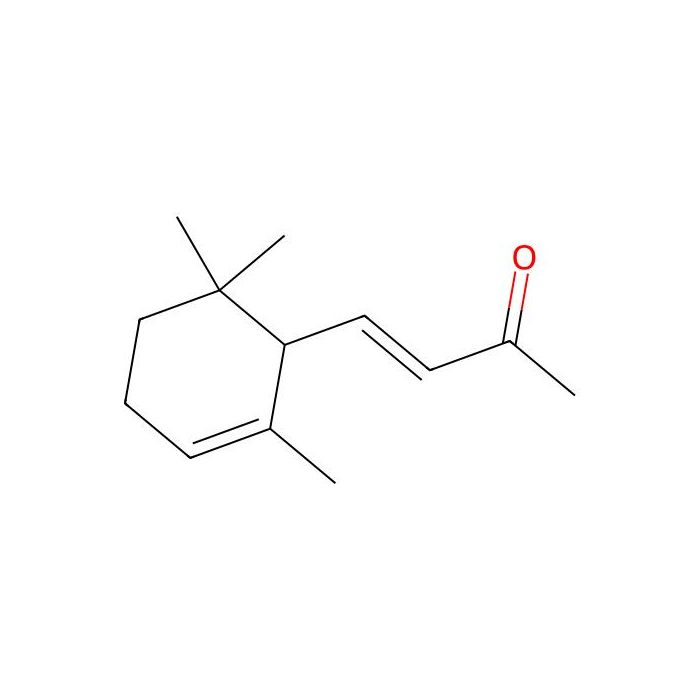
Brief overview: α-Ionone is a monocyclic terpene-derived enone (apocarotenoid) frequently used as a hydrophobic building block and odorant standard. It contains a conjugated ketone within a substituted six-membered ring and multiple isoprenoid methyl substituents.
Item-specific identifiers (from Product Data)
CAS: 127-41-3
SKU: I1500038
Grade: Moligand™
InChIKey: Not specified for this item; refer to CoA/Spec Sheet.
SMILES: Not specified for this item; refer to CoA/Spec Sheet.
Literature structural identifiers (general reference; not item-specific)
Common name: α-Ionone
Synonyms: trans-α-ionone; 4-(2,6,6-trimethyl-1-cyclohexen-1-yl)-3-buten-2-one (nomenclature varies by isomer description)
Molecular formula (literature): C13H20O
Molecular weight (literature): ~192.30 g/mol
Key structural features (general chemistry)
Functional groups: conjugated enone (α,β-unsaturated ketone) embedded in a 1,3-cyclohexadiene-derived framework; tertiary/allylic methyl substituents typical of terpenoids.
Ring system: substituted cyclohexene ring fused to an exocyclic enone side chain (isoprenoid architecture).
Stereochemistry: α-Ionone designates a constitutional isomer in the ionone family; commercial materials may be mixtures of E/Z at the side-chain C=C unless otherwise specified (not specified for this item).
2D description: a six‑membered ring with one C=C; at the ring vinylic carbon, an enone side chain (–CH=CH–C(=O)–CH3) extends; three methyls decorate the ring junction carbon (gem-dimethyl) and an allylic position, characteristic of carotenoid fragments.
Synthetic Utility
Functional group leverage:
α,β-Unsaturated ketone enables:
1,4-Conjugate addition with C-, N-, S- nucleophiles (e.g., malonates, enamines, thiols, cuprates) to elaborate the side chain.
Chemoselective hydrogenation: reduce C=C selectively (Pd/C, H2) while retaining carbonyl, or vice versa (NaBH4/CeCl3).
Epoxidation (mCPBA, H2O2/catalyst) and subsequent regioselective ring opening.
Strategic roles (literature):
Apocarotenoid synthon: models the β-ionone motif found in carotenoids; used in constructing damascones/damacenones and terpenoid libraries.
Chiral induction: enantioselective organocatalysis on the enone (e.g., iminium catalysis) affords access to chiral building blocks.
Retrosynthetic value: the ring’s gem-dimethyl substitution and allylic positions allow late-stage diversification without altering core volatility/odor properties—useful for SAR in fragrance research.
Operational tips:
Control E/Z geometry during manipulations; base/heat can scramble the side-chain double bond.
Use mild conditions to preserve fragrance attributes when odor evaluation is part of the workflow (avoid harsh acids/bases and high temperatures).
Target Specificity
Not applicable. This product is a small molecule enone, not a biological macromolecule or antibody. No antigen/epitope, clone, isotype, or species reactivity applies.
We use cookies to ensure the website functions properly and, where permitted, to improve your experience. You can manage your preferences at any time in Settings. Learn more in our Cookie Policy.
Shall we send you a message when we have discounts available?
Remind me later
Thank you! Please check your email inbox to confirm.
Products are supplied to verified businesses, institutions, and qualified professionals for research and development use only. Not for use in humans, animals, diagnosis, or therapy.